A Tour in Flux
A Tour in Flux
More than ever on the WTA, anything could happen.
More than ever on the WTA, anything could happen.
By Owen LewisJuly 23, 2026
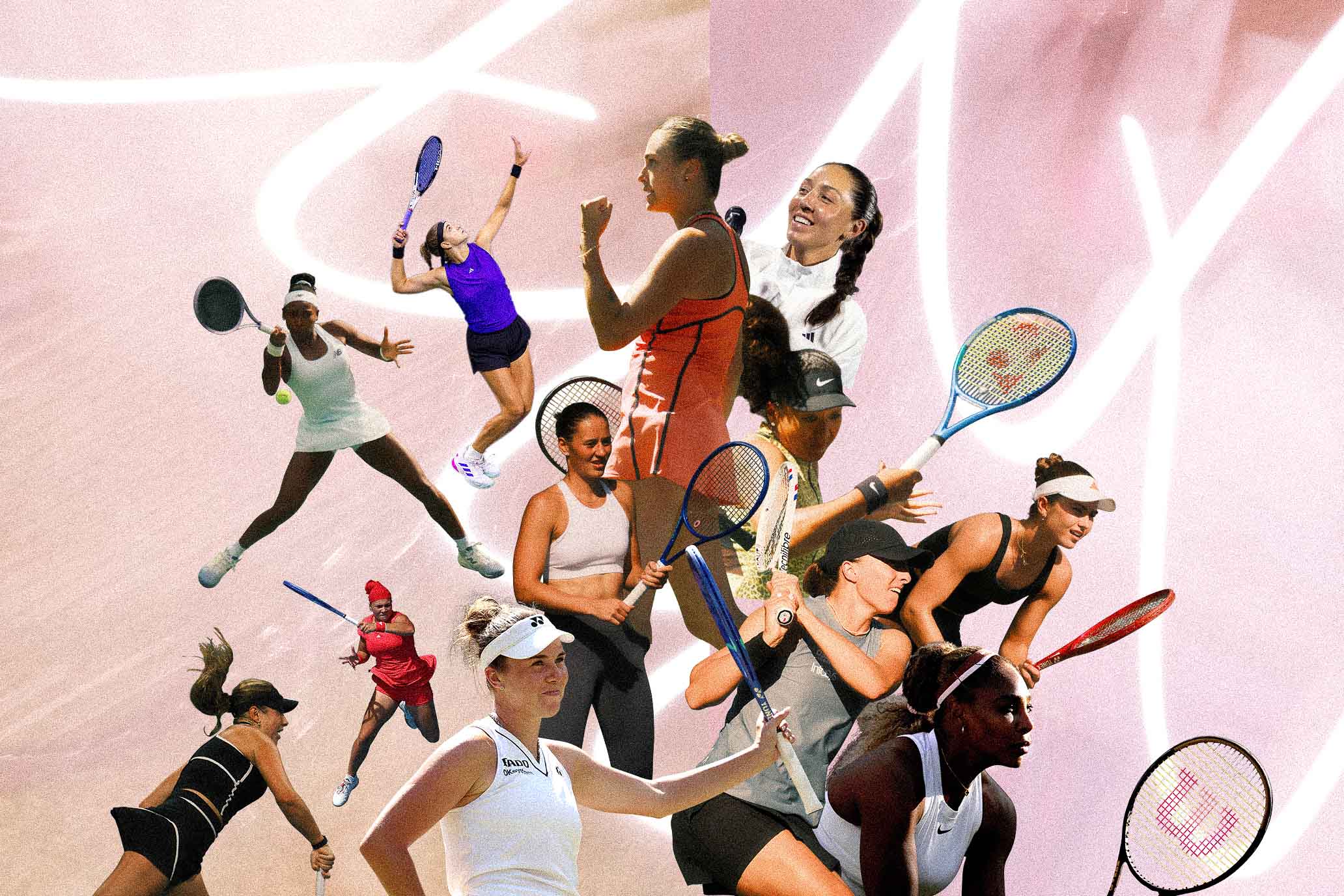
The field is wide open. // Photo illustration by David Bartholow.
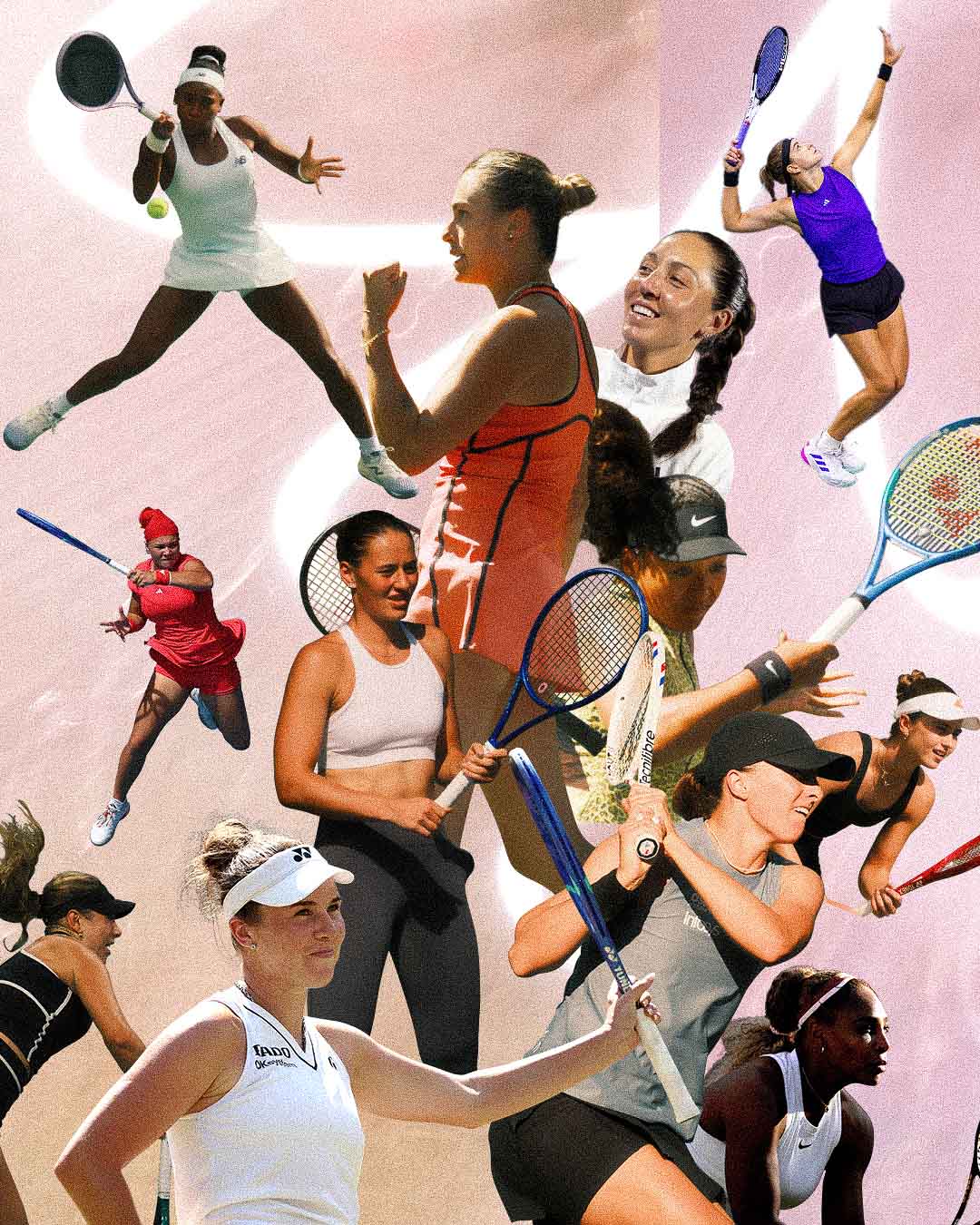
The field is wide open. // Photo illustration by David Bartholow.
Aryna Sabalenka couldn’t shake herself out of her funk in time to make a run at the Wimbledon title. Naomi Osaka was supreme in defeating her—there again was the first serve and backhand that propelled her to four major titles—but the circumstances of the loss were telling. It was the first time Sabalenka had lost at a major in straight sets since 2020. The first time she’d lost a tiebreak at a major since the US Open, and she lost it badly, 7–2, after winning the opening point. Iga Swiatek fell a round earlier, not coming close to defending the title she won ruthlessly in 2025. Elena Rybakina is in the midst of a mystifying loss of form; from the would-be successor to Sabalenka’s No. 1 ranking in March, she now looks fundamentally incapable of producing good tennis for the requisite length of time. She lost meekly to Elise Mertens the same day Alex Eala upset Swiatek.
There is unrest atop the WTA, and at Wimbledon we saw the rain-blurred landscape clearly. Each time the draw seemed to produce a favorite, the field promptly dumped them out of the tournament. After beating Sabalenka, Osaka looked like the sharpest player in the draw: She hadn’t dropped a set through four rounds and had just earned the best win of her career since her duels with late-career Serena Williams. (You can imagine Serena, watching the first half of the season from home, feeling that there wasn’t a player on tour she wouldn’t have a chance to beat.) As a four-time major champion, Osaka had only ever lost one match beyond the fourth round of a Slam. Instead, she didn’t win another set. At one point Jessica Pegula was a popular winner pick, before Coco Gauff thoroughly outplayed her for the last two sets of their quarterfinal. It was hard to imagine anybody beating the Gauff of those two sets, so next she stood out from the rest. Like Osaka, she fell to Muchova, and after having a chance to put away a short forehand on match point. Surely the stars had aligned for Muchova, then. Nope. She put up an almighty fight in the final, but only truly looked like a better player than Linda Noskova for the hallucinogenic half hour in which she wrestled control of the second set from 2–5, saving five championship points along the way.
So is it Noskova, at just 21 years old, who’s best positioned to climb atop this fractured summit? Maybe—in the final, it felt like I was watching an all-time great at 31. Her serve was relentlessly precise, her returns stifling and aggressive, her movement assured, her ground strokes and slices cleverly angled. How is there enough time in two decades to build a game that complete? But there’s so much competition that you’d still take the field over Noskova at any tournament. Leaving aside the top four, any of whom could regain their form at any time, there’s newly minted major champion Mirra Andreeva to contend with. There’s Amanda Anisimova, also in a slump but instantly deadly once she recovers the timing on her mighty ground strokes. Elina Svitolina, in arguably career-best form at 31. Marta Kostyuk, who made the semifinals in both Paris and London and hasn’t lost a match besides since March. The teen terrors of Iva Jovic and Victoria Mboko, who I expect to get right back to breaking brains once she recovers from her MCL injury. En route to the Wimbledon title, Noskova had to save a match point against 36-year-old Sorana Cirstea, who’s in the midst of the last and best year of her career. Anybody can beat anybody at any time.
Though peak Sabalenka or Swiatek chewing up a tournament is far from boring, this is the tour at its best. Pity those who claim to love predictability—in the absence of Carlos Alcaraz, any given ATP tournament is Jannik Sinner’s to lose, barring his body’s intermittent and violent rebellions against itself. The texture of men’s tennis has grown same-y, too. The top of the tour is a glut of ball-bashers and servebots (tellingly, Sinner is both those things), plus 39-year-old Novak Djokovic. There’s too much predictability in the ATP’s results, but what’s even worse is that you know what most of the tennis will look like: big forehands, bigger serves, some slow backhand-to-backhand rallies, a drop shot once every 10 or 15 points. Alcaraz is a vital presence because he’s the only player who can disrupt the Sinner monarchy, but also because—at least until, hopefully, Learner Tien develops a killer serve—he’s the only top player whose style varies wildly and thrillingly from the baseline.
The WTA, though? Power still has a loud voice, but each champion is wonderfully distinct from one another. In her semifinal against Gauff, Muchova hit two superhuman volleys under duress. She hit one of them while diving, and the other somehow was more impressive, following a path from the middle of the court to the sideline so thin and faint that even Muchova seemed to think she’d missed. Gauff has won two majors and risen to No. 3 in the world with a game entirely comprised of the negative space around the stale serve-plus-one archetype. Diana Shnaider’s vicious lefty forehand rips up typical baseline patterns and creates new ones. Kostyuk’s background in gymnastics is evident in each of her improbable defensive stabs. Even the best servers on tour don’t win as many as three-fourths of their service games, maintaining a healthy degree of unpredictability each time they toss the ball. The WTA is more than capable of losing any one player to injury for a while without feeling as though its soul has gone missing. Rivalries are sparse, something I’ve lamented before, but even that’s a tribute to the women’s game in a way—you can just watch a tournament unfold and expect to see something compelling rather than tuning half-out when the most telegenic player crashes out early. An alien would think that’s the distinguishing characteristic of what deserves to be the more profitable tour, and I do too.