Return of a Queen
Return of a Queen
Qinwen Zheng reestablishes her reign with a title in Beijing.
Qinwen Zheng reestablishes her reign with a title in Beijing.
By Giri NathanOctober 16, 2026
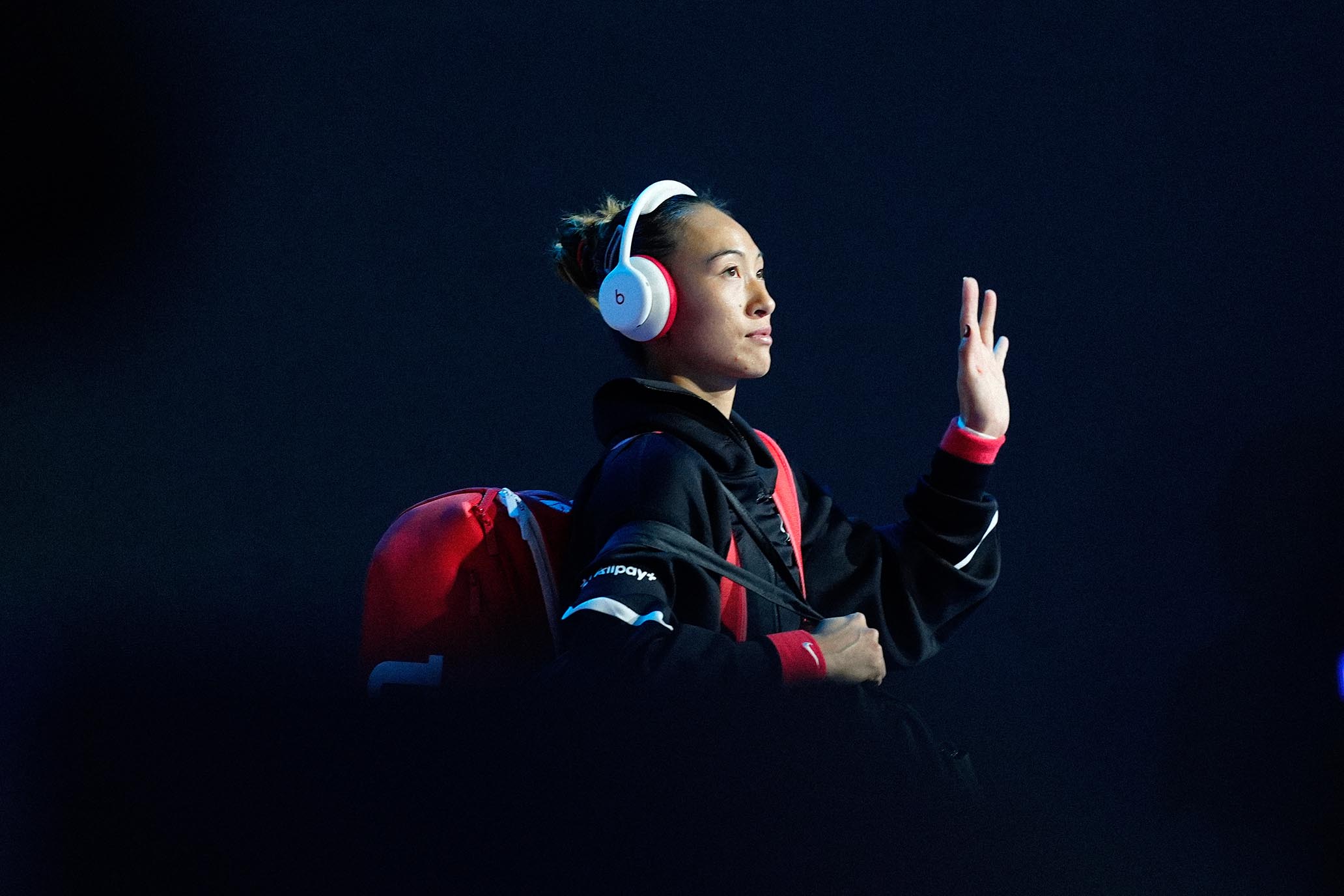
The queen and her court. Qinwen Zheng ahead of the China Open final. // David Bartholow
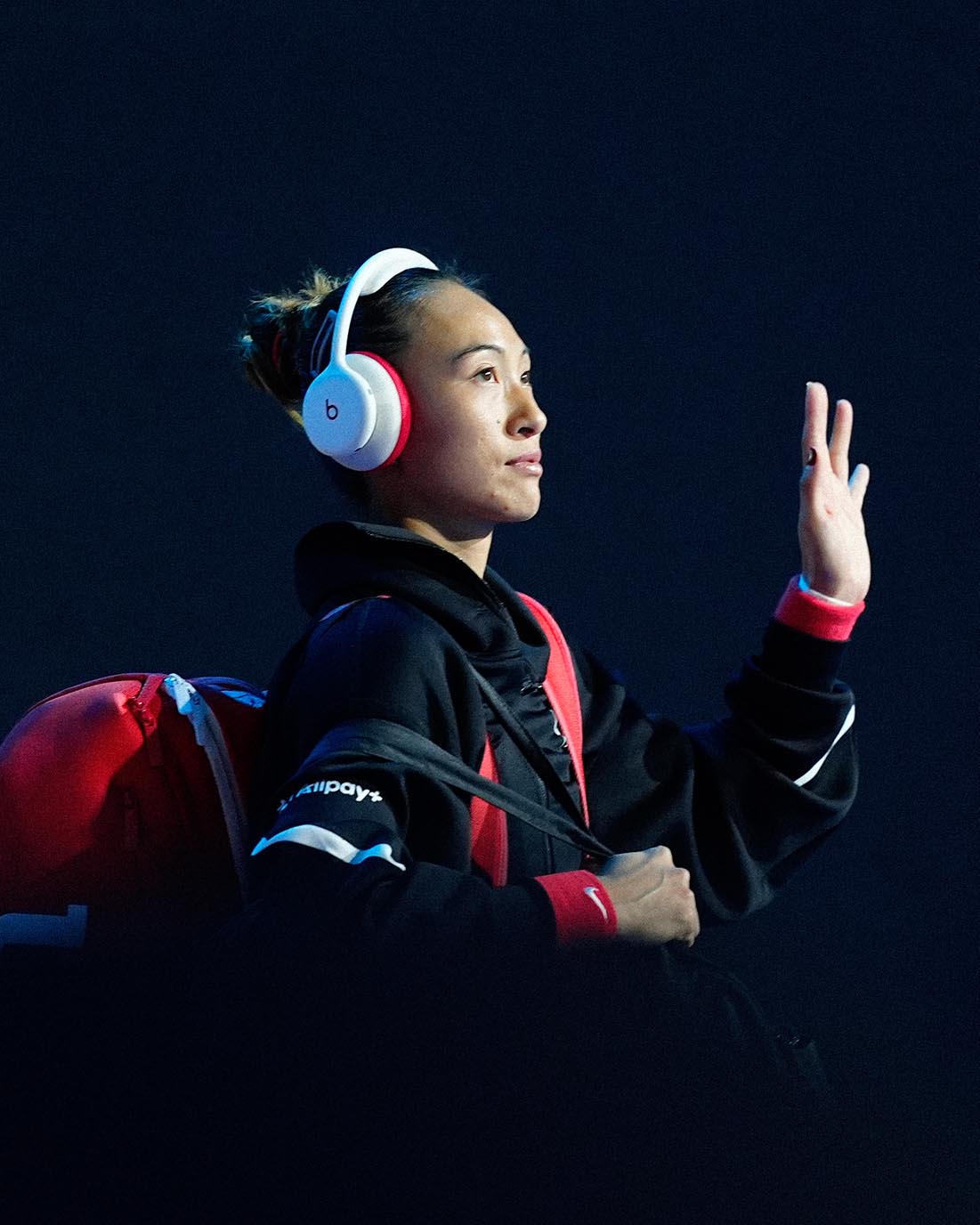
The queen and her court. Qinwen Zheng ahead of the China Open final. // Getty
What couldn’t Qinwen Zheng do? Heading into the summer of 2025, China’s superstar was settling in at the top of the WTA. Her heavy-topspin slugging had made her a staple of the top 10, an Olympic gold medalist, an Australian Open runner-up. But it had also, at that point, brought her many, many months of severe right elbow pain. The resulting arthroscopic surgery in July blew up her whole 2025 season. By her own admission, Zheng returned from injury too early, rushing back to play for the home crowds at Beijing in late September. She called it quits again almost immediately, after just one win and one mid-match retirement. Later she revealed that she still didn’t have full extension or flexion of her elbow at that moment and wasn’t sure she ever would recover it again.
Zheng wouldn’t return to tour again until February 2026, this time with an elbow that bent and flexed, even if she wasn’t yet pain-free. She chugged along, picking up a win here and there. But at Roland-Garros, where she was defending a quarterfinal result, Zheng lost the first round, which sent her cascading down the rankings. (At least she had the consolation of watching the victor, qualifier Maja Chwalinka, go all the way to the final.) She spent the grass season bobbing between No. 122 and No. 160 in the world. Queen-wen, as she is known to her English-speaking fans, was headed back to a commoner’s life: qualifying draws. After crashing out of the first round of qualifying in Toronto, she was informed by her coach, Pere Riba, that her tennis wasn’t where it needed to be to compete. She claimed she had all the “pieces” of her tennis but hadn’t yet found a way to put them together; Riba said they needed practice to put those pieces together. So instead of trying to qualify Cincinnati, the team decamped to Florida for a training block, where Zheng said some workdays started at 8:30 a.m. and ended at 8 p.m.
Then it was time to fly to New York for US Open qualifying. “Psychologically it was very difficult to accept,” the former seeded player said of her humble new status. But qualify for the main draw she did, and thus began one of the most thrilling comeback runs in recent memory. Zheng trailed 0–5 in the deciding set of her third-round match against Madison Keys…only to reel off seven straight games and win. In her next match, after just 20 minutes, she trailed Iga Swiatek 0–5 in the opening set…only to reel off seven straight games and win that set, plus the next one. After beating Swiatek she made a puzzle piece gesture to her team, a callback to their previous talk during her struggles with form.
Tough one to verify, but I’d feel comfortable asserting that this is the only time in professional tennis history that a player has ever won consecutive sets after trailing 0–5 in each. She lost a close quarterfinal to eventual champion Elena Rybakina, but reaching that stage of the tournament launched her to just outside the top 50, and on a pure emotional level, those back-to-back comebacks from the brink were among the most memorable storylines of the entire Open. The vicious battles throughout the tournament reenergized her. “The second time when I came back [from injury], I had totally lost the dynamic of how to compete as an athlete. I had been every day living a life—okay, training—but without any pressure. Without any adrenaline,” Zheng said. She left having gotten what she needed; that Open run was the sort of adrenaline shot you don’t see outside Pulp Fiction.
That was the momentum she brought to Beijing this year, arriving in very different circumstances from last year, when her recovery wasn’t complete and her elbow didn’t yet work. Here instead was a great player announcing her abrupt return to greatness, in the span of just two tour events. In her nation’s capital, she celebrated her 24th birthday, won her first 1000-level title, and became the tournament’s first-ever Chinese champion. The whole tournament was a showcase for the volcanic offensive tennis she produces at her best. Zheng has one of the tour’s deadliest first serves: She currently leads the WTA in ace rate and first serve points won over the past 52 weeks, edging out Rybakina in both categories. Even though that particular weapon began to falter by the final—only 38 percent of first serves in, which could have something to do with the shoulder injury she announced after the tournament—her baseline play was superb all week, and it was that skill that carried her past Mirra Andreeva to the title on Sunday. Zheng’s 243 cumulative winners were the highest tally for any player at a WTA event this season; whether she’s serving bombs or simply lining up a rally forehand, she has the pace to take the racquet out of any opponent’s hands. After winning the biggest tour title of her career, she treated the Beijing crowd to some pitchy karaoke. The physical toll of the past few weeks forced her to pull out of her hometown event in Wuhan this week, but I doubt she has any complaints about her current lot in life. Newly restored to the top 25, the days of qualifying are long past, and the queen reigns once more.
PURE, ORIGINAL TENNIS — SIGN UP!
RECOMMENDED

The Long Rally
The Hobby