The Long Rally
The Long Rally
A centuries-old sport, still finding its place in the trading card world.
A centuries-old sport, still finding its place in the trading card world.
By Noah ShulmanPhotography by Jeffrey WestbrookAs featured in OPEN Tennis Volume 5BUY
The Long Rally
A centuries-old sport, still finding its place in the trading card world.
By Noah ShulmanPhotography by Jeffrey WestbrookAs featured in OPEN Tennis Volume 5BUY
My path to collecting tennis cards did not start with tennis at all.
It started in the ’90s, with my dad and Michael Jordan.
It was 1993, and the entire basketball universe felt alive. Rivalries were fierce, future Hall of Famers filled the rosters, and trading cards were everywhere. Bodegas, card shops, even street vendors. Basketball cards were everything to my dad and me, and we were serious collectors.
In the fall of 1993, Topps Finest Basketball appeared, and I remember my dad coming home with a few packs. The moment we opened them, it was clear this set felt different. Every card felt premium and futuristic, fully foiled with chromium technology that gave them an insane shine and weight. Suddenly, every card felt like an insert. The design was peak ’90s, with loud colors and aggressive textures. It looked like early Photoshop on acid.
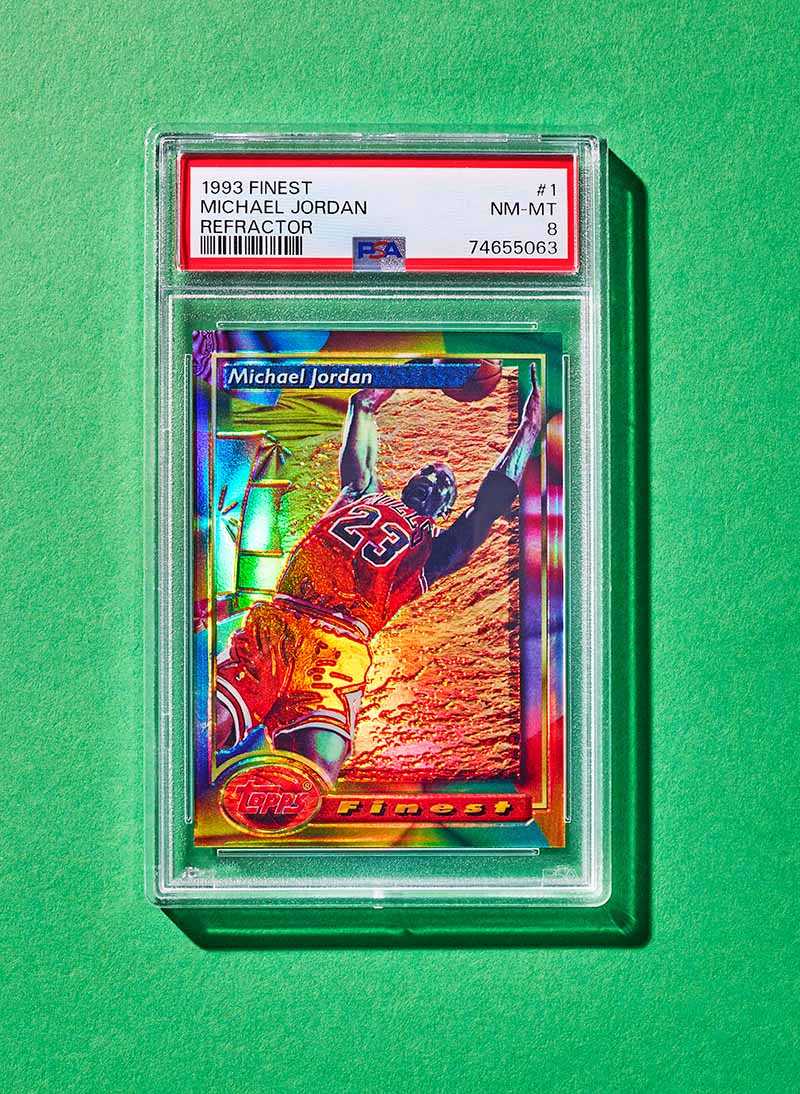
That was also the year Topps introduced the refractor, a parallel version with an added optical sheen. More than 30 years later, refractors are a staple of nearly every trading card product. Back then, they were rare, difficult to pull, and highly coveted. I was 9 years old, and the Michael Jordan refractor was my holy grail. I didn’t have the language for why it mattered. I just knew it did.
Collecting began to fade when I entered high school. Sports became something to participate in more seriously, and I gravitated toward my creative side: photography, design, filmmaking. Without consciously deciding to, I moved on.
My collection sat in boxes stacked in a closet at my parents’ house for decades. They would occasionally ask when I planned to get rid of them, but it always felt like too big an undertaking. I wasn’t ready to let go of something that still carried emotional weight, even though the hobby was no longer part of my life.
When the world slowed in 2020, my dad drifted back into collecting. He pulled the boxes out, researched values, and began selling pieces from our collection. Before long, he was hooked and started collecting again.
One day, he invited me over, and sitting in front of us was a sealed box of 1993–94 Topps Finest Basketball. It felt like going back in time. The same cards that once felt untouchable were there for us to rip open.
Somewhere in the middle of the box, I caught the corner of a card with just a glint of extra shine. I knew immediately it was a refractor. But not just any refractor. It was the Michael Jordan refractor.
My hands were shaking as we screamed at the top of our lungs.
I was finally holding my childhood holy grail. Not bought. Not traded. Pulled fresh from a sealed pack that had been sitting in that box since 1993. What surprised me later was not just the thrill of the pull, but what it unlocked emotionally. That moment didn’t send me chasing basketball cards again. It reminded me why collecting ever mattered in the first place.

Collecting is an act of belief. You choose a person and follow their story over time. A card becomes a way of anchoring that belief, a physical reminder of a moment, a season, a version of someone you once invested in. Something small you can actually hold on to.
And once that door reopened, it didn’t lead me where I expected.
In 2023, my wife attended the Australian Open on a business trip and, simply put, came home obsessed with the sport, talking about everything except the final scores. She was drawn to the mental battles, the personal narratives, the psychological drama unfolding point by point. I got pulled in quickly, and soon enough we were watching matches, following Grand Slams, learning players, becoming real fans.
Tennis felt different from the sports I grew up with. You weren’t rooting for teams. You were rooting for people. You felt the drama, heartbreak, and frustration right alongside them. The best matches felt Shakespearean. It was the first time I had fallen back in love with sports in a meaningful way since I was a kid.
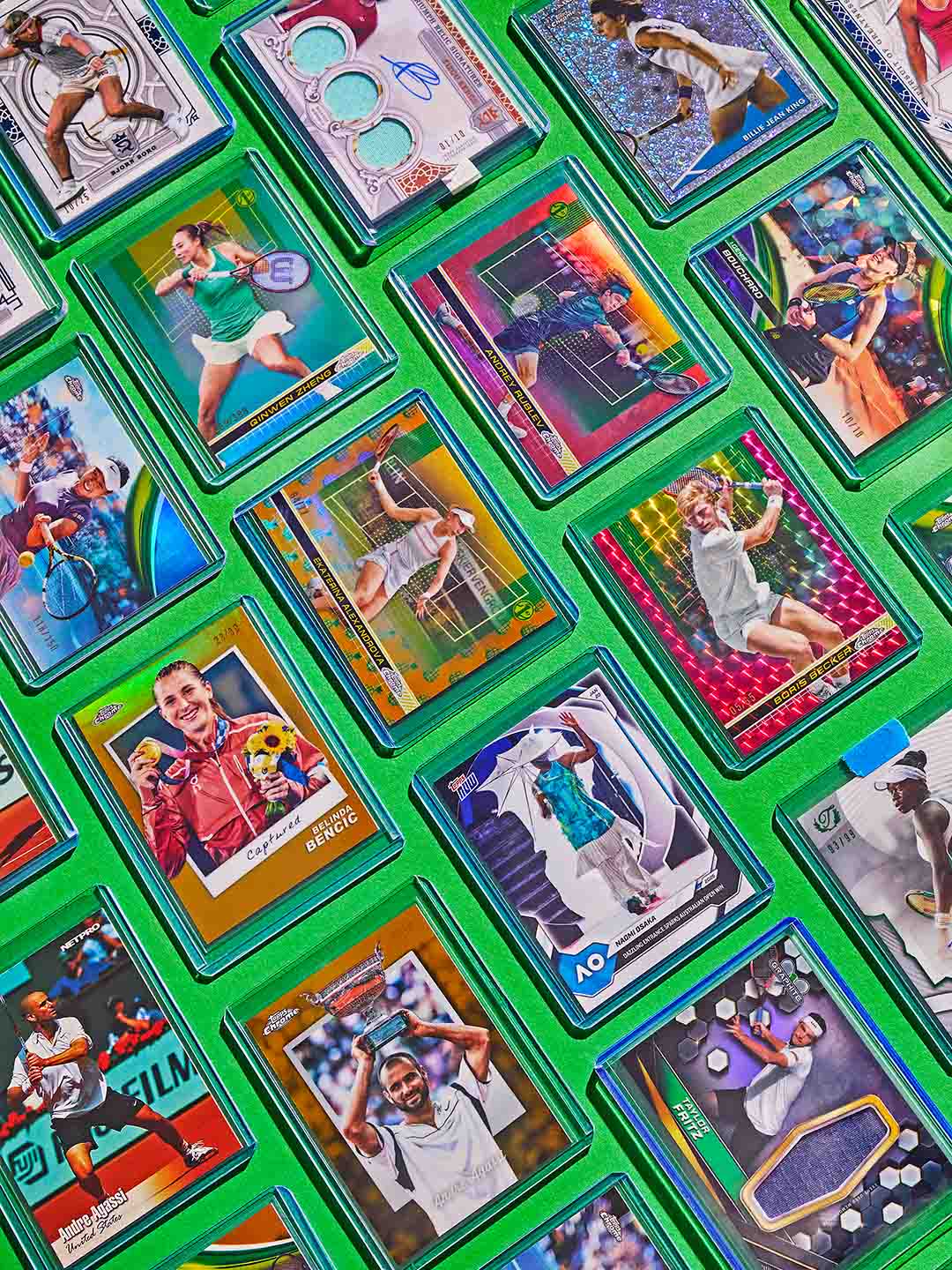
Around that same time, I became aware that Topps was preparing to release its 2024 Chrome Tennis set. For me, it was the perfect confluence: a sport I was investing in and a hobby that had just resurfaced.
Coming back to the trading card world after all that time felt like showing up at a new school halfway through the year. You recognize a few faces, but the rules have changed. Everyone speaks a language you don’t quite understand yet. I knew what cards were. I just didn’t know how the modern hobby worked.
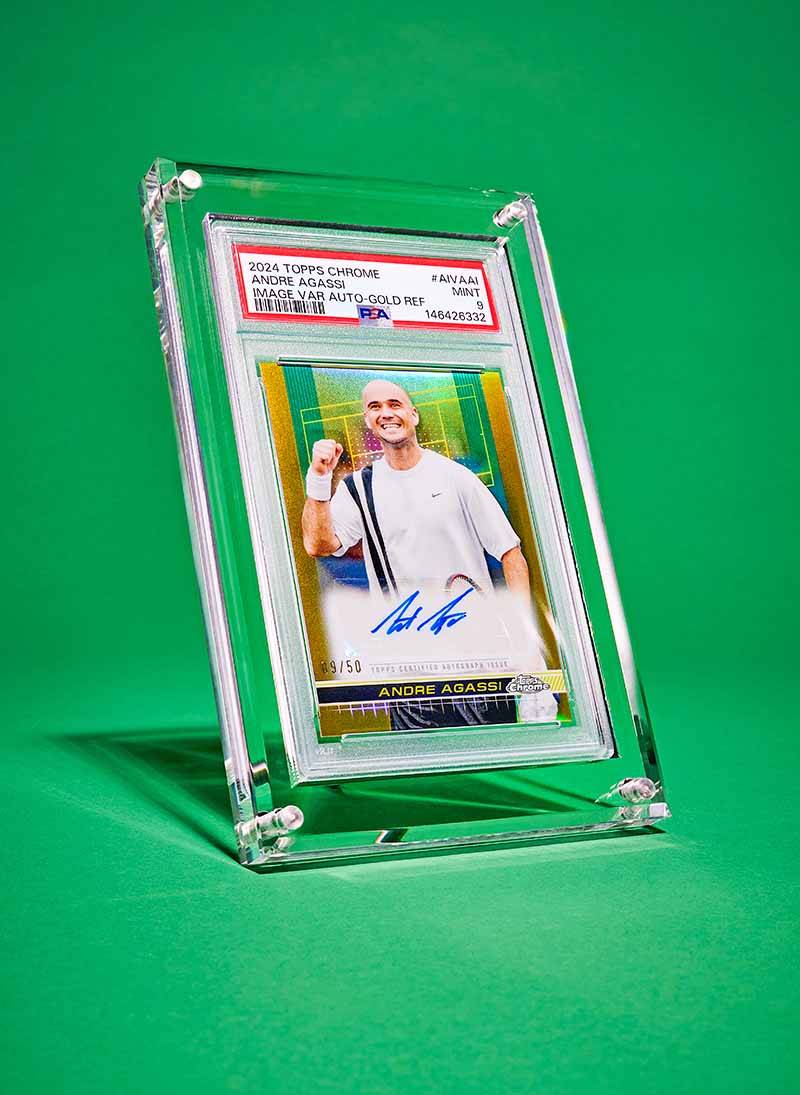
It wasn’t until I attended Fanatics Fest about a month before the 2024 Chrome Tennis release that I grasped how small the tennis market truly was. Everyone was chasing Jordan, Kobe, and Wembanyama. I was looking for Agassi, Alcaraz, and Serena. Among hundreds of dealers and tens of thousands of cards, I spotted maybe a dozen tennis cards total. Tennis felt like a rounding error, probably less than 1 percent of the market. I felt slightly out of place but oddly comfortable there.
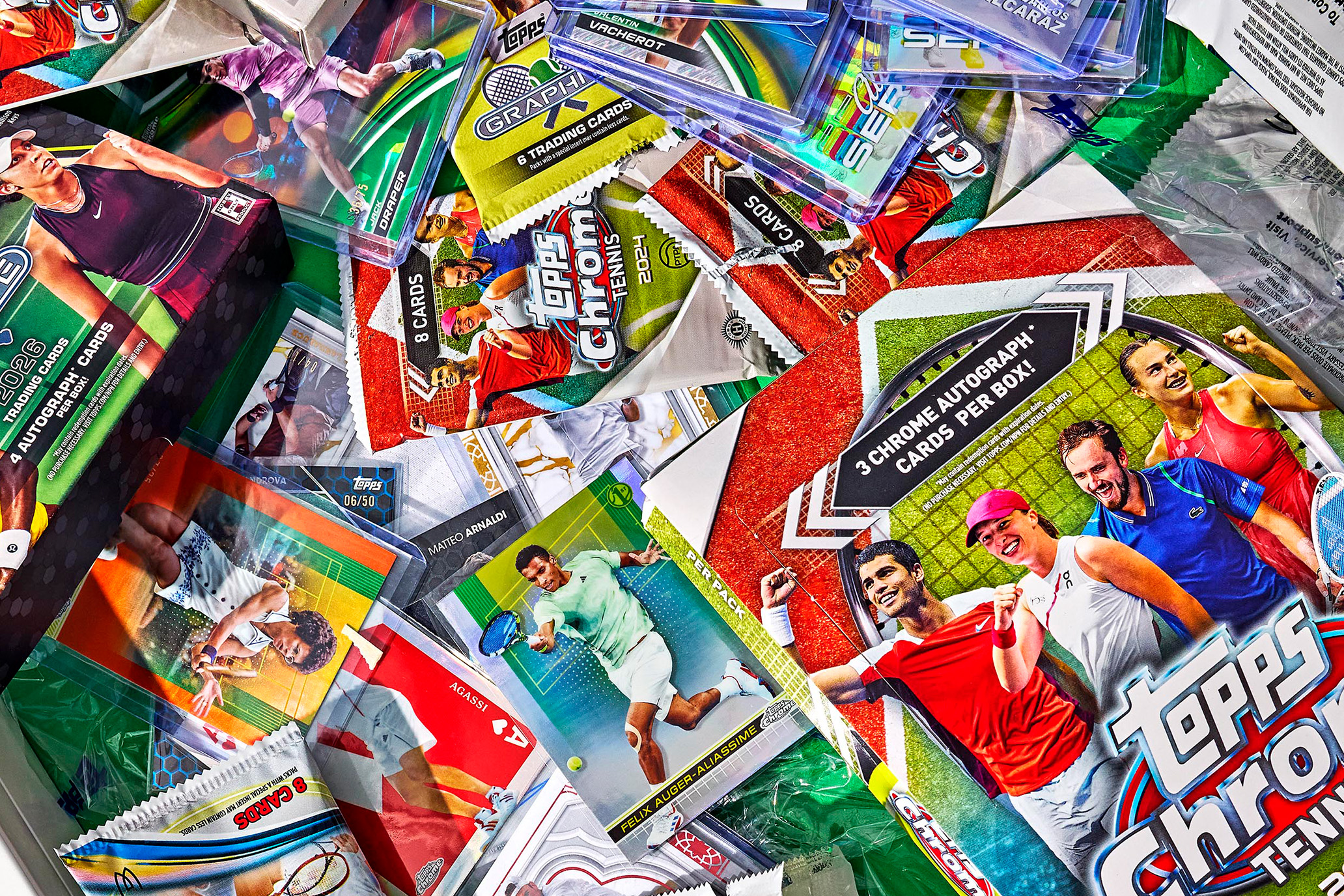
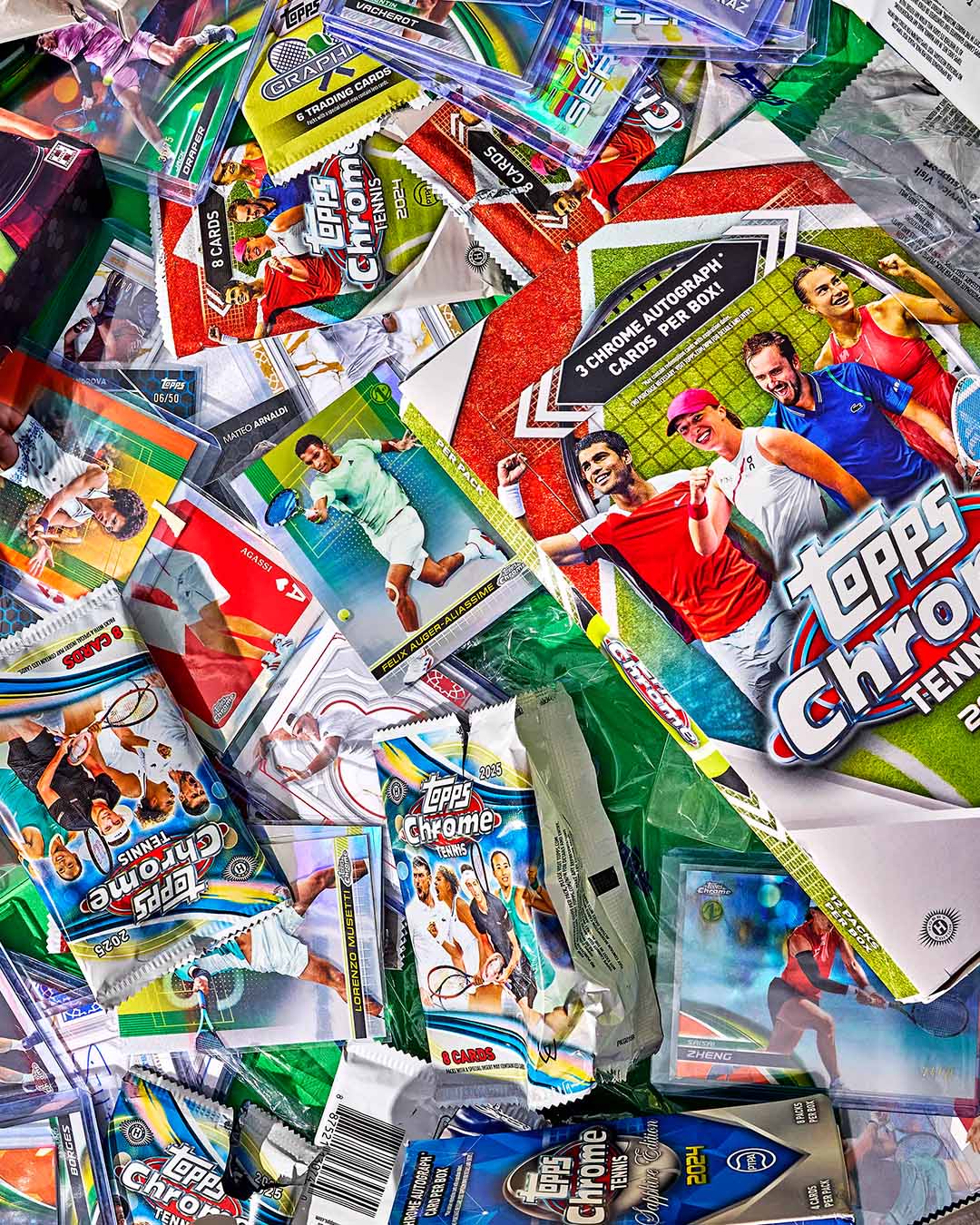
When Topps released Chrome Tennis in 2024, I bought a single box and opened it with my wife. That familiar anticipation returned. One by one we sifted through the packs and pulled a Carlos Alcaraz Pineapple Refractor numbered to 77. I felt that same quiet thrill.
That pull didn’t send me chasing the next card. It made me curious about what came before this.
We were binge-watching The Tudors when a scene at Hampton Court showed King Henry VIII ferociously playing royal tennis. Seeing the sport woven so casually into that world and time period reframed it for me. It wasn’t being introduced or explained. It was already embedded in culture long before it was something you could buy, sell, or collect.
As I started tracing the history of tennis and trading cards, I realized tennis doesn’t enter the card world the way other sports do. It shows up early, disappears for long stretches, then reappears, but never quite settles.
Tennis had been depicted for centuries in drawings, paintings, and engravings, often emphasizing ritual and setting more than competition. That same visual language carried into the Victorian era, when illustrated trade cards began circulating. These were business cards first, printed with company information on one side and illustrated scenes on the other, designed to catch the eye and suggest a certain kind of lifestyle. Tennis appeared there not as a sport to follow, but as a symbol of leisure and refinement.
Modern card collecting as we know it took shape in the late 19th century when cigarette packs included cardboard stiffeners that doubled as advertisements. Baseball and boxing thrived in that system, offering recurring rivalries and familiar stars that rewarded repetition. Tennis was present but often folded into “sports and pastimes” sets alongside golf, fencing, and croquet.
After World War II, gum replaced tobacco and children became the primary audience for collecting. Baseball and boxing cards continued to surge, and tennis moved elsewhere, into magazines, posters, souvenirs, and television.
Even during the Open Era, beginning in 1968, the pattern didn’t fully shift. Tennis had global exposure and stars like Bjorn Borg, Billie Jean King, and Arthur Ashe. On paper, it should have been the sport’s moment to establish a lasting home in cards. Instead, players appeared in international sticker albums, oversize cards, and occasional multisport sets. There was no consistent annual rhythm. No long-term home.
While other sports cards continued to build momentum through the decade, that inconsistent pattern around tennis cards carried into the 1980s.
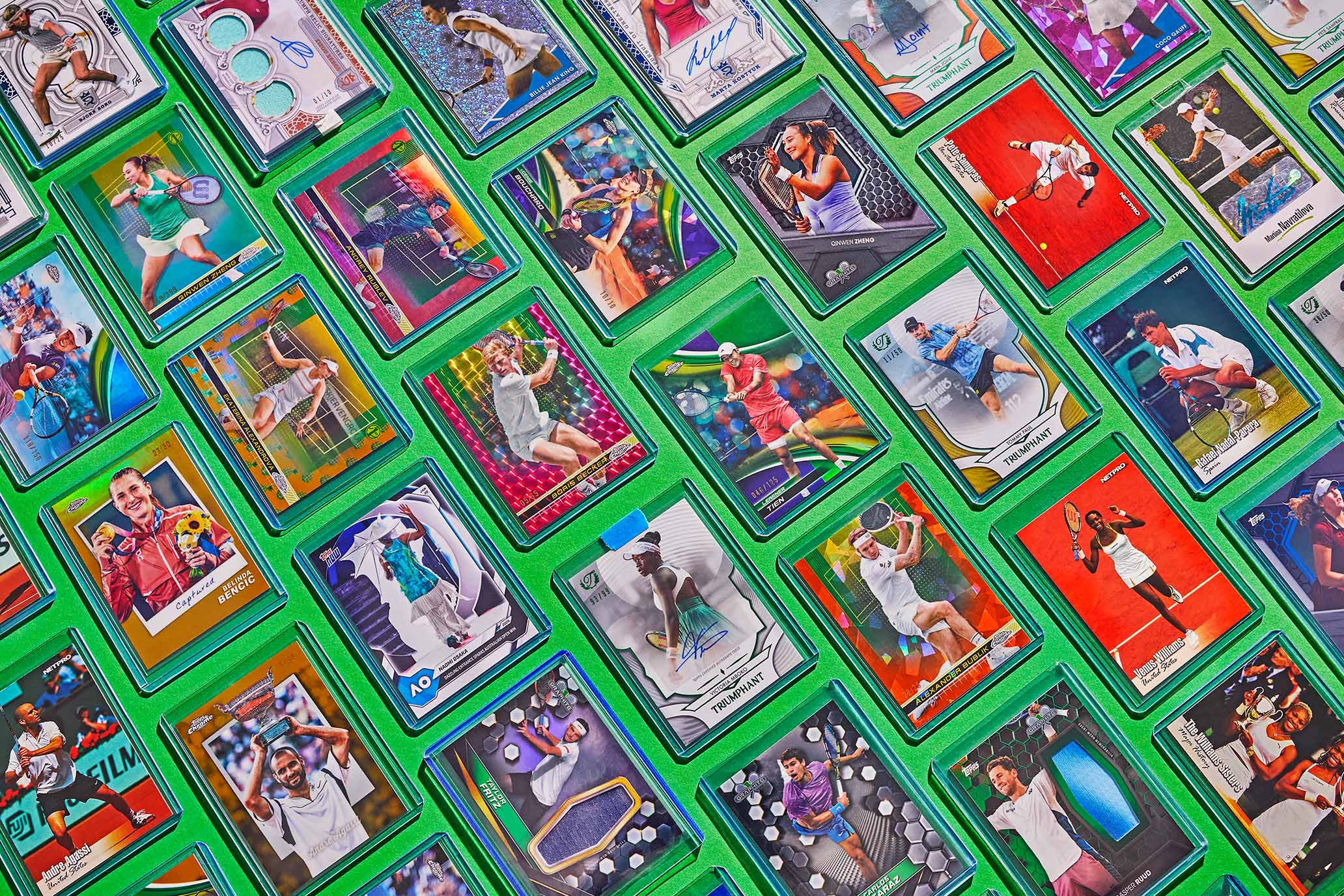
It wasn’t until 1991 that NetPro arrived, widely considered the first officially licensed, tennis-specific card set in the United States. It was a meaningful foothold, but the scale was modest and the releases were sporadic, especially compared with the machinery behind brands like Topps and Upper Deck.
All of this unfolded during the ’90s junk wax era, when overproduction flooded the market and collapsed value. Tennis, already smaller and less established, was trying to find its footing in chaos.
That fragility kept finding its way into collecting through side doors. One of the most culturally significant tennis “rookie” cards of the ’90s era didn’t come from a trading card company at all. It came from issues of Sports Illustrated for Kids, where perforated card inserts were bound directly into the magazine. They weren’t designed to be precious. Decades later, a pristine Serena Williams rookie from those pages would sell for over $100,000 at auction.
When NetPro returned in 2003, the checklist felt like a catch-up, with contemporary greats like Serena and Venus Williams, Roger Federer, Rafael Nadal, and Andy Roddick alongside established names like Andre Agassi and Pete Sampras. It wasn’t just another release. It felt like tennis trying to account for everything that had happened while cards had gone quiet.
But even that surge didn’t last. NetPro faded, and Ace Authentic emerged in the mid-2000s with limited, autograph-driven releases for a niche audience before being acquired by Leaf Trading Cards in 2012. Under Leaf, tennis continued through a mix of stand-alone and multisport products. It survived. It just never felt like it was accelerating.
A new chapter began in 2019 when Topps collaborated with the International Tennis Hall of Fame on a one-off 50-card set. It was thoughtful and celebratory but rooted in legacy rather than building something forward-looking.
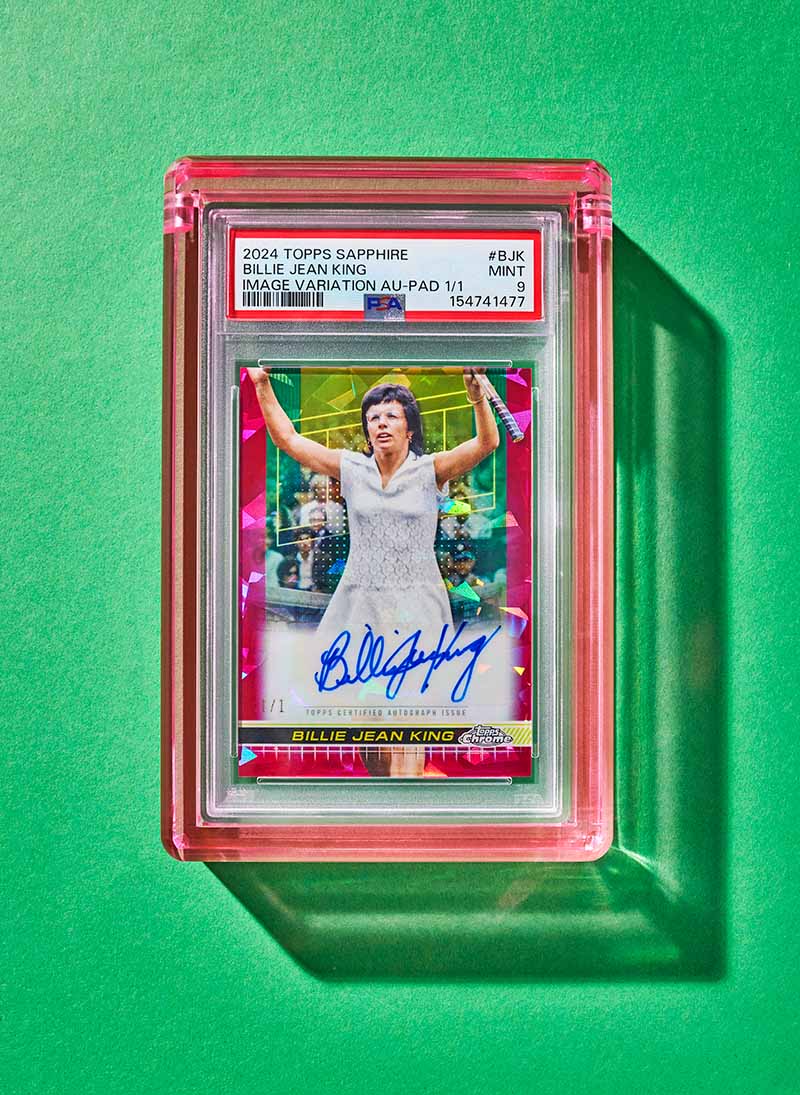
But Topps Chrome changed that.
Chrome has long been one of Topps’ core annual releases across sports like baseball, basketball, and soccer. It debuted in 1996, growing directly out of 1993’s Topps Finest, the chromium-heavy, refractor-driven set that shaped my earliest memories of collecting. Decades later, I realized the product pulling me back in shared the same foundation as the one that first hooked me.
Topps officially announced its first Chrome Tennis release for 2021 with a full checklist featuring rising stars, Hall of Famers, inserts, numbered parallels, and autographs. All the visual and structural language that card collectors understood. But the set was delayed and didn’t release until 2023.
The real shift came in 2024.
For the first time, tennis cards didn’t feel like a side experiment. Chrome arrived on time, fully realized and clearly built to return. It felt intentional. Maybe that’s why people began paying attention in a different way.
That shift became visible across the market.
“Tennis cards are still a relatively niche category, but the market has grown considerably over the last two years,” says Aaron Nowak, founder of SlabStox, a sports card market reporting company and one of the largest online breakers of Topps tennis products. “Between Carlos Alcaraz’s rise and Topps’ product expansion, there’s been clear investment into the category.”
Soon after, tennis expanded deeper into Topps’ ecosystem with releases like Sapphire, Triumphant, Graphite, and Royalty, increasingly premium sets of the brand’s annual offerings. It was a signal that tennis wasn’t just being included. It was being taken seriously.
In 2025, a one-of-one Royalty autographed card of Carlos Alcaraz featuring the actual racquet knob from his Indian Wells win sold for $222,000 at auction. In tennis card terms, that’s a watershed moment. In hobby terms, it’s still early, especially when compared with long-established cards that have sold for more than $12 million. But every market starts somewhere.
Even with the recent momentum, you can still see the residue of that uneven history. Tennis cards are still often buried under “Other Sports” across major websites and official platforms. From tobacco inserts to modern Chrome releases, tennis has repeatedly been placed at the margins. That categorization is not just cosmetic. It reflects how the sport has been treated in the hobby for more than a century.
And yet, the shift feels real.
The 2025 Chrome release arrived in February of 2026 with a 300-card checklist, something that would have felt unthinkable not long ago. New collectors are joining, conversations are expanding, values are climbing, and the energy is building.
Tennis also behaves differently from other sports in the hobby.
“It’s one of the only categories where men’s and women’s players are combined into the same product, and in many cases, the women are actually driving the market,” says Nowak. “Players like Sabalenka, Gauff, and Swiatek often outsell most of the men.”
“The market also moves faster. One deep run at a Grand Slam can shift prices almost overnight, which you don’t see as often elsewhere,” he says.
Tennis cards don’t feel like the continuation of an uninterrupted tradition. They feel like the beginning of something that arrived late and is finally carving out space in a sea of cardboard.
What makes this moment different is that we’re stepping into it while it’s still taking shape.
“We’ve only seen a small percentage of the global tennis audience engage with cards so far,” Nowak says. “There’s a lot of room for this to grow.”
A few years ago, I didn’t know a single tennis card existed.
Now there are hundreds in my collection: signed Carlos Alcaraz, Aryna Sabalenka, Novak Djokovic, Frances Tiafoe, Tommy Paul, greats like Billie Jean King and Bjorn Borg, and young standouts like Mirra Andreeva and Joao Fonseca. Players I follow week after week, investing in their stories as they unfold, still catching myself looking for that shimmer in the corner of a freshly opened pack.
That’s what collecting is. A small physical act of belief.
And right now, tennis feels like something worth believing in.
For the first time, tennis cards don’t feel temporary.
They feel like they’re beginning to stay.
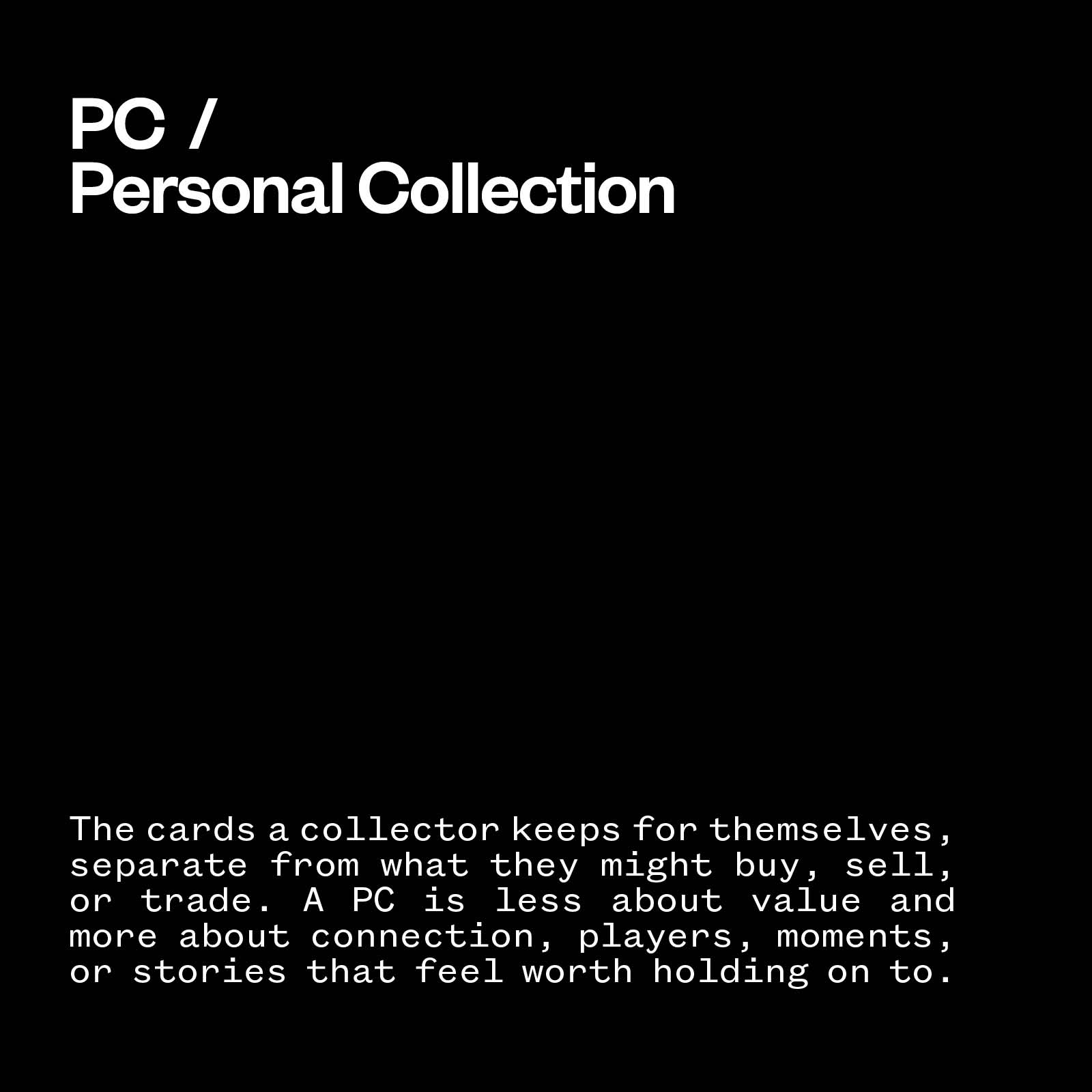
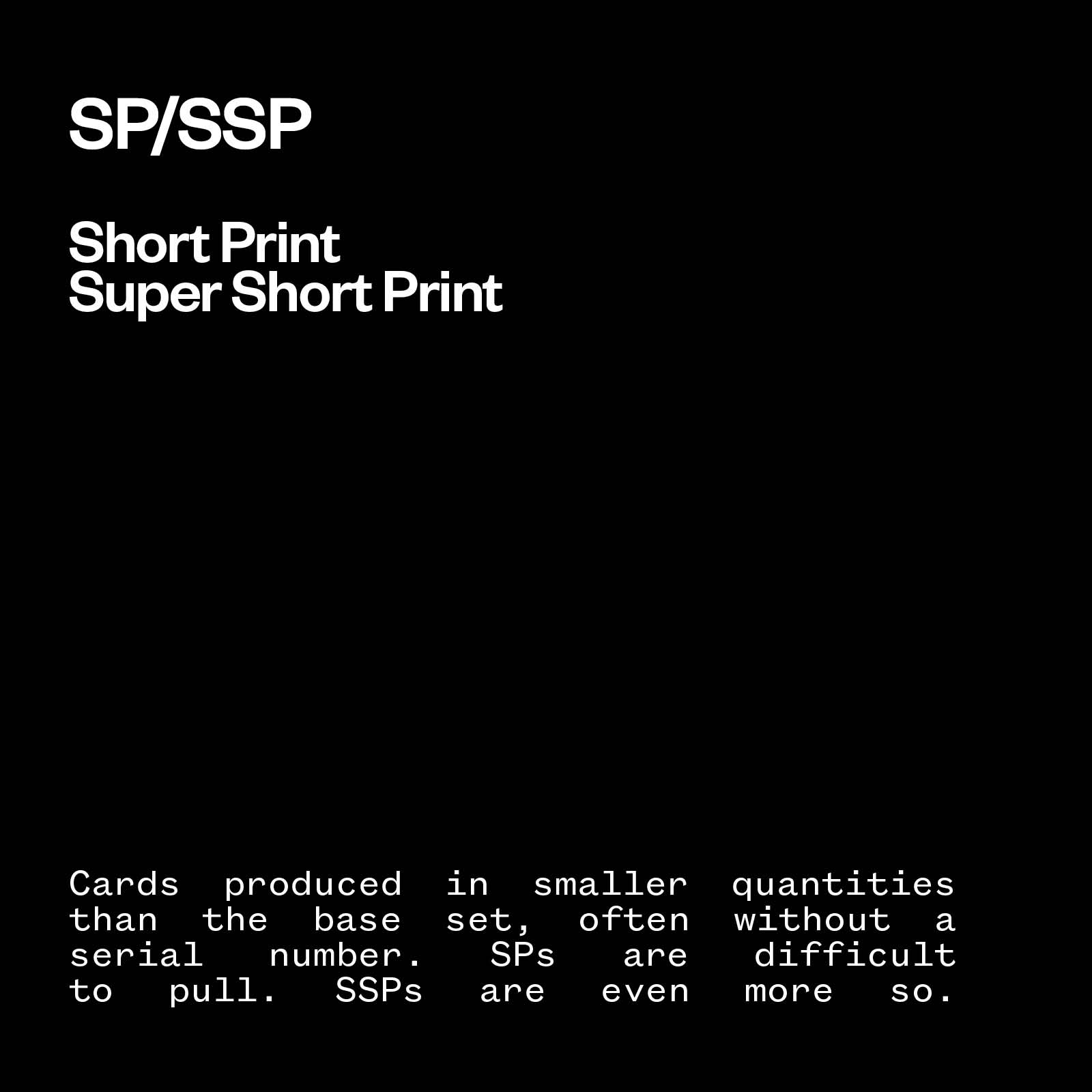
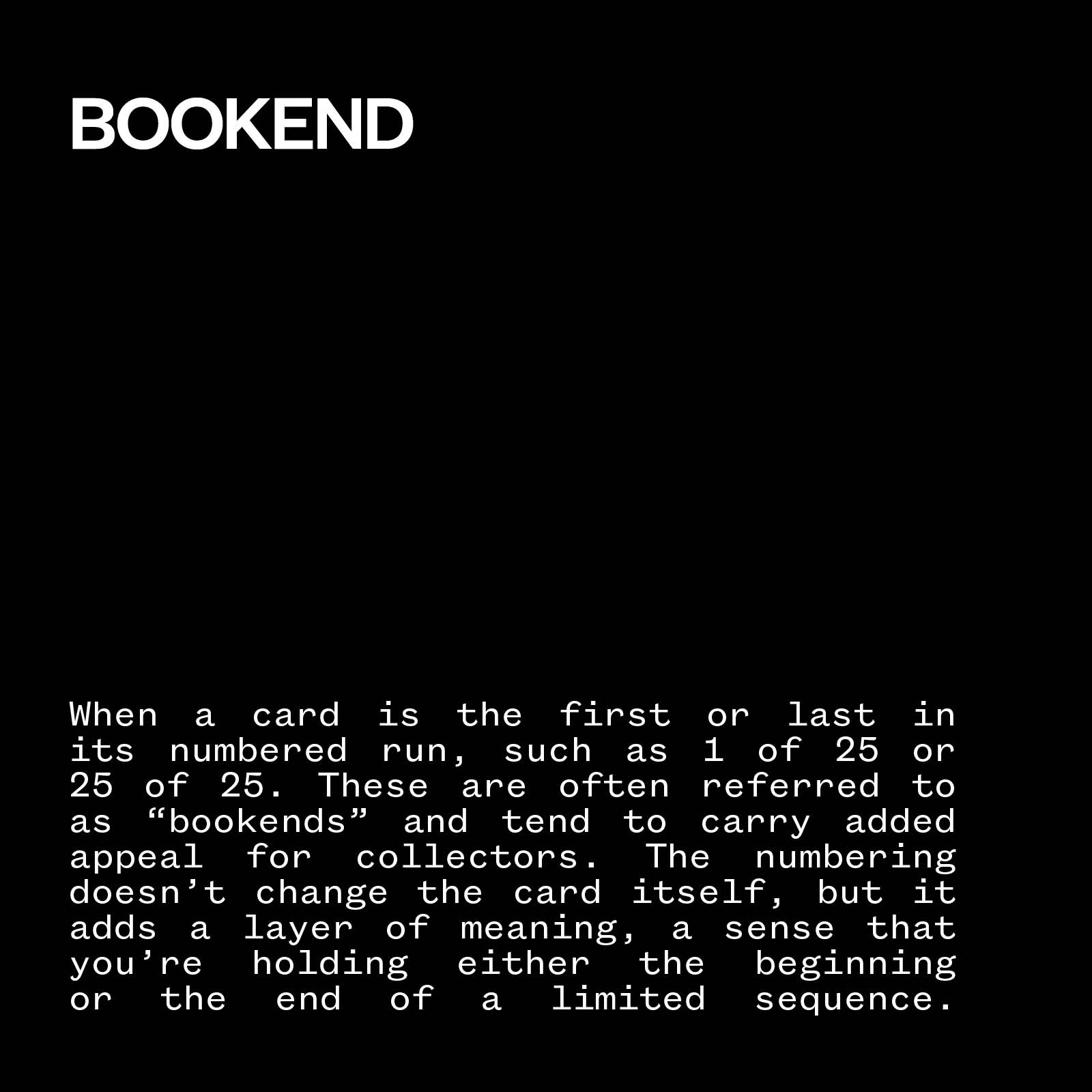
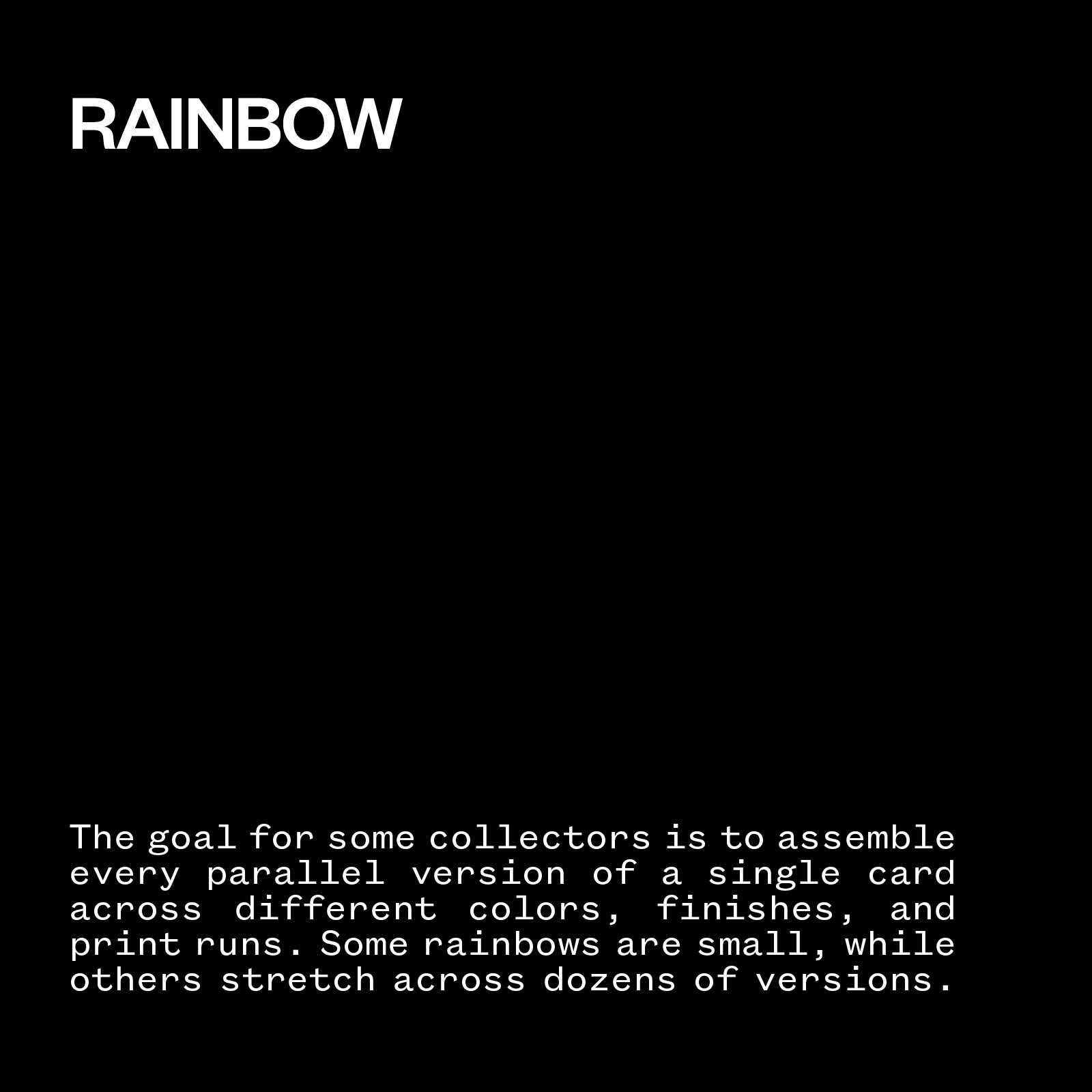
SPORTS CARD GLOSSARY



SPORTS CARD GLOSSARY