The Torchbearer
The Torchbearer
Review: "The Zina Effect"
Review: "The Zina Effect"
By Takashi WilliamsOct. 1, 2026
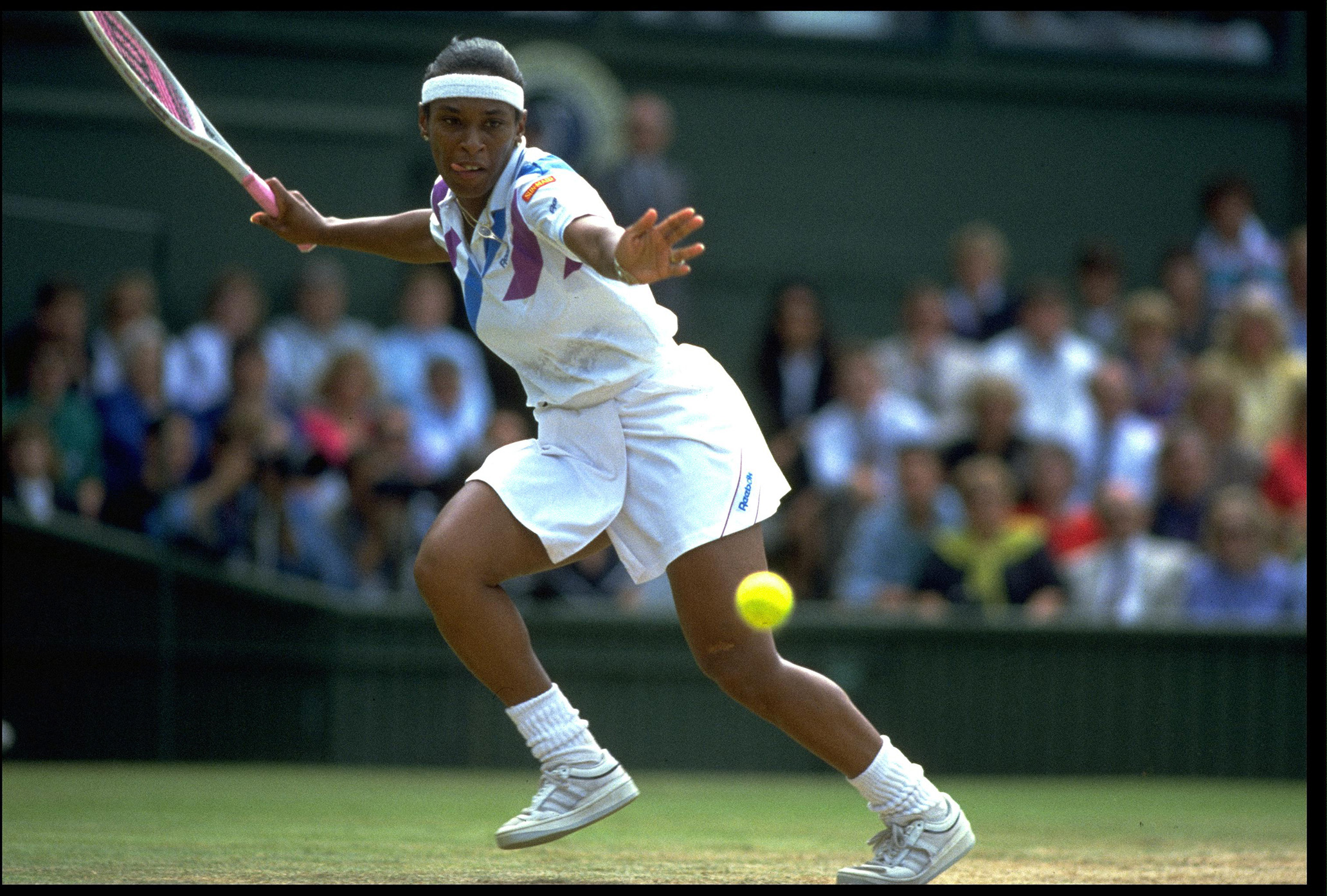
Zina Garrison during her run to the Wimbledon final in 1990. // Getty
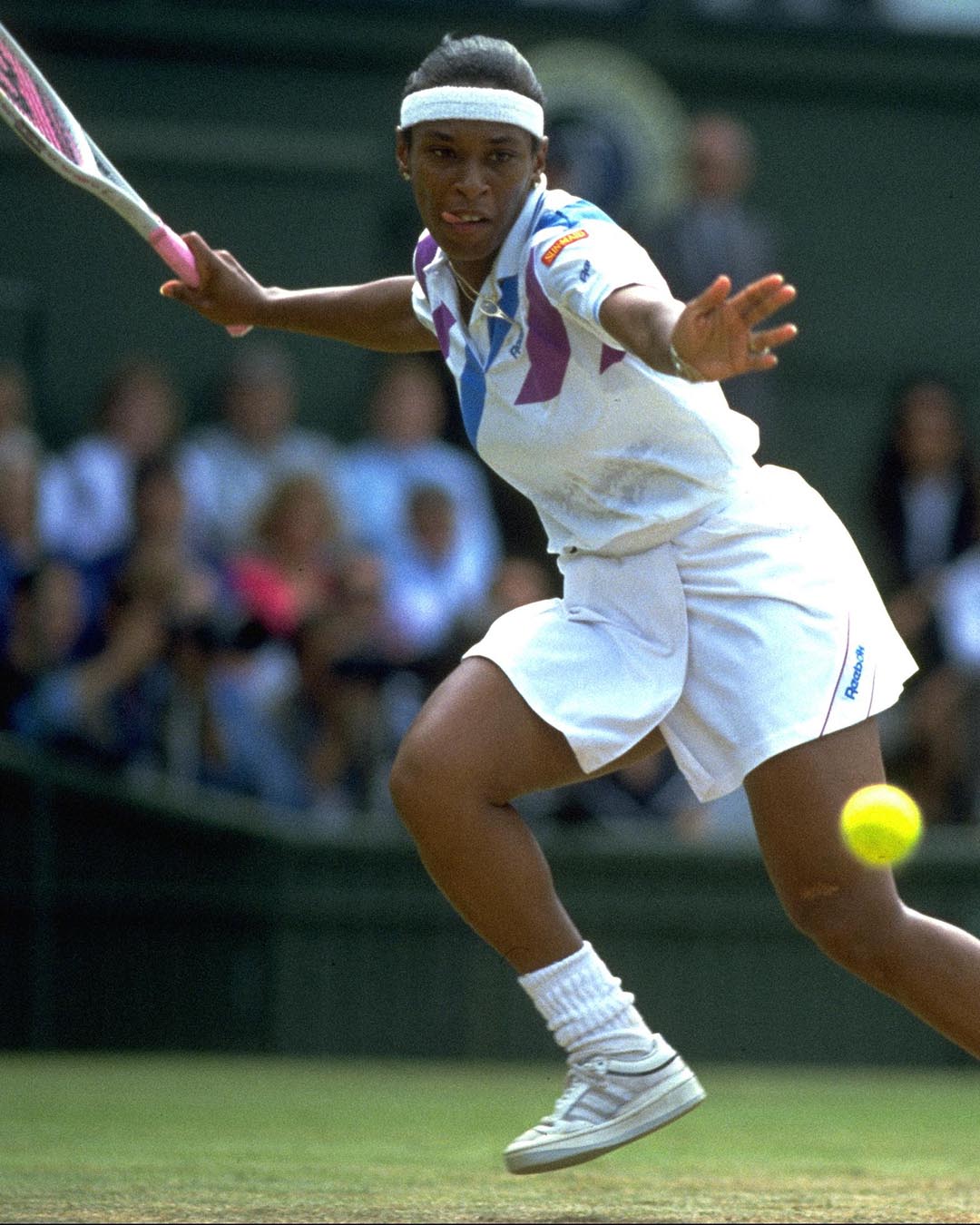
Zina Garrison during her run to the Wimbledon final in 1990. // Getty
On Feb. 6, 1993, the tennis world was devastated to lose one of its greatest champions far too soon. After five strenuous years battling AIDS/HIV, Arthur Ashe passed away from AIDS-related pneumonia. Ashe was only 49 years old. His untimely death left not only a void in the sport, but an even larger expanse in the world of Black tennis.
With him gone, who will carry the torch? Perhaps the second-ever Black man to win a Slam and a former protégé of Arthur’s in Yannick Noah. A young MaliVai Washington showed promise. Or maybe the space should be left vacant until a generation produces a Black man worthy of the mantle—a player who can display the qualities Ashe did, not only on the tennis court, but far away from it as well.
Jeanne Moutoussamy-Ashe, Arthur’s wife of 16 years, thought otherwise.
“Now the torch has been passed towards you to put on the wisdom to the younger Black kids,” Zina Garrison recalls Jeanne telling her over the phone.
Her reaction?
“I don’t want that! I’m not ready.”
Garrison was by far one of the most successful Black players—male or female—of her generation. The Texas native boasts a gold and bronze Olympic medal, 14 singles tour-level titles, 20 doubles tour-level titles, three Grand Slam mixed-doubles titles, and a career-high ranking of No. 4 in the world. And still, Garrison didn’t know if she was the one to fill that vacancy. A role that takes into account so much more than the amount of trophies lifted in a career. It’s more so about how those earned trophies can be used as a wedge to keep doors open for others like you.
Jeanne reassuringly replied, “Yes, you are.” Two weeks later, Zina Garrison assumed the role and has relished the responsibility ever since.
Available on TennisChannel.com, its app counterpart and Amazon Prime Video, the latest addition to the Tennis Story vault explores Zina Garrison’s career and impact through the directorial lens of Vashni Korin. The short-form documentary succeeds in not only giving a legend from the past her flowers, but linking her impact with the greats after her.
Venus and Serena Williams? Both coached and influenced by Garrison. Even a couple generations after the Williams sisters, Coco Gauff—the executive producer of this project—asserts in her opening narration that “without [Zina Garrison], we don’t have me for sure.”
The doc begins with Gauff listing the aforementioned accomplishments of a woman she considers to be “one of the founding mothers of Black tennis.” She falsely attributes “two glorious Olympic gold medals” to Garrison, but hey, a medal’s a medal. Nonetheless, her appraisals of Garrison’s significance in the sport could not be more spot-on. Before even reaching the tour, Garrison was breaking barriers as the first Black junior World No.1.
After Gauff, Garrison’s introduction comes with a surprising admission that she never wanted to be No. 1.
So many tennis documentaries and books cover the pain, sacrifice, and determination involved in the pursuit of becoming the greatest tennis player in the world. The Wolf in Winter provides fans with scenes of Novak Djokovic, a father of two, leaving his wife and kids en route to Grand Slam events. Netflix’s Rafa reveals to us that the 22-time Grand Slam champ endured severe bouts of anxiety and essentially played on a numb foot for the latter stages of his career. There is even a current series on Tennis Channel highlighting the stories of all 30 men who have been World No. 1 since the ATP rankings were introduced in 1973.
For Garrison, these boundaries and sacrifices were still present. However, they differed from those faced by players such as Djokovic and Nadal.
She ponders aloud what her career would have been like if she didn’t suffer from bulimia for the majority of her career. Maybe she would have been more successful if she didn’t feel as lonely on tour due to being one of the few women of her complexion competing. She openly discusses the feelings of isolation that came from major sporting brands not blinking an eye at a top American due to her lack of “blue eyes and blonde hair.”
It wasn’t until the night before her 1990 Wimbledon singles final that she received an endorsement deal.
The doc makes it clear that as great as Garrison was on-court, there is an additional aspect that must be taken into account when evaluating the careers of Black players like herself: the mental and emotional effects of being the only one. More candidly, the hurdles that are present for a Zina Garrison or a Coco Gauff are not present for a Novak Djokovic or a Rafael Nadal, regardless of how deserving they all are of their respective sporting achievements.
Arthur Ashe surely felt it during his career. Althea Gibson faced the reality of having to be twice as good because of these hurdles, telling a 15-year-old Garrison when they first met that she “wasn’t working hard enough.” Garrison felt similarly, and as a result prioritized being No. 1 in another regard.
“I was in a world where I couldn’t say too much or I couldn’t do too much. But I always wanted to be No. 1 as far as giving back to my community, because my community gave back so much to me,” she explained.
The stigma is still present in the tennis world, but it’s gotten better. There is more representation and more opportunities. The documentary sifts through scenes of Garrison coaching young Black girls at her own home base of the Zina Garrison Academy, watching Serena’s comeback at Wimbledon earlier this year, and even gardening with them as well.
Crediting the Williams sisters for this, tennis is now a space where even the executive producer of this film has been given a platform to highlight careers like Garrison’s. More personally for Gauff, her career and success are a testament to all the sacrifices made by Garrison and those before her. And with this success follows the expectations Jeanne Ashe had of Zina Garrison all those years ago. The torch must always be passed. And instead of a hesitant week or two when that question is posed of who will carry the torch next, it seems as though the two-time Grand Slam champion and entrepreneur may already have a hand on it as we speak.

PURE, ORIGINAL TENNIS — SIGN UP!
RECOMMENDED
Postcard from the Japan Open
JAPAN OPEN