Theatre of Pain
Theatre of Pain
Review: Netflix’s “Rafa”
Review: Netflix’s “Rafa”
By Owen LewisJun 2, 2026
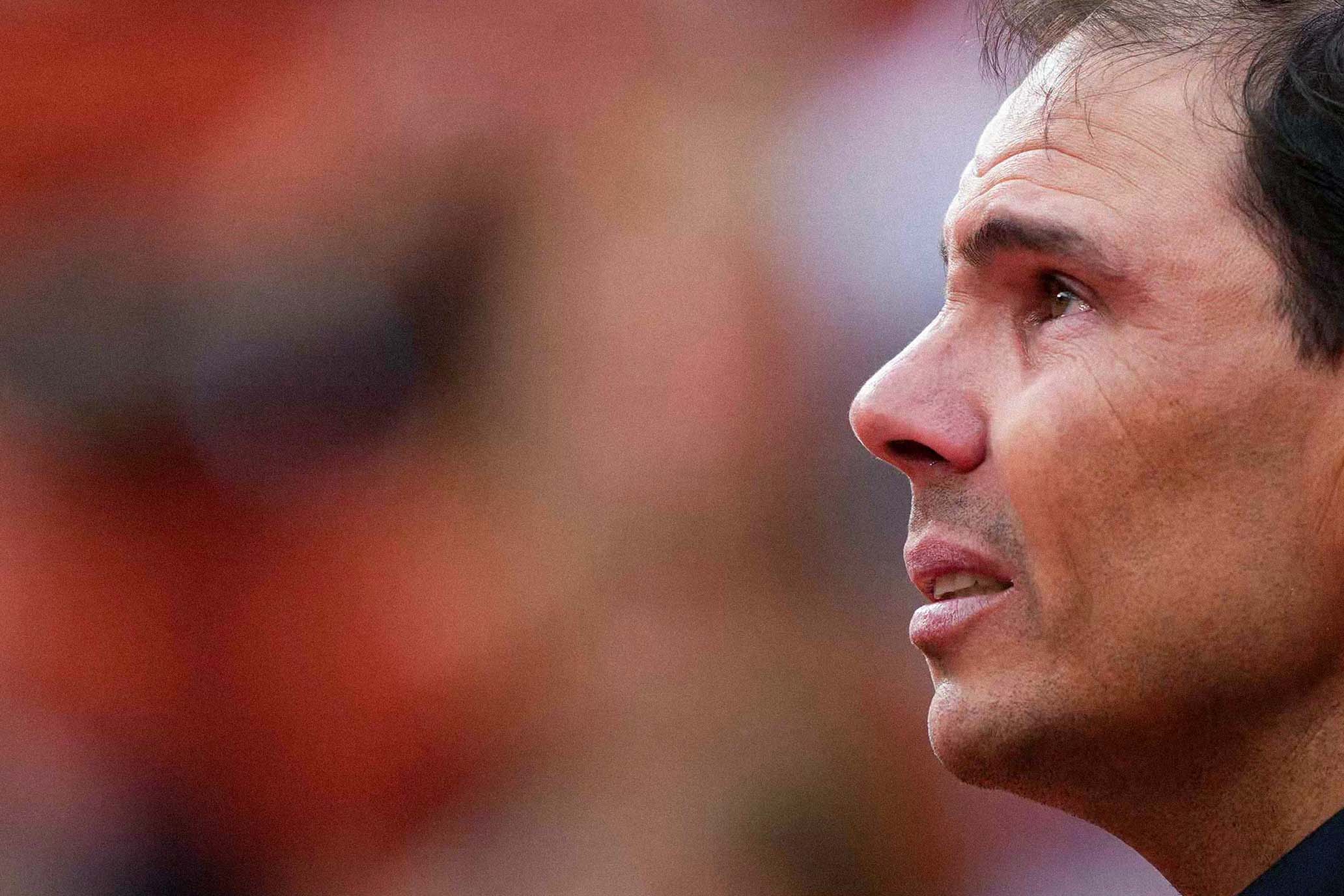
Rafa at a ceremony celebrating his accomplishments at Roland-Garros last year. // Getty
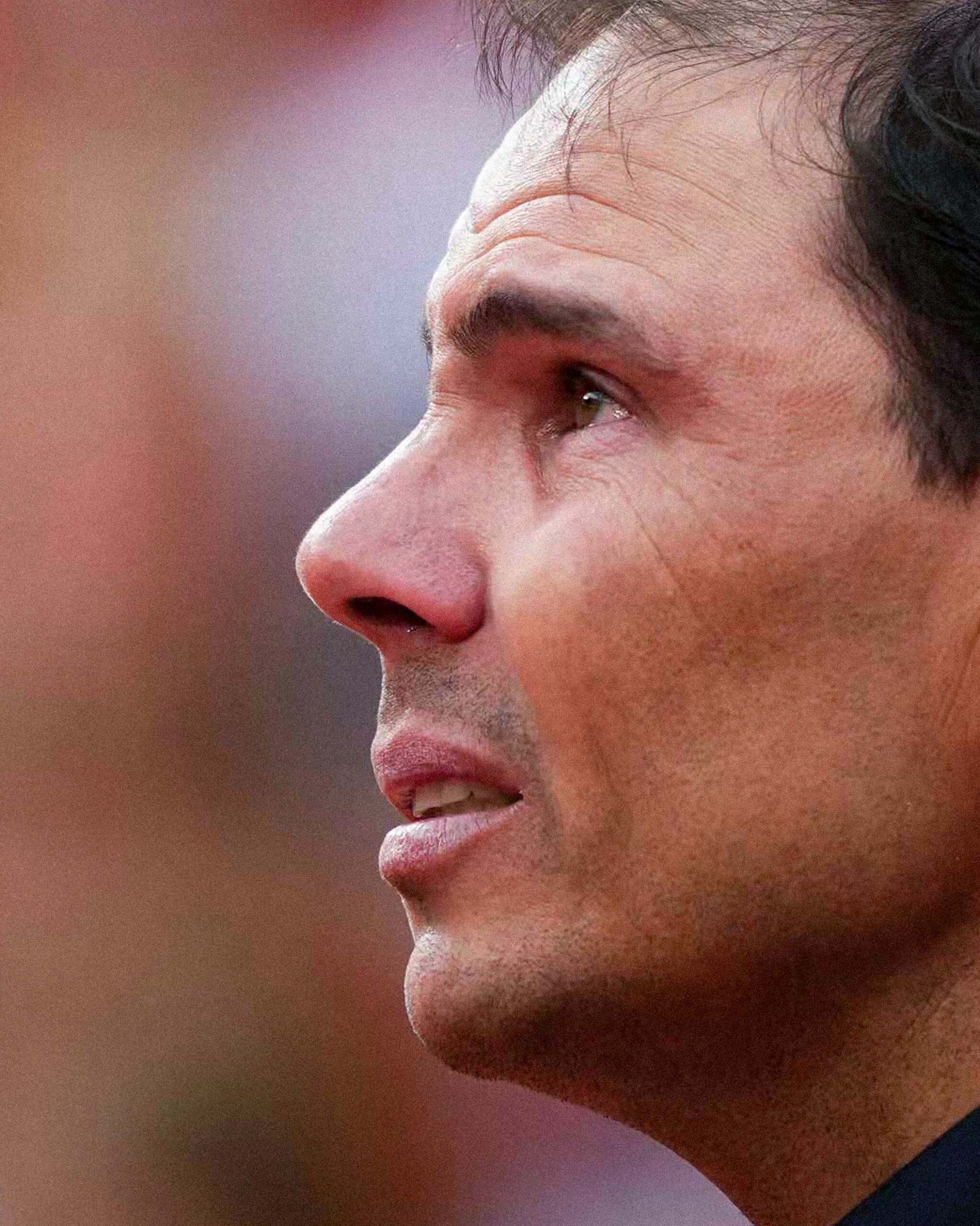
Rafa at a ceremony celebrating his accomplishments at Roland-Garros last year. // Getty
In 2013, Rafael Nadal returned to the ATP Tour after a knee injury forced him into an eight-month absence. He proceeded to win São Paulo, Acapulco, Indian Wells, Madrid, Rome, Roland-Garros, Montreal, Cincinnati, and the US Open. He wrestled the No. 1 ranking away from Novak Djokovic. You could make the case that he’s never played better. His forehand was blindingly aggressive, he hit his backhand bigger than usual, and his top-end speed wasn’t far off from his capri-pants days in the 2000s. Some added context on that season from the new Netflix documentary Rafa: Nadal decided unilaterally to go to Indian Wells after a doctor told him it would be unwise. He popped anti-inflammatories like candy because his body hadn’t really healed. He took those pills against the wishes of his physiotherapist, and he took enough to bore two small holes in his intestines. Nadal’s tennis has never looked easy. He couldn’t play two points without drenching himself in sweat, and his injury absences were rarely surprising given the ways he contorted and raced his muscle-bound body around every court surface. But it’s impossible to watch this documentary and not be startled at the sheer amount of pain Nadal absorbed while authoring his career.
Across four episodes, director Zach Heinzerling efficiently establishes a link between Nadal’s upbringing and his tendencies to play through agony to a fault. Rafa’s uncle Toni trained him from childhood until 2017, and his methods were often brutal. “For the first hour of training, no water,” Toni reflects for the Netflix cams with a sly smile. At one youth tournament, Nadal fell and broke his pinkie finger. When Toni encouraged him to play on, Rafa won the tournament but had to wear a cast for a month afterward. (Keen Nadal acolytes will recognize this anecdote as reheated leftovers from Rafa’s 2010 autobiography of the same name.) Rafa confesses that there was one time he couldn’t meet Toni’s demands, and he fled the court crying. We’re left to wonder what pushed him there.
It’s clear that operating under constant stress helped prepare Rafa for the pressure of a match. “A little extra pressure,” he says, “has always been good for me.” We know. We’ve seen it in how he often failed to serve a match out on his first opportunity but always converted the second. In his nature as an overwhelming physical force nonetheless constantly unsure of himself. In his 22–8 record in major finals. In the times he’d double-fault or make a bad ground-stroke error at love–30, then play five perfect points to hold. In the ways he’d weather an opponent’s most vicious baseline onslaught, then, when they’d hit their best shot of the rally, snap off a passing winner from an impossibly remote spot on the court.
Yet it’s equally obvious that while Toni hammered Nadal’s mentality into hard steel, he simultaneously weakened and traumatized areas around the metal. Rafa’s notorious routines sprouted as a way for him to feel safe under all the stress; when he tried to get rid of them, he couldn’t. He attributes his career-worst 2015 season to his anxiety spiking: “If I didn’t have a bottle of water in my hand…my throat would go dry, and I would choke on my own saliva.” He went to a psychiatrist. (Toni thought the solution was to work even harder on the court.) Eventually, Nadal brought Carlos Moya onto the team with the intention of him working in tandem with Toni. But his uncle withdrew from the arrangement, announcing his decision via the press rather than to his nephew. In the doc, Toni insists Nadal wouldn’t have been surprised. Even before a cut to Rafa saying he was, in fact, “a bit shocked,” the revelation that Toni seems not even to have bothered to get to know the man he molded so intensely is glaring. Then Heinzerling discards it without further examination.
The documentary shuffles between flashbacks of Nadal’s career and his tortured decision to wind his career down in 2024. He knows the end is near but still wants to play well. Just as his form begins to reappear, he gets hurt. He strains his pelvis. He presses too hard in practice and is unable to bend one of his fingers. The top of his foot sprouts a lump that looks like a second ankle bone but is soft to the touch. “I’m devastated, man,” he says after the pelvis injury. “I’m destroyed.” There follows a cut to 2005, in which Nadal’s broken foot isn’t healing properly, thanks to the Mueller-Weiss syndrome that constantly threatened to derail his career. He again uses the word “devastated.” During a segment on the 2008 Wimbledon final against Roger Federer, Nadal’s most famous triumph, Rafa announces that he thinks the path Toni put him on was the right one. In the moment, the line hits, but I spent the rest of the documentary wondering how it would have played over footage of Nadal squirming in discomfort from his latest injury on a massage table.
Rafa is better than the streamer’s failed tennis docuseries Break Point in virtually every way, but one thing they share is a total lack of regard for what the tennis-watching experience really feels like. While showing set point in the opening frame of the 2006 Wimbledon final, Heinzerling shows Federer slicing a backhand, then clumsily cuts to the follow-through on the topspin pass that he actually hit, then cuts to Federer celebrating a break point from earlier in the set. A Netflix scoreboard attempts to recap the 2007 set-by-set, with the Wimbledon scoreboard in the background tauntingly showing other scores in almost every shot. This shit is as lame as it is dishonest. Rafa attempts to reduce most of Nadal’s matches to a one-man show; the ball becomes irrelevant as soon as it leaves his racquet. His defense in his early years on tour couldn’t be an easier quality to translate into a telegenic highlight reel, but Heinzerling barely tries. Rest assured, Nadal’s capacity to suffer is well documented here; it’s just that at some point we should probably see him, I don’t know, doing the job for which he endured all that suffering.
Off court, Nadal seems cool. “You don’t notice,” he tells his wife, Maria Francisca Perello, over dessert, “but you’re at a point where you look spectacular.” Both could have melted into their meringue tart after that. While playing with his older son—adorably nicknamed Rafelet—he’s silly, childlike himself, the lines on his face receding until he better resembles his younger self. While discussing the game, Nadal talks constantly about exploring his limits, about giving himself a chance to compete, about leaving nothing in the tank. He calls himself a competitor, not a winner (he is obviously both). He repeatedly details his sadness and fatigue. There’s clearly something inside him that demands he give his all to tennis, but he looks happier when doing other things. The fundamental truth of his career is that Nadal keeps fighting to keep fighting. It’s a circular and painful enough quest that somebody should have asked him not why he fought so long but for a better description of why he likes it.
Heinzerling has succeeded in creating a gripping documentary, but at crucial moments he fails to fully explore the landscape he’s trying to chart. He’s surfaced a vital question he never ends up asking in strong enough terms: Was there a better way than repeatedly breaking your body to do this? Nadal thinks all this was worth it in episode 2 and insists it was in his speech at his Roland-Garros ceremony in 2025, depicted in episode 4. We’ve also watched him come to grips with an injury while sitting in a car, his face wilting in shock and then hardening in acceptance as if dealing with the death of a loved one. He’s mentioned that his knee was “shattered,” with a hole in the tendon, after his brilliant first half of 2012. This documentary paints the picture of a man in an abusive relationship with his own profession, and perhaps also his uncle/coach/mentor. The most satisfying explanation for why Nadal kept at it comes from physio Rafael Maymo, who describes Rafa’s “addiction” to the crowd’s cheers and fealty to suffering for the purpose of overcoming. Rafa himself hails the highs of competition via “the feeling in your stomach.” His descriptions of the lows are more evocative than the highs. This is all to say I think I’m supposed to believe Nadal when he says he chose the right path, but my gut is having trouble getting there.
“I would be very unhappy if I thought I hadn’t done everything to fight until the end,” Nadal says, finally having come to grips with his departure from tennis. “And now there is no fear. At all.” If he’d been blessed with a coach who didn’t play a part in creating that fear in the first place—if Moya had been there from the start—is it possible Rafa could have had the great career without as much of the pain? That’s a question for another documentary, but it’s a shame this one didn’t take it on after laying the foundation.
There’s a nice scene at the end of the fourth and final episode. Perello is holding their younger son (born in August 2025, so this is fairly recent), while Nadal runs around the house with Rafelet. Rafa is covering ground slowly but moving his legs at a fast cadence, pumping them up and down rapidly, with a big grin on his face. It’s a joy to see him able to move like this without visible pain, though maybe he’s just learned how to hide it. They run away from the camera into the background before Rafelet breaks away from his dad and toddles into a room whose lights are on. I’m positive it’s the last shot of the doc.
But it would have been too easy. Heinzerling cuts back to Rafa’s retirement announcement. The words are out of his mouth, the video already recorded. He just sits there, staring at the camera with pink eyes. Vale—okay— he says. There are so many emotions that could have gone into that word—catharsis, sadness, gratitude—and maybe all of them did. But I think what I hear most in his voice is exasperated fatigue. Then he gets up and leaves.