
Fatal Flaws
Fatal Flaws
Aryna Sabalenka’s yips are beginning to exert gravity over the rest of her game.
Aryna Sabalenka’s yips are beginning to exert gravity over the rest of her game.
By Owen LewisJun 23, 2026
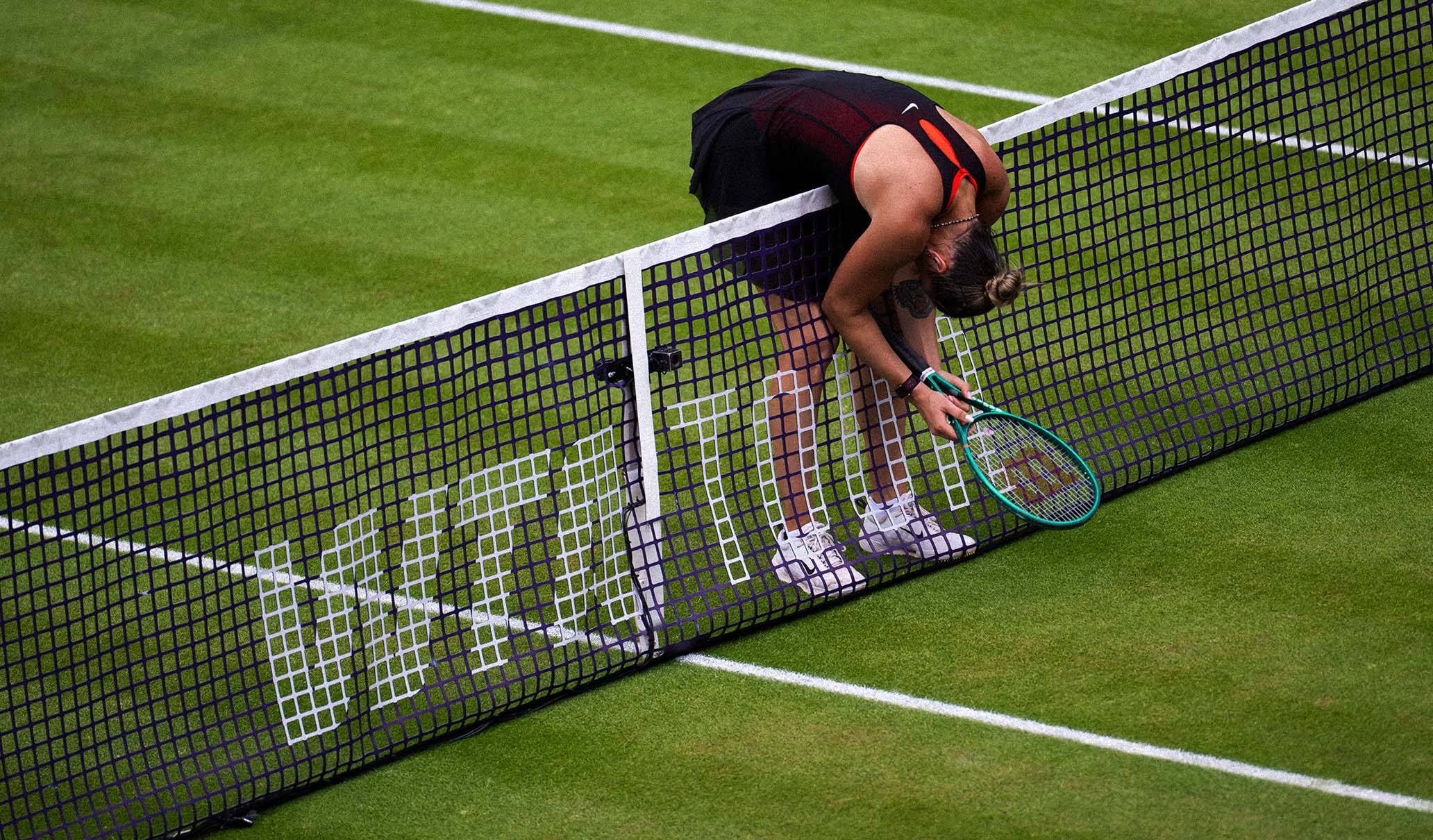
Aryna Sabalenka wilts in Berlin. // Getty
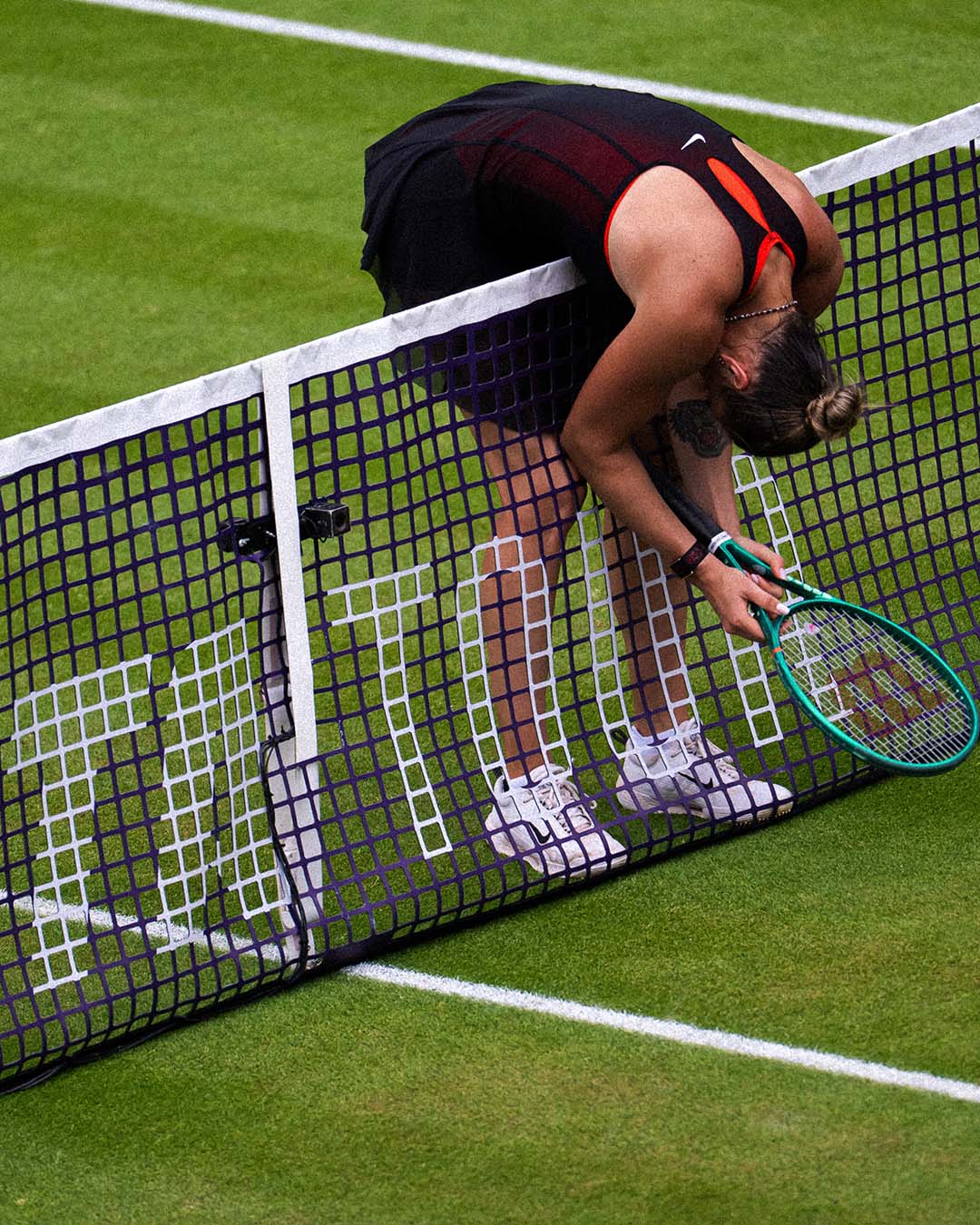
Aryna Sabalenka wilts in Berlin. // Getty
I’ve been watching Breaking Bad lately, which, as of early in the third season, seems to be a show about people doomed to die at the feet of their worst instincts. Though the fates of the protagonists are easy enough to guess, their slide into oblivion is studded with teases that they might divert toward salvation instead. One character passes up a museum date with his girlfriend in Santa Fe for a marathon meth-cooking session in the desert; he nearly ends up dying when his RV runs out of fuel. He agonizes over the mistake, but it doesn’t stop him from making plenty of similar ones over ensuing episodes. Though hopefully under less dire circumstances, I think we all know the feeling. You succumb to your vices—TV over homework, drugs over food, self over others—because it feels natural, not too different from a limb or a limp. For the characters, that the dark parts of their nature will ruin their day or week or maybe life is irrelevant next to the need to quiet their soul. They know it, I know it, and the moments that hint at them outgrowing their fates are the most frustrating parts of the show because they’re always followed by assurance that they won’t.
Naturally, the show made me think of Aryna Sabalenka.
There shouldn’t be much left to say about the world No. 1, who has maintained altitude atop the tour for 88 weeks in a row. She has a near-perfect baseline game with ground strokes immaculately poised between savagery and safety; nifty drop shots and volleys; more-than-sufficient defense; destructive returning. She also wears the groaning burden of self-sabotage, against which her immense talent fights endless battles. For years I’ve been able to see a projection of Sabalenka’s talent winning out and piloting her to the glorious land of double-digit major titles. I can see it so clearly. Then she disappears in another deciding set and makes me remember that she is who she is.
After Saturday’s 6–4, 6–7 (4), 6–0 loss to Jessica Pegula in the semifinals of the Berlin Open, Sabalenka didn’t show up to press. Though she’ll earn a fine, maybe some more jabs for being a sore loser, it’s for the best. How many thinly veiled therapy sessions with the fatally flawed, increasingly nihilistic world No. 1 can any of us take? An intrepid dictionary editor should commission Sabalenka to redefine “rock bottom” for all their future editions, because each time we think Aryna has suffered the roughest loss imaginable, she plunges to a new depth. Long iconic for her blown leads in late-round matches, Sabalenka burned a 6–2, 4–1 lead over Diana Shnaider in the Roland-Garros quarterfinals last month and ate a third-set bagel. (Her defeat from six match points up against Hailey Baptiste in Madrid barely registers at this point.) We don’t need yet another fraught group Q&A session for Sabalenka to tell us why the 6–0 disaster repeated itself against Pegula: For the first time in years, her implosions are outrunning her resilience.
The bagel sets didn’t look like catastrophes at first. In both of them, Sabalenka had chances to hold serve at 0–1. When she lost to Shnaider, she said she never recovered from her collapse in the second set. But against Pegula, Sabalenka entered the decider with momentum, taking set 2 with a kick of three straight forehand winners. And still, the eventual result was the same. At 0–3 in the third set in Berlin, Sabalenka began a must-win service game by missing a half volley. Afterward, she looked like she was on the verge of tears, completely vacant of her typical competitive rage. Pegula must have smelled blood from the tiger across the net chewing off her own paw in misery. In the 2025 US Open semifinal, Pegula outplayed Sabalenka in the deciding set, losing just four points on serve. The patient, steely version of Aryna that turned those four points into a decisive break, while fending off constant pressure on return, feels dormant. The one that won the Indian Wells final from match point down, that I thought might have found a breakthrough? Maybe it was just a stick shooting.
Sabalenka’s style oozes superiority in composition and effect. Her shots are just plain better than anybody else’s, but the way she plays is telling, too. She wants to attack, all the time. Anytime her opponent hits a winner, they’ve shown unforgivable audacity. I hit the winners, not you. The idea of a neutral rally, or trying to junkball an opponent out of the zone they’ve found themselves in, is alien, unnecessary. The way to overcome playing badly is to play better, because when she plays better she wins.
She is correct enough of the time to be a four-time major winner and a surefire Hall of Famer, and to make every major quarterfinal in sight. But it comes at the cost of losing in the same tragicomic way, again and again, with a trail of if-onlys leading up to every lost match point. The margins in best-of-three are small. Her peers are talented, and the ball takes funny bounces. (Like all those net cords that went Pegula’s way in Berlin.) Sabalenka plays with little respect for the opponent—and I don’t mean that in the concern-trolly way, that when she takes a loss gracelessly in a sport practically designed to force the ugliest emotions out of its participants, she’s committing some sort of crime against decorum. It’s simpler than that: She doesn’t believe her opponents can beat her, and in her fidelity to that belief she inadvertently ends up helping them do just that. Sabalenka should get a drink with Iga Swiatek, who continues to search for sanctuary in errant ball-bashing when a match isn’t going her way. If they can’t help each other, maybe they can harmonize on the agony of identical, avoidable losses.
Sabalenka’s efforts to escape this part of her game have seen her find various answers from others and within, not to mention a level of tennis only a couple dozen players in history can match. None of it has been an adequate fix. Sometimes a flaw is deep enough to be immune to erasure, or absorption into the parts of somebody that they like. If anything, Sabalenka’s yips are beginning to exert gravity over the rest of her game. The idea of her game curdling like Walter White’s home life is terrifying, but real. There’s nothing for her to do but keep trying to resist the pull of the void.

PURE, ORIGINAL TENNIS — SIGN UP!
RECOMMENDED
Zac Farro: Life Preserver
CULTURE & ARTS
Coco Gauff: Prophecy in Progress
ATP & WTA

Ben Shelton & Frances Tiafoe: Top Dawgs
FILM REVIEWS