The Jester is King
The Jester is King
Alejandro Davidovich Fokina summits the hill.
Alejandro Davidovich Fokina summits the hill.
By Owen LewisOct. 19, 2026
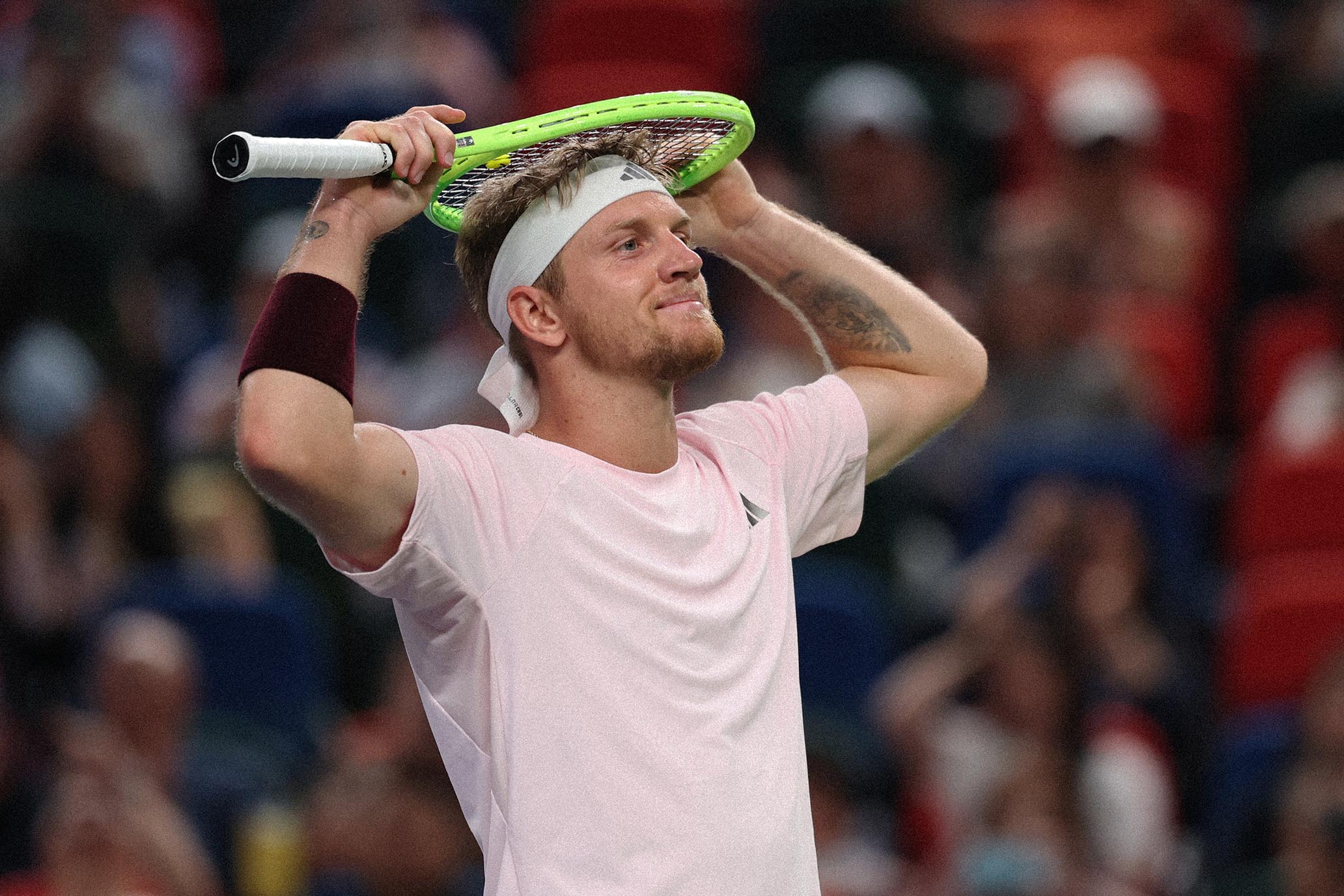
Sublime: Foki in Shanghai. // GETTY
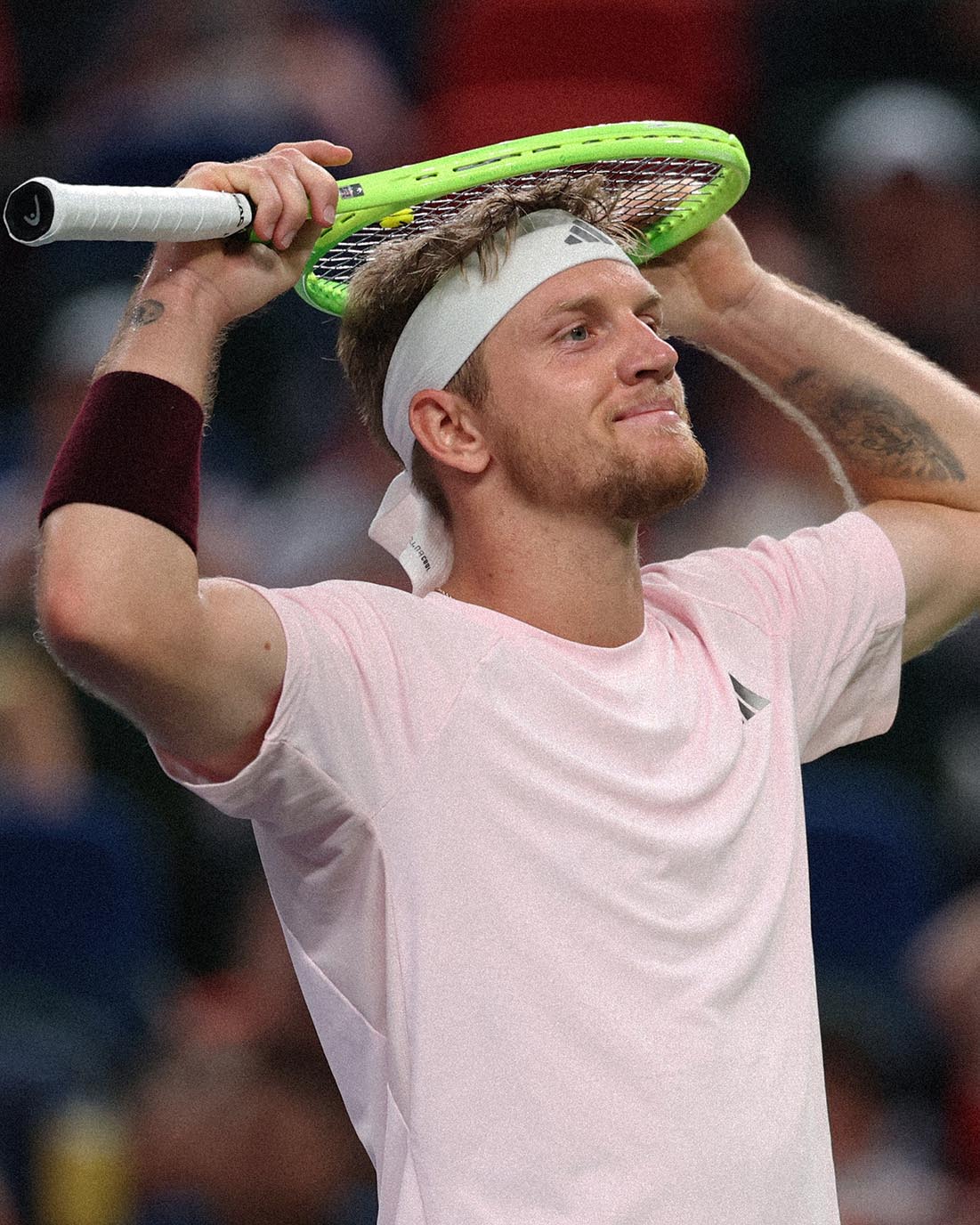
Sublime: Foki in Shanghai. // GETTY
[Shakes head in wonder, clears lump from throat, wipes tear from eye] Alejandro Davidovich Fokina is a three-time titlist. He’s a Masters 1000 champion. The last time we covered him here at The Second Serve, Foki was at the height of misery. The image of him resting on his haunches, mired in despair before he’d even officially lost to Alex de Minaur in the Washington, D.C., final last year, is still seared onto the back of my eyeballs. Foki had three championship points that day, and when he lost, it seemed like he’d never win an ATP title—a terrible underachievement for a player of his talent, but also forever haunting given how close he’d come. Foki had self-sabotaging tendencies to self-immolate that were so bombastic and poorly timed that you’d half expect him to turn to us, wink, and shake his head after a given disaster. But there was too much at stake to be in on his own joke, too much accumulated misery from finals played and lost. Until this glorious summer.
Foki broke the duck with a title at the Mallorca Championships in June—not the most prestigious tournament, and beating Adam Walton, a Grigor Dimitrov who suddenly seems washed outside of Wimbledon, Fabian Marozsan, and Ethan Quinn was not exactly a gauntlet. But I don’t think Davidovich Fokina would have cared if it was me in the final. When he followed up the crowning achievement of his career with a second championship in Chengdu, he already carried his talents more lightly. In the final against Hubert Hurkacz, Foki stared down four set points in the second set and erased them all with nerveless aggression, putting the match to bed in straights. This underarm serve-prone head case had somehow tapped into a Djokovician well.
But it’s this third title in Shanghai that most boggles the mind and is easily the most impressive of Foki’s troika of triumphs. Just look at the heads he sent rolling: Rafael Jodar in the final, after losing nine of the first 12 games of the match. Alexander Zverev in the semifinals, also after losing the opening set. Hurkacz again, this time via 8–6 in a do-or-die tiebreak. Frances Tiafoe, in the exact same fashion. That is a run, packed with stronger names than a couple Sincaraz titles this year.
It almost didn’t happen. During the Tiafoe match in the third round, Davidovich Fokina received treatment on his back. Tiafoe then held match point at 6–5 in that third-set tiebreak, only to lose his footing and tumble to the ground. Two points later, Tiafoe eviscerated his racquet on the hard court while Fokina shouted bone-rattling vamoses to his team. The difference between fury and salvation is unfavorable friction between shoe and cement on one point in the early rounds of the Shanghai Masters.
There were plenty of other highlights in Foki’s run—outdueling Hurkacz and his huge serve in a third-set tiebreak, annihilating slappy forehands down the line (a bit reminiscent of Medvedev’s forehand at its best, but with more venom) to get Zverev onto the run. After each win, he wrote vague messages on the camera, which he seemed to confirm on Twitter was to underline that he’s yet to be chosen for Spain’s Davis Cup team. Their loss. No other player can pack such a jagged emotional range into such a short spell of points. The final few against Hurkacz resembled a horror movie for jump scares, featuring a missed smash (after which Foki also lost his balance) on one match point, an errant sprawl on another that looked like it resulted in an ankle injury, and a sublime backhand pass. Everybody in the Davis Cup crowd would have simultaneously scorched their vocal cords screaming.
But let’s drill down on the final. There’s a good chance it was the best opportunity Foki will ever have to win a Masters 1000. Even then, he was the underdog. At 19 years old, Jodar is already ranked higher than Foki has ever been, is more gifted than Foki ever will be. His main vulnerability is that he is 19, and throws in the occasional stinker match between return-of-serve master classes. That didn’t happen here. Jodar not only rolled through the first set 6–1 but secured a break at 2–2 in the second: essentially, maximum psychological damage. You had the opener to show that Foki couldn’t even get close, the break in the second set to show that Foki holding twice didn’t actually mean he was growing into the match. At that point, the best Foki could hope for seemed to be holding serve until 4–5, then praying that Jodar got tight serving it out.
Instead, Davidovich Fokina broke back right away. He condensed his athletic gifts into one sublime sprint on break point. Jodar flicked a forehand drop shot with Foki behind the SHANGHAI lettering on the baseline, but Foki not only got there, he stabbed a backhand down the line for a winner. Plenty of players wouldn’t have gotten to the dropper; plenty of others would have gone crosscourt with their riposte, as happens what feels like 90 percent of the time when a pro runs down a drop shot to their backhand. Foki’s speed carried him off his feet, and he wound up in snow-angel pose after conjuring the winner. His fist pump from a seated position showed he knew that shot marked the end of a Jodar demolition job and the beginning of an even fight. Neither player could separate himself until 5–5 in the tiebreak, at which point Jodar got tight: a neutral +1 forehand sent over the baseline. Davidovich Fokina made it count, firing down an unreturned serve on set point. From there, Foki was the stronger in the third set.
Just watch the point at 30–love when Davidovich Fokina served for the match. That’s where it all unraveled for Foki against de Minaur in D.C., as if the prospect of three consecutive match points was such a frightening idea his body actively rebelled against it. Here, it injected his ground strokes with new life. In the first set, he’d been getting killed in crosscourt backhand rallies on big points. But on this point, Foki was the first to step into a vicious strike down the line. It knocked Jodar onto one knee.
Then it turned out that 40–love wasn’t so scary after all: Foki casually converted the second championship point on a huge serve. His reaction reflected how far he’d come. Just raised arms and a stoic expression, then a delighted little smile. Nothing too crazy even for the biggest victory of his career, since he now knew he could do it. Foki has actually managed to push the rock to the top of the hill, and I can’t wait to see what he does now that he’s no longer bound by mountain and stone.