It's Late, But Not Too Late
It's Late, But Not Too Late
Sorana Cirstea is playing the best tennis of her career, just as it's ending.
Sorana Cirstea is playing the best tennis of her career, just as it's ending.
By Owen LewisMay 15 2026
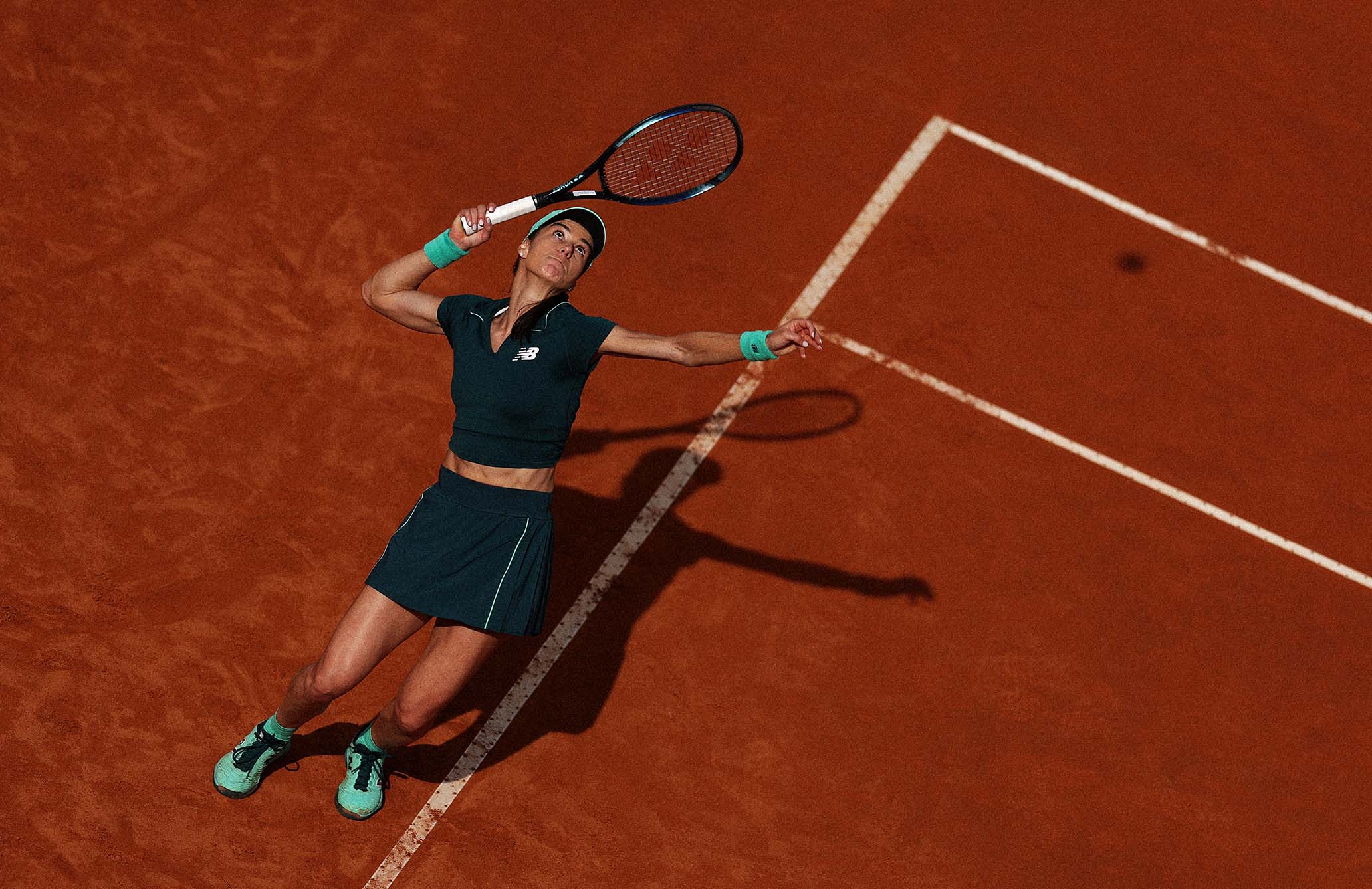
Sorana Cirstea in Rome this week. // Getty
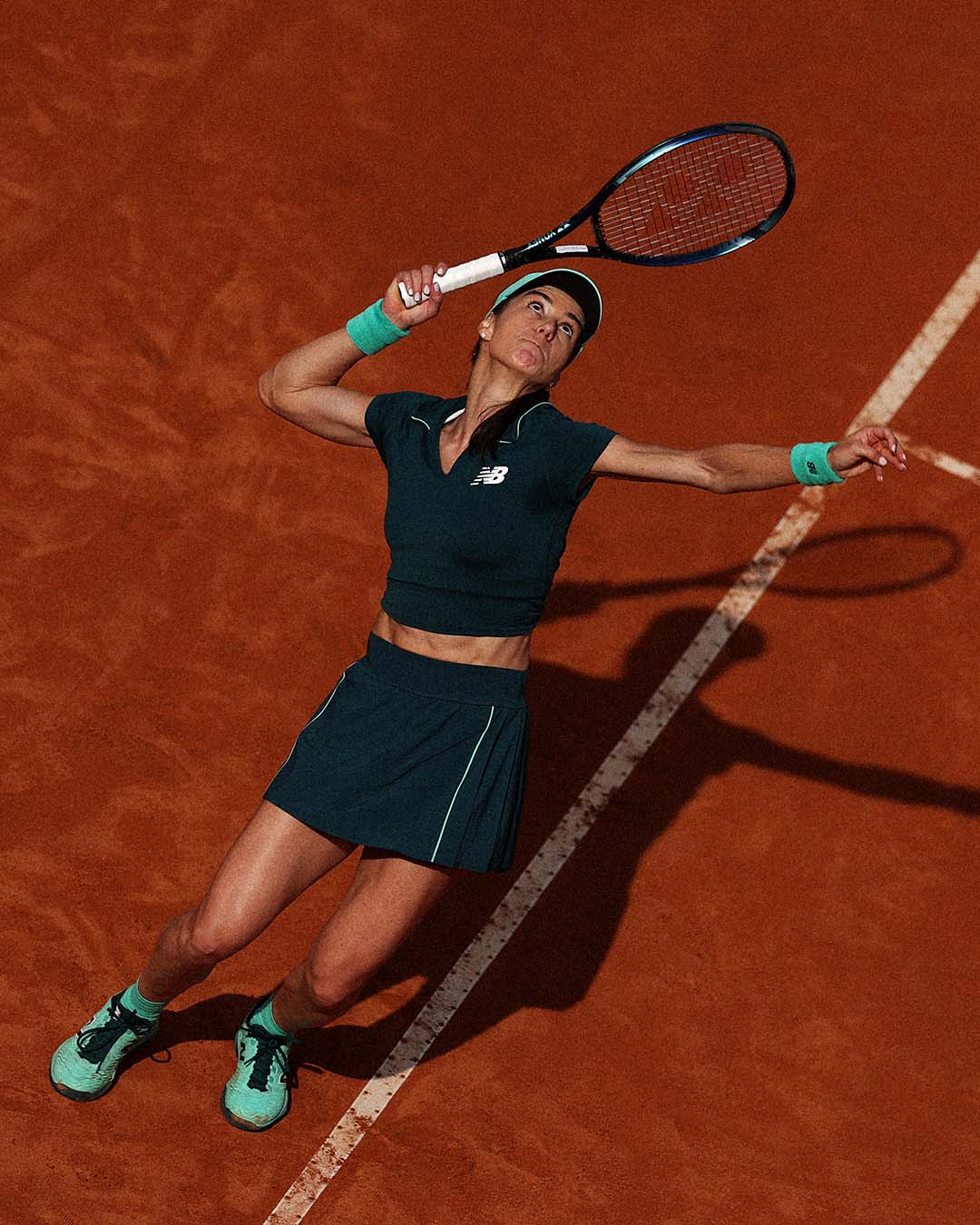
Sorana Cirstea in Rome this week. // Getty
Sorana Cîrstea’s press conference after her second-round loss to Naomi Osaka at the Australian Open wasn’t the most crowded of the tournament, but it might have been the most anticipated. The Romanian had taken issue with Osaka pumping herself up between first and second serves mid-match, leading to a frosty handshake and a visibly baffled Osaka. It’s a rare treat when real drama escapes tennis’ thick coat of decorum, so journalists were ready for more details. “You don’t want to miss this one,” another reporter said to me just before the press conference began. We piled into Interview Room 2, whose 10 or so seats were all filled, with another handful of people standing off to the side.
Down rained questions about the brief beef. Cîrstea, 36, was not amused. In December, she’d announced that the 2026 season would be her last, and was more inclined to talk about her 20-year history at the Australian Open. The moments of friction with Osaka also clearly didn’t move her as they did us. After staccato answers to the first two questions—no problem with Naomi, not the time to talk about this—the third in a row drew her ire.
“Is this the big thing that happened tonight?” she asked crisply, voice kicking up on the last word as her eyebrows arched. Perhaps the delirium of a long day provided an assist, but the quote instantly entered my mental pantheon of great tennis one-liners. How do you most precisely express your discontent with a line of questioning? “Stop asking me about this” is too intense, “No comment” too evasive. But is this the big thing that happened tonight? It’s the perfect pitch of petty.
Leaving tennis fans with that spectacular sound bite would have been a fine mic drop for Cîrstea’s career, in which she made two major quarterfinals and topped out at 21st in the WTA rankings. Instead, seeing the finish line of her career has been all she needed to play some of the best tennis of her life. After the Australian Open, Cîrstea went to the Winners Open, a 250 in Romania, and lifted the trophy without dropping a set. She won multiple matches at Dubai, Indian Wells, Miami, and Linz, eventually losing to a quality player each time. In Madrid, she took the first set off Coco Gauff and pushed the world No. 3 to 5–5 in the second before Gauff recovered and pulled away with the match. Cîrstea has played her way to a 29–6 record in 2026, climbing from 43rd in the rankings at the end of last season to 27th.
In Rome, Cîrstea authored her most impressive run of the year yet. After a dominant opening win over Tatiana Maria, she met Aryna Sabalenka. Despite a loss to Hailey Baptiste in Madrid—from six match points up!—Sabalenka has been the clear best player in the world for more than a year. She’d lost to Elena Rybakina, her closest challenger for that title, in the Australian Open final, but avenged it in the best match of the season in Indian Wells, then crushed Rybakina in Miami for good measure. Though Rome is not Sabalenka’s best tournament, her devastating ground strokes are weapons that work anywhere.
Aryna stormed out to a 6–2, 2–0 lead in 44 minutes, the most surprising part of which was that it took even that long. Cîrstea managed to not only claw back the deficit but recover when she failed to serve out the match at 5–4 in the third set. Sabalenka struggled with a back injury during the match, but Cîrstea’s 2–6, 6–3, 7–5 win was one of the most impressive victories of the season. You could even say it was the big thing that happened that night. As with her runs in Miami and Madrid, Cîrstea couldn’t get past Gauff in Rome, but making it far enough in tournaments to be stymied by one of the best players on tour is a feat plenty of players ranked higher than the Romanian can’t manage.
It’s an uncommon yet welcome phenomenon in tennis: Nearing retirement, a player’s game sharpens and sings, as if the unburdening that comes with hanging up the racquet precedes the action. With Cîrstea’s surge in form will come calls that she should ride this wave for as long as she can, retirement be damned.
I don’t quite see it. During a December appearance on the Tennis Insider Club podcast, Cîrstea outlined the story of her career, the pitch of which should be familiar to fans. Tennis was her father’s dream, not hers. She trained every day from 5 years old on. “There was no personal life,” she said. “I didn’t take a holiday until I was 25.” She eventually came to enjoy and appreciate tennis on its own terms, but “it took a long time,” and the same went for realizing there was more to life than tennis. One exchange between Cîrstea and host and retired player Caroline Garcia stuck out to me. Cîrstea asked Garcia if she’d played since retiring at the 2025 US Open, and Garcia mentioned a single half-hour hit in Riyadh when she’d attended the WTA Finals. But there was no surprise in either woman’s voice. There was no implicit guarantee they’d play tennis at any level after retirement.
Cîrstea isn’t the most sympathetic figure—see unfortunate Instagram stories and comments gone by. But her story resonated. She said that as the end of her career grows closer, she loves the game more and more. That doesn’t mean she wants to keep playing it. There are other things in the world to love.