
State of Play
State of Play
Torben Ulrich blurred the lines between practice, play, and art.
Torben Ulrich blurred the lines between practice, play, and art.
By Simon HegelundOriginally Featured Volume 3 of OPEN Tennis — BUY
State of Play
Torben Ulrich blurred the lines between practice, play, and art.
By Simon HegelundOriginally Featured Volume 3 of OPEN Tennis — BUY
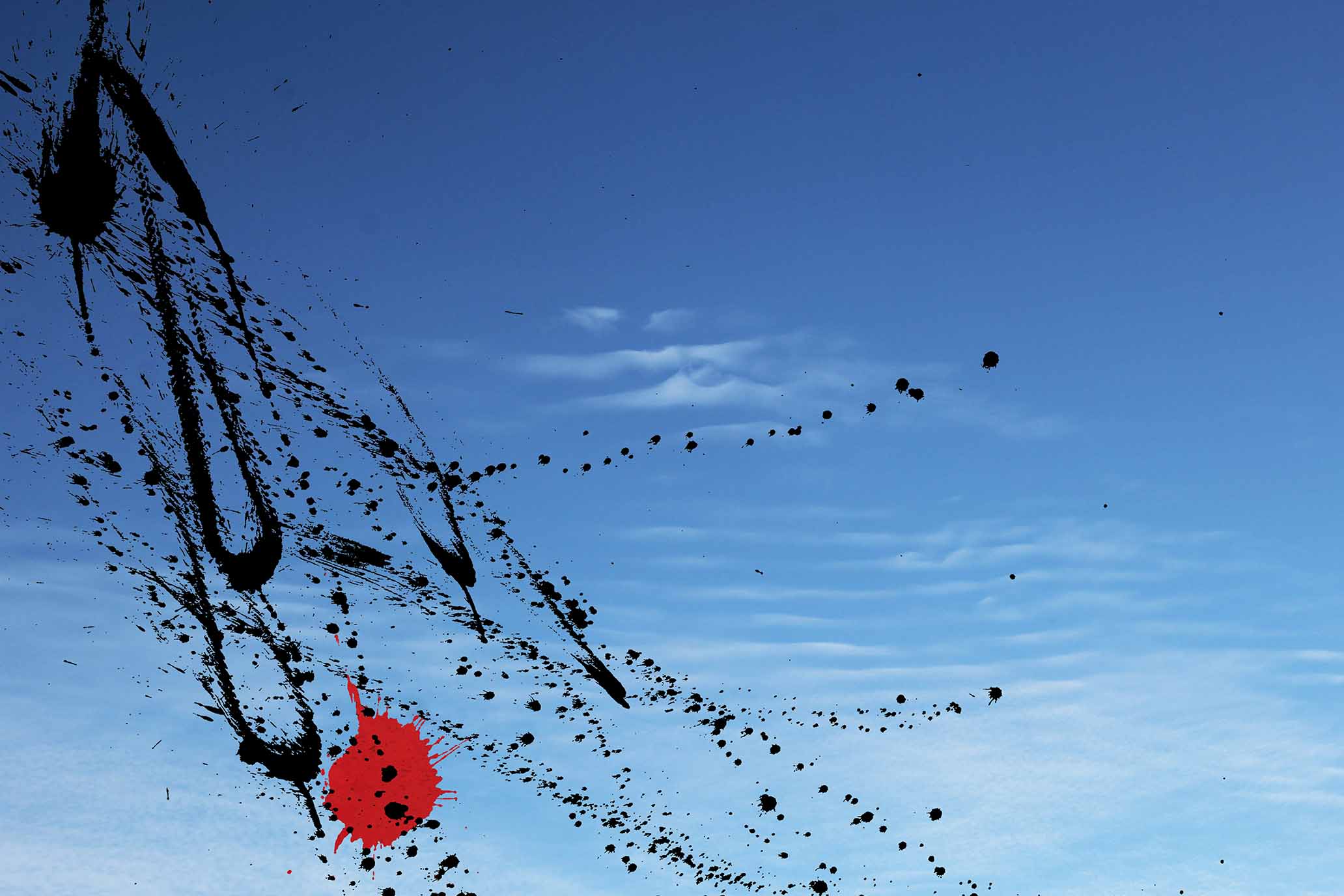
Untitled, print. // Torben Ulrich.
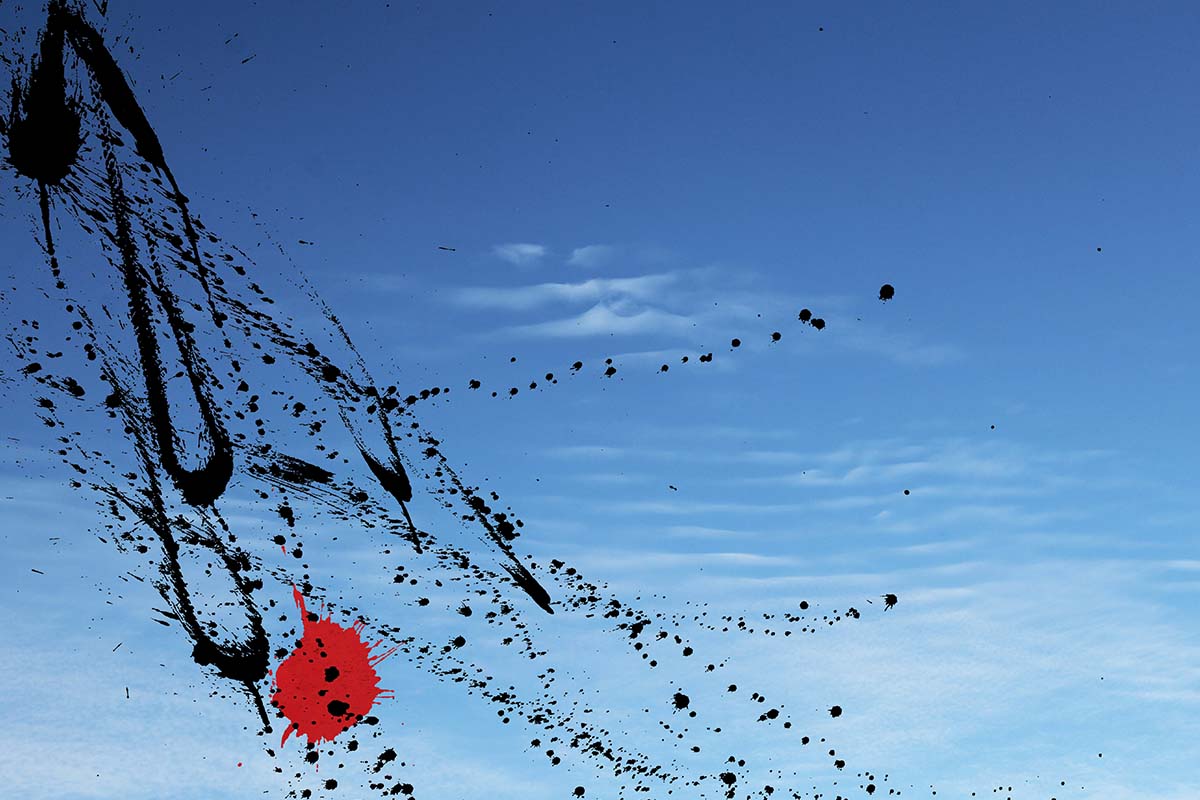
Untitled, print. // Torben Ulrich.
“Was I then a man dreaming I was a butterfly, or am I now a butterfly dreaming that I am a man?” Torben Ulrich responded when asked to reflect on a butterfly that had fluttered by him during a tennis match against John Newcombe at Forest Hills in 1968. Continuing along the Taoist principles of Chuang-Tzu, when asked about his age and chances of winning, Ulrich said: “How old is old? What is age? What is winning?”
Perhaps our first—and only—true tennis philosopher, Ulrich had little interest in results or absolutes. He sought instead to expose the false binaries of existence: winning or losing, artist or athlete, mind or body, sport or art, East or West. Through a lifetime of peaceful rebellion, he resisted convention in every form—through his tennis, his painting, his poetry, his jazz, and his devotion to inquiry itself.
As a tennis coach, I’ve spent much of my life studying not just technique but temperament—the psychology of performance, the philosophy of play. I’m always drawn to thinkers who blur the line between practice and art, who treat movement as a kind of meditation. Maybe that’s why Torben Ulrich has always felt like a quiet mentor to me, even from afar.
***
I was 10 when I first saw a black-and-white photograph of a long-haired, hippie-looking tennis player in my local tennis shop in Copenhagen. Another decade passed before that same guru-like figure flickered across my battered college MacBook screen in Some Kind of Monster, the Metallica documentary. There he appeared as the band’s fiercest critic, telling his son Lars, the drummer, what he thought of their album: “I think you can delete that.” He’s also a musician? I remember thinking. That discovery gave Torben Ulrich a rent-free studio in my mind—and the more I learned, the more I recognized traces of myself, or perhaps my ideal self, in him: as a human, a player, a coach.
Danish filmmaker and close friend Jørgen Leth once called Ulrich “the playful human.” Studying his life, it’s clear that the red thread running through his performances, his art, and his relationships is a philosophy of play. His way of moving through the world—dissolving dichotomies, resisting labels—was marked by a distinctly human sensitivity: play as a way of living, grounded in process.
Ulrich’s first confrontation with the cruelty of categorization came as a teenager in occupied Copenhagen. His mother was partly Jewish, and when the Nazis arrived, he fled toward Sweden in a fishing boat. Discovered and fired upon, he was captured and sent to a Danish concentration camp. “I wasn’t enough of a Jew for them,” he later said, “so I was released after two weeks.” Historians now suggest that his release was likely thanks to the Danish government’s quiet defiance—the same collective act of empathy that saw thousands of Danes claim to be Jews, helping the country largely evade the genocide that swept through Europe.
***
From the 1940s through the late 1970s, Ulrich lived the nomadic rhythm of the tennis circuit. The left-hander competed in 102 Davis Cup matches for Denmark (the last at 48), reached the fourth round of the US Open four times, and won a senior Wimbledon title. On court he was smooth and unpredictable, moving with a blend of elegance and explosiveness. His game was equal parts curiosity and intuition—experimental, musical, inspired. His tall, wiry frame resembled Pancho Gonzales, as did his aesthetic flair and rhythmic timing, but the improvisational spirit was his own. Today one might find echoes of him in Dustin Brown’s free-form shotmaking, Federer’s grace, musicality, and economy of movement, or Monfils’ playfulness and embodied joy. In musical terms—the language he loved most—Ulrich played less like a rehearsed symphony and more like a spontaneous jazz solo in search of its own melody. “I couldn’t find my song today,” he once said after a loss.
Tennis was only one of his instruments. Ulrich was among the most singular voices in Danish culture across the 20th and 21st centuries: a poet, jazz musician (and jazz-club owner), filmmaker, painter, journalist, and student of Buddhism. His work—whatever the medium—was rooted in process, in a wide-ranging inquiry into movement through the lenses of athletics, art, and philosophy. He was always in conversation with the ball: rallying with it on court, against a wall in his experimental films, in his ink traces across paper, and in the rhythms of his writing and jazz improvisations.
As a young man, Ulrich immersed himself in the post-Freudian thinkers and mystics: Krishnamurti, D.T. Suzuki, Henry Miller, and Søren Kierkegaard. These influences deepened his struggle with dualism. In a 2004 interview, reflecting on that period, he said: “I began rejecting this chauvinistic way of thinking…. I saw firsthand how this mentality was deeply flawed—either we’re Jewish, or we’re not Jewish, and suddenly we’re Jewish enough…all that shit. I tried working with this on a daily basis, to see if I could find other ways of looking at things, to reach beyond the dualistic thought process.” He became acutely aware of how institutions create boxes and conditions—teams and parties, winners and losers, blue and red. The ball is in or out, and yet, Ulrich sensed something alive in the space between.
From that awareness, his philosophy of play emerged. He sought to understand the world through presence and process, to dissolve false dichotomies by reframing experience itself. In tennis, the essence was not to win or lose, but to rally and exchange. Not to control, but to release control. “If I am in my groove,” he said after a match, “the ball will take care of itself.”
Among Ulrich’s many works, one captures his philosophy of play with particular clarity: La Balle au Mur (1989), his collaboration with French filmmaker and fellow tennis player Gil de Kermadec. In the film, Ulrich rallies not across a net but against the city itself—garbage cans, buses, brick walls scattered throughout Paris. Stroke by stroke, the act becomes a meditation on rhythm and breath: process as art, repetition without goal.
For Ulrich, the wall was a philosophical partner—at once resistance and reflection, limit and echo. Each ball’s return was time itself returning: always the same, always different. The impossibility of pure repetition; the inevitability of change through practice. “You can’t step in the same river twice,” Heraclitus said. Ulrich lived that aphorism.
He was drawn to Kierkegaard’s notion of bevæget rolighed, “moved calmness,” a paradox of motion within stillness. It describes a state of dynamic serenity, an awareness alive yet ungrasping, akin to Mihály Csíkszentmihályi’s flow, Lao Tzu’s wu wei, or what athletes call being “in the zone.” Every player has felt that effortless alignment. To Kierkegaard, letting go of attachment to outcome is what releases inner anxiety; to Ulrich, that release was both practice and art. He sought to embody moved calmness on and off the court.
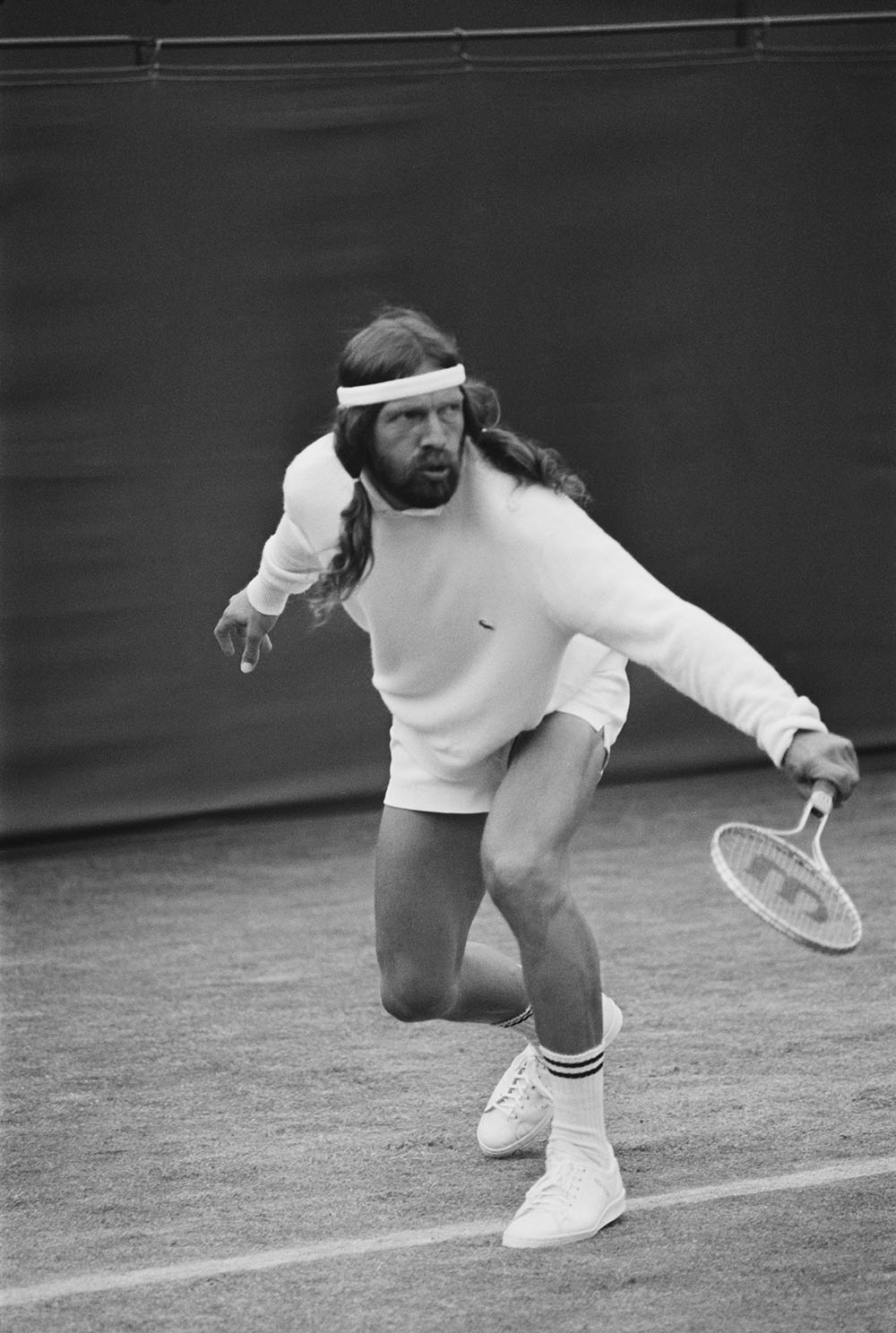
Peak Ulrich: Torben competes at Wimbledon, 1970. // Getty
Peak Ulrich: Torben competes at Wimbledon, 1970. // Getty
The principle of moved calmness—of process over outcome—runs through everything Ulrich touched. In his visual art, play became both method and subject. He used tennis balls, skipping ropes, and fragments of racquet frames to create traces, imprints, gestures. His works, which he called “examplings of play,” captured the fleeting choreography of motion—abstract expressionism meeting Zen calligraphy, ink on rice paper.
Jazz, too, was his practice ground. Its improvisation mirrored his belief in process, discovery, and dialogue. Music, for Ulrich, was not a performance but a conversation, a space for listening as much as playing. Across all his disciplines—tennis, art, jazz, Buddhism—he pursued the same inquiry: how to dissolve boundaries and live within the space between them.
Even at the height of his career, he cared little for the final score. “To me,” he said, “the competition part of it, the score, was never of such importance. All of this was more about being open to a larger adventure—to what can happen, what you can learn.” For a professional athlete, such thinking sounds almost heretical, but Ulrich was not rejecting competition; he was transcending it. He sought the moment when a player moves beyond themselves, where play becomes creation. He called it “creative vision,” the ability to sense situations before they unfold. John McEnroe, he noted, possessed it: that capacity to shape rhythm, space, and surprise, not to dominate, but to compose.
***
Maybe I’ve been apprenticing under Ulrich all along. Over the past decade, I’ve shaped my own philosophy of play—play as an antidote to hustle culture, a quiet rebellion against efficiency. Play as release, as moving meditation, as the return of the inner child. That’s when tennis becomes spiritual for me.
Ulrich’s home court in Hellerup—designed by architect Arne Jacobsen—was his sanctuary. He practiced there late at night, describing it as a “cathedral with sacred dimensions.” I feel the same about Court Two at Virum-Sorgenfri Tennisklub, a sunken red clay court in my hometown, just 15 minutes from Ulrich’s cathedral. Some nights, when the air cools and the floodlights hum, I could sense that same stillness.
Looking back, my most vivid memories as a competitor are not the matches I won, but those I lost. In those moments of loss, I played freely, fully—untethered to outcome, alive to exchange. I went toe to toe with players who should have beaten me soundly, and felt my spirit expand with every rally. Conversely, the matches I won easily often left me hollow, detached, executing from habit rather than curiosity. “What is winning?” Ulrich asks. The egoless game reaches far beyond the ego game.
The Western fixation on victory, on defeating rather than discovering, has little to do with becoming a better player. I talk to my students about this paradox often. Winning feels good; it can build confidence. But it also deceives. It tricks us into believing we did the right thing, that we succeeded, when perhaps we merely survived. As Roger Federer reminded Dartmouth graduates in his 2024 commencement speech, he lost 46 percent of all the points he ever played.
Perhaps we shouldn’t be misled by the perfectly painted lines or the strangely layered scoring system. I ask my players to loosen their grip on those boundaries; they rarely serve growth. Be critical, I tell them, but not judgmental. Seek process over perfection. Curiosity over control. Success and failure, I remind them, are not opposites—they are collaborators.
Modern life runs on binaries. Most of our conflicts—political, cultural, personal—arise from the illusion that truth must choose sides. We inherit these grids of opposition and live within their tension. The tennis court, too, is built on symmetry and division: in and out, winner and loser, net and line. It is both a playground and a diagram of the world.
Ulrich’s answer was to play within the lines without being defined by them. His play was a quiet rebellion, a reminder that freedom is not the absence of boundaries but the art of moving gracefully inside them. I try to live and teach in that spirit. To see beyond the score. To allow a rally to mean more than a point. To find joy in the shot, even if it sails out. Control, after all, was never the point. The letting go was.
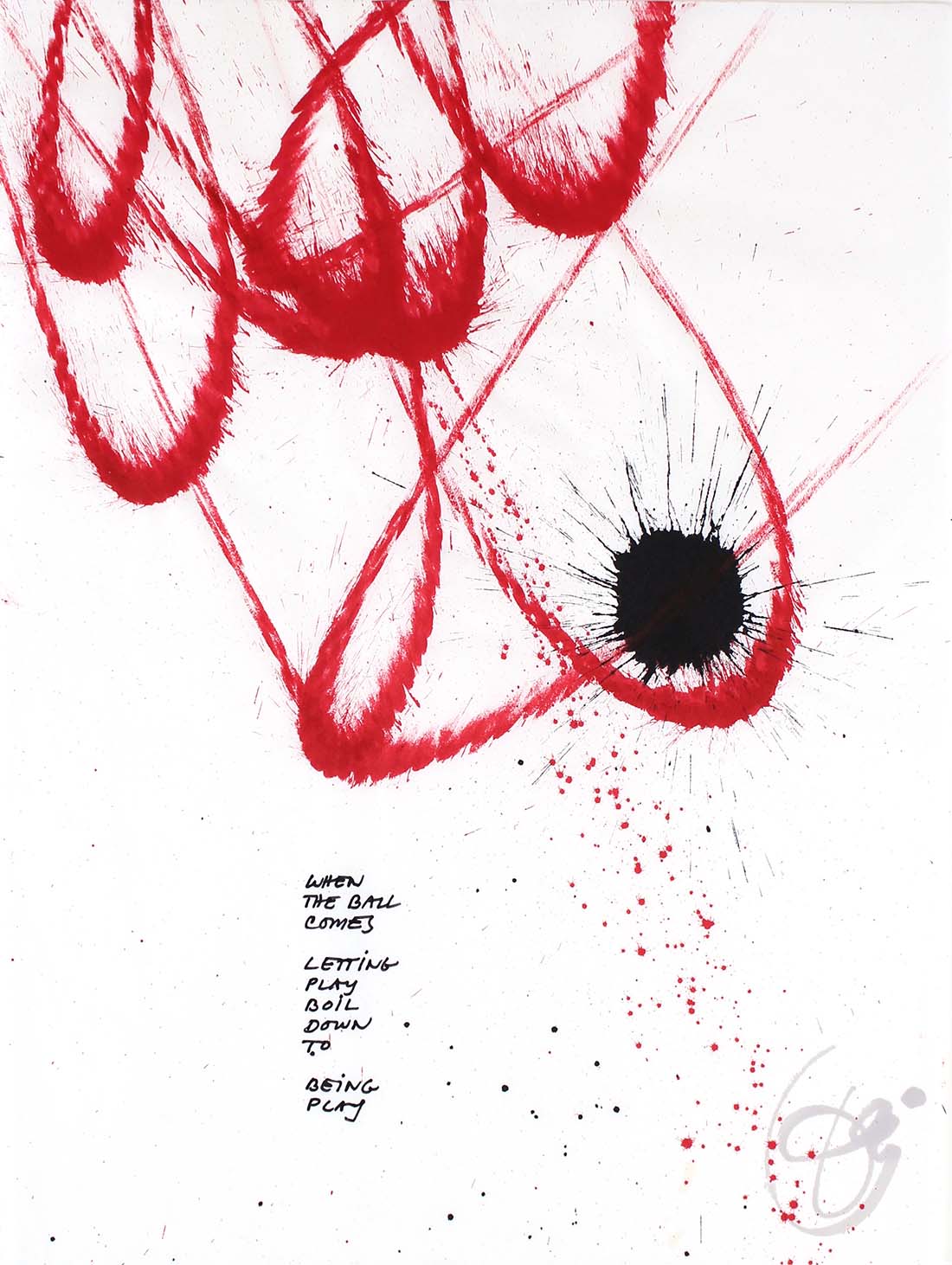
Untitled, ink on rice paper. // Torben Ulrich
Untitled, ink on rice paper. // Torben Ulrich
***
Plato’s Laches ends where it begins: with questions. The dialogue never defines courage, and that ambiguity is the lesson. Wisdom, like play, resists conclusion. Its purpose is not to close the circle but to keep it turning. Ulrich’s philosophy lives there: in the rally that never ends, the rhythm that renews itself through inquiry.
Sometimes I think of him, still, hitting against that Parisian wall, the ball returning again and again, time folding back on itself. I imagine the sound echoing through the alleys: soft, rhythmic, unhurried. Each stroke a question, each rebound an answer that never quite resolves.
Perhaps that is the truest form of play: not mastery, but motion. Not the victory, but the vibration between effort and ease. In that space, Ulrich found his calm movement, his moved calmness. And in the echo, I find my own.

TENNIS. ART. CULTURE. FASHION. TRAVEL. IDEAS. — SIGN UP
RECOMMENDED
Pete Sampras: Wanna Bet?
GAMBLING
Zac Farro: Life Preserver
CULTURE & ARTS