All the Rage
All the Rage
Book Review: Dad Had a Bad Day
Book Review: Dad Had a Bad Day
By Patrick J. SauerMay 15, 2026
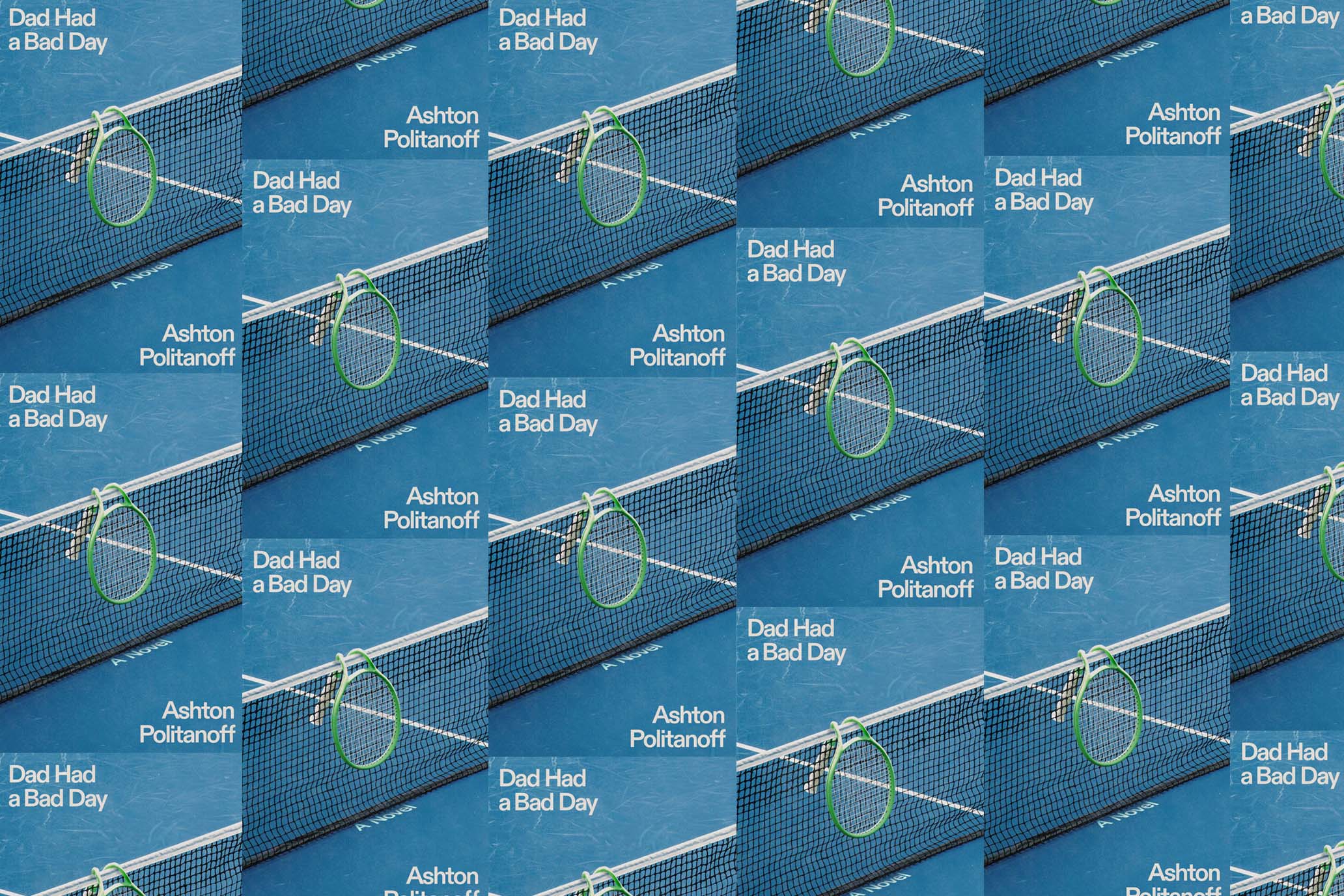
Courtesy of Astra Publishing House
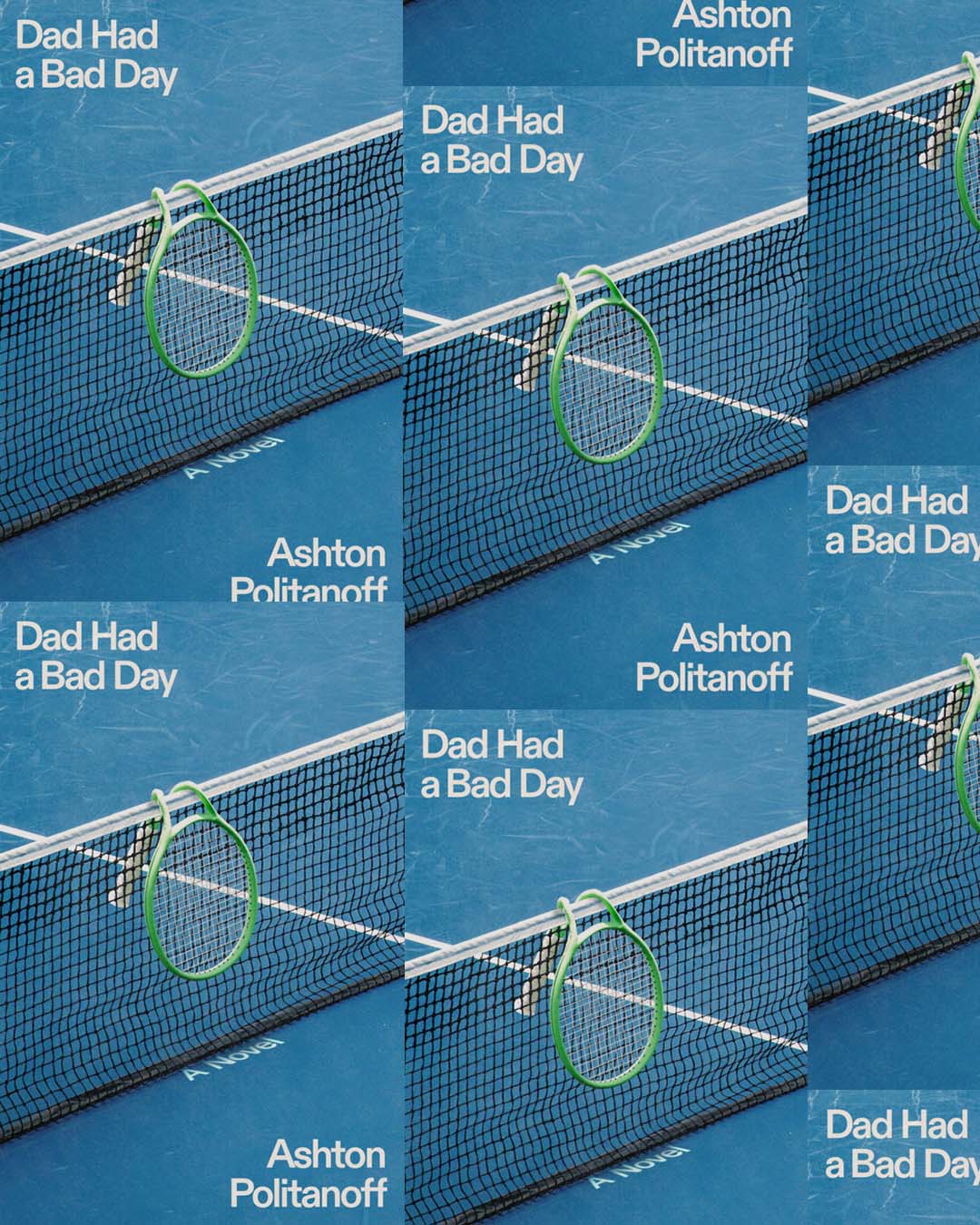
Courtesy of Astra Publishing House
I hate to be the one to break it to you, but American men—at least American white men of seemingly enough-to-live-on means—are in crisis. I first became aware of this alleged phenomenon when it was reported by every media outlet in every possible media format that’s existed for the past decade. The excuses—pardon me, reasons—for why modern dudes are having such a hard go of it are varied, complex, and, in many cases, wildly overblown. This isn’t to say the problem isn’t real; a 2024 poll from the American Psychiatric Association found that 30 percent of adults “experienced feelings of loneliness at least once a week,” with 30 percent of the 18–34 demographic feeling lonely daily or multiple times throughout the week. Of course, acute isolation can lead to serious pathologies like substance abuse, self-harm, and the type of burning inner rage that somehow convinces angry young men that there’s deep profundity in Joaquin Phoenix’s Joker dance.
Sure, the broad outcomes of loneliness can be terrible, but “epidemic” is thrown around far too loosely. Being lonely sucks individually, but it’s not an actual spreading disease. A basic definition is even wobbly because social isolation—once better known as “being alone”—is used in concert, but it’s value-neutral. Chilling solo can be just as edifying as a night out with friends. What gets lost in the constant barrage of dewy-eyed profiles of the lonely fellas is that it’s a subjective feeling, and there’s a real underdiscussed chicken-egg aspect to the whole thing. For many (mainly white, reasonably well-off) American males, their state of disgrace is an own goal brought on by who they are.
The inverse male “loneliness epidemic” is that this country is inundated with assholes.
I’m not talking about the charming antiheroes of prestige TV of recent yore: Sirs Soprano, Draper, Bell, and Barksdale—the type of profoundly terrible dudes who would be great drinking companions. I’m referring to the whiny, grievous, self-obsessed, know-nothing, unfunny cretins who have poisoned the well of everyday life, from the smallest of human interactions to the biggest of world stages. While there is no way to prove there are more of these guys now than ever before, I, as someone who just turned 55, have been around long enough to confidently say: There are more guys than ever before openly taking public pride and malevolent glee in their whole-ass assholery.
We are all…so…tired…of men who, because they believe they’ve been shortchanged by life, feel entitled to take what they want, at the expense of any notion of the common good. The guys who get their rocks off punching down become the same men mewling about loneliness, yelling into the void as they morph into one-in-the-same-guy shunned by everyone of decent heart and mind.
Men very much like Ned, the tennis-obsessed main asshole in Dad Had a Bad Day, the brilliant pitch-black comedy novel by former Loyola Marymount University tennis player–turned–English professor Ashton Politanoff. A book that, much to my surprise and possible chagrin, given a constant low-simmering hatred for how these narcissistic, sociopathic, peevish, power-hungry monsters—of whom Ned is a prime example—operate, I found ferociously compelling, uncharacteristically banging it out in three sittings.
Dad Had a Bad Day is essentially a book steeped in an asshole ethos driven by the interactions between Ned and everyone else, save for Freddie, the 6-year-old he is now wholly in charge of after losing his job. To explain who Ned is today and how he got there, the plot utilizes parallel timeline plots batted back and forth like a Tretorn Micro-X. The present-tense story runs at a breakneck pace; Politanoff wants us to experience the weeks when Ned destroys everything in life he allegedly held dear, because of an insatiable thirst to win a men’s rec league title of zero importance by any unethical means necessary, almost as it unfolds in real time. When we meet Ned he hasn’t played in decades, but the old Slazenger racquet he finds in the garage sparks an immediate obsession with the game, and so he joins the tennis club of his youth…on a clandestine credit card, unbeknownst to his breadwinner wife, the one keeping the family on a tight budget, the one who has no clue that Ned has added brunch old-fashioneds, intended infidelity, outright criminality, and match-fixing sabotage—even roping Freddie into snipping his own teammates’ strings to better Dad’s singles line—to his daily country club rituals.
There is one jaw-dropping scene—spoiler alert for this paragraph—that captures the magic trick Politanoff pulls off in making Ned so compelling on the page but so revolting when considered as an actual human being. In real life, you wouldn’t want to spend five seconds with the guy! But damn if I wasn’t slayed by Ned scouting out the birthday party situation at a local park, then bribing his son with T. rex LEGOs to be dropped off, gift in hand, for Chester’s 5th birthday party—a kid he’s never met—so Pops can go play dingles. Winking the knowingest wink possible, Politanoff buttons the subterfuge with, “Sundays, as they say, are for the boys.” Right before shoving the rabbit back in the hat as the panicked dad scours the park for his lost son.
One aspect of Ned’s situation that I fully relate to is his role as full-time stay-at-home dad. I fulfilled that duty from the end of my wife’s maternity leave until, well, today. (At least nominally, as, since she’s a teenager in a non-car-owning family, I primarily serve to keep money in her account.) When the kids are young, though, it’s a weird wired existence. Random people treat you like a war hero, a breather of rarefied paternal air, while others have no compunction questioning your “babysitting” choices. Neither on point, but in both cases, espoused by women. Men mostly don’t get it, condescend to it, or, in the Commie Corridor of Brooklyn at least, sidle up and tell you how jealous they are. Chalk one up to the death of freelance journalism, but it’s a truism. Nobody knows what it’s like to be the SAHD man, except those who’ve been there—like Ned and I have—in the hours when the entire world isn’t paying attention, the time when stroller naps in darkened Wimbledon day-drinking pubs are a dad’s quiet hole-in-the-corner prerogative. (And yes, for time immemorial mothers have understood, but Dad Had a Bad Day is decidedly about a world of shitty men.) Politanoff nails a few beautiful moments between Ned and Freddy that never would’ve happened if he still had his regular nine-to-five, all the more heartbreaking because we know the depraved tennis scheme is going to cause his son permanent scars. The same ones Ned carries.
A highlight of Dad Had a Bad Day is its unique structure, which keeps everything off-kilter, toying with the reader’s mind a bit, almost like a sludgy bad-weather match where the underdog aims to muck up every shot to throw every game out of whack. The book has no chapters, and some pages have only a few sentences. There are self-serving italicized epistolary letters to his wife that get uglier down the line, sharp all-dialogue sections without quotation marks, and a series of questions Ned asks his younger self. The longer action-filled chapters in the present are offset by shorter ruminative chapters out of the past.
An alternative title for Dad Had a Bad Day could easily be Hurt Men Hurt Men. The flashbacks are a murderers’ row of toxic assholinity. They don’t excuse Ned’s current horrific decisions, but they do lay out how circles of hell will also be unbroken. Ned’s violent stepfather is of the Damir Dokic, Jim Pierce, John Tomic parental ilk—sporadic, instantaneous, violent acts a motif—while a brutal run-till-you-puke juniors coach turns the sport he loved as a boy into the win-at-all-costs ephialtes he hates as an adult. And that’s without even getting into a formerly heroic AWOL teammate whose mental breakdowns at the hands of a somehow bigger asshole old man, then and now, come into the pace of play. The Slazenger racquet is Proustian, but the madeleine is covered in maggots.
I’ve been thinking about Dad Had a Bad Day nonstop for a couple of weeks. It took me that long to get a few thoughts in order. Politanoff has delivered a reading experience I won’t soon forget, about a character I kinda wish I could. In the end, what can be said of Ned and his awful, life-ending choices? To paraphrase the ubiquitous declaration of our assholic times, “The cruelty? Match point.”
Dad Had a Bad Day will be published on May 19, by Astra Publishing House.