
Twists and Turns
Twists and Turns
Twists and Turns
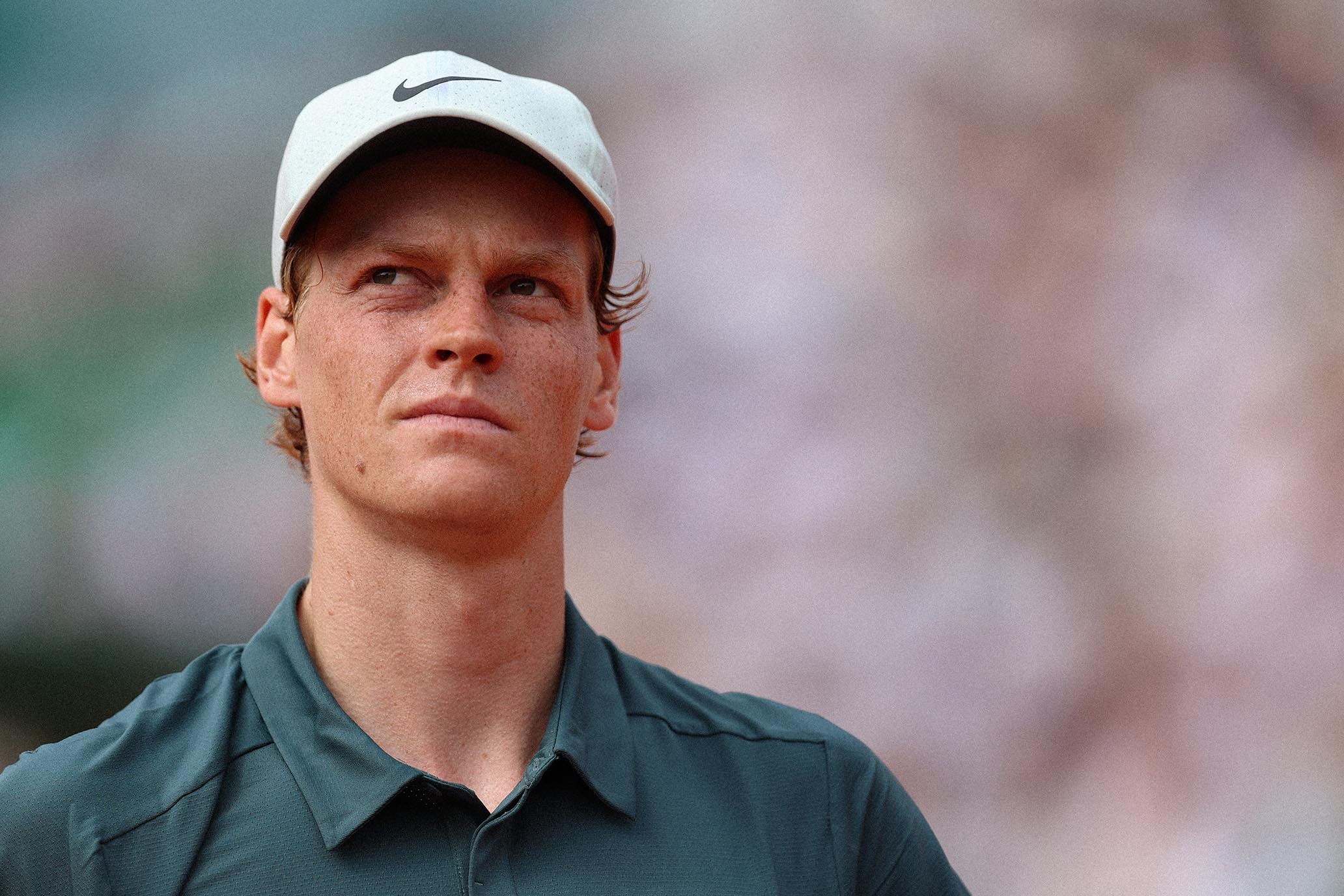
Jannik Sinner is in the ascendency in his rivalry with Carlos Alcaraz.
Jannik Sinner is in the ascendency in his rivalry with Carlos Alcaraz.
By Owen Lewis
April 13, 2026
Sinner is a winner in Monte Carlo. // Getty
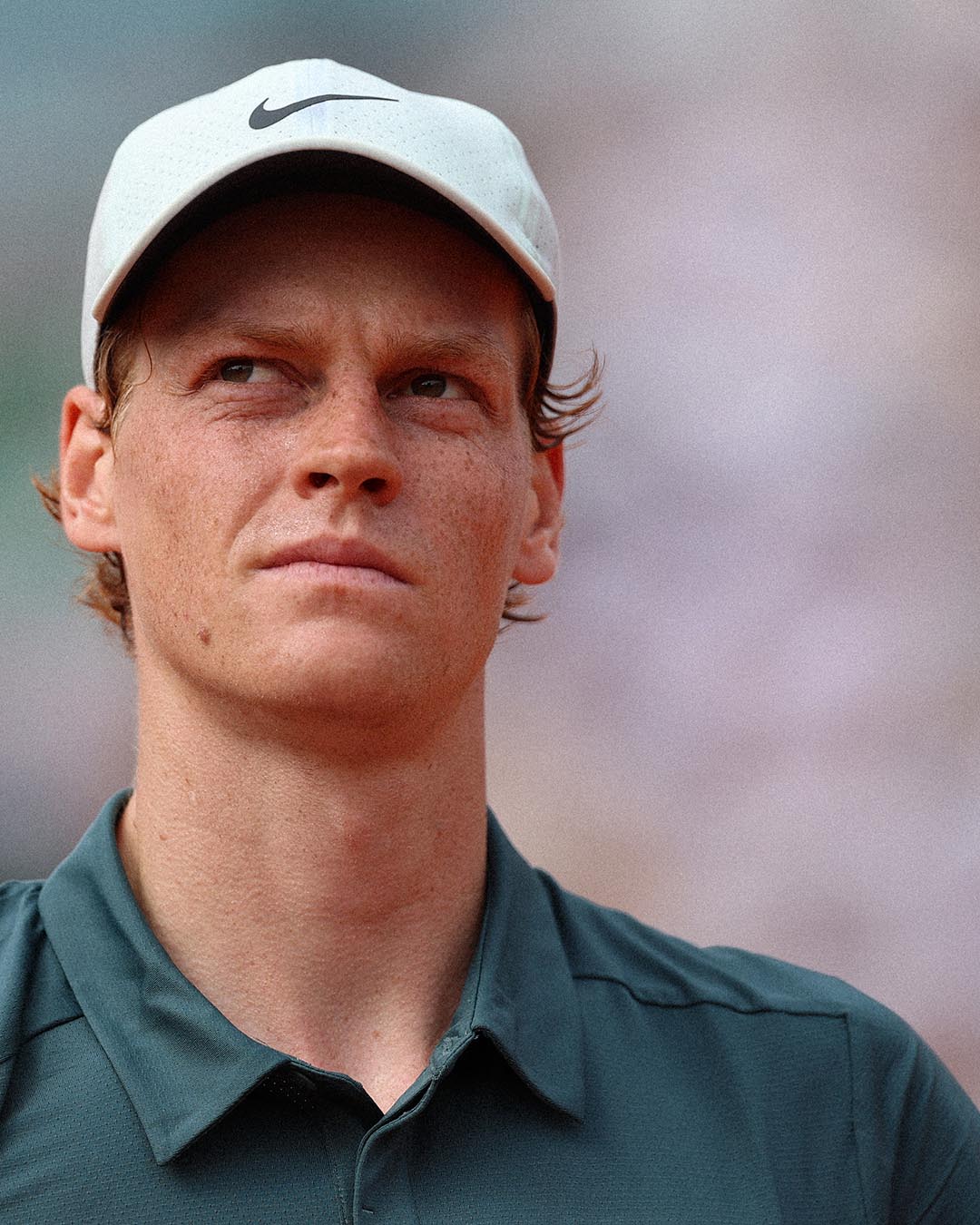
Sinner is a winner in Monte Carlo. // Getty
Of course the weather for the Monte-Carlo final was awful. We’re always hearing about how this is the most picturesque spot on tour, and it’s hard to argue. On the Tennis Channel this week, we were greeted on changeovers by wide shots of the swaying Mediterranean sea shining with a blue to rival the Australian Open’s hard courts, enveloping the Monte-Carlo Country Club tennis courts embedded into the cliffs. It feels appropriate that after all that view porn, and all the hype for 2026’s first Carlos Alcaraz–Jannik Sinner summit, the day itself was overcast and viciously windy. Teach us to get too excited. The anticipation was inescapable—the last Sincaraz meeting on clay was the 2025 Roland-Garros final, a match you may have heard about—but nothing changes the mood like a stiff breeze blanketing our tennis.
Still, if not the Roland-Garros final’s equal, the Monte-Carlo final was a worthy sequel. Sinner’s 7–6 (5), 6–3 win was closer than the score and added plenty of subplots to the best rivalry of the era. A theme in this rivalry is Sinner underperforming on serve, even as he improves the shot to alarming levels. That continued today—he made 51 percent of first serves—but a new pattern is emerging of Sinner scrapping his way to wins over Alcaraz despite subpar serving. (And as Alcaraz made sure to point out in his postmatch presser, during the tiebreak, Sinner made all six of his first serves.) Jannik also pummeled Carlos’ backhand until it wilted, and hung tough through what felt like a thousand love–30 and 15–30 holes on serve. After Alcaraz beat him from three match points down in Paris last year, Sinner had lost five straight to his rival, many of them thanks to deranged Carlos comebacks. Ten or so months later, his resilience has borne fruit.
I thought a lot about their last match, at the ATP Finals, yesterday. Sinner won it 7–6 (4), 7–5, but I didn’t read much into it because Alcaraz tweaked his hamstring when the match was still young and even. Now I’m wondering if the players did draw a lot on what happened that day. The points in the Monte-Carlo final looked very different—slow clay here, fast hard there—but the major beats of the matches were the same. Sinner narrowly escaped being broken at 5–6 in both first sets before winning them in tiebreaks, and won both second sets from a break down. Carlos has had the mental edge in the rivalry for a couple years now; he’d be down 9–8 in the head-to-head instead of leading it 10–7 were it not for his match point saves. Jannik might have taken it from him.
I wrote recently about how Sinner’s style tends to strip his matches of their drama and entertainment value, given the lack of available solutions for the puzzle called “an unyielding storm of nearly perfect serves and ground strokes.” But Alcaraz has always been the lone opponent against whom Sinner’s gears begin to shriek and spark. You saw it early. Sinner, unbreakable in his semifinal, unceremoniously dropped his opening service game. With a break point in hand at 4–4, Sinner missed a forehand by a mile. (I heard the thud of Alexander Zverev punching a wall.) Jannik found his first serve late in the set and masqueraded as Ivo Karlovic for a while, repeatedly thundering service winners in the tiebreak. At 6–4, he blasted a bomb down the T; Alcaraz was so far back on the return that I couldn’t see him when he made precarious contact. The return floated delicately down the middle of the court from its invisible sender, barely over the net and short in the court, there for the pummeling. Sinner somehow netted it.

Yet Alcaraz, he of the match point saves, the winner of all three of his tiebreaks on clay against Sinner in 2025, offered a thank-you gift bigger than the original present by double-faulting the set away on the next point. You can rationalize most shockingly bad tennis shots if you try hard enough: That Alcaraz return at 4–6 was really quite low, and Sinner does get tight against his rival. Alcaraz was probably spooked by the threat of Sinner’s backhand return at 5–6, not wanting to get speared by a down-the-line winner like the one Jannik had hit a few games earlier. Still, when Alcaraz’s serve landed long, I was shocked.
And the second set! When Alcaraz broke serve at 1–1 with one of those points that only he can play (look at that blue blur on the far side of the court; how does he run like that?), it felt like a turning point. It felt like we were now headed for a four-hour thriller, the kind that people who couldn’t watch would insist was one of the best matches ever after checking out the highlights. (Those of us who really did watch would annoyingly remind them of all the forehand unforced errors.) Instead, the comeback never quite got off the ground. Alcaraz streaked to 40–love at 2–1 but let Sinner drag him into a drawn-out succession of deuces; though Carlos held, it gave Jannik the confidence not to flag. Sinner’s crunching forehands didn’t let Alcaraz have another game for the rest of the match, leaving him with a groaning grocery list of missed opportunities from this match to obsess over. Typically Alcaraz is the one dishing the list out. Blame the weather, maybe, but it feels like Sinner is in the ascendancy in the rivalry.
It’s interesting, both players’ inability to shake the other. “We aspire to be as good as him and hopefully one day be better than him, but at the moment we’re chasing Carlos, and we’ll continue to do that,” Darren Cahill said of Sinner after the 2024 Australian Open. Two years and change later, Sinner’s still chasing, except he’s now three major titles behind instead of one. (Though Sinner has gained ground in other areas, like weeks at No. 1 and Masters 1000s.) Then there’s Alcaraz—he’s inflicted pretty much the maximum imaginable amount of pain upon Sinner during their rivalry, dating back to their very first match in the Challenges, which Alcaraz won from 3–0 down in the third set. And still Jannik keeps throwing improved versions of himself at Carlos and vacuuming up any tournament in which they don’t play each other with ease. He’s now won four straight Masters 1000s, with the Tour Finals thrown in for good measure, dropping just one set across all those runs. He’s the first to win Indian Wells, Miami, and Monte-Carlo (Sunshine Triple? Wind Triple?) since Novak Djokovic. He also happened to grab the No. 1 ranking back from Carlos with this win.
After a brutal loss to Djokovic in Melbourne and a puzzling one to Jakub Mensik in Doha, Sinner has won 17 straight and is back in the driver’s seat ahead of Roland-Garros, which he’s said is his biggest goal of the season. He’ll want revenge over Alcaraz for the heartbreaking loss there in 2025 and the merely nauseating one in 2024. He can also prevent his rival from winning a third straight major, after Alcaraz swiped his US and Australian Open titles. If he can’t, you can imagine the press conference: “I think Jannik did a great job to get to No. 1. He won Indian Wells, Miami, and Monte-Carlo.”

PURE, ORIGINAL TENNIS — SIGN UP!
Home Court Advantage For Valentin Vacherot
Local Hero
Local Hero
It's home court advantage for Valentin Vacherot.
It's home court advantage for Valentin Vacherot.
By Giri Nathan
April 10, 2026
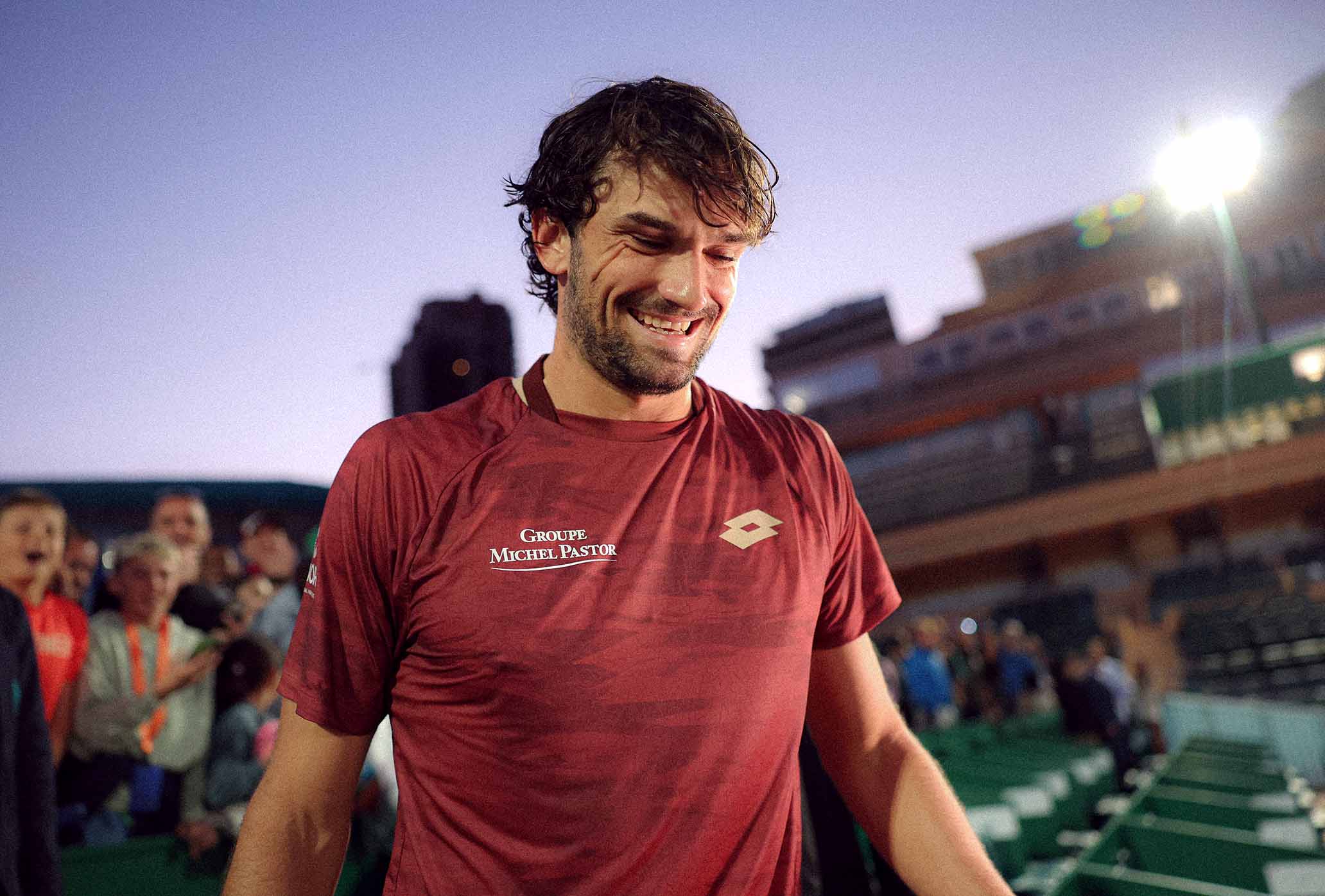
Valentin Vacherot on his local courts this week. // Getty
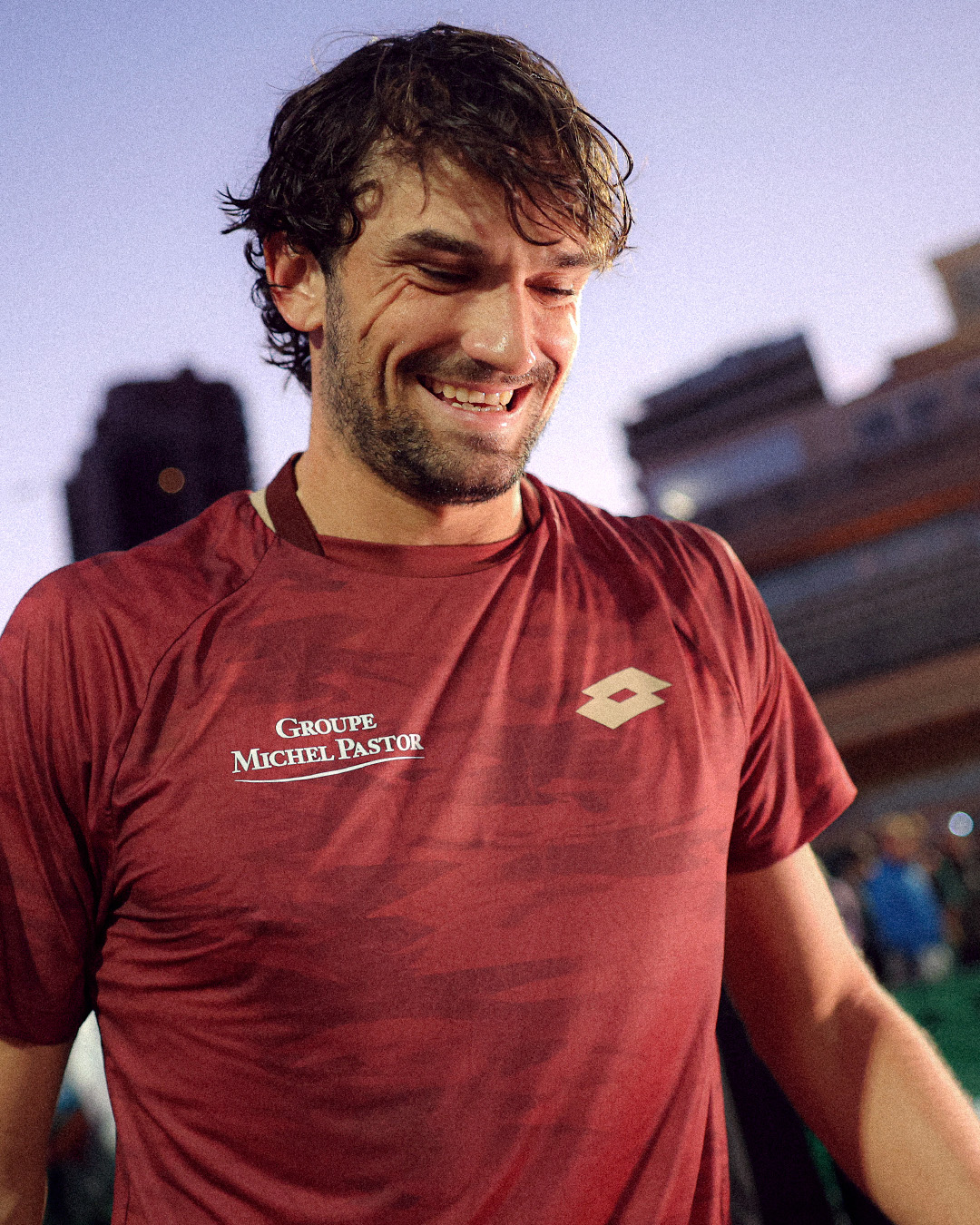
Valentin Vacherot on his local courts this week. // Getty
Respectfully: I had gone many decades of life without considering the notion of “Monegasque” identity, or even seeing the word “Monegasque.” I knew what Monaco was, of course. But I somehow hadn’t wrapped my head around the concept of being born there and living there full-time. I thought it was just a place you went to in order to hide from taxation, board big boats, gamble large sums, watch fast cars, things of that nature. It was only in the past few years, when I began to learn about Formula 1, that the word even entered my lexicon, courtesy of driver Charles Leclerc.
In fairness, my impression about Monaco wasn’t totally off base: According to a 2025 analysis by the Monegasque Institute of Statistics and Economic Studies, of its tiny population of 38,857 residents, only 24 percent are Monegasque by nationality. One member of that vanishingly small subgroup is the 27-year-old tennis player Valentin Vacherot. If you know the name at all, it is probably due to his freak performance at the Shanghai Masters last year. Refresher course: Despite being ranked No. 204 in the world, and despite having only won a single 1000-level match in his career, he won the entire tournament. Also, he had to beat his own cousin—Arthur Rinderknech, who was himself on an uncharacteristic heater—in the championship match. Vacherot became the first player from Monaco ever to win an ATP title, and the lowest-ranked player ever to win a Masters title.
What’s remarkable is that Vacherot has backed up that result ever since. With a sturdy serve-and-forehand foundation, plus great rally tolerance and movement at 6 foot 4, Vacherot simply looks the part of a top 30 ATP player and has given no indication of an imminent return to pumpkin state. He has improved his ranking to No. 23 in the world. Since the end of his dream run in Shanghai, he has been competing at a higher layer of the tennis atmosphere—tour-level events—and he has gone a sterling 16–9. That includes a quarterfinal at the Paris Masters, a third-round showing at the Australian Open, the round of 16 in Miami.
That sterling record also includes the hot streak he’s enjoyed this week on his home courts. Vacherot was born in Roquebrune-Cap-Martin, which lies in France, just outside the periphery of Monaco. It is in Roqueburne-Cap-Martin where you will find the misleadingly named Monte-Carlo Country Club, which is not actually in the Monte Carlo area of Monaco, nor inside Monaco at all. Vacherot grew up hanging out and playing at the tennis club, which is a training base for tons of top ATP players, many of whom reside in nearby Monaco. It also hosts the Monte-Carlo Masters. That was his favorite week of the year, as Vacherot recalled in a recent episode of the AO podcast. He’d pray that it fell during his school vacation, so that he could stay on site from 9 a.m. to 7 p.m., watching matches and getting autographs. Much later on, in 2023, 2024, and 2025, the local boy was awarded a wild card to compete in the main draw of that tournament. This year, he didn’t require the club’s generosity at all, because he was ranked so high he nearly had a seed next to his name—a measure of the distance he’d traveled in such a short span.

On Wednesday, Vacherot took down his first big opponent of the season: Lorenzo Musetti, last year’s runner-up at this tournament, who is now working his way back from the leg injury he suffered while up two sets on Novak Djokovic in Australia. Musetti isn’t yet back to the peak of his clay-court artistry, and Vacherot brought some of his best tennis of the year to complete the upset. “If someone had told me that my first top 5 win of the season would be here in the night session on this center court I’ve been hitting on since I’m 6 years, [I’d say] nothing can beat that,” Vacherot said after the win, which he spent riling up the home crowd.
For this one stop on the tour, Vacherot is the marquee name, and on Thursday it was he, not Jannik Sinner or Carlos Alcaraz, who got the last slot on Court Rainier III. His opponent was another Monaco resident, though not a native son: the great Hubi Hurkacz, finding his footing after a right knee surgery last year, who broke a seven-match losing streak here. Looking at their matchup on the scoreboard, it’s hard to miss that the Monaco flag is the Polish flag upside down. Vacherot came out sharper, racing out to 4–0 in the first set, only to lose it in a tiebreak. The character of the match changed with the passage of time. On paper, it was a battle of big servers, but in the cold wet reality of Thursday night, the balls slowed down and the rallies lengthened dramatically. Neither player could produce an easy winner; the tennis got scrappy and grunty. Vacherot, who said that he relishes a marathon match, triumphed after nearly three hours, to the delight of his friends and family at the club. He became the only Monegasque player ever to make it to the quarterfinal stage of this tournament.
“I’d rather win Monte Carlo than a Grand Slam, if I could, to be honest,” Vacherot said on the aforementioned podcast, reflecting on how integral this tournament is to his history. He’s now two wins away from realizing that unlikely dream. Perhaps it helps to have pulled off the whole unlikely dream thing before.
PURE, ORIGINAL TENNIS — SIGN UP!
The Coach Approach
The Coach Approach
The Coach Approach
The coaching carousel turns, but are full-time coaches even necessary?
The coaching carousel turns, but are full-time coaches even necessary?
By Simon Cambers
April 8, 2026
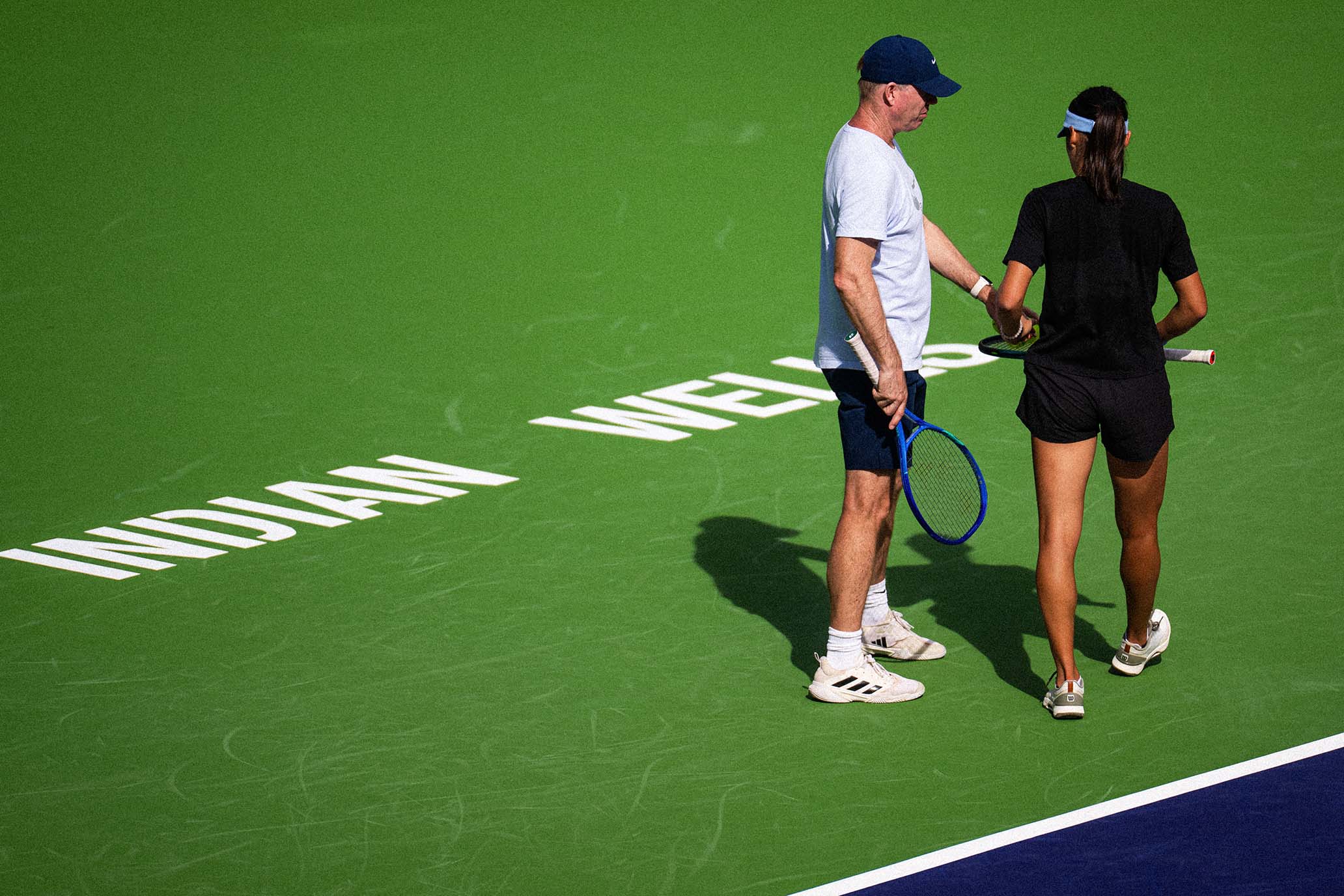
Mark Petchey and Emma Raducanu renewed their partnership at Indian Wells this year. // Getty
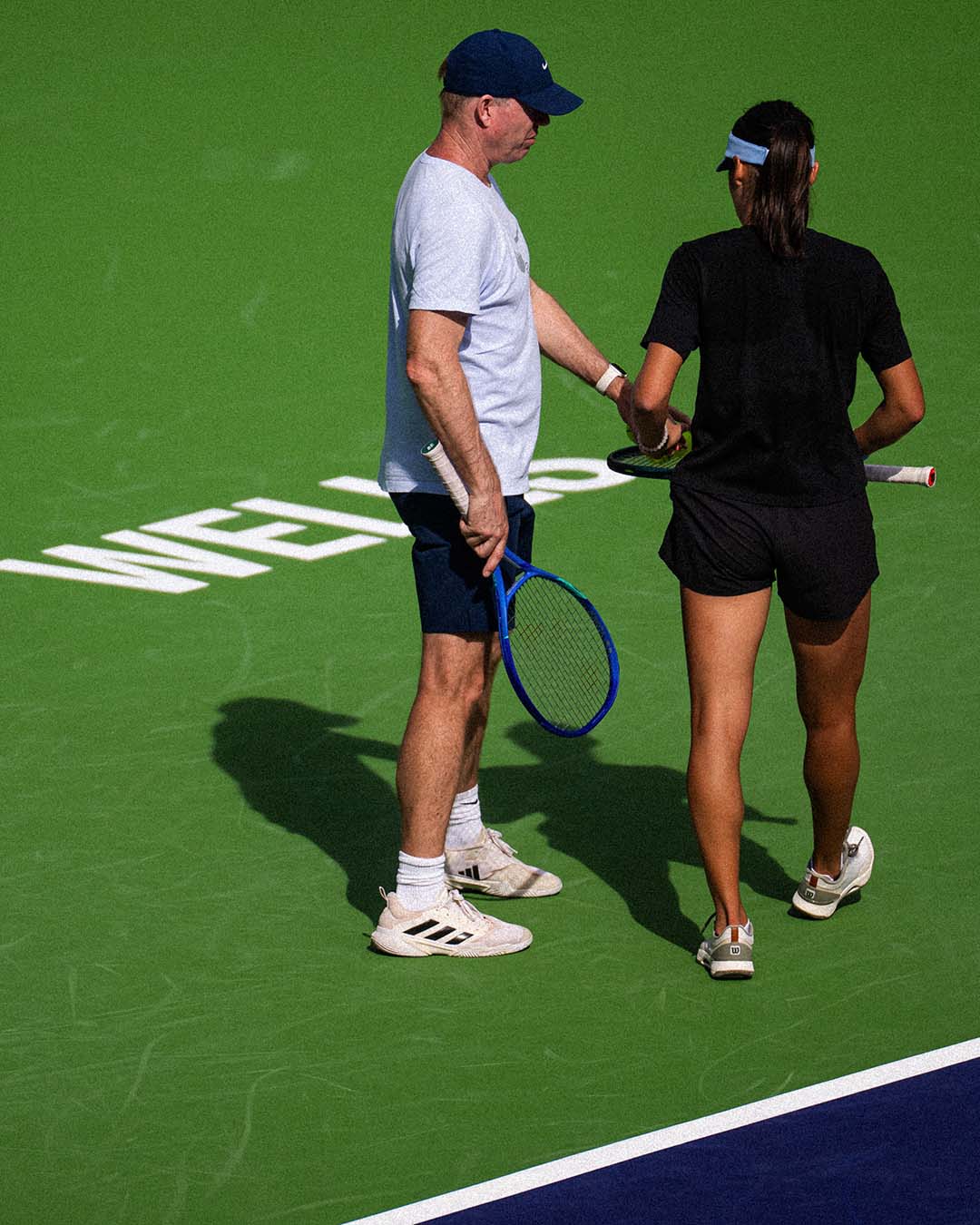
Mark Petchey and Emma Raducanu renewed their partnership at Indian Wells this year. // Getty
The coaching merry-go-round began early this year. Usually it’s an end-of-season-type thing, a clear-out before the new year, but things have been moving fast, with Iga Swiatek and Emma Raducanu at the heart of a spring clean. Swiatek split with Wim Fissette, who helped her win Wimbledon last summer, as she looks to regain confidence and form, while Raducanu parted ways with Francisco Roig, who then worked with Giovanni Mpetshi Perricard for about five minutes before hooking up with Swiatek at the Rafa Nadal Academy, with the man himself on hand in the background.
Who would want to be a coach these days? Even success doesn’t bring security. It’s less than a year since Swiatek won Wimbledon, for which Fissette was given due credit, and yet the Belgian lost his job when her confidence deserted her. In an interview with The Athletic last week, Fissette said patience is a rare quality in tennis. “There are some teams that can stay really calm under, let’s say, difficult conditions,” he said. “Others feel like something needs to change. As in every sport, it’s always first the coach that has to go.”
It’s highly likely that Swiatek will find form under Roig, especially with Nadal, a genuine hero of hers, on hand to offer support and advice these past few days. And Fissette will doubtless land another big job soon, with Amanda Anisimova among big names looking for a new coach.
Do all players even really need a full-time coach? Players of Raducanu’s earning power can afford big teams if they want, picking and choosing between whom they confide in. In the past few years, she has seemed happiest when working with Mark Petchey, the former British player and early-career coach of Andy Murray. Petchey couldn’t be full-time if he wanted to, thanks to his TV commitments. Perhaps that’s exactly what works for Raducanu, someone she trusts but who can’t be there every day, so is less likely to get on her nerves.
Raducanu is a fascinating case. Every time she changes coach—and in truth, it’s been often—she is criticized. Stay with someone for longer than a few months, she is told. Get a legend to help you. The funny thing is that though Raducanu appears ruthless in her decision-making, the opposite is the truth, at least going by her words to the BBC in Indian Wells recently.
“I have had a lot of people telling me what to do, how to play, and it hasn’t necessarily fit,” she said. “I want to come back to my natural way of playing. That takes time to relearn because that’s something that has been coached out of me a little bit. I don’t necessarily want to have one coach in the role because anyone I bring in is straightaway going to be scrutinized—even if it’s a trial. I might feel the pressure to stick with them, even if it’s not necessarily the right decision.

“I would love to have a coach that works well, but I don’t think it’s necessarily going to be easy to find one person and they are going to check every box. I definitely have my mind open to it. It’s just that I would rather someone not come in and tell me, ‘Let’s do this,’ and I disagree with it but have to listen to them.”
Maybe Raducanu just doesn’t like being told what to do. And she doesn’t have to; she’s the one paying the bills.
When the likes of Rod Laver and Ken Rosewall ruled the roost, they didn’t have someone in their pocket day in, day out. They used Harry Hopman, Australia’s legendary Davis Cup captain, as a sounding board when they needed him, and that worked nicely.
Likewise, Roger Federer did very nicely when he split from the late Peter Lundgren at the end of 2003. Lundgren had helped him win his first Grand Slam title that year, at Wimbledon, but Federer went off on his own, and in 2004, he won three of the four Slams, trusting his talent. He had plenty of people he could speak to behind the scenes, of course, but he didn’t have that constant that players are so often told they need.
Nick Kyrgios played for much of his career without a full-time coach; Novak Djokovic doesn’t have a full-time coach right now. As he said in Indian Wells: “I’m okay with that. I feel I have what I need. I don’t think that right now I’m ready to, again, at this stage of my career, bring somebody completely new and go through the same process of getting to know each other.”
Darren Cahill, the coach of Jannik Sinner since 2022, believes the optimum length of time for a coach to be with a player is about three to four years. In that time, the Australian says, a player will have learned everything the coach has to give. Some players stick with their coach for longer. Alex de Minaur has been with Adolpho Gutierrez since he was 9; if you can find that great, long-term player-coach relationship, that’s great.
But everyone has different needs. Raducanu didn’t like where her game was going under Roig, and so she cut ties. Fair enough. Swiatek is in the business of winning Slams, and if she felt she needed a change, then so be it.
Coaches work so closely with players these days—going out for dinner each night, hanging around with them all day—that when the cut comes, it can hurt. But the coach should also know that it’s not worth taking things too personally. The merry-go-round continues.
PURE, ORIGINAL TENNIS — SIGN UP!
Talia Gibson: From Out of Nowhere
From Out of Nowhere
From Out of Nowhere
Talia Gibson Has Power to Spare.
Talia Gibson Has Power to Spare.
By Giri Nathan
April 3, 2026
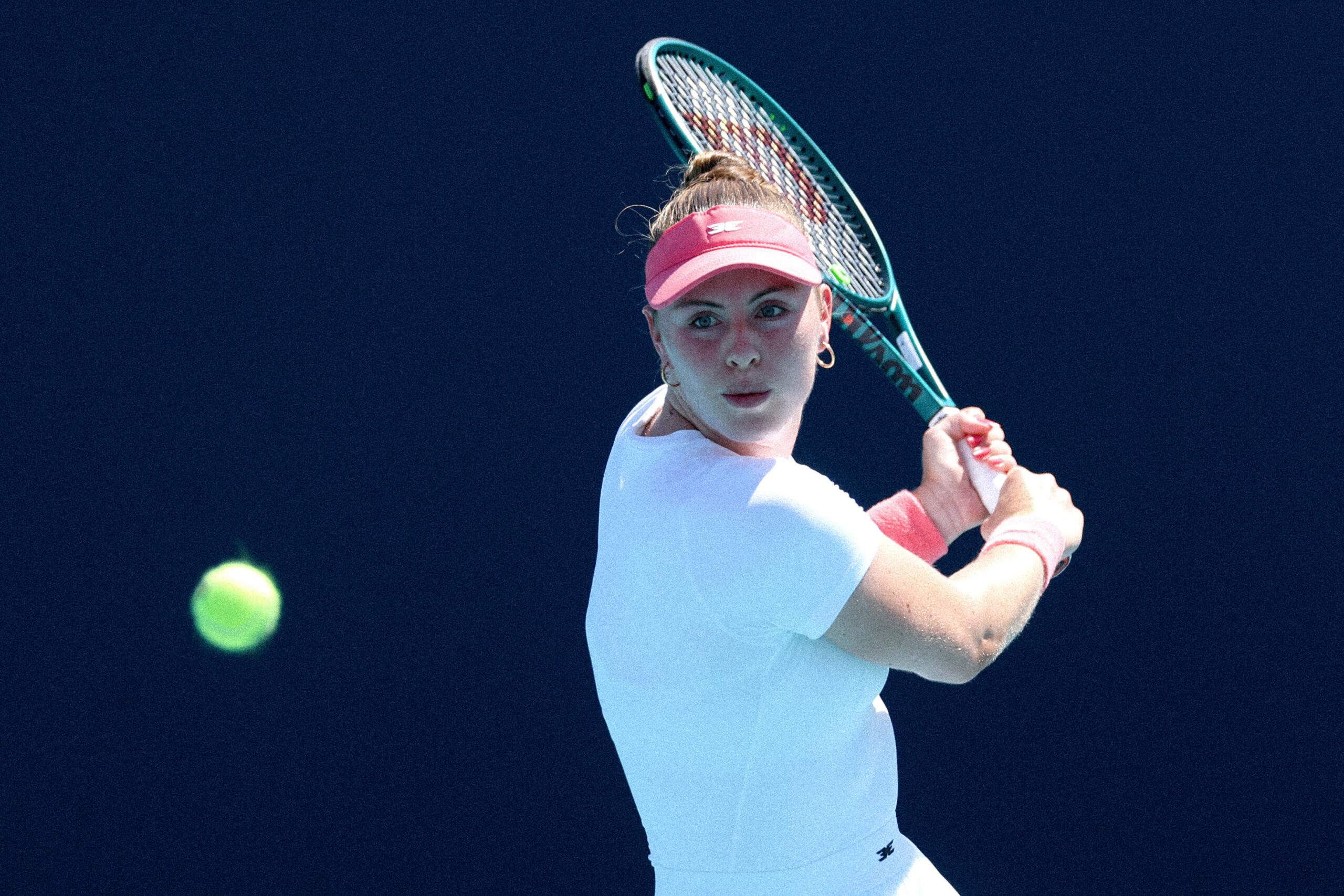
Talia Gibson during her match with Iva Jovic in Miami. // Getty
Talia Gibson during her match with Iva Jovic in Miami. // Getty
In winning the Sunshine Double, champions Aryna Sabalenka and Jannik Sinner each won 12 matches across Indian Wells and Miami. An astounding feat. Across those same two tournaments, meanwhile, one WTA player won 11 matches. Granted, some of those matches were in the qualifying rounds, but many others were against the very best players in the world. The sudden emergence of 21-year-old Talia Gibson was wild to witness.
Ranked No. 118 at the start of the season, the young Australian had not given us any omen that such a blistering run of form was coming. Right before coming to the Californian desert, Gibson was playing at the W100 in Bengaluru, where she lost in straight sets to the world No. 160. At that point, she had managed only four wins over top 100 players in her entire career. And then across the next few weeks in Indian Wells and Miami, she beat five top 20 players. What gives?
Within a few seconds of watching her, it’s clear that Gibson is a ball-striker’s ball-striker. Power is increasingly the currency of this sport, and she has plenty to spare on both wings. The backhand in particular I could watch all day—a swooping strike that she even likes to take inside out on occasion. She’s hard to push behind the baseline as she camps out and makes early, bruising contact on one ball after another. No matter how casual her swing, that ball moves; it’s the sort of power we have come to expect out of those named Elena Rybakina or Amanda Anisimova. These are lofty names to be throwing around a player who has been at this level for only a month, and Gibson may well just be on an anomalous heater…but there are players who go their entire careers without ever revealing weapons like these. So perhaps there is something real here to build on.
If you asked any of the top players upset by Gibson in March, I suspect they would say that there’s definitely something real here. In Indian Wells, she won two rounds of qualifying, then a first-round against world No. 41 Ann Li, which was the best win of her career to date, although that mark was immediately obsoleted by her next three wins, over the world No. 11, No. 17, and No. 7 (or Ekaterina Alexandrova, Clara Tauson, and Jasmine Paolini, respectively). A quarterfinal appearance at Indian Wells, for a qualifier, who had won only two WTA main-draw matches heading into the 2026 season. Surely a fluke?
Not at all. In Miami, she was back in the qualifying rounds, and then springing back out of them to pull off. Eventually she took out No. 15 Naomi Osaka in straight sets, a match where the neutral observer might find themselves tallying up the players who can now match Osaka in the high-speed shoot-outs she used to dominate, a testament to how deep the sport has gotten in even the past few years. From there, Gibson moved on to crushing No. 17 Iva Jovic, the teenage prodigy who nevertheless appeared to be playing tennis from a lower weight class. Gibson cracked returns for casual winners, winning a staggering 81 percent of her points when returning Jovic second serves. Eventually Gibson had her fun ended in the fourth round by Rybakina, who reasserted the true hierarchy of power players on tour.
But by that point Gibson had stacked lots of wins and altered the course of her whole season. At world No. 56, she’ll no longer have to claw through qualifying in these 1000-level tournaments, and she doesn’t have too many points to defend for the rest of the season.
Australia hasn’t had a tip-top player on the women’s side since Ash Barty hung up her racquets. There’s a buzz around the 19-year-old Maya Joint, now ranked No. 31 in the world and currently on a rough six-match losing streak. Which of these two prospects will go higher in tennis depends on what skills will be rewarded in the future. Joint has assembled a more successful full season but hasn’t yet had as much success against top players as Gibson has had in just the last month. Joint moves around the court with more ease, but Gibson can gain control of the rally with any given superpowered ground stroke. In the era of Sabalenka-Rybakina duopoly—surely shaped by the current facts of court speed and racquet tech and tennis ball quality, which may well change—fortune seems to favor the bigger bashers.
PURE, ORIGINAL TENNIS — SIGN UP!
Talent is the Armor That Protects Aryna Sabalenka
Demons
Demons
Talent is the armor that protects Aryna Sabalenka.
Talent is the armor that protects Aryna Sabalenka.
By Owen Lewis
March 25, 2026
David Bartholow
David Bartholow
In her press conference after losing the Australian Open final in January, Aryna Sabalenka couldn’t stop laughing. She was angry after losing to Madison Keys in the same match a year earlier, annihilating her racquet after match point. Dropping the Roland-Garros final to Coco Gauff in June after hitting 70 unforced errors made her feel something even worse. “Once a year even a stick shoots,” she said, disgustedly, as Elena Rybakina hit her off the court in the championship match of November’s WTA Finals. When my friends and I talk about who we think will win a tournament, I sometimes say, “Whoever plays Sabalenka in the final.” By the time Rybakina beat Sabalenka again in Melbourne this year—Aryna won five straight games to go up 3–0 in the third set; she had the match sewn up—there seemed to be no new negative emotions for Aryna to feel. Her laughter was regretful, dark, fatalistic, but still. The best player in the world’s inability to close out a tournament had become comedic.
Had Sabalenka fallen short yet again in the Indian Wells final, watching her press conference would have felt intrusive. “I’m so done losing these big finals,” she had said earlier in the week; when I read the quote, I figured it’d been said partially in jest, but Sabalenka didn’t have a trace of humor in her voice. She’d already cycled through—hell, maybe invented—the five stages of grief in top-level tennis: fury, heartbreak, confusion, rationalization, and nihilistic laughter. Some untold horror awaited her if she lost once more.
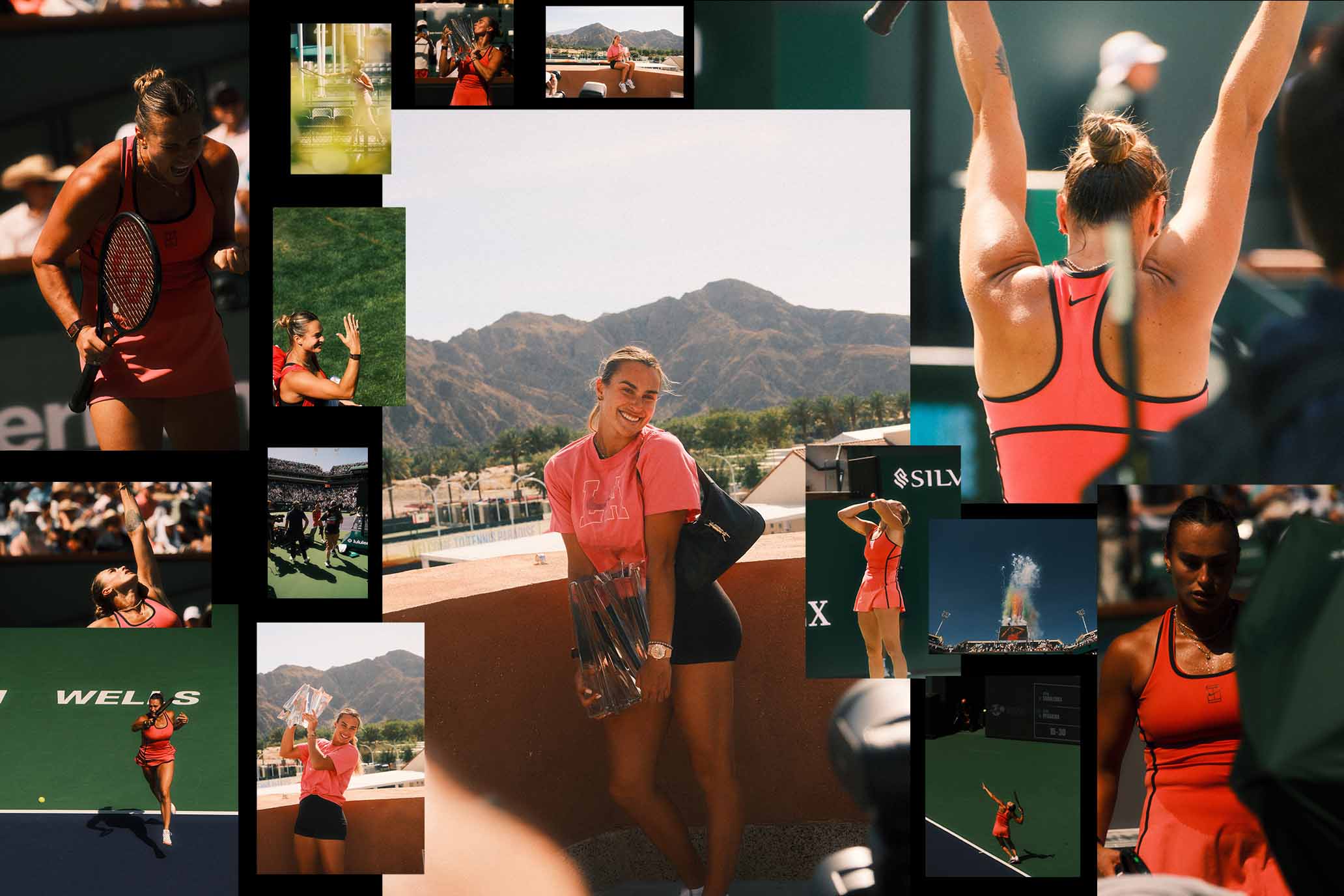
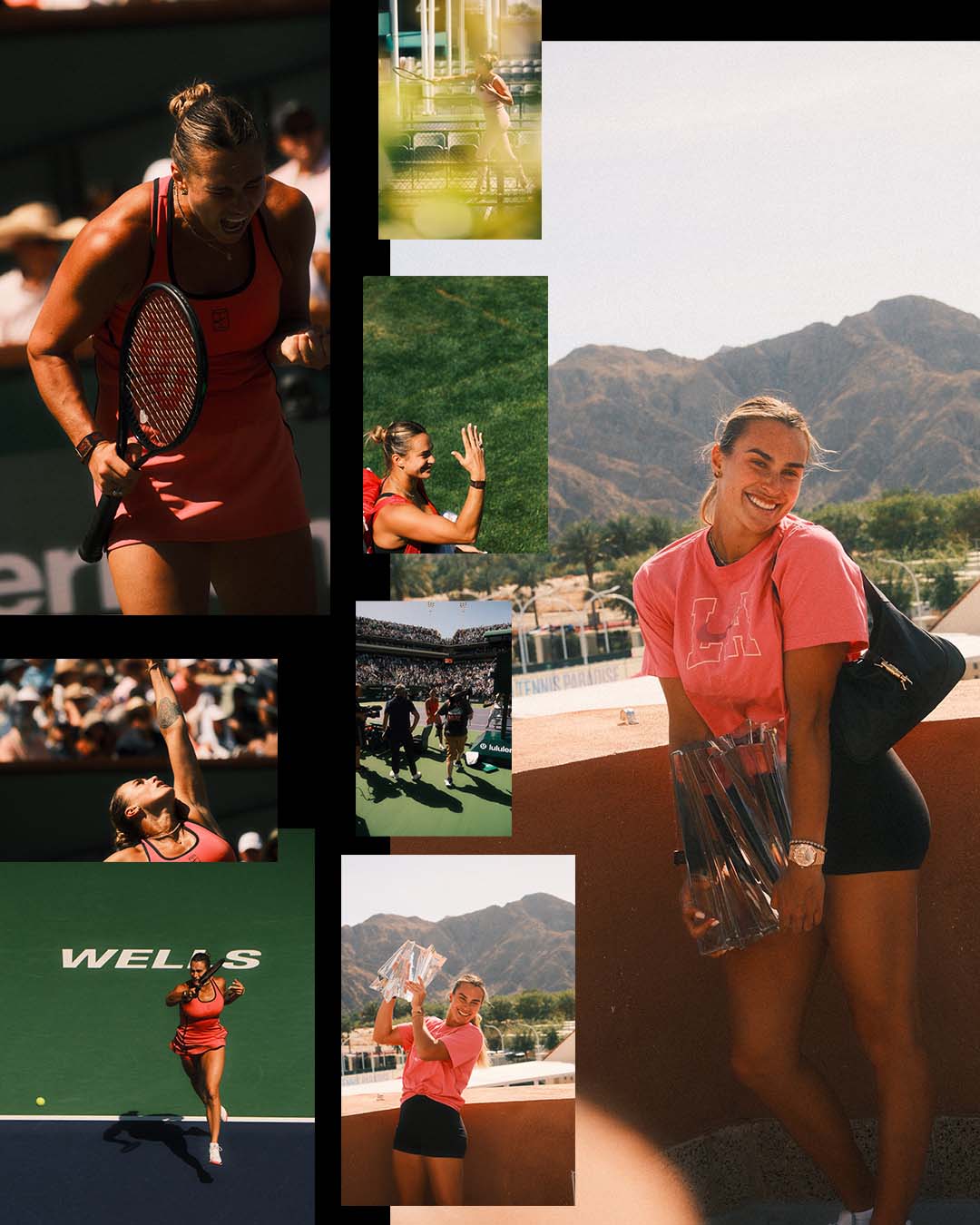
It looked imminent at a number of moments in the Indian Wells final, a Rybakina rematch. The matchup between the current two best players in the world is an odd one. Rybakina gives Sabalenka hell every time but tends to bleed faster when a match grows teeth, so she often loses in three sets if she can’t win in two. Rybakina breezed through the first set and went up an early break in the second before beginning to fade. She lost serve at 1–1 in the decider despite going up 40–love—something that should never happen given her top-flight serve, but it’s somehow unsurprising when she drifts into the ghostly background of one of her own matches. Not without difficulty, Sabalenka maintained the break throughout the set and served for the match at 5–4.
Of how many dominant No. 1-ranked players in history can you expect failure in that situation, and be right? Sabalenka only won one point in the game. But even I didn’t bargain for the three second-serve return errors she missed at break point up in the following game. This was the Australian Open final again, but magnified, each vital mistake she made there reproduced here in sharper and more agonizing color.
Sabalenka’s vices and virtues collided in a deciding-set tiebreak. Since the start of 2025, she has demonstrated a confusing excellence in breakers. You’d think a player so susceptible to the pressure of late-round matches would come apart in the emotional horror movie of a first-to-seven, win by two. But it’s as if the proximity of the finish line, even if she’s not first over it, frees Sabalenka from her demons. She won 19 straight tiebreaks in 2025. Here, she and Rybakina exquisitely teetered their way to five–all, at which point Elena thrashed a backhand winner down the line, giving her a match point on serve.

In the same situation in Melbourne, Rybakina hit an ace, then celebrated her career-defining triumph as if she’d unexpectedly found a quarter in her pocket. This time, her first serve was more tentative, landing closer to the middle of the box. Sabalenka returned it with authority, then, on her next shot, lashed a backhand winner at an acute crosscourt angle. It spent approximately a millisecond in my field of vision and felt like it cleared the net by a fly’s wing. It was an even braver backhand than Rybakina had just hit, struck under even more pressure. When Sabalenka had a match point of her own, she went for broke on the serve. Rybakina’s return sailed long. Sabalenka wept at the sky and clutched the air hard, as if seizing something ephemeral suddenly made tangible.
I am consistently floored by how good Sabalenka is. On a tour including Rybakina, Gauff, Iga Swiatek, Amanda Anisimova, and a fleet of other high-ceiling challengers, Sabalenka is a clear class above everybody and has been for 75 weeks and counting. Teenage terrors Victoria Mboko and Iva Jovic are already scaling the rankings; Sabalenka played both at the Australian Open and didn’t drop a set. She hasn’t missed a major quarterfinal since 2022, hasn’t lost in straight sets at a major since 2020, and has been in 12 of the last 14 major semifinals (of the two missing, she didn’t play one tournament and got sick in another). Most of her records are on hard court, but she’s a two-time Wimbledon semifinalist (and had to skip the tournament in 2022 and 2024) and a three-time Madrid champion, and she ended Swiatek’s 26-match winning streak at Roland-Garros by bageling her in the third set. Though her accomplishments haven’t yet caught up to Swiatek’s, Sabalenka feels like the defining player of the generation.
As I write this, Martina Navratilova just cried, “Queen Aryna!” on Tennis Channel at a successful Sabalenka serve-and-volley. Sabalenka has a drop shot in her arsenal, a net game. She hits sharp angles on both forehand and backhand as well as big blasts through the middle of the court. The strength of her second-serve return alone is enough to win many matches. Her defense, once a nonfactor in her game, is now yet another weapon. Sabalenka has yet to drop a set in Miami. Rybakina is making something of a challenge for the No. 1 ranking (she’s still more than 3,000 points behind), thanks to making three big finals in a row over the course of a few months. Sabalenka has been similarly reliable in getting to finals over the course of years.
And still, that vulnerability in those finals. She is incredibly susceptible to the chaos and anxiety wrought by a tennis match. In that way, her talent is an armor that protects her from the nerves. She’s bolstered it in every imaginable area.
But sometimes, that armor fails. The pressure of a final pierces it, or an opponent can match her on a given day. On those occasions, Sabalenka has to meet the moment with nothing but herself. It’s still when she’s most beatable, but Indian Wells proved it can also see her at her most spectacular.
PURE, ORIGINAL TENNIS — SIGN UP!
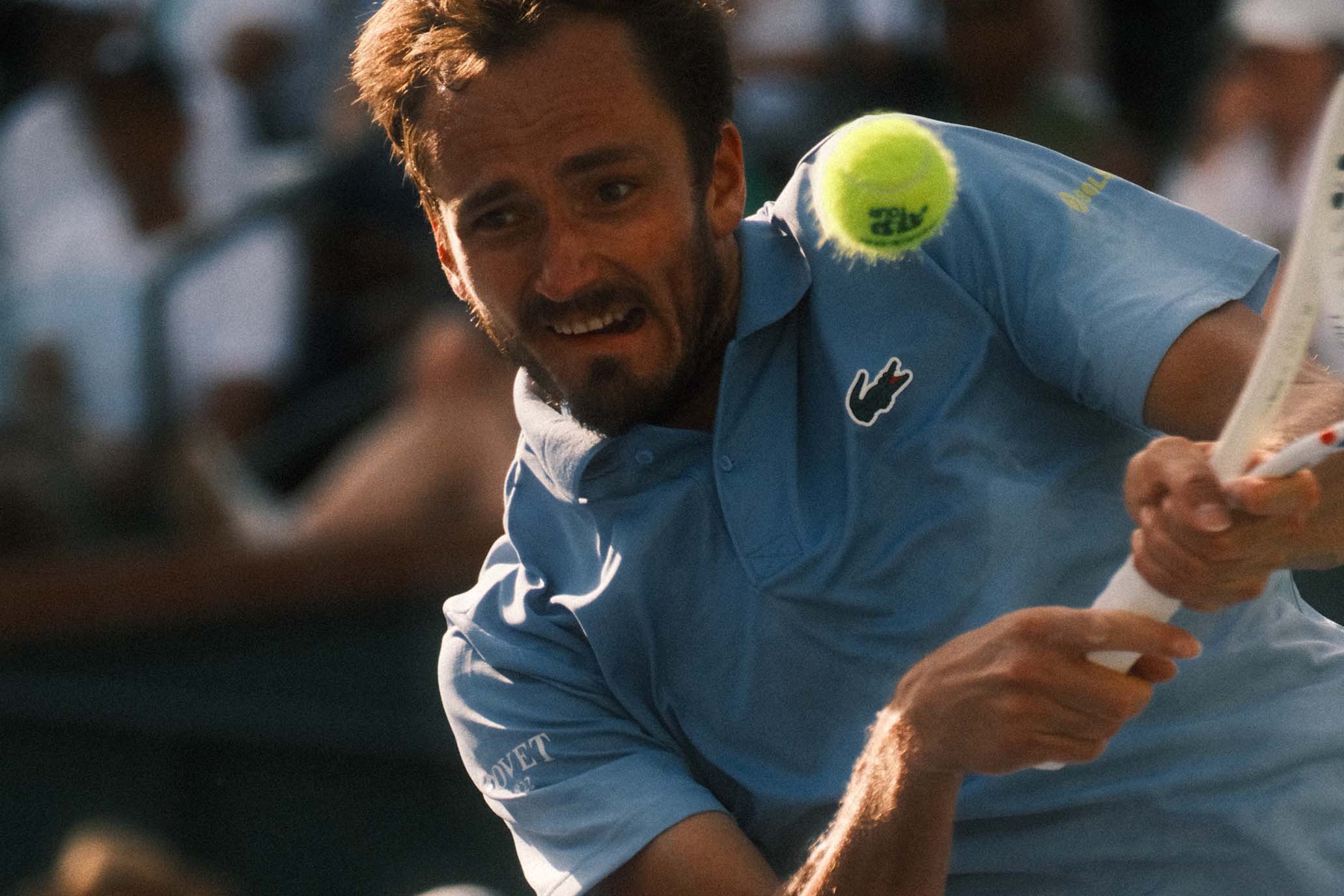
Peak Medvedev is Back
Medheads, Rejoice
Medheads, Rejoice
We are now re-entering an era of Peak Medvedev.
We are now re-entering an era of Peak Medvedev.
By Giri Nathan
March 20, 2026
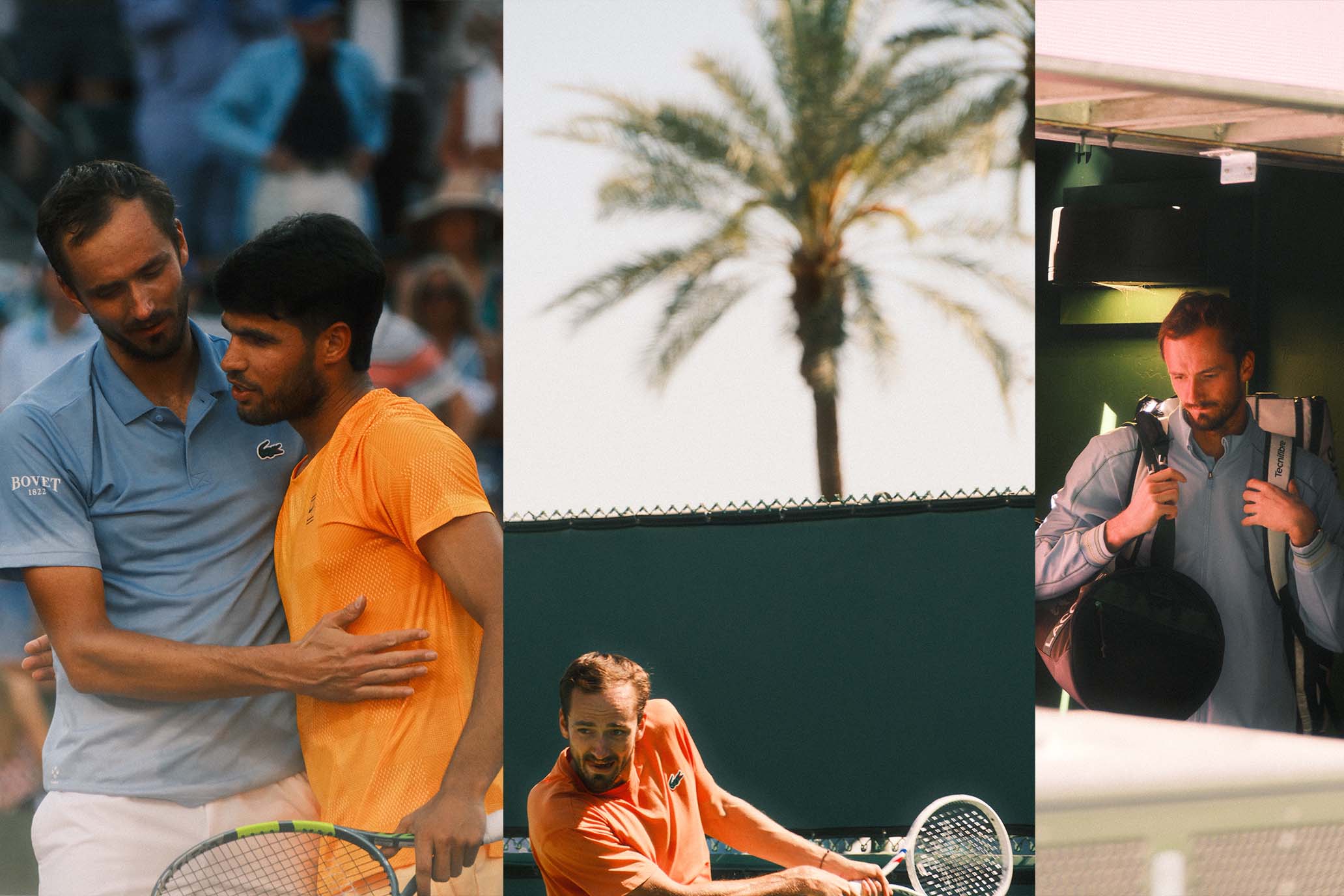
Photo by David Bartholow.
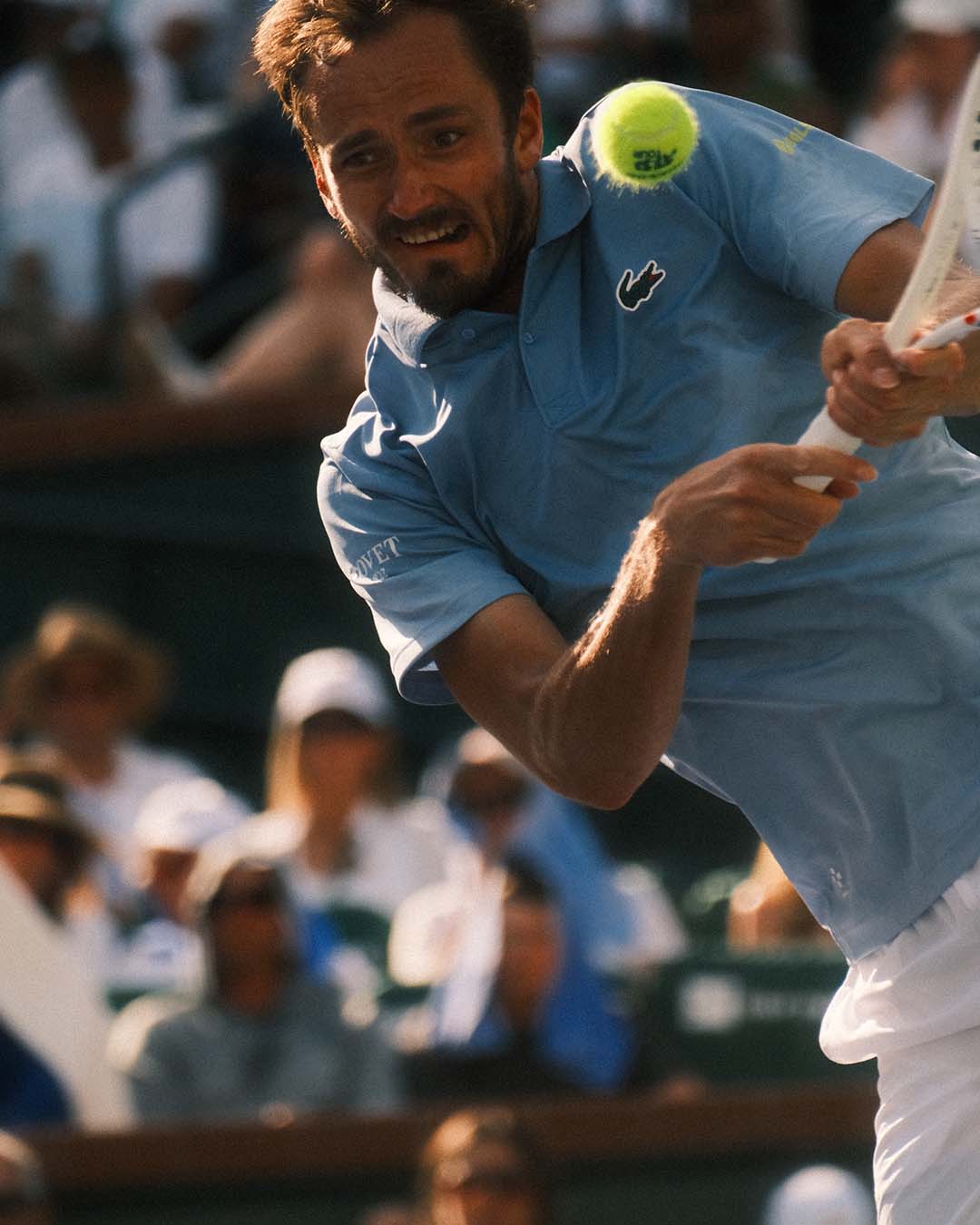
Photo by David Bartholow.
Sometimes I compile a wish list at the start of the tennis season. I forgot to do it this year, but if I had, at the top would have been a Daniil Medvedev resurgence. Not that I would have written it down without any sheepishness. As much as I believe in his peculiar game, more than I believe in anyone else’s game in the rapidly obsoleting ’90s-born generation, the case for Medvedev’s relevance was getting shakier by the day. His 2025 season was a wasteland. His trademark on-court meltdowns continued at the usual rate, but he forgot to counterbalance them with the actual match wins. Not much fun when those proportions are off
I found myself in too many conversations where I insisted, “He’s the only guy that has recent wins over both of them at Slams,” only for the months to keep on passing by, such that a 2023 US Open win over Carlos Alcaraz and a 2024 Wimbledon win over Jannik Sinner got harder and harder to hang an argument on. And in the interim, Novak Djokovic took over as the guy with the most recent wins over both of them at Slams. Plus, Medvedev was entering his 30s, while the two boy-kings of the tour were barely into their 20s. Why exactly were anyone but his dead-end obsessives supposed to care about the man who won the 2021 US Open and reached world No. 1 in 2022, but in the meantime lost his potent serve and spent years attributing his decline to shoddier manufacturing of the tennis ball?
But Medvedev shook things up at the end of last year, splitting with longtime coach Gilles Cervara, replacing him with Thomas Johansson and Rohan Goetzke. Almost immediately he won a 250-level title in Kazakhstan, a sole bright spot at the end of a dim season. Then he started the 2026 season with two more early titles: a 250-level in Brisbane and a 500-level in Dubai. Though a fresh war severely complicated Medvedev’s travel plans—Dubai to Oman to Istanbul to Los Angeles was his eventual solution—he did make it to Indian Wells in time to compete in the year’s first 1000-level event. He had match momentum, and perhaps more important, the environment had been tweaked to his liking. The Indian Wells hard courts, known for being the slowest on tour—so slow that Medvedev complained in 2023, “I’m a specialist on hard court. This is not hard court”—sped up appreciably this year. That meant it would be easier to finish points, and given his persistent complaint that it is impossible to hit a winner on tour anymore without Sincaraz-level power, it would be a welcome change.
And Medvedev thrived. From Dubai through the first four matches at Indian Wells, he won 16 consecutive sets. His serve was big and accurate again, reminiscent of his peak years. And he’d managed to inject some much-needed pace back into his ground strokes. The core magic of Medvedev’s game is the infuriating trajectory of his ball through the air, and after the bounce—a flat, low projectile that cannot easily be attacked—but some extra pace and placement make him even more dangerous still. While Medvedev over the past few seasons had taken on the reputation of a defensive player prone to low-powered shots and lengthy rallies, it was fascinating to hear how differently he conceives of his own game. As he put it after his fourth-round win:
When I’m in confidence, I’m an aggressive player. If you look, like, the Grand Slam matches when I was making finals, I’ll play, like, Rublev or Felix, the guys you cannot be more aggressive than them, but I would hit more winners than them, because I would be great in defense to try to reduce their winners, but whenever I had opportunity, I could move in.
So of course when I’m a bit playing worse, that’s where I become defensive, but it’s not by choice, it’s more by when I’m playing not great, my shot power and everything drops a bit down, the percentage of the serve, et cetera.
So when I’m hitting the ball the way I hit now, I can be aggressive and can put a lot of pressure on my opponents and still being able to be great in defense, and that’s what makes it tough.
With that renewed aggression he restored a vision of peak Medvedev: the one who rattles off quick, unreturnable serves, barely pausing between points, holds, and then sinks deep behind the baseline, where he can put a lot of returns into play and stretch out the resulting rallies. Short and easy service games for him, long and excruciating service games for you—that’s how he looks when everything is clicking.
The Medvedev who took out Jack Draper in the quarterfinal looked like that. And the one who went on to upset Carlos Alcaraz in the semifinal, 6–3, 7–6(3), looked even more confident still. Sixteen matches into the season, Alcaraz finally lost his first match of 2026, and said afterward, “I have never seen Daniil playing like this.” The Medvedev forehand in particular was struck with a conviction I hadn’t seen since that win over Alcaraz in New York back in 2023. Since that day, he’d lost four matches in a row to the Spaniard, and this match in Indian Wells could have started turning in that direction when Alcaraz lined up two set points at 5–4 in the second. But Medvedev held his ground. He has internalized that he cannot win this matchup without taking slightly bigger risks and playing closer to the lines; any passivity can be punished by Alcaraz’s ability to end points at will, with his infinite menu of options. But Medvedev managed to reverse his fortunes against a player who had seemingly surpassed him for good.
The other player who fits that descriptor, Jannik Sinner, awaited Medvedev in the final. If Medvedev wanted to capture the last 1000-level hard-court title that still eludes him, he would have to consecutively beat the two players that no one else can manage to beat even once. (It might’ve been roughly comparable to David Nalbandian reeling off consecutive victories over the Big Three to win Madrid back in 2007.) Sinner had won their last three meetings since the upset at Wimbledon 2024, and he is the rare player on tour who does not fear backhand-to-backhand battles against Medvedev. It was a brilliant battle, a stress test of the renovations to Medvedev’s game, and, despite some real chances, a narrow loss, 7–6(6), 7–6(4). On the strength of the past few months, however, Medvedev reenters the top 10. He has very few points to defend the rest of the year and has shown that he can still hang with the untouchable duo at the top of the tour, despite using tools quite different from their ultra power and spin. I second Sinner’s post-match assessment: “I do believe that tennis needs him. He’s a very unique style of playing. Seeing him back at this level, it’s great.”
PURE, ORIGINAL TENNIS — SIGN UP!

The Great Outdoors
New Balance and Tommy Paul Go Outdoors
New Balance and Tommy Paul Go Outdoors
By Tim Newcomb
March 18, 2026
Image courtesy of New Balance.

Images courtesy of New Balance.
Tommy Paul, laid-back on an airboat, whipping through the Everglades: That’s the look New Balance is channeling with the release of a new special player edition CT-Rally v2 “Outdoor Court,” created alongside Paul and ready for the Miami Open courts.
The performance sneaker from the Boston-based brand has a true outdoor twist with a Realtree camo pattern reminiscent of Paul’s off-court lifestyle preferences, such as downtime spent on his family’s south New Jersey farm or in the wetlands of South Florida.
“Some of my favorite hours are spent outside, before sunrise,” Paul says. “I grew up working around the farm, tending to animals and fishing. These simple moments inspire and ground me, and creating a shoe that allows me to share my connection to nature on the court is truly special.”
The Outdoor Court version of one of New Balance’s most popular performance tennis sneakers is not exclusive to Paul and hits the retail market March 18. The version features the Realtree Edge camouflage pattern—one with a woodsy mix of browns, grays, and neutral tones—contrasted with an “electric blaze orange” New Balance logo. This is the first time Realtree camo has adorned a performance tennis shoe. The special edition retains the performance attributes of the Fresh Foam X cushioned model.
“The CT-Rally v2 Outdoor Court edition shares Tommy’s life in a way no other shoe could—reflecting his unique blend of grit, calm, and competitive drive,” says Josh Wilder, New Balance senior product manager. “We worked closely with Tommy to capture his connection to the outdoors and translate that into a design that feels original, personal, and truly unique in the tennis world.”

Image courtesy of New Balance
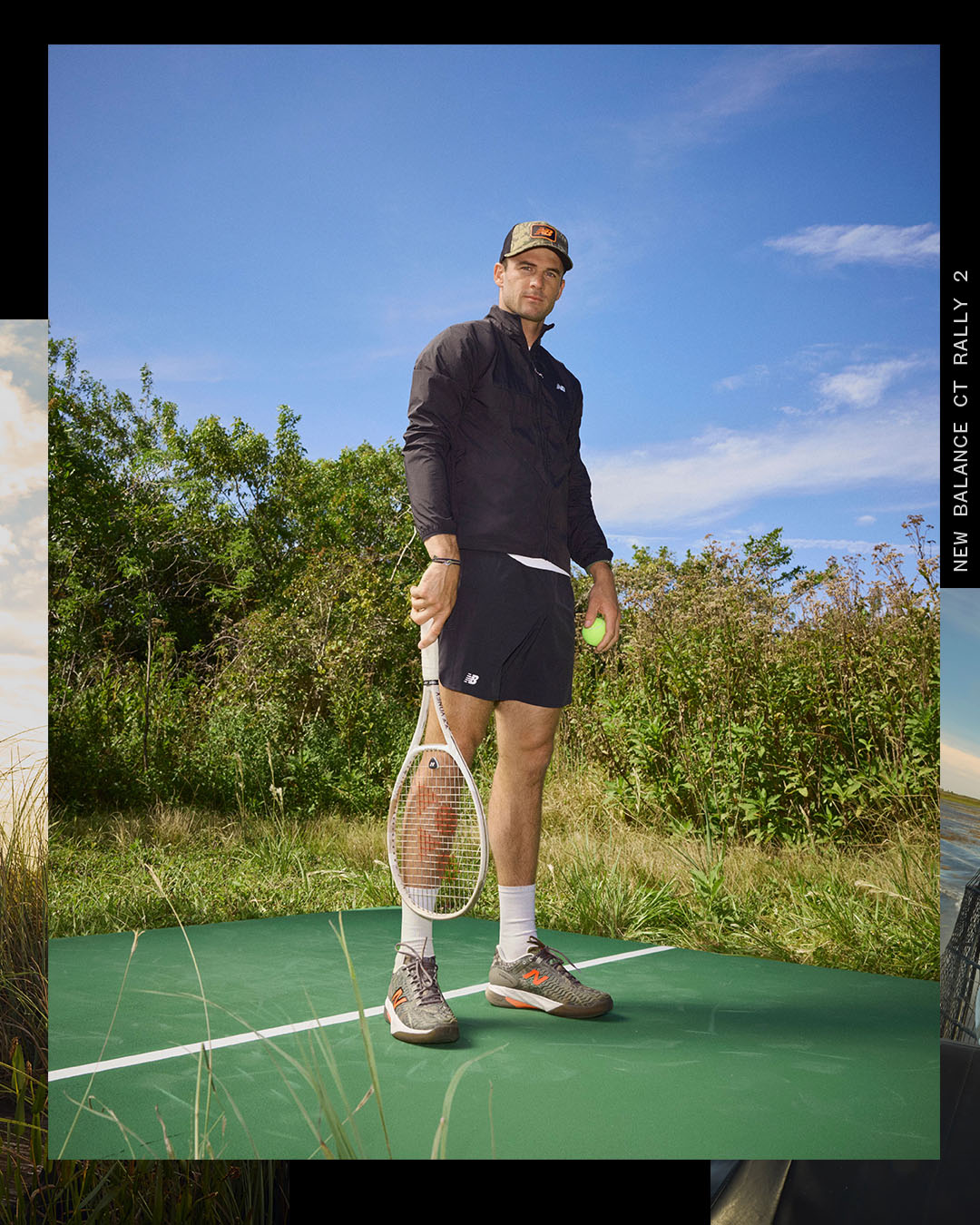
Images courtesy of New Balance.
Follow Tim Newcomb’s tennis gear coverage on Instagram at Felt Alley Tennis.
SIGN UP — YOU'RE ONLY AS GOOD AS YOUR SECOND SERVE.
SIGN UP — YOU'RE ONLY AS GOOD AS YOUR SECOND SERVE.
Jack Draper Reminds Us How Good He Is
A Loud Return
A Loud Return
Jack Draper reminds us how good he is.
Jack Draper reminds us how good he is.
By Giri Nathan
March 13, 2026
Photo by David Bartholow.
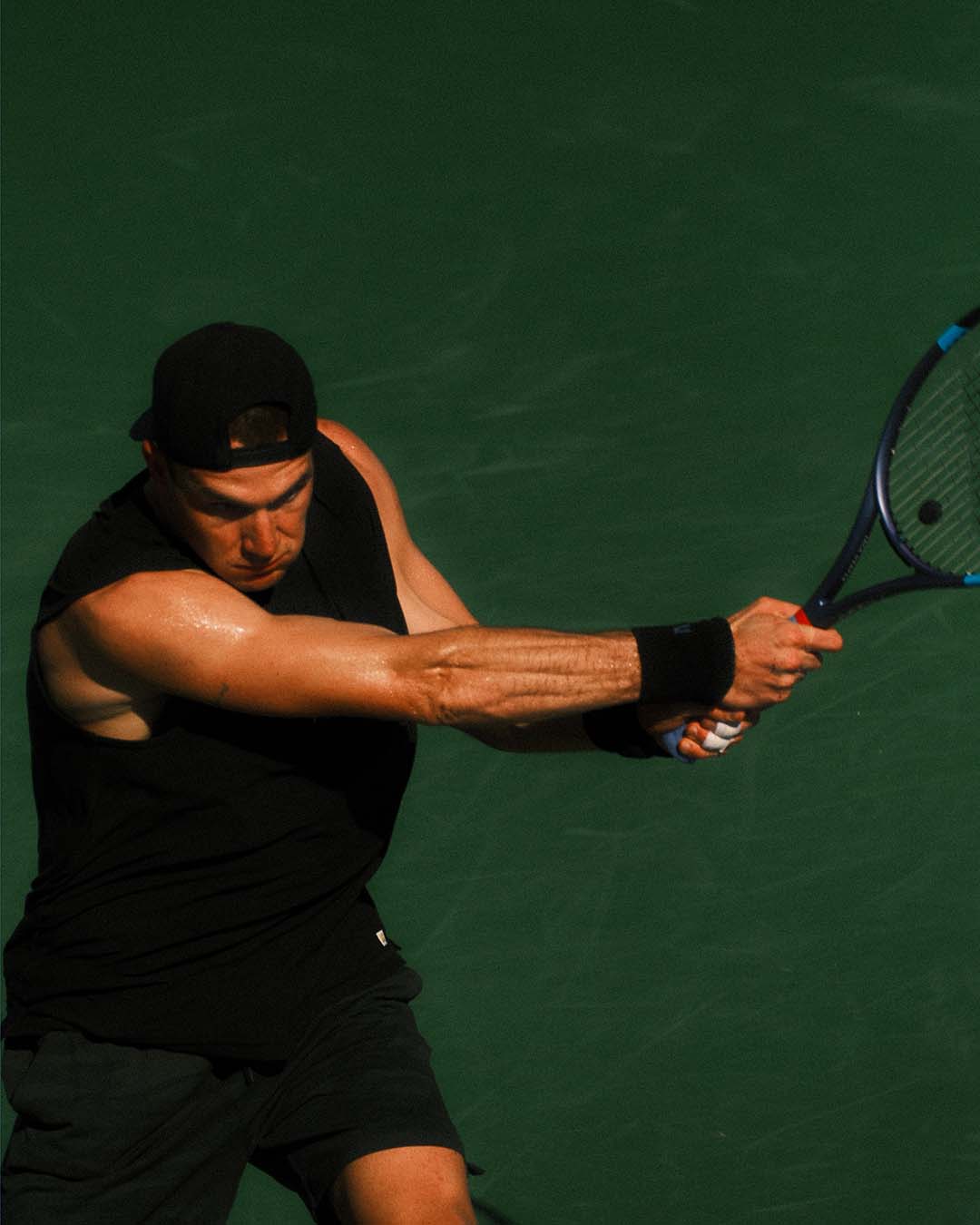
Photo by David Bartholow.
Eight months of no Jack Draper made it easy to forget that he is, in fact, the defending champion at Indian Wells. But if ever there were a way to remind the world that you exist, it is winning a comically high-level epic over Novak Djokovic in just your second tournament back from injury. Draper’s run in the desert ended in the quarterfinals, but the 24-year-old’s return to tour was loud and intriguing. Any fans concerned about the competitive balance of the ATP should be relieved to see this big-serving lefty with the weapons to at least make life difficult for the duopoly at the top and, evidently, to defeat the elder Djokovic just trailing them.
This time last year Draper was emerging as one of the best players of this early-20s cohort, and then just one of the best players in the world. After the Indian Wells title, he enjoyed the best clay stretch of his career: runner-up at Madrid, quarters in Rome, fourth round at Roland-Garros. He got as high as world No. 4. But injuries have always intervened in his career, and during the clay season his left arm began to act up. He said he felt his arm “shutting down a little bit” when hitting his forehands and serves. Pain increased in the grass season. The diagnosis was a bone bruise on the humerus of that left arm. He skipped the summer hard-court events and even took a full month off hitting serves in practice. But he did arrive at the US Open to win one match and then withdraw. That ended his season for good. Just as he seemed to be ascending, he was grounded again.
After a late withdrawal from the Australian Open, Draper finally returned to competition in February, having played just one match in the previous eight months. During his time off he made one adjustment to his scalp (buzz cut) and two adjustments to his game, both with the intention of protecting his body, as he told Chris Eubanks on Tennis Channel. First change: changing his serve from a pinpoint to a platform stance—meaning he no longer drags his back foot up to meet the front foot, but rather keeps them spaced out, which gives him a more stable base (though he didn’t speak to its impact on his arm specifically). Second change: stringing his racquet with gut in the mains, because while gut doesn’t have the spin potential of poly strings, it is softer on the body, transferring less vibration to the arm.
Considering the length of his layoff and the novelty of these changes, it was surprising to see him play so well. There’s very little missing in his game. That well-roundedness makes sense when you consider his origin story: Draper hit his growth spurt late and grew up winning tennis matches without the benefit of the huge serve he would later acquire. He backs up that serve with general athleticism and elite ground strokes, qualities that explain why he is the rare elite server who is also elite on return: Over the past year he is fifth in percentage of service points won, and ninth in percentage of return points won, per Tennis Abstract. His contemporaries Jannik Sinner and Carlos Alcaraz are too good on both sides of the ball to be threatened by a one-dimensional player—not sure I’ll believe in the Ben Shelton threat until he can improve on being the worst returner in the top 50, for example—but Draper has a little bit of everything. (Some trivia: He is the rare player in their cohort to have beaten both players, both times at Queen’s Club, with an upset over defending champ Alcaraz in 2024 and a defeat of an admittedly embryonic Sinner in 2021.)
Draper’s all-around talent was plain to see in his fourth-round match against Novak Djokovic, who continues to play supreme tennis and will presumably continue to do so until stopped by boredom or nuclear winter. It was easily one of the matches of the season, culminating in a brutal, astonishing third set. Come for the crazed rallies like this one with the double lob; stay for the many post-rally shots of Djokovic laboring on all fours as if with child. Which brings me to a related point: How surreal is it that we rarely see an opponent manage to take away Djokovic’s legs, even though those opponents tend to be more than a decade younger than him? This is a testament to his still-incredible fitness, of course. But someone’s got to be up to the task. Draper’s shot tolerance and endurance allowed him to go toe-to-toe for long rallies, then press the pain button with well-timed drop shots. Djokovic later admitted that the exertion in that double-lob rally “cost me a break” two games later. He still managed to break back to survive at 5–4, because Djokovic must always be killed multiple times over, but Draper finished the task in a deciding tiebreak. (Which was so thrilling that Tim Henman apparently forgot his neutral role as Sky Sports commentator and delivered some kind of pep talk to his young countryman. So funny.)
Frankly, I’d forgotten just how good this tennis player he was. The backhand might be an obvious thing to appreciate in a lefty, because it is a prerequisite for having made it this far in the sport, but the Draper backhand really did everything he asked of it in this match: absorbing pace, generating pace of his own, abruptly changing direction, landing the coup de grâce on match point. That he delivered such a strong performance this early in his return bodes well for the season ahead. It was hard to imagine anyone bouncing back from that effort so quickly, and he lost Thursday’s quarterfinal against an in-form Daniil Medvedev. With some good health, though, Draper should be back inside the top 10 soon, and trying to steal a big title in the world of wall-to-wall Sincaraz. Just stay locked in, Jack—it’s not a crime.
PURE, ORIGINAL TENNIS — SIGN UP!
Give Mirra Andreeva a Break
The Discourse
The Discourse
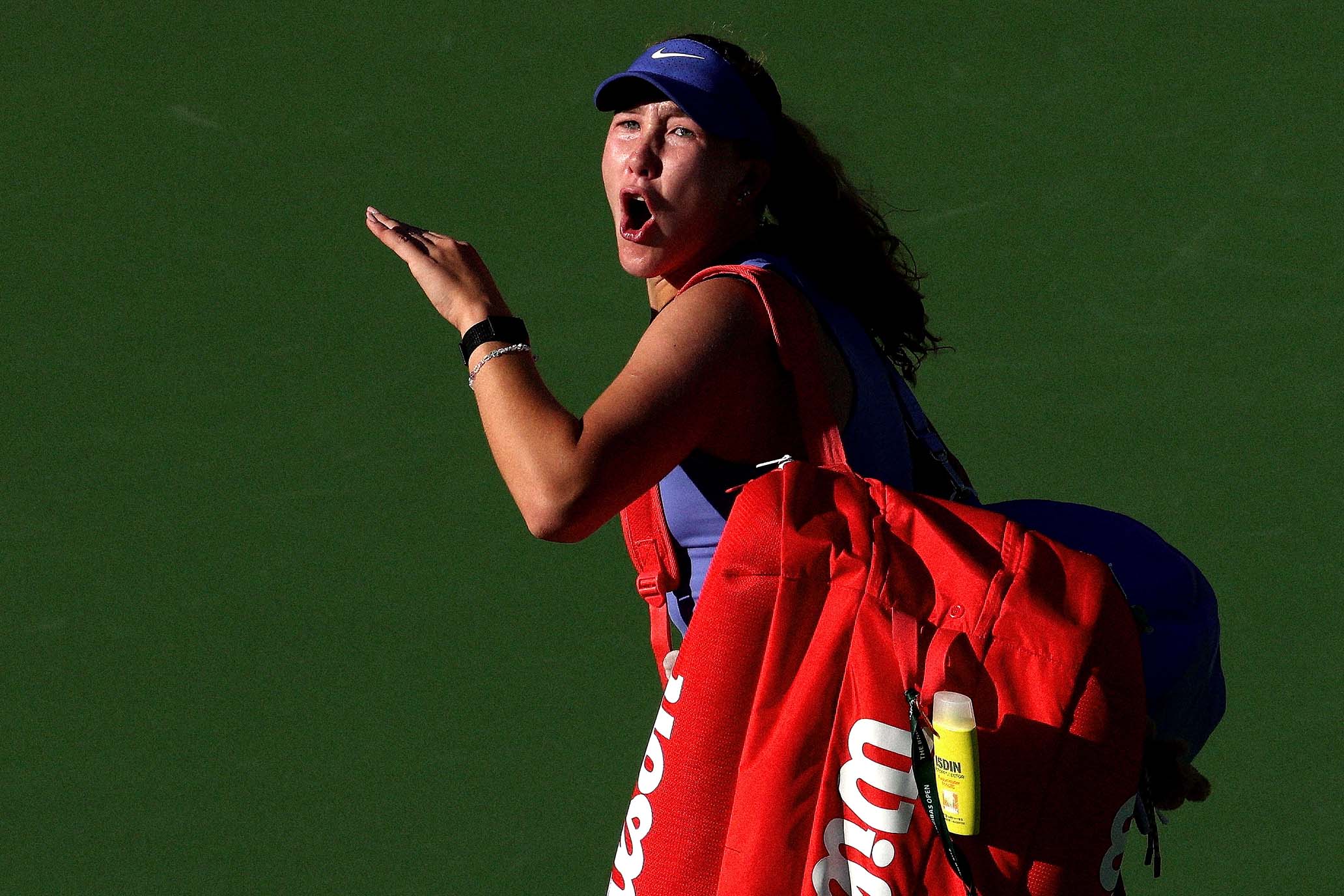
Give Mirra Andreeva a break.
Give Mirra Andreeva a break.
By Owen Lewis
March 12, 2026
Mirra Andreeva puts a dollar in the swear jar. // Getty
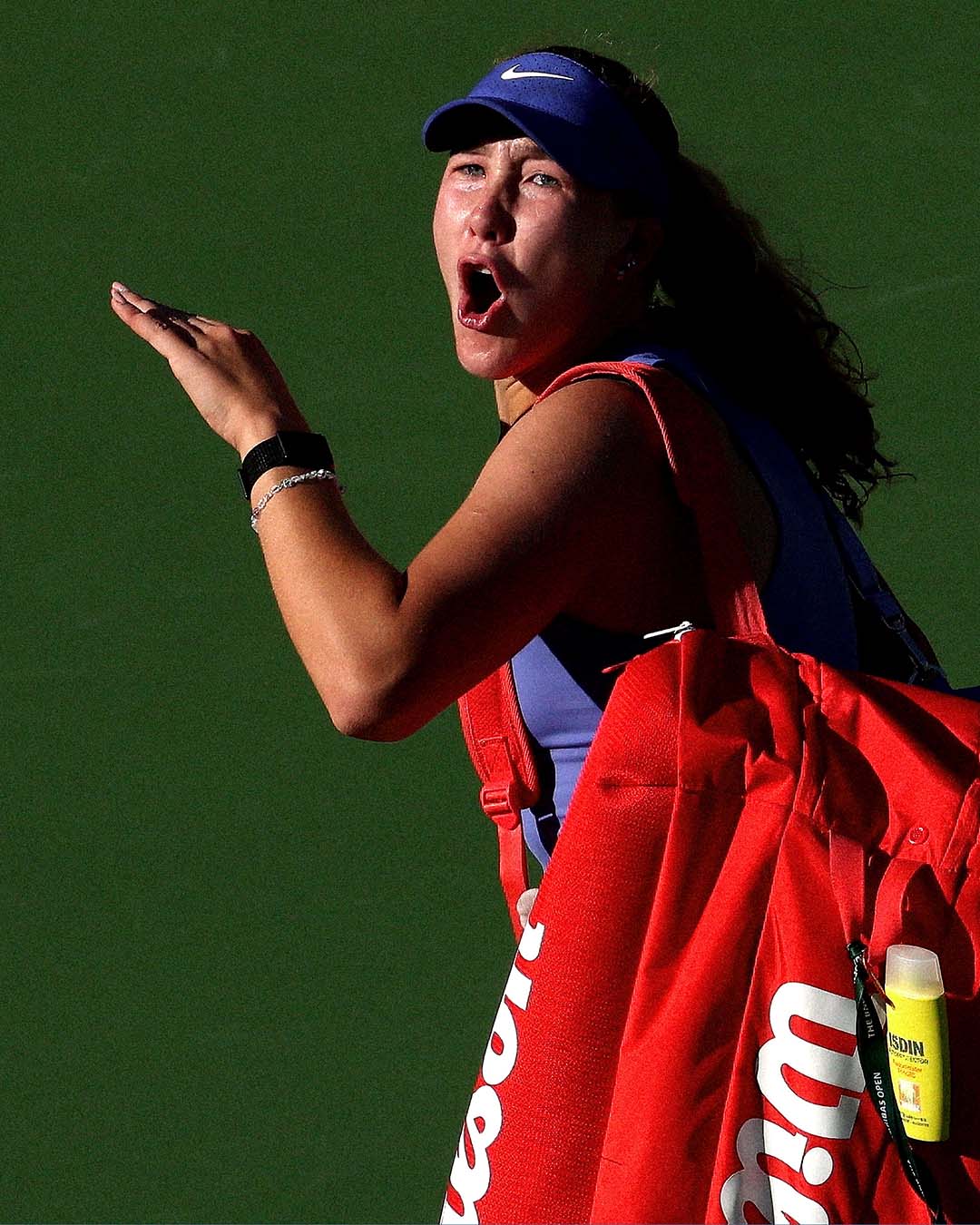
Mirra Andreeva puts a dollar in the swear jar. // Getty
Mirra Andreeva left us with too many things to talk about from her loss to Katerina Siniakova at Indian Wells on Monday. On her way off the court, she shouted, “Fuck you all!” to the crowd, twice, which, on top of some other tantrums, has left the general viewership with the impression that she is a brat. She also fell short in her title defense, knocking her down a few spots in the rankings, out of the top eight and below fellow teenager Victoria Mboko. (Impression: Is Andreeva being leapfrogged? Did she fail to make the most of her form when she was the premier teenager on tour?) She went seven for 26 on break points, decelerating on her forehand on many of them in a way that reminded me, unfortunately, of Alexander Zverev. (Will this last forever, and if it does, how can she compete with clutch rivals who go big?) Andreeva chucked two racquets during the match. She punched herself in the leg, hard, three times. (Is she the WTA’s Andrey Rublev?) Every errant swipe on a standard ground stroke seemed to be Conchita Martinez’s fault. (When will she take responsibility for her shortcomings?) She’s won just one title since her triumph in the desert last year. Her world-beating form from back then is a distant enough memory that, if you wanted to, you could convince yourself it was an anomaly. (Was it?) In positive news, a fan literally clutching her pearls in reaction to Andreeva’s postmatch profanities will be GIF’d for generations.
It’s a bit hard to tell the difference these days between critical analysis of a loss and sweeping, premature predictions. Between tournaments in February, what felt like every tennis outlet and pundit spent some time meditating on Jannik Sinner’s slump; specifically, losses to Novak Djokovic at the Australian Open and Jakub Mensik in Doha. Two losses! The possibility that Sinner just had a bad February must not have been a sexy enough podcast segment. According to this discourse, Carlos Alcaraz—14–0 in 2026 so far, and leading Sinner in major titles 7–4—is beginning to pull away. I suppose Alcaraz will indeed be pulling away if he wins Roland-Garros, and he won’t be if Sinner wins it. All we have to do is wait to find out, except that none of us are capable of waiting for anything anymore.
This is especially bad news for Andreeva, 18, a prodigy since forever but not yet a major champion. Her fallow stretch has been longer than Sinner’s but pockmarked with enough spots of brilliance to not be symptomatic of overhype. Look, it’s fun to be correct. It’s even more fun to be correct first, especially about a prodigy whose peak lies undiscovered in a haze way up in the sky. The trouble is that between YouTube, Reddit, and Nazified Twitter (please delete your accounts, friends), millions of people are constantly posting opinions from sensible to outlandish. To be correct first, you almost have to egregiously overreact to a seemingly innocent result. In pursuit of The Take, I’ve seen people online compare Alcaraz to Lleyton Hewitt (back when he had only two majors and went without a title between Wimbledon in 2023 and Indian Wells in 2024). Joao Fonseca has swung from “future No. 1” to “overhyped” to “so many people think he’s overhyped that he’s now underhyped.” Expect the pendulum to swing all the way back to where it started if Fonseca can sustain the level he produced against Sinner in a 7–6, 7–6 loss on Tuesday. Abandoning our opinions at the drop of a hat seems antithetical to the point of following sports; a player you rate having a disappointing series of results should disappoint us, not persuade us to reevaluate them until their results no longer register emotionally.
So, Andreeva. She’s 18! Every Roger Federer origin story begins by detailing his whiny, belligerent temperament on court in his youth, so there is at least a chance Andreeva grows out of this, rather than going down Nick Kyrgios Boulevard. She’ll certainly define her career in her 20s. While I do not recommend telling thousands of people who paid money to watch you play, “Fuck you all,” I also think it’s silly to pretend that she isn’t living an outrageously stressful life and isn’t old enough to have found her footing yet. Professional sports tend to make its participants crash out: See 29-year-old Celtic Jaylen Brown this week, or approximately 1,000 other recent examples. 18 is a difficult age, when emotions have jagged edges and don’t yet fit together quite the way they feel like they should; you feel separated from happiness by just a bit of experience and wisdom, if only you knew what you needed to endure and learn. Assuming that fame does not wipe away all those difficulties, I am advocating that any article or podcast captioned “What’s Going On With Mirra Andreeva?” be banished from the disintegrating internet.
Another factor, I think, is that we tend to expect players to be at their best all the time, and are disappointed when they aren’t. (We also criticize players when they’re anything less than smiley and wavey on one of the worst days of their professional lives; see Sabalenka, Aryna after last year’s final of Garros, Roland.) We all know that tennis is a game of errors, that no two shots are the same, that players aren’t truly at their best more than a couple times in a season. But at least for me, that doesn’t erase the visceral letdown when a player with a great forehand gets a look at a mid-court ball and either whacks it into the net or hits a nothing shot. So the reaction to Iga Swiatek’s demolition of Karolina Muchova on Wednesday figures to sway closer to “Iga is BACK” than “Wow, that’s the best Iga has looked in a few months.” Every reaction is vindication of an opinion, or a trend, or a previous version of a player. Players and matches are constantly defined in relation to other things and are not allowed to establish themselves as unique.
Between advanced stats, immediately accessible press conferences, and an atomized, omnipresent media environment, there’s more information about tennis players available now than ever. Ironically, we often arrive at wildly irresponsible conclusions from that information. (Did this suddenly turn into a politics blog? Who can say?) Maybe there is a result out there so damning to be seriously concerned about a prodigy, but a very young adult lashing out under intense pressure isn’t it.
PURE, ORIGINAL TENNIS — SIGN UP!
A Backhanded Compliment
A Backhanded Compliment
A Backhanded Compliment
In celebration of Lilli Tagger's epic one-hander.
In celebration of Lilli Tagger's epic one-hander.
By Giri Nathan
March 6, 2026
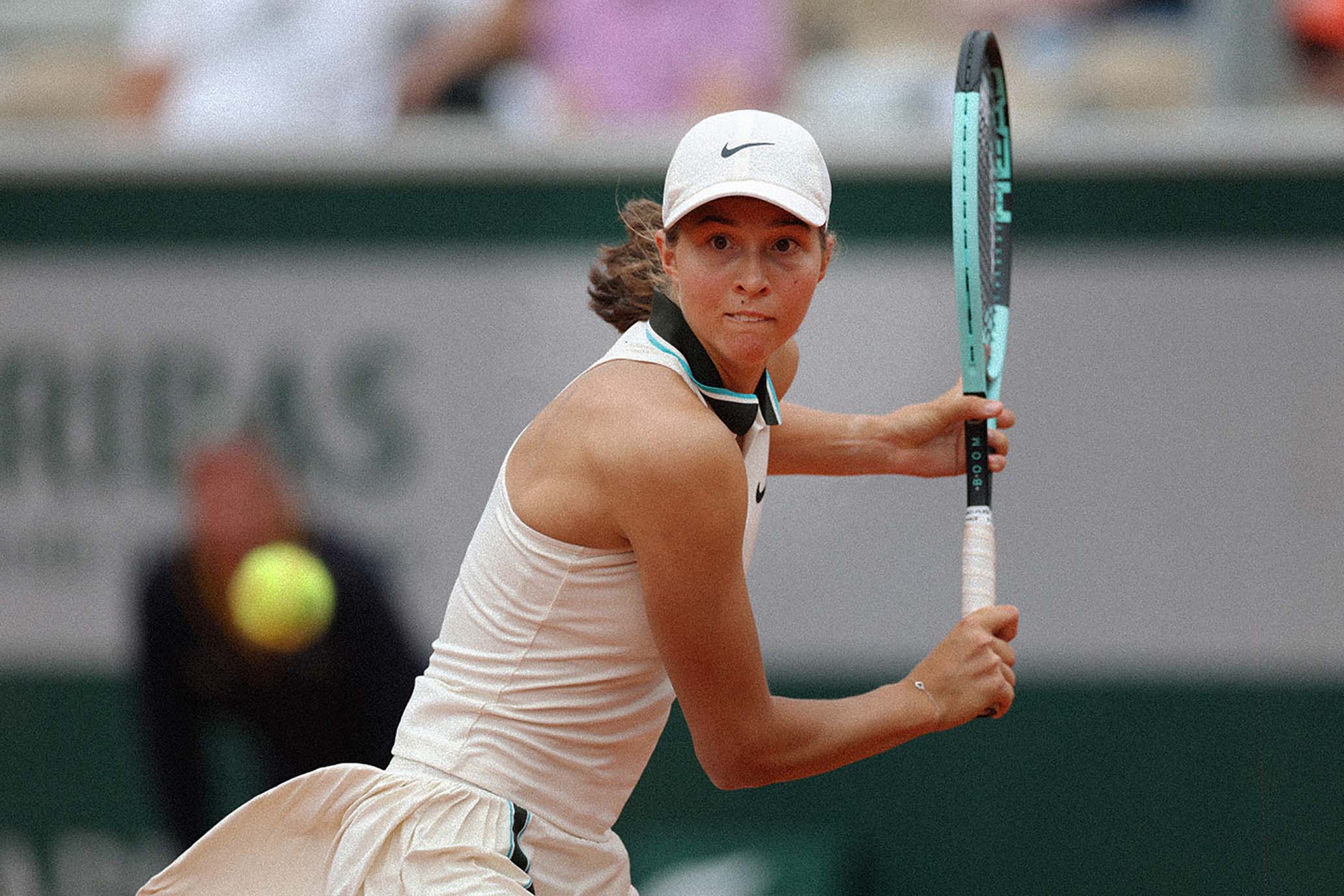
Lilly rips one during the girls French Open final last year. // Getty
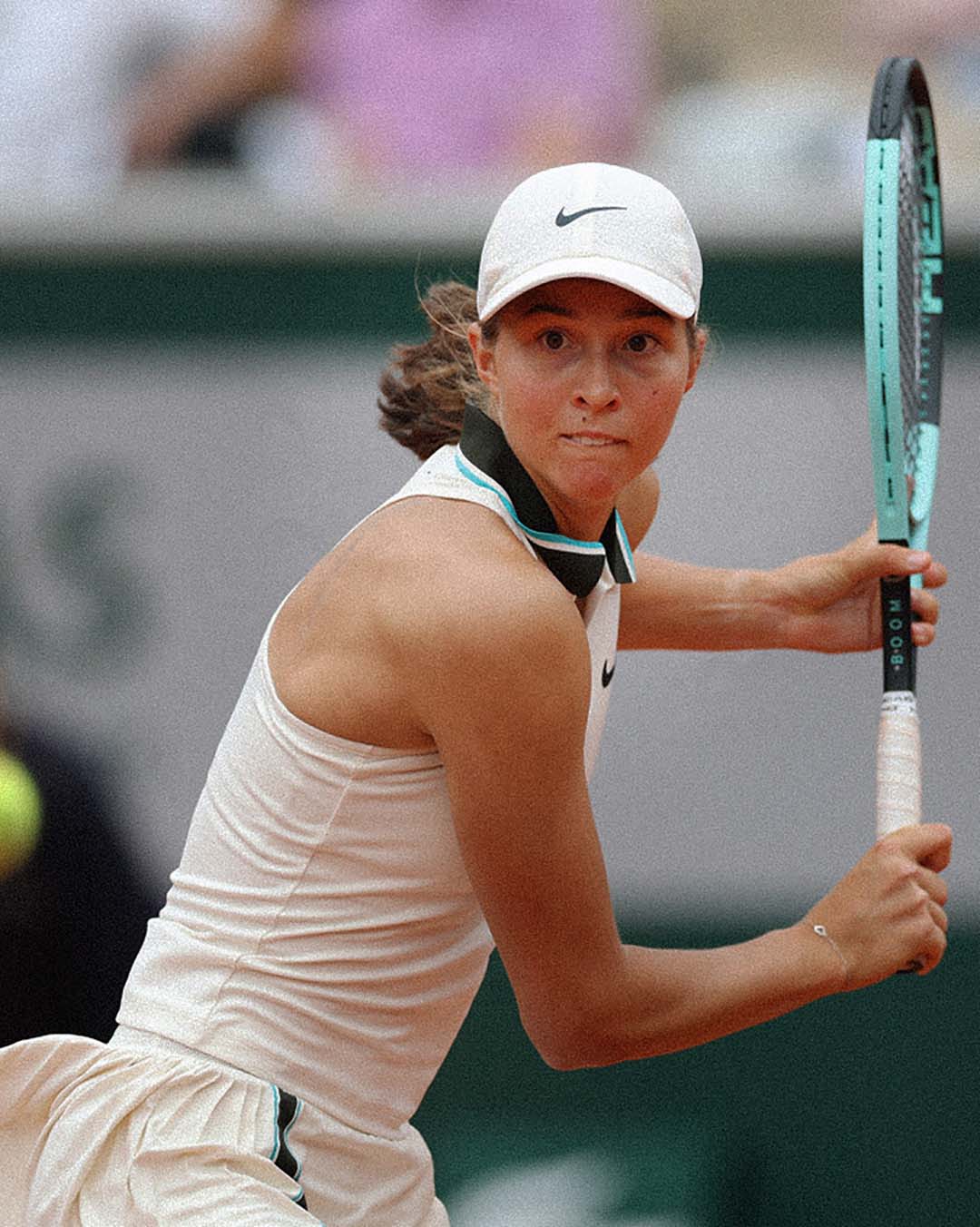
Lilly rips one during the girls French Open final last year. // Getty
Has your enjoyment of professional tennis suffered because you can no longer find an Austrian who rips a ferocious one-handed backhand? We might have your Dominic Thiem replacement right here. Lilli Tagger, the 18-year-old talent, is that rare case: a promising young player who has opted to subtract one hand from her backhand. And that shift occurred surprisingly late in her tennis development, too. She’s running against the grain of present tennis dogma, which holds that one-handers are too demanding with respect to timing, too vulnerable when returning fast serves, and generally too shaky for the pace and weight of the modern game.
I’ve undergone an evolution in my attitude toward the one-hander. It could be loosely organized into phases. In my childhood: outright enthusiasm, with so many ingenious practitioners, from Justine Henin to Tommy Haas. Then: a decade noticing the one-hander’s many downsides in an evolving game—Rafa surely accelerated its obsolescence—and tiring of people who fetishized it as some aesthetic pinnacle. (There are plenty of other beautiful movements in tennis, relax.) Then a minor panic: Denis Shapovalov is not that dude, some of these supposed one-handers like Diane Parry just slice everything in sight, and the extinction of the topspin drive is a real possibility. By 2026: I’ve come full circle, craving its presence and praising all practitioners of this ancient art, who should be given grants from governments and museums for their feats of cultural preservation. I can’t raise a child in a world without one-handed backhands.
So we celebrate Tagger, who was initially deterred in her quest. “I wanted to switch it when I was 10, but everybody told me, ‘No, you shouldn’t do it, it’s not good for you.’” she told the WTA site last year. “Then when I was 12, I had a bet with my coach, and I told him, ‘Okay, let’s do this. If I win the tournament, I will change. Otherwise, I will never ask you again.’ And I went on to actually win the tournament that week.” This unnamed junior tournament might have been a critical moment for the sport’s technical future. (Also, I’m seeing conflicting reports about whether countryman Dominic Thiem inspired this decision; someone needs to get to the bottom of this.)
After a one-year adjustment period, Tagger, at the late age of 13, had adapted to her new backhand. That was around when she moved from Austria to Italy to advance her training. First she worked with Max Sartori—longtime coach of Andreas Seppi, early believer in a tiny Jannik Sinner—and then with Francesca Schiavone—2010 Roland-Garros champ and a one-hander herself. Tagger has some commonalities with Sinner, having also grown up as a skier just on the other side of the border—she in Austrian East Tyrol, he in Italian South Tyrol—and now she has the same manager as him, too.
Looking at the state of her game, I doubt she has any regrets about making the bold technical change that her coaches discouraged. Tagger, now 6 foot 1, won’t have many issues with the ball kicking high out of her strike zone, and possesses the long levers for big power. That backhand is a point-ending weapon. Early results are impressive. She won the 2025 junior title at Roland-Garros without dropping a set, which brought her some unfamiliar attention, including a congratulations message from Thiem, who did or did not inspire her one-handed backhand. “The first week after Roland-Garros, suddenly everyone wanted to be my best friend. Sometimes I was like, ‘I have never heard of you, but now you want to be my best friend,’” Tagger told the ITF site last summer.
After thriving at the ITF level, particularly on clay courts, Tagger transitioned gracefully into the top tier of tennis. Last November she made her WTA debut at the 250 in Jiujiang, where she was down triple match point in the semifinal and strung together 13(!) straight points to win, thus contending for a title in her very first tour-level event. While she lost that final, she earned enough points to hover right outside the top 150 at season’s end. To kick off 2026, she had a flurry of strong results, celebrated her 18th birthday in February, and earned a wild card into the main draw at Indian Wells. Which is where we find her now: in the second round, after a thorough 6–2, 6–4 defeat of world No. 58 Varvara Gracheva. I suspect it is the last time that Tagger will require a wild card at this tournament, and that the one-hander will persist on those super-slow hard courts for many, many years to come.