A Loud Return
A Loud Return
Jack Draper reminds us how good he is.
Jack Draper reminds us how good he is.
By Giri NathanMarch 13, 2026
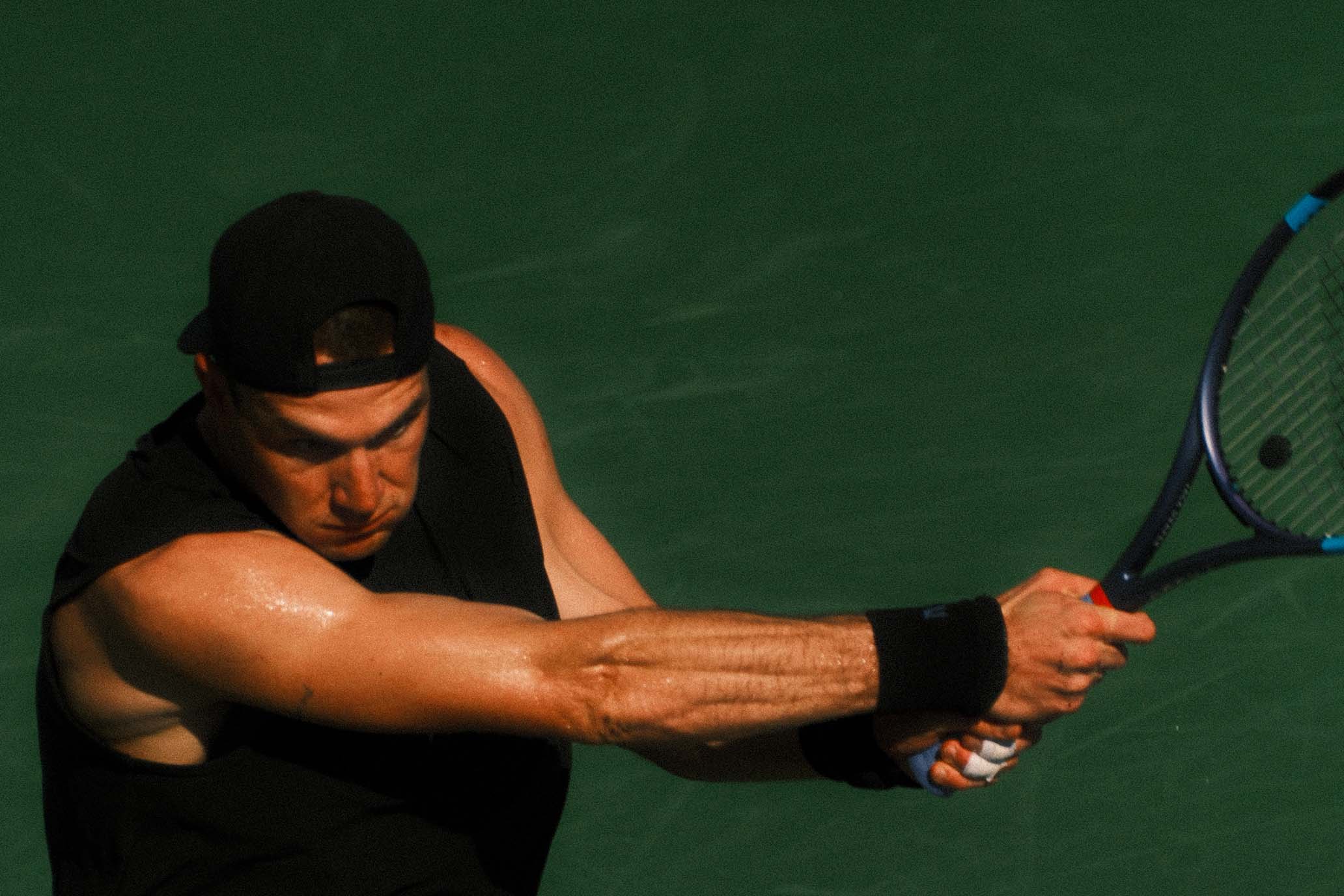
Photo by David Bartholow.
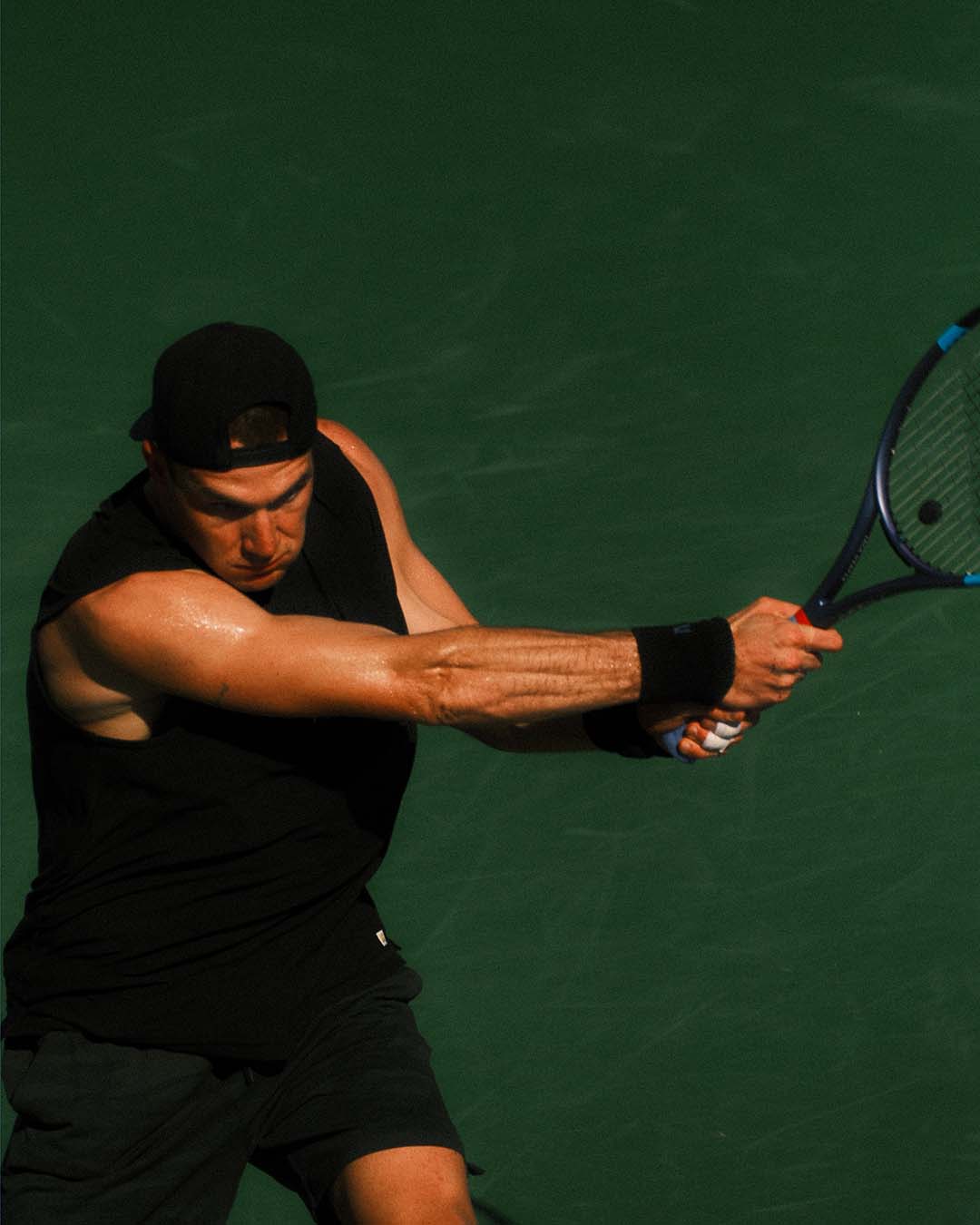
Photo by David Bartholow.
Eight months of no Jack Draper made it easy to forget that he is, in fact, the defending champion at Indian Wells. But if ever there were a way to remind the world that you exist, it is winning a comically high-level epic over Novak Djokovic in just your second tournament back from injury. Draper’s run in the desert ended in the quarterfinals, but the 24-year-old’s return to tour was loud and intriguing. Any fans concerned about the competitive balance of the ATP should be relieved to see this big-serving lefty with the weapons to at least make life difficult for the duopoly at the top and, evidently, to defeat the elder Djokovic just trailing them.
This time last year Draper was emerging as one of the best players of this early-20s cohort, and then just one of the best players in the world. After the Indian Wells title, he enjoyed the best clay stretch of his career: runner-up at Madrid, quarters in Rome, fourth round at Roland-Garros. He got as high as world No. 4. But injuries have always intervened in his career, and during the clay season his left arm began to act up. He said he felt his arm “shutting down a little bit” when hitting his forehands and serves. Pain increased in the grass season. The diagnosis was a bone bruise on the humerus of that left arm. He skipped the summer hard-court events and even took a full month off hitting serves in practice. But he did arrive at the US Open to win one match and then withdraw. That ended his season for good. Just as he seemed to be ascending, he was grounded again.
After a late withdrawal from the Australian Open, Draper finally returned to competition in February, having played just one match in the previous eight months. During his time off he made one adjustment to his scalp (buzz cut) and two adjustments to his game, both with the intention of protecting his body, as he told Chris Eubanks on Tennis Channel. First change: changing his serve from a pinpoint to a platform stance—meaning he no longer drags his back foot up to meet the front foot, but rather keeps them spaced out, which gives him a more stable base (though he didn’t speak to its impact on his arm specifically). Second change: stringing his racquet with gut in the mains, because while gut doesn’t have the spin potential of poly strings, it is softer on the body, transferring less vibration to the arm.
Considering the length of his layoff and the novelty of these changes, it was surprising to see him play so well. There’s very little missing in his game. That well-roundedness makes sense when you consider his origin story: Draper hit his growth spurt late and grew up winning tennis matches without the benefit of the huge serve he would later acquire. He backs up that serve with general athleticism and elite ground strokes, qualities that explain why he is the rare elite server who is also elite on return: Over the past year he is fifth in percentage of service points won, and ninth in percentage of return points won, per Tennis Abstract. His contemporaries Jannik Sinner and Carlos Alcaraz are too good on both sides of the ball to be threatened by a one-dimensional player—not sure I’ll believe in the Ben Shelton threat until he can improve on being the worst returner in the top 50, for example—but Draper has a little bit of everything. (Some trivia: He is the rare player in their cohort to have beaten both players, both times at Queen’s Club, with an upset over defending champ Alcaraz in 2024 and a defeat of an admittedly embryonic Sinner in 2021.)
Draper’s all-around talent was plain to see in his fourth-round match against Novak Djokovic, who continues to play supreme tennis and will presumably continue to do so until stopped by boredom or nuclear winter. It was easily one of the matches of the season, culminating in a brutal, astonishing third set. Come for the crazed rallies like this one with the double lob; stay for the many post-rally shots of Djokovic laboring on all fours as if with child. Which brings me to a related point: How surreal is it that we rarely see an opponent manage to take away Djokovic’s legs, even though those opponents tend to be more than a decade younger than him? This is a testament to his still-incredible fitness, of course. But someone’s got to be up to the task. Draper’s shot tolerance and endurance allowed him to go toe-to-toe for long rallies, then press the pain button with well-timed drop shots. Djokovic later admitted that the exertion in that double-lob rally “cost me a break” two games later. He still managed to break back to survive at 5–4, because Djokovic must always be killed multiple times over, but Draper finished the task in a deciding tiebreak. (Which was so thrilling that Tim Henman apparently forgot his neutral role as Sky Sports commentator and delivered some kind of pep talk to his young countryman. So funny.)
Frankly, I’d forgotten just how good this tennis player he was. The backhand might be an obvious thing to appreciate in a lefty, because it is a prerequisite for having made it this far in the sport, but the Draper backhand really did everything he asked of it in this match: absorbing pace, generating pace of his own, abruptly changing direction, landing the coup de grâce on match point. That he delivered such a strong performance this early in his return bodes well for the season ahead. It was hard to imagine anyone bouncing back from that effort so quickly, and he lost Thursday’s quarterfinal against an in-form Daniil Medvedev. With some good health, though, Draper should be back inside the top 10 soon, and trying to steal a big title in the world of wall-to-wall Sincaraz. Just stay locked in, Jack—it’s not a crime.
PURE, ORIGINAL TENNIS — SIGN UP!
RECOMMENDED
The Long Rally
The Hobby