
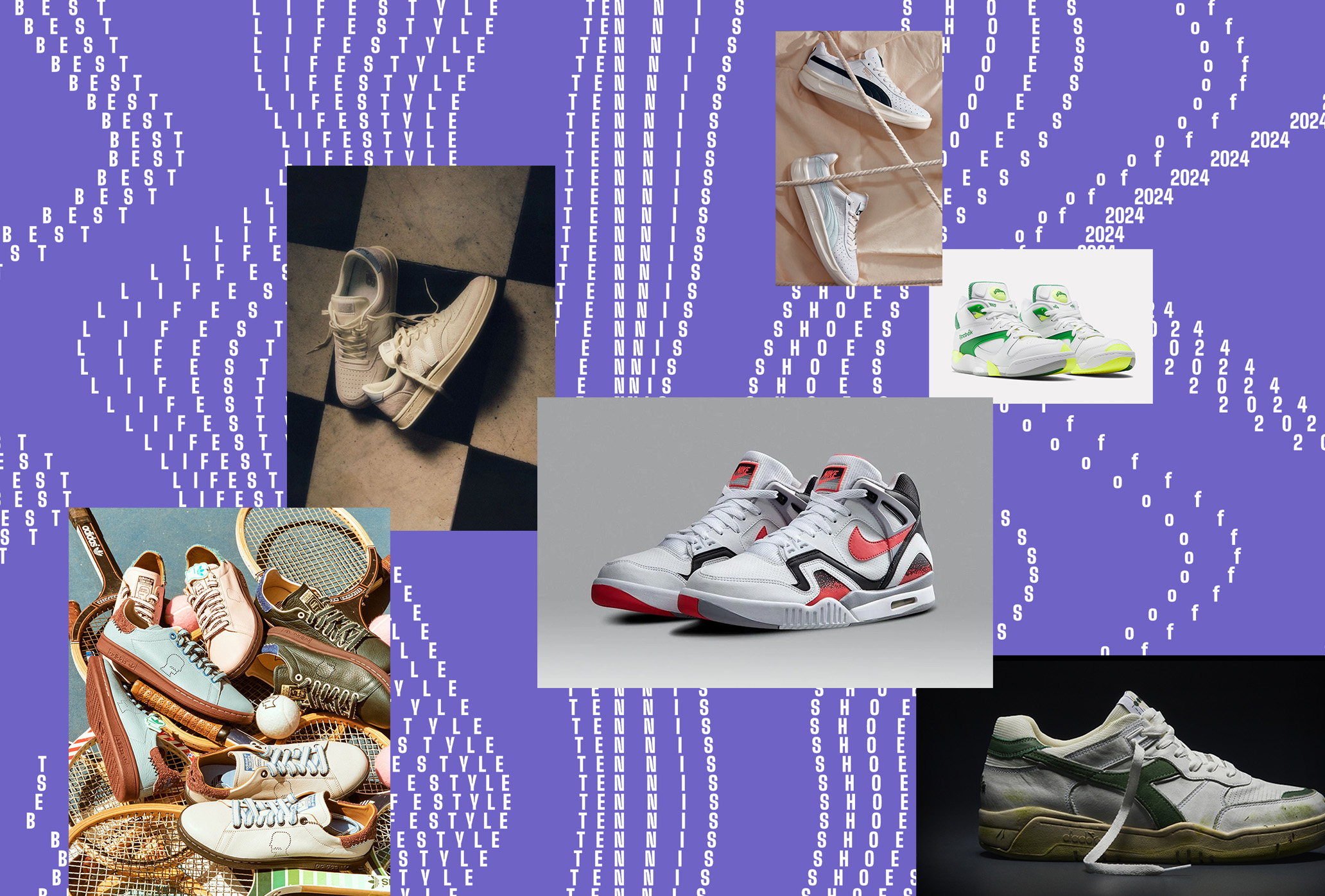
The Best Off-Court Tennis Shoes of 2024
The Best Off-Court
Tennis Shoes of 2024
The Best Off-Court
Tennis Shoes of 2024
Tennis continues to influence off-court style.
Tennis continues to influence off-court style.
By Tim Newcomb
December 19, 2024
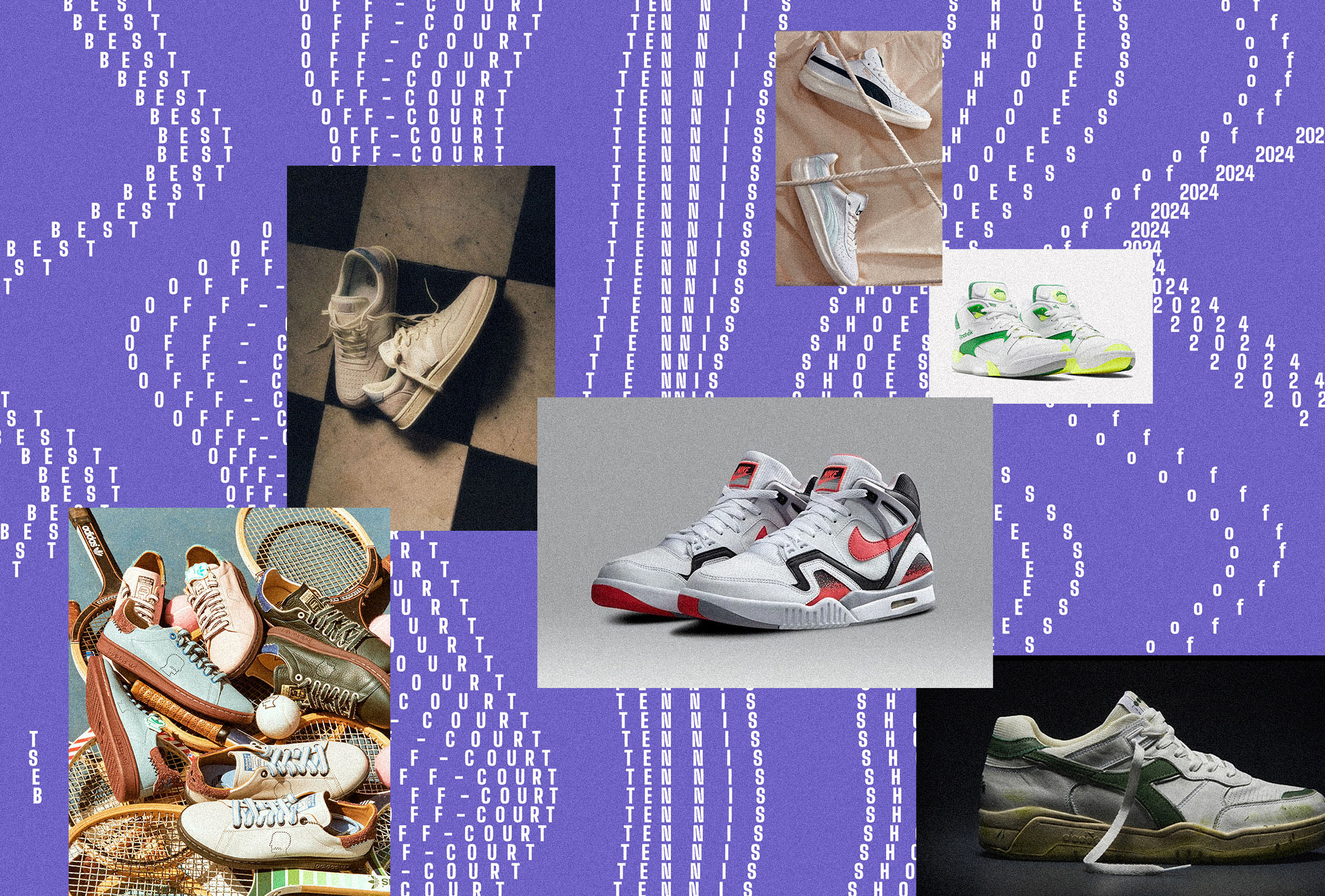
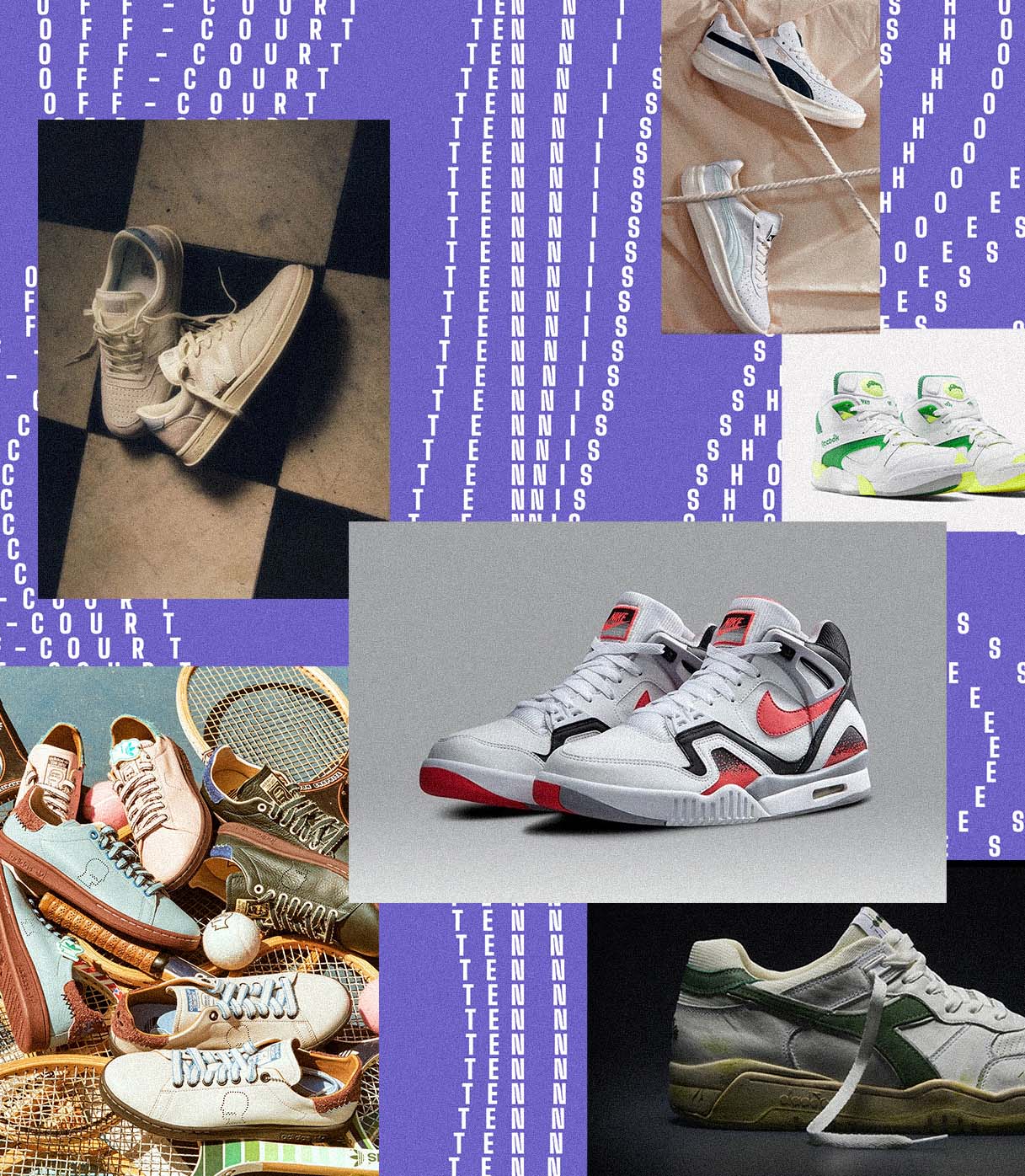
Tennis style was born on court, naturally, and while the sport spent some time in the cultural doldrums after the tennis boom of the ’70s and ’80s, it’s now again in fashion. And that means not only more stylish performance gear but also a more robust offering of off-court, tennis-inspired lifestyle selections. Sneakers included.
While the list of brands introducing some sort of tennis-adjacent design is long, we’ve winnowed the list for you to ensure your lifestyle options have diversity in historical relevance, brand participation, and style accessibility. Let’s explore our favorite tennis-inspired lifestyle sneakers we saw in 2024.
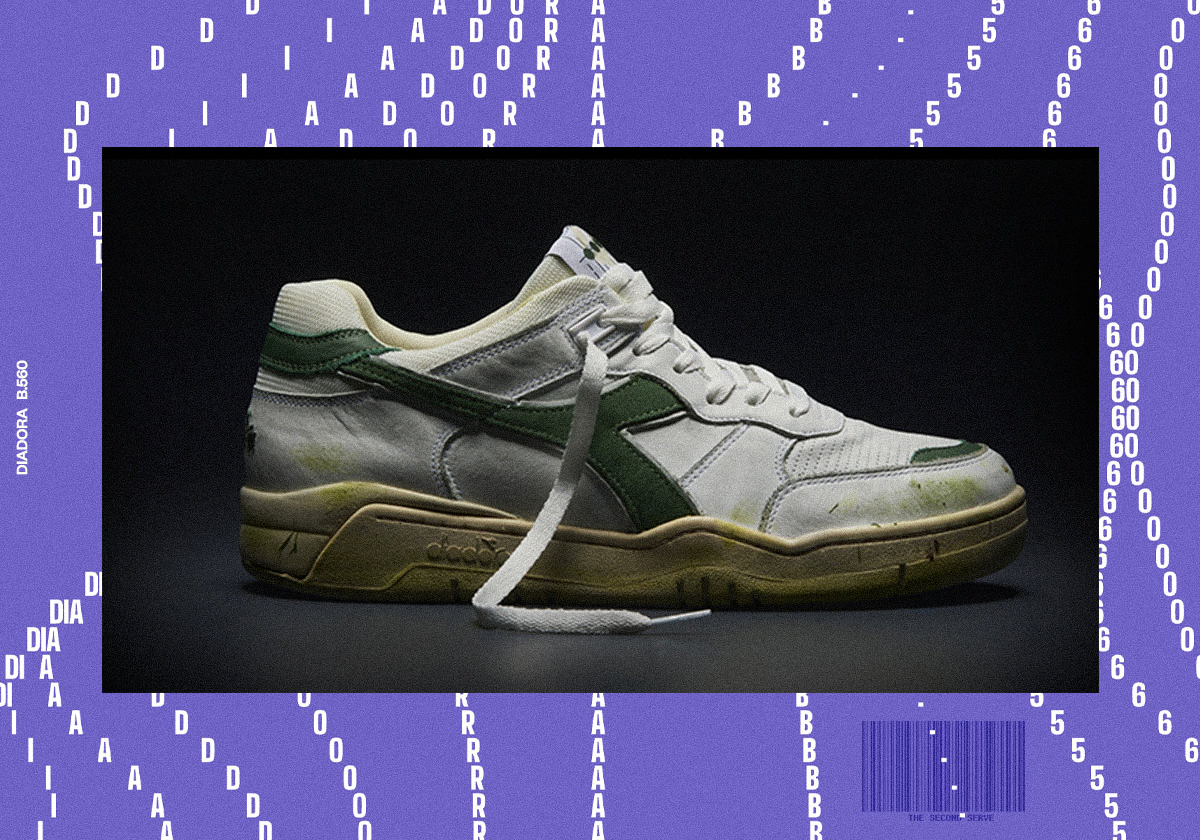
Diadora B.560 Used
Of all the high-end tennis-inspired sneakers you could choose, you can’t beat a brand with a deep history in the sport. Diadora has a mix of tennis-inspired lifestyle models, but two are made exclusively in Italy as part of the brand’s Heritage collection. Those designs feature some of the plushest leather available on the market. The B.Elite has a long history tied to the original 1980 on-court model, but we’re highlighting the B.560 Used RR Italia, a 1990 archive model reinterpreted with modern accents and with a range of personality-filled colorways to match. Texture defines the B.560, using specialty wool from Italy, pigskin leather, and a wax finish to help create a used effect on this luxurious, made-in-Italy offering.
Images courtesy of Diadora
Images courtesy of Diadora
New Balance T500
We appreciate what New Balance has done on the court by elevating signature sneaker style, and now the traditional running brand is tackling tennis-inspired lifestyle designs, too. New Balance does have historic tennis silhouettes in its archives—here’s looking at you, CT300—and so the Boston-based brand broke out the T500 this March, a remake of an early-1980s style. Expect new colorways and collaborations as the year goes on, but the first release highlights the polyurethane midsole that screams 1980s tech while staying in tune with the trendiness of lower-profile court shoes with clean and elevated designs, the brand says, that feature “quiet luxury with sophisticated, elegant lines.” We applaud New Balance for its growing tennis-specific focus and look forward to the future of the T500.
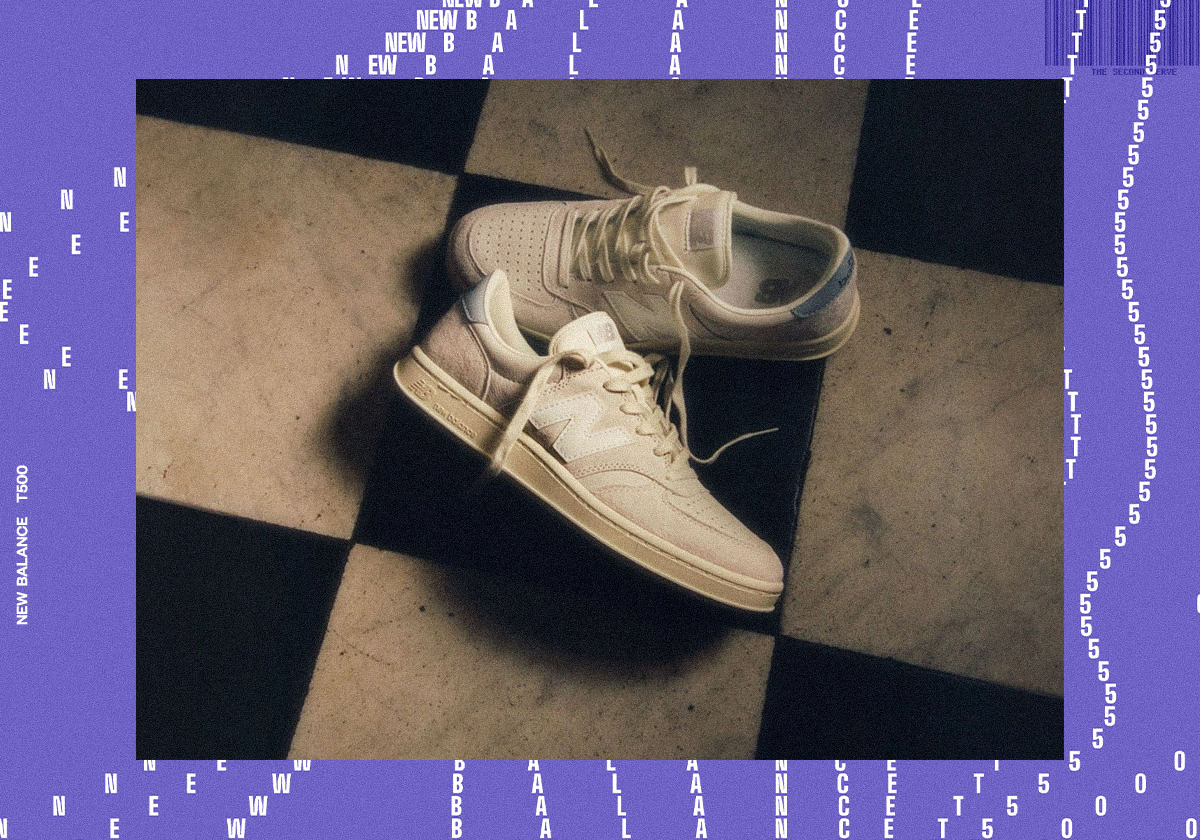
Image courtesy of New Balance
Image courtesy of New Balance
Wilson Pro Staff 87
Wilson isn’t just basic equipment any longer. The Chicago-based brand has elevated its lifestyle look and embraced tennis fully while introducing a range of tennis-inspired apparel collections. Now Wilson takes on footwear, highlighting one of the most well-known shoes from the brand, the Pro Staff. In the 2024 release, the Pro Staff 87 gets modernized with a new last for a better fit, upgraded leathers, and updated midsole foam. The shoe also embraces fresh colors, adding to the original red, white, and blue that launched in March with the June release of a green on white, blue on white, and white on white. And oh, there was plenty more coming as Wilson continues to embrace its tennis-inspired footwear archives.
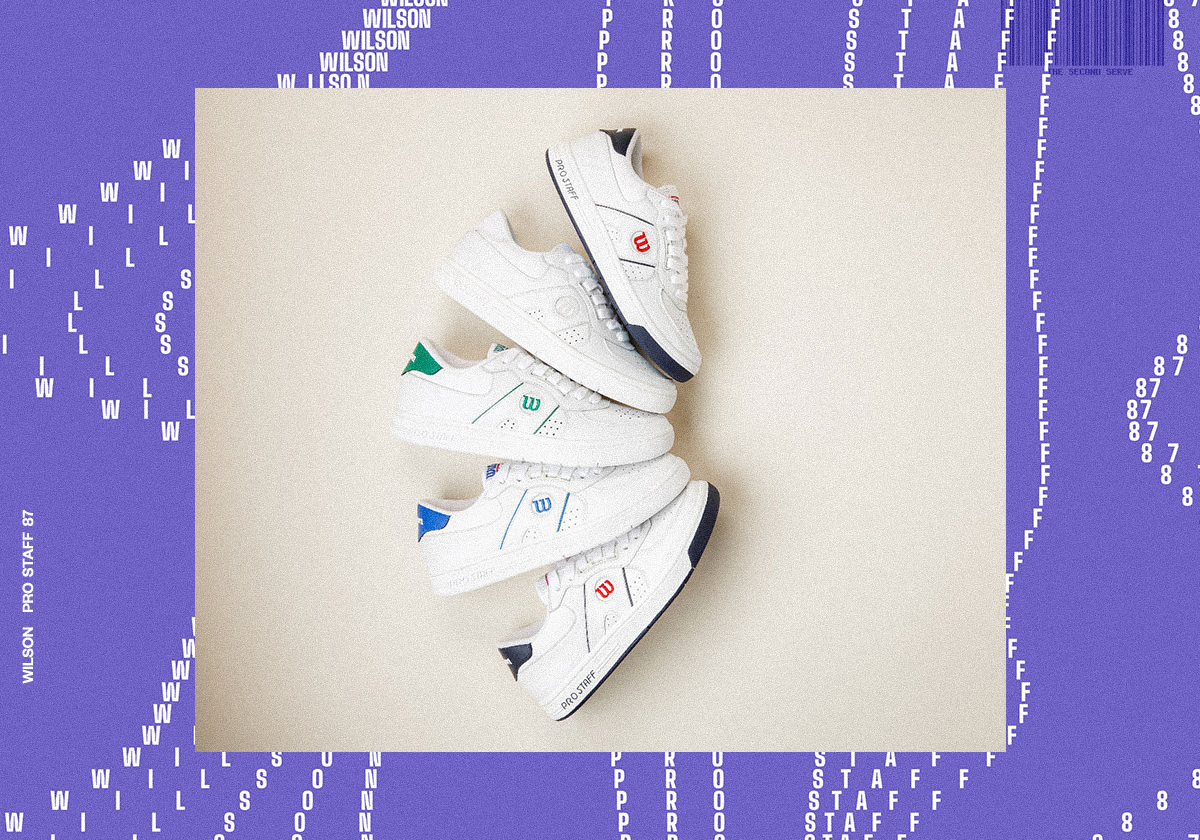
Image courtesy of Wilson
Image courtesy of Wilson
Lacoste LT-125
Let’s face it, much of the Lacoste catalog has tennis inspiration behind it. With Rene Lacoste’s history of producing a tennis-specific sneaker in 1958—and being credited with the creation of the polo shirt—there’s a tennis lifestyle aesthetic strewn across the whole of the Lacoste brand. So, pick your preference when it comes to Lacoste designs, from the classic Lineshot or Carnaby Pro Leather to the more updated L001 or G80 Club. But we’ve picked out the modern-looking LT-125. This model isn’t a direct tie to a Lacoste heritage sneaker—that much is obvious—but the brand says they took inspiration from classic court designs and gave the LT-125 a “luxurious” take on what is surely a distinct approach to tennis inspiration.
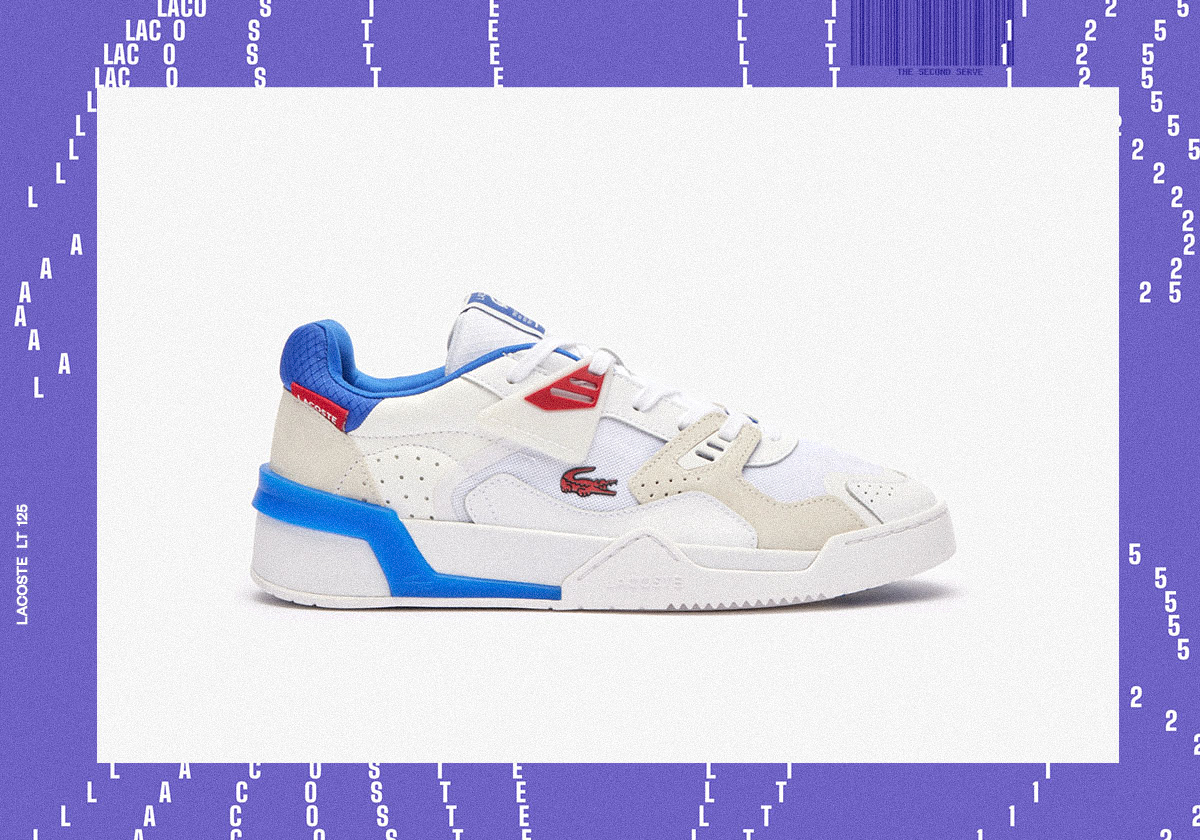
Image courtesy of Lacoste
Image courtesy of Lacoste
Brain Dead x Adidas Stan Smith
The Stan Smith has been a staple of tennis-inspired lifestyle footwear for decades. So much so that the shoe is ubiquitous in the culture. That can cause the silhouette to lose traction in the modern space, especially as tennis fans search for a differing approach. But collaborations can help keep the style fresh. The Brain Dead x Adidas Stan Smith offered that in 2024. The leather design featured a perforated Brain Dead logo, chunky laces, and a fuzzy suede heel tab. It all adds up to something that keeps Adidas Stan Smith fans coming back for more.
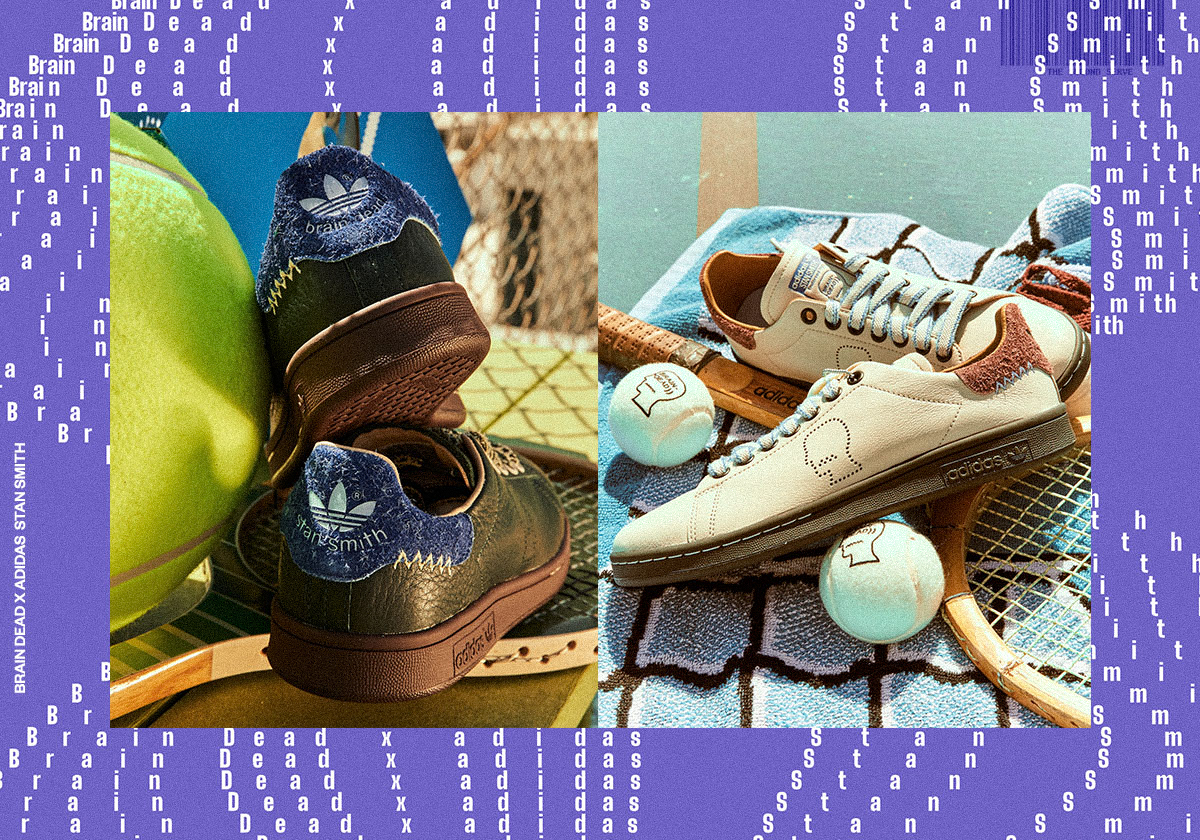
Image courtesy of Adidas
Image courtesy of Adidas
Nike Air Tech Challenge 2
Chalk up the Nike Air Tech Challenge 2 in the category of legendary competition-turned-lifestyle sneakers that those in the tennis space know oh-so-well. And while the silhouette has enjoyed multiple rereleases over the years, in 2024 the hot lava colorway returned with a bit of a retro touch built in. Not only was the hot lava’s return a welcome sight for fans of the 1990-born style made famous by Andre Agassi, but it also marked a precursor of what to expect in 2025 with plans to launch additional colorways of one of the sport’s most famed styles.
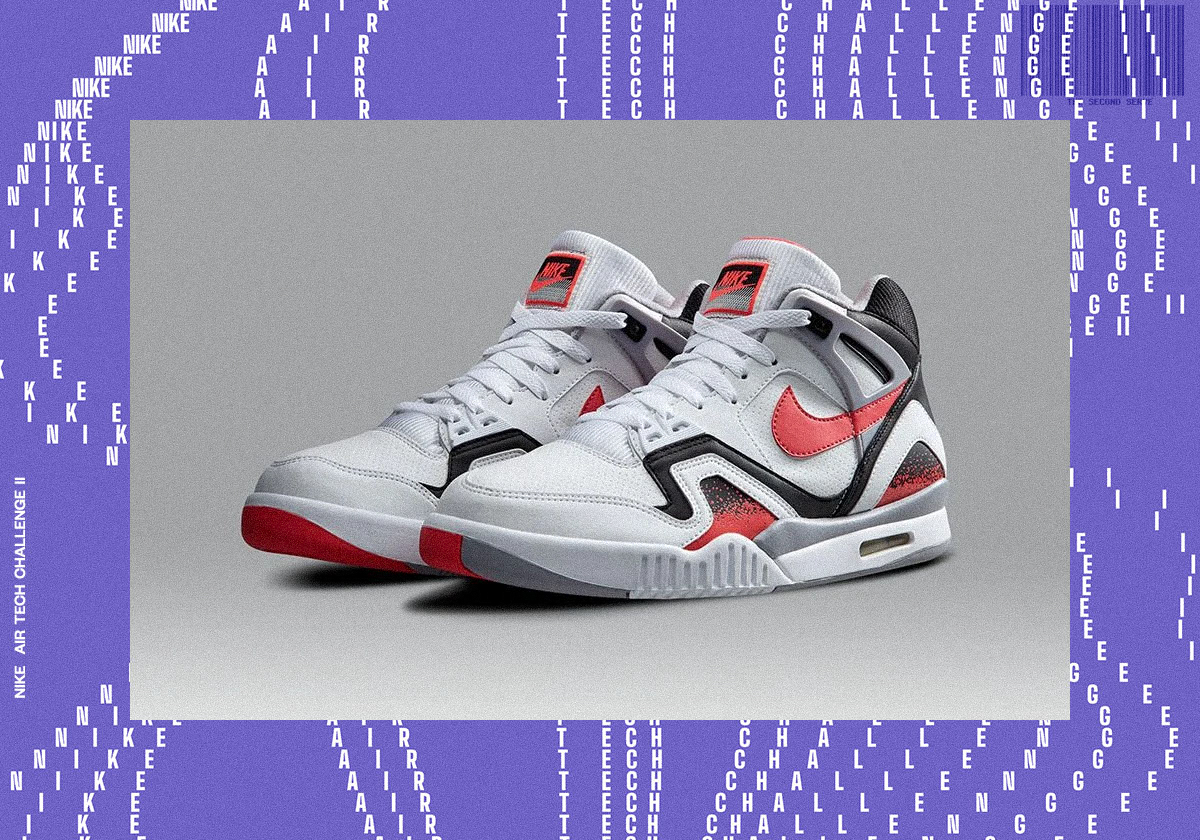
Image courtesy of Nike
Image courtesy of Nike
Wilson Tennis Classic
Don’t sleep on Wilson’s style. The Pro Staff 87 marked the front half of the year, but the quiet launch of the Tennis Classic gives the brand both a wildly fun—think the entire upper is made from yellow tennis ball felt—and timeless look in black or white leather. Inspired by traditional tennis silhouettes, the Tennis Classic fits the name and gives those looking for a refined model in European leather a touch of elegance that doesn’t overstep.
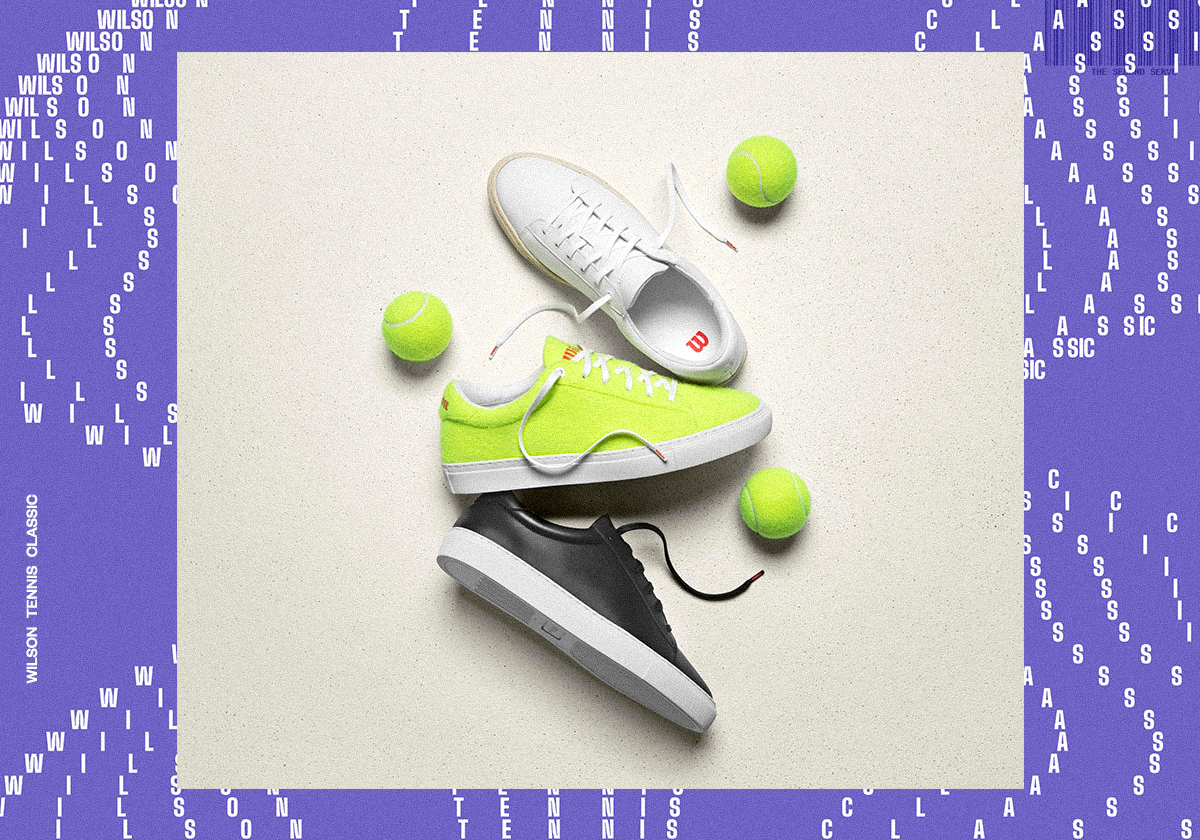
Image courtesy of Wilson
Image courtesy of Wilson
Reebok Court Victory Pump
Take a decidedly sporty view of the 1990s by donning the recently reimagined Reebok Court Victory Pump. First introduced in late 1989, the pump technology from Reebok allowed the wearer to pump air in the shoe’s sole via a mechanism housed in the tongue. Use the same tongue to reduce the air pressure. Sure, the tech was first used in basketball, but Michael Chang gave the Reebok Pump its own tennis moment—the pump mechanism as a tennis ball is a splendid touch—during the 1990 Roland-Garros. Rereleased this March, Reebok has vowed to offer a wealth of colorways while keeping the Court Victory Pump alive in tennis.
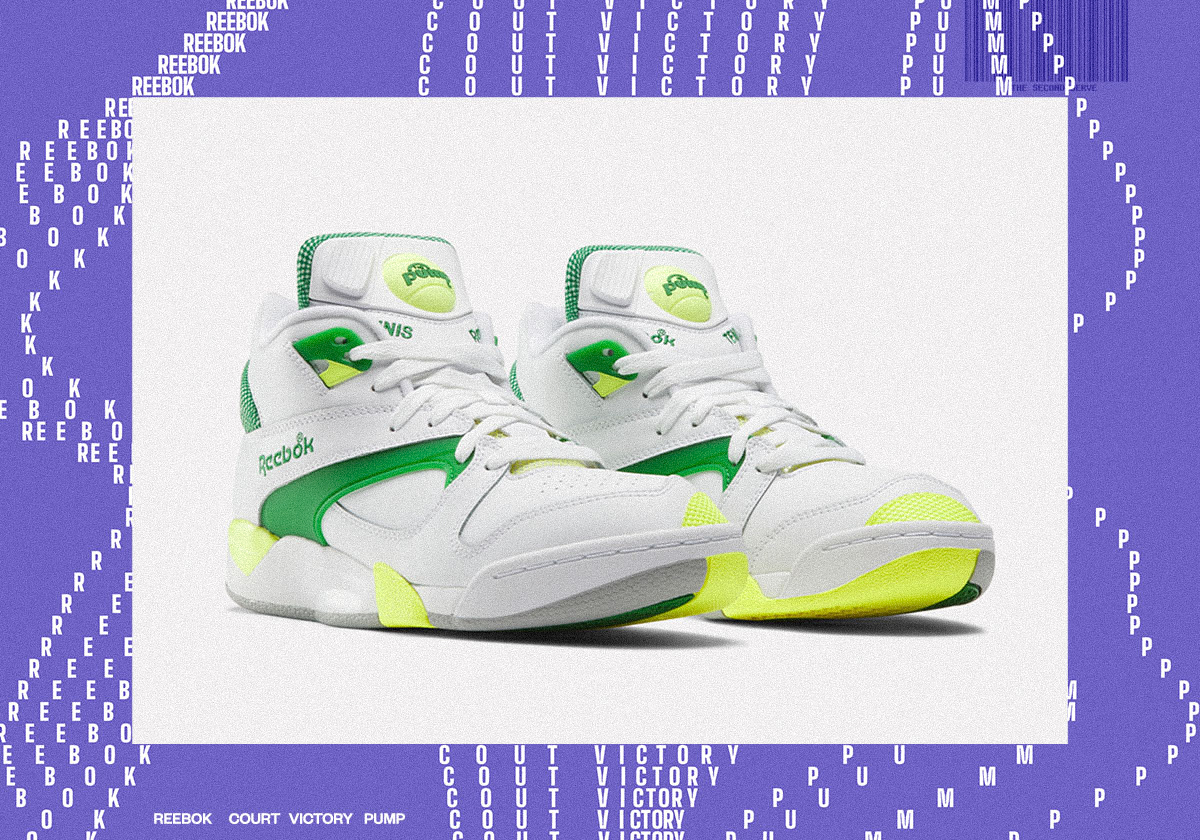
Image courtesy of Reebok
Image courtesy of Reebok
Puma GV Special
The GV Special isn’t a new addition to the Puma catalog, but the German company refreshed the silhouette this year, ensuring that a brand without a place on the performance side of the sport doesn’t fully lose touch with tennis. With an April release that offered the first of many colorways of the shoe this year, Puma also brought new construction with improved comfort, perforations in the toebox for breathability, and tumbled leather. The sneaker is a mix of tennis and training style and was named the GV Special in honor of Argentinean major champion Guillermo Vilas. For an even deeper dive into Puma’s tennis history, check out the now-available Puma Star, a remake of the 1970 Wimbledon sneaker. The modern Star even has a strawberries-and-cream colorway.
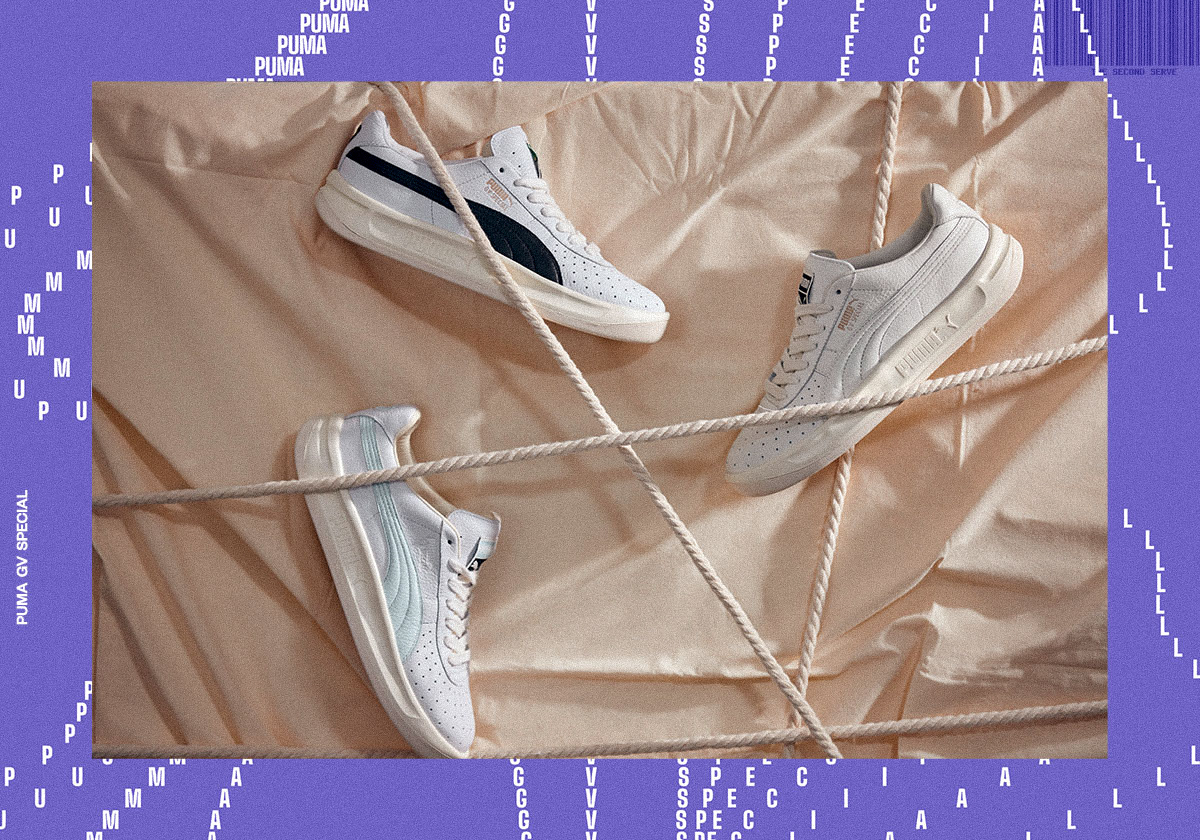
Image courtesy of Puma
Image courtesy of Puma
Nike Killshot 2
Nike has brought back many of its classic on-court looks in retro form over the years, but there’s one model that has had impressive staying power. Last year brought us the John McEnroe Mac Attack (we are fans of the ongoing colorway releases well into 2024), we continue to see new versions of the Court Legacy, and we’re primed for yet another return of the Air Tech Challenge 2 (likely this fall), but right now we’re all in on the Killshot 2. Inspired by the original Killshot, a low-profile Nike tennis design from 1979, the model gave way to the Wimbledon in 1981. But the Killshot made a return as a lifestyle option in 2009, exclusively at J.Crew. In 2019, Nike brought the style to its own domain and offered fresh colorways. That freshness continues in 2024, as Nike has released special-edition versions and new colorways while it promotes the (thankfully often) gumsole beauty that is all things 1979 Nike tennis.
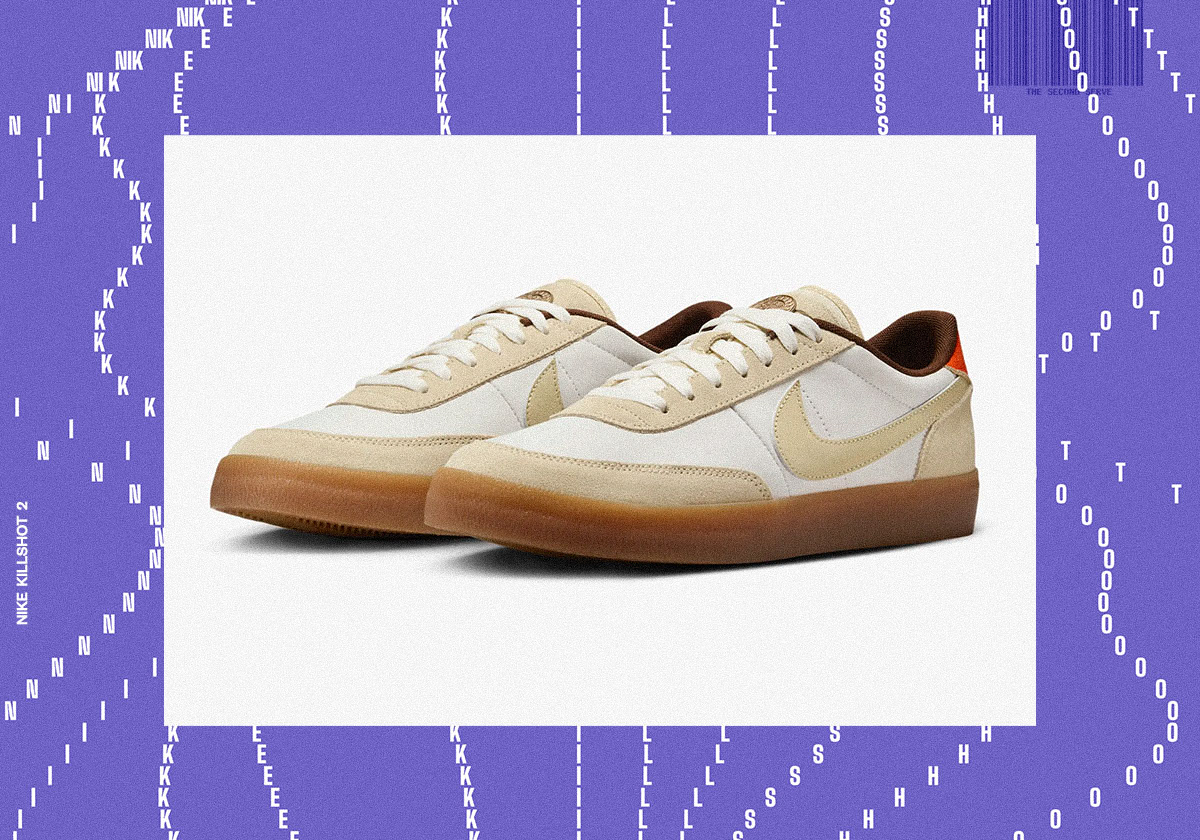
Image courtesy of Nike
Image courtesy of Nike
SIGN UP — YOU'RE ONLY AS GOOD AS YOUR SECOND SERVE.
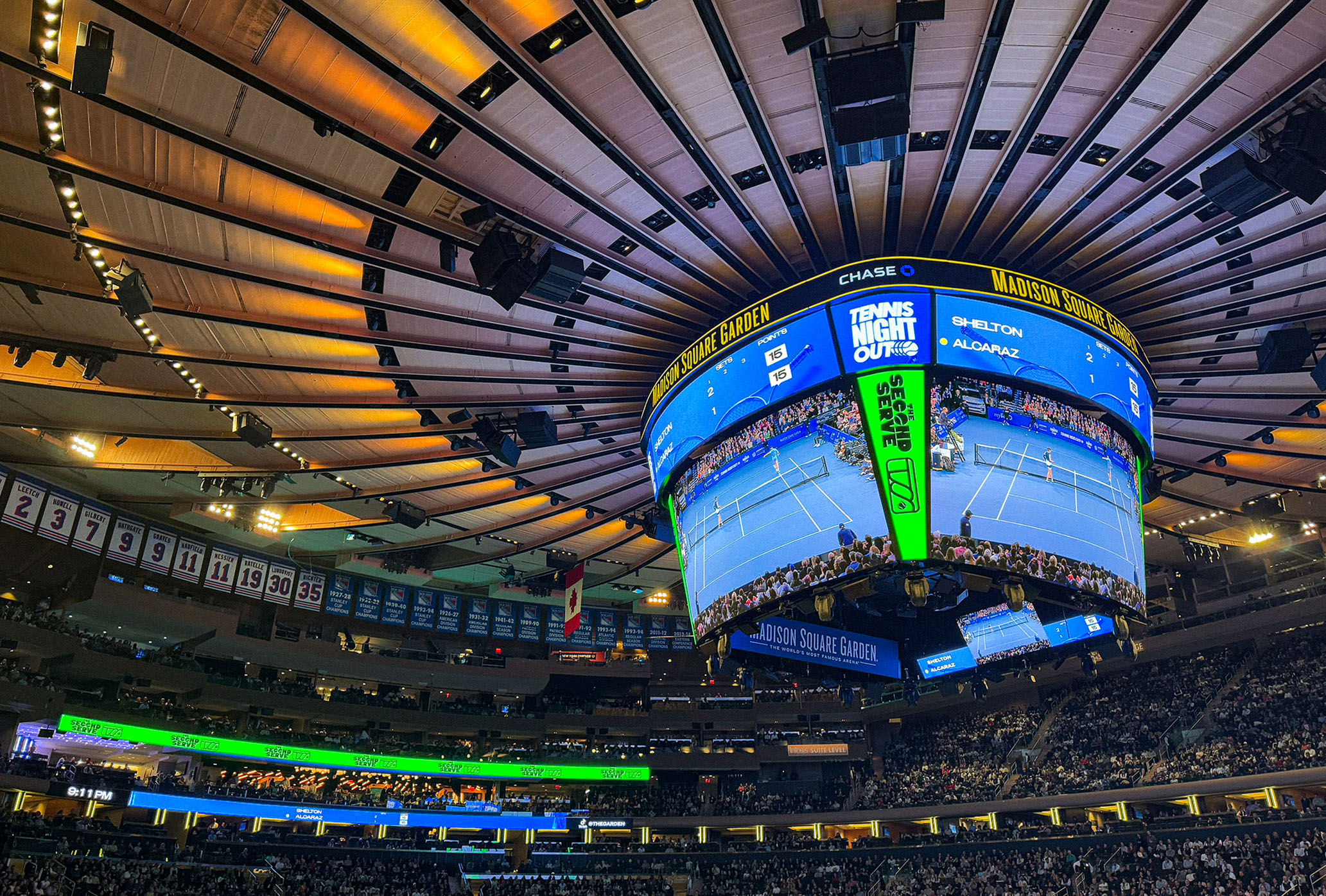
Garden Party
Garden Party
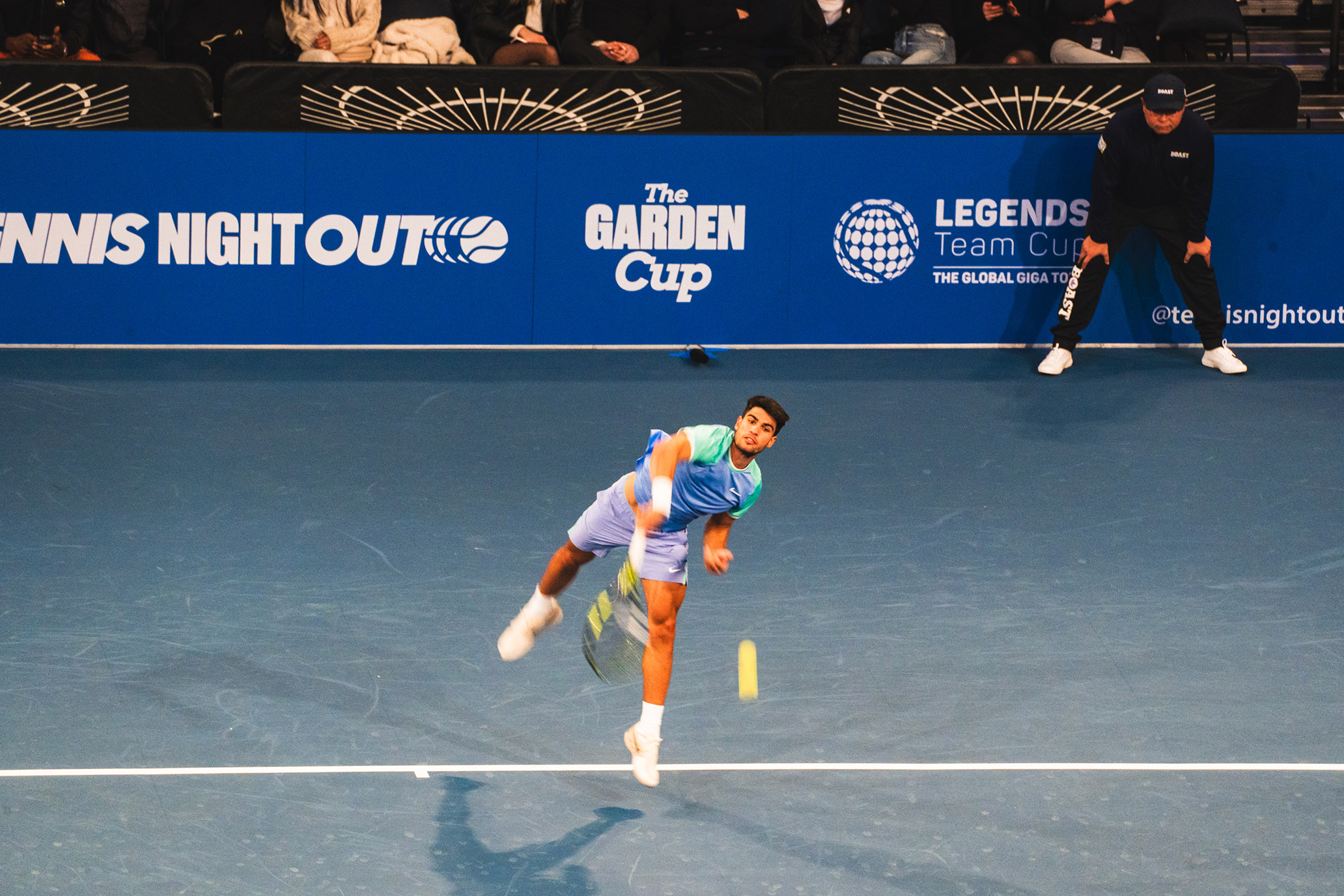
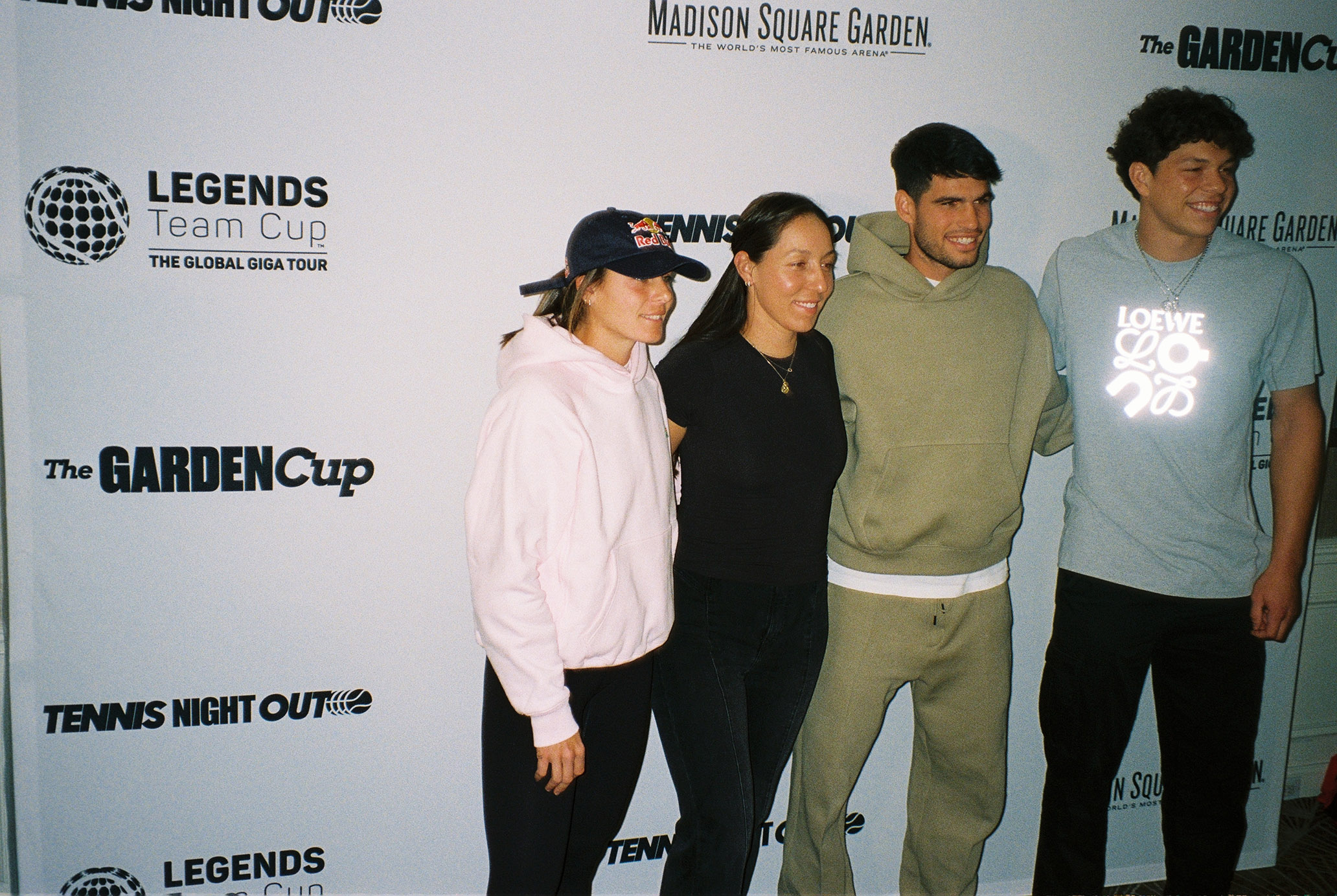
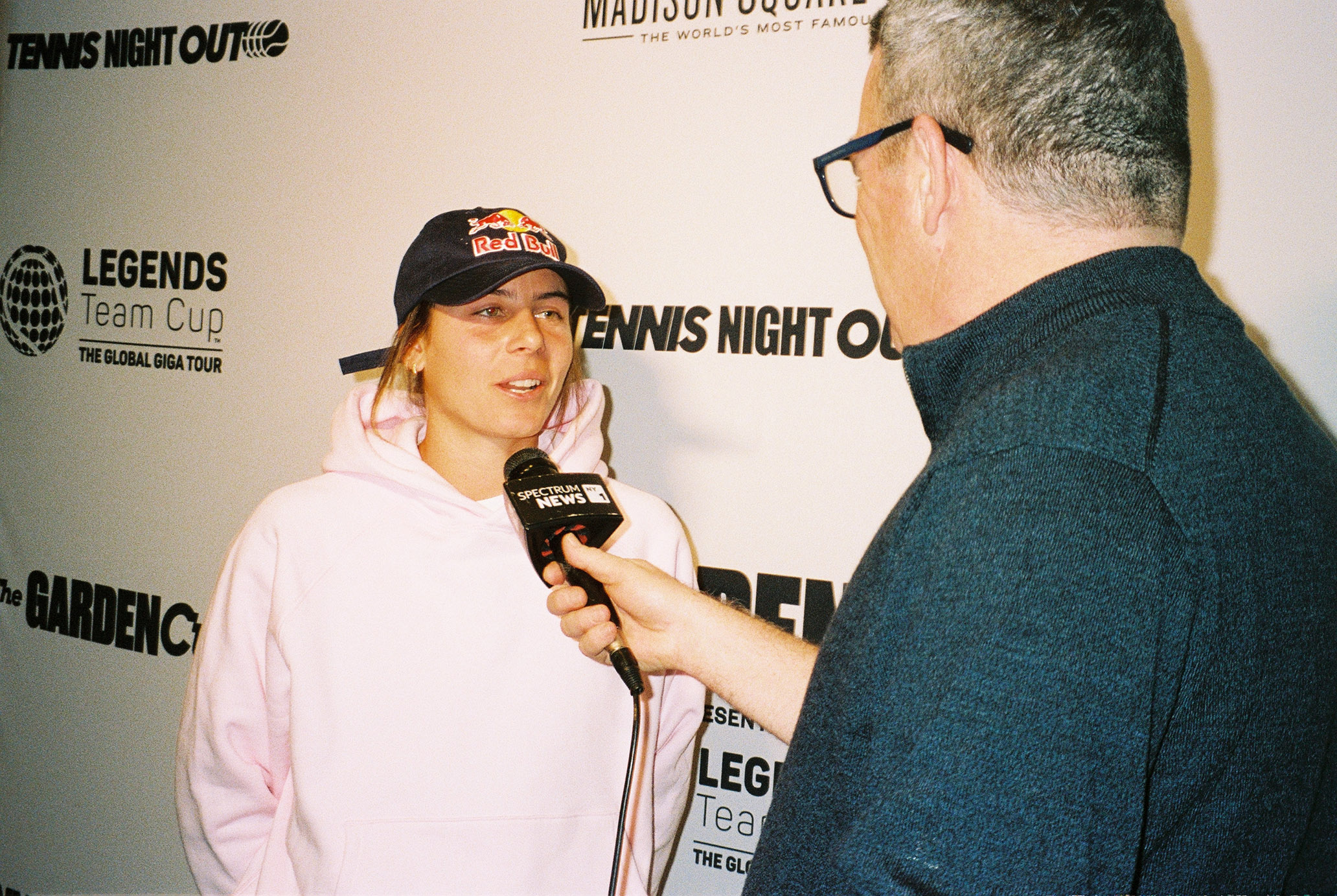
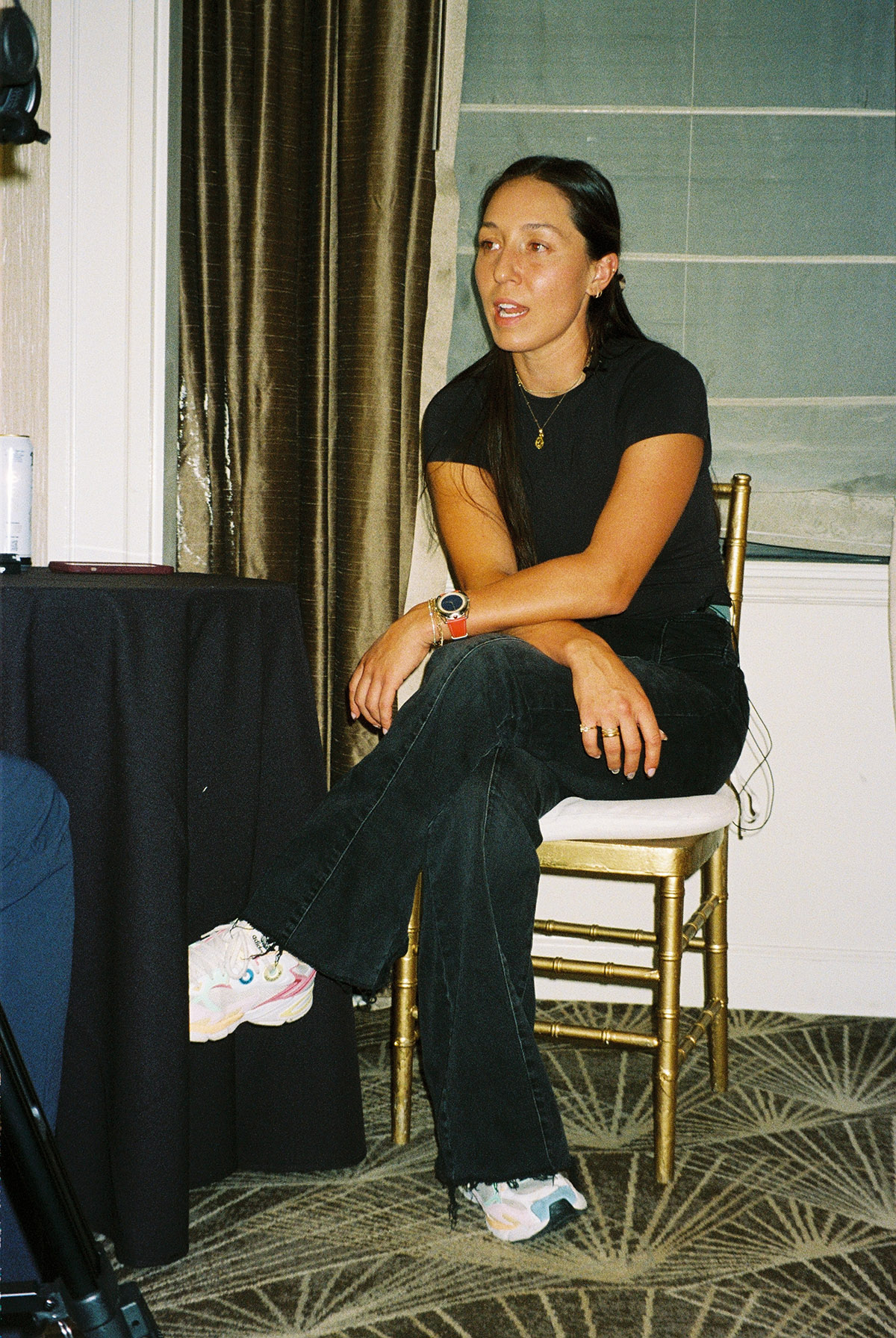
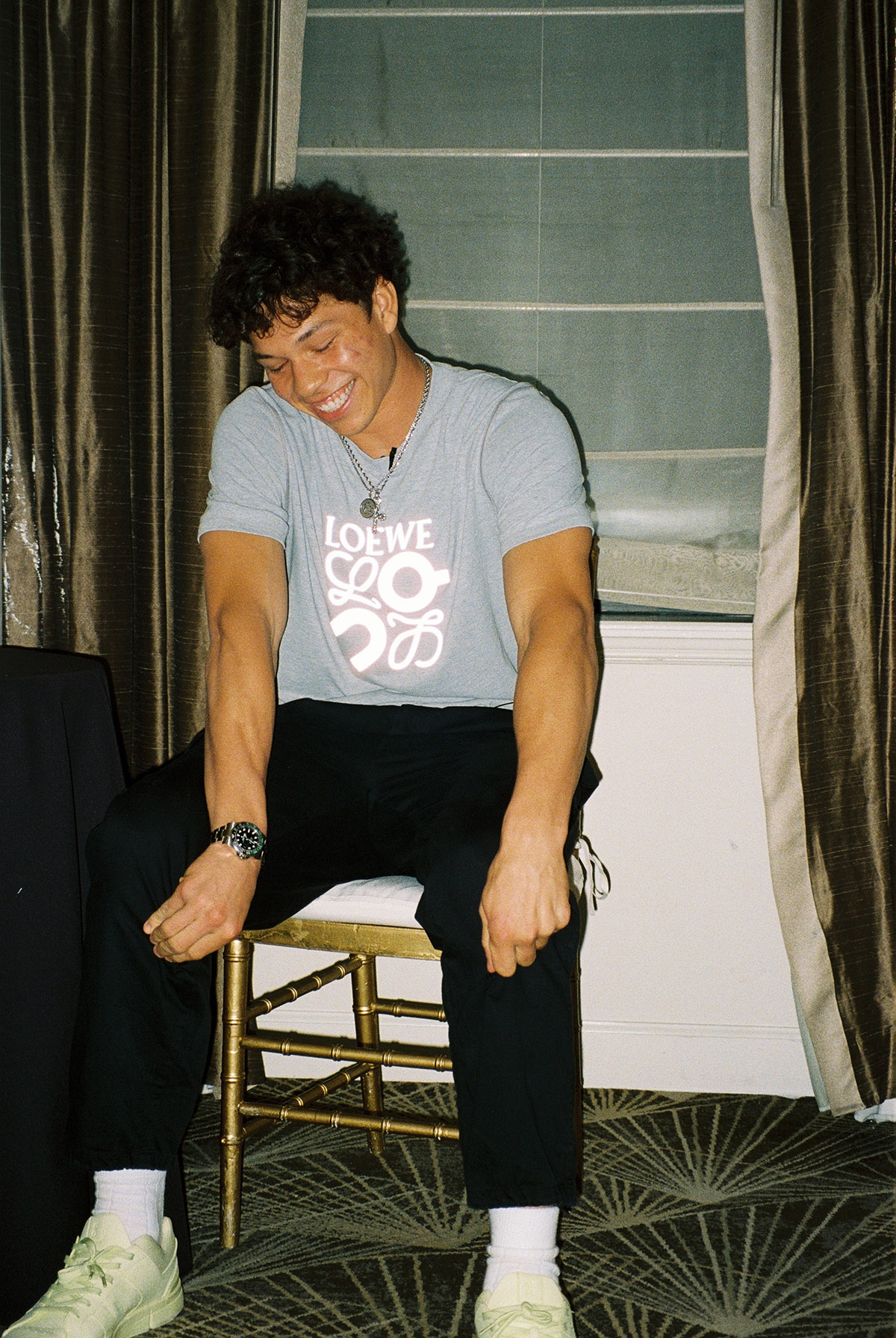
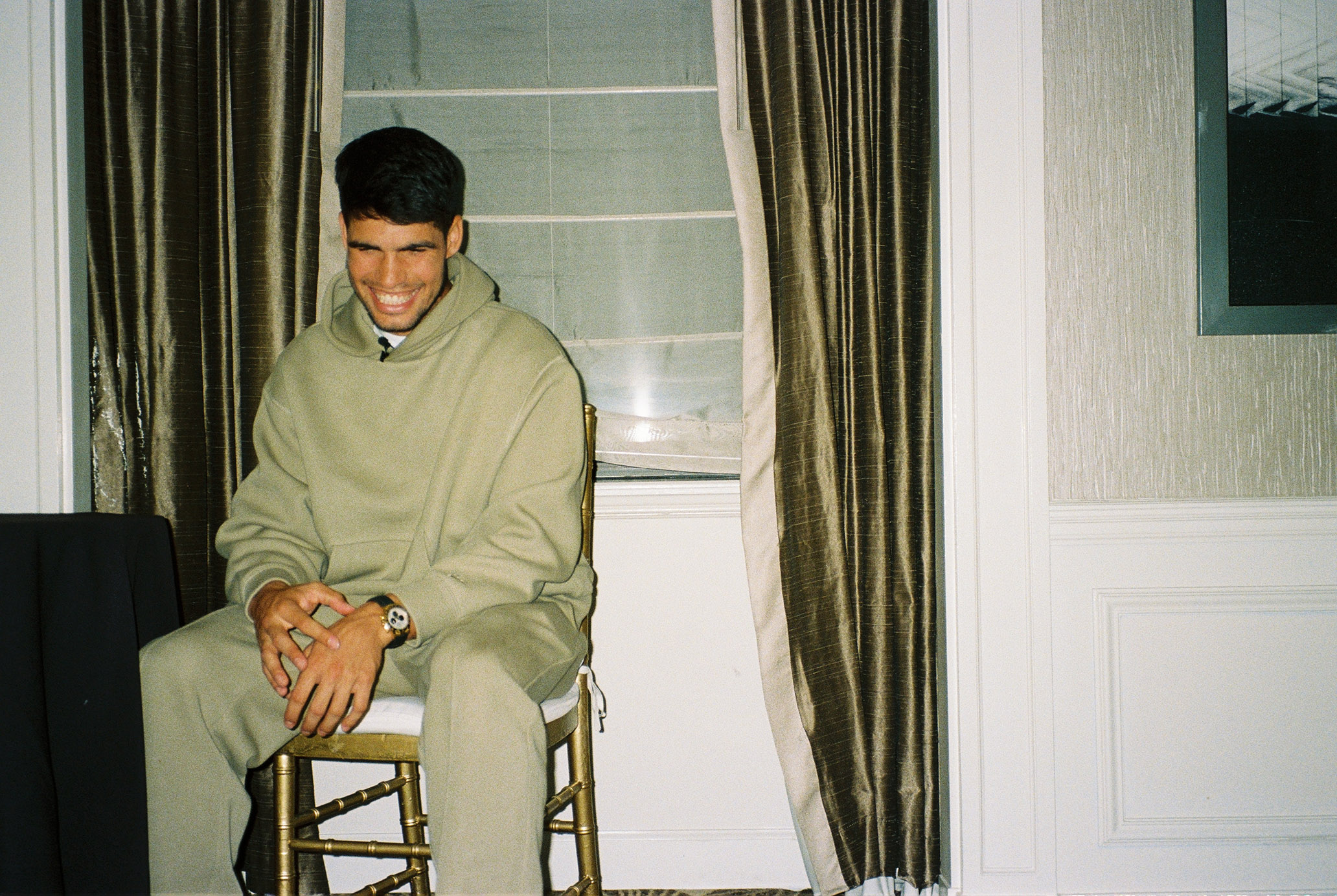
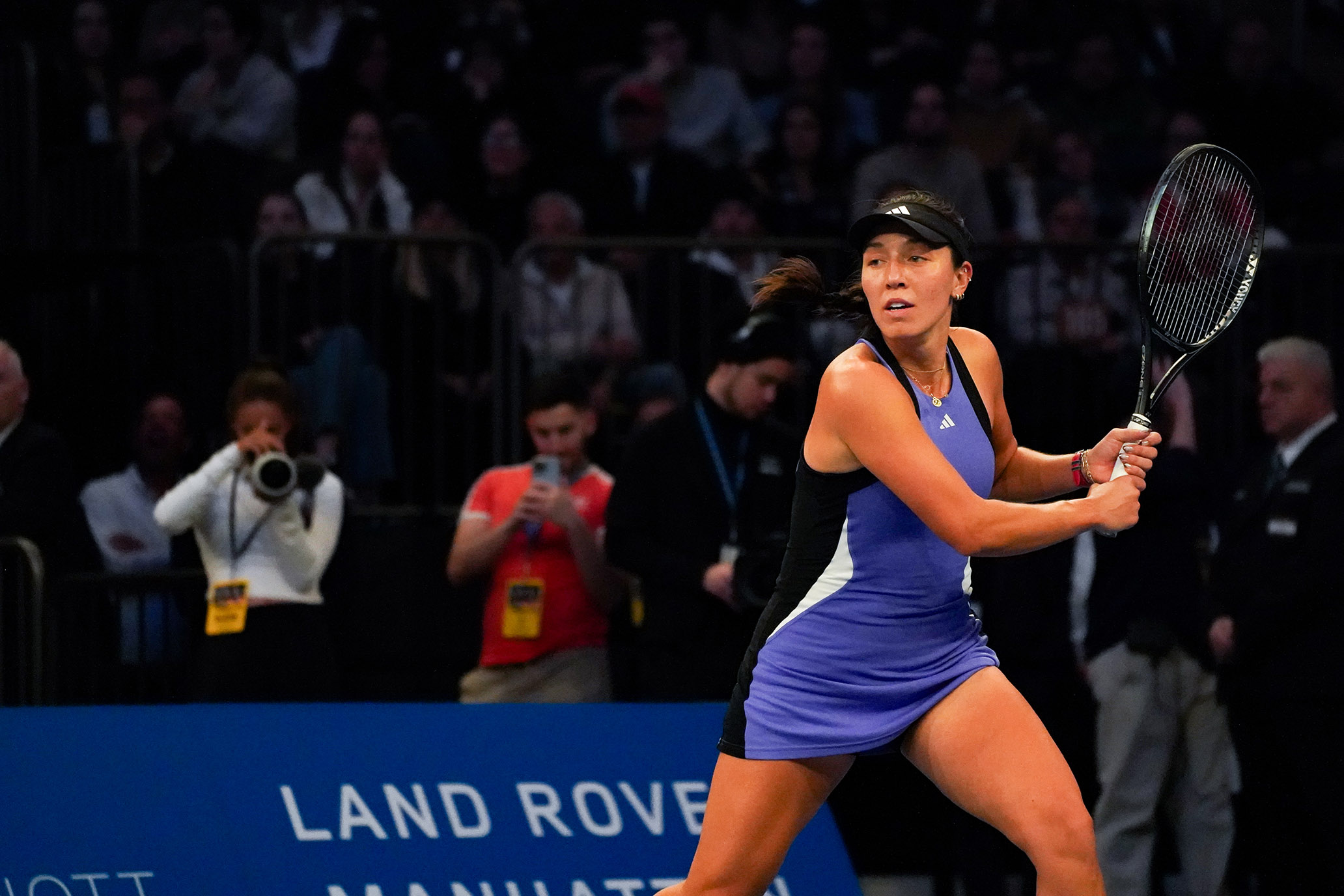
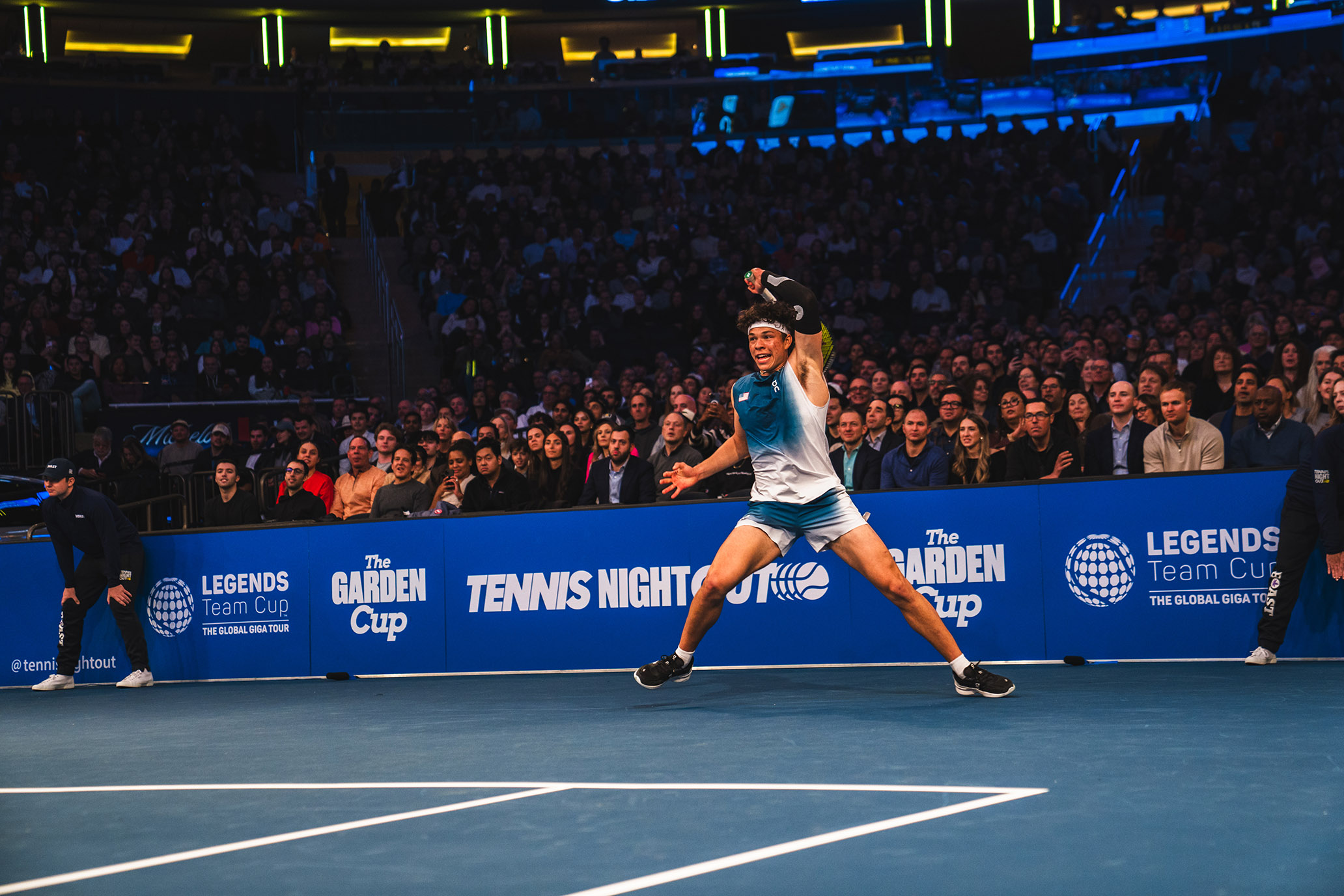
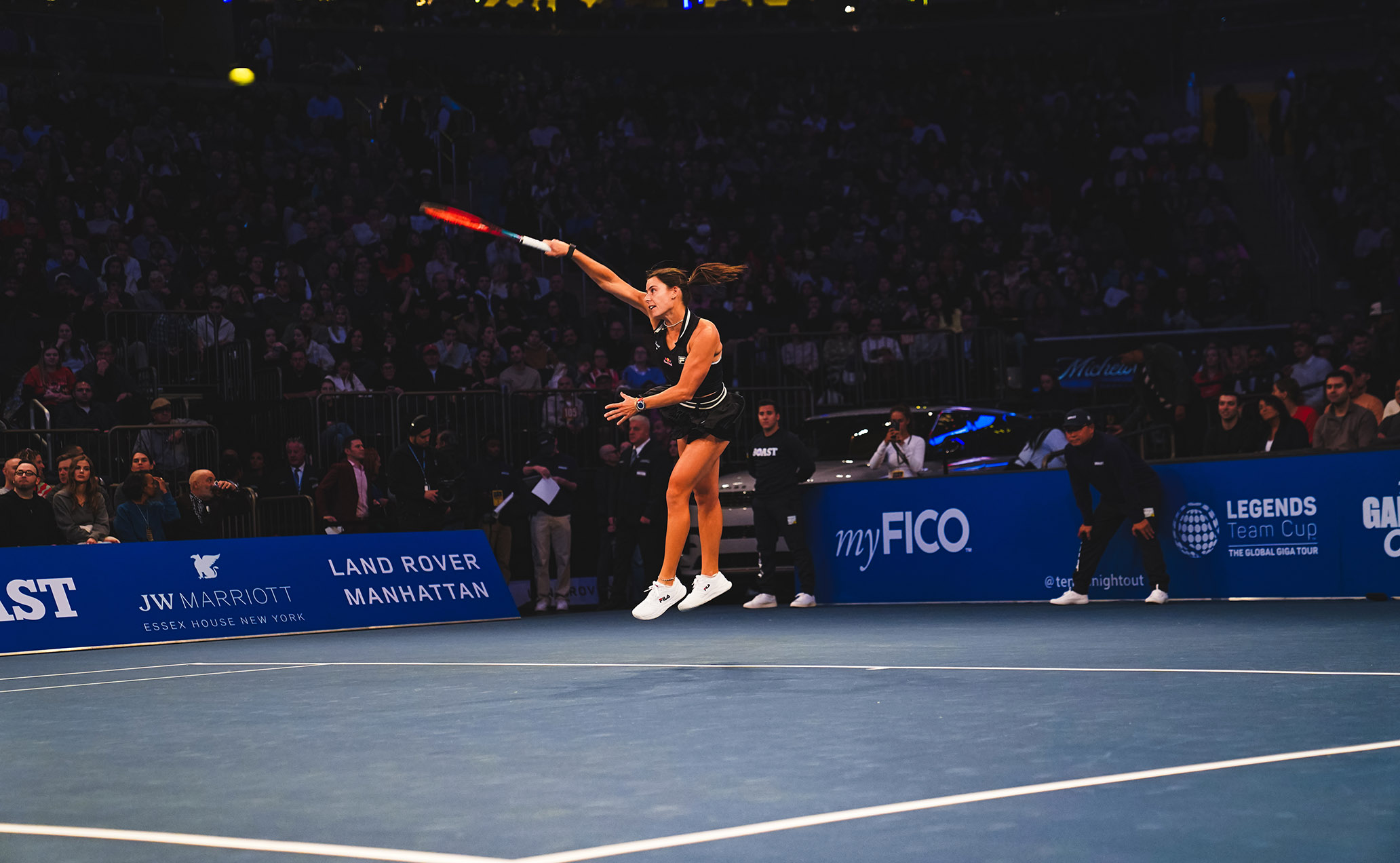
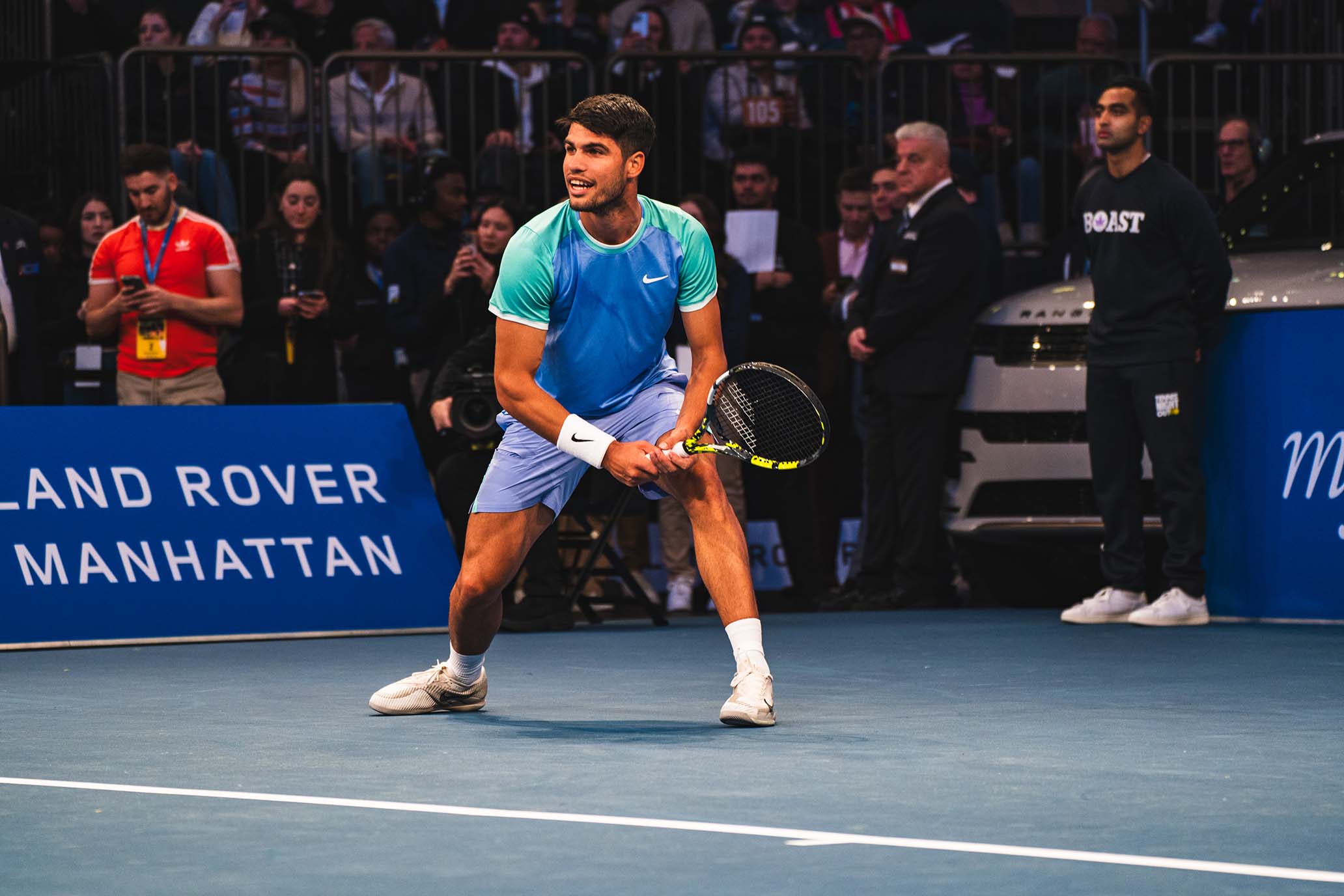
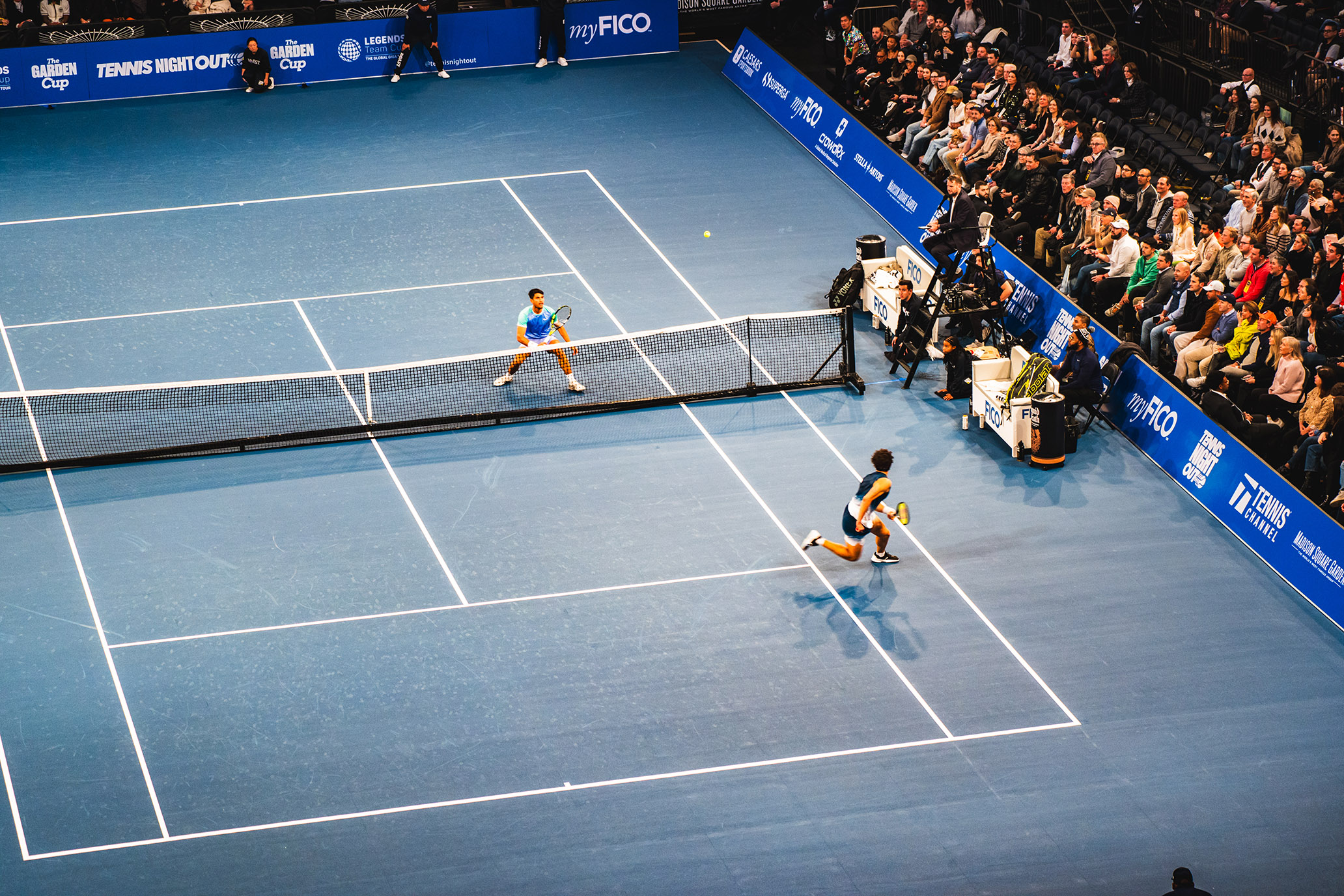
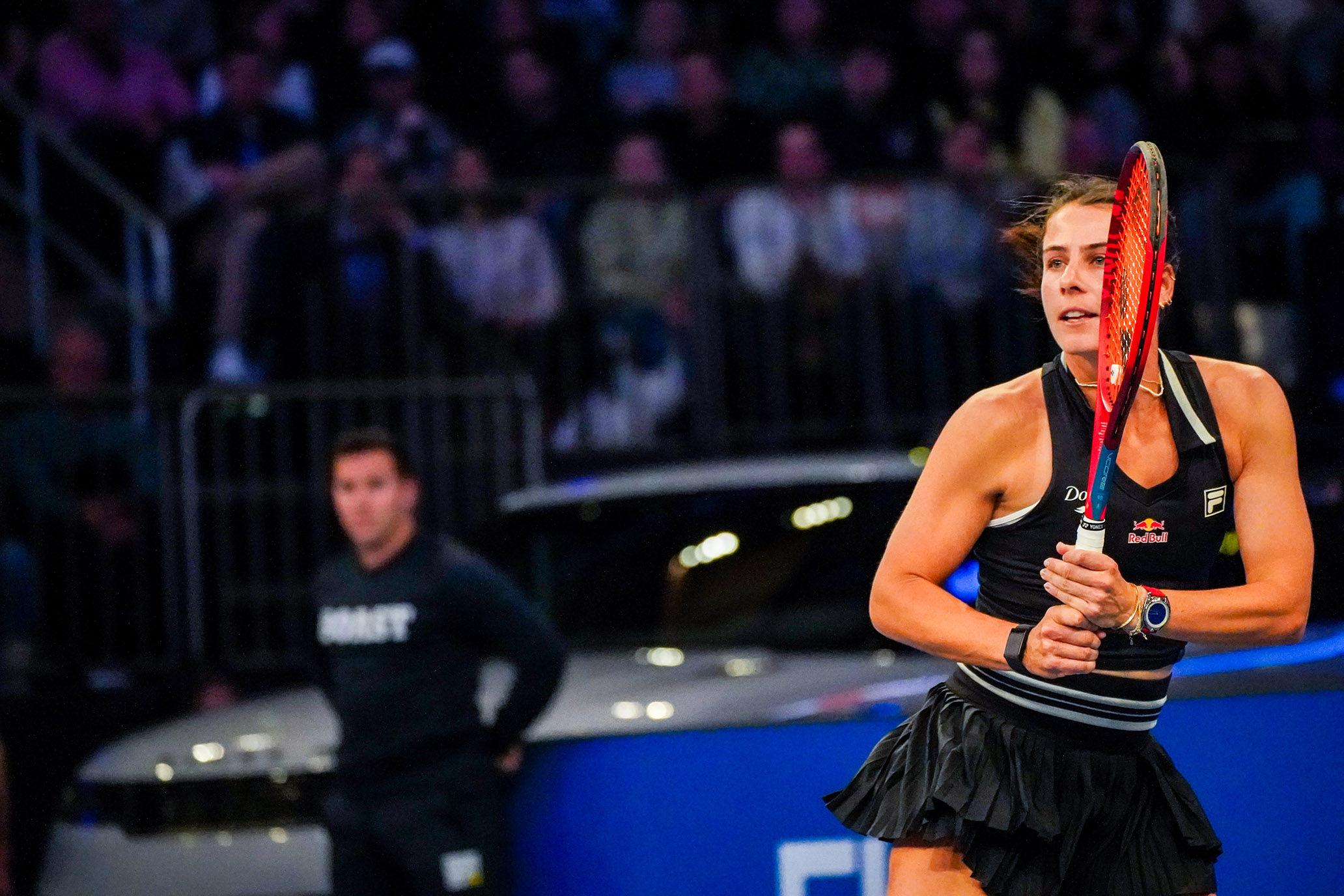
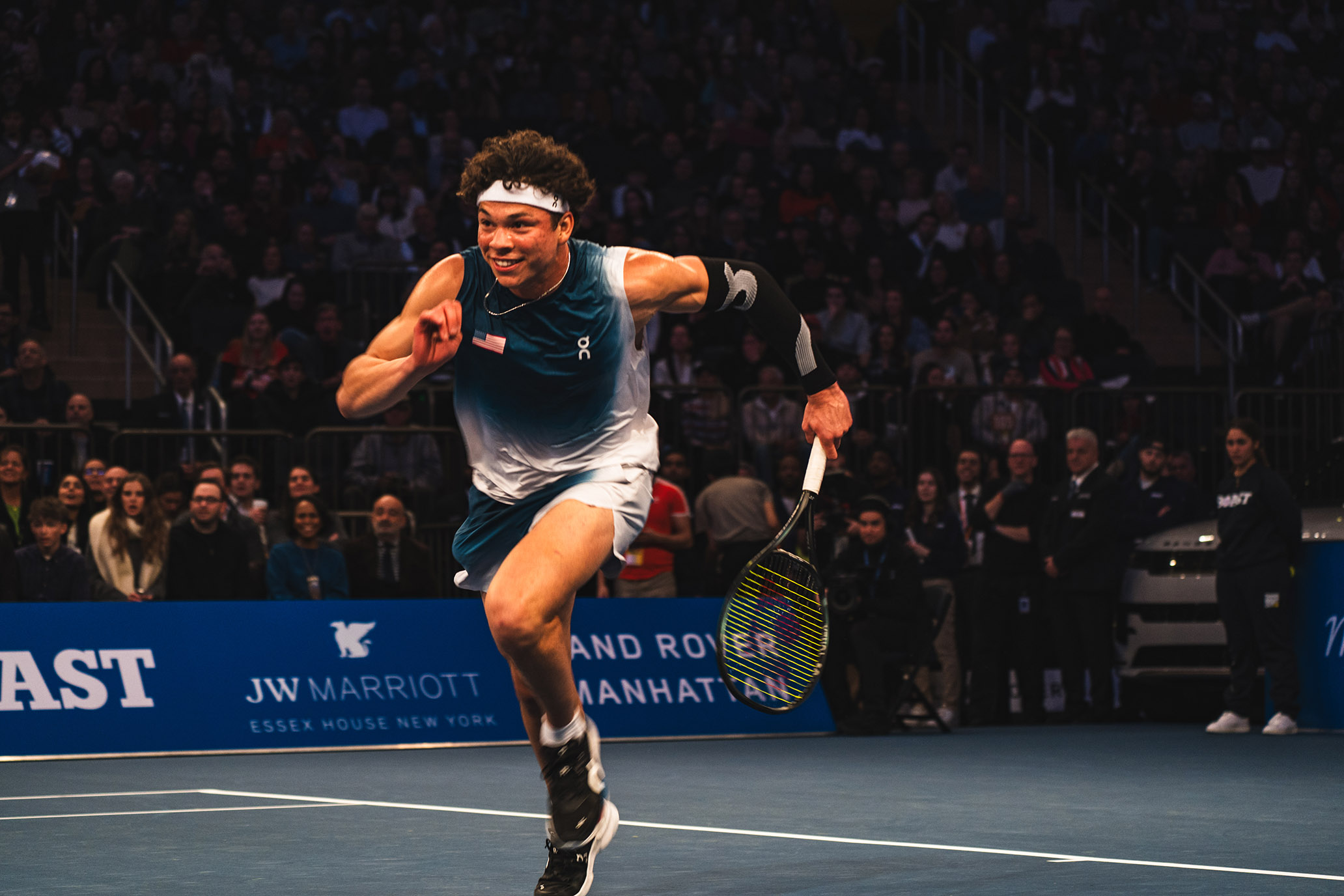
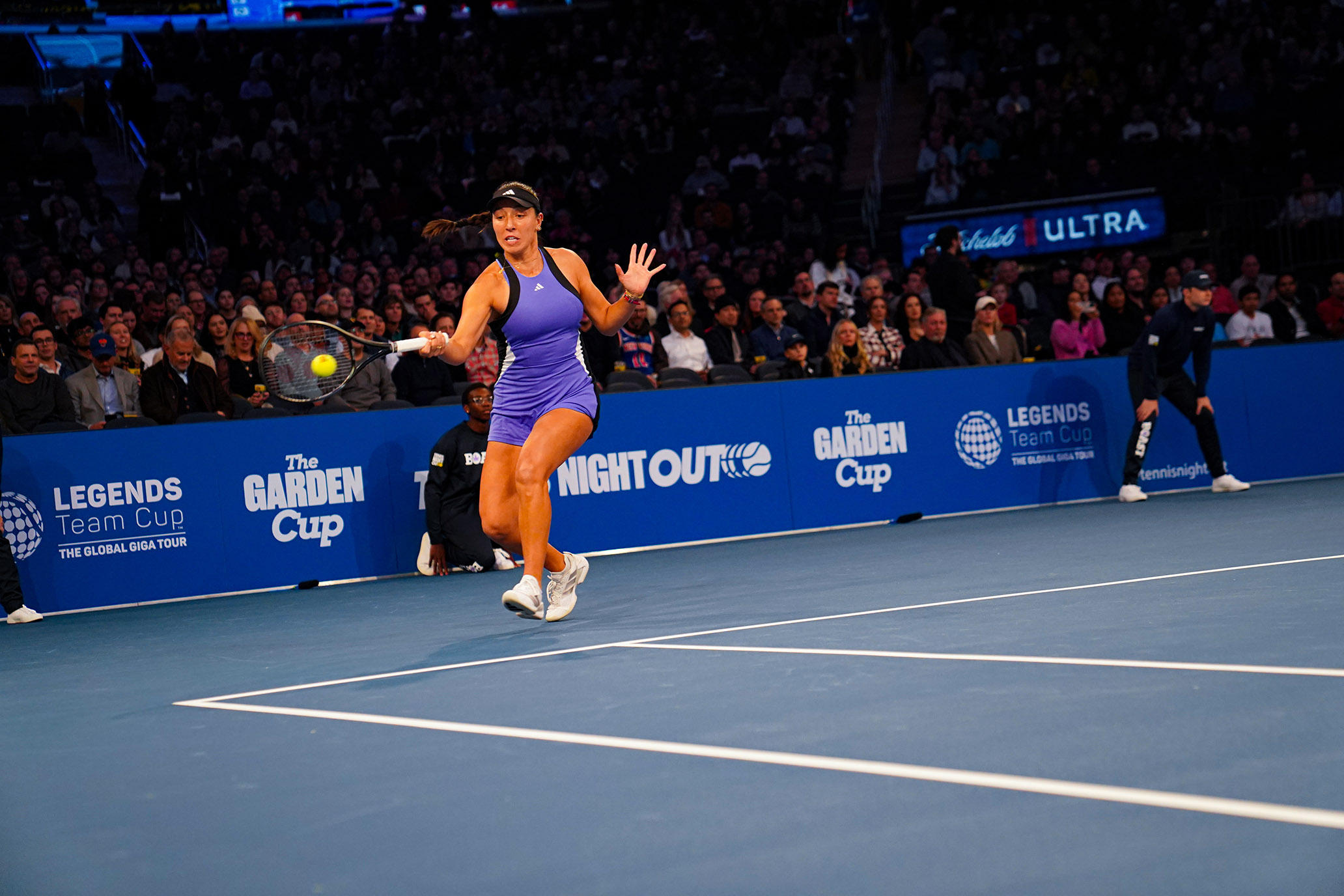
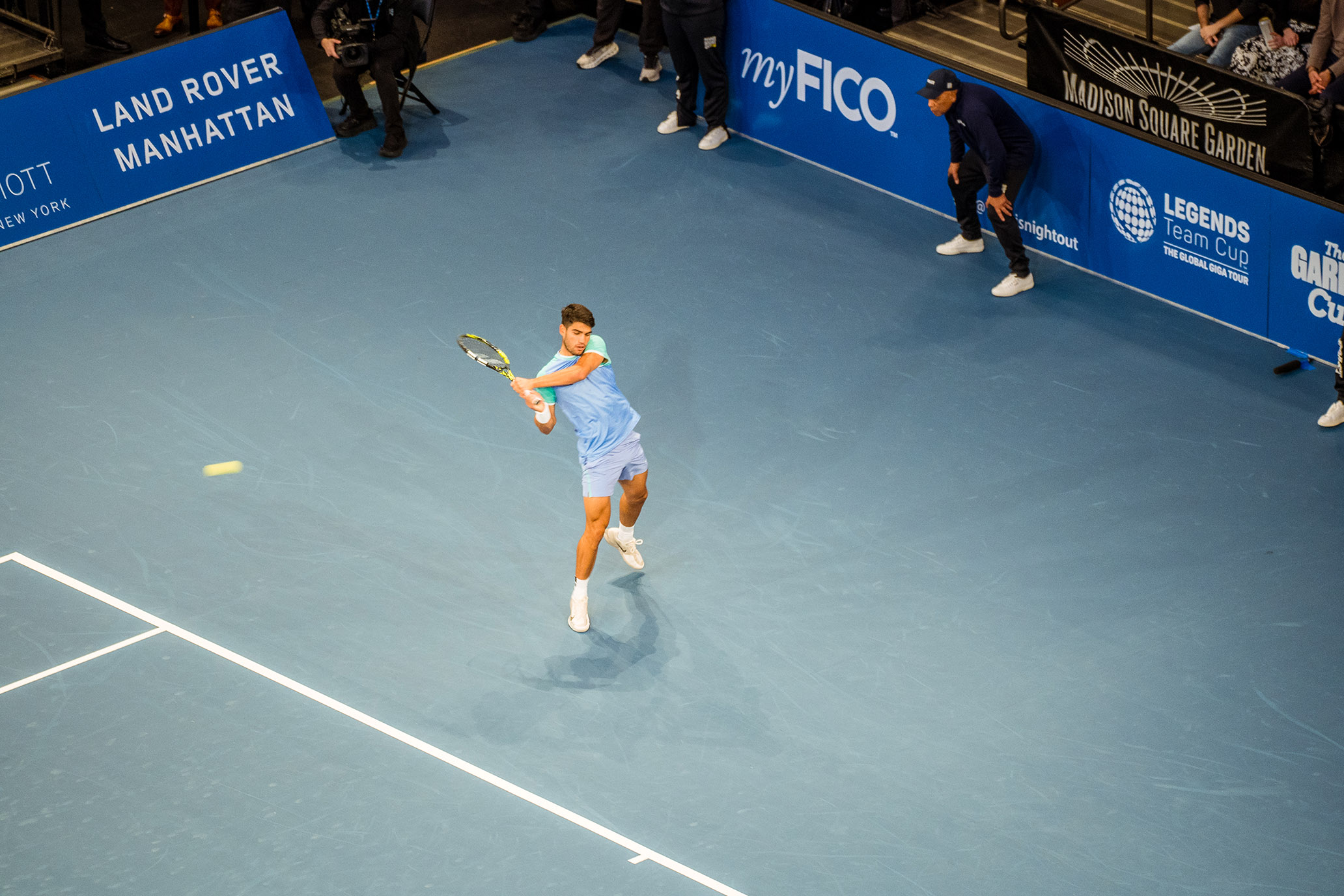
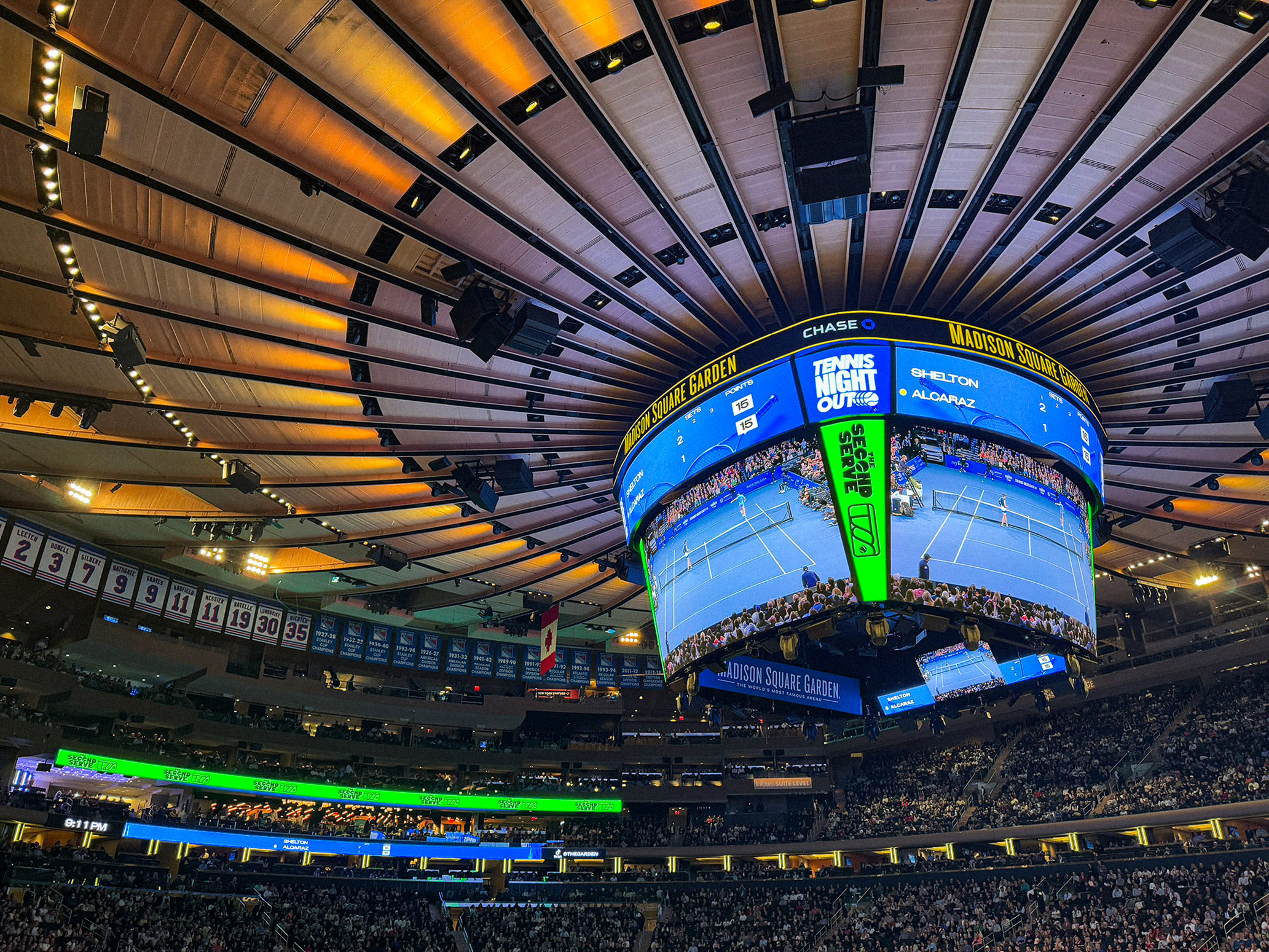
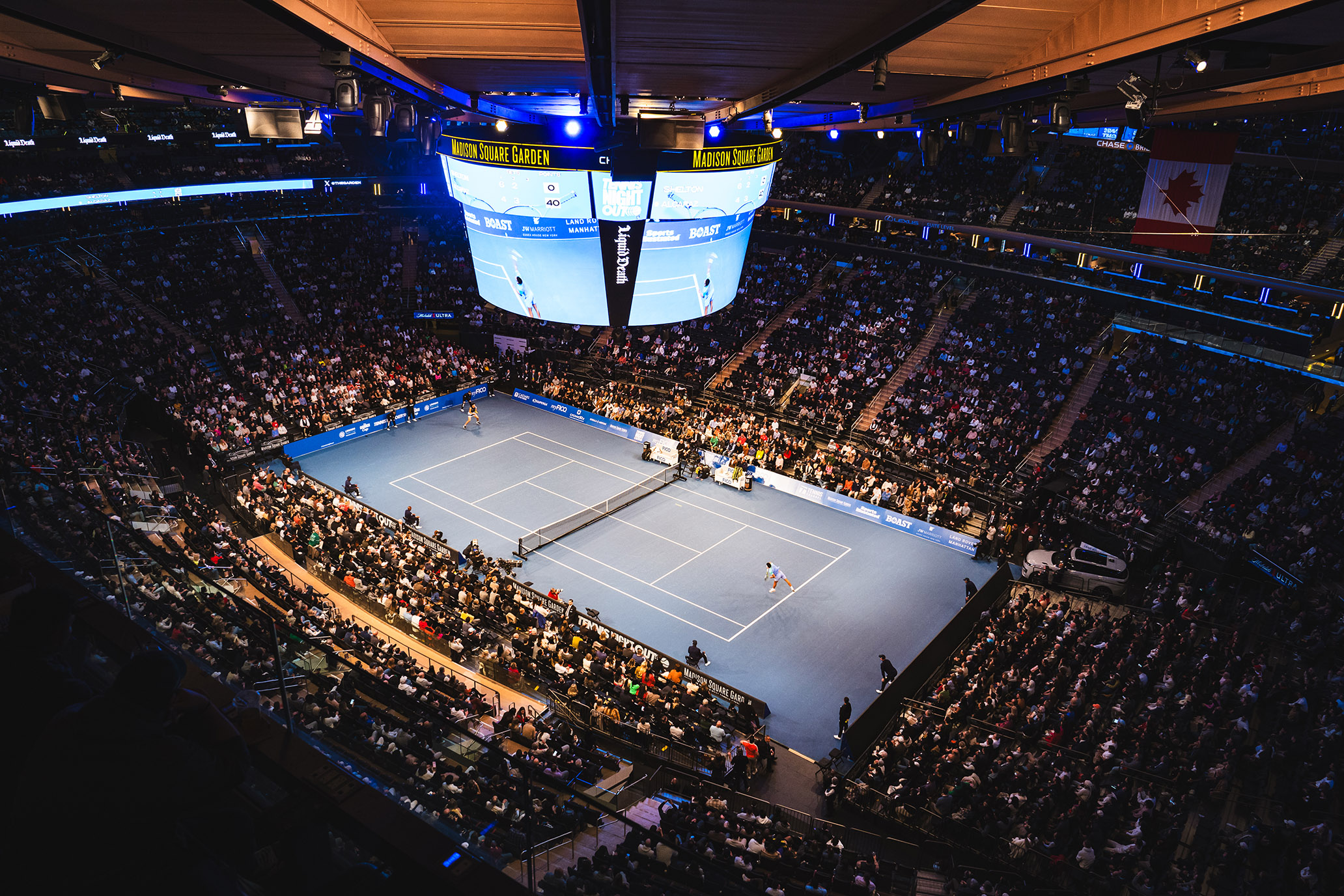
Tennis' return to the World's Most Famous Arena brought the moment, and delivered.
Tennis' return to the World's Most Famous Arena brought the moment, and delivered.
Photography by @ayssports, @tennisnightout and TSS
December 13, 2024


YOUR WEEK IN TENNIS — SIGN UP FOR THE SECOND SERVE NEWSLETTER
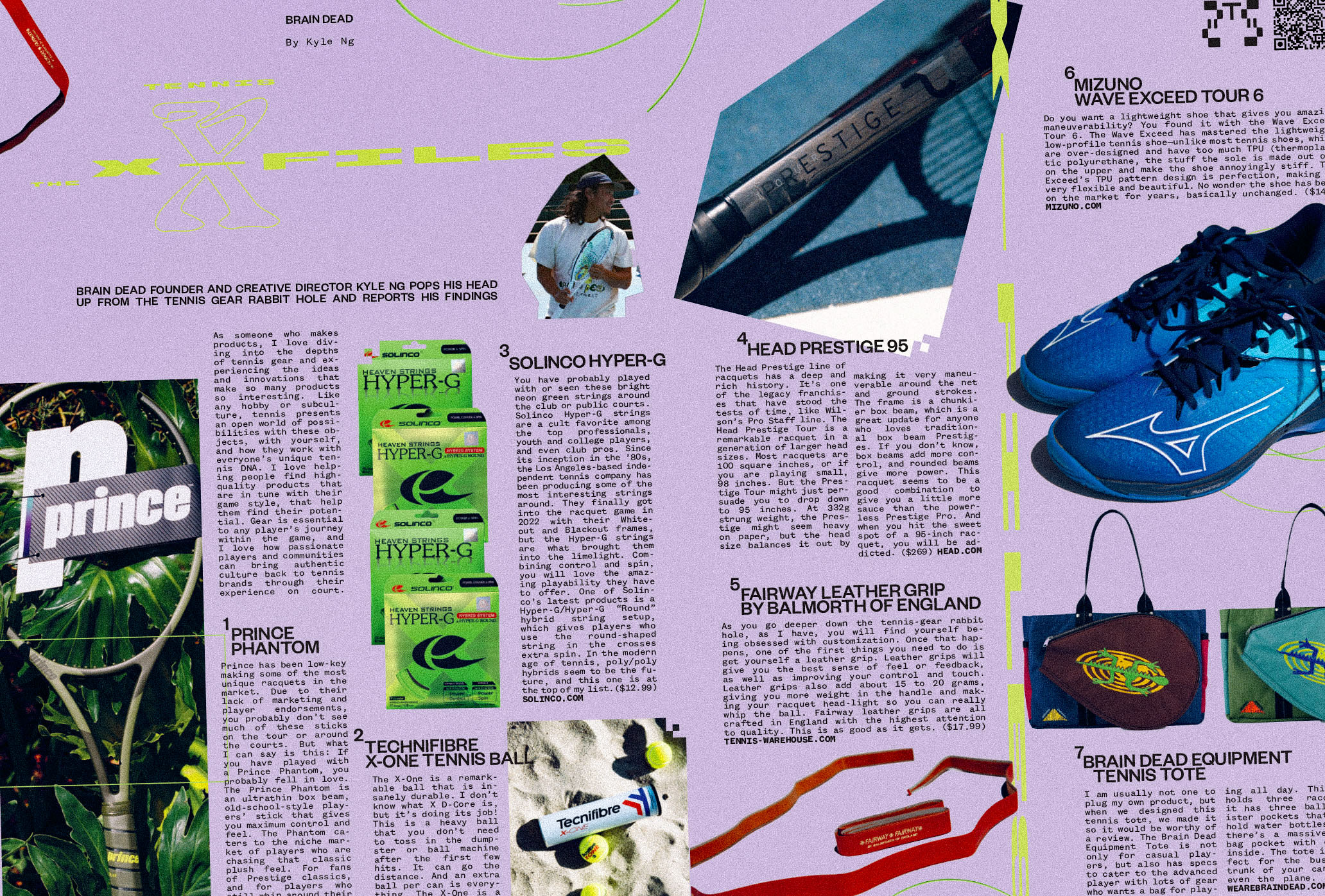
The Tennis X-Files

Brain Dead founder and Creative Director Kyle Ng pops his head up from the tennis gear rabbit hole and reports his findings.
By Kyle Ng
Photography by TSS
Featured in Volume 1 of OPEN Tennis — BUY

Brain Dead founder and Creative Director Kyle Ng pops his head up from the tennis gear rabbit hole and reports his findings.
By Kyle Ng
Photography by TSS
Featured in Volume 1 of OPEN Tennis — BUY
The Tennis X-Files
The Tennis X-Files
Brain Dead founder and Creative Director Kyle Ng pops his head up from the tennis gear rabbit hole and reports his findings.
Brain Dead founder and Creative Director Kyle Ng pops his head up from the tennis gear rabbit hole and reports his findings.
By Kyle Ng
Photography by TSS
Featured in Volume 1 of OPEN Tennis — BUY
As someone who makes products, I love diving into the depths of tennis gear and experiencing the ideas and innovations that make so many products so interesting. Like any hobby or subculture, tennis presents an open world of possibilities with these objects, with yourself, and how they work with everyone’s unique tennis DNA. I love helping people find high-quality products that are in tune with their game style, that help them find their potential. Gear is essential to any player’s journey within the game, and I love how passionate players and communities can bring authentic culture back to tennis brands through their experience on court.
As someone who makes products, I love diving into the depths of tennis gear and experiencing the ideas and innovations that make so many products so interesting. Like any hobby or subculture, tennis presents an open world of possibilities with these objects, with yourself, and how they work with everyone’s unique tennis DNA. I love helping people find high-quality products that are in tune with their game style, that help them find their potential. Gear is essential to any player’s journey within the game, and I love how passionate players and communities can bring authentic culture back to tennis brands through their experience on court.
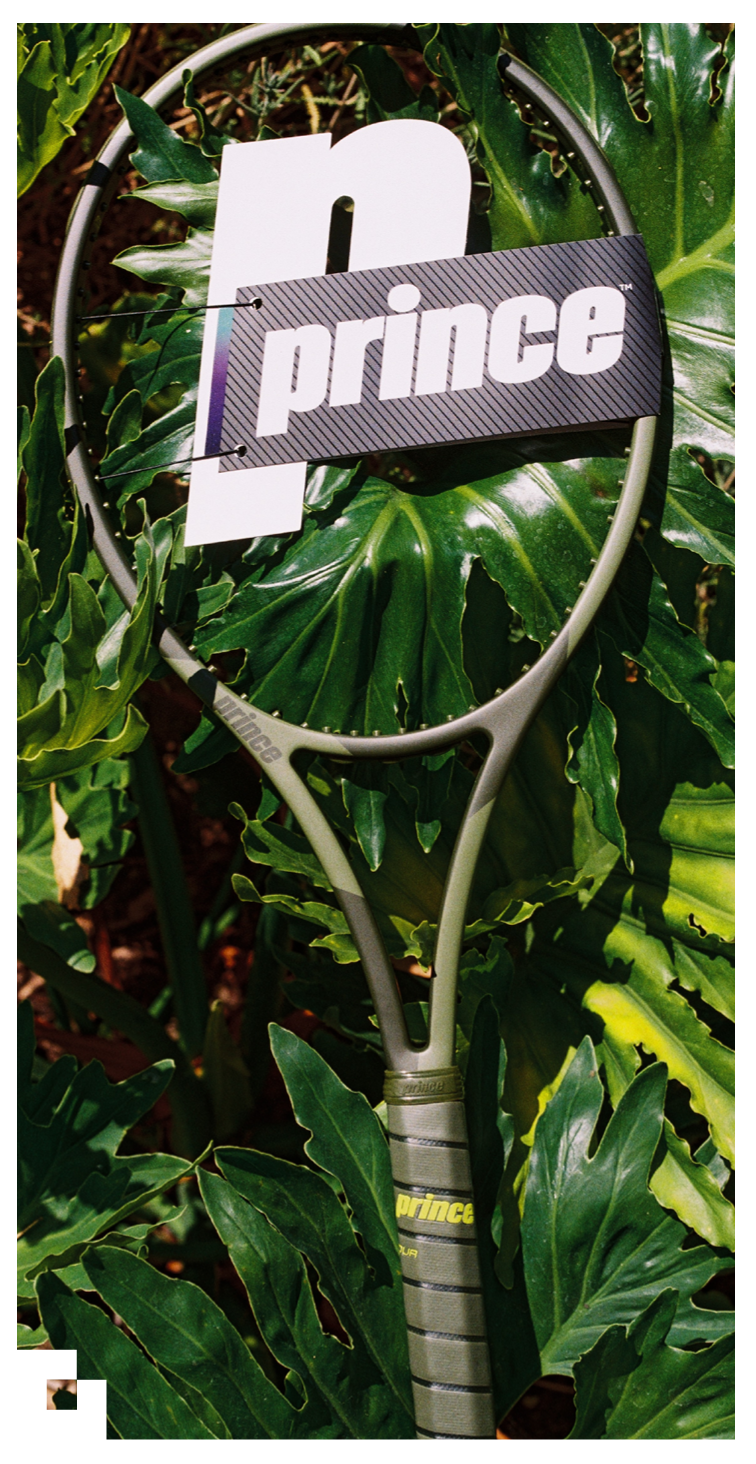
PRINCE PHANTOM
Prince has been low-key making some of the most unique racquets in the market. Due to their lack of marketing and player endorsements, you probably don’t see much of these sticks on the tour or around the courts. But what I can say is this: If you have played with a Prince Phantom, you probably fell in love. The Prince Phantom is an ultrathin box beam, old-school-style players’ stick that gives you maximum control and feel. The Phantom caters to the niche market of players who are chasing that classic plush feel. For fans of Prestige classics, and for players who still whip around their sticks from the ’90s, I highly recommend the newest version of the Prince Phantom. ($199)
PRINCE PHANTOM
Prince has been low-key making some of the most unique racquets in the market. Due to their lack of marketing and player endorsements, you probably don’t see much of these sticks on the tour or around the courts. But what I can say is this: If you have played with a Prince Phantom, you probably fell in love. The Prince Phantom is an ultrathin box beam, old-school-style players’ stick that gives you maximum control and feel. The Phantom caters to the niche market of players who are chasing that classic plush feel. For fans of Prestige classics, and for players who still whip around their sticks from the ’90s, I highly recommend the newest version of the Prince Phantom. ($199)
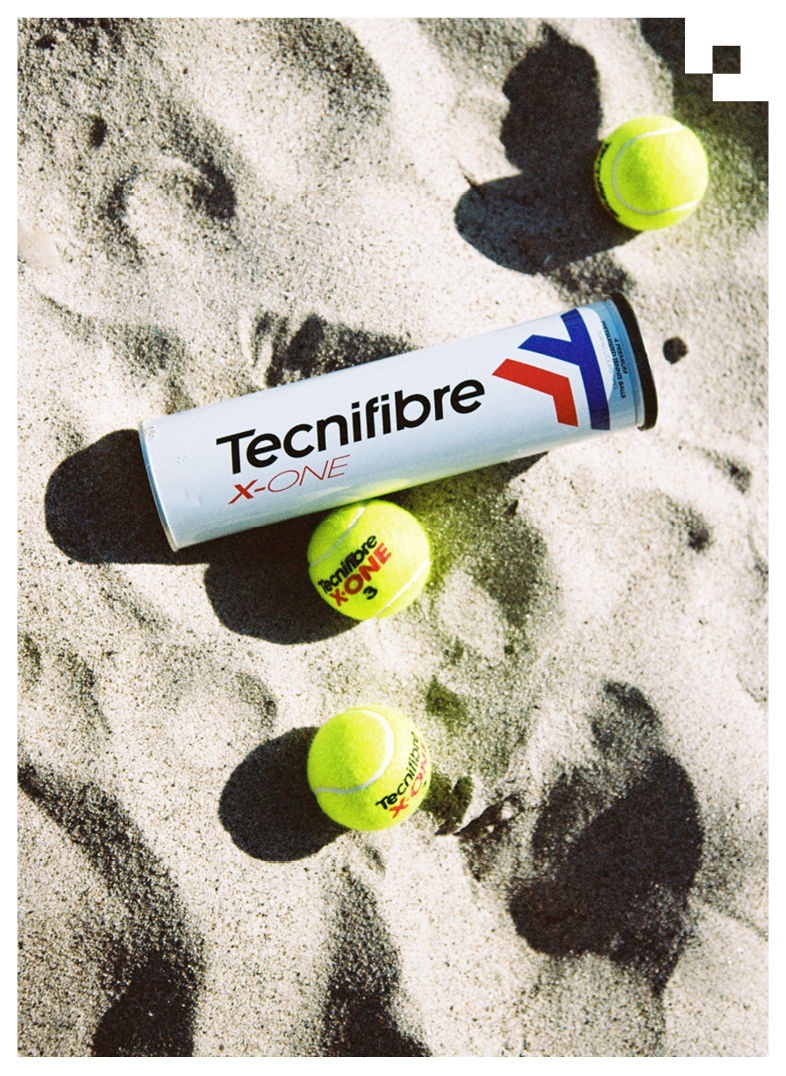
Tecnifibre X-ONE Tennis Ball
The X-One is a remarkable ball that is insanely durable. I don’t know what X D-Core is, but it’s doing its job! This is a heavy ball that you don’t need to toss in the dumpster or ball machine after the first few hits. It can go the distance. And an extra ball per can is everything. The X-One is a premium product that justifies its price point. ($199 per case)
Tecnifibre X-ONE Tennis Ball
The X-One is a remarkable ball that is insanely durable. I don’t know what X D-Core is, but it’s doing its job! This is a heavy ball that you don’t need to toss in the dumpster or ball machine after the first few hits. It can go the distance. And an extra ball per can is everything. The X-One is a premium product that justifies its price point. ($199 per case)
Solinco Hyper-G Strings
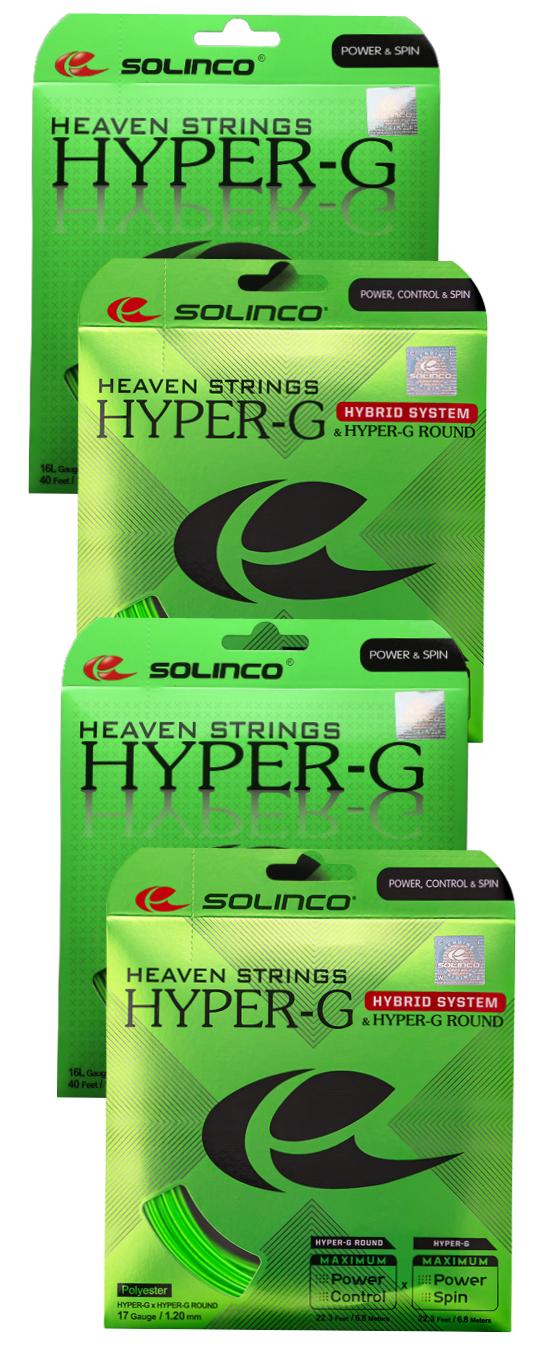
You have probably played with or seen these bright neon green strings around the club or public courts. Solinco Hyper-G strings are a cult favorite among the top professionals, youth and college players, and even club pros. Since its inception in the ’80s, the Los Angeles-based independent tennis company has been producing some of the most interesting strings around. They finally got into the racquet game in 2022 with their Whiteout and Blackout frames, but the Hyper-G strings are what brought them into the limelight. Combining control and spin, you will love the amazing playability they have to offer. One of Solinco’s latest products is a Hyper-G/Hyper-G “Round” hybrid string setup, which gives players who use the round-shaped string in the crosses extra spin. In the modern age of tennis, poly/poly hybrids seem to be the future, and this one is at the top of my list.
Solinco Hyper-G Strings
You have probably played with or seen these bright neon green strings around the club or public courts. Solinco Hyper-G strings are a cult favorite among the top professionals, youth and college players, and even club pros. Since its inception in the ’80s, the Los Angeles-based independent tennis company has been producing some of the most interesting strings around. They finally got into the racquet game in 2022 with their Whiteout and Blackout frames, but the Hyper-G strings are what brought them into the limelight. Combining control and spin, you will love the amazing playability they have to offer. One of Solinco’s latest products is a Hyper-G/Hyper-G “Round” hybrid string setup, which gives players who use the round-shaped string in the crosses extra spin. In the modern age of tennis, poly/poly hybrids seem to be the future, and this one is at the top of my list.
Head Prestige 95
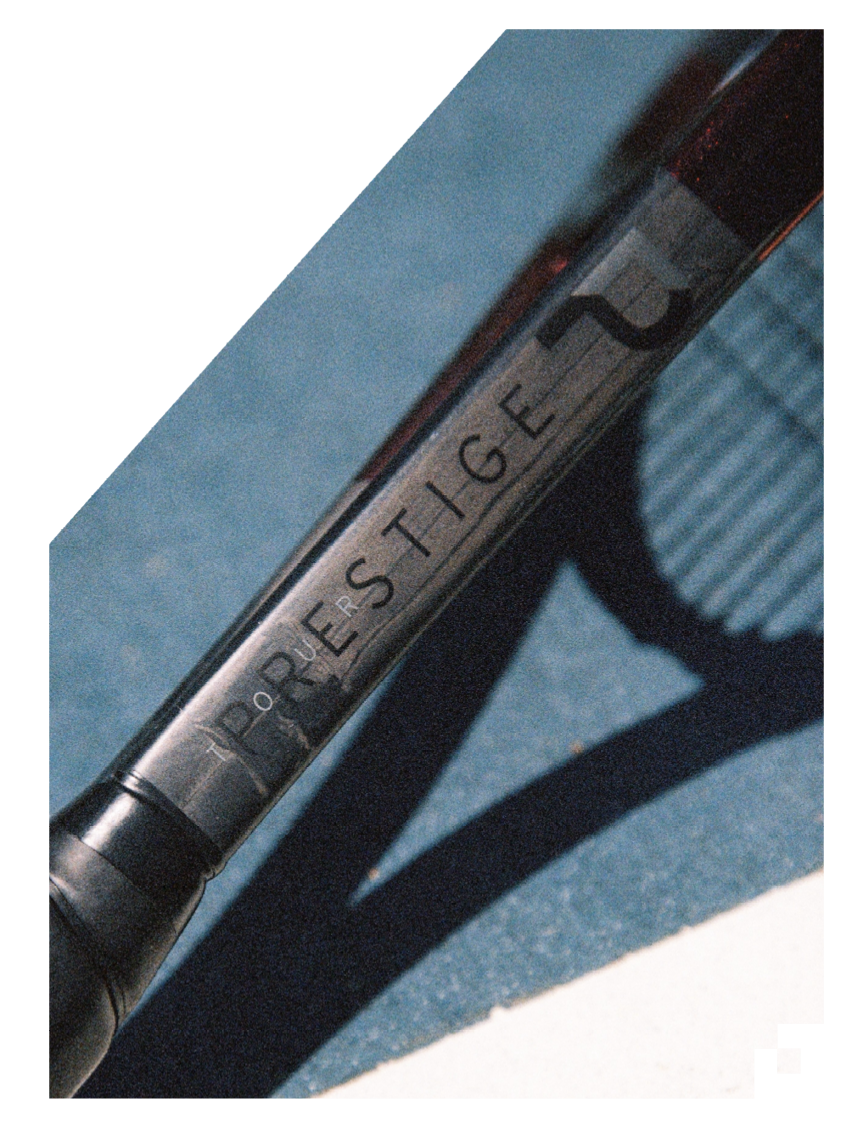
The Head Prestige line of racquets has a deep and rich history. It’s one of the legacy franchises that have stood the tests of time, like Wilson’s Pro Staff line. The Head Prestige Tour is a remarkable racquet in a generation of larger head sizes. Most racquets are 100 square inches, or if you are playing small, 98 inches. But the Prestige Tour might just persuade you to drop down to 95 inches. At 332g strung weight, the Prestige might seem heavy on paper, but the head size balances it out by making it very maneuverable around the net and ground strokes. The frame is a chunkier box beam, which is a great update for anyone who loves traditional box beam Prestiges. If you don’t know, box beams add more control, and rounded beams give more power. This racquet seems to be a good combination to give you a little more sauce than the powerless Prestige Pro. And when you hit the sweet spot of a 95-inch racquet, you will be addicted. ($269)
Head Prestige 95
The Head Prestige line of racquets has a deep and rich history. It’s one of the legacy franchises that have stood the tests of time, like Wilson’s Pro Staff line. The Head Prestige Tour is a remarkable racquet in a generation of larger head sizes. Most racquets are 100 square inches, or if you are playing small, 98 inches. But the Prestige Tour might just persuade you to drop down to 95 inches. At 332g strung weight, the Prestige might seem heavy on paper, but the head size balances it out by making it very maneuverable around the net and ground strokes. The frame is a chunkier box beam, which is a great update for anyone who loves traditional box beam Prestiges. If you don’t know, box beams add more control, and rounded beams give more power. This racquet seems to be a good combination to give you a little more sauce than the powerless Prestige Pro. And when you hit the sweet spot of a 95-inch racquet, you will be addicted. ($269)
FAIRWAY LEATHER GRIP BY BALMORTH OF ENGLAND
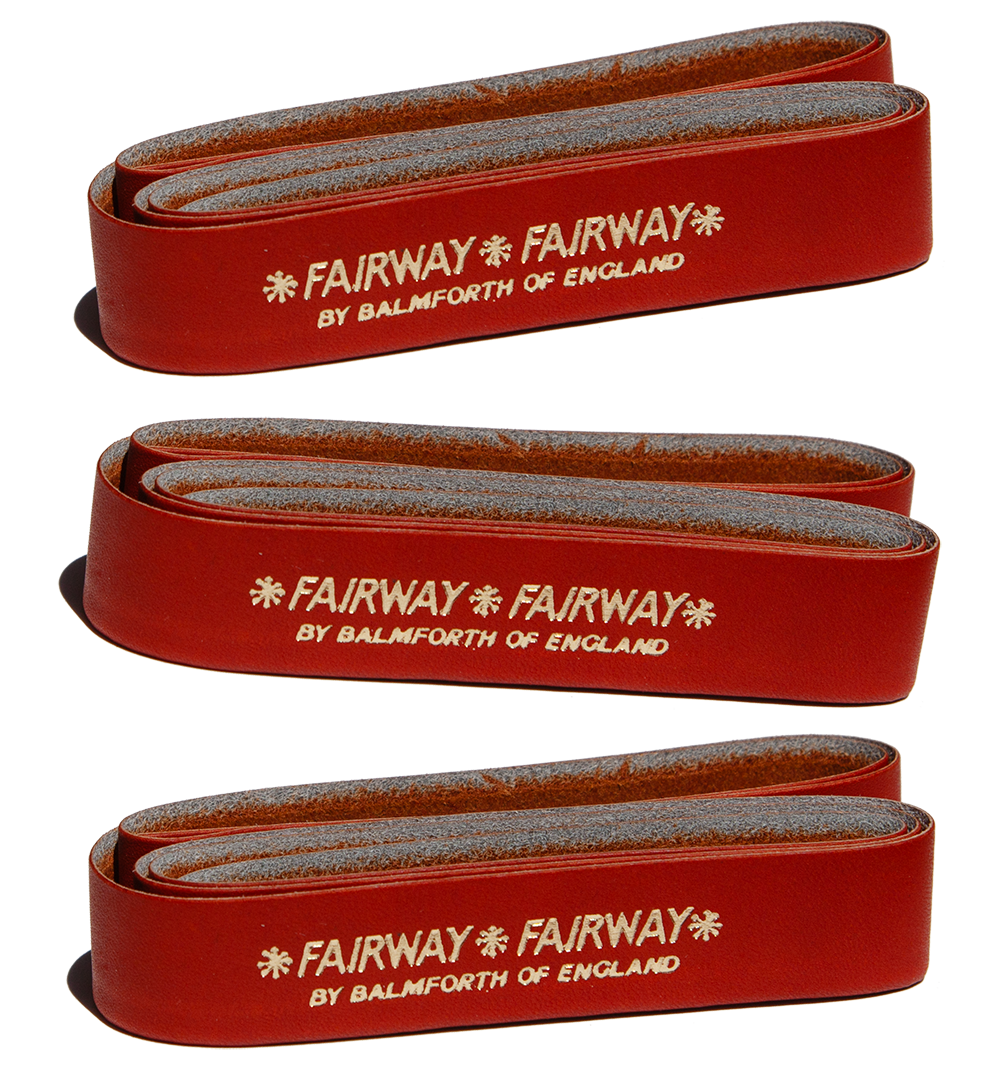
As you go deeper down the tennis-gear rabbit hole, as I have, you will find yourself being obsessed with customization. Once that happens, one of the first things you need to do is get yourself a leather grip. Leather grips will give you the best sense of feel or feedback, as well as improving your control and touch. Leather grips also add about 15 to 20 grams, giving you more weight in the handle and making your racquet head-light so you can really whip the ball. Fairway leather grips are all crafted in England with the highest attention to quality. This is as good as it gets. ($17.99)
FAIRWAY LEATHER GRIP BY BALMORTH OF ENGLAND
As you go deeper down the tennis-gear rabbit hole, as I have, you will find yourself being obsessed with customization. Once that happens, one of the first things you need to do is get yourself a leather grip. Leather grips will give you the best sense of feel or feedback, as well as improving your control and touch. Leather grips also add about 15 to 20 grams, giving you more weight in the handle and making your racquet head-light so you can really whip the ball. Fairway leather grips are all crafted in England with the highest attention to quality. This is as good as it gets. ($17.99)
MIZUNO WAVE EXCEED TOUR 6
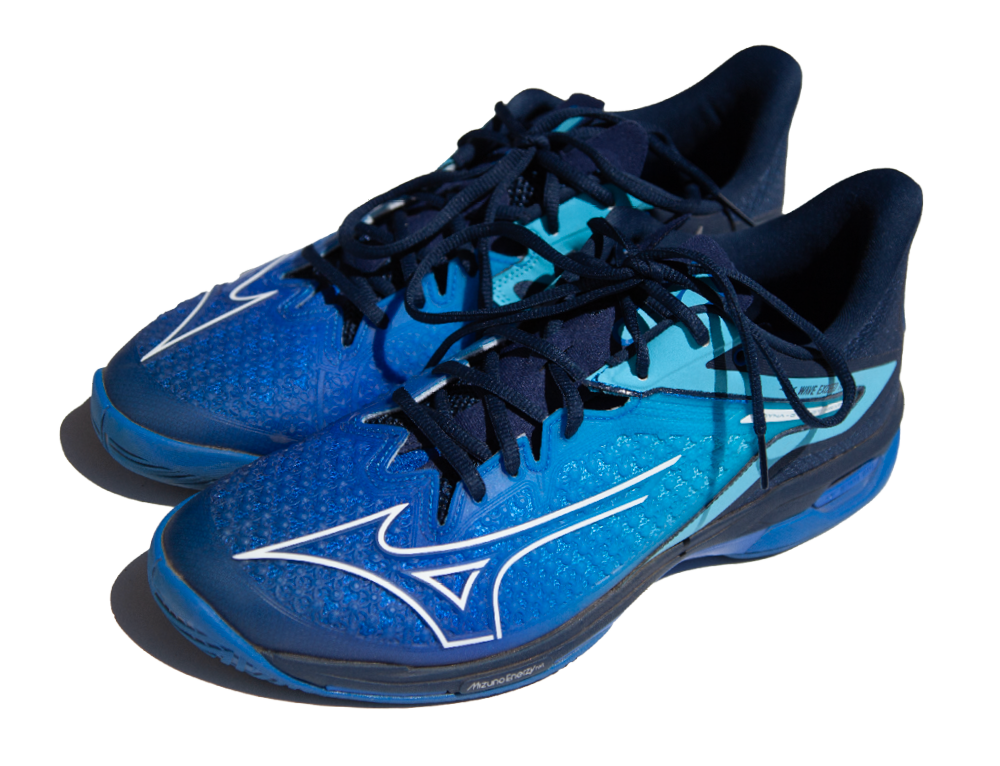
Do you want a lightweight shoe that gives you amazing maneuverability? You found it with the Wave Exceed Tour 6. The Wave Exceed has mastered the lightweight low-profile tennis shoe—unlike most tennis shoes, which are over-designed and have too much TPU (thermoplastic polyurethane, the stuff the sole is made out of) on the upper and make the shoe annoyingly stiff. The Exceed’s TPU pattern design is perfection, making it very flexible and beautiful. No wonder the shoe has been on the market for years, basically unchanged. ($140)
MIZUNO WAVE EXCEED TOUR 6
Do you want a lightweight shoe that gives you amazing maneuverability? You found it with the Wave Exceed Tour 6. The Wave Exceed has mastered the lightweight low-profile tennis shoe—unlike most tennis shoes, which are over-designed and have too much TPU (thermoplastic polyurethane, the stuff the sole is made out of) on the upper and make the shoe annoyingly stiff. The Exceed’s TPU pattern design is perfection, making it very flexible and beautiful. No wonder the shoe has been on the market for years, basically unchanged. ($140)
BRAIN DEAD EQUIPMENT TENNIS TOTE
I am usually not one to plug my own product, but when we designed this tennis tote, we made it so it would be worthy of a review. The Brain Dead Equipment Tote is not only for casual players, but also has specs to cater to the advanced player with lots of gear who wants a bag for playing all day. This bag holds three racquets, it has three ball canister pockets that also hold water bottles, and there’s a massive tote bag pocket with cargos inside. The tote is perfect for the bus, the trunk of your car, and even the plane. ($150)

BRAIN DEAD EQUIPMENT TENNIS TOTE
I am usually not one to plug my own product, but when we designed this tennis tote, we made it so it would be worthy of a review. The Brain Dead Equipment Tote is not only for casual players, but also has specs to cater to the advanced player with lots of gear who wants a bag for playing all day. This bag holds three racquets, it has three ball canister pockets that also hold water bottles, and there’s a massive tote bag pocket with cargos inside. The tote is perfect for the bus, the trunk of your car, and even the plane. ($150)

SIGN UP — YOU'RE ONLY AS GOOD AS YOUR SECOND SERVE.
Offseason Shoe Report
The Offseason
Shoe Report
The Offseason
Shoe Report
New on-court and lifestyle shoes expand tennis offerings.
New on-court and lifestyle shoes expand tennis offerings.
By Tim Newcomb
December 4, 2024
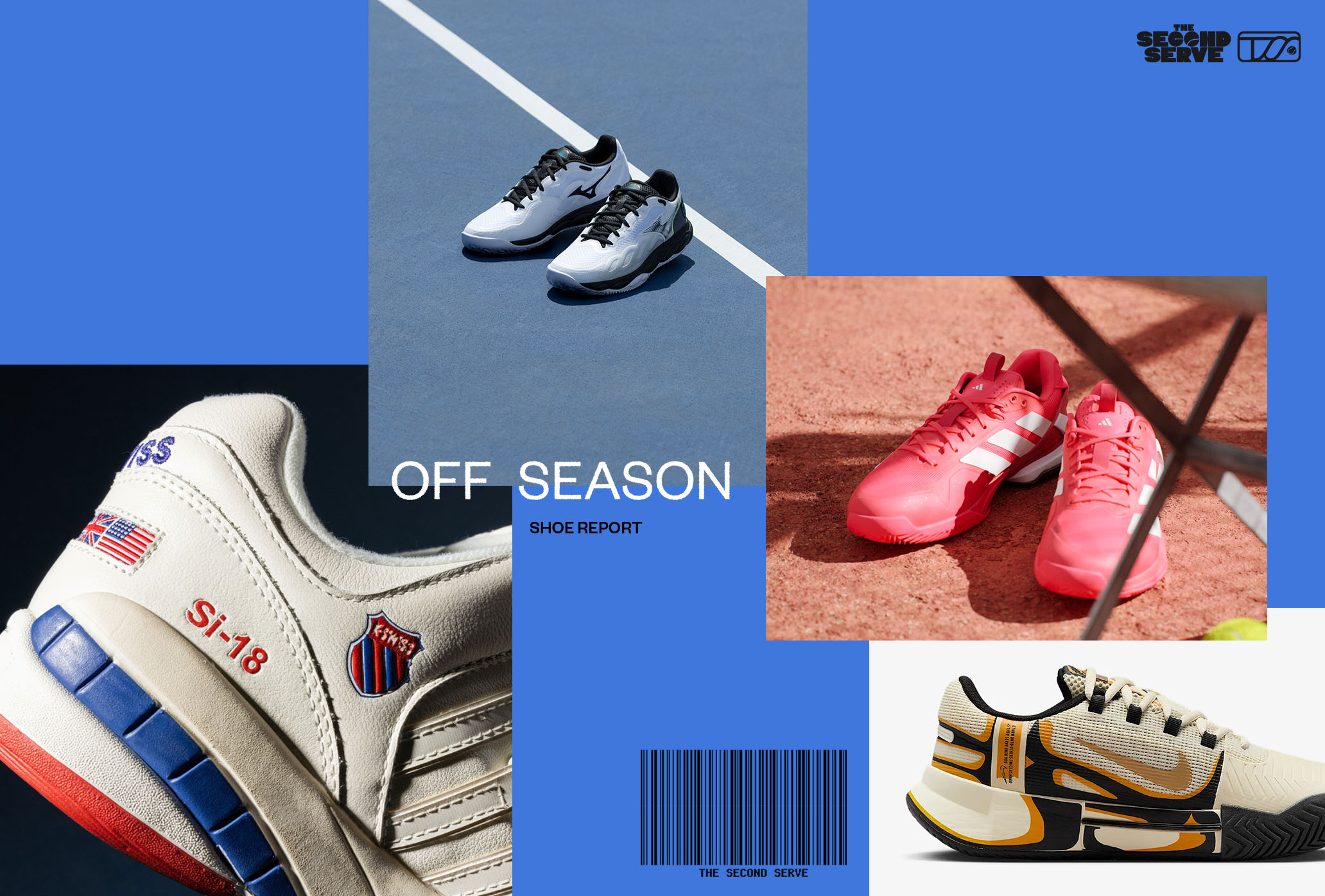
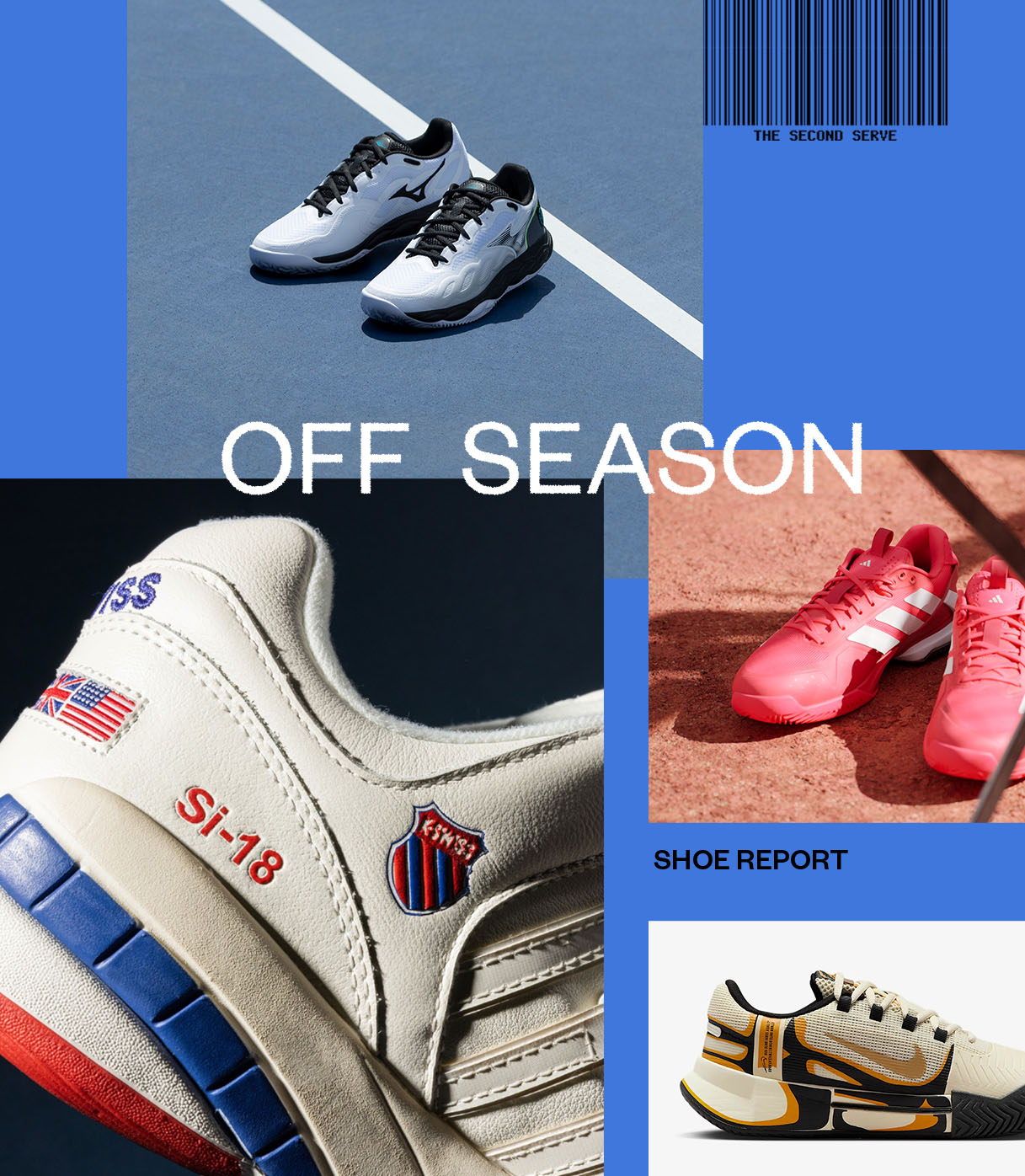
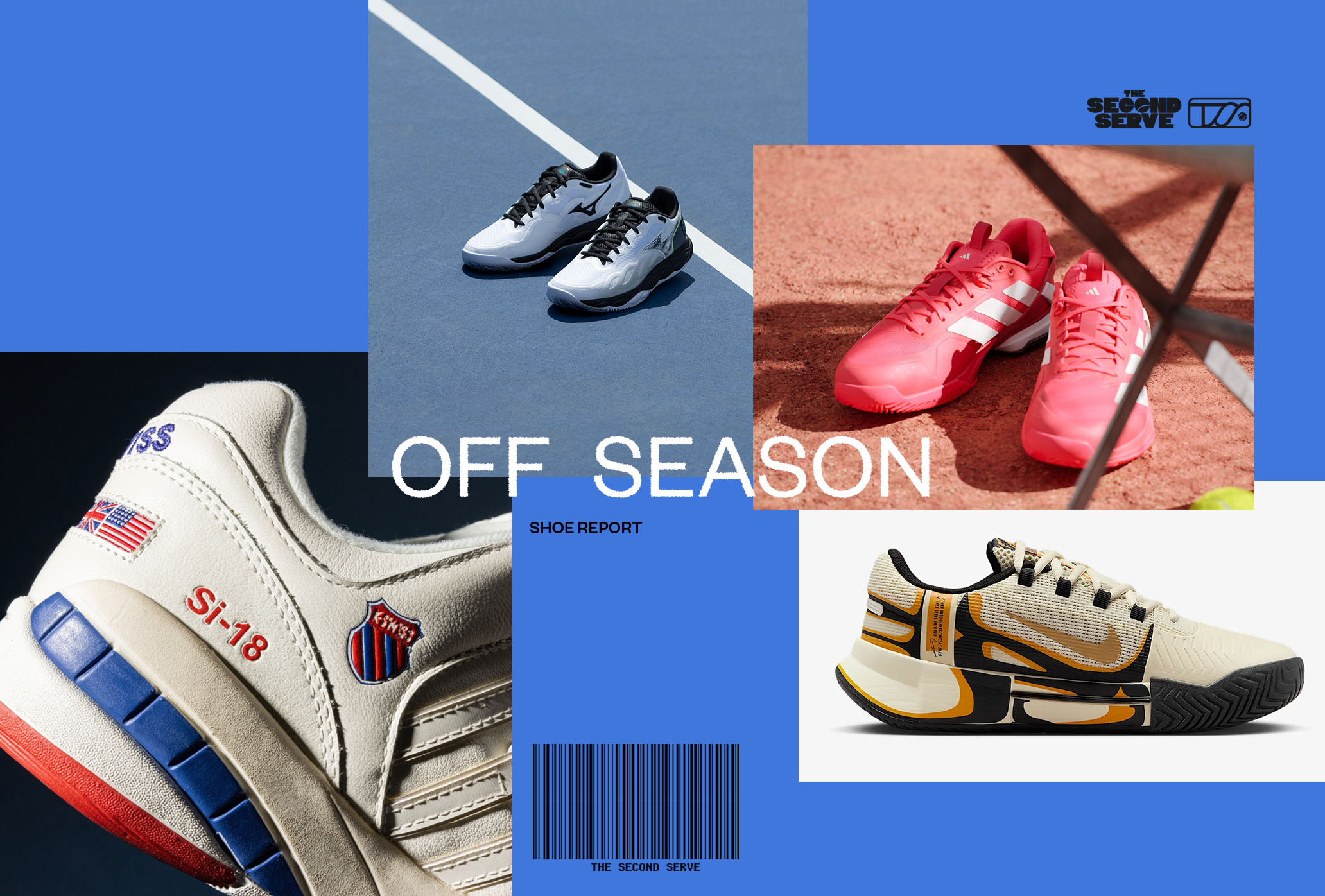
The offseason—if the concept of an offseason even exists anymore in tennis—typically brings a flurry of new tennis gear announcements, and this year is no different. As far as footwear is concerned, Mizuno has launched a new on-court shoe, Adidas has given us an update to the Ubersonic line, Nike is still all-in on Naomi Osaka, and K-Swiss is dipping into nostalgia for a new lifestyle model. As other brands will certainly enter the fray over the next few months with updated offerings, here’s a roundup of the latest.
Adidas Adizero Ubersonic 5
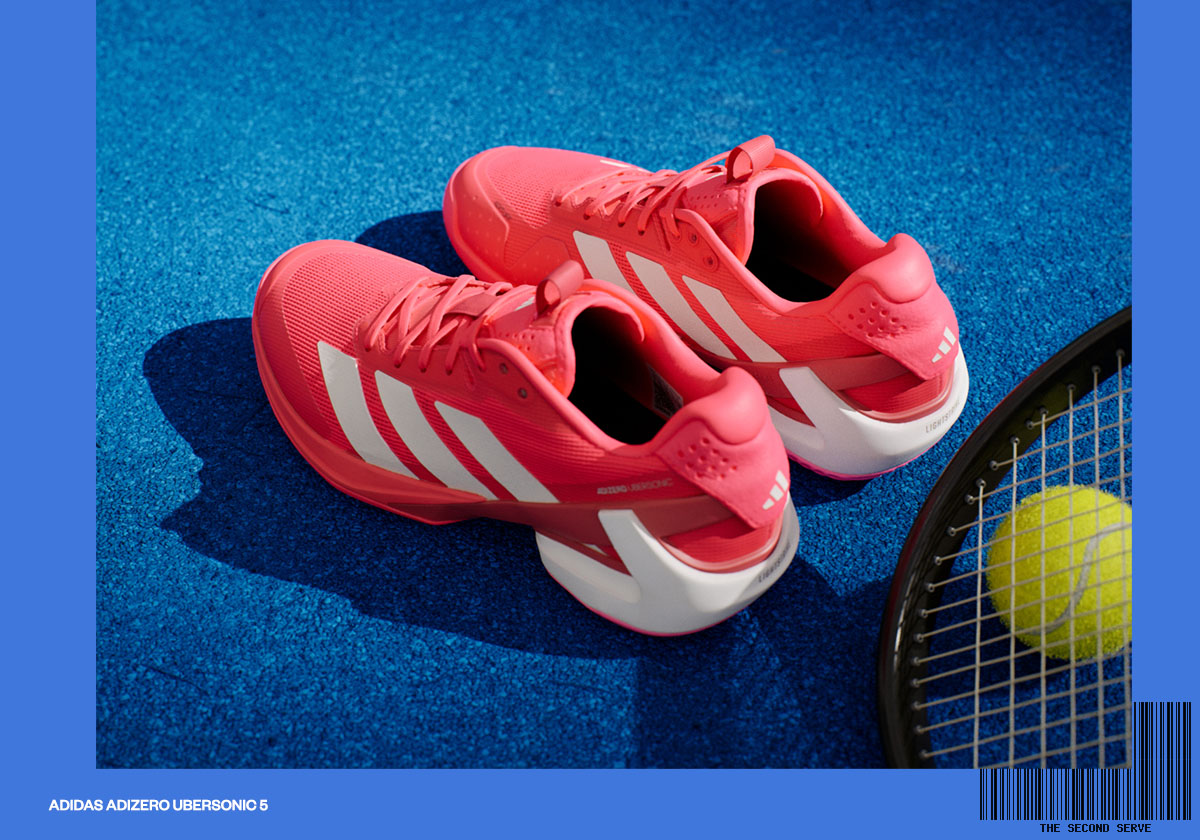
The Adidas Ubersonic franchise, focused on on-court speed, continues its fascination with lightweight movement with the line’s new Adizero Ubersonic 5. Announced Dec. 3, the shoe features a Speedframe technology new to tennis that boasts a three-piece heel construction popular in soccer and rugby cleats for stability during rapid changes of direction. The low-profile Lightstrike foam midsole and upper (the brand’s proprietary lightweight cushioning and mesh) create a low-to-the-ground feel with minimal weight. The shoe will debut during the Australian Open in “lucid red.”
Images courtesy of Adidas
Images courtesy of Adidas
Mizuno Wave Enforce Court
The long-standing and popular Mizuno Wave Enforce Tour now has a new on-court sibling in the Wave Enforce Court, a lighter version of the Tour model. Complete with the brand’s Enerzy foam paired with additional foam to make this the most cushioned option in the Mizuno stable, the latest from Mizuno signals an emphasis on growing the Mizuno tennis footwear lineup.
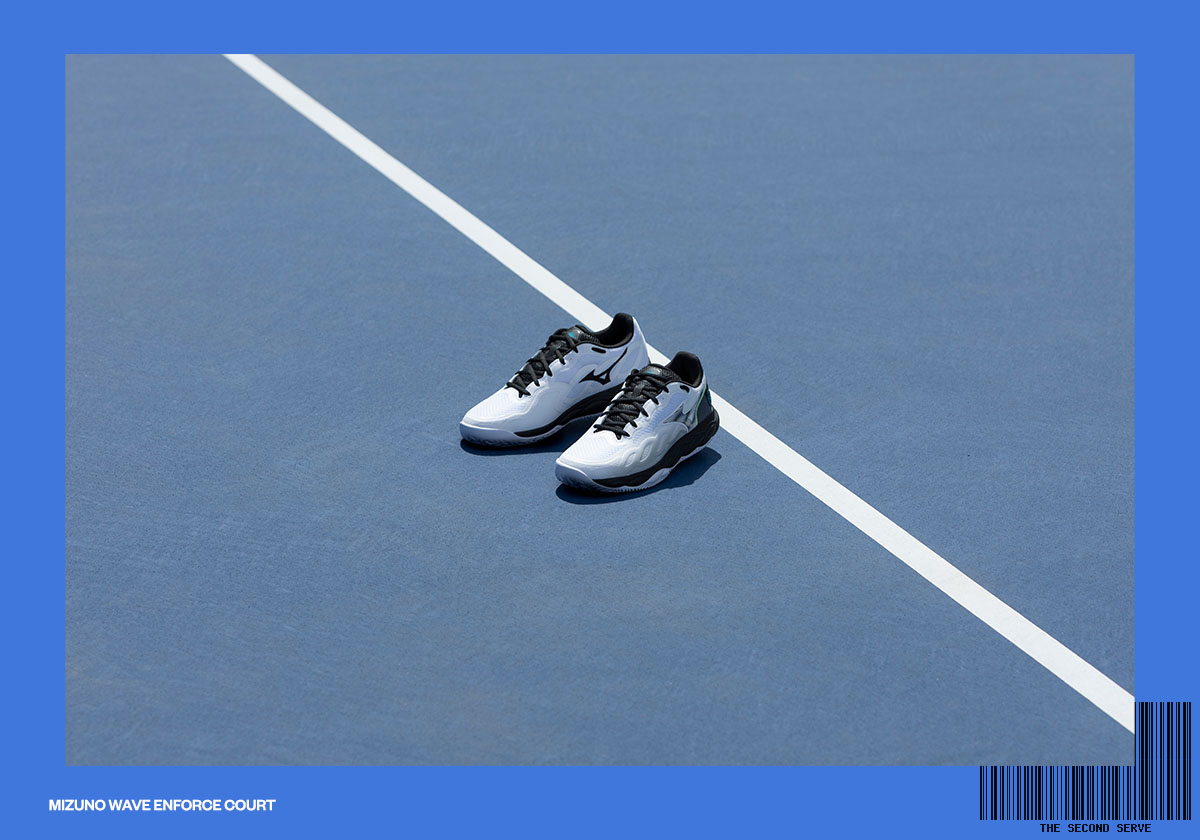
Image courtesy of Mizuno
Image courtesy of Mizuno
Nike GP Challenge 1 Osaka
Naomi Osaka is still making her fashion mark at Nike. The latest in a line of retail-ready player-edition models has been released with a new on-court GP Challenge 1. This “Osaka” version features plenty of brown and orange hues and comes with Osaka’s “NO” logo on the tongue. As with other models, the phrase “Return unto others twice as hard as they serve unto you” is on the shoe’s upper.
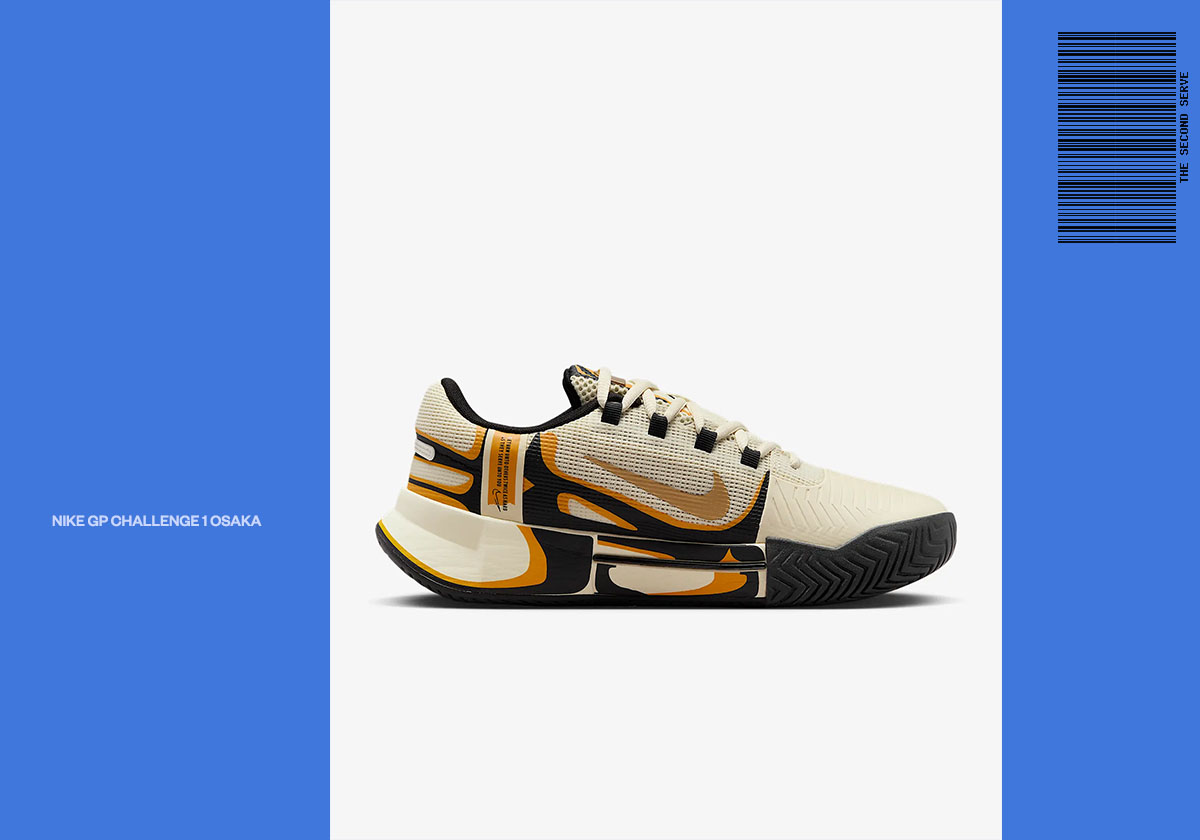
Image courtesy of Nike
Image courtesy of Nike
K-Swiss Si-18 International
An on-court mainstay when first introduced in 1989, the Si-18 International has been reissued once again by K-Swiss as a vintage lifestyle model. The flagship red, white, and blue retains its classic look, complete with the flags of the home countries of the sport’s four tennis majors on the back heel. The brand says the model is reengineered for additional comfort while still featuring a leather upper and a ski-boot-inspired cinch lacing system.
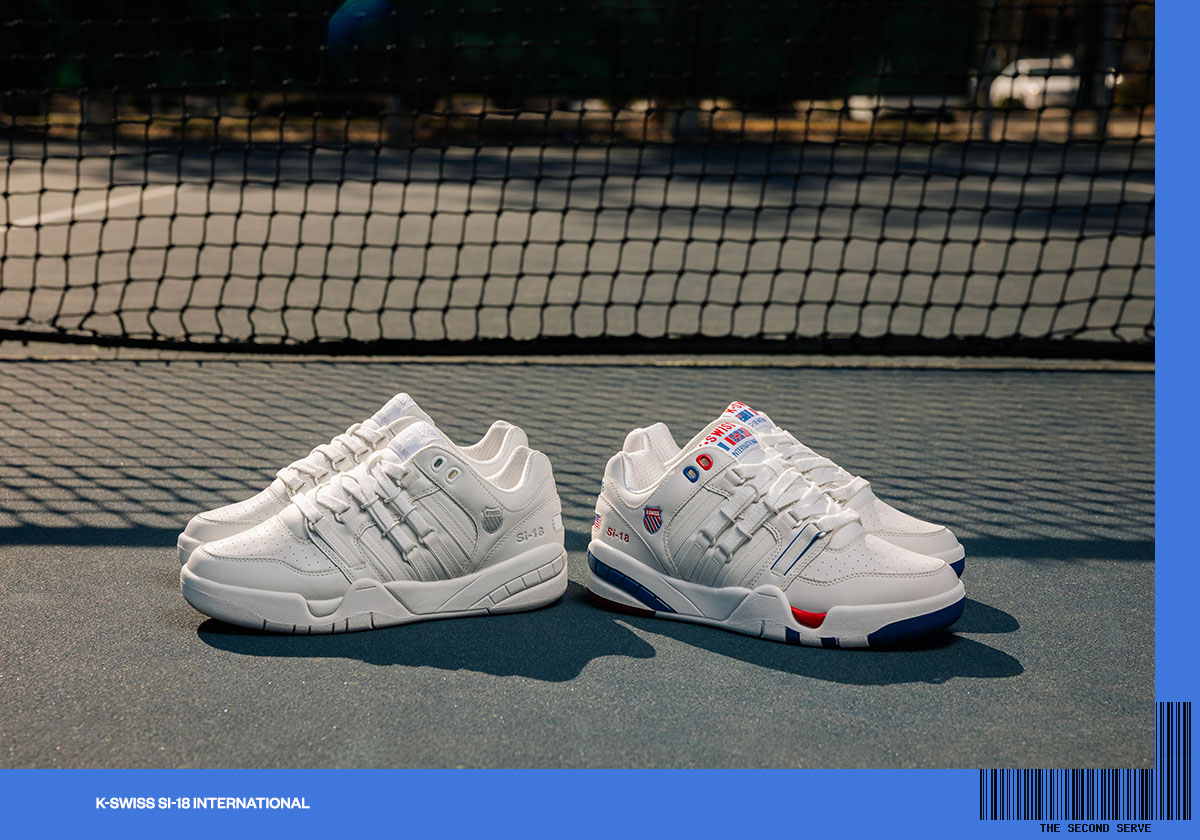
Image courtesy of K-Swiss
Image courtesy of K-Swiss
SIGN UP — YOU'RE ONLY AS GOOD AS YOUR SECOND SERVE.
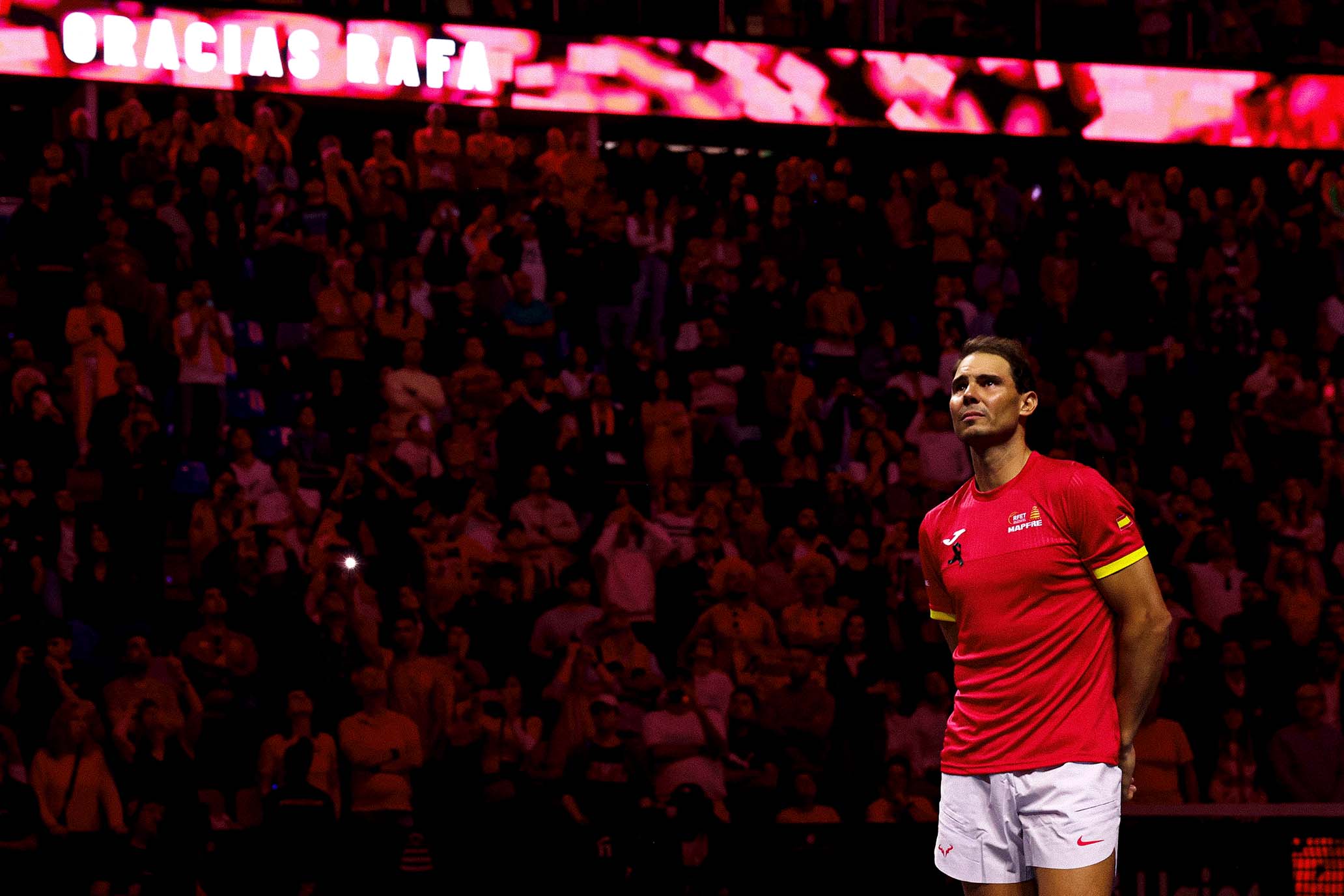
Adios, Amigo
Adios, Amigo
Adios, Amigo
Tennis Channel lets the door hit Rafa on the way out.
Tennis Channel lets the door hit Rafa on the way out.
By Giri Nathan
November 22, 2024
Rafa says goodbye at Davis Cup in Malaga this week. // Getty
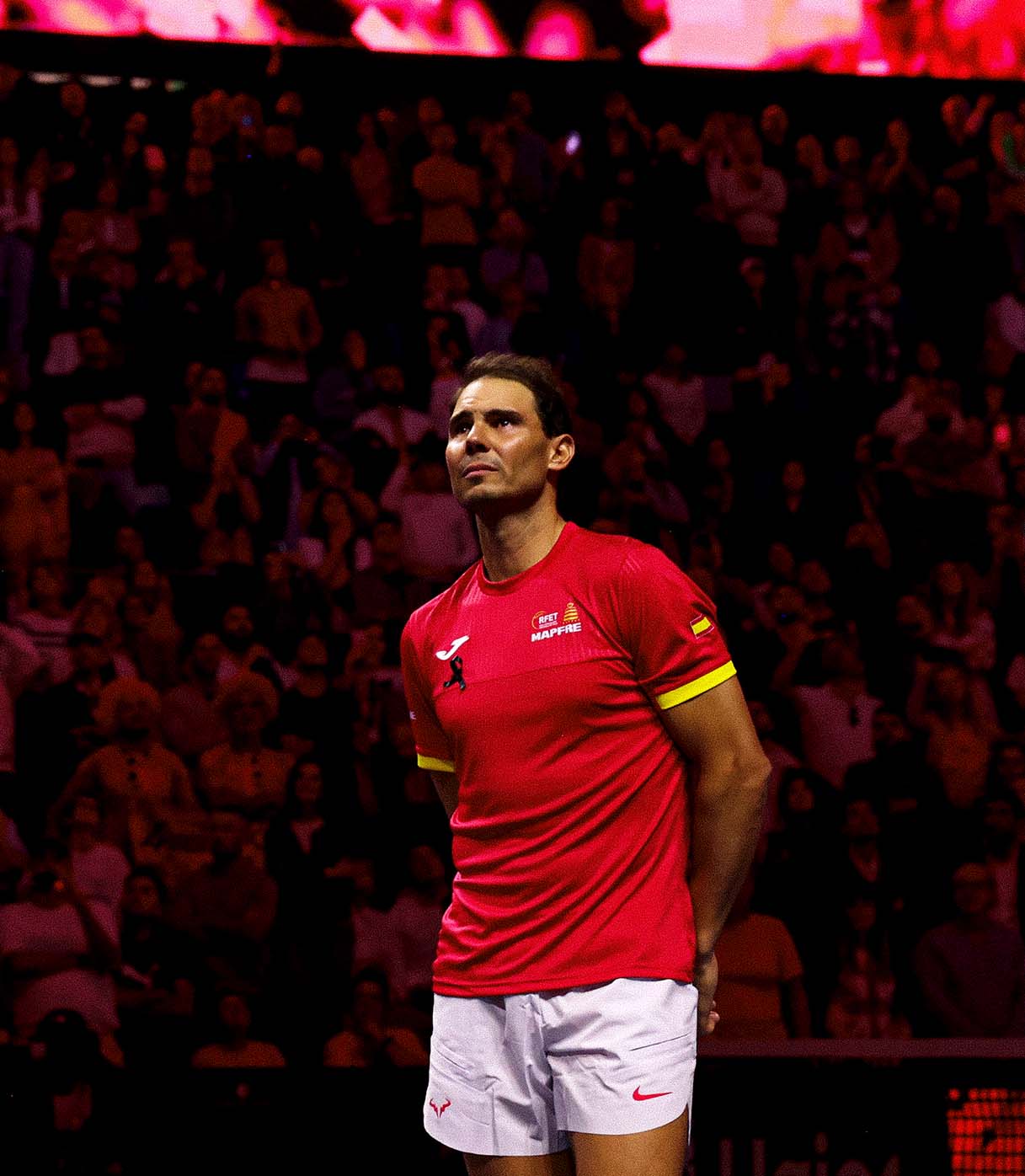
Rafa says goodbye at Davis Cup in Malaga this week. // Getty
Rafael Nadal retired on Tuesday at the age of 38. He gave tennis everything. Possibly no player has given it more. But did tennis give him a sufficient farewell? Perhaps an unreasonable standard was set by other recent exits. Serena Williams got to retire at her home Slam, wearing crystal-encrusted outfits, pulling off some surprising wins, in front of one of the most batshit crowds I’ve ever been a part of. Roger Federer got to show up at his own pet tournament, play doubles alongside his iconic rival, and weep with him while holding hands. The level of fan service in those instances was astonishing. And justly so! Millions of people were deeply invested in these lives and careers. Just as there were millions more curious to see tennis’ greatest fighter say goodbye this week.
Part of what made it so tricky is that Rafa himself was never clear and conclusive about when he wanted to end his career. In January 2023, he hurt his hip and spent the whole year recovering. In May of that year, he convened a press conference to announce that the 2024 season would be his last. What a wonderful, characteristically Rafa quote he gave at that time: “I believe I don’t deserve to finish [now]. I think I have fought enough during all my sporting career so that my end is not today, here in a press conference. My ending will be in another way, and I will fight so that my end will be in another way.”
I was eager to see what ending he might choose, on his own terms. Throughout 2024, though, Nadal kept leaving the door slightly ajar, sometimes making remarks that conflicted with the finality of that 2023 announcement. Each time he played a tournament it was probably, but not definitely, his last time at the tournament. It seemed that Rafa was constantly reassessing his level, monitoring his tennis for any sign he should call off the retirement plan.
Of course, there was one tournament that mattered above all the others. When I arrived in Paris for Roland-Garros, my top priority was seeing Nadal play on Chatrier, which I’d never done before. He was to play Sascha Zverev; there wasn’t going to be a second-round match in his future. Nadal had apparently informed the tournament at the outset that he did not want a ceremony. But what we got instead was completely botched. Tennis has a question-and-answer problem. For some reason, in these life-changing and emotional moments, tournaments think it’s a good idea to get someone up there with a mic asking specific questions, rather than simply handing players the mic and letting them process these overpowering emotions in real time. This question-and-answer session was predictably muddled, and the crowd, ready to roar to life, went dead. I arrived at that match expecting tears, and left merely wanting a beer. If this was really the end, how could we send off a 14-time champion this way?
But come October, there was no more ambiguity. Nadal announced that Davis Cup would be his last-ever competition. It was a fair choice. The tie was in Malaga, Spain. He was surrounded by Spanish players past and present. His spiritual successor, Carlos Alcaraz, was there. (The kid has been taking it pretty hard, posting sad memes about his hero’s retirement.) Nadal was training in advance of the event, and in the end he was declared fit to play singles. He played Botic van de Zandschulp—who, having already upset Alcaraz at the US Open, has played an outsize role in Spanish tennis this year—and lost to the comically stone-faced Dutchman, who is the precise emotional opposite of Nadal on a tennis court. The match was just competitive enough. Plenty of fight, even if Rafa’s true level was long gone.
Afterward, we got to see Rafa as a fan and tactician, watching with enthusiasm as Alcaraz won his singles match, and then looking on in sadness as Alcaraz and Marcel Granollers lost the doubles, ensuring that this was the last possible day that Nadal was on a tennis court as a professional. Nadal took the mic. Like many American tennis fans, I jacked up the volume on Tennis Channel. He spoke in Spanish, naturally. And then…Tennis Channel pulled up a split screen, showing us the studio. Surely this was some kind of technical error. It would pass. Maybe they meant to bring on a Spanish translator for the speech. Or, even if there was no translator, that’s fine too—simply show us Rafa and the people sobbing on the sidelines and in the crowd. This one should be pretty easy.
And yet, while one of the most beloved tennis players in history delivered his final words, the audio of his speech was dialed down and overridden by the audio of three TC employees in a studio riffing vaguely and extemporaneously about his career. Was this really happening? Even when Nadal began speaking in English, I couldn’t hear it over the aimless studio chatter. I was in disbelief then, and days later, I remain in a state of disbelief. I don’t think I’m alone. Fans show up to these occasions hoping for A Moment; what we got felt something like the part of the infomercial where people talk about how exciting and versatile the gimmicky duct tape is. Rafael Nadal is not a gimmicky duct tape that you slap on a leaky boat. How could this happen? The channel had more than a month after Nadal’s announcement to prepare for this broadcast. This wasn’t exactly an improvised response.
Tennis is a good sport, dense with poignant moments. Why does it often self-sabotage when it comes to making those moments accessible and digestible to its audiences? It’s hard to imagine a bigger failure of broadcasting than what played out on Tuesday. I hope, in 20 years, when I try to revisit my memory of Rafa Nadal’s retirement, I won’t be evoking the colors and surfaces of a Tennis Channel studio. But I can’t guarantee it.
The Hopper
—CLAY Tennis on Beatriz Haddad Maia’s US Open run.
—Giri on Iga Swiatek’s loss to Jess Pegula.
—Jon Wertheim’s mailbag is full this week.
—Sara Errani and Andrea Vavasori have won the US Open mixed doubles.
—Tim Newcomb on Taylor Fritz and Asics.
PURE, ORIGINAL TENNIS — SIGN UP!
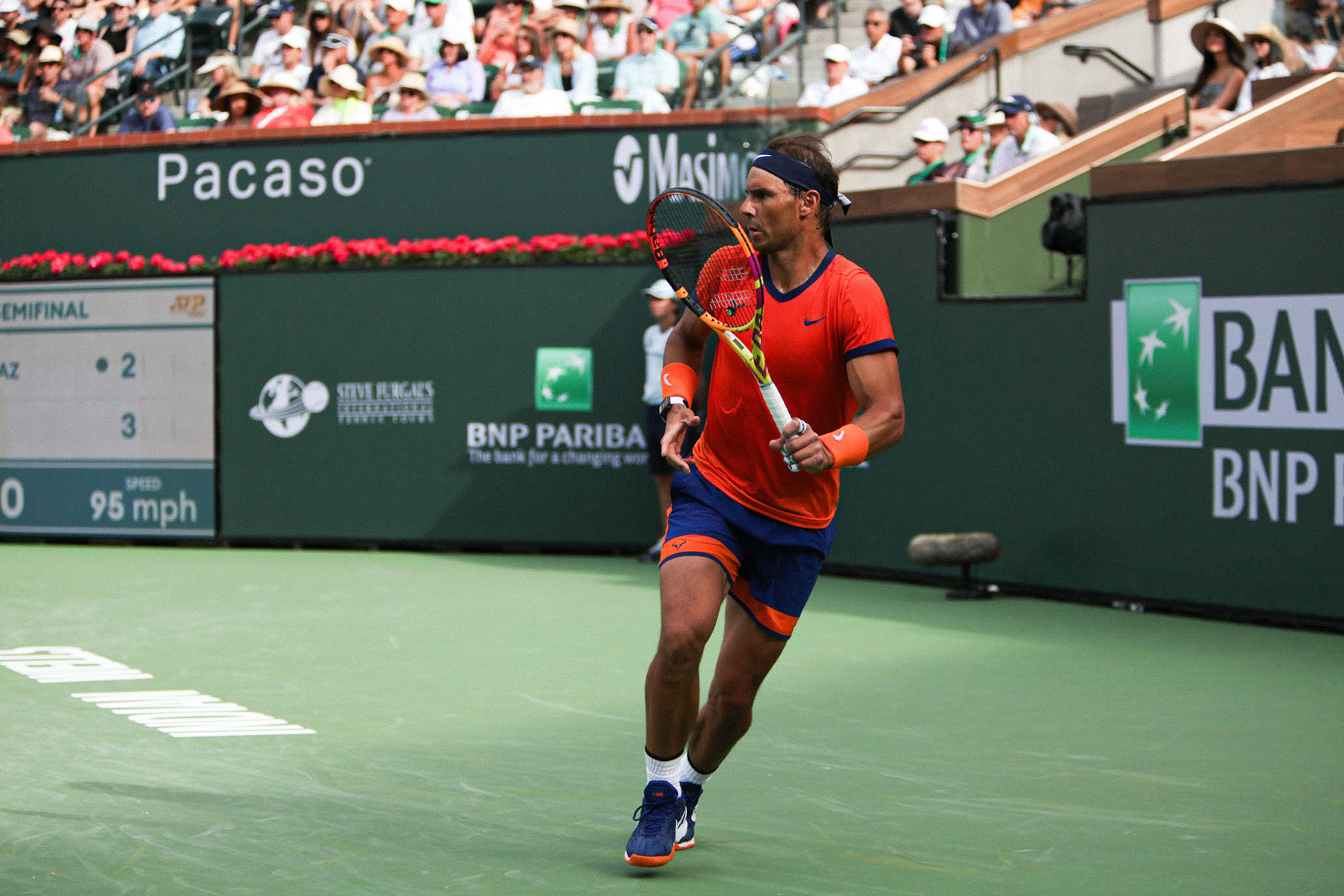
Postcard to Rafa
Postcard to Rafa
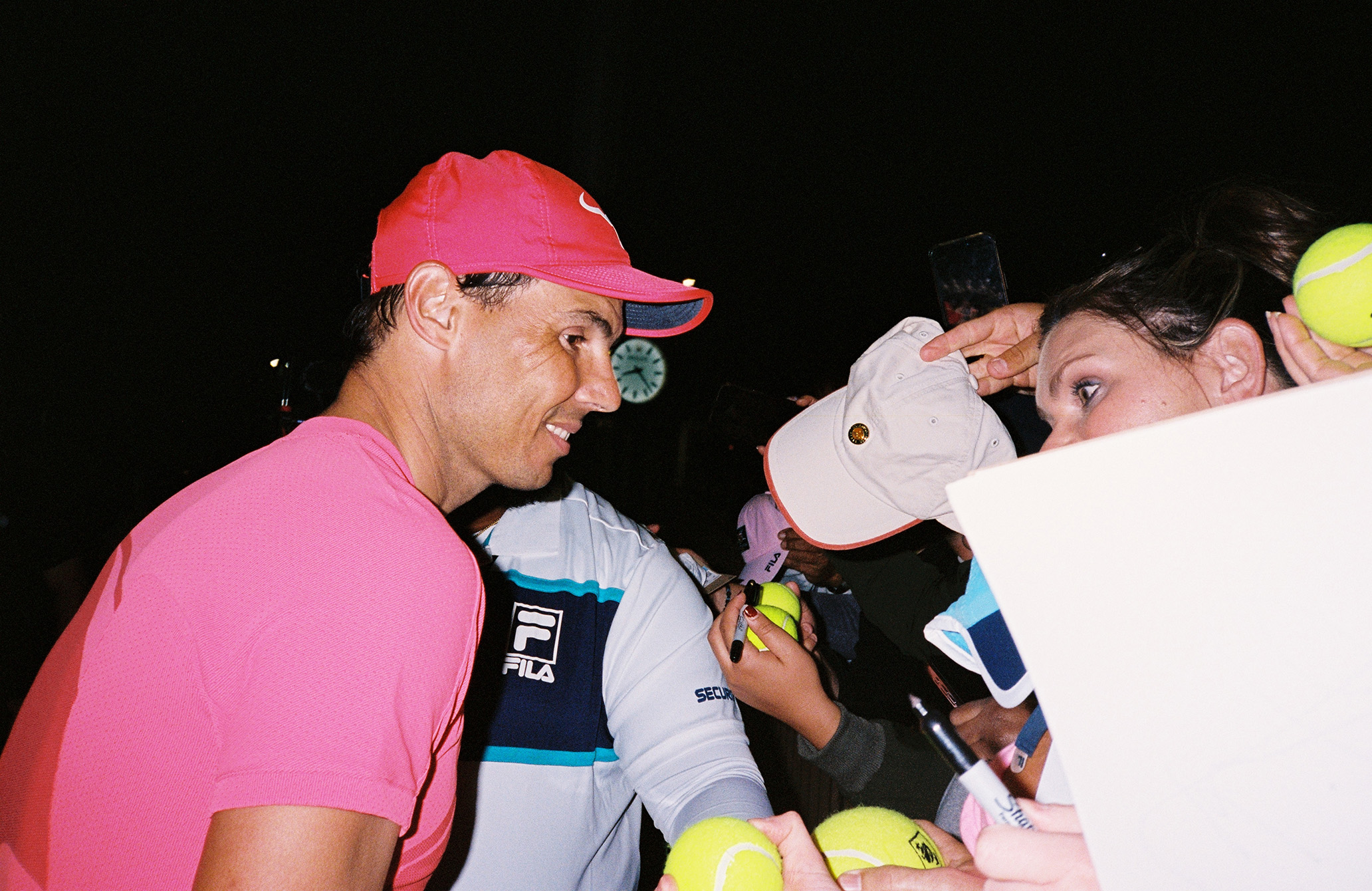
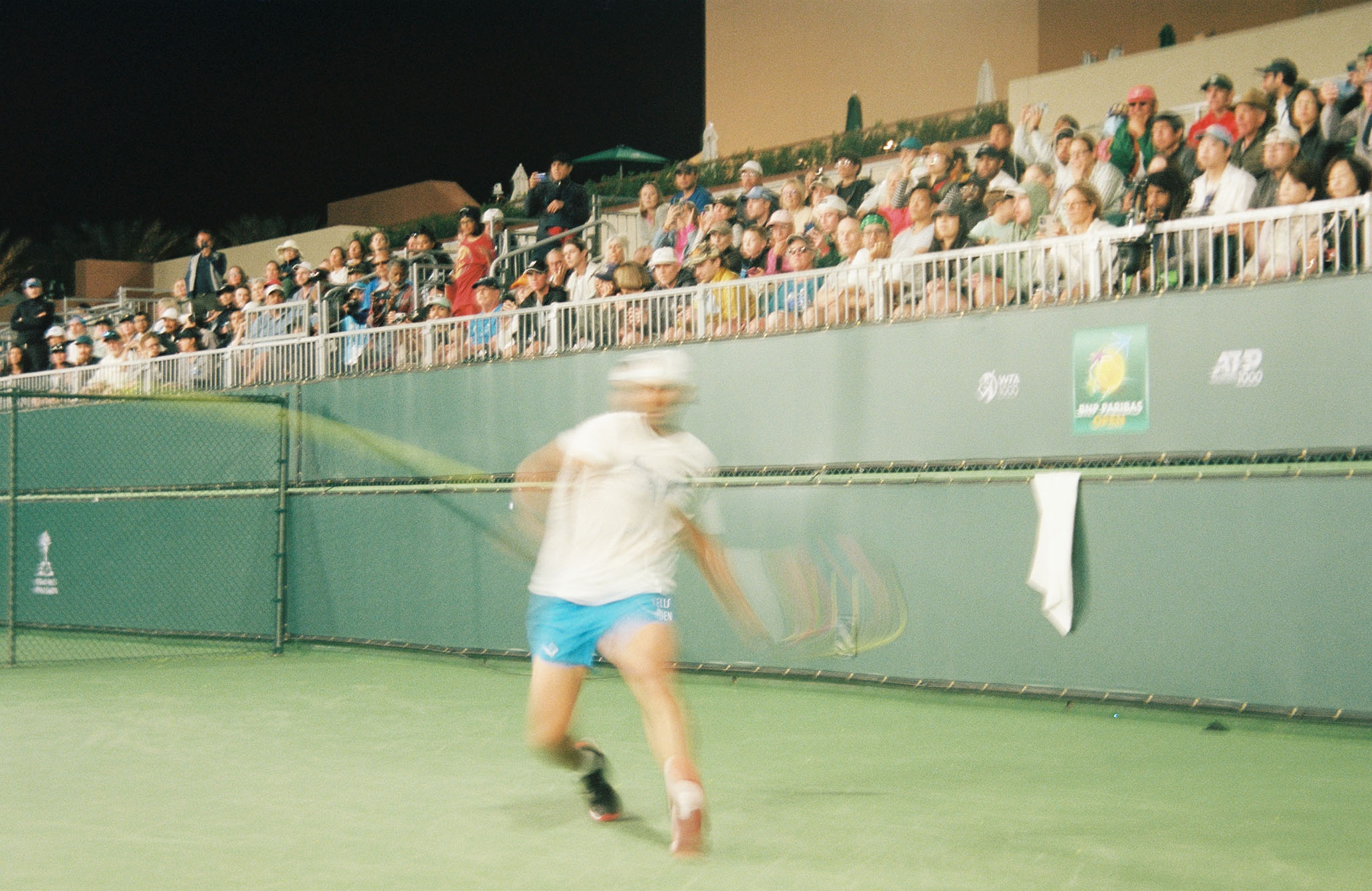
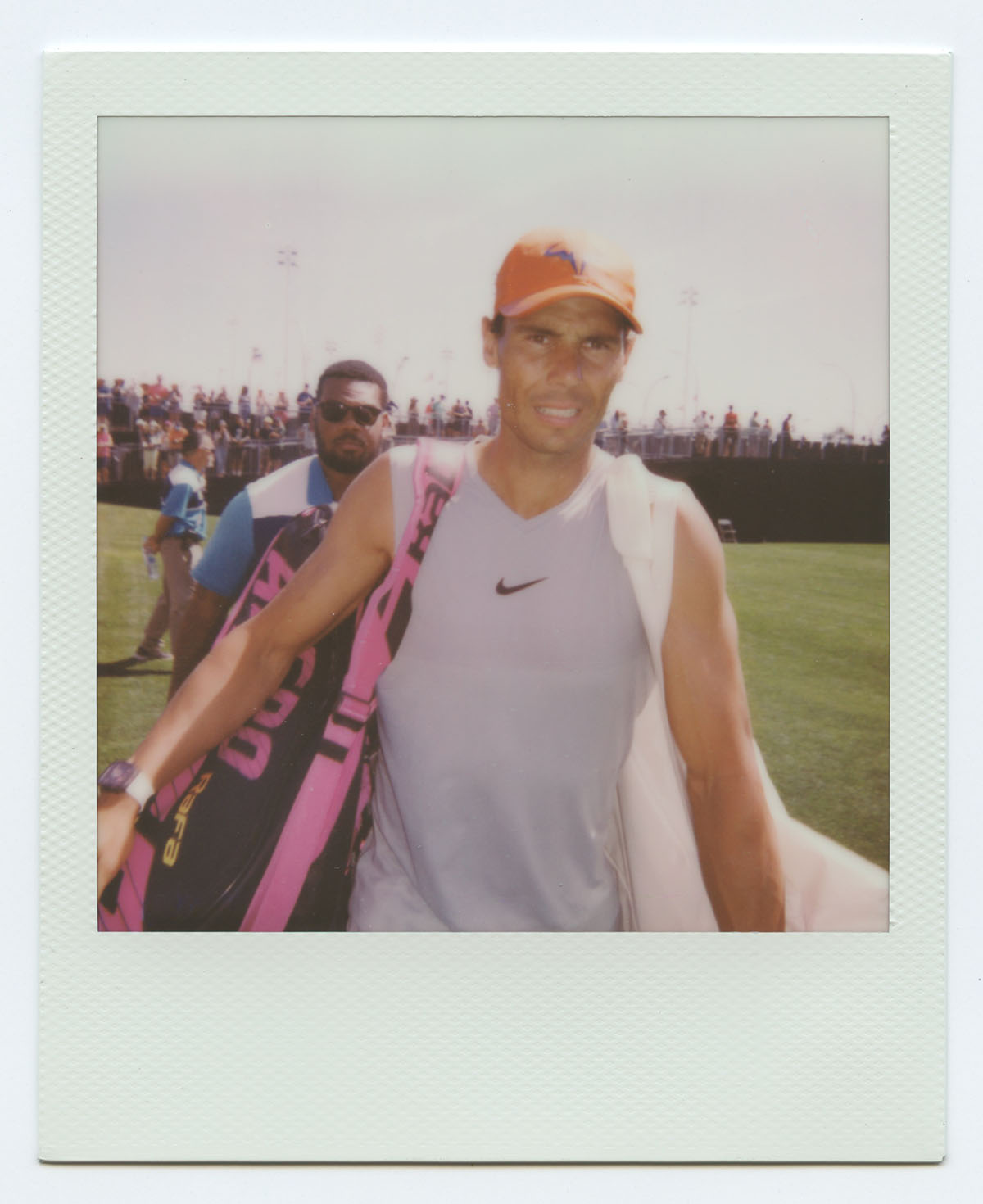
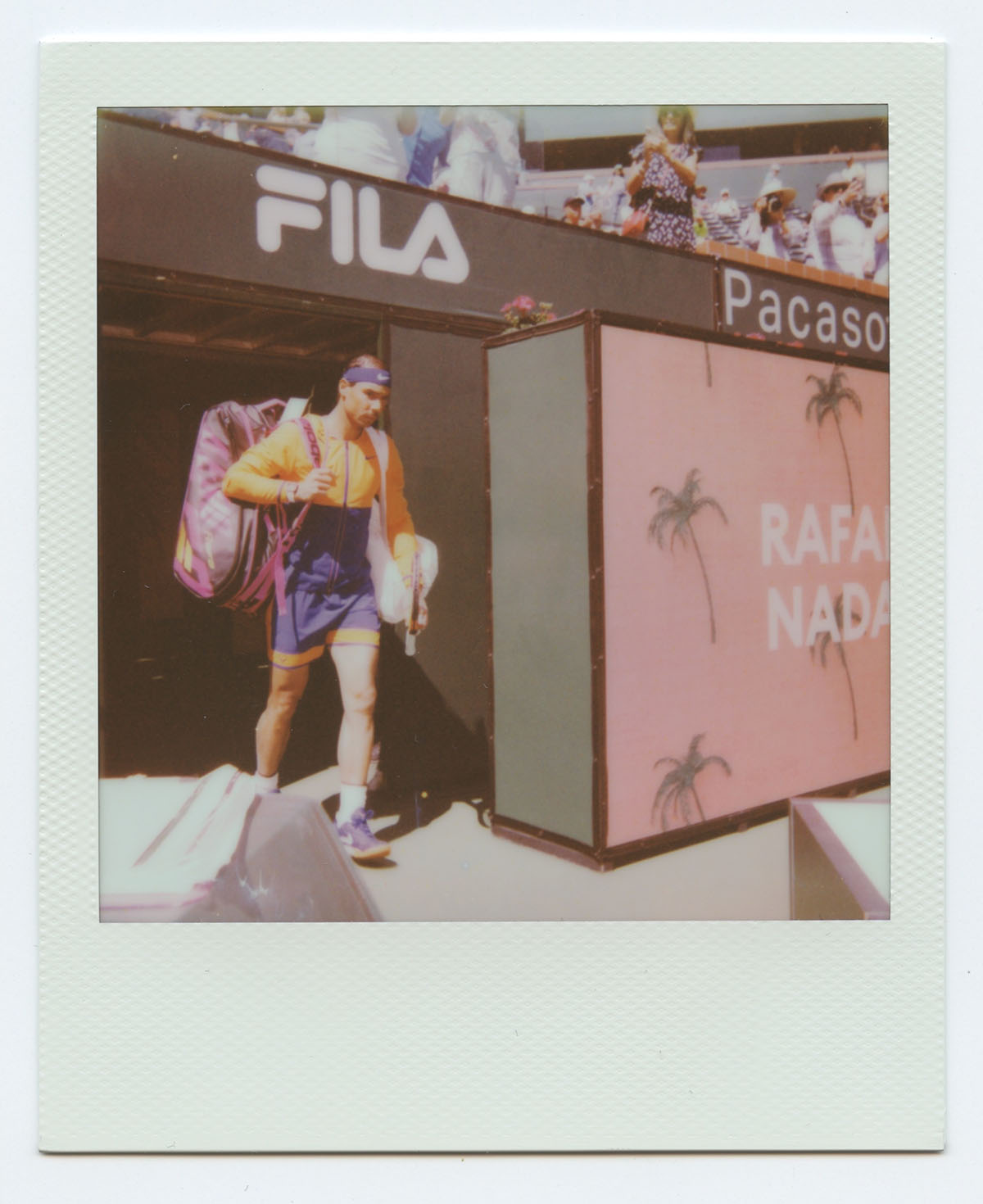
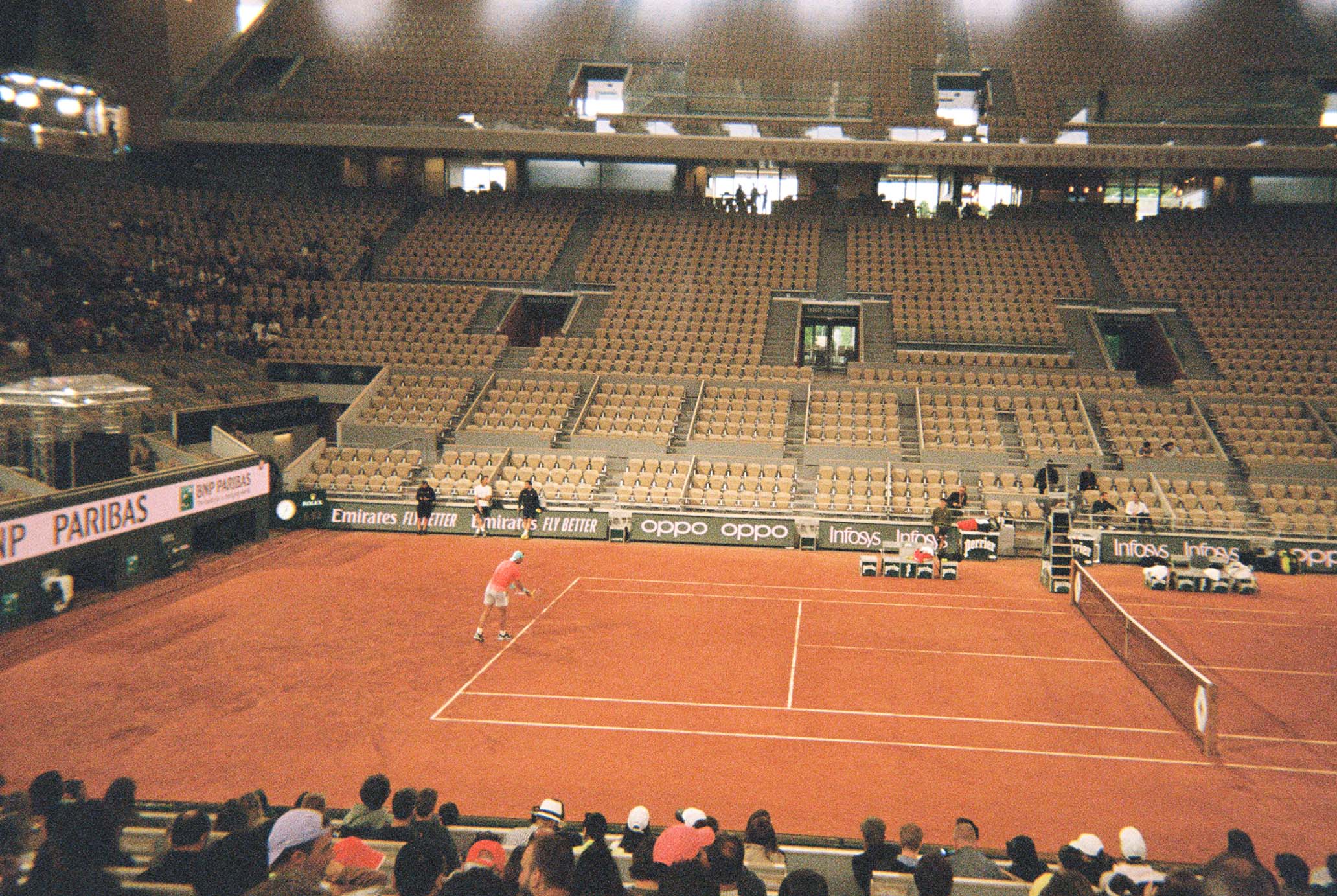
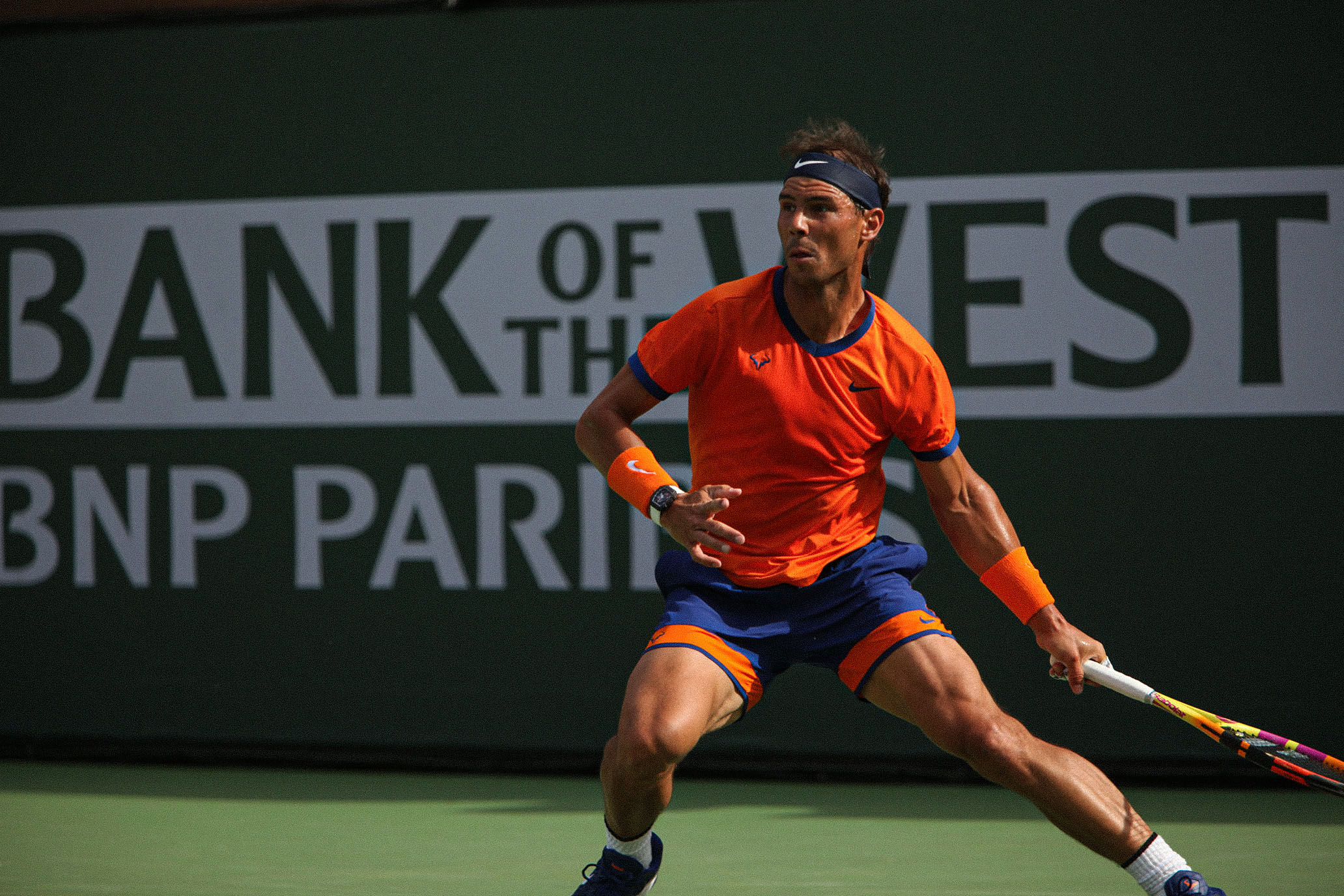
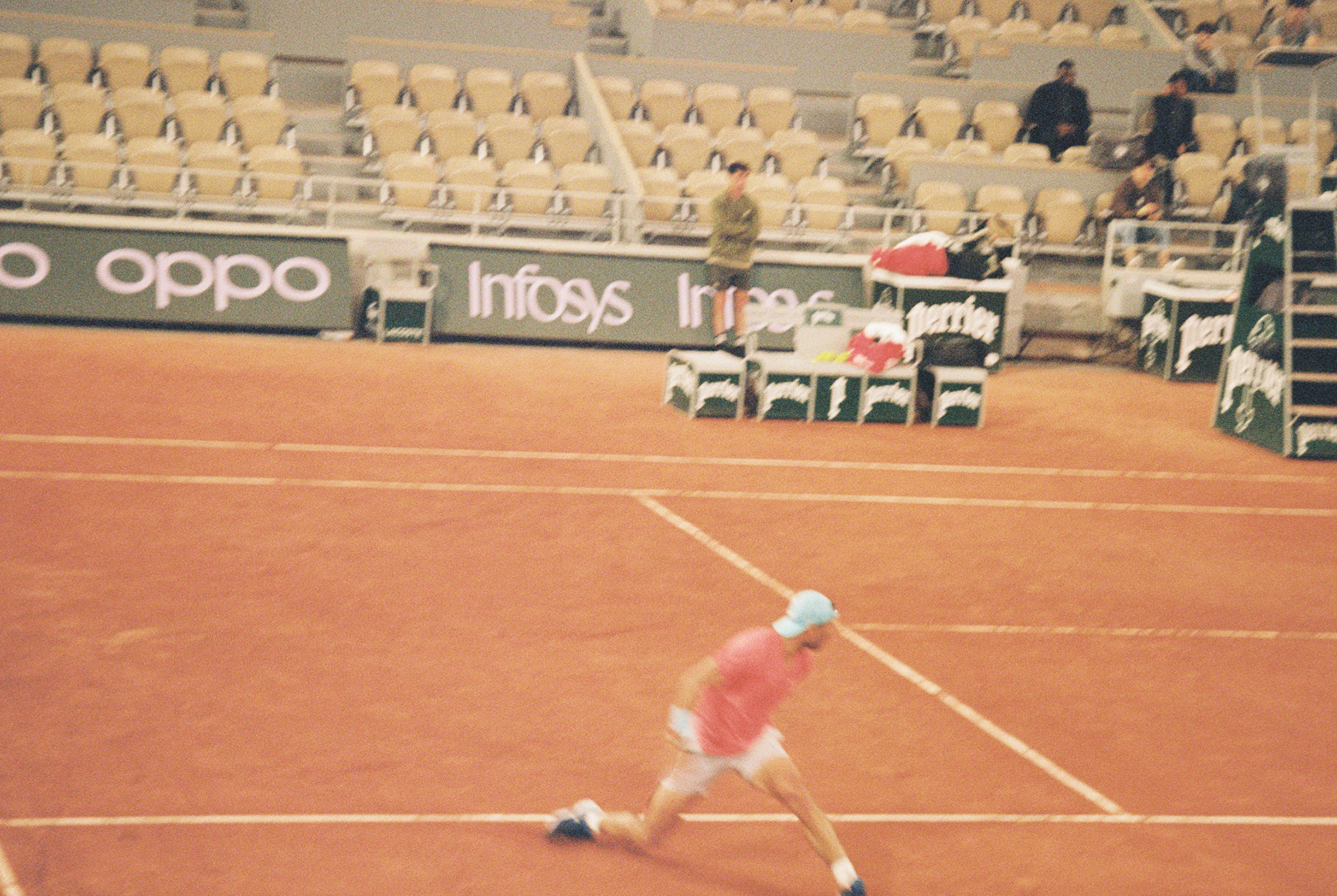
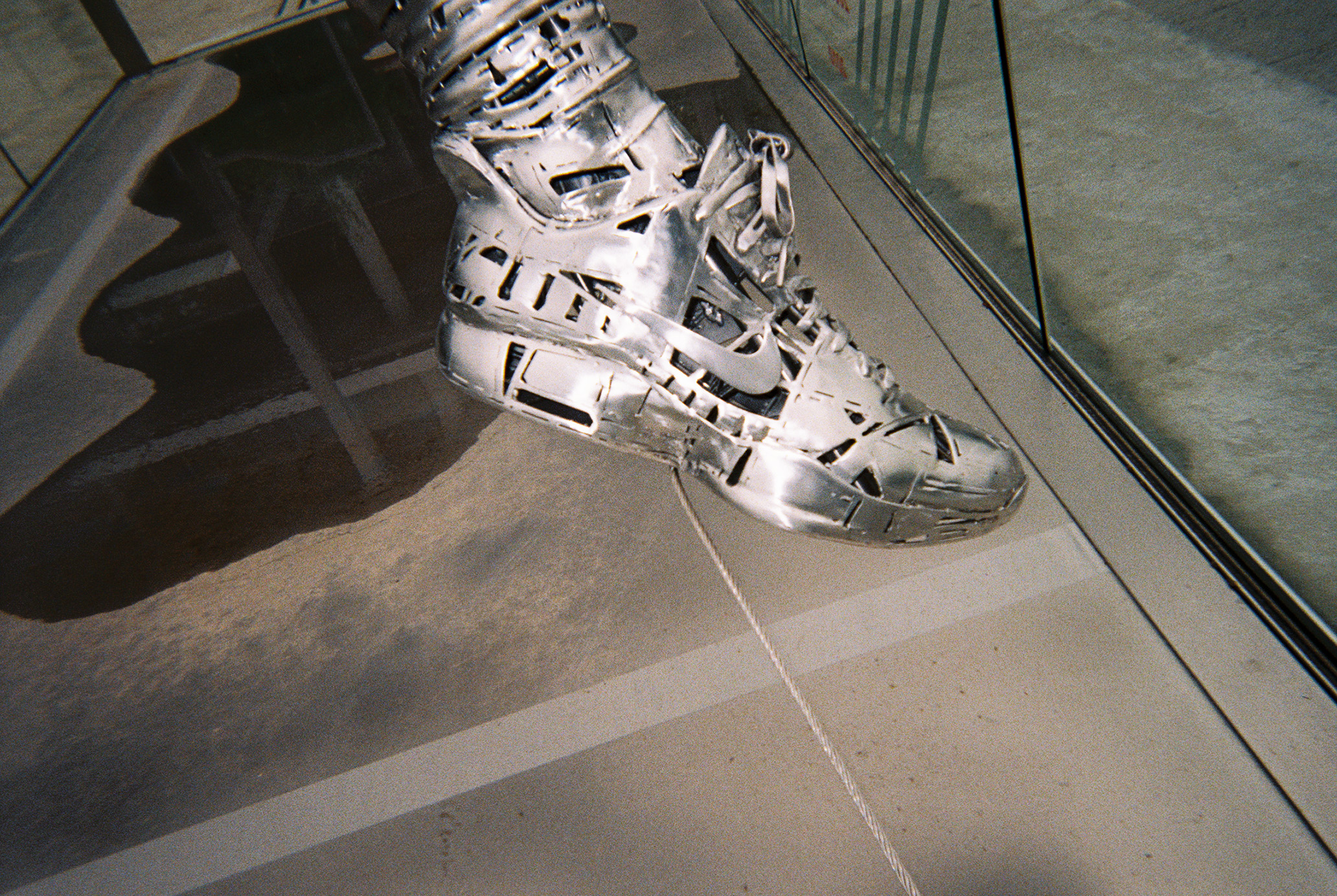
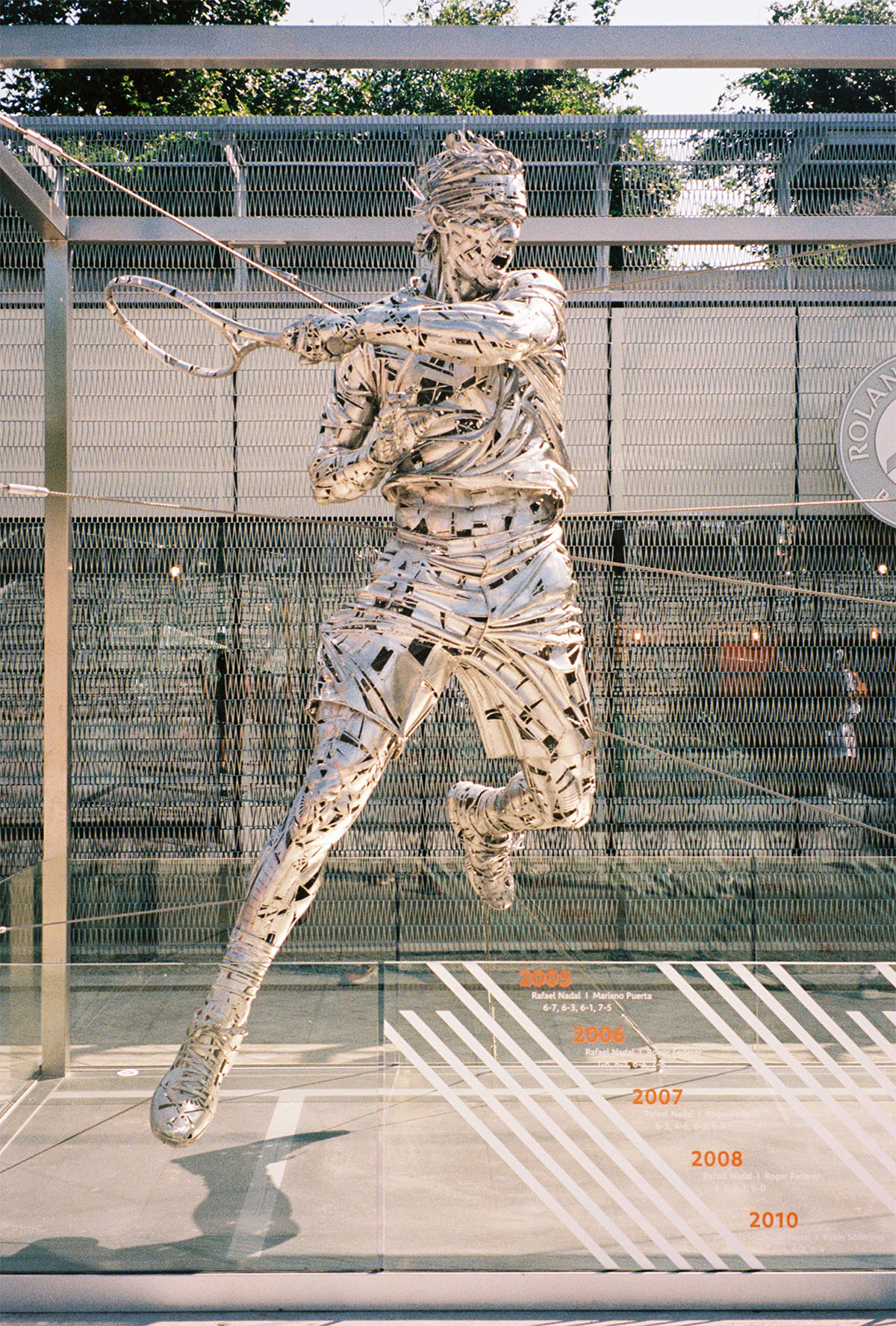
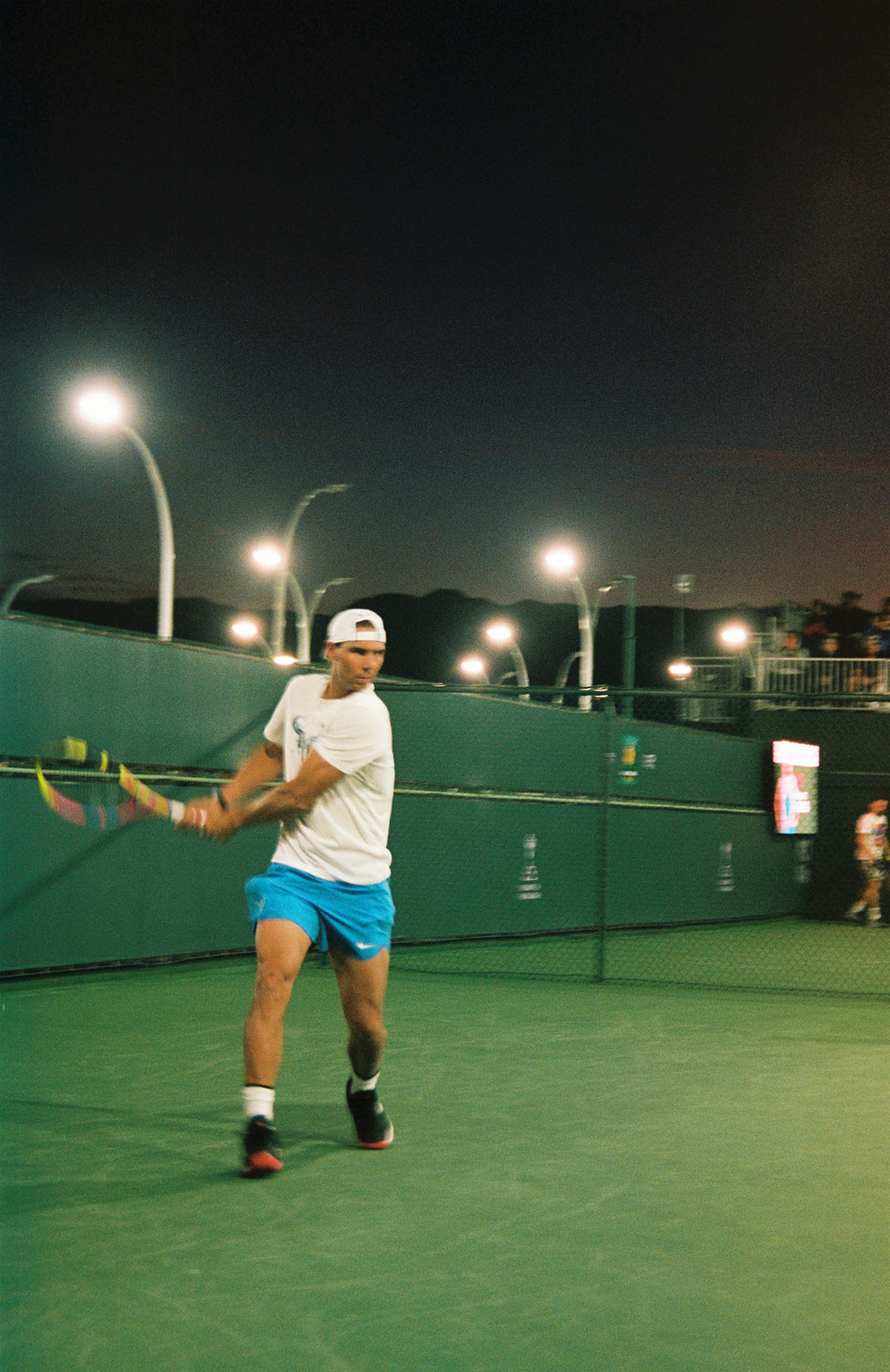
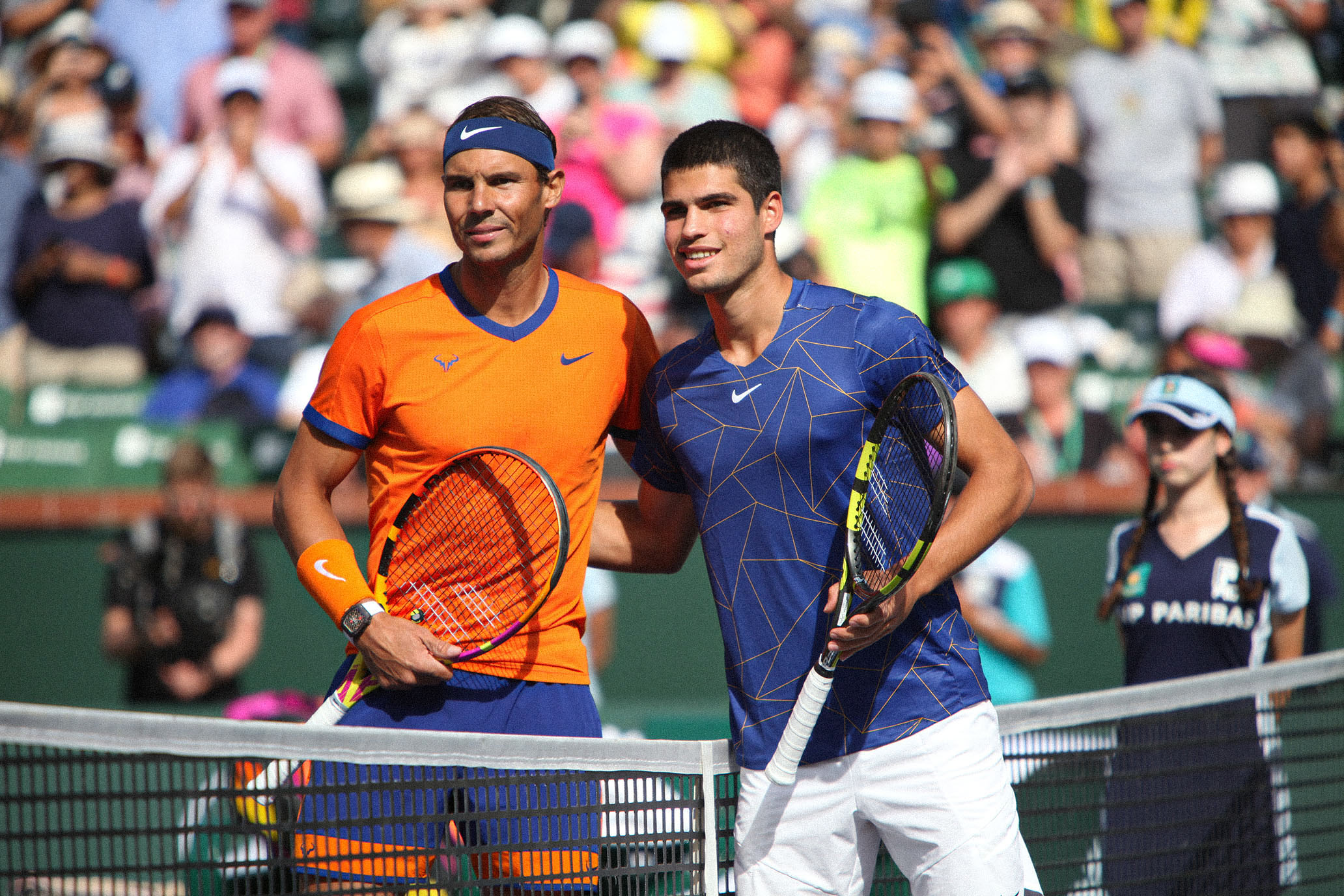
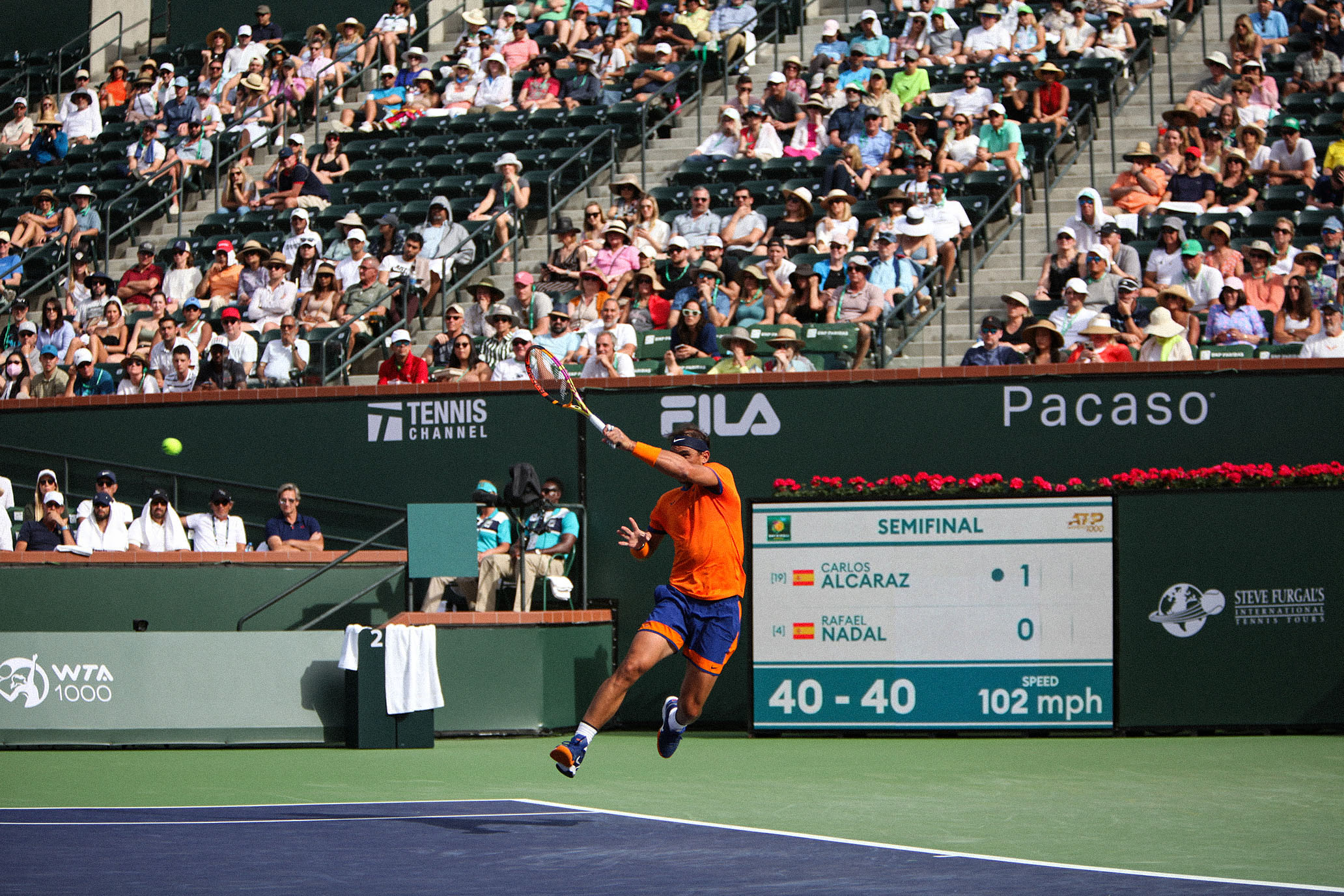
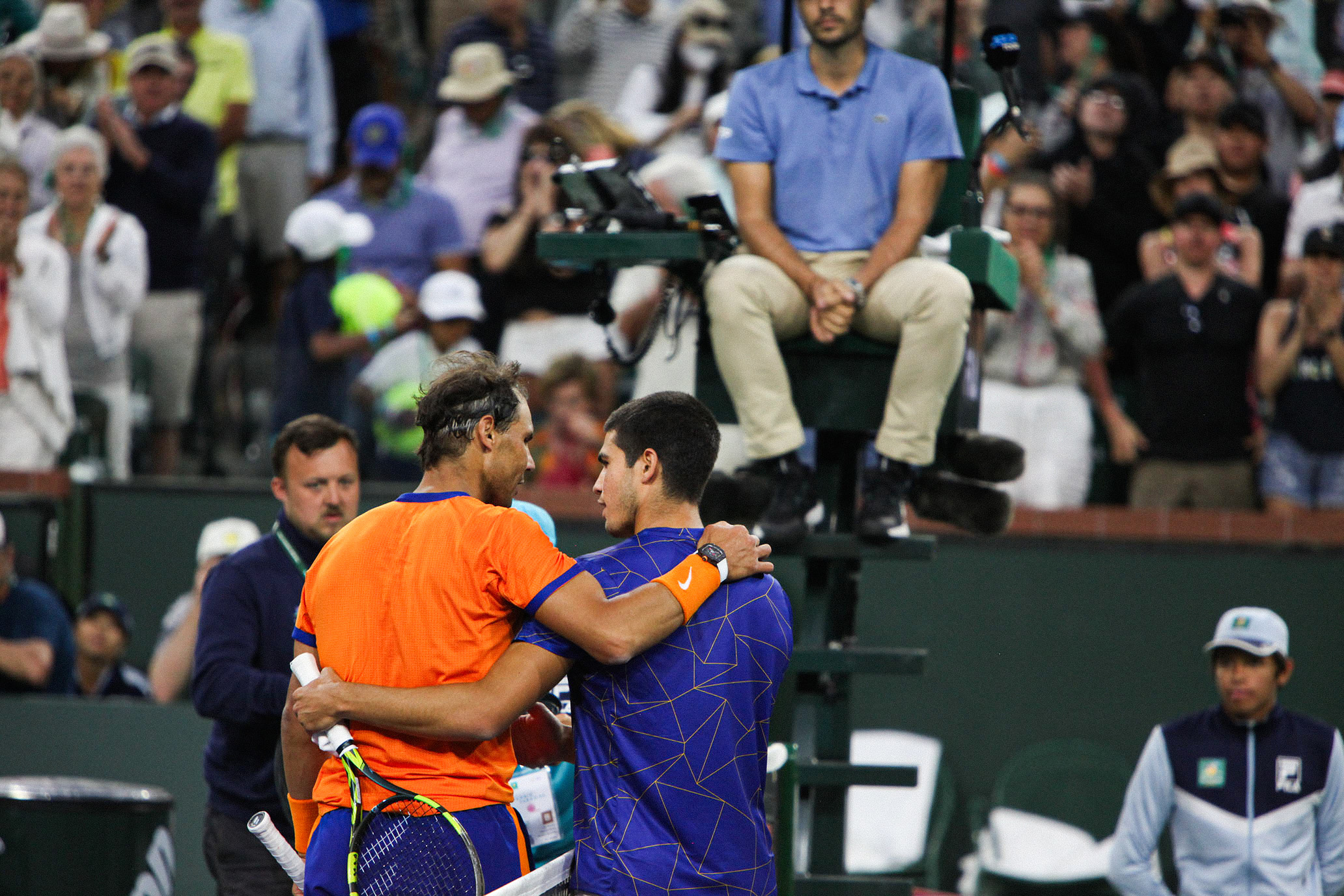
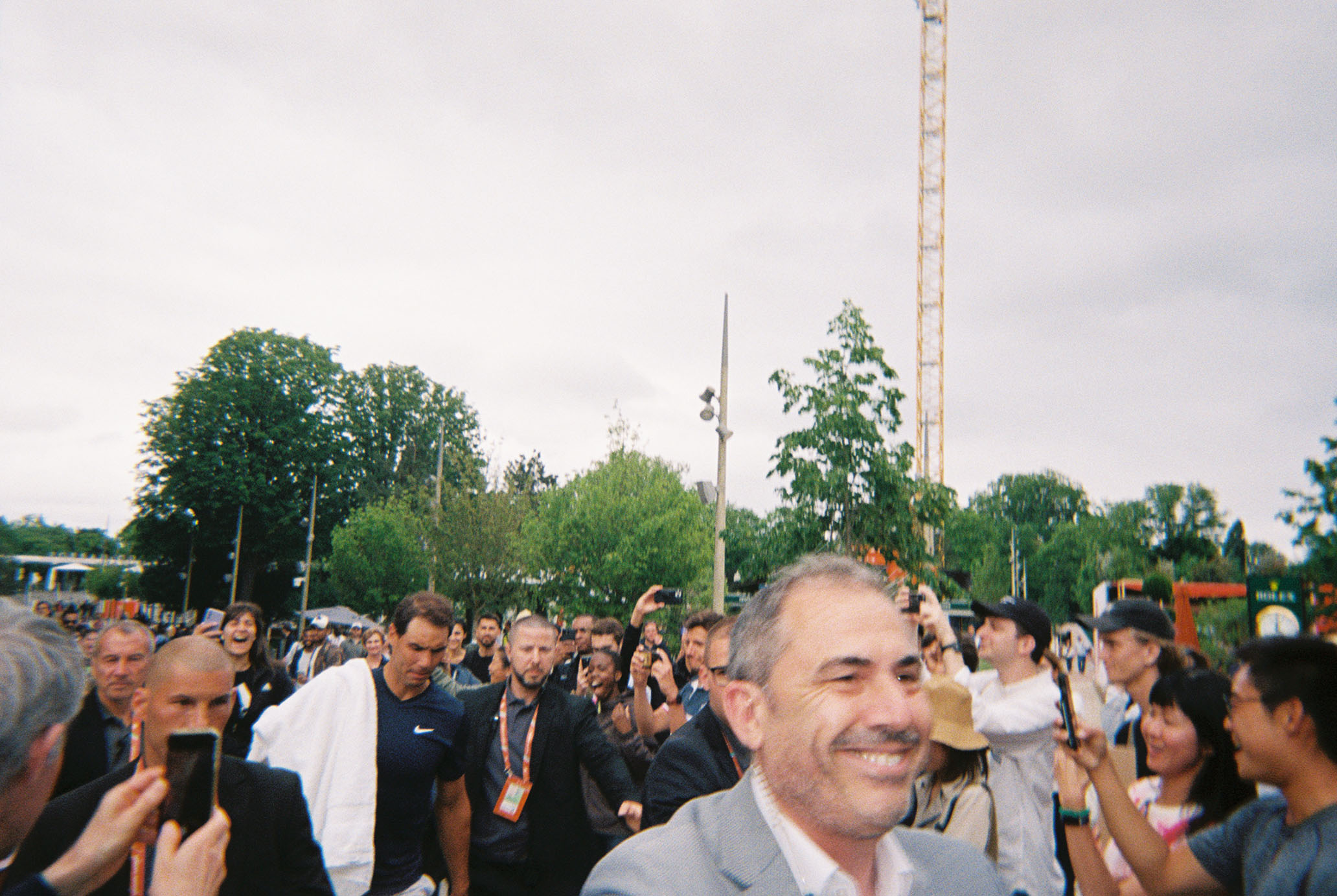
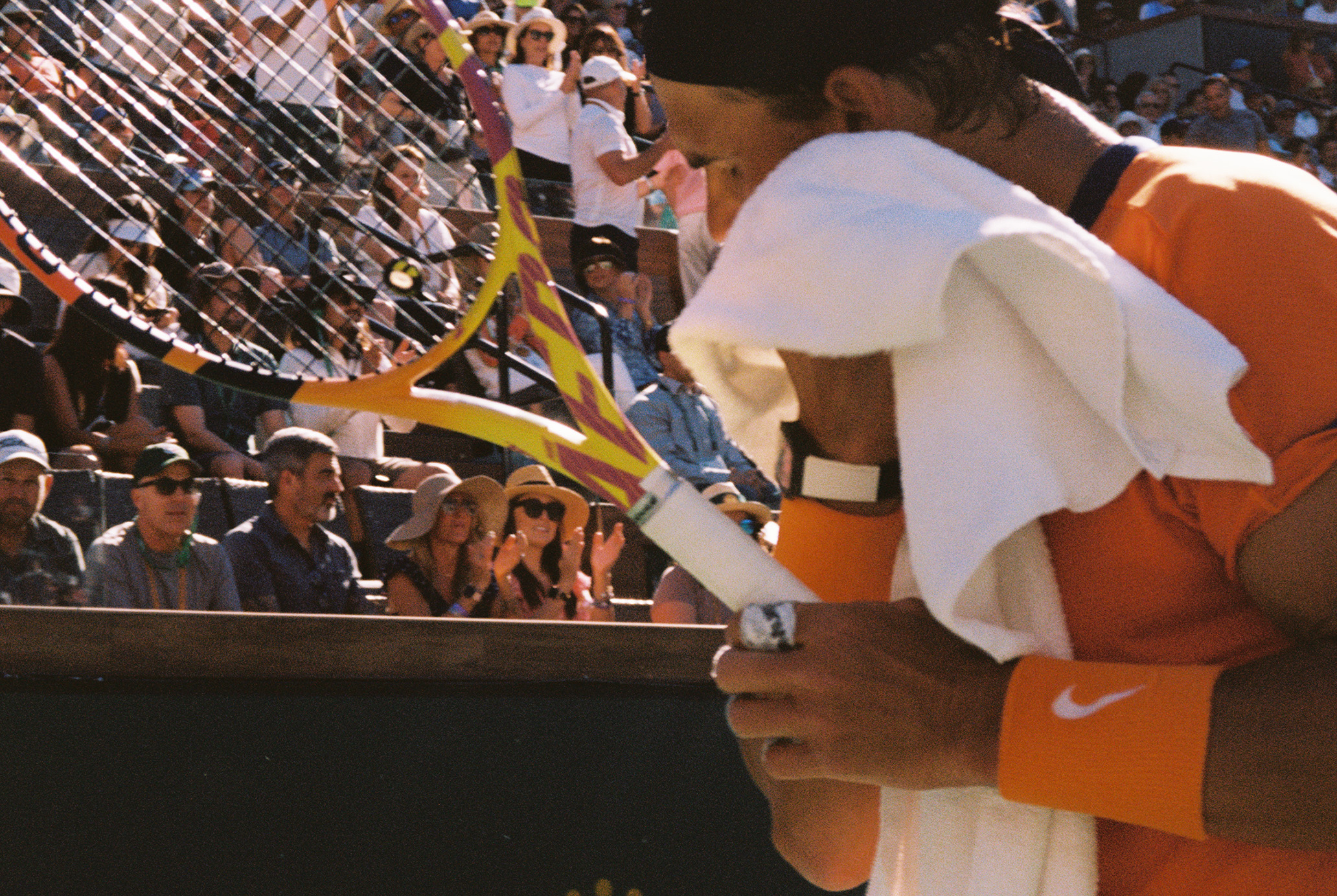
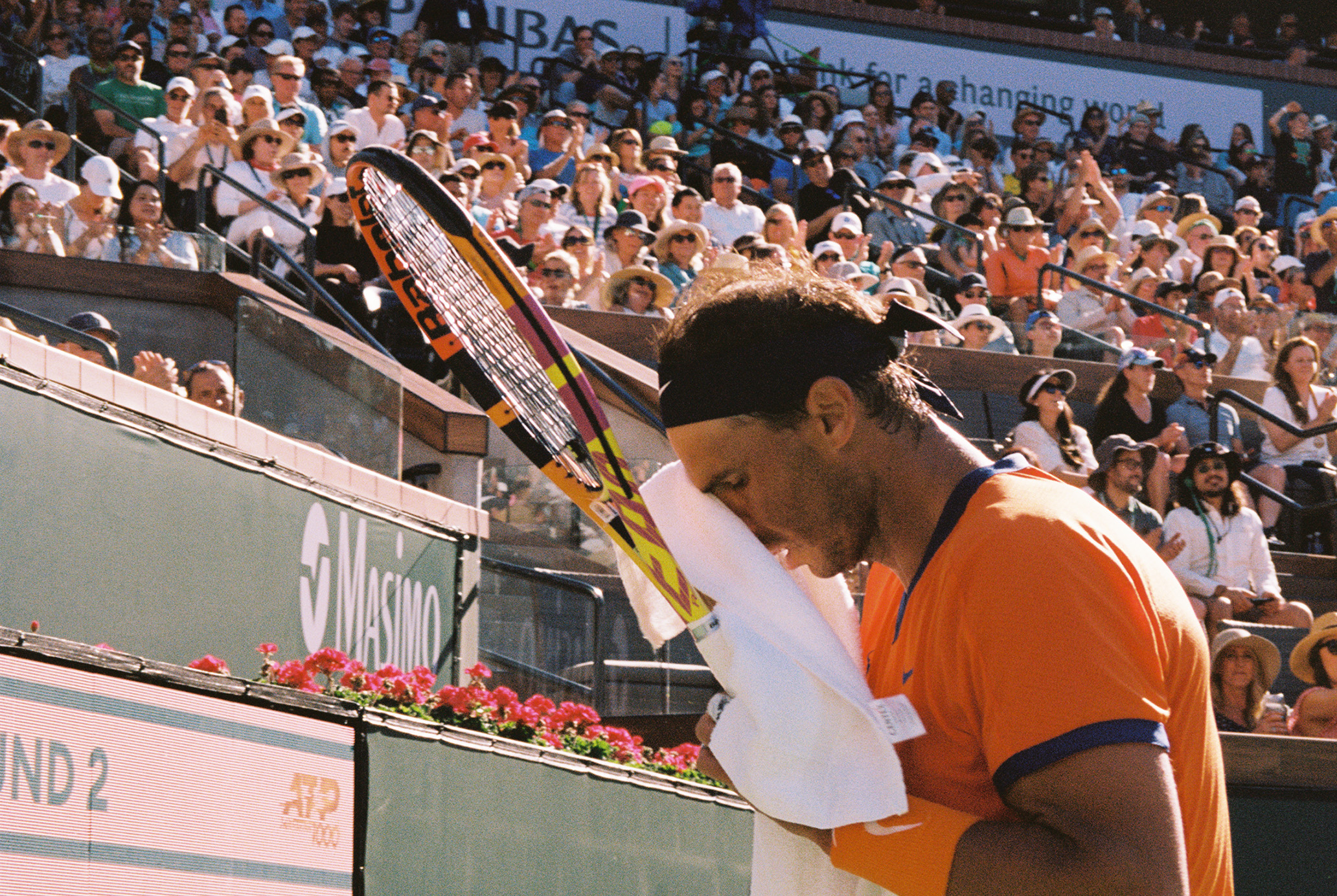
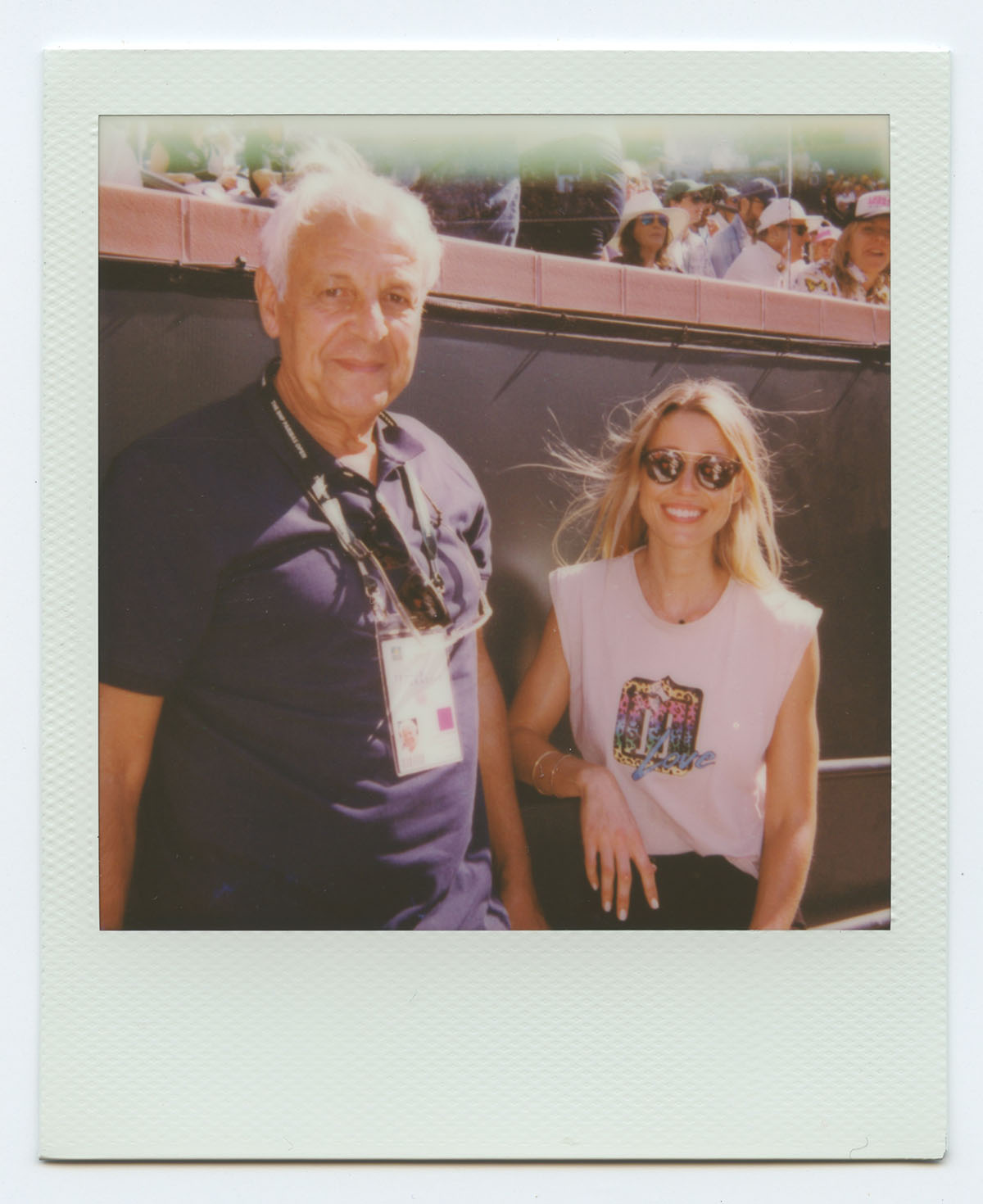
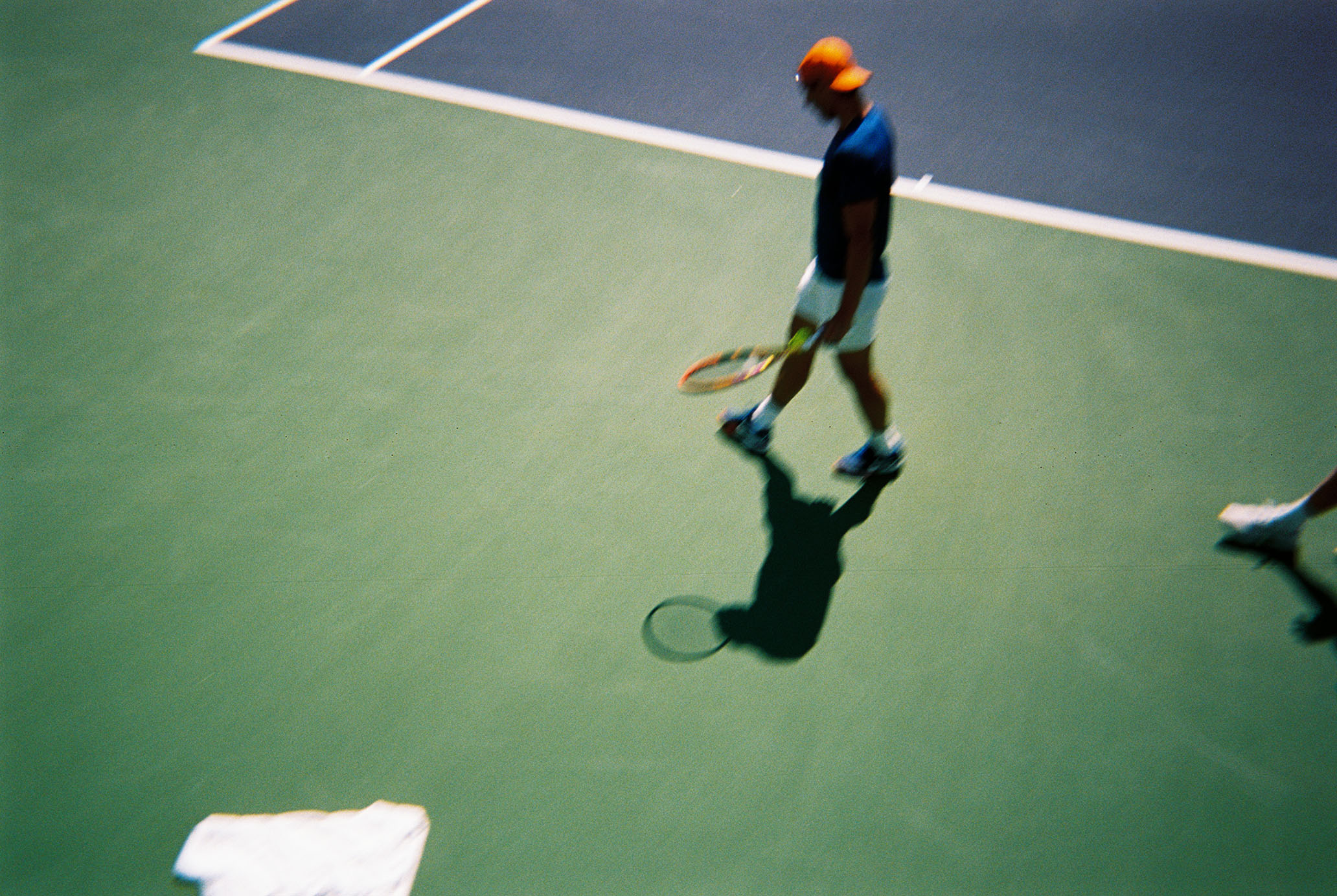
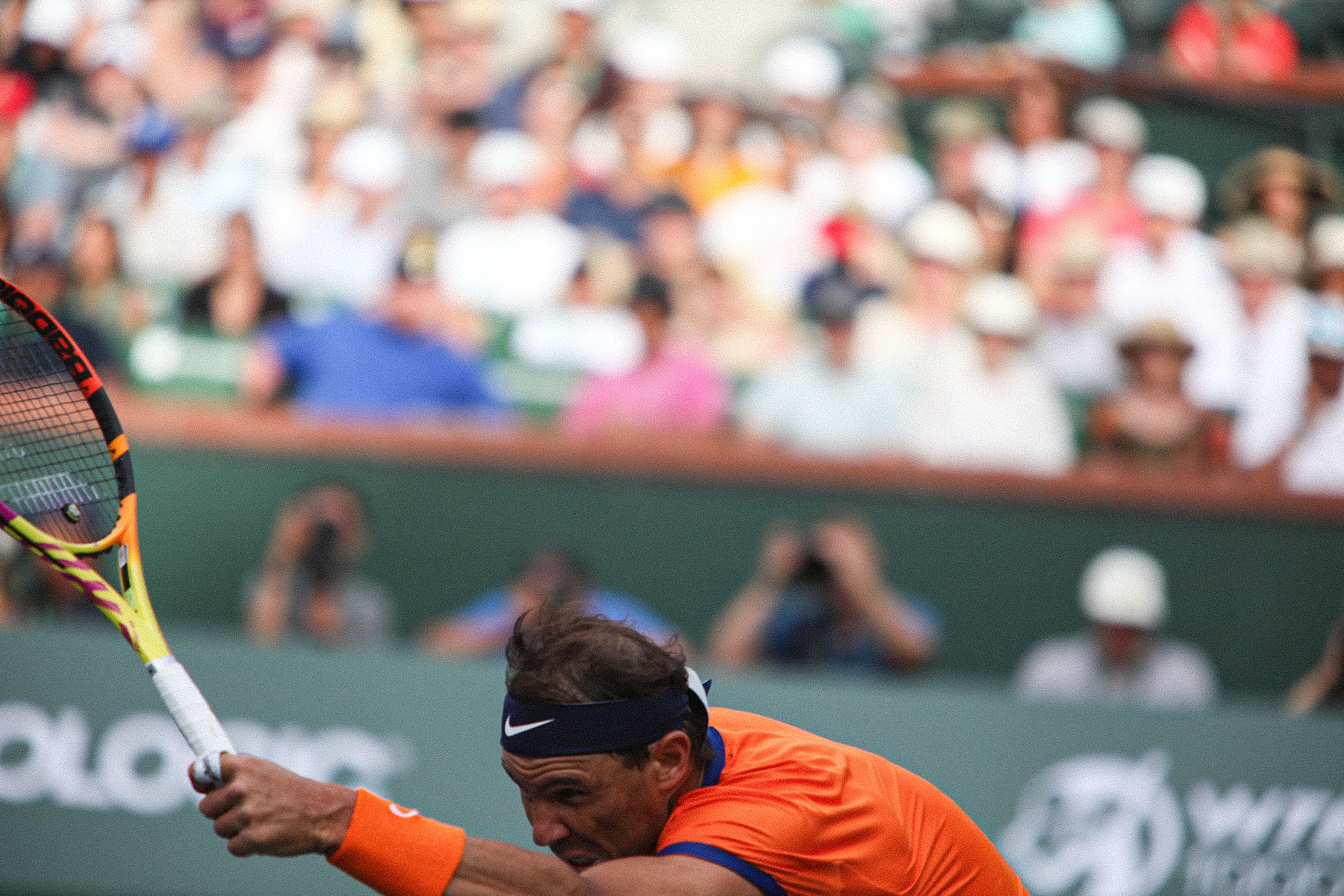
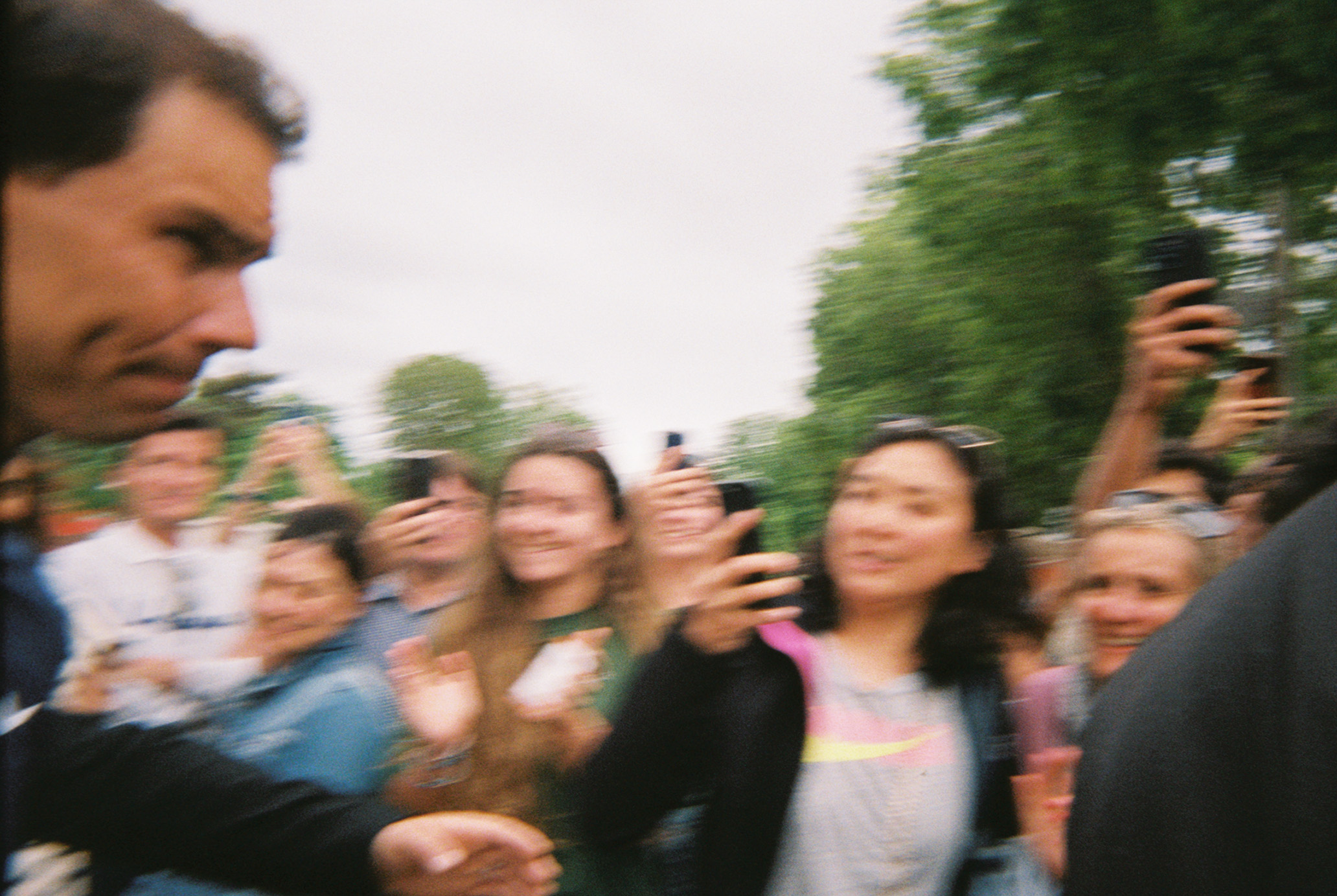
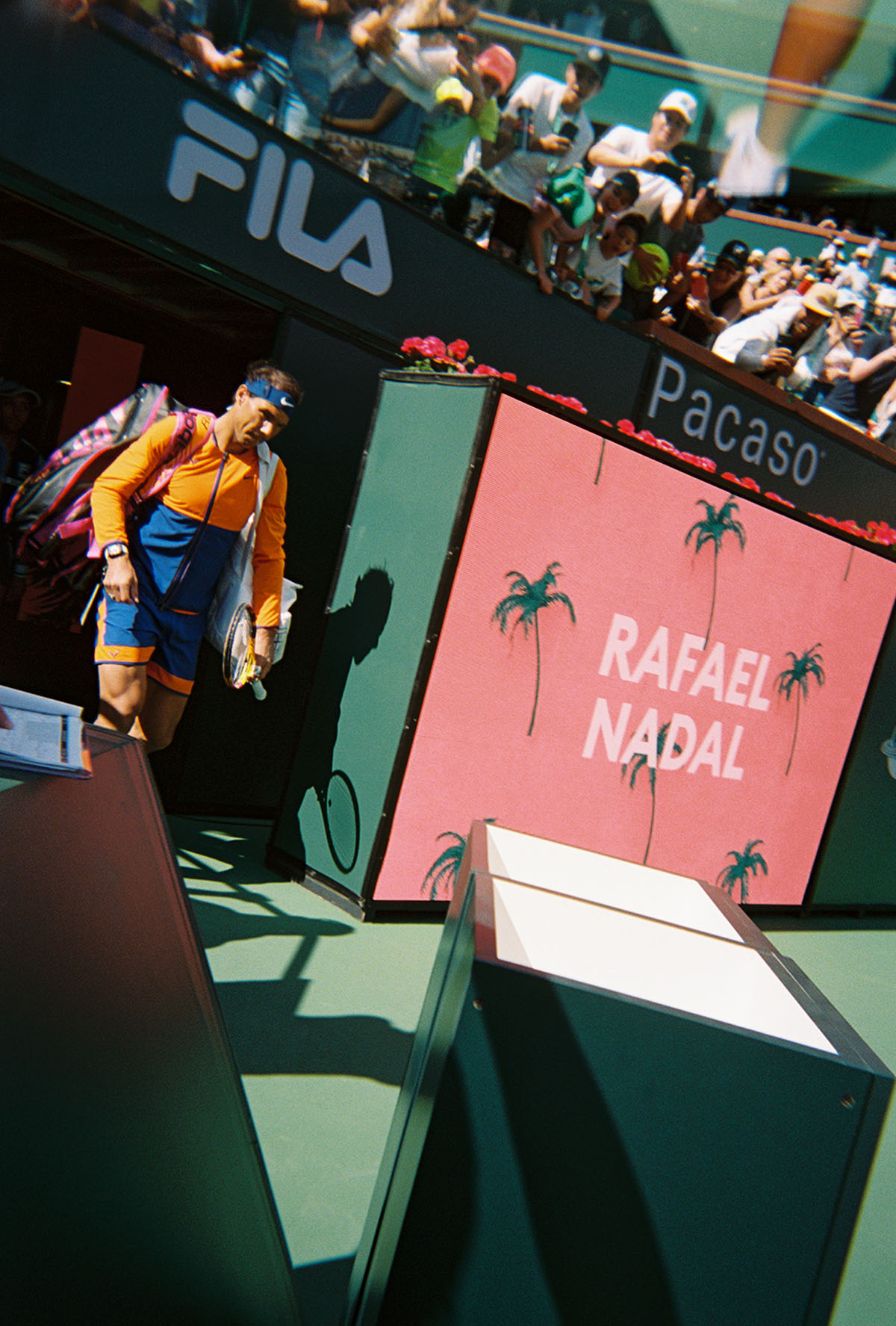
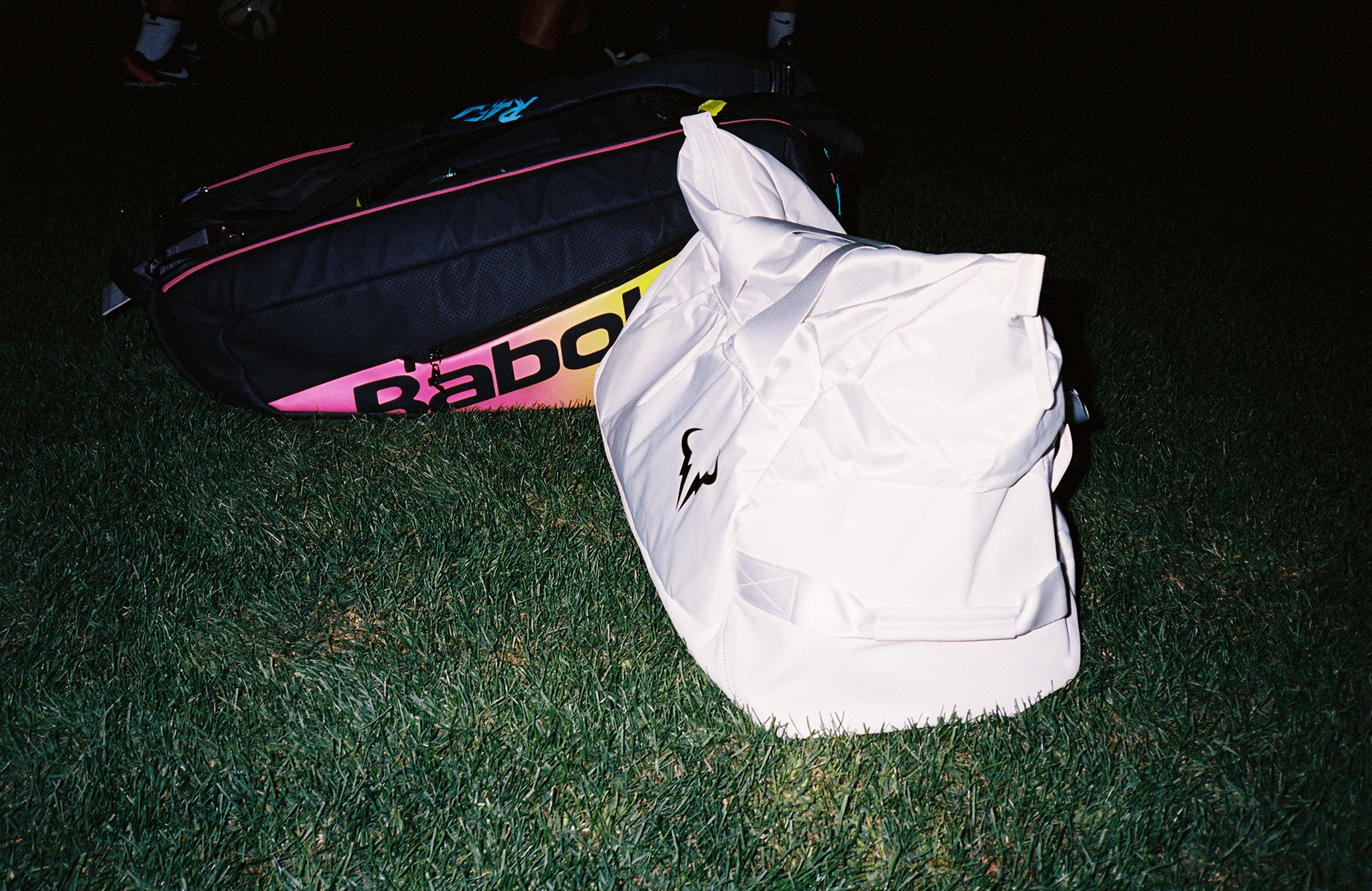
TSS creative director David Bartholow shares some of his favorite moments covering Rafael Nadal during the Spanish legend's twilight years.
TSS creative director David Bartholow shares some of his favorite moments covering Rafael Nadal during the Spanish legend's twilight years.
Photography by David Bartholow
November 22, 2024

YOUR WEEK IN TENNIS — SIGN UP FOR THE SECOND SERVE NEWSLETTER
Sin's City
Sin's City
Sin's City
At the ATP Finals, Italians do it better.
At the ATP Finals, Italians do it better.
By Giri Nathan
November 14, 2024
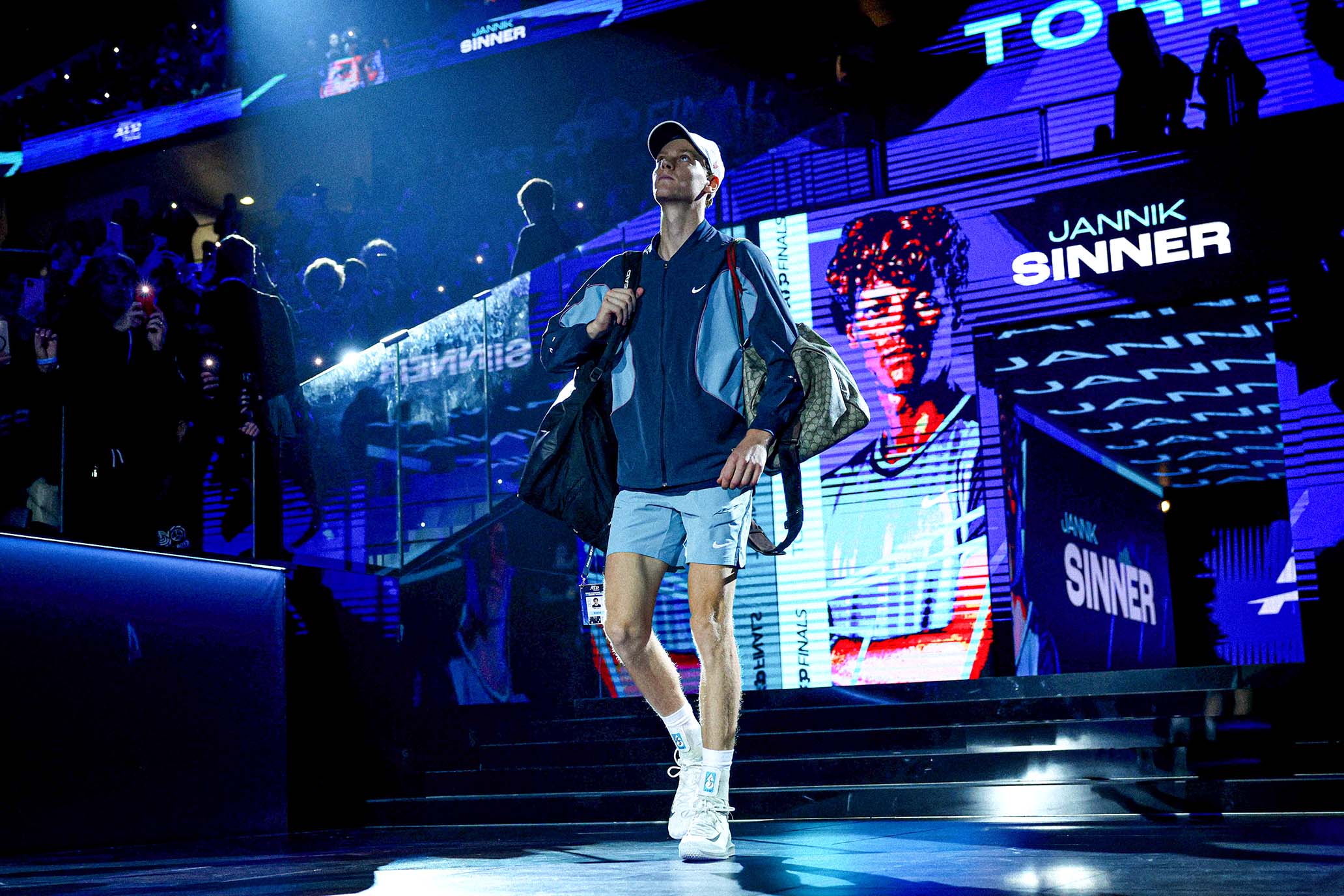
Italian tennis as a whole is surging, and the ambient sensation when you walk among the fans in Turin is Sinnermania. // Getty
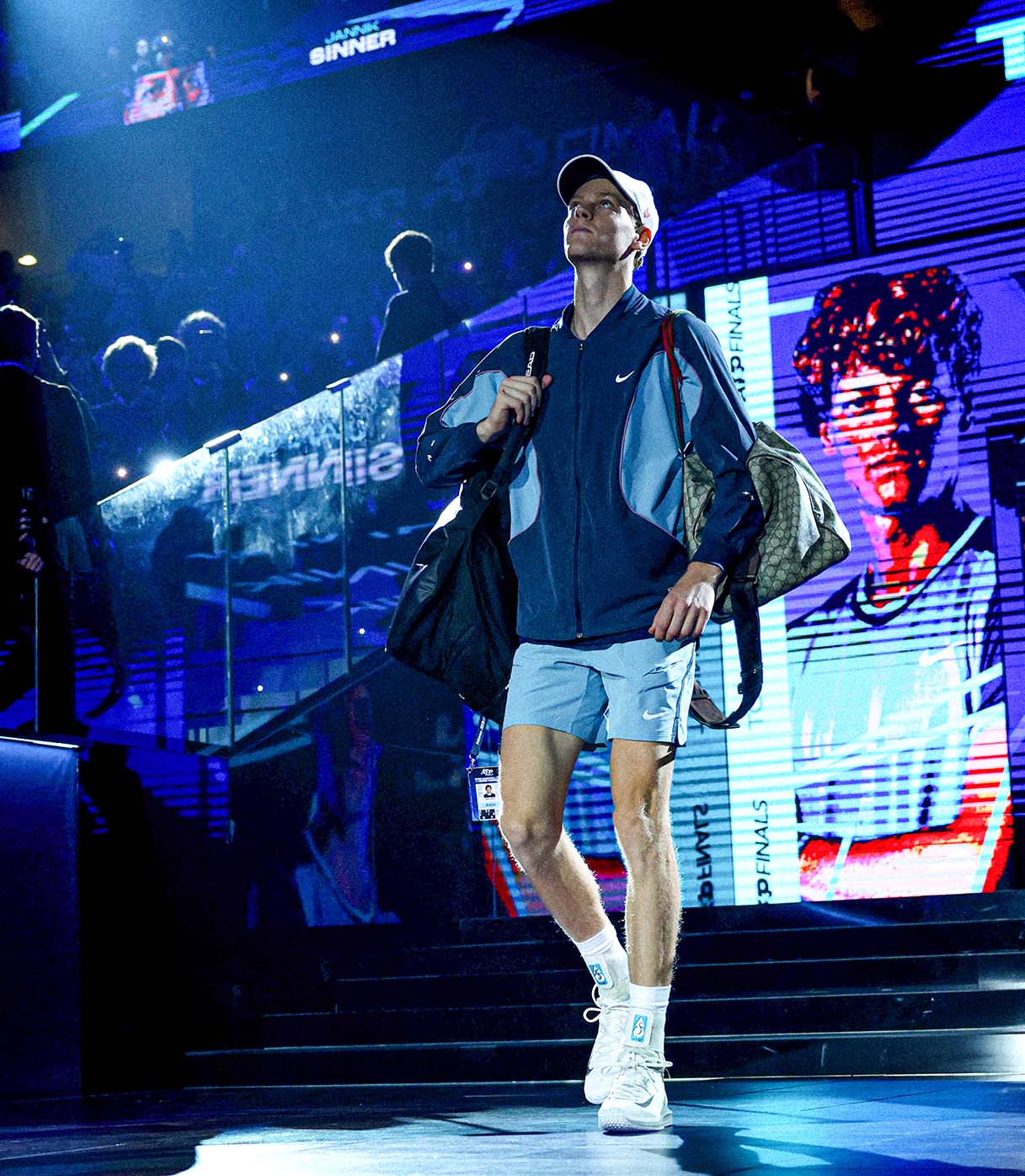
Italian tennis as a whole is surging, and the ambient sensation when you walk among the fans in Turin is Sinnermania. // Getty
Last week’s WTA Finals fittingly concluded with a classic between Coco Gauff and Qinwen Zheng that offered everything: three sets, wild scoreboard pressure, a satisfying closure to an odd Coco season, and another bout of legendary iciness from Zheng. Right now, the various rivalries at the top of the WTA are livelier than those at the top of the ATP; there are more matchups to look forward to, and more uncertainty about who will win at any given meeting. Meanwhile, at time of writing, all eight ATP Finals matches have wrapped up in straight sets. And yet—if you were to choose which one to actually go to, as a fan experience? Location matters. Riyadh is an…interesting place. It also does not appear to be much of a tennis fan magnet. The Saudi Public Investment Fund’s incursion into tennis, which now looks inevitable, has presented the tour with a funny trade-off. On the one hand: For the second day of the WTA Finals some 400 fans populated a 5,000-seat stadium. On the other hand: At the end of the tournament Gauff collected $4.8 million, the biggest check in the history of women’s tennis.
But the powers that be could just pick love over money and do everything in Italy. Tennis fans appear to be significantly more eager to assemble in Turin than in Riyadh. You don’t even have to pay them to show up here! The contrast could not be more stark. This is my first trip to the ATP Finals, and these are the best-attended professional tennis matches I’ve ever been at. Hard to spot a single empty seat at any of these sessions in this arena, which I’ve enjoyed as a physical space. Shadowy, metallic, mirrored, menacing, it feels like a tennis tournament conducted inside the Death Star. (If a slightly overzealous Italian DJ had managed to get on the 1s and 2s at the Death Star.) Indoor tennis is fast and loud, and they’ve done it justice with the acoustics and lighting, letting you hear every boom off the strings in this enclosed space. The crowd is kept in near darkness, except for two spotlights on the player boxes, so we can all dial in on every little coach-player exchange. I’m torn on how I feel about the funky lighting cues at critical moments in the matches—match point, set point, even a meager break point—but it does make it feel like we’re all living inside a video game, which perhaps is not the worst thing.
Built for the 2006 Winter Olympics, the arena is starting to show its age in some ways—including, tragically, its bathrooms—but is still a lot of fun to wander around. There’s a real practice court inside the lobby, so you can walk around with your caffè in hand and watch tournament alternates Stefanos Tsitsipas and Grigor Dimitrov chop it up from a few feet away. All over the grounds, kids are playing racquet sports of all kinds: tennis with foam balls, pickleball (sorry), and beach tennis in a sand pit. The food is predictably good, if pricey. Think US Open prices, but at two times US Open quality, and mostly confined to various regional Italian cuisines. And unlike the US Open, it is possible to walk around from point A to point B without feeling like you’re in a rugby scrum.
My biggest surprise was the deeply domestic feel of what is, in theory, an event with big international tourism appeal. Someone with the tournament informed me that proud countrymen scooped up the vast majority of the tickets in the weeks immediately following Jannik Sinner’s win at the Australian Open. Italian tennis as a whole is surging, and the ambient sensation when you walk among the fans in Turin is Sinnermania. It’s the first time I’ve ever experienced a -mania for any ATP player after the Big Three, though admittedly I haven’t been to a tournament in Spain yet to see how mighty Carlitos Alcaraz is treated at home. Because Sinner wasn’t able to play in Rome, this tournament was his grand national welcome for 2024. He received a trophy for locking up year-end world No. 1, the first Italian man to ever do it, with his proud, weepy parents looking on.
He is synonymous with tennis here. Whenever I walk through the crowds, I literally hear the name spoken aloud, even if he’s not playing that day: Seen Air. Jannik’s face is on the lampposts that line the thoroughfares leading up to the venue. During the changeovers in Jannik’s matches, a digital Jannik appears on the screen to advertise coffee. Jannik’s official fox logo is on so many orange caps on so many heads. The crowd requires only the mildest provocation to break into full-fledged “Olé, olé-olé-olé, Seen Air, Seen Air” chants. There are, of course, carrot-themed costumes, and while I think the charm of the Carota Boys as a unit has long since expired, I’m enjoying the improvised setups. I like all the bootleg, unofficial stuff—the neon-orange construction vests, or the elderly gentlemen in orange trucker hats that read “Sinner Seniors.” I wanted to celebrate and applaud the man in a fine dark green suit with a vibrant carrot top dangling at least a foot out of its jacket pocket.
There’s only one more year on the Turin contract; very soon, we’ll find out if it’s staying here, or if it’s going elsewhere in Italy, or if perhaps it’ll be headed to a desolate stadium in a petrostate. If it does leave, I’m going to be taking a lot of focaccia to go.
The Hopper
—CLAY Tennis on Beatriz Haddad Maia’s US Open run.
—Giri on Iga Swiatek’s loss to Jess Pegula.
—Jon Wertheim’s mailbag is full this week.
—Sara Errani and Andrea Vavasori have won the US Open mixed doubles.
—Tim Newcomb on Taylor Fritz and Asics.
PURE, ORIGINAL TENNIS — SIGN UP!
A Call to Arms
A Call to Arms
A Call to Arms
Elena Rybakina has drifted over this season like a ghost.
Elena Rybakina has drifted over this season like a ghost.
By Giri Nathan
November 8, 2024
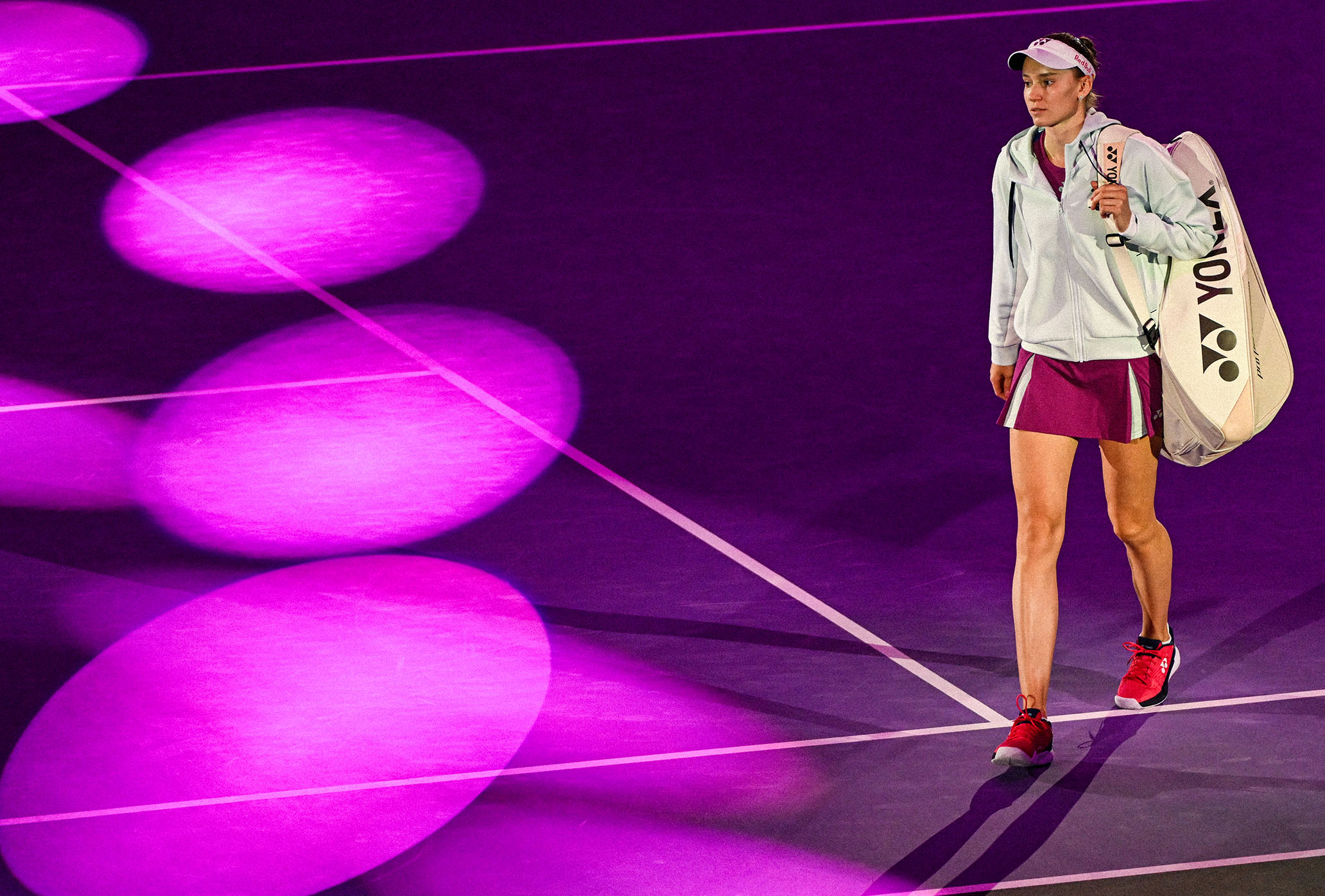
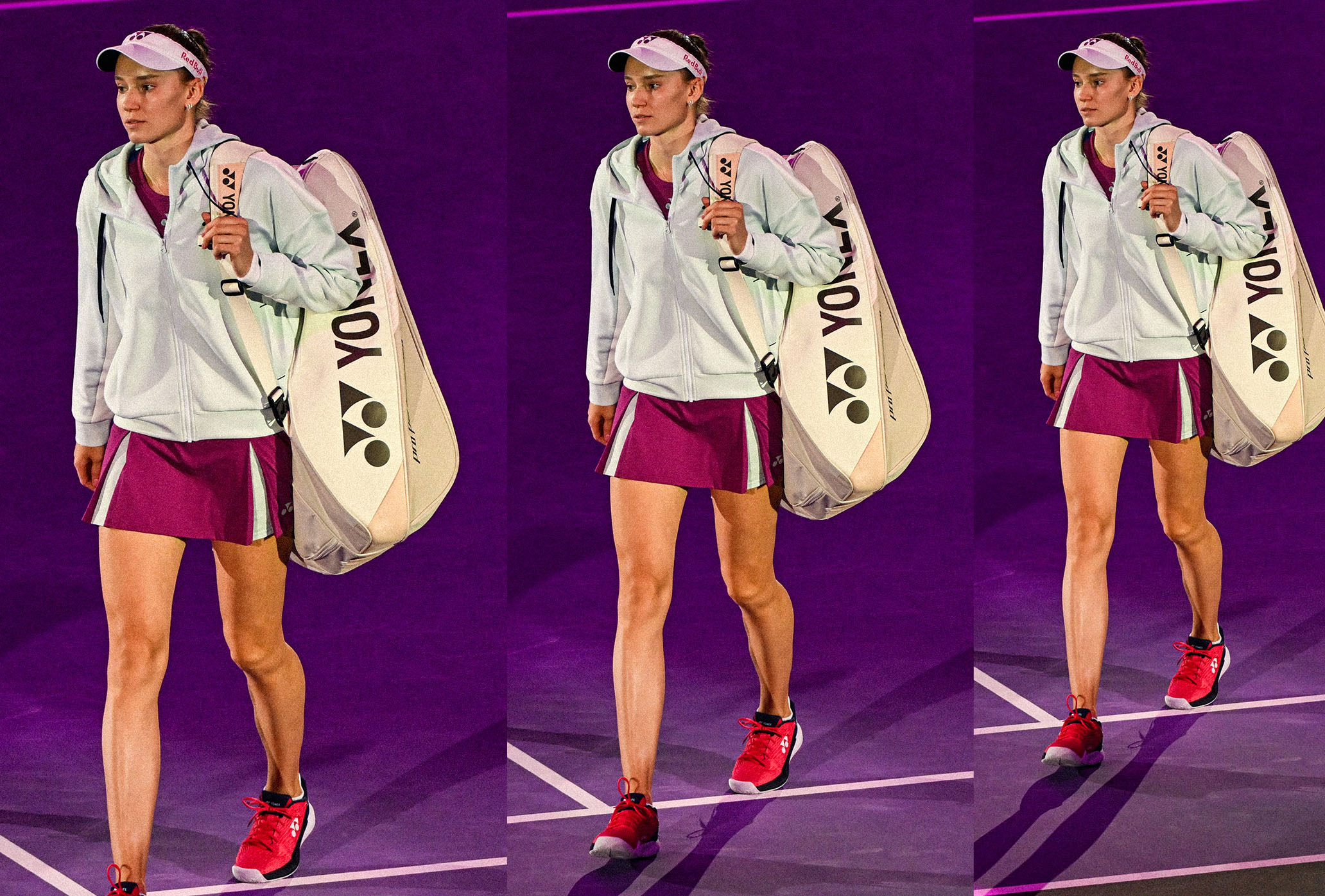
Elena Rybakina in Riyadh this week. // Getty
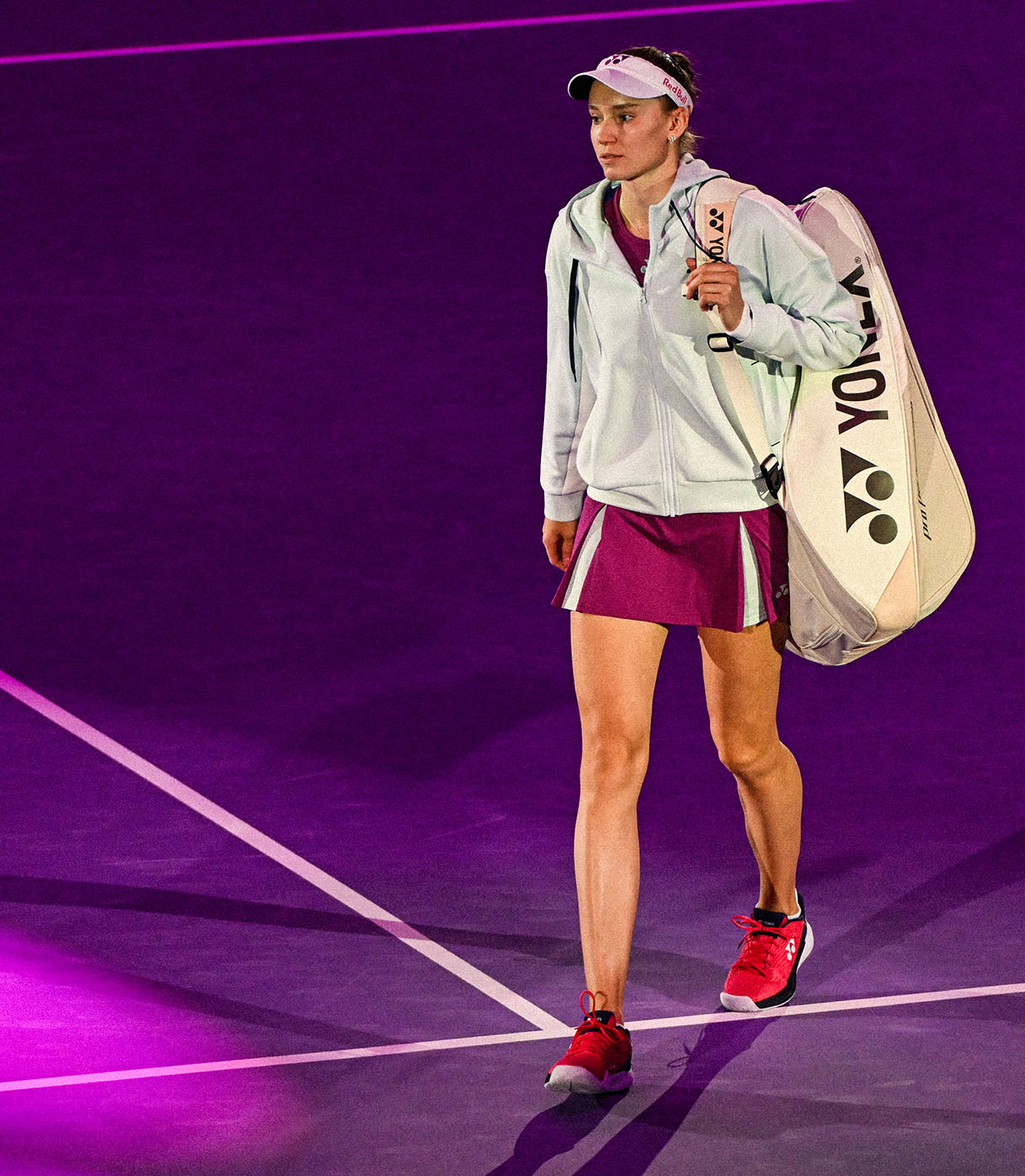
Elena Rybakina in Riyadh this week. // Getty
Aryna Sabalenka, who became the world No. 1 in late October, ensured this week that she would remain the world No. 1 at the end of 2024, a year that’s felt even more dominant than her four titles would suggest. She locked down both hard-court Slams, went deep in the other two, rarely lost early anywhere, and won Cincinnati and Wuhan for good measure. If she capped off the year with another trophy at the WTA Finals—which she’s currently in good position to do—it’d be a fitting end to a season that, in isolation, pretty much secured her fate as a Hall of Famer. But this week, Sabalenka also got a reminder of a familiar old menace. You’d have to go all the way back to…I dunno, four months ago, to remember her name. Sabalenka’s only loss at the WTA Finals thus far was at the hands of Elena Rybakina, a player who has drifted over this season like a ghost, both here and not.
Though the season pleasantly intensified the Iga Swiatek vs. Aryna Sabalenka rivalry, and set them against each other in a down-to-the-wire race for the year-end No. 1 ranking, it all would’ve been even spicier if the third member of the trio had been more present. Elena Rybakina, the stone-faced icon with the biggest serve on the WTA and the punishingly clean ground strokes, started the year on a 30–4 heater that included wins over both her chief rivals on their preferred court surfaces. When all three of these players are healthy, there’s a wildly compelling rock-paper-scissors dynamic playing out at the top of the tour.
But even during that successful stretch, she was dealing with health issues, and they only diversified as the months went on. Over the course of the season, she withdrew or retired from at least 10 events, citing maladies like gastroenteritis, abdominal injury, bronchitis, and, most recently, a lower-back injury that took her out of the US Open and the entire Asian swing. While Rybakina is famously cagey when fielding questions from the press, she was more candid ahead of the WTA Finals, referencing allergies and insomnia as other challenges. Somehow, amid all these interruptions, she won three 500-level titles and put together a strong enough body of work to end the year at No. 5 in the world. This is despite playing just three tournaments after Wimbledon and winning just two matches across them. She and Novak Djokovic—who also qualified for his tour’s year-end finals, but skipped them citing an “ongoing injury” and was recently seen chilling in the Maldives—are surely the best part-time tennis players on the planet.
By her own admission, Rybakina came into the finals without any particular goal in mind: “The level is definitely not at its best. Actually I came without too many expectations. I want to have fun.” And her performance in her first two was as spotty as you’d expect from a player who’d last competed in late August. She lost in straights to Jasmine Paolini, and ran out of gas in the deciding set against Qinwen Zheng. Given that those losses ruled her out of advancing past the group stage, Rybakina’s third match was just for the points, money, and aforementioned fun. She was to play Sabalenka, who had already secured a semifinal berth, and who had won 17 of her last 18 matches. And, improbably, Rybakina ended her year with a win over the hard-court player du jour, 6–4, 3–6, 6–1; she didn’t lose a point behind her first serve in that final blowout set. Here was one last reminder of her huge talent and, in particular, her calm way of unsettling Sabalenka’s baseline rhythm with her own calm, flat pace.
Looking ahead, there’s plenty of reason for Rybakina optimism in 2025. The biggest news of Rybakina’s year may well have been a personnel matter. The day the US Open draw was released, Rybakina announced that she had sacked Stefan Vukov, the first and only coach of her professional life. I’ve never seen a firing met with such widespread cheer from the broader tennis world. Whatever the internal dynamics—Rybakina publicly defended him from criticism at times—from the outside, it looked like an unusually antagonistic player-coach dynamic, with all of the ire flowing from crabby coach to soft-spoken player. Last week she revealed that she would be replacing Vukov with one of the highest-profile names on the market: Goran Ivanesevic, who completed his highly successful and stressful six-year tour of duty with Djokovic just ahead of the clay season. Ivanesevic said he had lots of offers from top players on both tours but picked Rybakina in part because he could directly relate to her game style: big serve, big hitter, won Wimbledon. If anyone can get Rybakina back into the arms race against Sabalenka and Swiatek, it’s him. That WTA “Big Three” everyone was so excited about—not a mirage.
The Hopper
—CLAY Tennis on Beatriz Haddad Maia’s US Open run.
—Giri on Iga Swiatek’s loss to Jess Pegula.
—Jon Wertheim’s mailbag is full this week.
—Sara Errani and Andrea Vavasori have won the US Open mixed doubles.
—Tim Newcomb on Taylor Fritz and Asics.
PURE, ORIGINAL TENNIS — SIGN UP!
Meteor Shower
Meteor Shower
Meteor Shower
Giovanni Mpetshi Perricard joins the ace club.
Giovanni Mpetshi Perricard joins the ace club.
By Giri Nathan
November 1, 2024
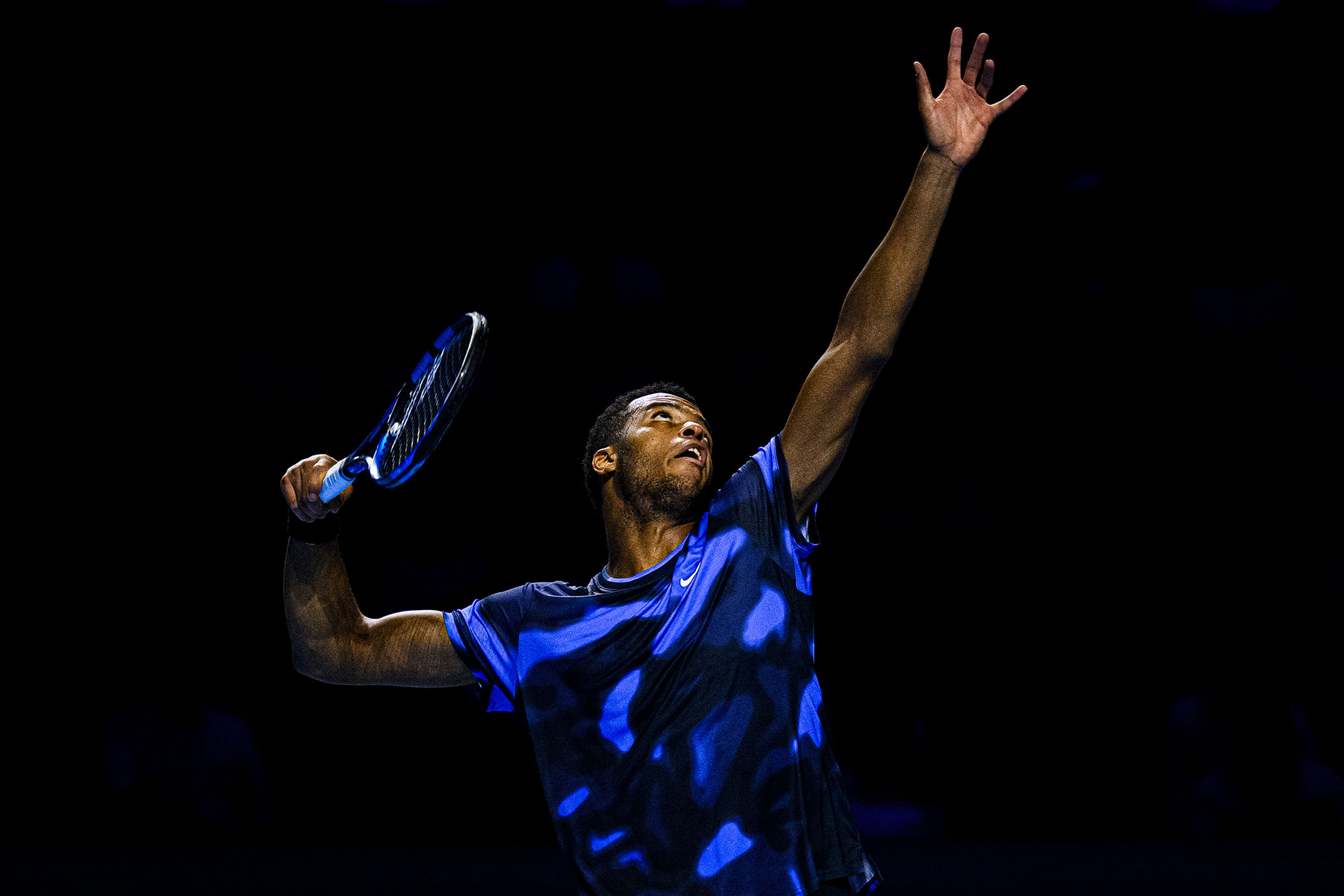
GMP serving bombs in Basel, where he won the title. // Getty
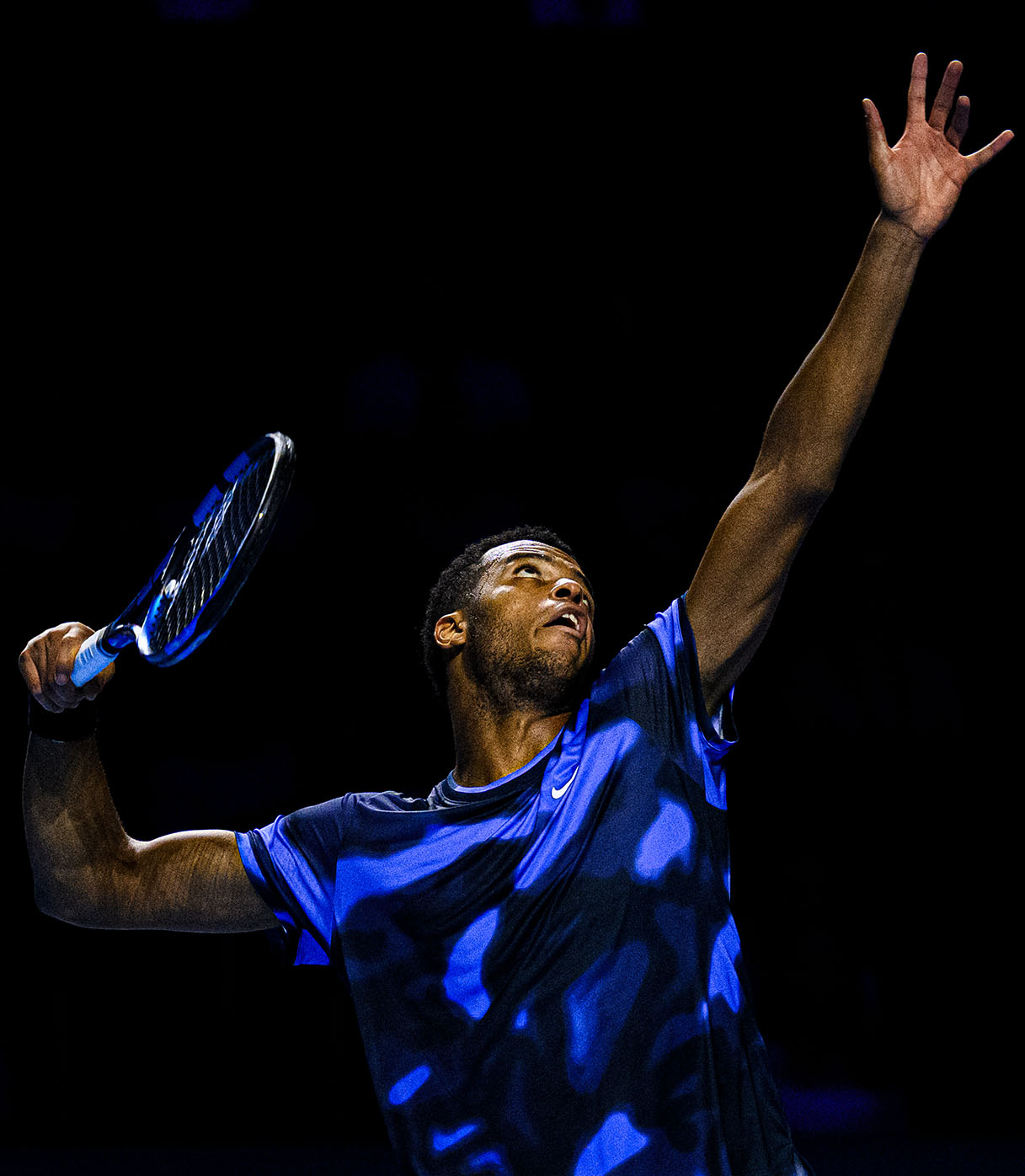
GMP serving bombs in Basel, where he won the title. // Getty
One rainy day at Wimbledon I stood in an on-and-off drizzle for several hours and watched the lucky loser Giovanni Mpetshi Perricard take serves. I could say that I watched him play tennis, or more specifically that I watched him play tennis in a first-round match against Sebastian Korda, but it feels more honest to say that I watched him take serves. Because that is what tennis becomes in the hands of the enormous 21-year-old Frenchman: serves. Everything else, like a one-handed backhand and nice volleys, is simply neat accessories for what may well become the single most terrifying shot on the ATP.
After upsetting Korda at Wimbledon with 51 aces, Mpetshi Perricard went on to face Yoshihito Nishioka: 6-foot-8 versus 5-foot-7. Tennis is a great sport precisely because it encompasses such an anatomically diverse field of athletes, but on grass, that one went the way that you’d expect. Three sets wrapped up in 71 minutes; Nishioka groveling bilingually at his box the entire time, simmering in disbelief at Mpetshi Perricard’s meteor-shower serving, until they met at the net for the most visually arresting post-match handshake I’ve seen. Mpetshi Perricard kept going, reaching the fourth round before stalling out. He’d won the 250 at Lyon a few weeks prior; this was something else.
See enough high-level tennis up close in a short span and it’s possible to get desensitized to their extraterrestrial feats. But I’m still always shocked back into appreciation by the true outliers. The weight of shot from an Aryna Sabalenka or Jannik Sinner, the soft touch of an Ons Jabeur or a (heh) Courentin Moutet. Watching Mpetshi Perricard from up close, I knew immediately that this serve belonged in that freakish class. Being 6-foot-8 does a lot of the work, of course, but it still takes sound technique to make the most of those musculoskeletal advantages. GMP has arrived at a clean and efficient method. Low ball toss, light coiling of the body, the racquet floating up slowly, and then a snap. As far as service motions go, this is a quick and violent one, and the results could be similarly described. At time of writing, Mpetshi Perricard has 484 total aces, eighth on tour this season. He trails only Jannik Sinner in percentage of service points won. And he is on top of the tour in terms of ace rate: A staggering 22 percent of his serves go untouched by returners, per Tennis Abstract.
How about those occasions where the ball actually does come back over the net? There’s no ambiguity about what Giovanni wants to do in any given point: end it as quickly as possible. He used to want to emulate the baseline play of his idol Rafa Nadal, but his current coach Emmanuel Planque guided him toward this kill-kill-kill playstyle. “When I have the ball, I want to inflict pain,” Mpetshi Perricard said last week. Despite all that, he is a placid, pleasant presence on court, his disposition as gentle as his serve is evil. He’s also just the latest in a rich tradition. Every generation has its servebots, and this one has been outfitted for the demands of the modern game. Because Mpetshi Perricard is a superior athlete to the prior models—your John Isner, your Ivo Karlovic—his movement is closer to tour average, and his volleys are genuinely great. It’s miraculous that a guy that big can move in the ways that tennis now demands. On the grass, as he decelerated to hit a shot on the run, the sound of his heavy steps on the turf reminded me of the sound of someone beating the dust out of a rug.
But after that breakout Wimbledon run, which earned him a spot in the top 50, Mpetshi Perricard cooled off, losing eight of his next 10 matches. He found his form again last week in Basel, which isn’t surprising. This is the stretch of the calendar he’s going to look forward to every year. For a player with his particular gifts, indoor hard-court season is a boon. No wind to sabotage the ball toss, no sun up above to make you squint—just a consistent environment and quick court surfaces. The greatest servers are known for repeatability, and here they find laboratory conditions. Mpetshi Perricard didn’t lose a single service game in his five matches en route to the title in Basel. In the final he played Ben Shelton, who previously looked like he might have become this generation’s most fearsome server, though he has consciously stopped pushing the mph so as to spare his shoulder, emphasizing serve variety instead. Mpetshi Perricard, meanwhile, is only serving harder and harder as the days pass us by. He’s channeling power so big that he can leave accuracy behind. In the Basel final against Shelton, his average first serve was 138 mph; his average second serve was 131 mph, faster than Shelton’s first. He’s effectively taking two first serves, and when you look at the expected value, it’s a defensible strategy, one that other great servers have toyed with but that no one has taken to such an extreme.
Carlos Alcaraz, who beat GMP in Beijing this month, said it was the best serve on tour, “without doubt.” That’s for the best, because right now, Mpetshi Perricard is also the worst returner in the top 50, by a considerable margin. In his second-round match in Paris this week, the big Frenchman lost to Karen Khachanov. But I would like to direct your attention to the first set of that match, which Mpetshi Perricard won, while winning two return points the entire set, both in the tiebreak. Is this still recognizable as tennis? I don’t know, but I do suspect that he will eventually be a top 10 player in the sport we presently refer to as tennis. Perhaps, before he’s through, they’ll have raised the net a few inches.
The Hopper
—CLAY Tennis on Beatriz Haddad Maia’s US Open run.
—Giri on Iga Swiatek’s loss to Jess Pegula.
—Jon Wertheim’s mailbag is full this week.
—Sara Errani and Andrea Vavasori have won the US Open mixed doubles.
—Tim Newcomb on Taylor Fritz and Asics.
PURE, ORIGINAL TENNIS — SIGN UP!
Exit a Minor Titan
Exit a Minor Titan
Exit a Minor Titan
Dominic Thiem was a worthy foil for the Big Three–for a while, at least.
Dominic Thiem was a worthy foil for the Big Three–for a while, at least.
By Giri Nathan
October 25, 2024
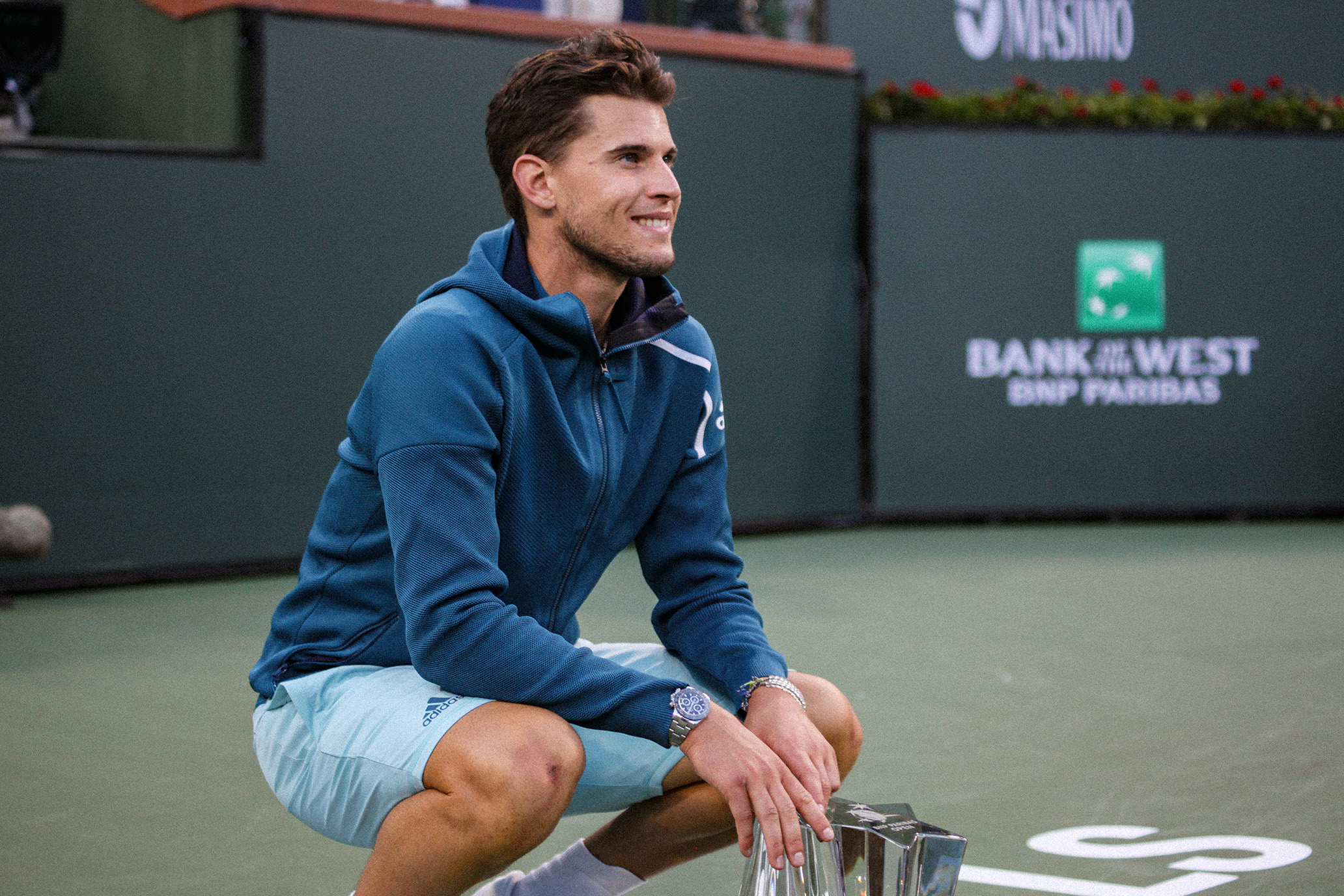
Dominic Thiem after defeating Roger Federer in the 2019 Indian Wells final. // David Bartholow
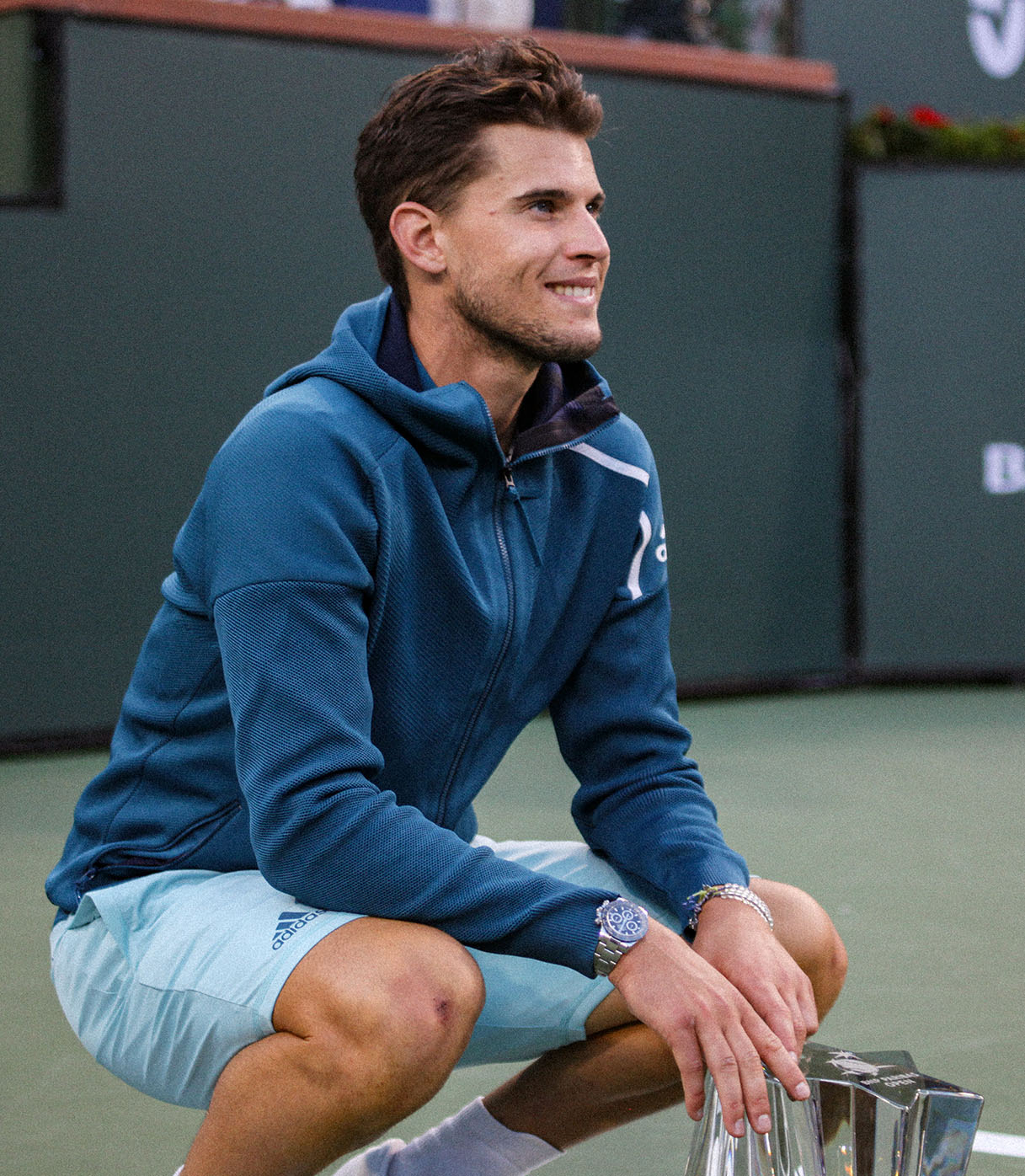
Dominic Thiem after defeating Roger Federer in the 2019 Indian Wells final. // David Bartholow
Sometimes time corrects false impressions. This was certainly my experience with Dominic Thiem, who retired this week at the young age of 31, having lost his best tennis well before. Now I worry that his body of work, though decently impressive on paper, might not do justice to his beastly talent. Seven years ago, when I first started writing about this sport, I didn’t really believe in that talent at all.
In summer 2017 I was at the Citi Open Washington D.C., reporting a piece on the future of the men’s tour. I left that tournament with a dim impression of Dominic Thiem: a hapless ball-basher who played too busy a tour schedule and never adjusted his tactics to succeed off of clay courts. This was just a few weeks after a hungover Roger Federer, the morning after winning Wimbledon, had expressed his horror at a younger generation with no net skills to finish points quickly. Perhaps no young player seemed more remote from the net than Thiem, who was then notorious for camping out miles behind the baseline to set up his big ground strokes. I asked Thiem what he thought about Federer’s advice. “Everybody likes to see something different, but nobody is going to change the style of game,” he said, clearly never going to leave his happy place at the back wall of the court. Another example of how inflexible and hardheaded he was, I thought—he’d never make it!
Thiem seemed to me a placeholder, a player of temporary interest until the next true generational player arrived to usher Federer, Rafael Nadal, and Novak Djokovic out of the game. Surely that guy was coming soon. Here he comes. This is the one…or maybe that is the one. But it’ll be any minute now. Right? Year after year passed, prospect after prospect faded, and the Big Three continued to reign. In time I came to grasp just how anomalous those three were, how superior they were to so many successive generations of players, how many potential breakthroughs they managed to quash. And while I came to this realization, the man I’d once dismissed, that stubborn and sedulous ball-basher, kept toiling away. And improving. His blind power got smarter. He found better angles instead of whaling away down the middle. He stepped up into the court when he needed to play a little faster. He expanded his success out from clay to hard courts. He was becoming, if not quite their equal, a constant irritant.
If you consider the 2017–2020 seasons as the final phase of the Big Three era—the last time all three were pretty healthy, clogging up the draw at every big event, winning all the Slams—it’s clear who their worthiest competitor was in that span. It wasn’t Andy Murray, who spent those years ravaged by injury and spiraling toward his first retirement. It was in fact Thiem, who could often hit a peak level defined by overwhelming power and spin, the biggest one-handed backhand since Stan Wawrinka, and a bruising physicality. All that was enough to amass a 16–19 record against the best players ever: 5–2 against Federer, 6–10 against Nadal, 5–7 against Djokovic. Dominic Thiem isn’t as good as Andy Murray, but he is the only player to match the rare feat of having beaten all members of the Big Three at least five times apiece.
Beyond the numbers, I’ll remember the distinctive stamp Thiem put on those matches. His conviction in his own style paid off in the end. Nobody was beating the Big Three with fussy attritional baseline play; it took something bolder and bloodier, a commitment to full power, no second thoughts. And with that burly style of play, Thiem had a knack for epics, for entertaining us in wins and losses alike. His nearly five-hour loss to Nadal in the 2018 US Open quarterfinal is about as close as tennis gets to blood sport. Wins like the one over Federer at Indian Wells in 2019, or the one over Novak Djokovic at the ATP Finals later that year, proved how dangerous he could be when his baseline game was in full flow. “No matter the surface, you always found a way to beat me with your thunderous backhands,” Federer wrote in his tribute to Thiem this week.
Thiem got his lone Slam in 2020, in odd conditions, and faded out almost immediately after. It would take four more seasons before the tour found those long-awaited generational talents, the ones who would finally wrest the game away from that old triad, with Djokovic as their last standing delegate. It was only in 2024 that Jannik Sinner and Carlos Alcaraz took over. And even so, at age 37, playing a part-timer’s schedule and wearing a knee sleeve after a meniscus repair, Djokovic is still good enough to steal away a gold medal and beat pretty much every other player on tour. That’s how hard he is to take down. Having seen how history played out, I’ve come to understand just how unusual it was for Thiem to battle these three guys and come away with an almost 50/50 record. My first impressions were way off. Dominic Thiem wasn’t a lunk, but in fact a minor titan. He didn’t last long, but what he accomplished in his prime was more than the other mortals could manage.
The Hopper
—CLAY Tennis on Beatriz Haddad Maia’s US Open run.
—Giri on Iga Swiatek’s loss to Jess Pegula.
—Jon Wertheim’s mailbag is full this week.
—Sara Errani and Andrea Vavasori have won the US Open mixed doubles.
—Tim Newcomb on Taylor Fritz and Asics.