
The 2024 Roland-Garros Shoe Report
The 2024 Roland-Garros
Shoe Report
The 2024 Roland-Garros
Shoe Report
The Parisian dirt is a backdrop for fresh colorways and collaborations.
The Parisian dirt is a backdrop for fresh colorways and collaborations.
By Tim Newcomb
May 28, 2024
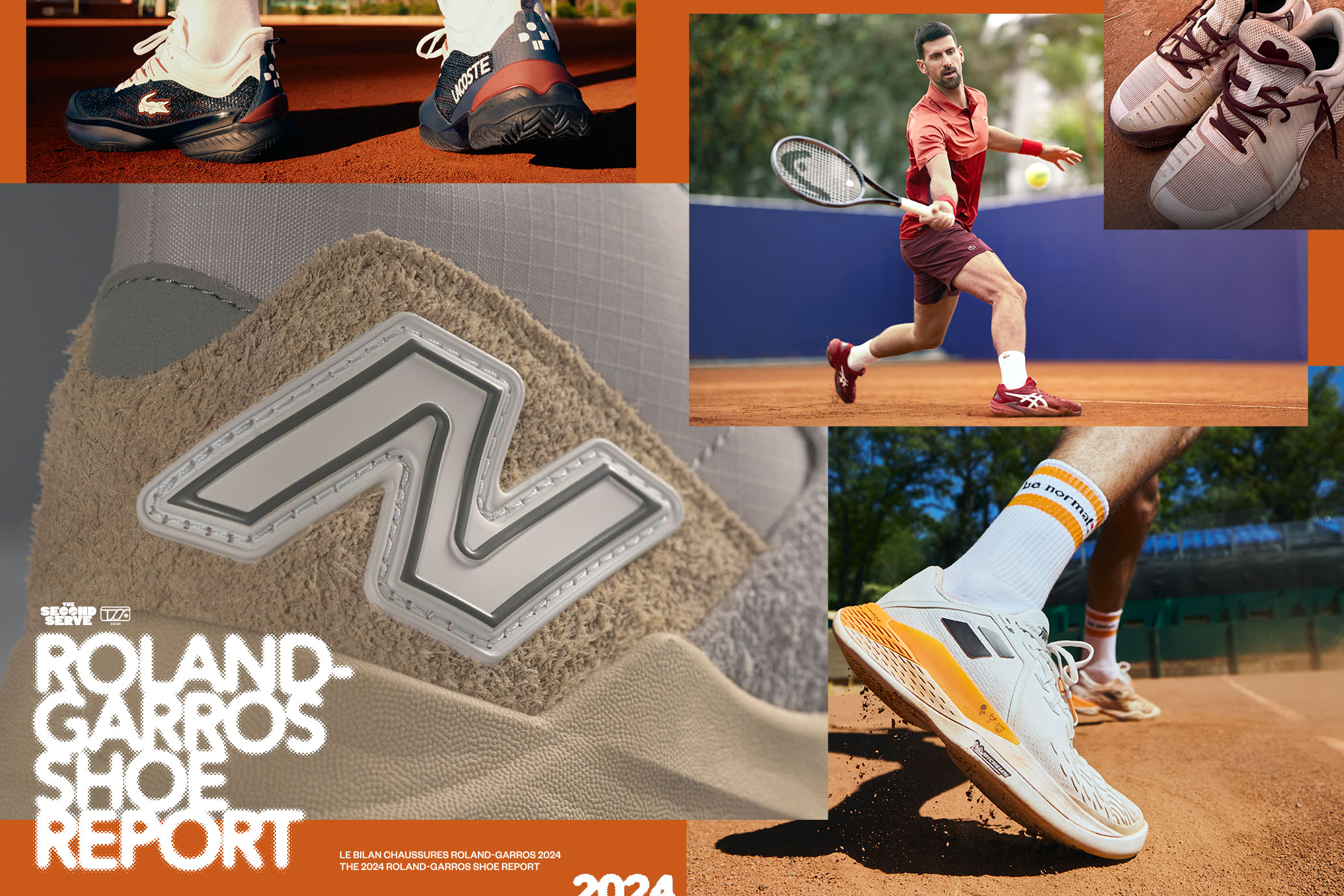
Tennis takes on a distinct hue when entering the grounds of Roland-Garros for the French Open. The fashion follows suit. With the reds and oranges prominent across the Parisian grounds, shoemakers tune their colorways to match. This year, though, offers a unique approach to the clay, with New Balance celebrating gray, Asics embracing Novak Djokovic in red, and Babolat—yes, Babolat—partnering with Benoit Paire on a limited-edition model. Yup, Benoit Paire has his own special-edition sneaker design.
Let’s explore some of the best sneakers you’ll see in Paris this year.
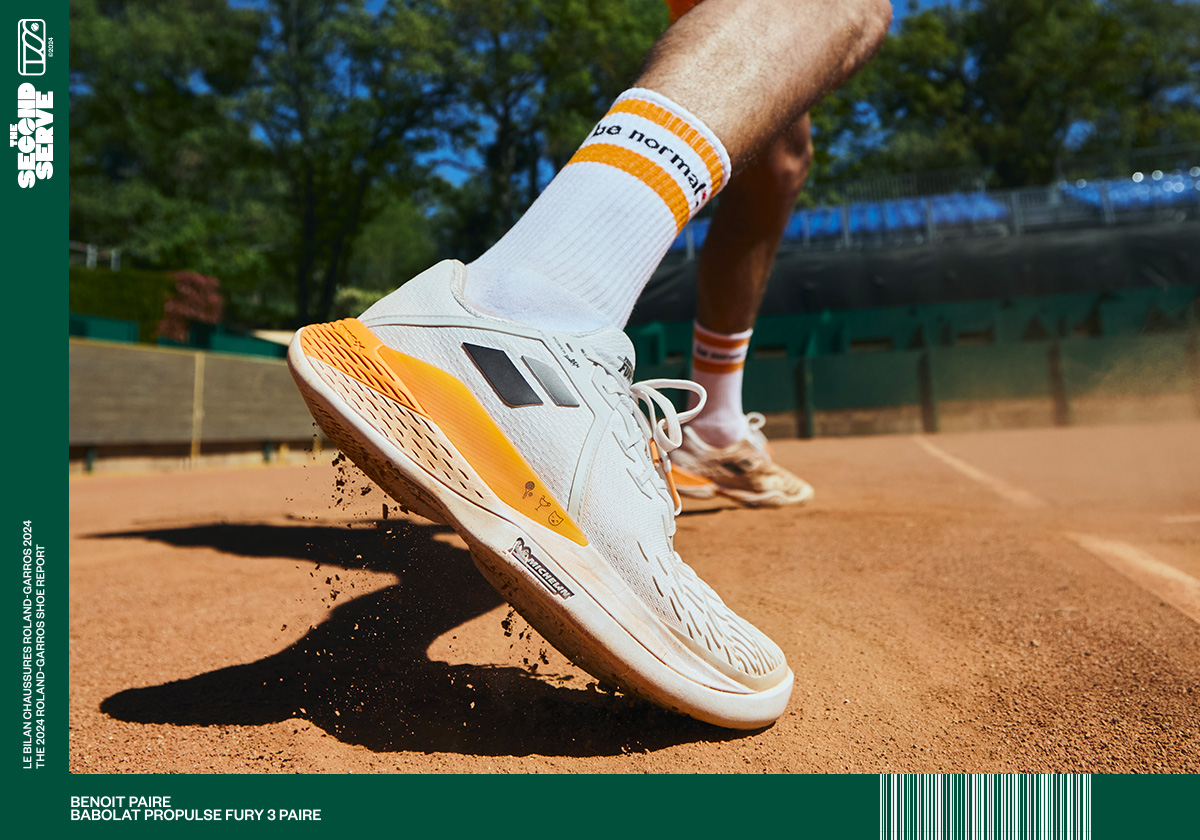
Image courtesy of Babolat
Image courtesy of Babolat
BENOIT PAIRE
Babolat Propulse Fury 3 Paire
In one of the more startling—and we mean this in the most thrilling version of the word
possible—releases of the Roland-Garros season, French brand Babolat has paired with French player Benoit Paire on a special-edition clay Propulse Fury 3 model. And there’s nothing too bland about the symbolism in this design.
Released on May 8 as a limited global launch—only 48 pairs are being sold in the United States, for example—the white, orange, and black colorway matches his French Open kit from Celio. The Paire model also features distinct callouts on the side, such as the phrase “powered by Ben” and three symbols placed side by side. The tennis racquet and ball are a bit more mundane and self-explanatory, but then things get interesting. The middle symbol is a cocktail glass complete with what appears to be an olive on the rim of the glass. It is meant to symbolize Paire’s party lifestyle and his willingness to taunt those who don’t agree with it. The third symbol is a cat, a reference to a vulgar phrase he yells to opponents after they hit a winner.
Only Paire will wear the model during the French Open, giving the spirited player a unique aesthetic to go with his distinct personality.

Image courtesy of New Balance
Image courtesy of New Balance
COCO GAUFF
New Balance Coco CG1 “Grey”
With the only signature* shoe in the sport, we can expect something special from New Balance and Coco Gauff every single major. But the 2024 French Open falling in May offers up a style bigger than a fresh colorway for the Coco Gauff CG1 sneaker.
New Balance has long celebrated the color gray as a brand-wide signature color for performance shoes since the 1980s—originally it was meant to help what were primarily white shoes not show use as quickly. What was once an annual May 1 release of gray styles turned into a May-long event in 2024, with the Grey CG1 releasing May 24, ahead of the French Open.
This special-edition Grey Coco goes gray all over and includes hairy suede accenting. Not only does the Grey Coco provide a unique take on the nearly two-year-long run of the signature sneaker style, but it will also stand in sharp contrast to other shoes seen on the Parisian clay.
*A signature sneaker is defined as a model designed in collaboration with an athlete for the specific needs of that athlete and is not an inline model that is given special “player edition” colorways or designs tied to an athlete.
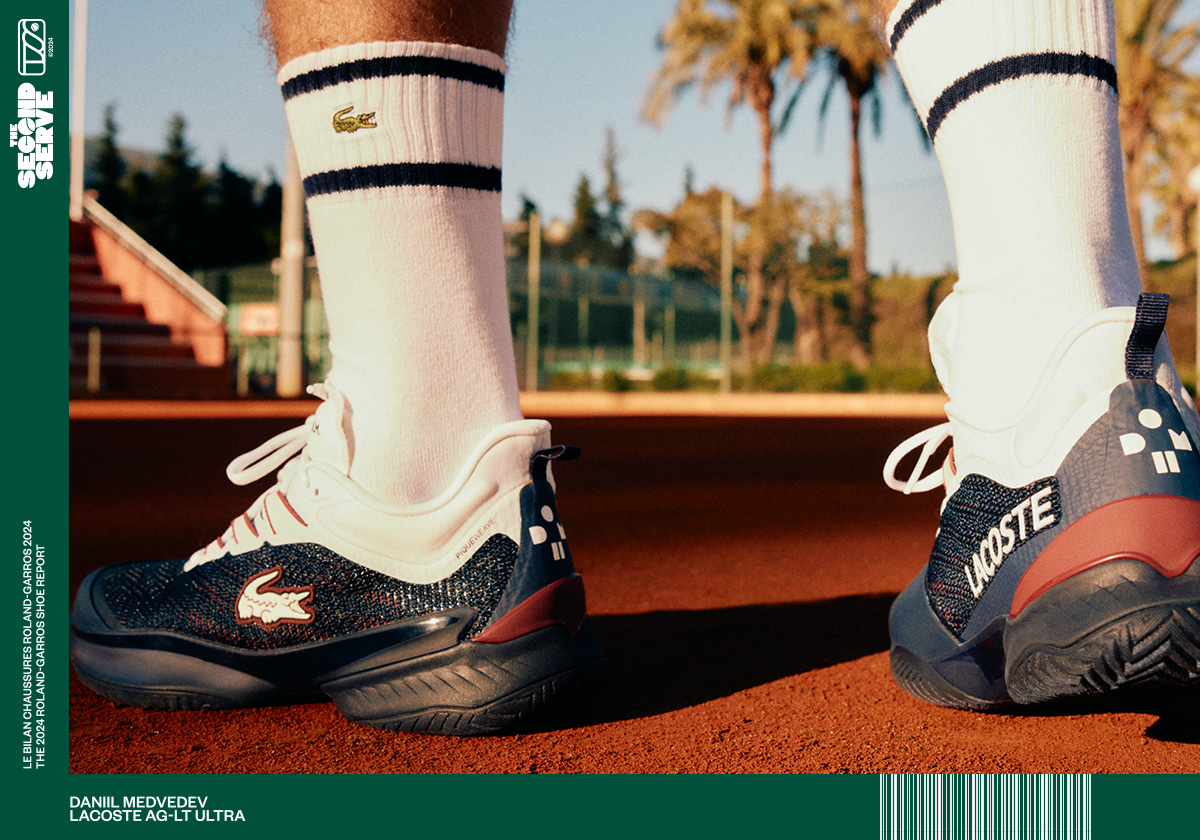
Image courtesy of Lacoste
Image courtesy of Lacoste
DANIIL MEDVEDEV
Lacoste AG-LT Ultra
Daniil Medvedev is fully French when it comes to his equipment. He wields a Tecnifibre racquet, and that brand’s parent company, Lacoste, is his head-to-toe sponsor, which makes Medvedev the feature athlete when it comes to Lacoste footwear.
The Russian player added his personal Lacoste-driven logo to his gear at the start of 2023, and his 2024 French Open footwear design is no different. The color blocking on the AG-LT Ultra features a dark blue topped with white. Accents of red highlight the aesthetics, while the Medvedev logo appears in white on the heel.
A non-Medvedev version of the same shoe will be worn by Arthur Fils, a French player sporting the brand at the French Open for the first time since signing with Lacoste in late 2023.
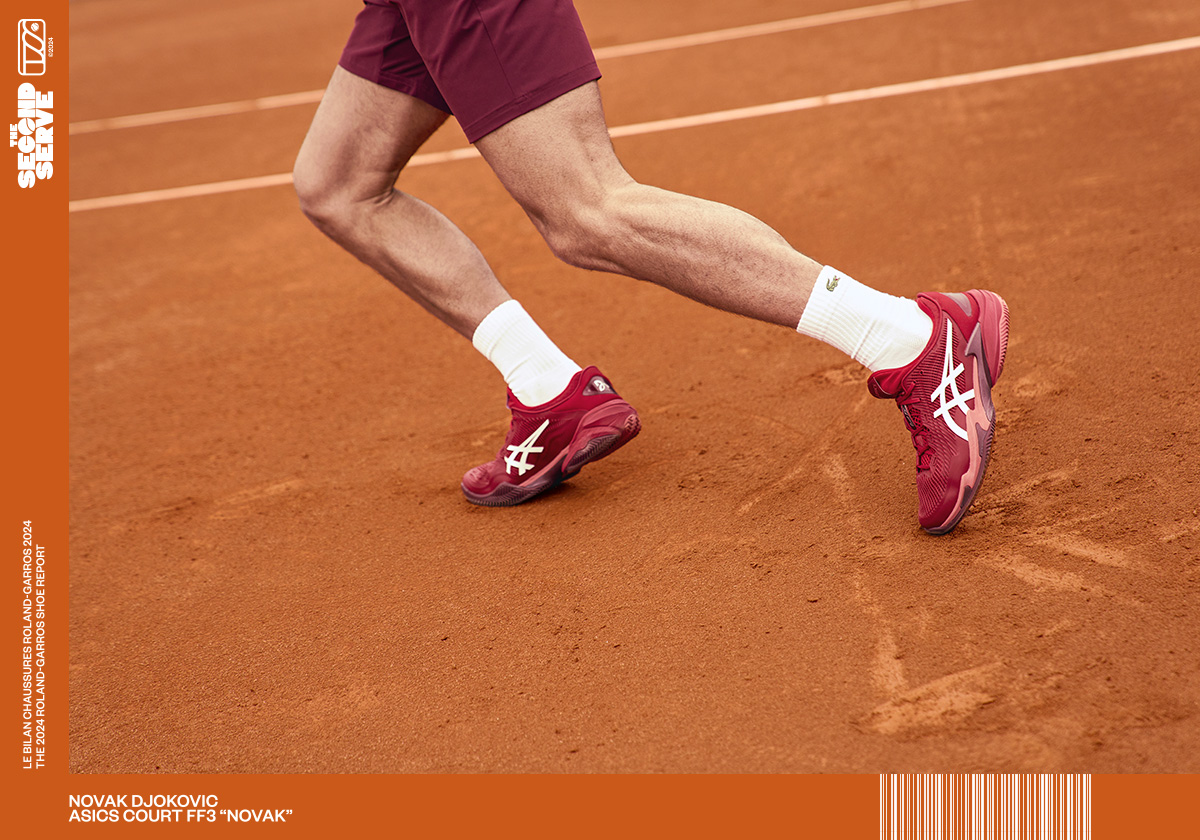
Image courtesy of Asics
Image courtesy of Asics
NOVAK DJOKOVIC
Asics Court FF3 “Novak”
While the 2024 clay line for Asics generally softens with the Gel-Resolution 9 and Solution Speed FF 3 in various shades of blues and yellows with white, the Novak Djokovic-worn Court FF 3 Novak blasts us with red.
It’s an in-your-face reminder—his Lacoste kit will also feature a mixture of red tones—that the world No. 1 is at the top of the ATP rankings list, and he’s doing it on his own terms. It’s also a departure from the two differing blue models he wore at the last two major events earlier this year in Australia and last year in New York City.
The multitoned red on the 2024 clay version of the Court FF 3 Novak, which also features the Asics Tiger stripe in white, includes the Djokovic logo on the heel and Djokovic detailing on the tongue of the sneaker.
Djokovic signed to Asics in 2018 and wore the latest Gel-Resolution model at the time. He later switched to the Court FF model and helped market the launch of the third iteration of the shoe that released in January 2023. Asics has adorned the heel of the shoe with a “24” to again mark the number of major victories for Djokovic.
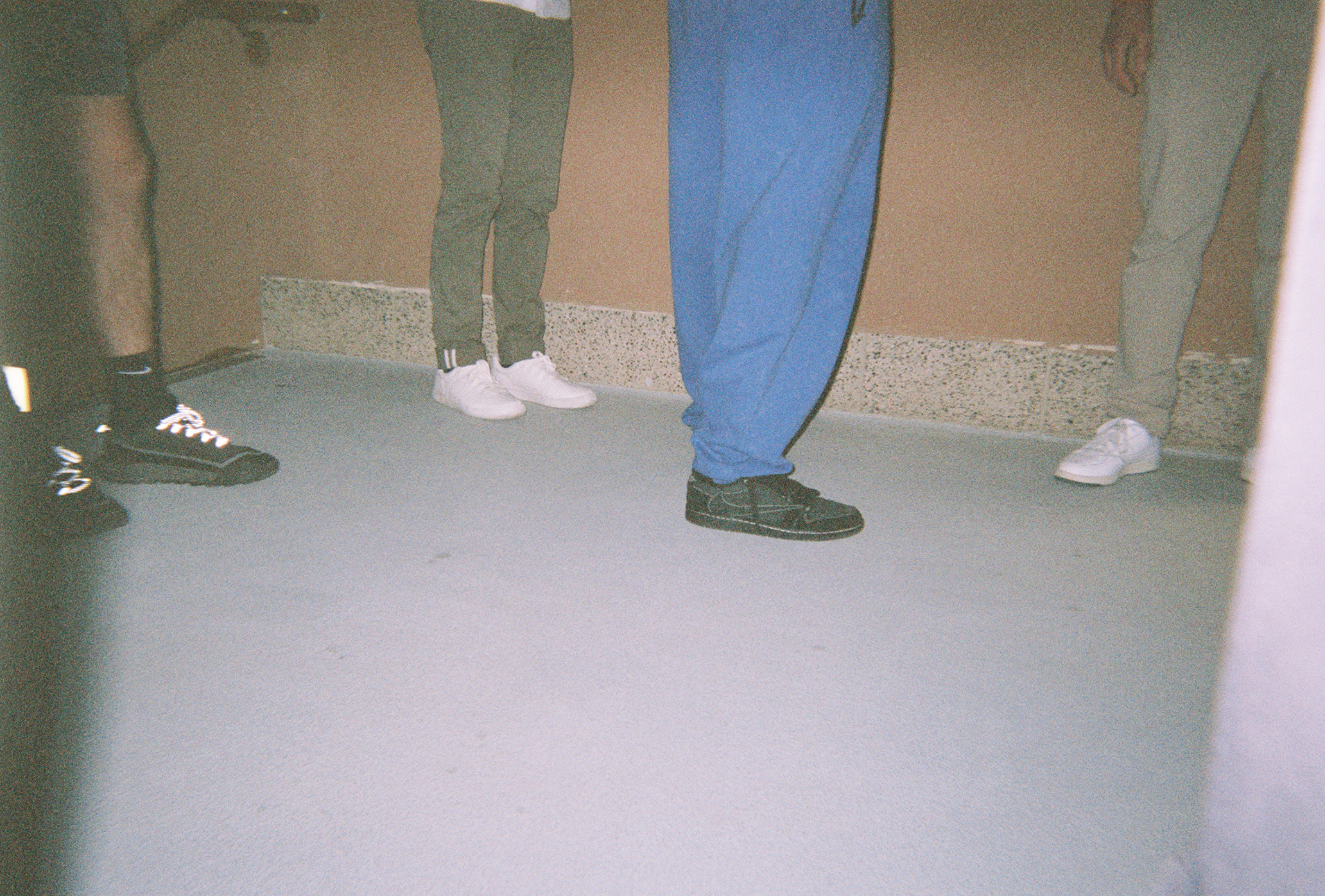
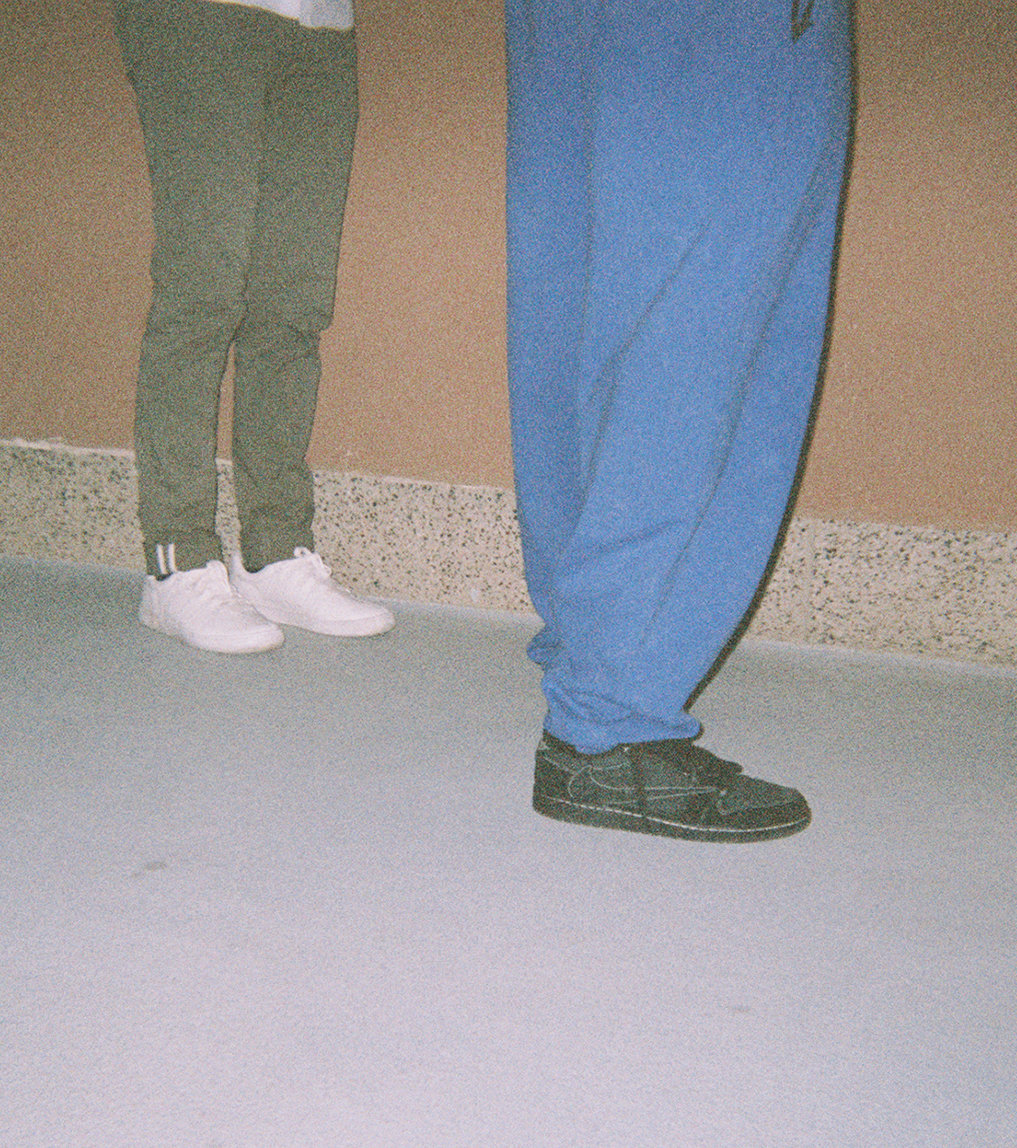


— Rafael Nadal gave an early look at his custom Nike shoes when he started practicing on the clay at Roland-Garros. His black, white, and yellow shoes—which appear to be a nod to the pair he debuted in 2005—have a touch of retro Breathe Free Max II feel to them and feature the Rafa wordmark on both the tongue and the heel. But when it came time to take the court, Nadal went with bright blue shoes to match his kit, offering up a Zoom Vapor Cage 4 Rafa with plenty of pop.
— Nike also has a neutral, French-inspired collection ready for Paris. Done up in the neutral colors the Nike line embraces for the 2024 French Open—the brand calls it sanddrift, thunder blue, gum medium brown and metallic gold—each Nike model has its own take on the colorway. The entire Nike line features the fresh colorways with graphics on the sockliners and tongues distinct to the French connection. Lace tags also feature “Nike” on one foot and “j’aime” on the other.
— It’s dragon time for Naomi Osaka. She has pulled on the Nike GP Challenge 1 Naomi Osaka shoes with a mythical dragon on the right shoe and then the “calming aura” of some of her favorite flowers on the left. The asymmetrical design is beloved by Osaka and she’s wearing yet another bold and busy shoe, just for her, at the French Open.
— Yonex is bringing out a mix of green-and-orange and sand-and-orange Eclipsion 5 clay-court models for the French Open. Expect to see Casper Ruud, Hubert Hurkacz, and Elena Rybakina sporting these colorways.
— Andy Murray isn’t afraid of both the old and the new. Making noise for switching—after a personal trial of frames—to a Yonex racquet for the French Open, his shoes remain from his Under Armour days, a deal that expired back in 2018. Under Armour is not producing new shoes for Murray, as he still just dips back into the stash he has had for years. For Roland Garros, he broke out a gray pair to match his Andy Murray Collection kit from Castore.
— Yonex has upped the brightness level for Stan Wawrinka’s player-edition Eclipsion line of shoes. His neon yellow shoes include “Stan” on the heel with a Swiss flag and icons depicting a kangaroo, the Eiffel Tower and Statue of Liberty, signifying the locations of his three major victories.
— Adidas athletes will embrace yellows, oranges, and black for the 2024 French Open colorways
Follow Tim Newcomb’s tennis gear coverage on Instagram at Felt Alley Tennis.
SIGN UP — YOU'RE ONLY AS GOOD AS YOUR SECOND SERVE.
It's On
It's On
On Running teases the Roger Pro 2.
On Running teases the
Roger Pro 2.
By Tim Newcomb
May 24, 2024
Images courtesy of On
Images courtesy of On
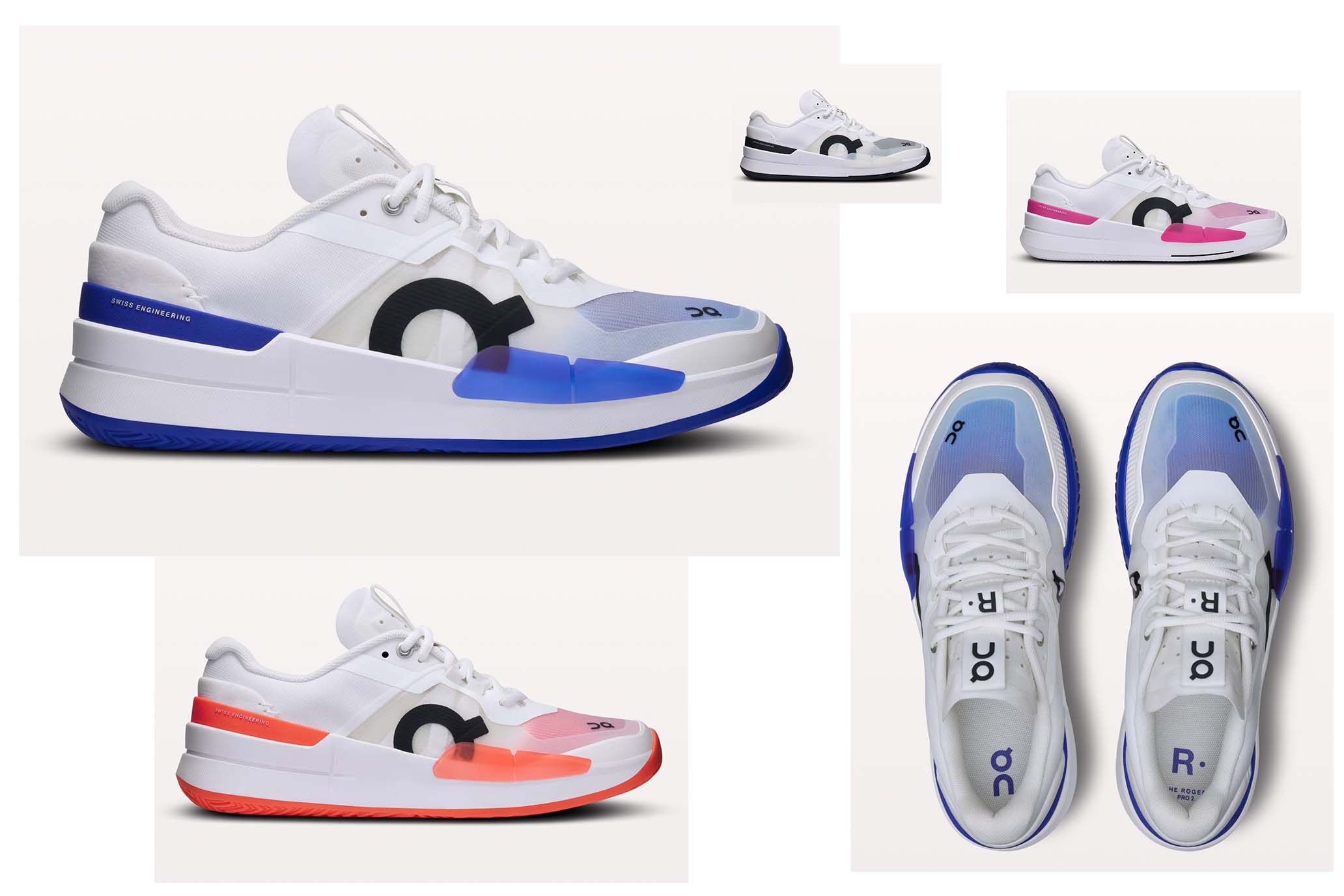
As On announces the soon-to-release update to the signature shoe from Roger Federer—all without providing an exact launch date—the brand highlights not only a complete overhaul of the upper but also a fresh take on outsole durability.
The second iteration, which Ben Shelton has already donned, features a new “ultra-light and abrasion-resistant mesh upper” and an internal half-bootie construction for a better fit in the forefoot, the brand says. The upper also includes reinforcement in the form of TPU clips for stability and a toe cap for durability.
On says they have improved foot lockdown with a molded heel counter, upped the shock absorption with foam in the midsole, and improved breathability throughout, from the mesh to perforations on the tongue. The shoe still features a carbon fiber Speedboard propulsion plate underfoot. But what fans of the line may be most excited about is a new open herringbone outsole meant to improve grip on the court.
The styling of the shoe also takes on a more modern flair than the original, with an oversize On logo on the side of the shoe and smaller On logos sprinkled across the shoe, from the heel to the tongue to the upper. The Roger Federer “R” logo lives on the tongue and sockliner.
Along with the hard-court versions in blue and orange, the clay comes in both pink and black.
Federer bolstered the Swiss running brand’s move into tennis when he signed as an investor-partner with On in 2019. His first signature model, a lifestyle shoe, released as the Centre Court in 2020, and the Roger Pro performance shoe debuted in 2021. Federer and On have continued to grow both lifestyle and performance offerings and in March announced a more recreational-style on-court model, the Roger Pro Clubhouse. The announcement of the Roger Pro 2 comes even as the brand continues to introduce new colorways of the Roger Pro, and Swiatek and Shelton now wear On from head to toe.
Follow Tim Newcomb’s tennis gear coverage on Instagram at Felt Alley Tennis.
SIGN UP — YOU'RE ONLY AS GOOD AS YOUR SECOND SERVE.
SIGN UP — YOU'RE ONLY AS GOOD AS YOUR SECOND SERVE.
A Very Intense Career
A Very Intense Career
A Very Intense Career
Dominic Thiem wasn’t going to wait forever for a feeling that wasn’t coming back.
Dominic Thiem wasn’t going to wait forever for a feeling that wasn’t coming back.
By Giri Nathan
May 23, 2024
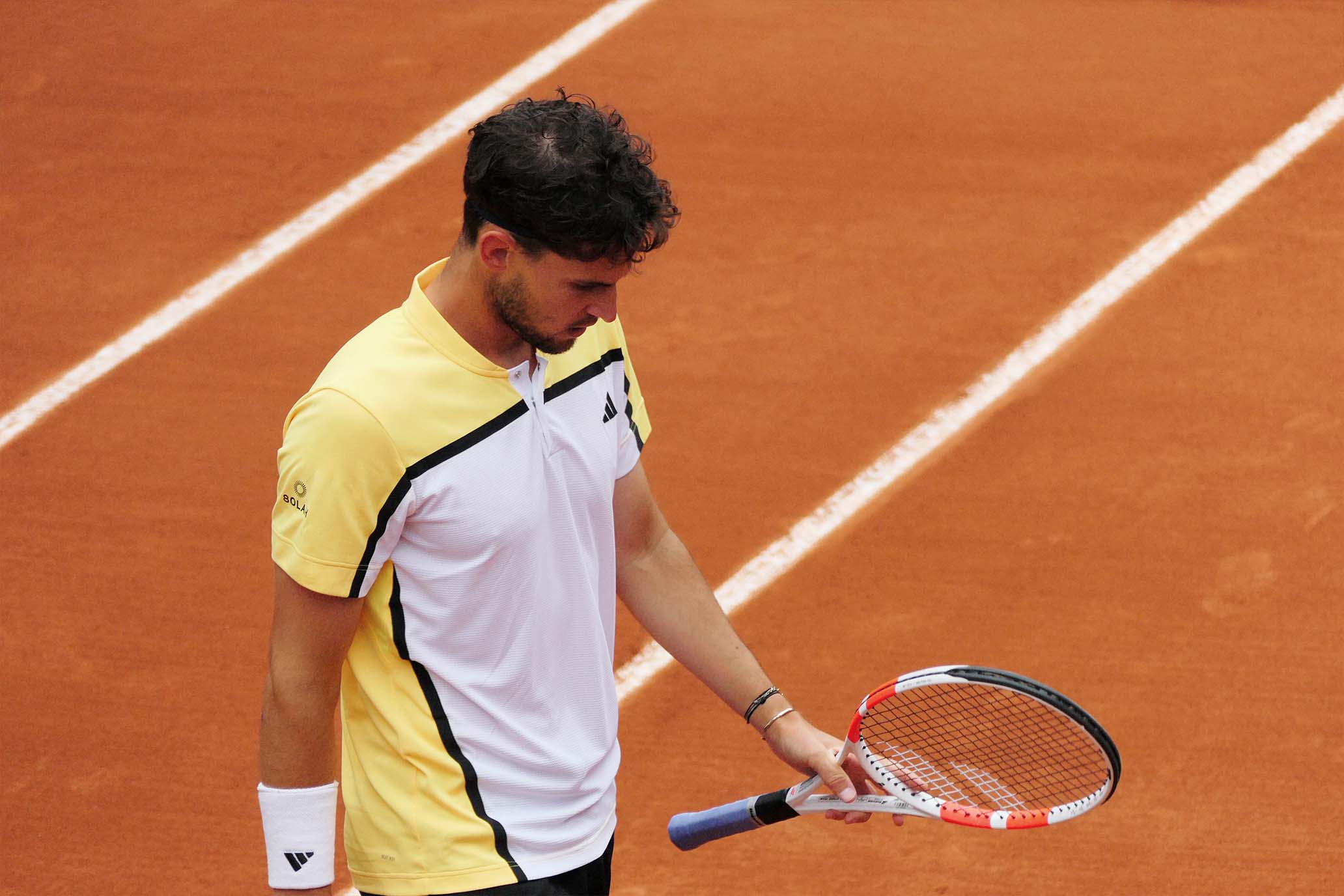
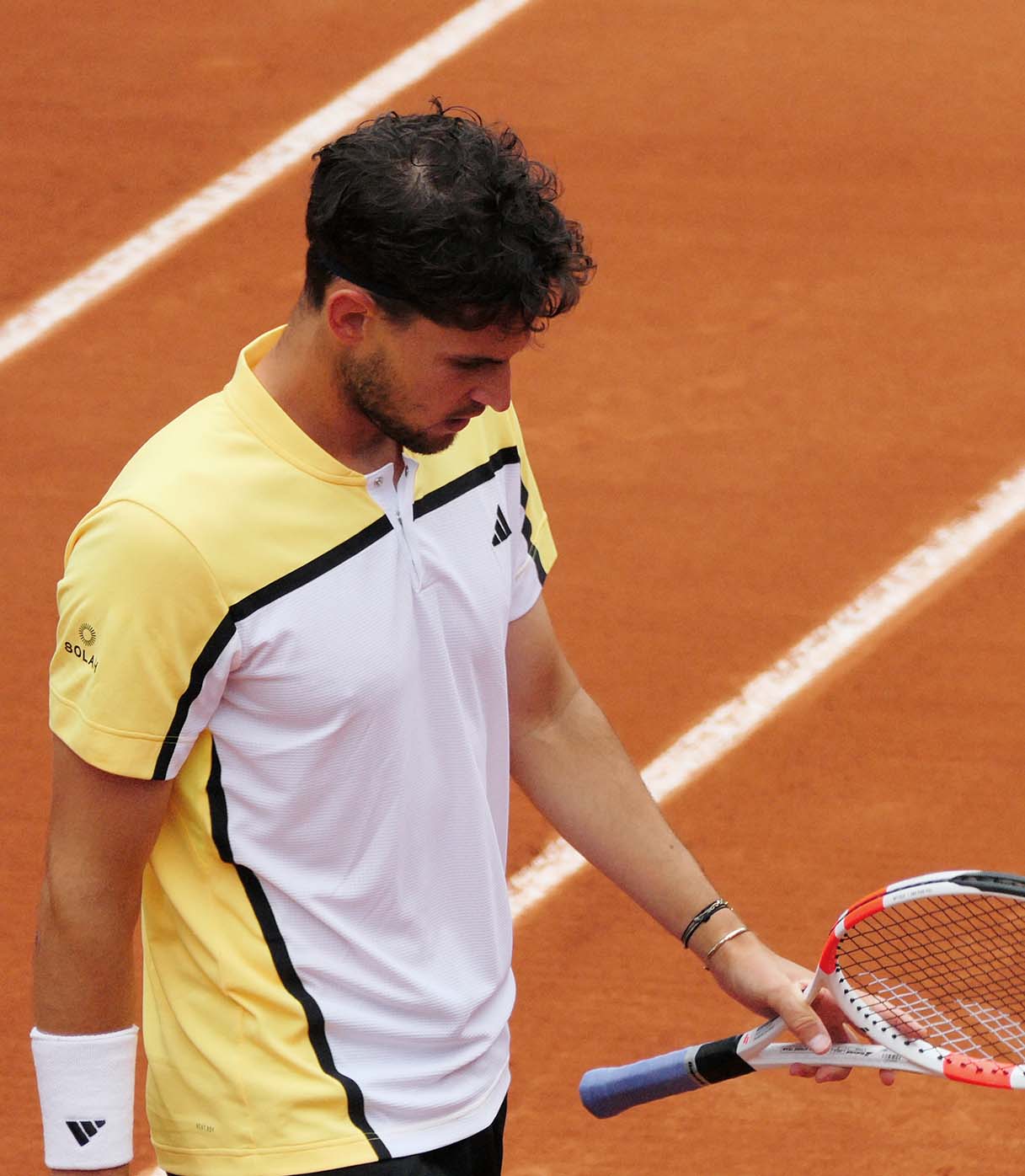
Dominic Thiem during qualifying in Paris. // Craig E. Shapiro
Dominic Thiem during qualifying in Paris. // Craig E. Shapiro
Dominic Thiem announced his retirement earlier this month, at the unusually tender age of 30, and he played his last-ever match at Roland-Garros this week. If you beamed this to a tennis fan five years into the past, or even three years, this would be disorienting news. Not long ago, Thiem was set to inherit the clay. It was a matter of time. He had the big spin, the foot speed, the court positioning, the taste for suffering. He hit every tennis ball with his eyes closed at point of contact, as if terrified of it, and outlandishly hard, as if to inflict his own terror on it. He played a rigorous schedule. He was a constant threat to the Big Three, a champion for the youth against their thirtysomething oppressors.
All Thiem had to do was wait out the king of clay. In the meantime, he was already making him sweat. In the 2016, 2017, 2018, and 2019 seasons, the era of the Thiem come-up, the industrious Austrian achieved annually what few players have achieved ever: a win on clay over Rafa Nadal. Thiem accounted for three of Rafa’s five losses on the surface between 2017 and 2019. (Nadal won his other 71 matches in that span, most of them handily, so that is no small feat.) Thiem had become, if not quite an equal or a nemesis, certainly the most challenging and consistent obstacle of the clay season, a worthy heir to that dirt empire.
Thiem never managed to beat Rafa on the most significant clay, at Roland-Garros, where they met four times: once in the second round, once in the semifinal, and twice in the final. Only in the last meeting, that 2019 final, did Thiem finally manage to snag a set off him. Through its first two sets that match looked like a classic, and then, suddenly, it wasn’t. The king delivered two straight breadsticks to put it away. Thiem’s disappearance was understandable: Rain delays had him playing tennis on four consecutive days, and he’d worked hard to dispatch Novak Djokovic in a five-set, two-day odyssey. But someday he’d get Nadal, right? Next time he’d show up with fresher legs. Eventually time would bend the matchup in Thiem’s favor. He was then only in his mid-20s, industriously refining his game season over season.
In truth, that was the closest Dominic Thiem would ever get to the title at Roland-Garros, a trophy I thought he’d win a handful of times. The next season, in 2020, Thiem showed up at the pandemic-edition US Open—which was also the Djokovic “disqualification for beaning a linesperson”-edition US Open—and in an empty stadium, after a gruesomely nervy five-set final against Sascha Zverev, he claimed his first major title. After that, they played a cold, wet Roland-Garros in October, and Thiem made it to the quarterfinal. He would never win another match in the main draw there again, because his best tennis was about to abandon him.
A wrist injury cut short his 2021 season and, in effect, his career. The imposing power never returned to his game. His forehand technique changed to compensate, he split with his longtime coach, and he spent years pushing for a comeback. Over time, the quotes morphed from hopeful to ominous. Here and there he drew perilously close to a statement win—most recently last October in Vienna, nearly besting Stefanos Tsitsipas—but the breakthrough never came. He got as high as No. 72 in the world, but no higher. He wasn’t going to wait forever for a feeling that wasn’t coming back. In early May, Thiem announced that 2024 was his final season on tour, meaning that this would be his last visit to Roland-Garros.
You would think a two-time finalist, and the only person besides Djokovic to record four clay wins over Rafael Nadal, would receive a wild card at his favorite Slam on his own farewell tour. You’d be wrong! There is no real honor in the wild-card system, which largely just rewards players for being born in the countries that host major tournaments, but that system does also allow those tournaments to extend grace to aging or departing greats. Thiem got stiffed. He was sent straight into the qualifying tournament, like any other 30-year-old journeyman, and he won his first match. On Wednesday, Court Suzanne Lenglen was as packed with fans as it will ever be for a second-round qualifying match. Thiem lost in straight sets to Otto Virtanen and got chants of “Merci, Domi!” from the crowd, then gave a speech. The tournament didn’t give him a wild card, but it did give him a commemorative trophy. (His friend and fellow former top-tenner now headed for retirement, my personal favorite, Diego Schwartzman, also ended his Roland-Garros career that day.)
Thiem didn’t begrudge the tournament for withholding the wild card. “Honestly I had a long time to be in a good ranking. I had enough tournaments and enough time to climb up the ranking and I didn’t do it, so I kind of didn’t deserve it and that’s fine,” he said. It would have been fascinating to watch Dominic Thiem grow old in tennis. It took him a few seasons to figure out how to best wield his considerable weapons. I foresaw a Stan Wawrinka-style arc to his career, with the best results awaiting in his early 30s, when his tactical and physical maturity fell into alignment. Perhaps the existence of, say, Carlos Alcaraz would have complicated that story. We’ll never know. It seems early for him to go, but his body did not cooperate, and Thiem, once notorious for his rigorous touring schedule, self-reports a different age from the one on paper. “I had a very intense career,” he said. “I don’t really feel like I’m only 30 or 31, I feel quite a bit older, to be honest.”
The Hopper
—Rafa will face Alexander Zverev in the first round of the French Open. Oof.
—For some, the French Open is a last chance to qualify for the Olympics.
—Jessica Pegula has pulled out of the French Open.
—Your GEMS update: Elina Svitolina is on a mission & Gael Monfils still has it.
—Sports Illustrated misses an issue.
—Naomi Osaka has a new set of priorities.
—Andy Murray has changed racquets.
—Andre is replacing Johnny Mac as a Laver Cup captain.
—“Nasty”, a documentary about Ilie Nastase, premiered at Cannes this week.
SIGN UP — YOU'RE ONLY AS GOOD AS YOUR SECOND SERVE.
You’ve Got to Be Djoking
You’ve Got to Be Djoking
You’ve Got to Be Djoking
Novak Djokovic is in the wilderness, but it’s foolhardy to count him out at a major.
Novak Djokovic is in the wilderness, but it’s foolhardy to count him out at a major.
By Giri Nathan
May 17, 2024
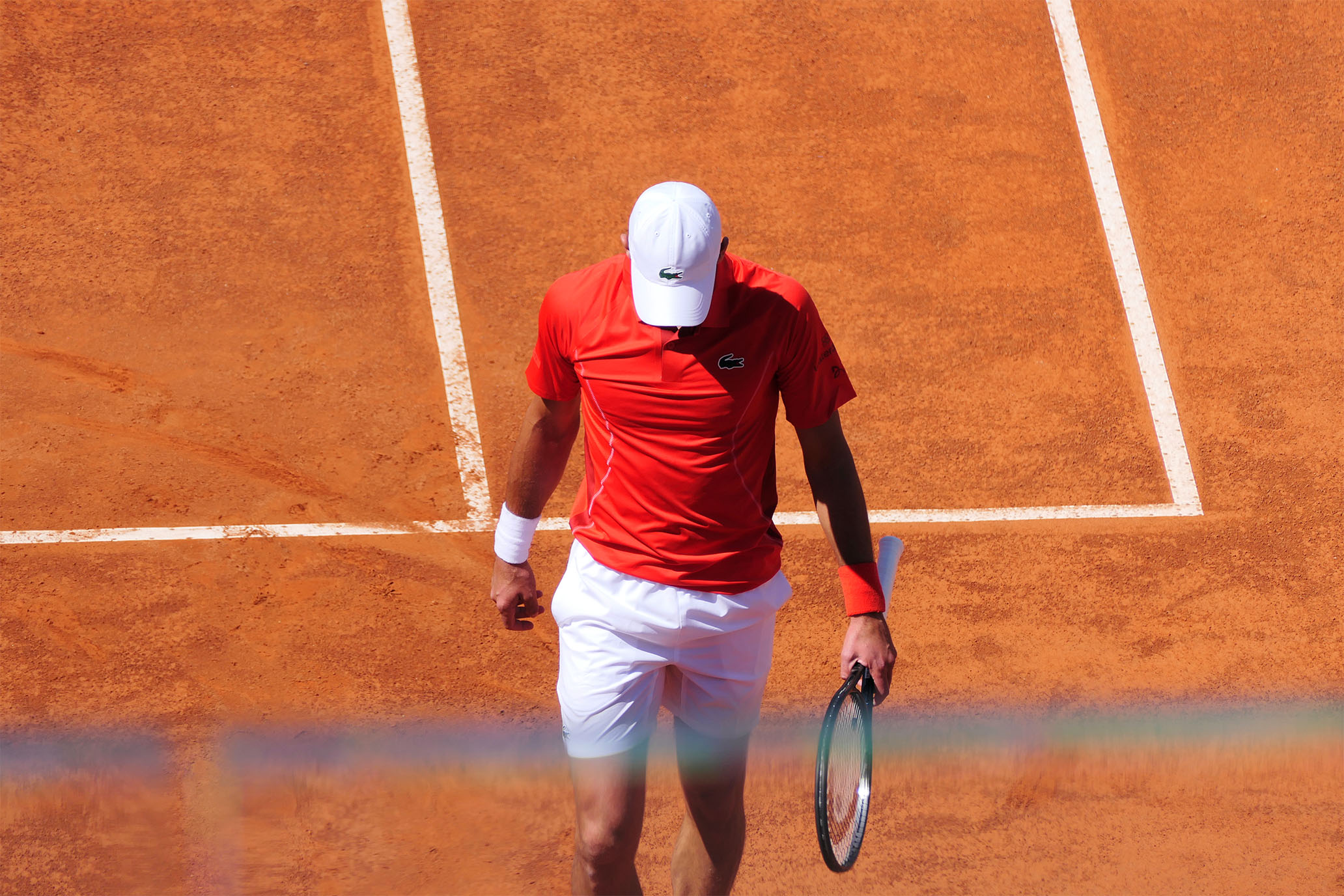
A Roman Holiday for Novak // Craig Shapiro
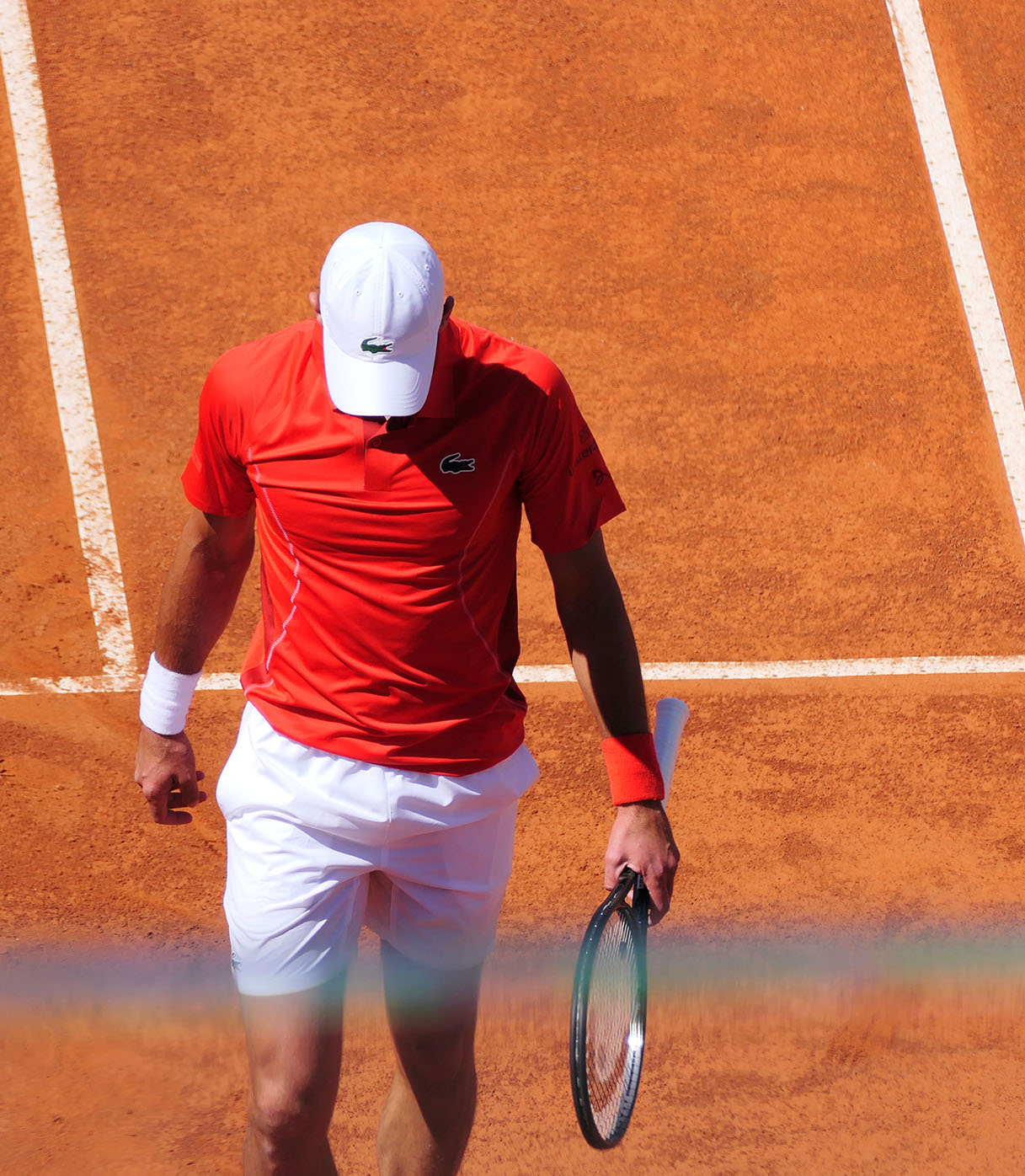
A Roman Holiday for Novak // Craig Shapiro
Tennis fans love to conduct vibes-based prophecies. Maybe it has something to do with the nature of individual sport. It’s just one human being out there on the court, not a huge team where any one player’s emotional ups and downs are lost in the multivariate noise. It actually matters if one guy is having an awful time out there. And fans often think that any given slump could mark permanent decline. It has been hard to extricate myself from the speculative and short-memoried behavior of the casual fan—because it’s sort of fun—but I think I’ve managed it. So every time this year when I hear about the supposed end of Novak Djokovic, I’m left wondering if we’re talking about the same guy.
This player who supposedly has nothing left in the tank—is this by chance the same person who won three majors last year and came within a set of the fourth one, barely losing to a man 16 years his junior, who is the most significant talent to hit the tour since Novak Djokovic himself? Is this allegedly washed-up retiree the same dude who went on a 19-match winning streak last fall? Given his recent body of work, it seemed absurd to get hung up on any particular dry spell. Sure, he looked a little dodgy at the Australian Open this year; he still made it to the semifinals and had his run ended by the most in-form player in the world, Jannik Sinner, who was then on his own 19-match winning streak. Calling that a decline felt shortsighted.
That wasn’t the end of Djokovic’s 2024 woes, though. I went to Indian Wells and watched him lose his third-round match to a 20-year-old Luca Nardi. Djokovic’s ball had no bite or depth to it. He started an uncharacteristically dumb argument and relitigated it with the poor kid during the handshake. It was not the stuff of champions. But Nardi, ranked outside the top 100, wasn’t a total cipher; he was a touted Italian prospect whose fabulous feel was tangible throughout the match. Why couldn’t he pull off an upset without everyone catastrophizing about the state of Novak Djokovic? I’ve seen this dude lose to Taro Daniel on this court and go on to beat Rafa Nadal in a Wimbledon fifth set a few months later. So this did not, for me, count as definitive evidence that he’d taken his foot off the gas pedal.
But then the playing schedule began to thin out, too. Djokovic pulled out of the Miami Open. “At this stage of my career, I’m balancing my private and professional schedule,” he wrote, and he was seen in Miami during that same time frame, hanging out on the beach with friends. And ahead of the clay season, he split with his coaching staff. Out went Goran Ivanisevic, his coach for five years and 12 major titles; so ended one of the most productive player-coach partnerships in the sport’s history. The atmosphere in the player’s box for the past few months could have been characterized as “firing squad,” so this wasn’t such a surprise. Returning in Monte Carlo, he played his way to the semifinal and lost to Casper Ruud, a fine clay-courter who had nevertheless not even managed to take a set off Djoker in their previous five meetings. An overall good tournament result, but more fodder for a persistent skeptic’s case.
He skipped Madrid and returned for Rome, where nothing quite stabilized. After nixing the always enthralling Corentin Moutet in a straight-setter, Djokovic signed some autographs for fans. Then came unexpected trouble. A video circulated: A heavy water bottle fell down from the stands and struck Djokovic hard on the head, sending him to all fours, and he was slow to rise back up to his feet. A fan base that has historically had a somewhat gauzy relationship with reality began to speculate about the accident: Was this an ordered hit on Djokovic? Is this part of the ongoing Western media conspiracy against this overlooked hero? But in time another camera angle emerged, revealing the innocuous cause. A fan had leaned over the railing to get an autograph, and a bottle slipped out of a backpack sleeve, taking an unfortunate direct path to Novak’s noggin. Painful, but no ill intent. Djokovic showed up the next day for practice wearing a bike helmet as a joke, clearly in high spirits.
His next opponent in Rome was Alejandro Tabilo, a 26-year-old Chilean who’s enjoyed a dramatic surge in fortunes over the past few months. Tabilo tore up the Challenger circuit, won a shocker of an ATP title in Auckland, and shot up to No. 32 in the world, just in time to be seeded for Rome. Still, ultimately, he was an inexperienced player who hadn’t consistently managed to dent previous opponents ranked in the top 50. And yet on Sunday, Tabilo took on the world No. 1 and ended him in 68 minutes, assembling a personal forehand highlight reel. Rome has been an auspicious tournament over Djokovic’s career—he’s won it six times and had never lost earlier than the quarterfinal round—but at no point did he realistically threaten to win this match. He lost 6–2, 6–3, closing things out with his fifth double fault of the day. Afterward, he praised Tabilo’s play and, when asked about the water-bottle incident, said he didn’t feel right on court. “Today, under high stress, it was quite bad. Not in terms of pain, but in terms of complete dis-balance, no coordination, completely different player from what I was two nights ago,” he said. “I have to do medical checkups and see what’s going on.”
That can’t help, but it was already an odd season. Djokovic has not arrived in May without a title since 2018, when he was emerging from his last real slump, due to an elbow injury and eventual surgery. He has not yet found a full-time coach, though in Rome he was working with countryman and former doubles No. 1 Nenad Zimonjic. At this stage of his career, he’s only in the hunt for big trophies. He has said that he is hoping to “peak” during the Olympics, which makes sense, since a gold medal is the only meaningful hardware missing from his treasure hoard. But he has yet to build any momentum and looks quite distant from any peak. The skeptics have surely made their point. I still have one last criterion: I’ll believe in a decline when I see it in a best-of-five format. We’ll see how he fares in Paris.
The Hopper
—Speaking of Novak, Head is releasing a Djokovic signature frame.
—More and more men are returning serve from the Boondocks, via The Guardian.
—For the first time, the US Open men’s final will be broadcast on ABC.
—The WTA has released its calendar for 2025.
—There is a new documentary about Roger Federer’s retirement.
—An eagle-eyed preview of the WNBA season.
SIGN UP — YOU'RE ONLY AS GOOD AS YOUR SECOND SERVE.
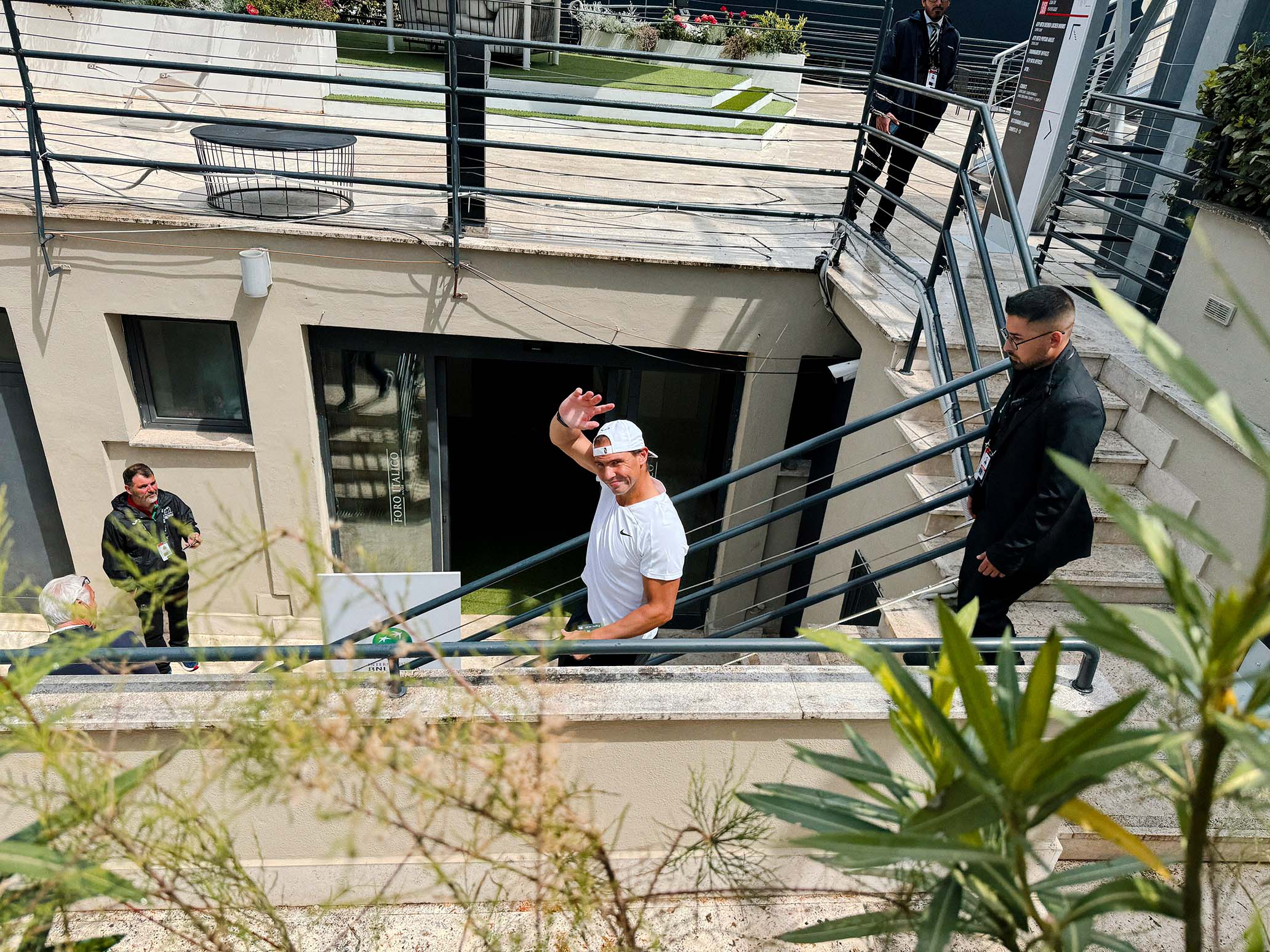
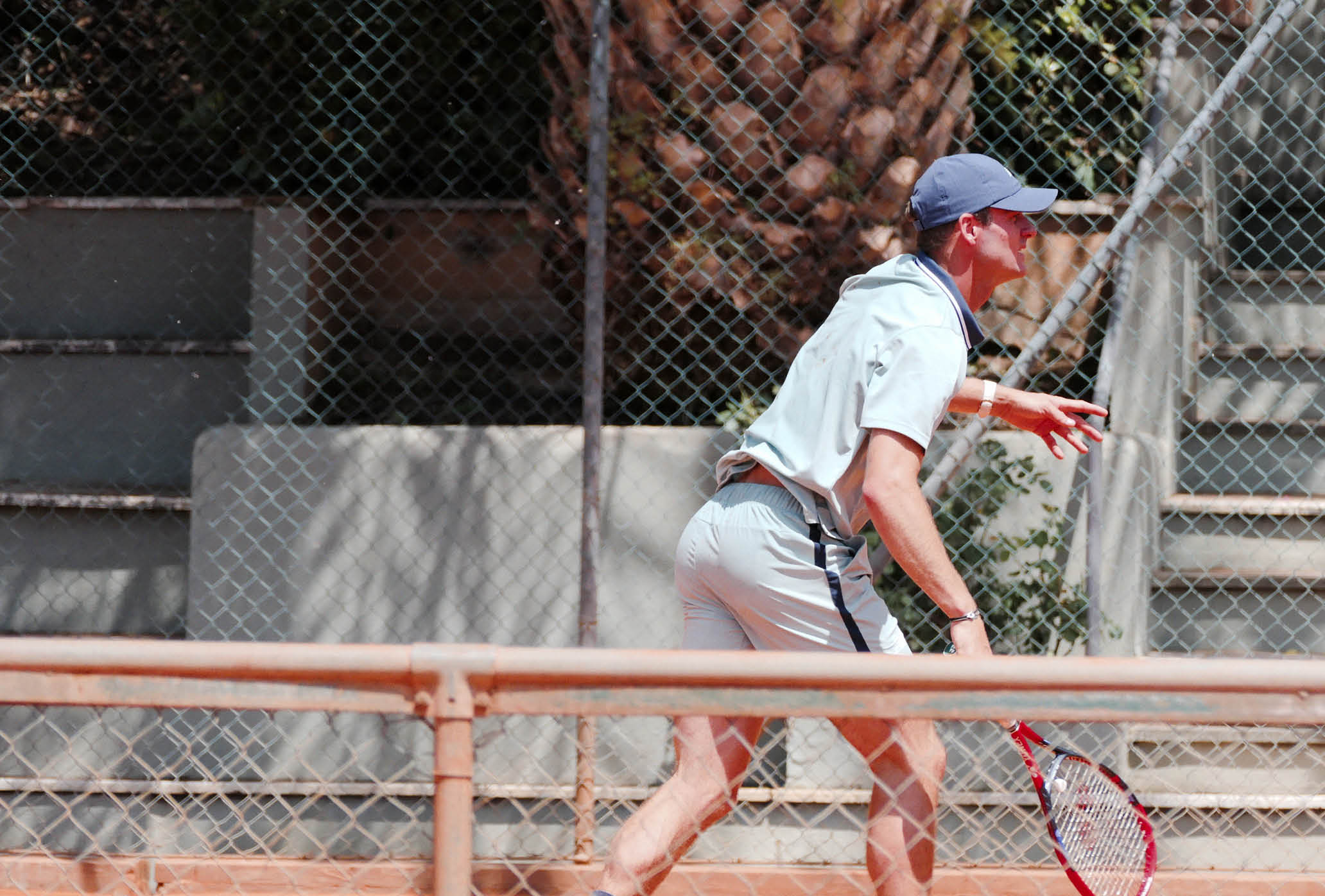
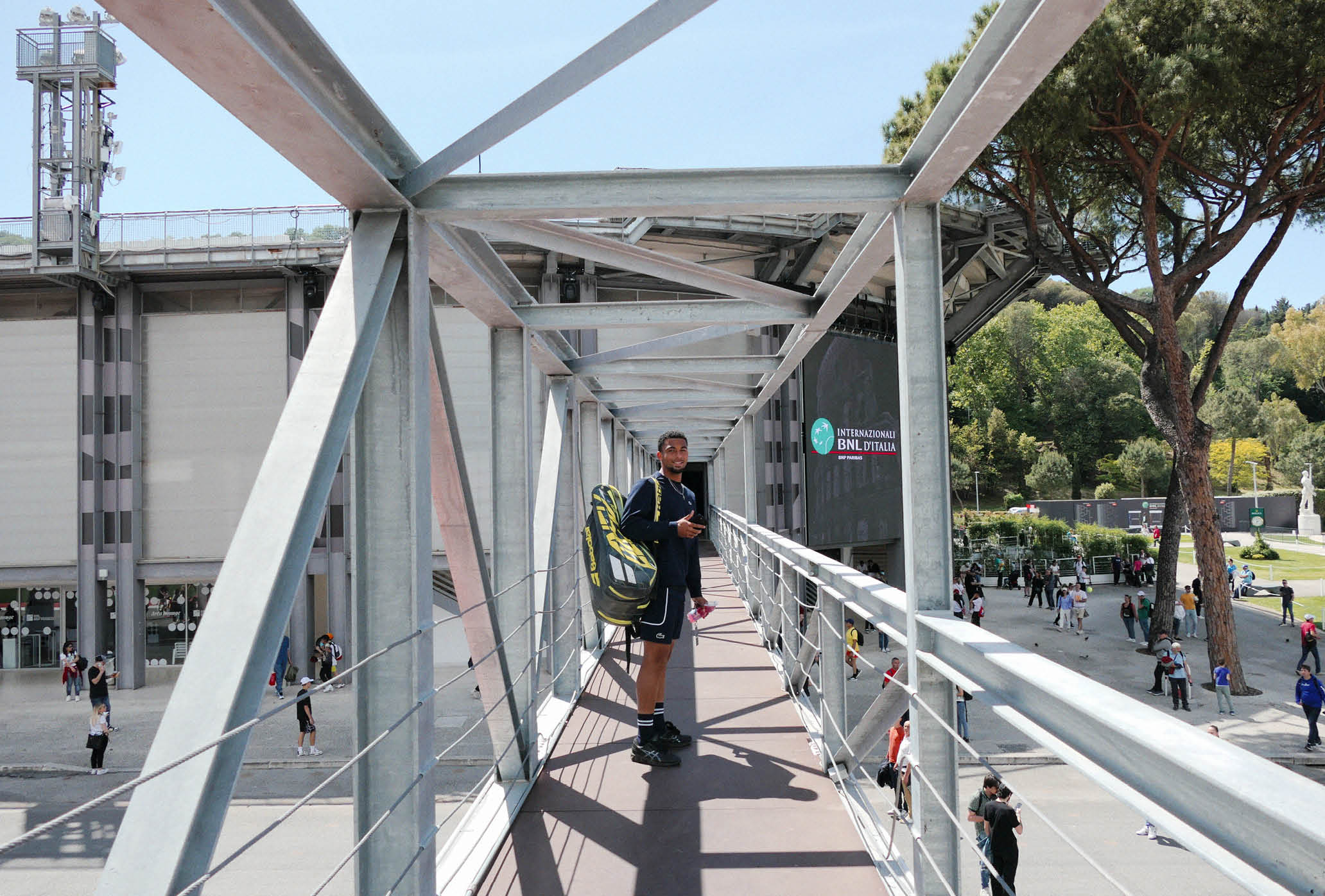
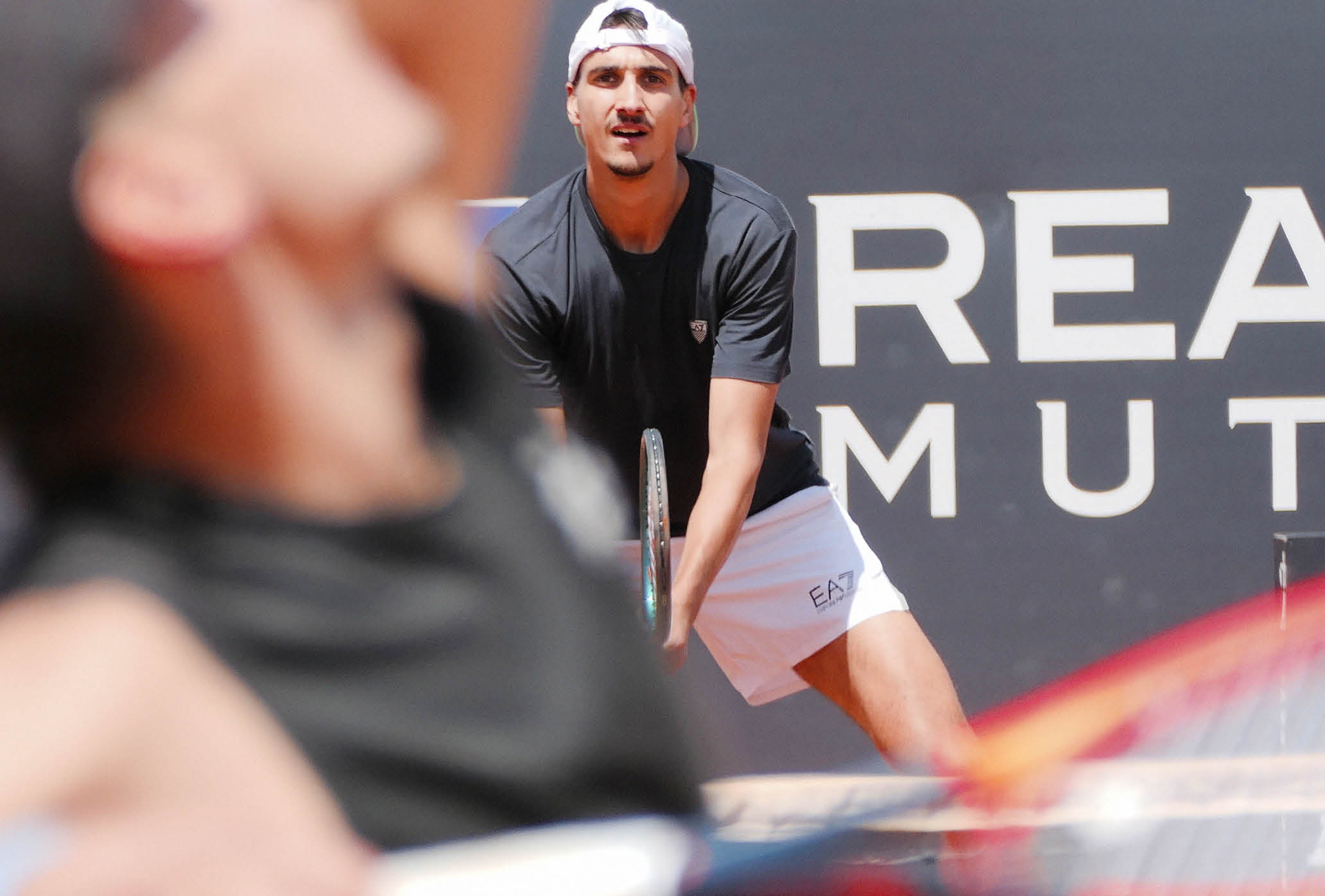
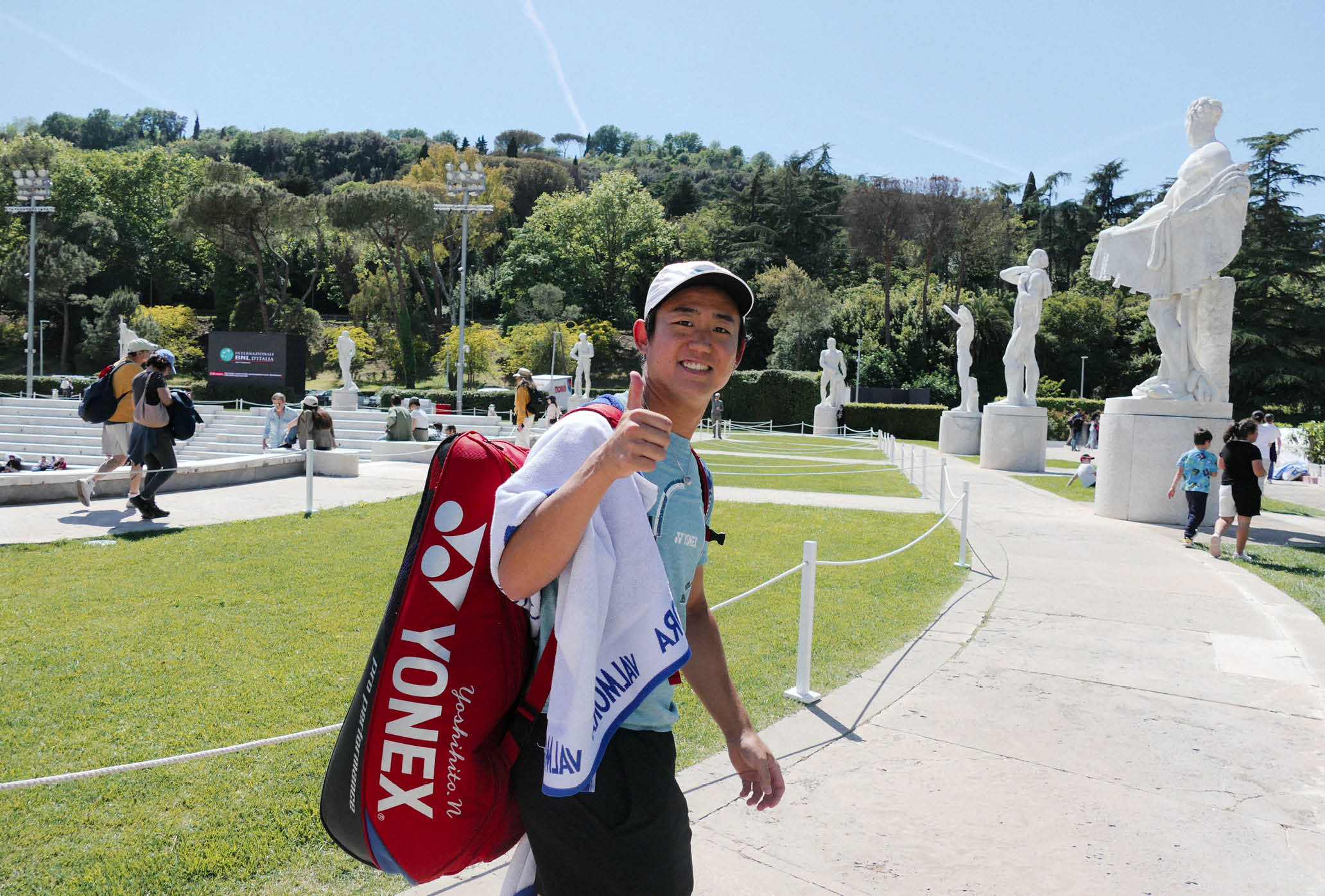
Postcard from Roma
Postcard from Roma
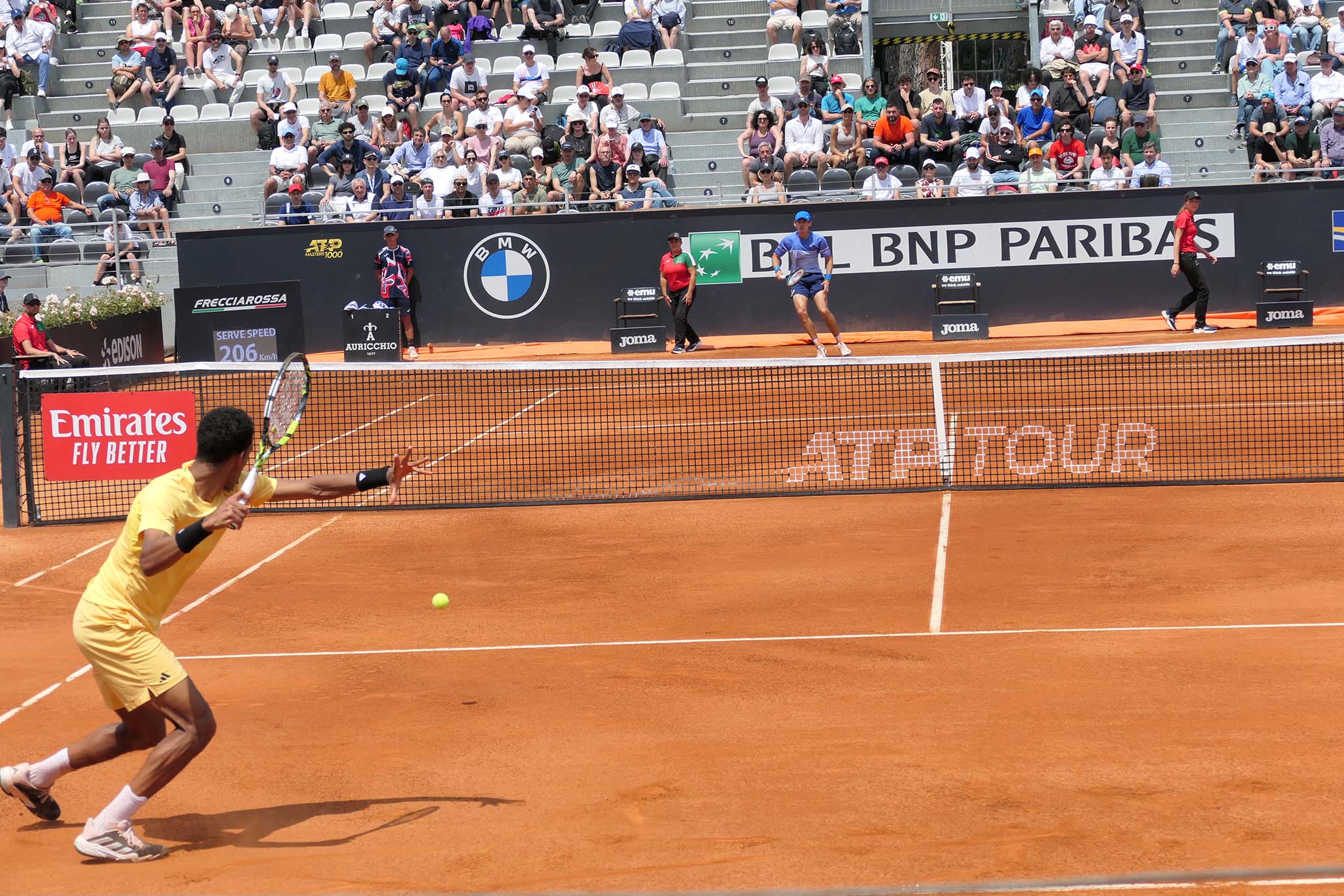
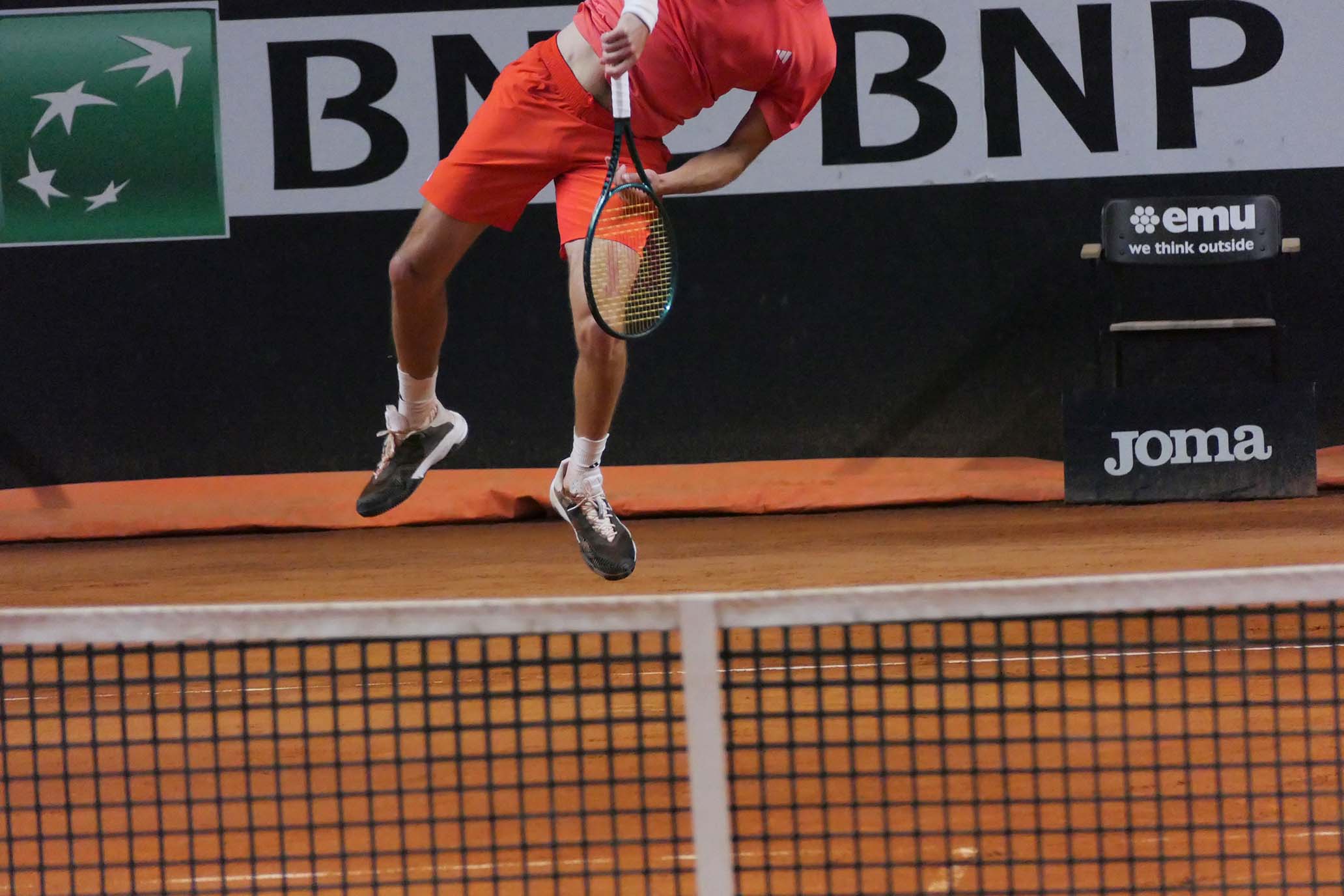
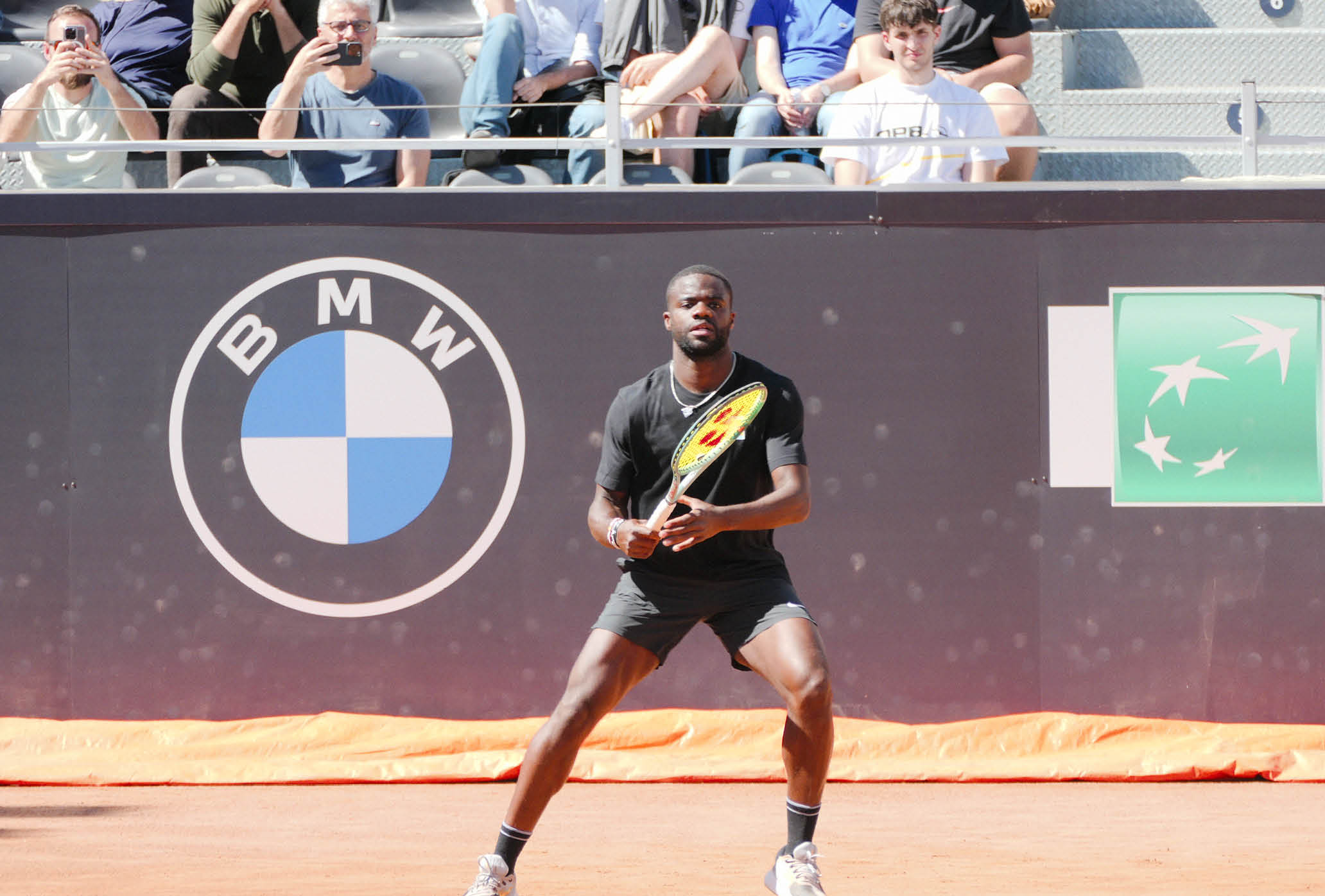
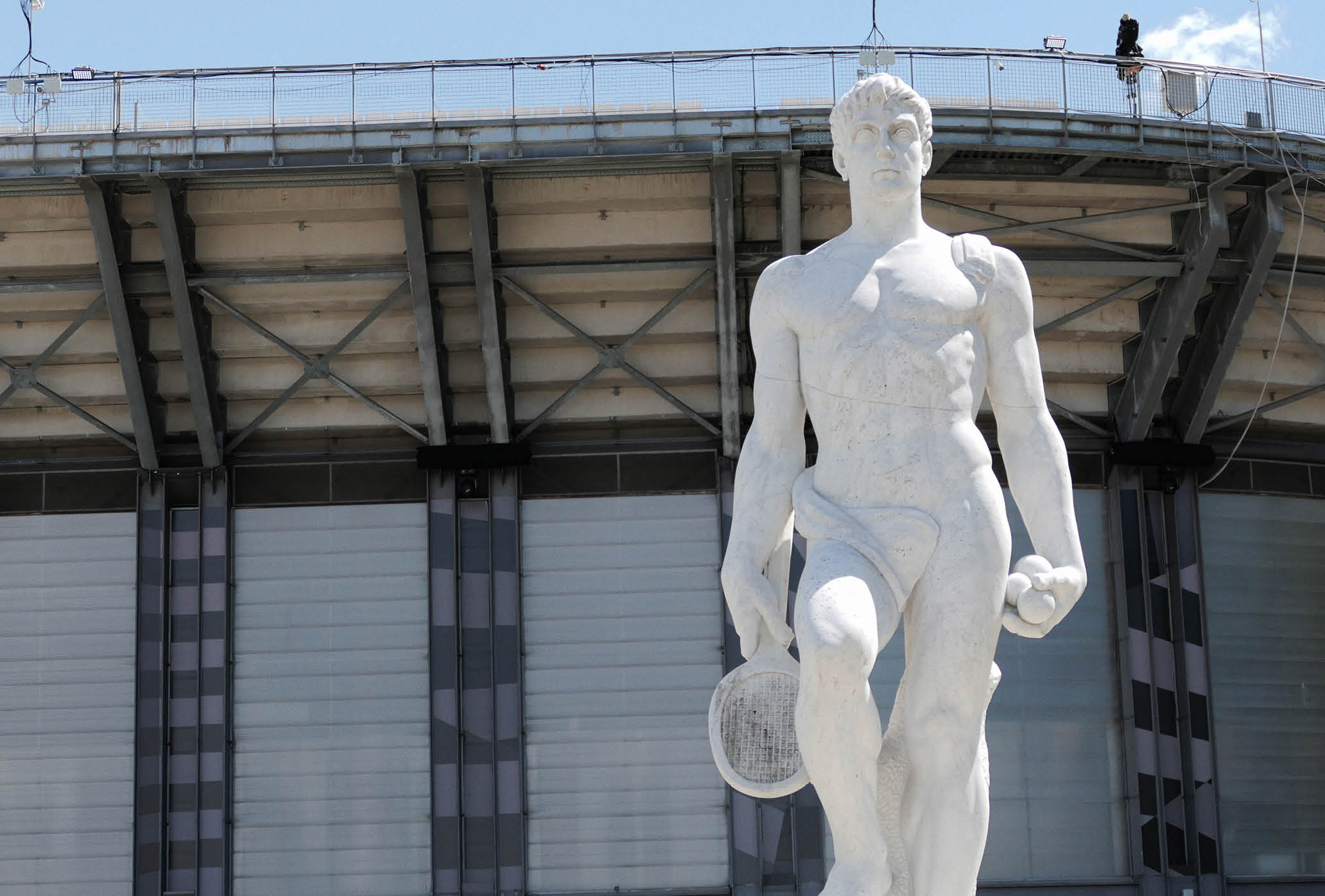
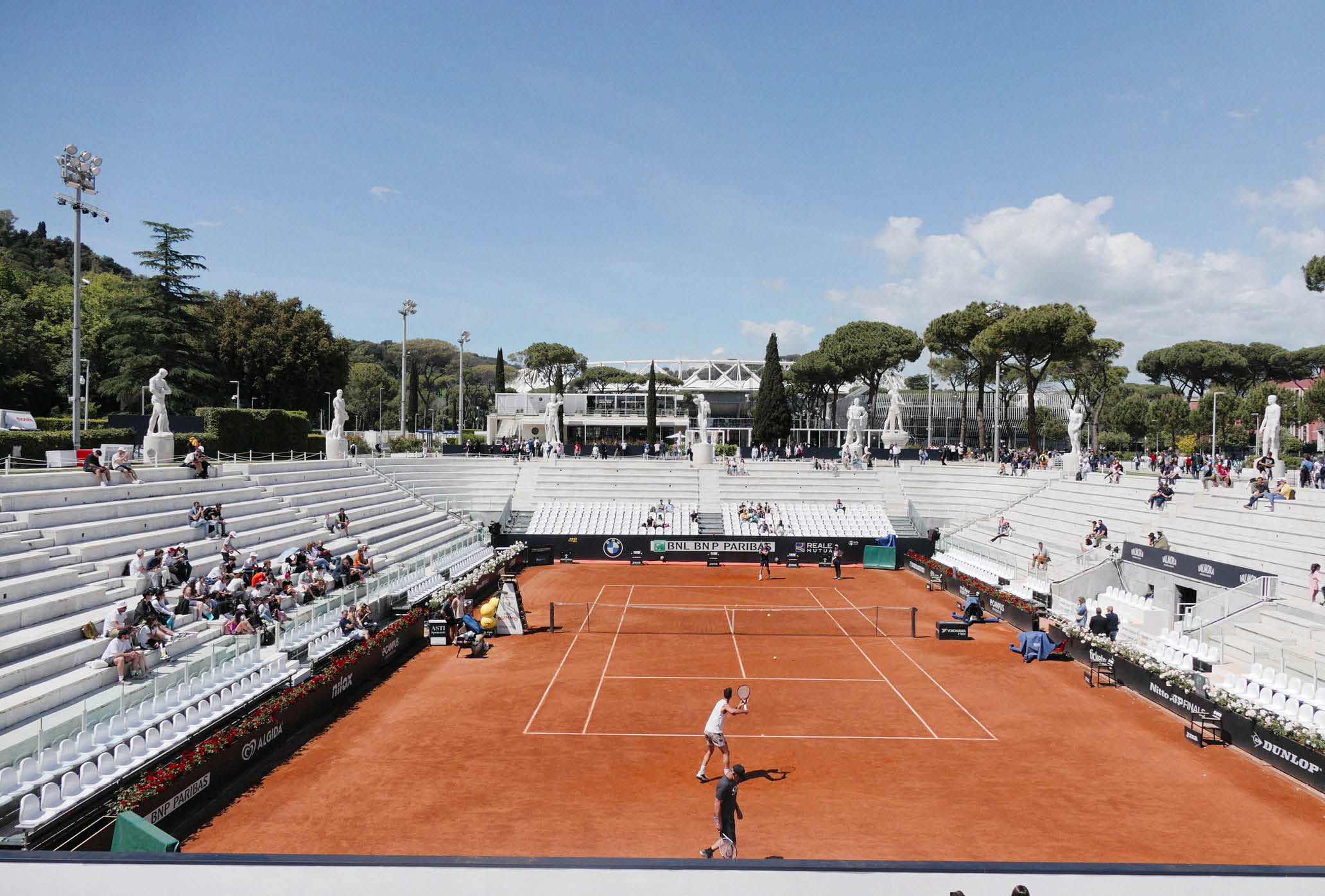
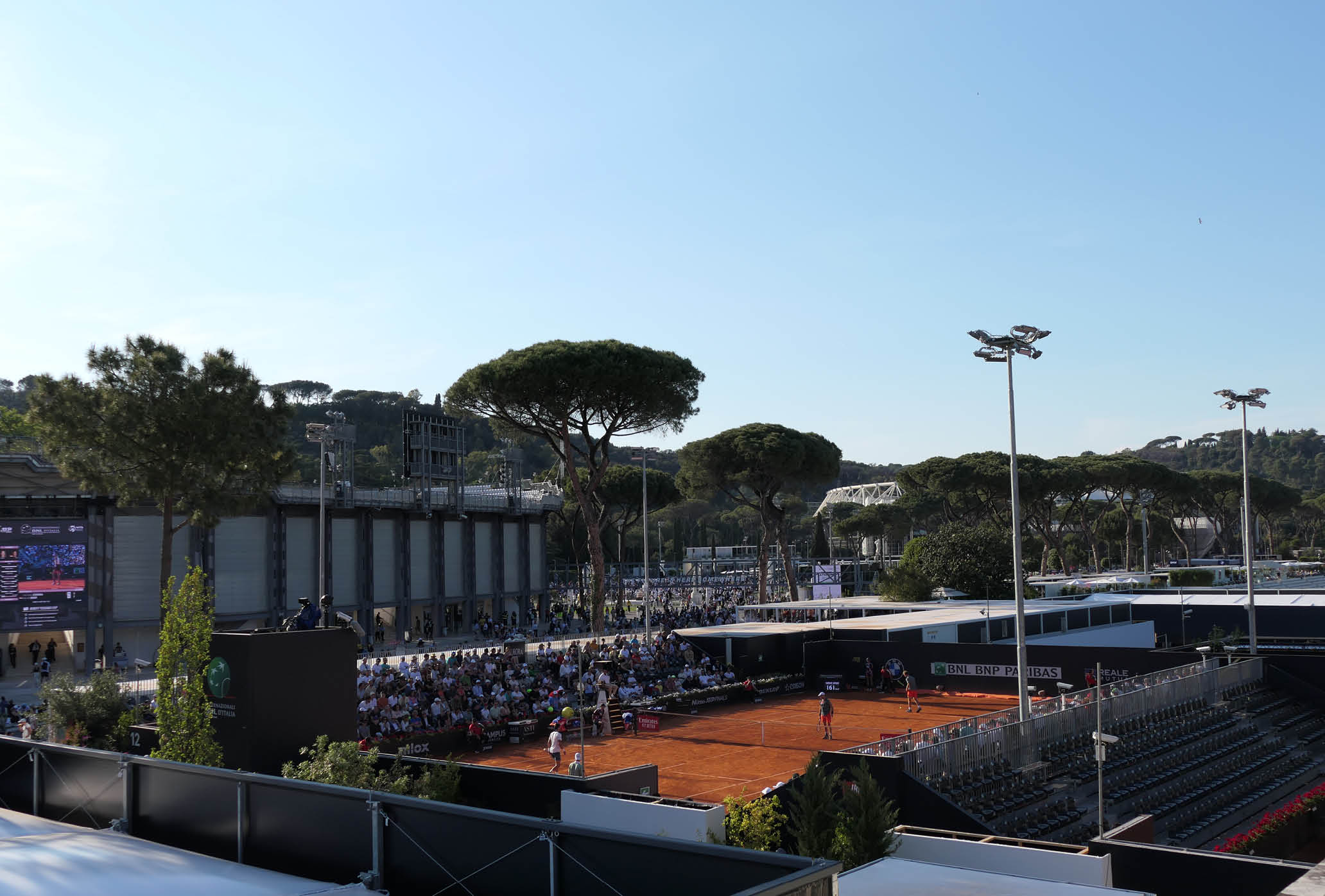
The 5th Slam aka Craig Shapiro takes TSS into the Foro Italico and the Italian Open.
The 5th Slam aka Craig Shapiro takes TSS into the Foro Italico and the Italian Open.
Photography by Craig Shapiro
May 15, 2024
YOUR WEEK IN TENNIS — SIGN UP FOR THE SECOND SERVE NEWSLETTER
Iga Restores Order
Iga Restores Order
Iga Restores Order
The WTA has a Big Three, but on clay there is still only one.
The WTA has a Big Three, but on clay there is still only one.
By Giri Nathan
May 10, 2024
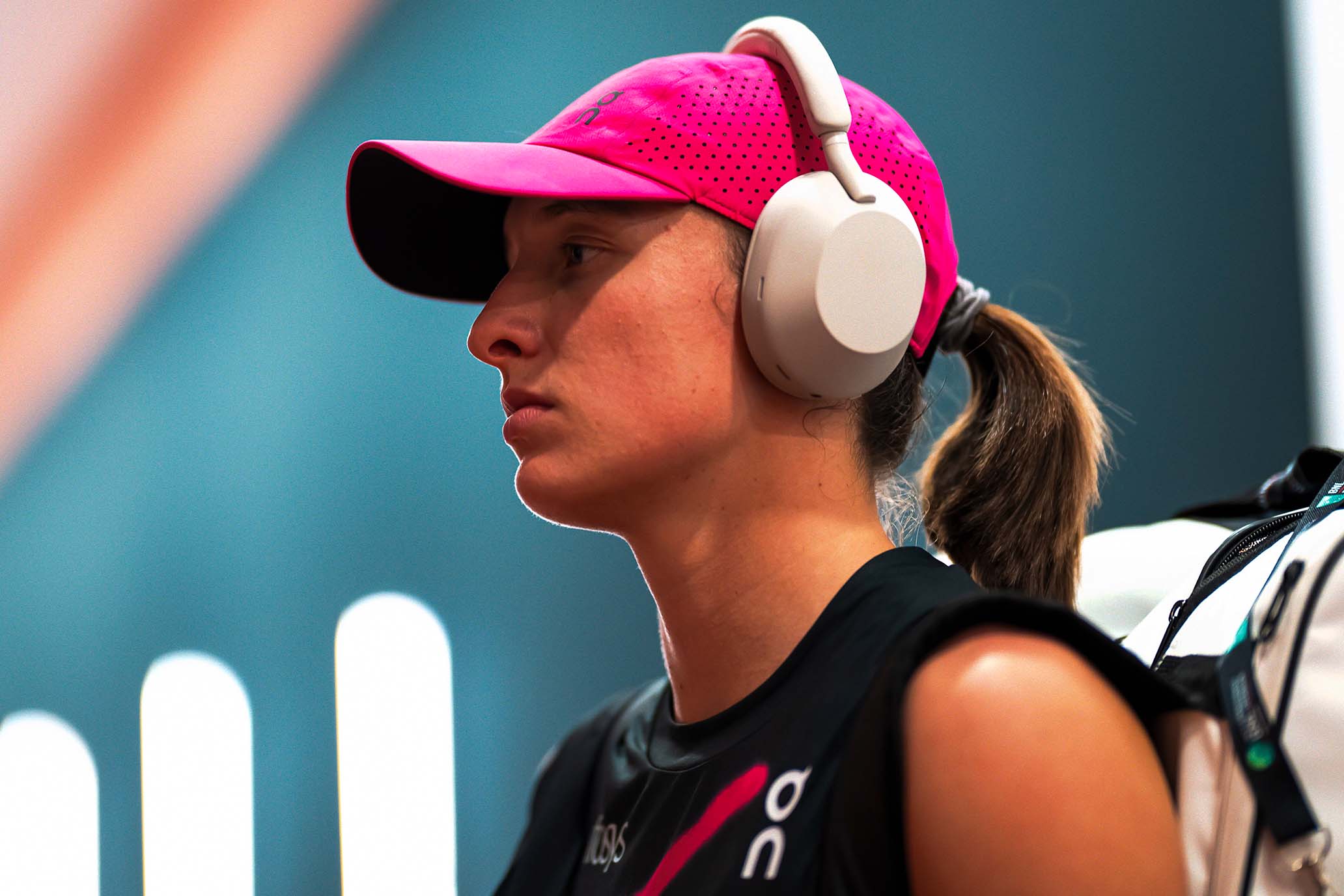
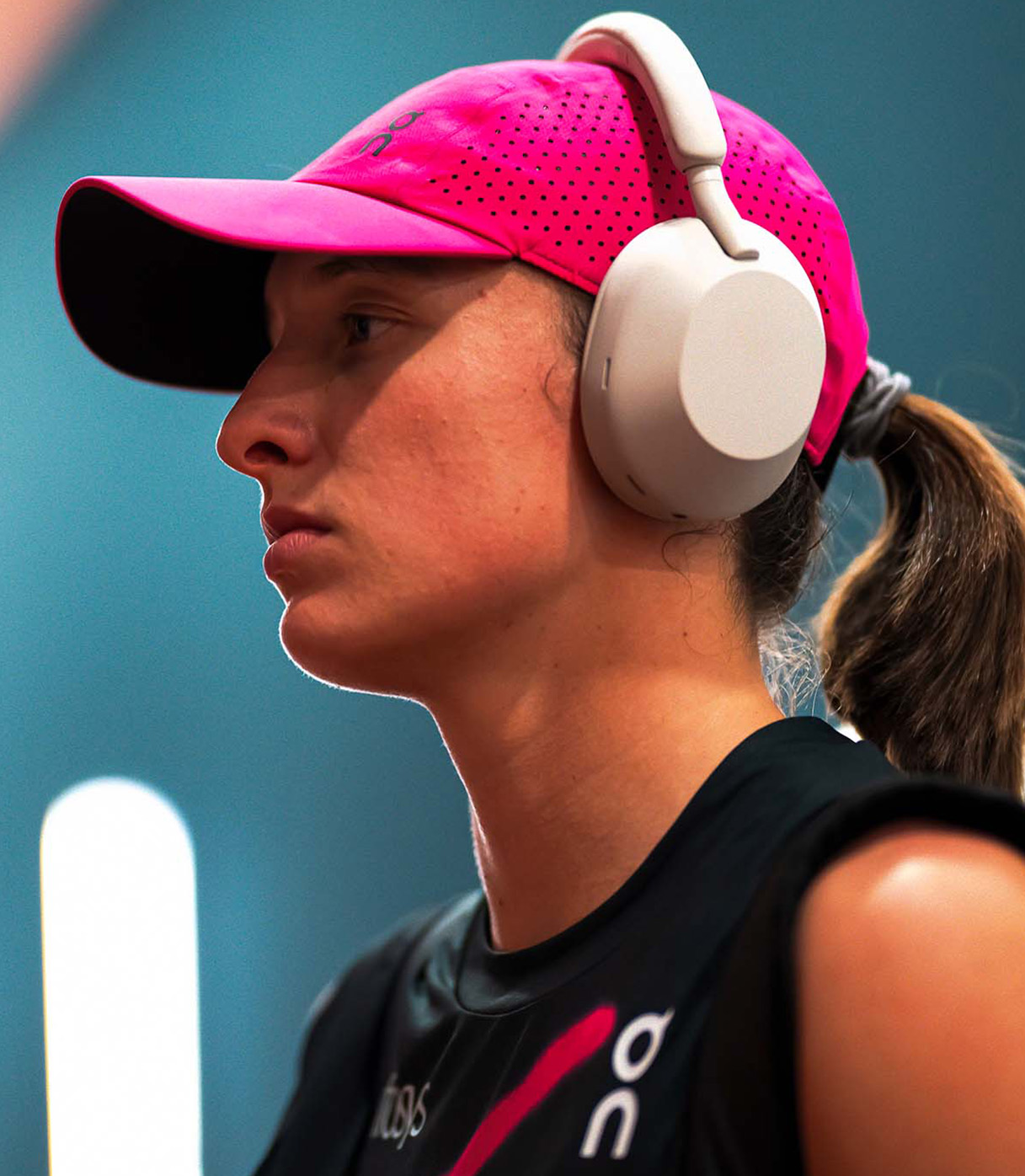
Iga in Rome. // Getty
Iga in Rome. // Getty
Some tennis heads seemed reluctant to acknowledge the emergence of a Big Three on the WTA. Perhaps they were afraid of setting themselves up for disappointment. Sports stories don’t often play out as telegenically as fans might hope. For example, it wasn’t so long ago that I foresaw a thrilling era of rivalry between Ash Barty, Naomi Osaka, and Bianca Andreescu; they are now retired, reemerging, and perma-injured, respectively. Not a whole lot of rivalry there. But there’s no longer any denying the sparks between Iga Swiatek, Elena Rybakina, and Aryna Sabalenka, who sit at first, second, and third in the singles race this season. Each woman leads the head-to-head against precisely one other woman, and they are all getting consistent enough to ensure that they clash in high-stakes matches every few weeks. Last week’s action in Madrid included two such matches involving this talented trio, and I came away thinking, Big Three, yes—but on the dirt at least, it’s still the Big One, the unassailable Iga Swiatek.
It was Swiatek vs. Sabalenka in the Madrid final last weekend, for the second straight year, and if they had a standing appointment in this final every year, I’d have no complaints. In Madrid’s high-altitude conditions, balls fly faster through the air; big hitters and servebots seem to thrive here relative to other clay courts. It clearly works out for Sabalenka, as it’s the only clay tournament she’s ever won, and she’s done it twice (beating the then world No. 1 both times, too). In the 2023 final, she repelled Swiatek in three sets, a match she described last week as the best she’s ever played. It was a breakthrough in her career, proof that the leader she’d been chasing—the player whose own elite fitness had inspired Sabalenka to undergo an intense conditioning block—was actually beatable on her preferred surface. The margins were thin, with Sabalenka winning 88 points and Swiatek winning 85.
This year’s Madrid rematch was somehow even more brilliant. At three hours and 11 minutes, it was the longest WTA final of the season so far, and easily one of the highest-level matches of the past several years, full of rallies that drew out the finest characteristics of both players, Iga’s aggro-control and Aryna’s all-out ballistics. This time it was Swiatek’s turn to squeak out a victory, after surviving three Sabalenka match points. Here again the margin was thin: The winner took 121 points to the loser’s 116. For Swiatek, this win restored a familiar hierarchy: a second consecutive win over Sabalenka, giving her a 7–3 lead in a matchup that looked, this time last year, like it might just be leveling out. And as for the runner-up, an imminent birthday only deepened the pain of loss: “I’m going to be in a bad mood. I am 26 tomorrow. It sucks.”
After the match, Swiatek said she cut through the stress by remembering her idol Rafa Nadal’s comeback in his 2022 Australian Open final. She is busy building up a clay résumé that would make Rafa proud. By winning Madrid, Swiatek assembled a complete collector’s set of the big titles on clay. This week in Rome she has continued that form, advancing to the third round; she’s now 15–2 at the tournament. At Roland-Garros, her career tally there is an even more imposing 28–2. As lively as these potential new rivalries are, don’t get it twisted: Clay season is Iga season, an ideal showcase for her topspin and staggering court coverage. She’s healthy, she’s tearing apart all early-round foes, and she has now reasserted herself in a key matchup against one of the few players who can trip her up. I’m open to potential intrigue, but fully expecting title No. 4 in Paris.
The Hopper
—Speaking of Stan Smith, don’t miss Craig Shapiro’s interview with him on the Craig Shapiro Tennis Podcast (or, for that matter, his latest episode, featuring Grigor Dimitrov.)
—And it’s the moment you’ve all been waiting for: Giri takes on Challengers.
—Jack Draper contemplates life without tennis (and he’s not into it.)
—Camila Giorgi appears to have retired.
—And Dominic Thiem is likely next.
—Billie Jean King (finally) gets a Wheaties box.
ICYMI from TSS:
SIGN UP — YOU'RE ONLY AS GOOD AS YOUR SECOND SERVE.
Steps Through Time with Stan Smith
Steps Through Time
with Stan Smith
Steps Through Time With Stan Smith
Some people think he's a shoe.
Some people think he's a shoe.
JOEL DRUCKER
May 10, 2024
Some people think he's a shoe.
Steps Through Time With Stan Smith
Some people think he's a shoe.
Some people think he's a shoe.
JOEL DRUCKER
May 10, 2024
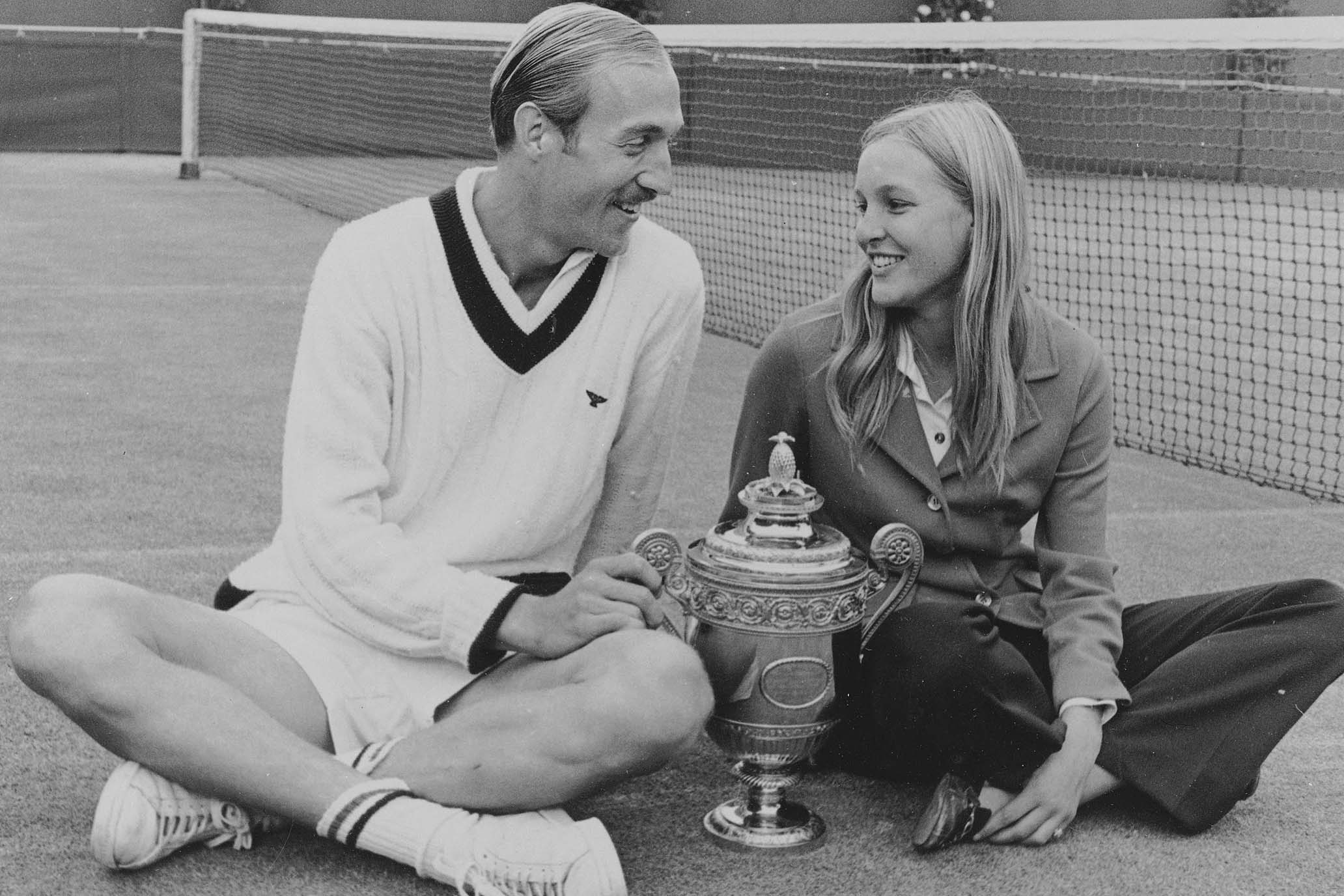
Wimbledon, 1972: "Stan Smith of Pasadena sits with his friend Margie Gengler of Long Island, N.Y, with the winner's cup between them.…" // AP Images
Wimbledon, 1972: "Stan Smith of Pasadena sits with his friend Margie Gengler of Long Island, N.Y, with the winner's cup between them.…" // AP Images
The Nuart, venue for the Los Angeles premiere of director Danny Lee’s documentary Who Is Stan Smith?, is a 95-year-old movie theater that has long hosted independent art films. Located in West Los Angeles, three miles southwest of the UCLA campus, the Nuart is renowned for its midnight showings of the 1975 cult film The Rocky Horror Picture Show, a campy musical whose many songs include “Let’s Do the Time Warp Again.” Fitting indeed that watching this majestic, intimate, and compelling film about a tennis legend put me through a time warp all my own.
It had been more than 40 years since I’d entered the Nuart. But back in my ’70s adolescence, when I’d typically attend a movie a week, I went to the Nuart frequently. For the Nuart was within walking distance of where I lived. It was also right near Stoner Park, the spot where, in 1971, at the age of 11, I’d first hit a tennis ball and eventually play many tournament and high school matches.
My start in tennis happened to take place during Smith’s peak years, roughly from 1971 to ’73. This was when he won the US Open and Wimbledon, led the U.S. Davis Cup team to victory, became No. 1 in the world, helped start the ATP, and soon enough took a political stand. In 1973, as part of their struggle for freedom, Smith joined forces with his ATP brethren to boycott Wimbledon, in the process declining to defend his title.
The film deftly covers all of these occurrences, a nicely paced mix of action, memories, photos, news clips, and thoughts from such experts as John McEnroe, journalists Craig Shapiro and Cari Champion, and Tennis Channel CEO Ken Solomon. Others chiming in include Smith’s onetime Davis Cup captain and agent Donald Dell; doubles partner Bob Lutz; close friends Jeanne Ashe, Charlie Pasarell, and Mark Mathabane; and, of course, Smith’s children and wife of nearly 50 years, Margie. The Smiths’ enchanting marriage conjures up another Nuart-worthy movie, It’s a Wonderful Life. One can easily picture the young Margie whispering into her beloved’s ear, “Stan Smith, I’ll love you till the day I die.”
One pivotal moment for Smith came in 1972, when he and Dell took a midnight meeting with adidas CEO Horst Dassler at a Paris nightclub. Soon after, adidas launched the sneaker that bears Smith’s name and has made him an icon to millions who wouldn’t know a volley from a valley and may have even believed the name “Stan Smith” was conjured up in a Madison Avenue conference room. As Smith titled his 2018 coffee-table book, Some People Think I’m a Shoe.
For someone like myself, who dove into the sport during those boom years of the ’70s, the success of a shoe with Smith’s name on it was baffling. My shoe preference then was for adidas’ blue-striped, meshed Ilie Nastase. Nastase, Smith’s victim in the ’72 Wimbledon final, fit in with Jimmy Connors and John McEnroe as part of a rebellious troika that radically changed perceptions of tennis. If the white-clad, well-mannered Smith was the last of the understated crooners à la Bing Crosby, then these three were the first of the rock stars, taking the game from black and white to Technicolor.
In a decade strongly defined by antiheroes, Smith was Captain America. But perhaps Smith’s constancy was what triggered his shoe’s popularity. “Superheroes don’t change,” said Lee. “They change the world around them.” Tennis’ rock stars have sparkled and strobed, subject to shifts in taste. Smith’s white leather shoe is classic and enduring, a transparent, open-ended licensing agreement of sorts that others could project their designs on.
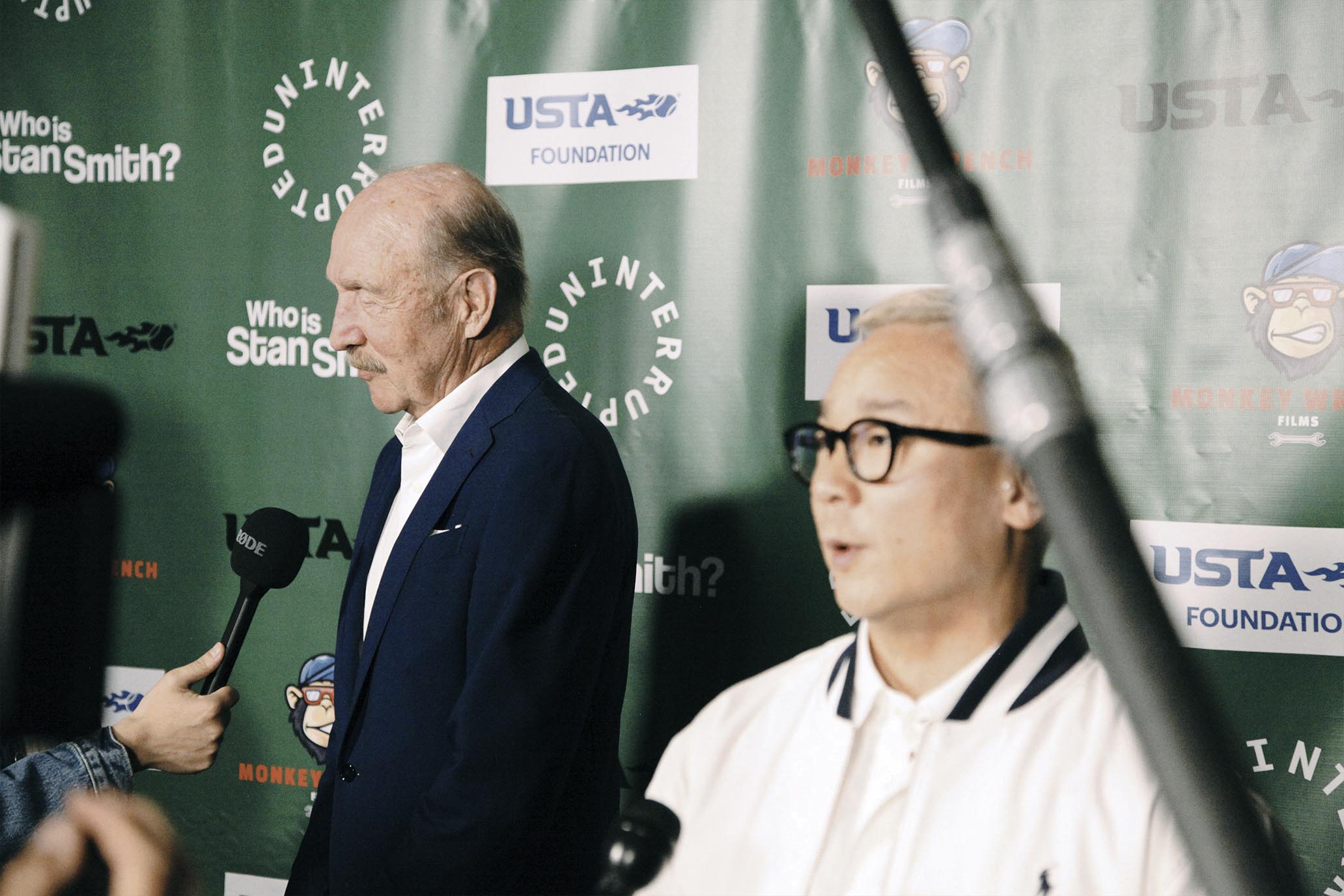
Stan and director Danny Lee at the Los Angeles premiere. // David Bartholow
Stan and director Danny Lee at the Los Angeles premiere. // David Bartholow
As Lee’s film shows, Smith too is transparent, graced with an inner peace that commenced with his middle-class upbringing in Pasadena, a wholesome L.A. suburb. Like all of us, Smith’s life grew into a series of expanding circles and friendships, many of which were deeply formed by the time he was 21 years old. Two factors contributed to the forging of the Stan Smith community at what for many of us is merely a preliminary stage: the extensive commitment required to become a world-class athlete and the volatile times when he came of age.
Smith turned 21 on Dec. 14, 1967. Then came 1968, an exceptionally volatile year, marked by twists in the controversial Vietnam War, the assassinations of Martin Luther King Jr. and Robert Kennedy, riots in the streets, and so many other forms of political and cultural tumult that Arthur Ashe later said, “You didn’t get five minutes to breathe.” Even tennis and politics came closer than usual to each other. Donald Dell, the newly appointed Davis Cup captain, was a close friend of the Kennedys, juggling his tennis responsibilities with work on RFK’s presidential campaign. Thanks to Dell, Smith, Ashe, Pasarell, and Lutz had spent time with the senator. News of Kennedy’s shooting came while the team was in Charlotte, N.C., gearing up for a Davis Cup tie. While Dell rapidly left to be with the Kennedys, Pasarell stepped in as interim team leader.
Prior to that Davis Cup campaign, though, the bond between those four had been well-formed in Los Angeles, where this quartet played for college tennis’ two superpowers, UCLA and USC. Starting in 1965, the NCAA singles title was won over the next four years by Bruins Ashe and Pasarell, followed by Trojans Lutz and Smith. “That’s our private label rivalry that won’t ever go away,” said Pasarell.
What happened in 1968 further deepened their affinity (the fifth member of the squad, Clark Graebner, played superb tennis that year but was never as emotionally connected to his teammates). Much was fueled by Captain Dell’s hunger to bring the precious Davis Cup back to the U.S. for the first time since 1963. The film digs into that successful quest, capped off by the postscript of a January ’69 State Department tour to Vietnam, complete with hospital visits, helicopter rides over battle zones, and an increased awareness of the horrors of war in both its physical and political dimensions.
For make no mistake, Stan Smith has long possessed a social conscience that is concurrently spiritual and of this world. This comes across most clearly when the film shows the care and compassion he and Margie showed for Mathabane, a Black teenager growing up in South Africa under the thumb of that nation’s apartheid regime. Thanks largely to the Smiths, Mathabane was able to make his way to the United States and build a new life.
In a delightful coincidence that pleases storytellers, weeks before learning about the May 3 movie premiere, a friend had invited me to be his guest and play tennis on May 7 at the Los Angeles Tennis Club. This was Smith’s training ground, first as an adolescent, then in college, where his USC team practiced and played its matches.
Smith had been the last of the club’s great male champions, a chain of excellence that began with Ellsworth Vines and continued with such all-timers as Bobby Riggs, Jack Kramer, and Pancho Gonzalez. My afternoon there was glorious. From hitting on the courts to strolling through the lobby filled with photos and trophies, it was joyful to occupy a place where this man known largely to the world for a piece of footwear had crafted his legend, one step at a time.
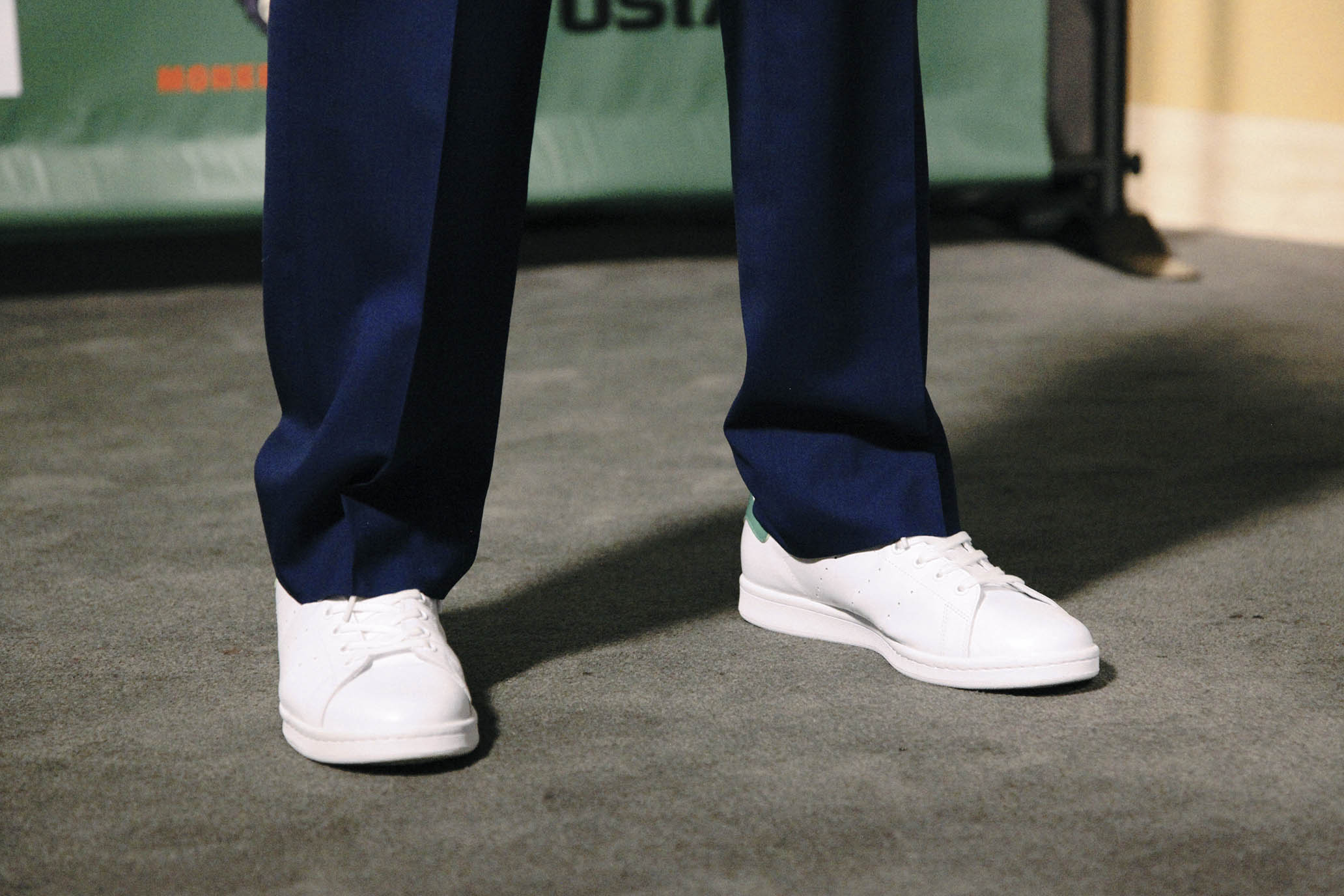
"Canadian Doubles." / MGM Studios
"Canadian Doubles." / MGM Studios
All through his youth, Joel Drucker knew he lacked the strength and skill to wield the elegant Stan Smith Autograph frame.
SIGN UP — YOU'RE ONLY AS GOOD AS YOUR SECOND SERVE.
A Forensics of the Foro Italico
A Forensics of the Foro Italico
A Forensics of the Foro Italico
The architects and artists who built the Fascist sports complex sought parallels with previous Roman empires.
The architects and artists who built the Fascist sports complex sought parallels with previous Roman empires.
Gerald Marzorati
May 9, 2024
A Forensics of the Foro Italico
A Forensics of the
Foro Italico
The architects and artists who built the Fascist sports complex sought parallels with previous Roman empires.
The architects and artists who built the Fascist sports complex sought parallels with previous Roman empires.
Gerald Marzorati
May 9, 2024
I.
The Fascist Academy of Physical Education was founded in Rome in 1928. Its mission, at once pointed and sweeping, was to help create for Italy what the world’s first Fascists called the New Man. This New Man was to be modern, virile, confident, unquestioning, forceful, and, when called upon by the state—by its dictator, Benito Mussolini, Il Duce—ruthlessly violent. Sports would play a significant role in shaping the New Man. The Academy’s essential aim was to train physical-education teachers for Italian schools and, more important, sports instructors for the Opera Nazionale Balilla (ONB), a network of youth organizations that would be developed into a compulsory paramilitary comprising millions of fit and indoctrinated boys (and girls, eventually), parading in Italian towns with scaled-down service rifles and prepared (or so they believed) for battle wherever.
A new home was built for the Academy in 1932, along the River Tiber north of Rome’s centro storico, at the base of Monte Mario. Four years later, behind the Academy, a monumental statue of a Balilla boy, chiseled in an appropriated, exaggerated classical style, was solemnly unveiled to mark the 10th anniversary of the ONB. It remains astonishing today in both its scale and detail. Atop a hefty pedestal, and hewn from white marble, the young paramilitary rises nearly three stories. His ONB uniform—T-shirt and shorts—clings tightly to his muscular frame. His face reveals nothing but purposeful concentration. He shoulders a rifle, and from his neck onto his expansive chest dangles a pack exposing a gas mask—a timely touch. In 1936, the Italian military was in the thick of its fight to seize Ethiopia, an imperial conquest that relied to no small degree on aerial bombardments of mustard gas.
I found myself gazing up at the face of this towering figure one overcast morning last May. It is a face its sculptor had rendered a little older than that of a teenage boy; better, perhaps, to convey that he was already a young New Man, his molding complete: physically developed, disciplined, ready for action. He looked, I couldn’t help but think, about the age of Casper Ruud, who I was watching as he struck one inside-out forehand after another during a practice session on Court 8 on the grounds of the Italian Open, which was about to enter its first weekend. The statue of the OMB paramilitary loomed above Court 8, along the central walkway of the tournament, the grounds of which are situated on the southern end of the sprawling sports complex known as the Foro Italico.
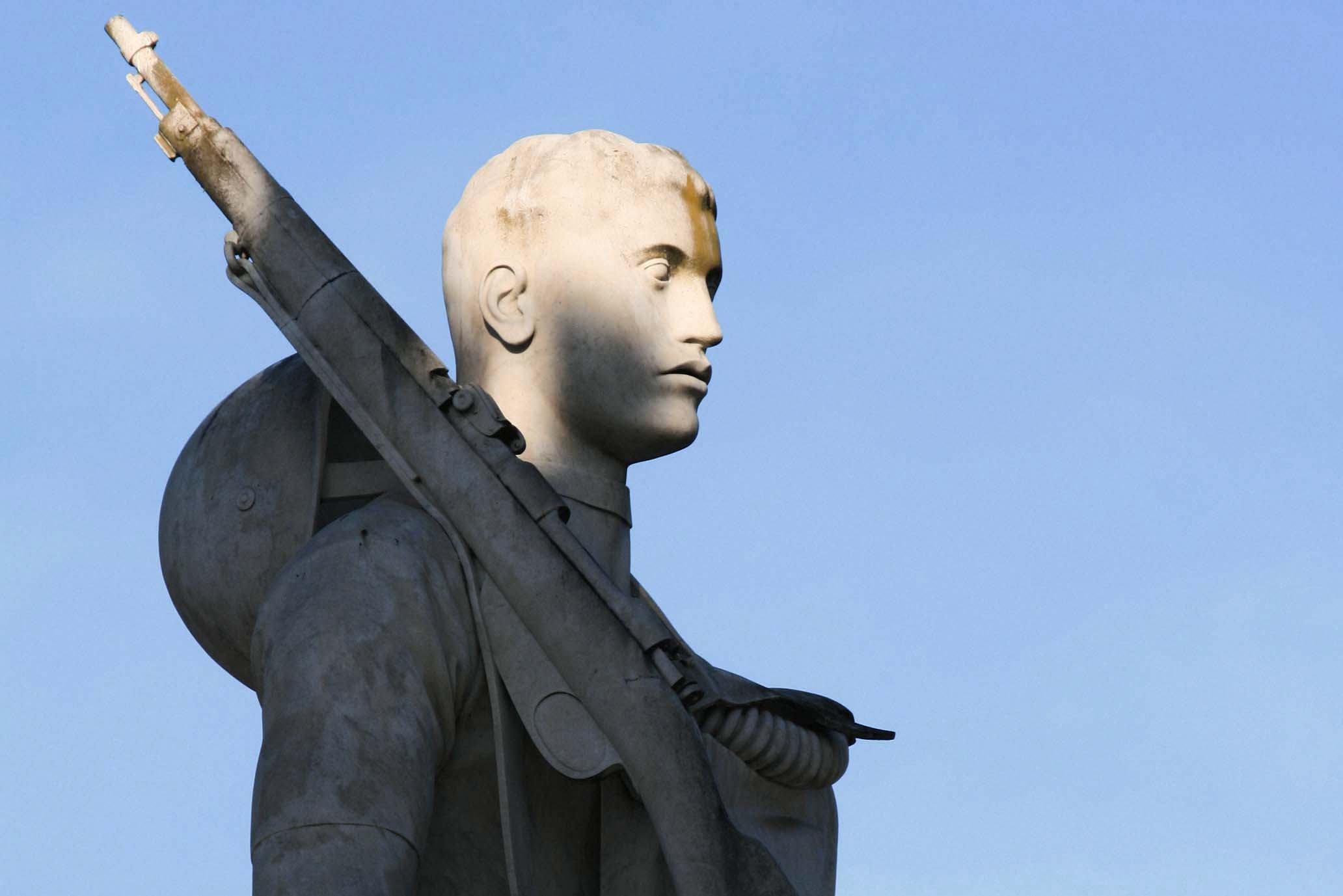
At what is now called the the Foro Italico, a statue of a “Balilla boy”, was unveiled in 1936 to mark the 10th anniversary of the Opera Nazionale Balilla, a network of youth organizations that would be developed into a compulsory paramilitary. // Alamy
The Foro Italico had originally been designed and constructed as the Foro Mussolini. Plans for it were drawn up, under the direction of a then-prominent architect named Enrico Del Debbio, beginning in 1928, three years after Mussolini declared himself dictator. The Foro was to be a complex of buildings and stadia, parade grounds and piazzas. It was to manifest artistically and architecturally Il Duce’s promotion of the idea that the Fascist police state he was forging was, among other things, an ambitious 20th-century revival of Rome’s past. Caesar Augustus had had a forum, and he would have one too—a grand public space for military ceremonies, commemorations, processions, sporting events, and more. Mussolini’s pursuit of romanitá—a caricatural notion of ancient Roman-ness, meant to manifest Fascist conceptions of unity, control, and heroic destiny—was impassioned and near boundless. He introduced the so-called Roman salute of the stiffly raised right arm (though it’s unclear whether ancients Romans ever employed it) and had his proclamations published in Latin. A forum bearing his name would at once align him with Rome’s past grandeur, pronounce that he was the state, and leave a sprawling legacy of marble and tile, greenswards and concrete, for a future that would glorify him and his reign.
It didn’t work out that way: He wound up shot by partisans in the last days of World War II, his Fascism routed, his Italy decimated, his body hung by its feet from a metal girder at a half-built service station in Milan. But the Foro survived. Rome had been bombed, but not the Foro. Two weeks after the liberation of Rome, in June of 1944, it was transformed into a U.S. Army rest center. Bill Hargis, who’d coached football and track at Kansas University in the 1930s, was at the rest center as an armed-forces athletic consultant, and he composed a little guide to the Foro for the American soldiers encamped there. “When you walk over to the P.X., look at the statue of the ‘Balilla,’” he wrote. “The marble figure of a boy with a gun and gas mask gives you a fair idea of what Mussolini was training Italian youth for.”
Who attending the Italian Open today gives a thought to the statue of the Balilla boy—to what it was meant to honor? The Foro is filled with creations designed to evoke Mussolini’s greatness and imperial ambitions. Who, wandering the Foro, has a sense of that? The architects and artists who built the Foro had worked to revive the past, adopt and adapt it, construct parallels with previous Roman empires, grandly convey ultranationalist order and power: Fascist ideals. Who, today, understands the Foro that way? What, over time, has it all come to mean—if, now, it means much of anything at all?
"Canadian Doubles." / MGM Studios
"Canadian Doubles." / MGM Studios
II.
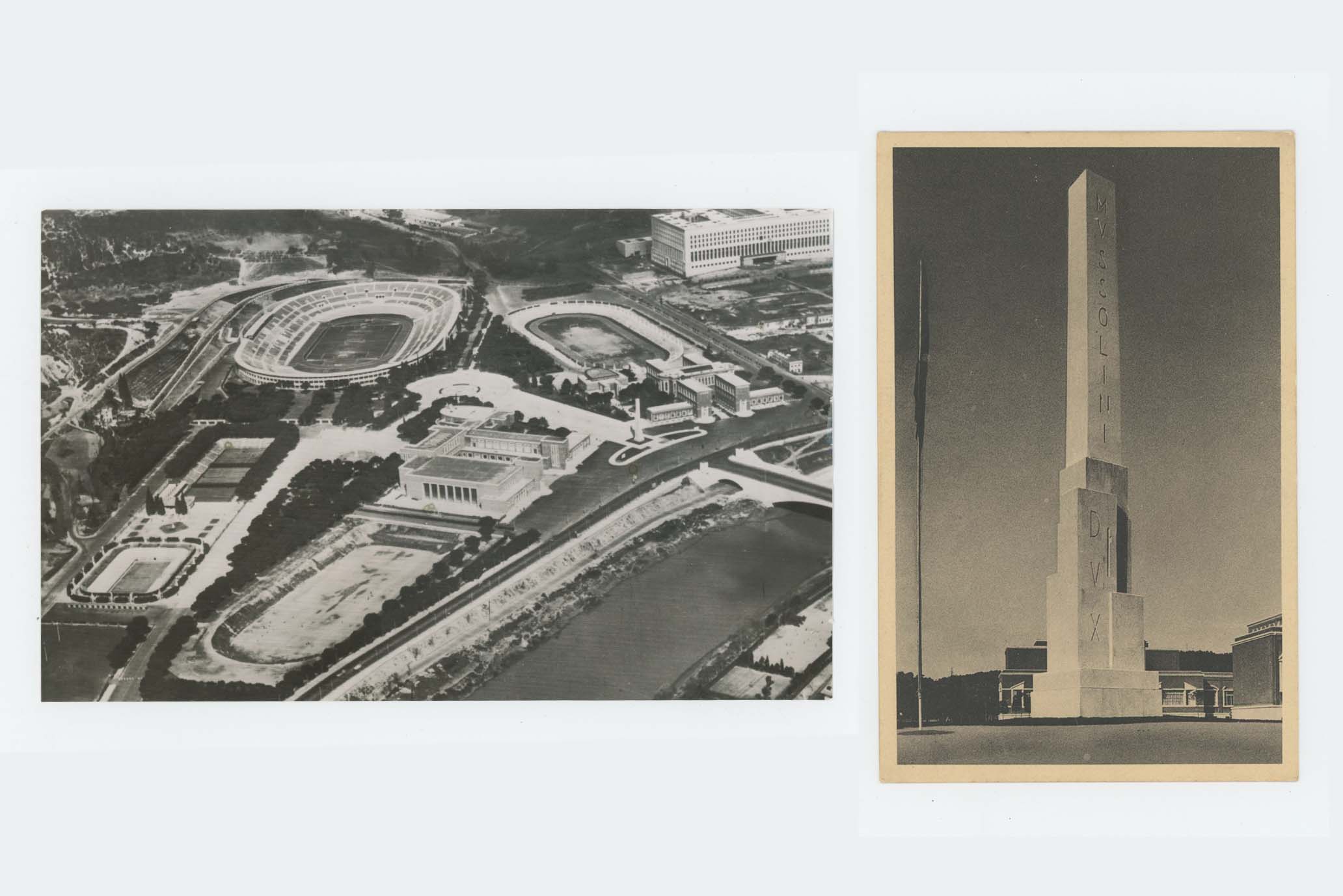
Enter the Foro Italico at its northern end, from the roadway that curves along the western bank of the Tiber, and you’re greeted by Il Duce’s colossal monument to himself: a 60-foot-high obelisk, engraved vertically with letters three feet tall declaring MVSSOLINI DVX. The obelisk, like much else about the Foro, was meant to evoke ancient Rome—the Romans had hauled eight obelisks back from Egypt to the city—and so was the wording: A “dux,” under the Caesars, was a military leader or governor, and the Roman alphabet had no “u.” Mussolini wanted his obelisk to be taller than any of the Egyptian ones. That required nearly 300 tons of Carrara marble. Its pointed top is gilded, and buried beneath its base, its existence unknown until a pair of classical scholars discovered archival references to it that they revealed in 2016, is a metal box containing a eulogy to Il Duce, written in Latin on parchment and hailing him (to quote a bit of it, according to the researchers) for his “regenerating Italy through his superhuman insight and resoluteness.”
Beyond the obelisk, the Foro’s northern entry opens onto a wide esplanade, the Piazzale dell’Impero. Along its outermost edges stand rows of marble blocks, each etched with a brief description of developments under Fascism that the regime was proud of: campaigns abroad, growth in grain production… Underfoot are a football field’s length of black-and-white floor-tile panels—crumbling, but still legible—commingling images drawn from Roman mythology and Christian legends with heroic depictions of Fascist militarism. Excavations during the 1930s, in particular one in Ostia Antica, the ancient port city outside Rome, were revealing impressive tiled pavings, and art historians today point to them as inspirations for the artists who worked on the Piazzale dell’Impero. Byzantine mosaics of the early Christian era were an influence too. Thus, a tiled portrayal of St. George slaying the dragon shares a panel along the walkway with a mosaic of a lorry, its truck bed filled with squadristi militia—the Blackshirts who roved Italy terrorizing union members, leftists, and others identified as opposed to the Fascist state. There’s a mosaic of Romulus and Remus, and there are mosaics of warplanes. And there’s DVCE, DVCE, DVCE spelled out again and again in bold black tiles—the crowd chant that greeted Mussolini whenever he appeared on the balcony of the Palazzo Venezia, his seat of government in Rome and private residence.
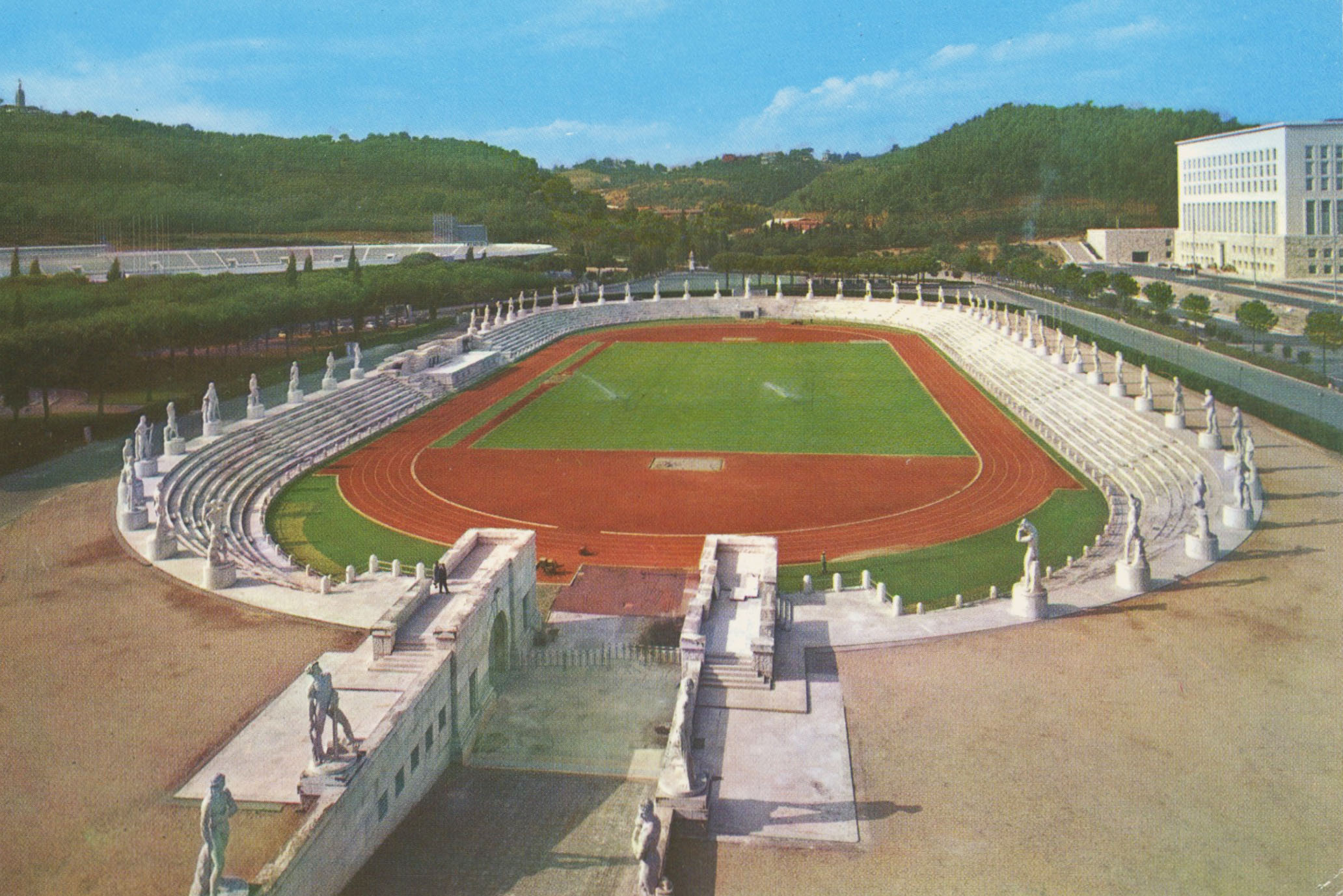
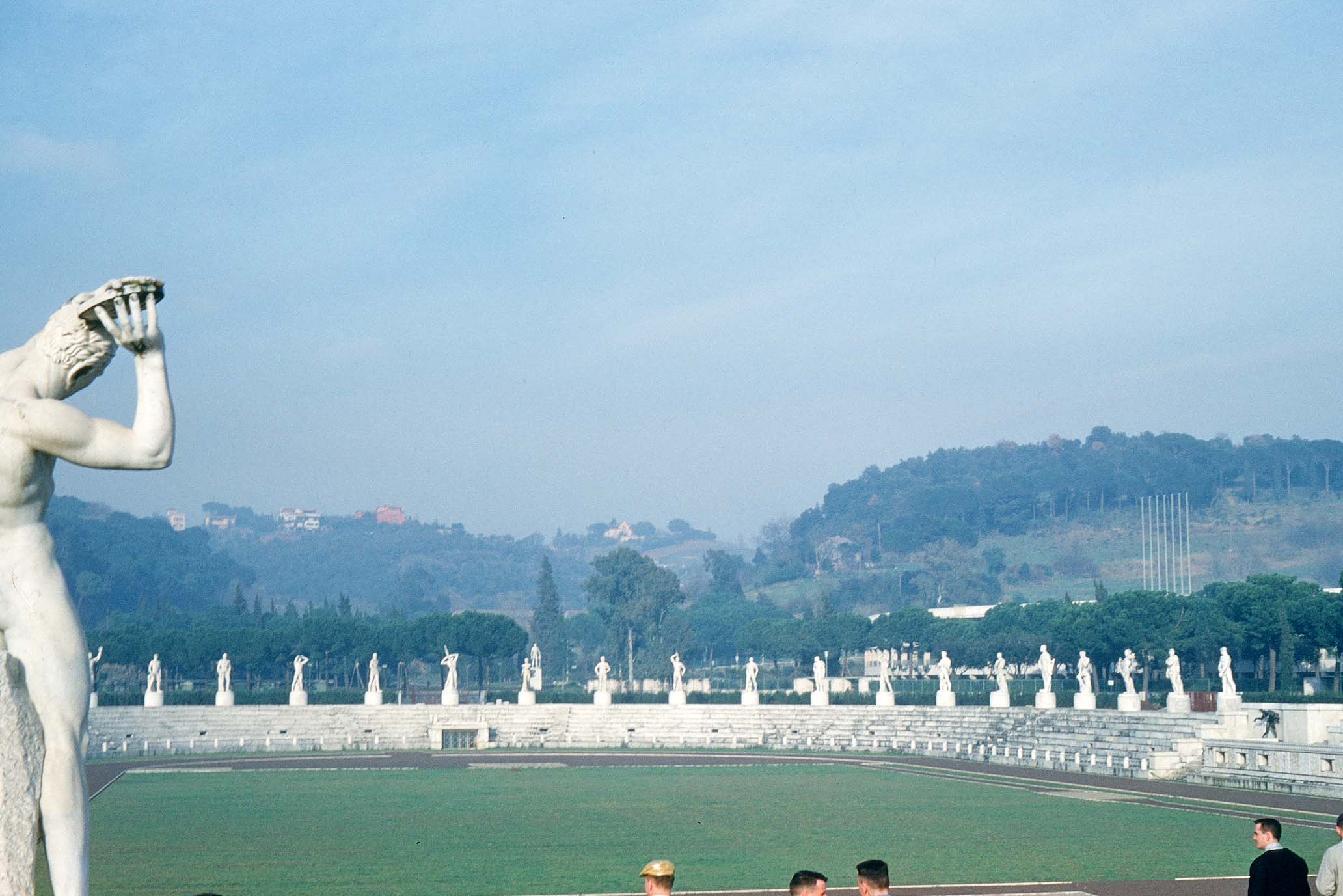
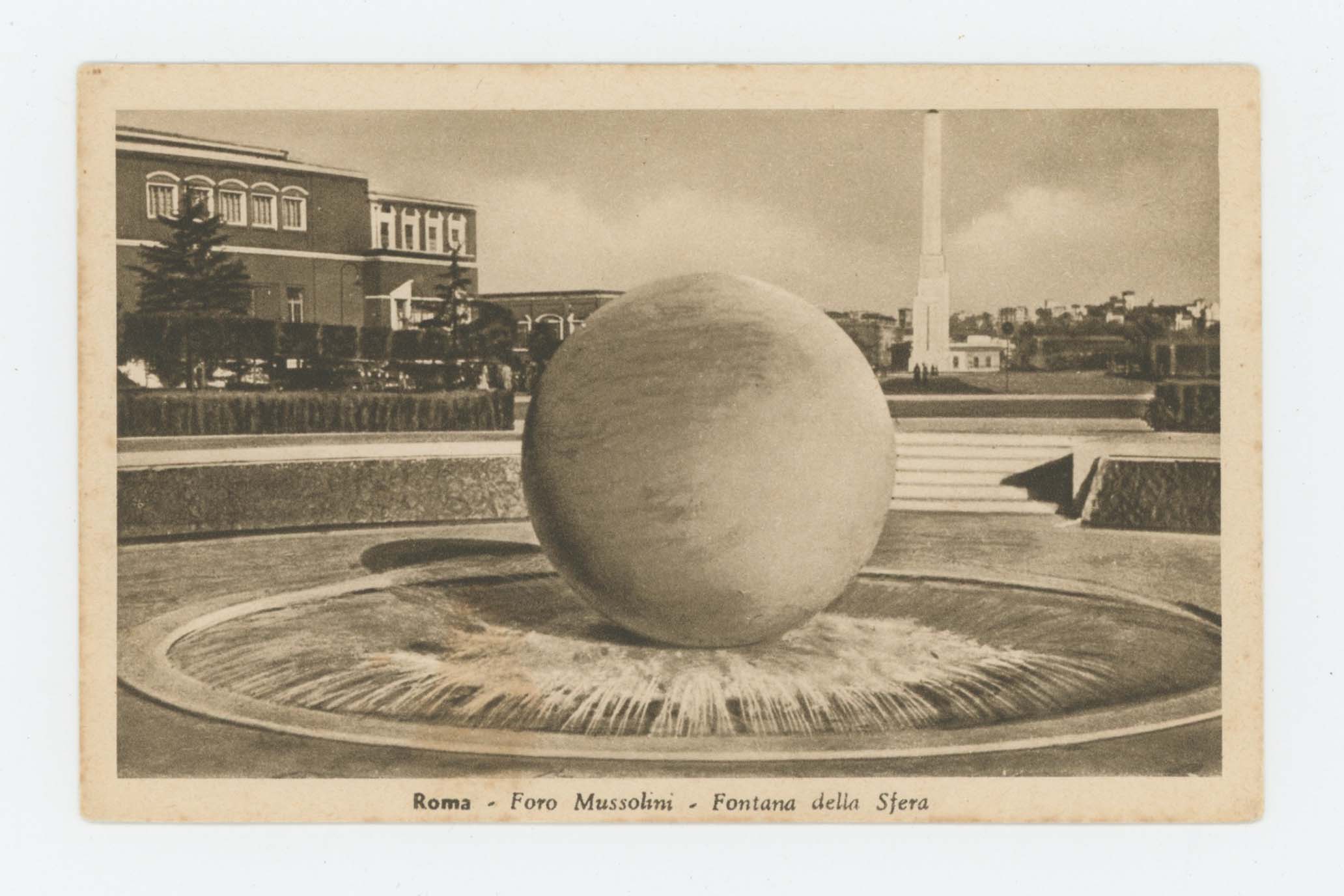
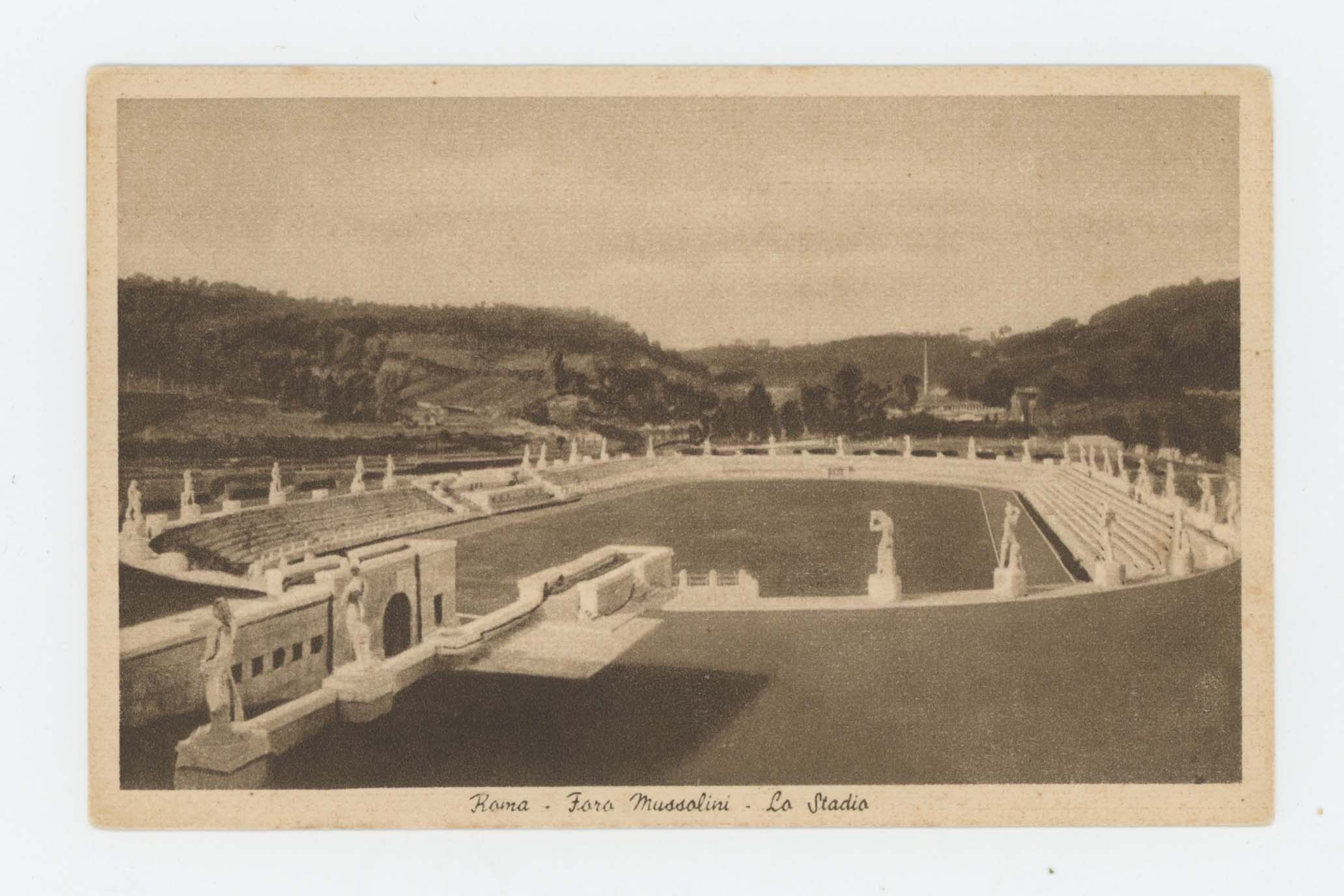
The tiled walkway of the Piazzale dell’Impero leads to a circular, sunken fountain, the Fontana della Sfera—a huge marble globe rests in its basin—and then onto the most arresting of the Foro’s romanitá re-conjurings: the Stadio dei Marmi. It was designed in the late 1920s and opened in 1932 as a track-and-field training oval for the future phys ed instructors enrolled a short walk away at the Academy. It’s encircled by marble bleachers, and the bleachers, in turn, are bordered by four dozen larger-than-life-size marble statues of male nudes. The references are classical, but we’re not exactly in Hellenic Greece or the Rome of the Caesars here. The poses struck by the carved figures are more like those of oiled bodybuilders at a Mr. Universe competition. Each was created in a different province of Italy—it was an undertaking meant to strengthen national unity—but the height and heft are uniform throughout the surround, the spacing between the statues, too. It is hard to believe that the overall effect ever registered as instructive, even among fervid Fascists: All the exercise in the world couldn’t give you bodies like these. But it must have resonated as impressively ambitious, visually compelling. It remains so—carefully maintained nearly a hundred years after its construction, radiantly majestic when the sun finds it. It can be disquieting, too, when happened upon in the stillness of its disuse, the statues staring blankly onto the still well-tended emptiness.
The neo-Hellenic look of the Stadio dei Marmi was reiterated in the design of a tennis stadium south of it in the Foro. Tennis had been brought to Italy by British expatriates, though it would be played on clay, as it was in France. It was most popular in Italy’s north, and it was in Milan where the Italian international championships were held, beginning in 1930. Mussolini liked tennis, played a little, though he didn’t like the word “tennis”—it was among the foreign words that, in 1929, he and his Fascists declared illegal to use. The game was to be called pallacorda, after an ancient game involving a ball and a string tied across a street. Italy’s international championships were moved to the Foro in 1935, and the Foro’s Stadio della Pallacorda, with its amphitheatrical layout, its hypermasculine statuary, and its seating on marble bleachers for 3,600 spectators, was the tournament’s main show court. It’s as striking, if not quite as grand, as the Stadio dei Marmi, and it continues in use today as the third show court of the Italian Open.
Was Mussolini there at the championships in 1935? How about his tennis commissioner, Uberto de Morpurgo? He was Italy’s best men’s player during the 1920s. He was from Trieste, and Jewish—a surprising and bitter irony, perhaps, for anyone who has read Giorgio Bassani’s heartrending postwar historical novel The Garden of the Finzi-Continis, with its Italian Jewish students in the northern city of Ferrara, in the wake of the 1938 racial laws, banned from the local tennis club and gathering regularly around a court on the grounds of the Finzi-Continis’ estate, anxious but with no sense (who could have seen it coming?) that the Finzi-Continis, among other Jews in Ferrara, would, beginning in 1943, be deported by the Germans then occupying central and northern Italy, and perish in a death camp. There were no tennis tournaments at the Foro by 1943. A world war was raging. The Italian championships held in 1935 were the last until 1950.
Along with its adoptions of ancient Roman visual forms, Mussolini’s regime (unlike Hitler’s) fostered a Modernist aspect, at least architecturally, and there are several examples around the Foro. This Rationalism, as it was called, could suggest a stripped-down version of a Florentine Renaissance palazzo, as it does in the Academy for Physical Education. Or, more adventurously, it could embrace an Internationalist-Style Modernism, which can be glimpsed, at the southernmost tip of the Foro, in the sleek, low-slung Casa delle Armi (House of Arms). Home to a fencing academy during the Fascist period, and today showing signs of years of neglect, it was designed by Luigi Moretti, who took over responsibility for the entire build-out of the Foro in the 1930s, and whose postwar career would go on to include the design for Washington’s Watergate complex.
Other modernist aspects of the Foro proposed during the Fascist period were never fully completed. Italy made a bid in the early 1930s to host the 1940 Olympic Summer Games, and the Stadio dei Cipressi, to be erected up a slope of cypresses in the foothills of Monte Mario, was planned as the main stadium. But Italy was not selected; Helsinki eventually was. As it would turn out, the war would lead to the cancellation of the 1940 Olympics. The Stadio dei Cipressi stood unoccupied, its design not fully realized. Italy joined the Axis in 1940, and that summer was busy occupying (or attempting to) a swath of southeastern France.
"Canadian Doubles." / MGM Studios
"Canadian Doubles." / MGM Studios
III.
After WWII, Italy underwent no large-scale, programmatic undertaking to rid itself of its Fascist remnants—nothing like the de-Nazification that was carried out in Germany, under pressure from the Allies. The United States, in particular, was more worried about Italy’s postwar Communist Party, which had emerged among the strongest in Western Europe, than any threat that Fascism might lurk, and one day be revived, never mind its monuments playing a role in that. Buildings, statuary, and many street names that evoked the years of Fascist dictatorship were left intact. As NYU professor of history and Italian studies Ruth Ben-Ghiat has pointed out, the Allied Control Commission recommended that only the most obvious Fascist monuments throughout Italy, such as busts of Mussolini, be removed. At the Foro, fig leaves were added to the statues of male nudes—which must have had to do with Catholicism, not erasing signs of Fascism—then fairly quickly removed. Mussolini’s forum was simply renamed the Foro Italico.
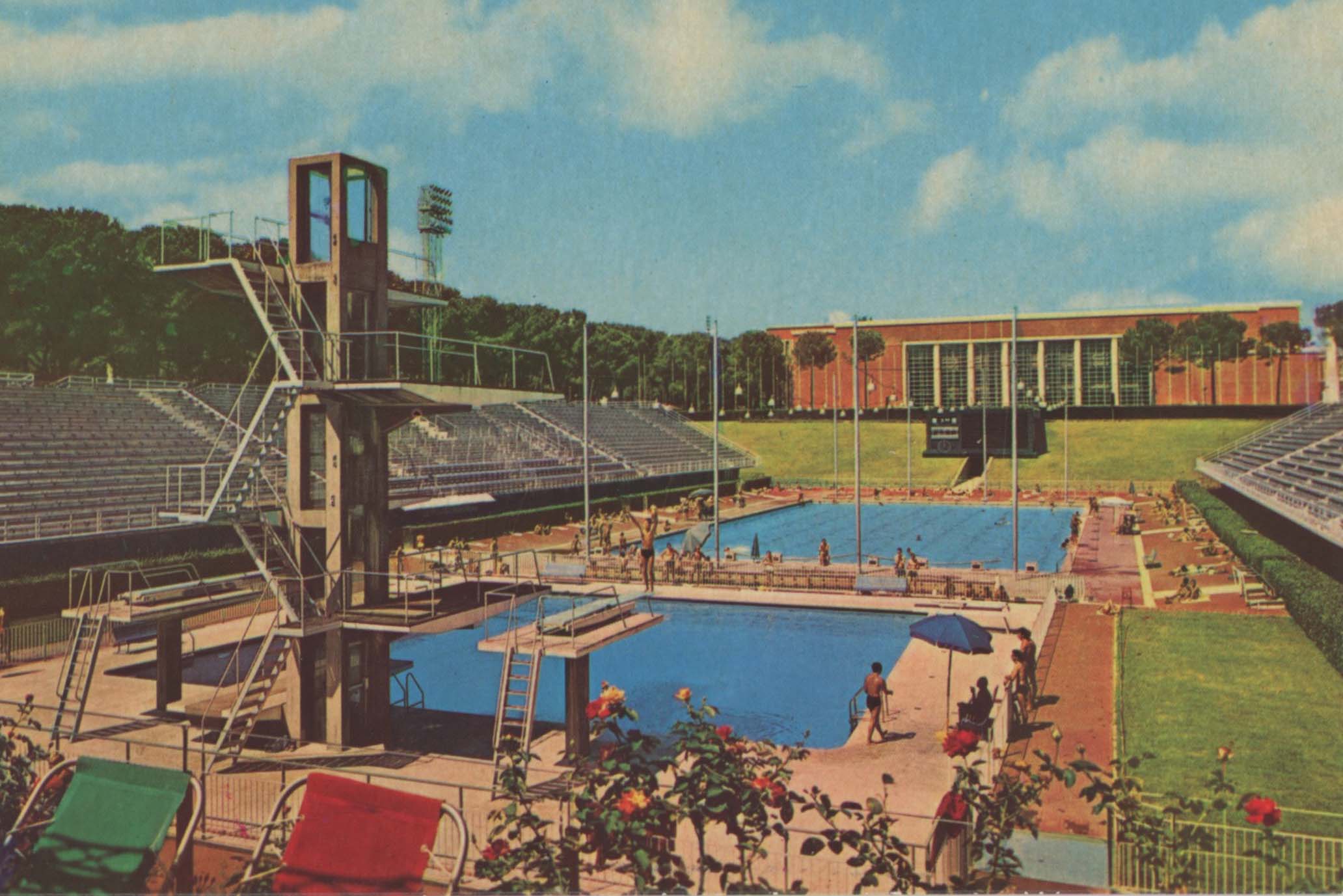
In 1955, Rome won the rights to host the 1960 Summer Olympics, and most of the Games’ events were held at the Foro. A large modern stadium, Olympic Stadium, was built on the footprint of the Stadio dei Cipressi, and a new center for aquatic sports went up at the southern end of the Foro, near the tennis facilities. (One of its codesigners was Enrico Del Debbio, who, 30 years earlier, had been responsible for guiding the overall design of Mussolini’s Foro. His associations with Fascism would catch up to him and his reputation in the 1970s.) There were a few political alterations made to the Foro grounds for the Olympics; the rows of engraved blocks along the Piazelle dell’Impero, for example, saw the addition of new ones summarizing that Fascism had, in fact, been defeated. But the stately figure of the battle-ready Balilla boy went untouched and stood poised above those making their way to the swimming and diving events.
Time brings forth new ways of seeing, and can silt and wear away intended meanings. The Foro has, for the most part, been de-Fascistified by the postwar gaze. The male nudes were, by the 1960s, beginning to be aestheticized as camp. Their romanitá stylizations—the contrivances, the histrionics—were foregrounded and ironized by art history. It was a fresh look, a La Dolce Vita regard, one that disengaged the statues from Fascism, judged them a little laughable, left them depoliticized. A generation later they were eroticized—see the black-and-white Mapplethorpe-esque photographs of them taken in the 1980s by George Mott, who cropped close in on nipples, pecs, and buttocks. The marble nudes were re-described as “expressing a virility that seems to have been conferred directly from the gods”—this the view of Giorgio Armani, who credits the Stadio dei Marmi with inspiring one of his advertising campaigns. They were thus powerfully compelling again, just not as originally conceived. The Rationalist buildings, meanwhile, were being put to use by new tenants. Their forms were strictly functional, after all. The Italian Olympic committee decided to make its home, and still does, in what had been the Fascist Academy of Physical Education.
Today, Italy’s Neo-Fascists (they number many) may make pilgrimages to Dovia di Predappio, Mussolini’s birthplace, but the Foro doesn’t have a similar resonance for them. The hard-right government of Prime Minister Giorgia Meloni—who, in the 1990s, joined the youth wing of a Neo-Fascist political party—is determined to keep out dark-skinned immigrants and denigrate gays and lesbians, not build a next Roman empire. There are, conversely, progressive Italian historians who have begun a project to map Fascist-era monuments, inspired by debates in the United States and some countries elsewhere in Europe over what to do with monuments celebrating slave owners and colonialism. The mapping project is backed by the Ferruccio Parri National Institute in Milan, named for an anti-Fascist partisan who went on to become the first prime minister of postwar, democratic Italy. The historians involved are not calling for any monuments to be destroyed. But they would like to see explanatory plaques affixed to them and hold out the hope, however faint, that Italy will finally have some sort of concerted reckoning with its Fascist past.
To spend a few days at the Foro was to glimpse many Romans expressing their innocent indifference to the built markings of that Fascist past—an attitude that comes easily, perhaps, to those living in a city that is a deeply layered palimpsest, its streetscape the stratified accumulation of thousands of years of rises and falls, reigns and vanquishings. Fans of the Roma and Lazio soccer teams, both of which play their home games at the Olympic Stadium, met up with their friends, as arranged, at the Mussolini obelisk. Local kids enjoyed skateboarding on the tiled surface of the Piazelle. Forgetting, like remembering, can be, for the victors at least, a quietly collaborative act of revenge, an unconscious expression of freedom and renewal. Tony Judt, an English historian of Europe, and a man of the left, wrote in his magisterial book Postwar that “without collective amnesia, Europe’s astonishing post-war recovery would not have been possible.” He quotes an Italian newspaper headline published the spring day in 1945 that the world learned Hitler was dead: “WE HAVE THE STRENGTH TO FORGET.”
I was at the Foro among thousands of shirtsleeve Italians who’d gotten past the past as we settled in, on a Sunday afternoon, to watch a second-round match between the young Italian hopefuls Lorenzo Musetti and Matteo Arnaldi. Italians, like fans everywhere, are nationalists when given the opportunity, and to see the all-Italian matchup at the Italian Open they crowded the onetime Stadio della Pallacorda, now the Stadio Nicola Pietrangeli, named for the Italian star of the late ’50s and early ’60s (he won two French Opens). Size-wise, Pietrangeli is one of those just-right venues, big enough for spectacle yet still small enough for intimacy—like the old No.2 Court at Wimbledon, and the now-gone Bullring at Roland-Garros. Those of us jammed on the stadium’s stone bleachers were joined by an encircling throng of standing spectators, the sunken-amphitheater design affording them decent sight lines even as they clogged and jostled three deep.
A milky sun glinted now and then off the heroic nudes, most of them arrayed with teenagers who’d hoisted themselves up on the statues’ pedestals for better views. The tennis was good. (Musetti, 6–4, 6–4.) The red clay, the white marble, the green of the soaring umbrella pines beyond: It was its own enclosed world, a sporting garden, and out of time, deepening the here-now absorption we are seeking whenever we show up to watch a match. The moment provided little room for the past, though the colossal Balilla boy was visible to anyone who turned and looked above the north end of the court. On this afternoon he cast no shadow.
SIGN UP — YOU'RE ONLY AS GOOD AS YOUR SECOND SERVE.
A Matter of Respect
A Matter of Respect
A Matter of Respect
Ons Jabeur is frustrated.
Ons Jabeur is frustrated.
By Ben Rothenberg
May 3, 2024
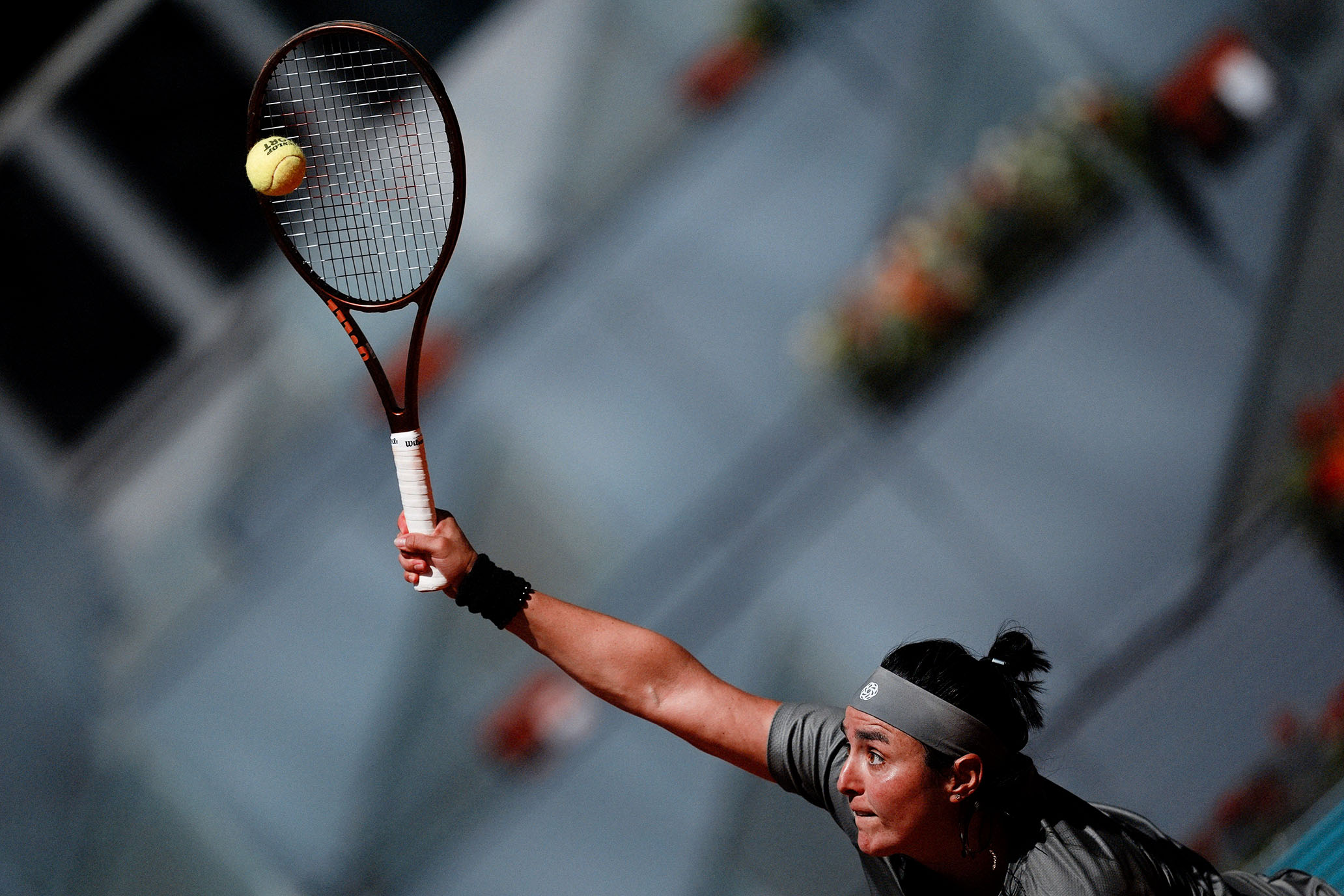
“Sometimes I don’t think that it’s just a question of money, but also respect.” — Ons Jabeur in Madrid this week. // AP
“Sometimes I don’t think that it’s just a question of money, but also respect.” — Ons Jabeur in Madrid this week. // AP
It’s a frustrating time in women’s tennis for nearly everyone involved, it seems.
Ons Jabeur was frustrated this week, you may have heard. With only three wins in the 10 matches she’d played heading into Madrid, the three-time major runner-up was ranked 76th in the WTA’s year-to-date race. But though she could be philosophical about losses in Madrid, where she doubled her win count for the year by winning three matches to reach the quarterfinals, Jabeur’s frustrations remained on behalf of her entire tour.
Asked after an impressive fourth-round win over Jelena Ostapenko about her thoughts on the history of women’s tennis as a leader among women’s sports, Jabeur made it clear that she is deeply dissatisfied with the present. “I feel like we have a long way [to go], especially here in Madrid and in Rome—in Europe in general,” Jabeur said. “I feel like they need to respect women more, and they need to respect how we are playing.”
Jabeur elaborated that “the way they treat women here” included uneven assignments in practice courts—she heard of four top-20 women being made to share a single court while male players got hours-long blocks to themselves, and just the general “energy” of the organizers. Coverage of the tournament on Spanish television, she added, skewed entirely toward the men.
“Sometimes I don’t really think that it’s just a question of money, but also respect,” she said.
Complaints about the gender landscape in Madrid are nothing new. Last year, eyebrows raised when Aryna Sabalenka’s birthday cake looked puny next to the multitiered megalith given to birthday boy Carlos Alcaraz. “Couldn’t be more accurate on the treatment,” WTA player council mainstay Victoria Azarenka commented on a side-by-side confection comparison.
Apparently fearing that Azarenka might continue to be more mouthy than they wanted, tournament organizers made the shocking decision to not allow any of the four women’s doubles finalists to make any remarks during the trophy ceremony. Apologies came days later, but bad feelings remained and fermented over the past year.
After letting a few birthday candles turn into a small inferno a year before, Madrid organizers remained typically oblivious this year after Jabeur’s comments. Feliciano Lopez, the latest in the worldwide trend of picking tournament directors for major events based on the apparent sole qualification of who is handsomest among ATP players near retirement age, said he thought everything was hunky-dory. “Last year…with the doubles finals, we apologized and we moved on and everyone’s happy,” Lopez dubiously claimed in an interview with Sky Sports this week.
He said Jabeur’s more recent suggestion that there was unequal respect was impossible, given the equal numbers on the paychecks. “I have to say that we were the same tournament to pay the same prize money to women and men,” Lopez said. “And so I don’t think it’s fair that someone might think that we are not treating men and women equally.”
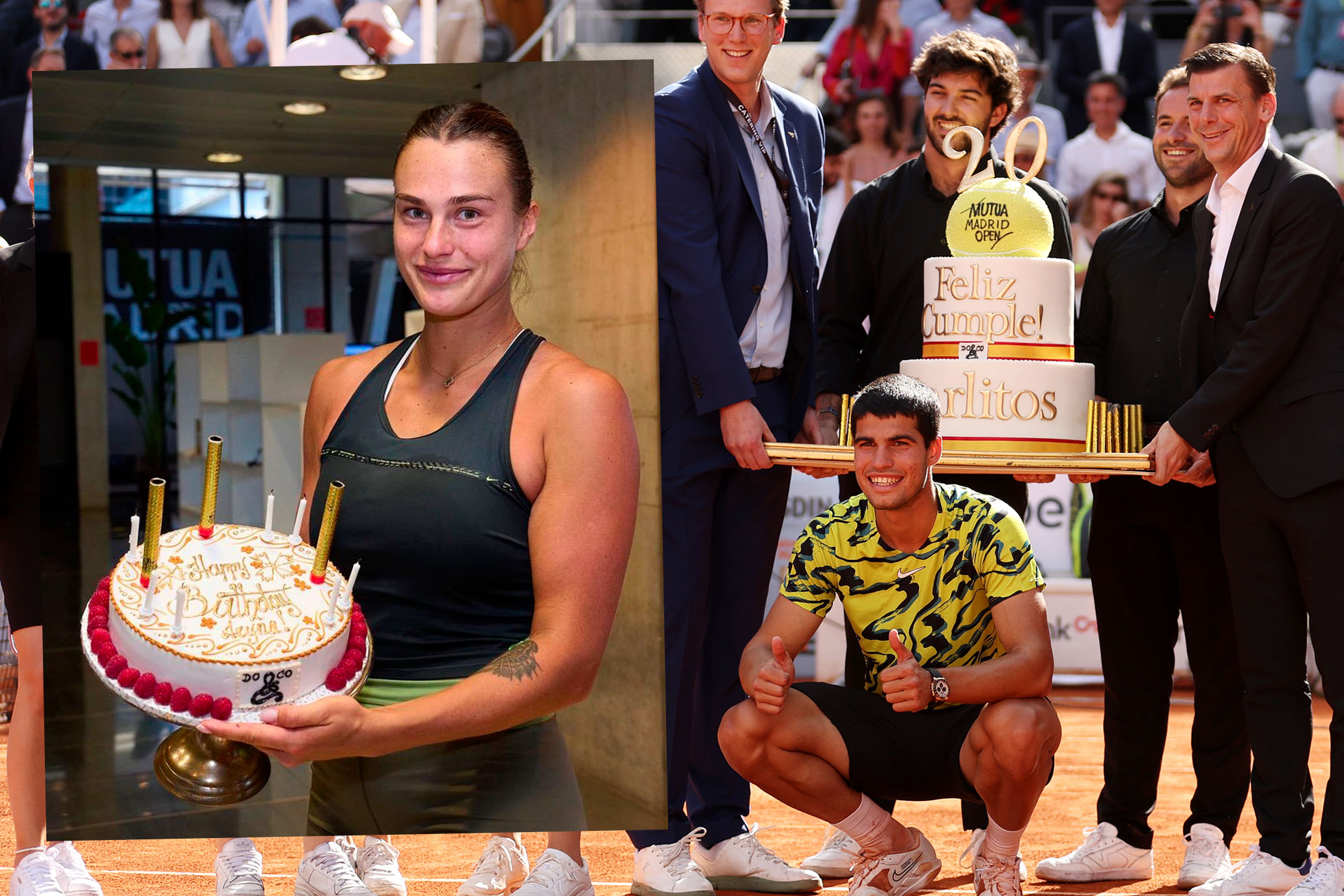
"Different cakes for different folks." Twitter // AP
"Different cakes for different folks." Twitter // AP
Lopez is right, Madrid is a rare equal prize money event on the WTA Tour, one of only three events alongside Indian Wells and Miami. But tournament founder Ion Tiriac repeatedly sued the WTA in hopes of breaking his obligation to give equal pay at the tournament, which significantly undermines the numbers. To be at the Caja Magica briefly is to realize how hollow that signal is when it’s drowned out by the undeniable noise of misogyny and machismo on site. At The House That Ion Tiriac Built, women are regularly given the worst slots on the biggest courts, largely contributing to attendance skewing heavily toward men’s matches in the stands. “So many times people would judge women’s tennis without even watching one match,” Jabeur had said during her complaints. “That pisses me off a lot.”
The disconnect between money and message has been foregrounded in women’s sports recently, most notably when Caitlin Clark’s superstar status clashed with the information that circulated shortly after she was the first overall draft pick that she would only be paid about $75,000 in salary for her rookie season in the WNBA, less than a WTA player would make for a first-round loss at the US Open. This is no small thing, both for the viability and security of top women’s tennis players: As Brittney Griner goes on a media tour for her new book about her time in captivity, we are reminded that she only had to go to Russia because her WNBA salary was so paltry.
With that perspective, even when things are bad in women’s tennis, they’re still pretty good. Last year’s slapdash WTA Finals in Cancun were bashed by many top players for the volatile tropical weather and substandard facilities. But when Iga Swiatek won the title, she walked away with a meaty $3,078,000 in prize money (about 41 Caitlin Clark salaries, to do the math). These bountiful hauls are something that both players and fans of women’s tennis probably take for granted more often than they should; this still just isn’t the norm for a women’s sport.
In fact, it seems reasonable to suggest that WTA players are getting paid too much. The WTA’s finances pale in comparison with the ATP’s in recent years, and that gap is widening.
It’s pretty easy to see a reason why: The ATP is consistently reinvesting in promoting its product, with a constant stream of social media and video content through both itself and its partner TennisTV, which is a high-functioning streaming service. The WTA lacks any sort of partner or high-functioning streaming service; instead, they’re using a disproportionately huge percentage of their budget to pay top players very high amounts. Investing in those assets will help increase revenues and stabilize the business far more than any prize-money check.
Those investments should help authentically stabilize the business of the tour and leave them in a position of strength, which brings us to the next source of women’s tennis frustration: the tour’s three-year deal to host its showcase WTA Finals in Riyadh, Saudi Arabia. Myriad men’s sporting organizations and individual athletes (including the ATP Tour and Rafael Nadal) have already cashed in big checks from the Saudis, so it’s tough to begrudge the business of women’s tennis that same opportunity. But women’s tennis, like most every women’s sport, has also positioned itself as a cause, and a place for equality and inclusivity, values that are particularly tough to jive with Saudi Arabia’s positions on women’s equality movements and LGBT people.
Much has been made of Daria Kasatkina’s possible inclusion in the field in Riyadh, should she qualify; this week, she told the BBC she had been “given guarantees that I’m going to be fine.” But exceptions for Kasatkina, who travels the tour vlogging with her girlfriend Natalia Zabiiako, do little to fix the almost certainly inhospitable circumstances for broad swaths of people who might attend an event like the WTA Finals in nonplayer roles. Whether it’s officials, staff, media, or fans, it’s hard to imagine an LGBT person feeling welcome in Riyadh. The WTA was founded and sustained by LGBT people, and selling them out was a serious decision; hopefully the price was sufficiently high.
Another recent major frustration came from within the players itself, when WTA No. 2 Aryna Sabalenka said before the tournament that “I prefer to watch men’s tennis rather than women’s tennis. I feel like there is more strategy and it’s more interesting to watch [laughs]” Sabalenka tried to walk back the comments in her next press conference, saying she can enjoy a match more when not thinking about the players on screen as future opponents, but it was still a staggering own goal from a person who should be one of the sport’s most reliable ambassadors.
But between the frustrations, there’s undeniable beauty. Sabalenka, days after her boneheadedness, delivered one of the matches of the year in the Madrid semifinals, coming back to beat Elena Rybakina in a three-set thriller and setting up a rare 1-vs.-2 battle in the final against Iga Swiatek. It’s hard to stay mad at this sport for long.
The Hopper
—Still on the fence about seeing “Who Is Stan Smith?” Learn more about it here.
—Speaking of Stan Smith, don’t miss his touchbase with The Fifth Grand Slam, on the Craig Shapiro Tennis Podcast.
—Tennis Australia is not into a Saudi Masters 1000.
—Andrea Petkovic was ready to hate “Challengers”—but didn’t!
—However Zendaya concedes it’s a “mess”, albeit a “beautiful” one.
—Still haven’t had enough of “Challengers”? Here’s Defector on the film’s soundtrack.
—Danielle Collins has partnered with FP Movement.
—There’s still time to sign up for LVBL NYC x USTA Eastern.
—And to attend a table tennis tournament and Madrid Masters finals party at Spin NYC hosted by LVBL and the Manhattan Tennis Association.
SIGN UP — YOU'RE ONLY AS GOOD AS YOUR SECOND SERVE.
Mayhem in Madrid
Mayhem in Madrid
Mayhem in Madrid
Corentin Moutet and Jerry Shang deliver a classic… of sorts.
Corentin Moutet and Jerry Shang deliver a classic… of sorts.
By Giri Nathan
April 26, 2024
Future generations. // AP
Future generations. // AP
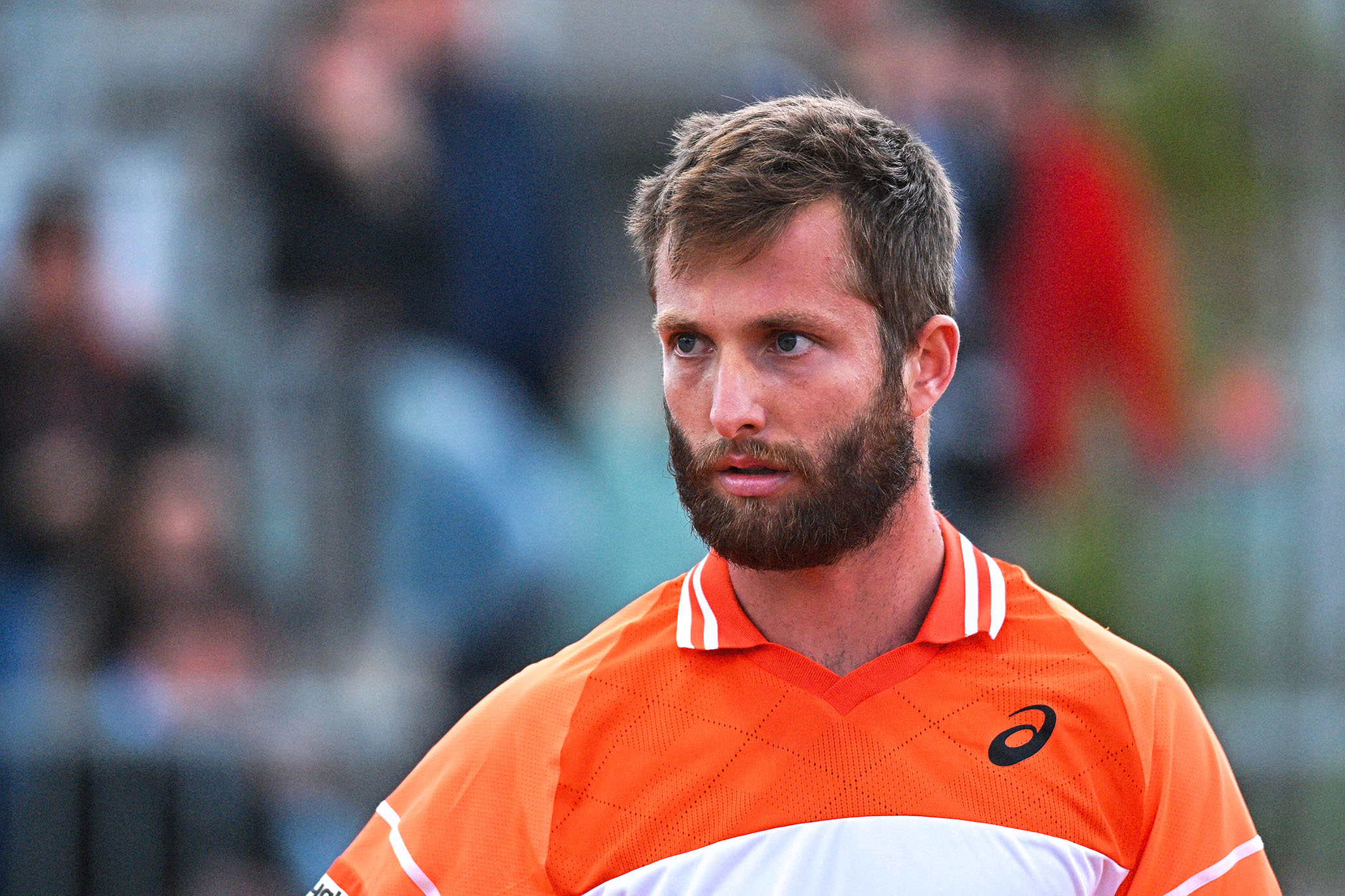
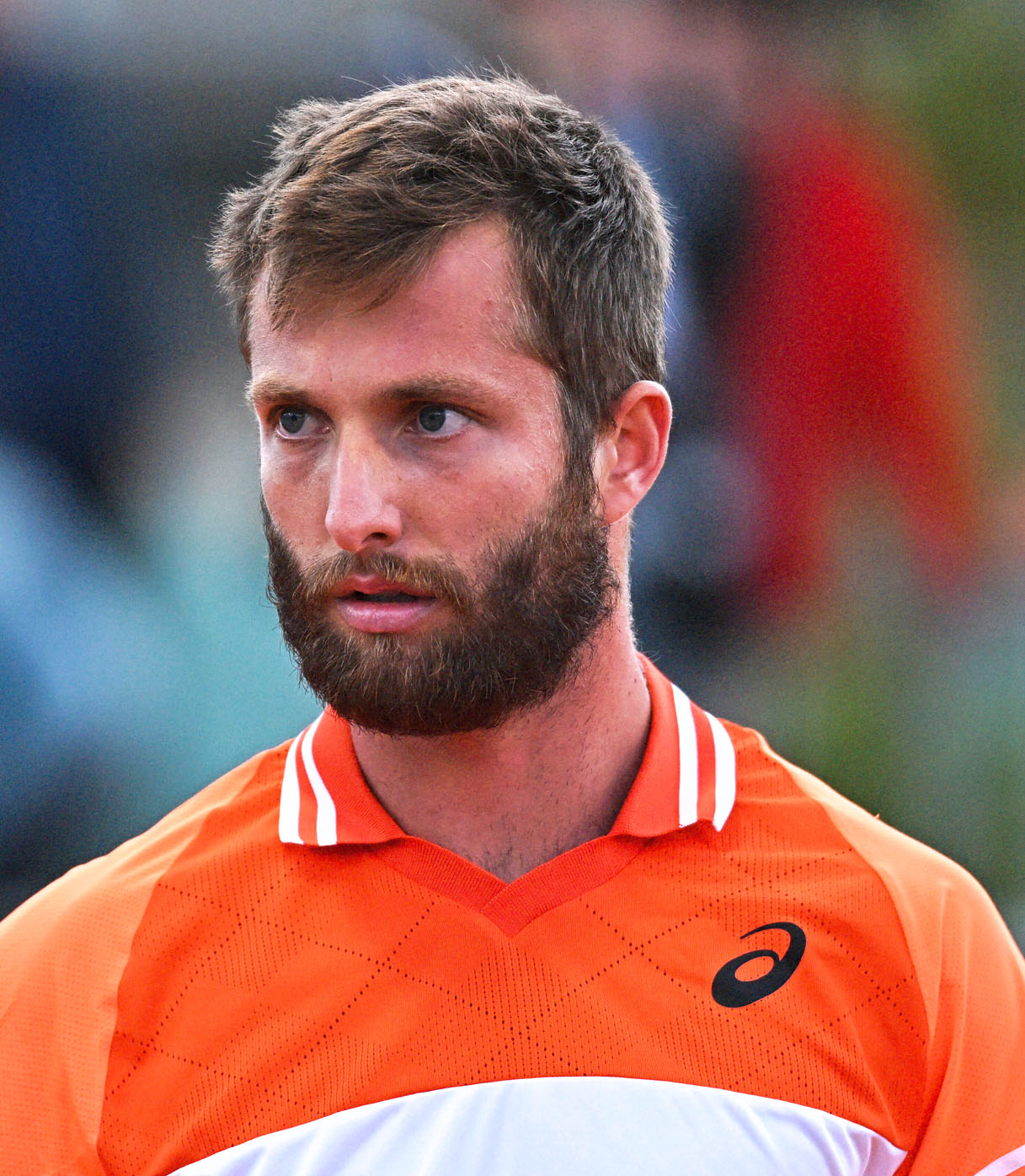
Earlier this week I was asked to name some potentially entertaining first-round matchups in Madrid. My sole pick on the ATP side was Corentin Moutet vs. Jerry Shang. I turned out to be completely correct. But at what cost?
We must preserve the memory of this match for future generations. On the one hand was Corentin Moutet, the slight Frenchman with soft hands, loads of trick shots, and a catastrophic temperament. Think of Nick Kyrgios, only divide the height by half and add a better sense of humor. (Just look how cleanly he punctures a Stefanos Tsitsipas fake-deep musing.) There’s something admirable about Moutet’s talent and resourcefulness. Just as he was on the doorstep of the top 50, he had a serious injury on his right wrist, so he taught himself how to hit a one-handed backhand for a season. Life’s not easy as a small-statured lefty suddenly bereft of a backhand; playing righties means a lot of crosscourt battles against heavy forehands. He somehow made it work. Now he slices a ton, runs around every backhand he can, and mixes in the occasional two-hander.
On the other side of the net from Moutet was fellow lefty Jerry Shang, a touted 19-year-old on the cusp of breaking into the top 100. Shang, who might be the most talented men’s prospect to ever play under the Chinese flag, was previously coached by former world No. 1 and noted screwball Marcelo Rios, so he must know a thing or two about excessively large personalities. “I told my team that the only player I didn’t want to play was Corentin,” Shang said afterward. “I don’t want to see him in the first round of the draw. When I got him I just told myself: ‘Win or lose I would have fun and enjoy every point.”‘ That’s one way to describe the relentless distraction games that Moutet specializes in.
No match is ever straightforward for Moutet, who needed nine set points to claim the first set. When he did finish the job, he treated the crowd to the “big balls” celebration, which is rare in the prim domain of tennis but good for a five-figure fine in the NBA. Early in the second set, as Moutet ran to the net to hit an easy put-away, Shang squatted deep and stuck his racquet straight up in desperate self-defense, only for Moutet to somehow put his ball directly into the strings of the outstretched racquet. The ball boinked back into play and Moutet lost the point. That lapse mattered, because later that game, Shang broke Moutet’s serve with a slick passing shot. As an enraged Moutet cocked his racquet back overhead, a poor ball boy nearby recoiled in fear, which says something about that boy’s read on what Moutet might do at any given moment.
The match ran late. In the second set, Moutet asked the umpire for coffee and was outraged to find that this was not a perk provided by the tournament. Always quick to find an angle for martyrdom, he wondered if it was because he wasn’t important enough. “Is it because I’m on Court 4?” he asked. “It doesn’t matter where we play,” said the umpire. “We don’t provide coffee.” A helpful fan eventually reached onto the court to hand over a paper cup of joe, which Moutet accepted.
He also had an underarm serve, and a lengthy demand that a particular fan be ejected, though those barely earn a place in the historical record of this match. Save room for stuff like this: Down 0–3 in the third set, in the middle of a rally, Moutet was doused with water. A groundskeeper hosing down a neighboring court had accidentally sprayed him through the fence. Moutet flipped out, and the umpire ruled it a let. Shang, who’d hit a clean winner only to have it negated, asks if that’s in the rules. Spontaneous dousing is probably not mentioned by name in the rule book, though a let does seem fair.
At 5–5 in the deciding set tiebreak, Moutet served; the racquet flew out of his hand and past the doubles alley, so when Shang’s return came back, Moutet simply attempted to kick it back. That loss of grip put him match point down. It took Shang a little longer still, as he only cashed in on his fifth match point, putting this match mercifully to rest with a forehand winner. Amid the madness there were some genuinely spectacular rallies between two great movers conditioned enough to battle for three hours and 59 minutes. That’s just four minutes short of the semifinal Novak Djokovic and Rafael Nadal played at this tournament in 2009, which was the longest best-of-three match in ATP tour history and one of the highest-quality clay-court matches ever played. This was…not that. But it was legendary in its own right.
SIGN UP — YOU'RE ONLY AS GOOD AS YOUR SECOND SERVE.
The Hopper
—Garbiñe Muguruza is ready to do nothing.
—The ATP denies rumors that a Masters 1000 in Saudi Arabia has been confirmed.
—The self-described “Taste of Tennis” interviews Hall-of-Famer Rosie Casals on the Craig Shapiro Tennis Podcast.
—Mayor Sherif gets a win.
—A nice piece on the American Crossword Puzzle Tournament from Defector.