
Sakk Attacks and Rune Runs
Sakk Attacks and
Rune Runs
Sakk Attacks and Rune Runs
At Indian Wells, Maria Sakkari finds her form, while Holger Rune showed what the future may hold.
At Indian Wells, Maria Sakkari finds her form, while Holger Rune showed what the future may hold.
By Giri Nathan
March 15, 2024
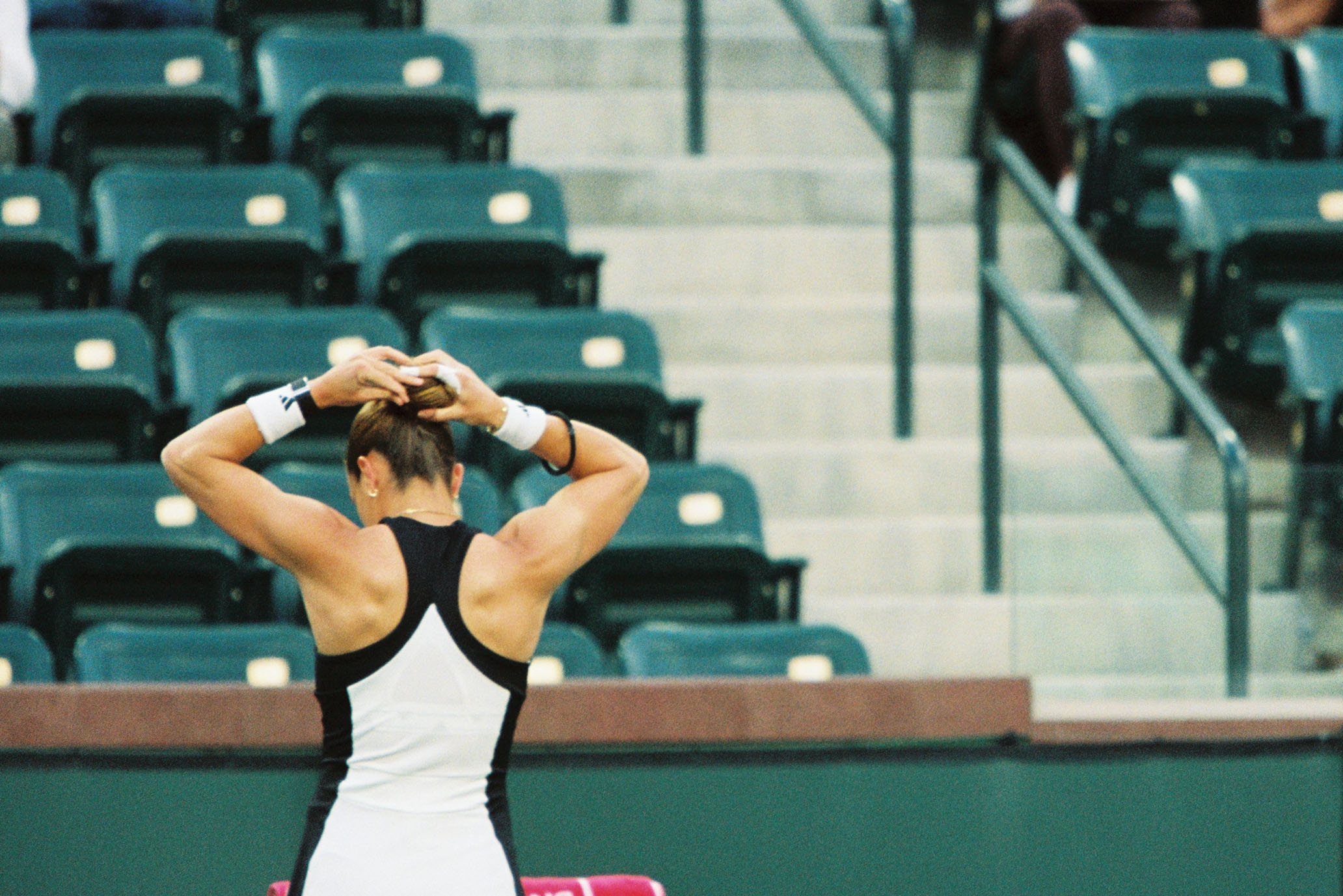
Maria Sakkari // David Bartholow
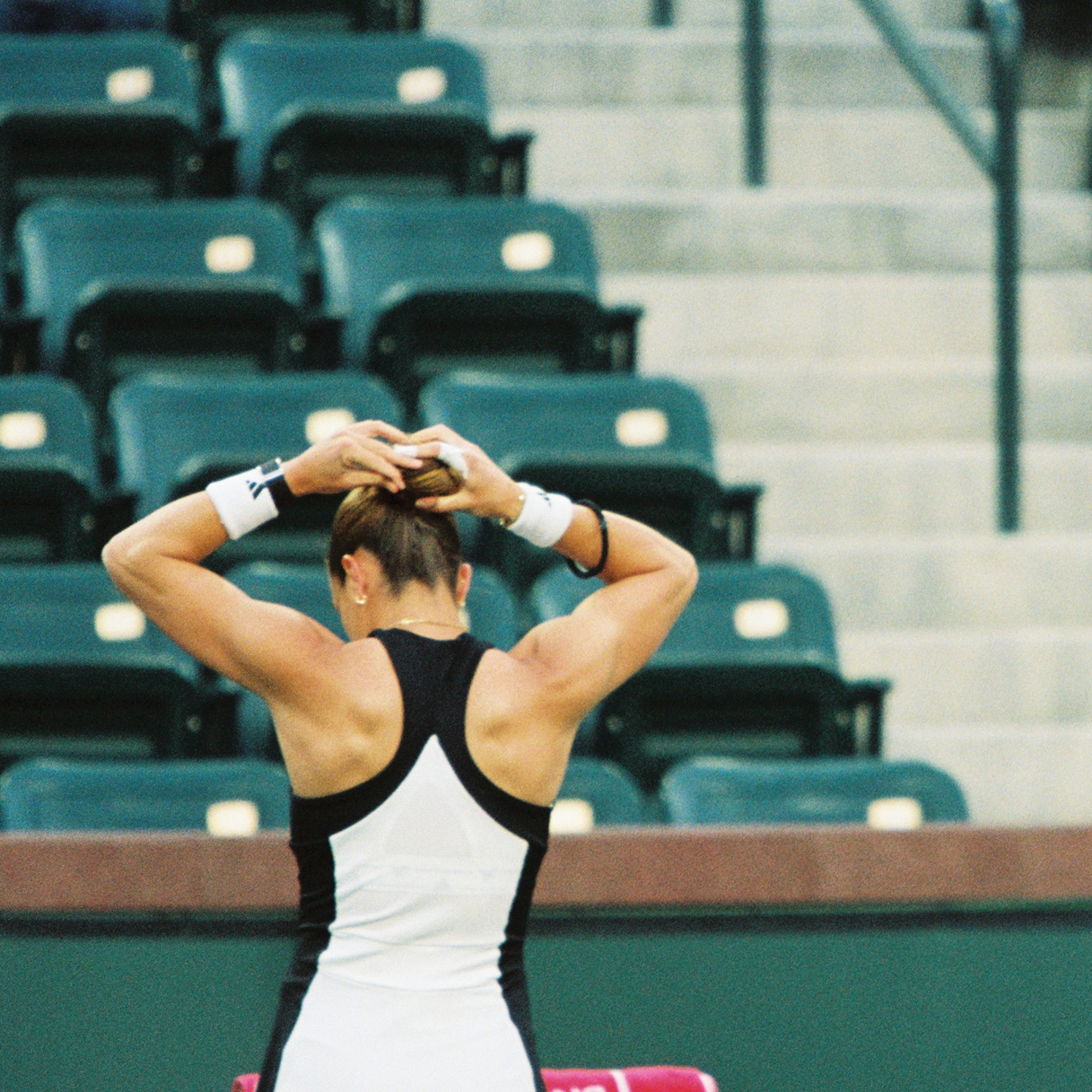
Maria Sakkari // David Bartholow
Something about the desert must be restorative for the brilliant if self-sabotaging Maria Sakkari. No matter her surrounding woes, she seems to arrive in Indian Wells with the clearest mind and biggest punches. She made the final in 2022, at which point she fell into the blender of the Iga Swiatek 37-match win streak. That result pushed Sakkari into the top 3 for the first time. Returning to Indian Wells in 2023, she fought to the semifinal and lost to an ascendant Aryna Sabalenka. Now Sakkari is back in the semifinal, sloughing off an inconsistent few months, playing the best tennis in recent memory. Hear it from the source: “I cannot remember the last time I played that well in a lot of matches,” Sakkari said after her three-set win over Emma Navarro in Thursday night’s quarterfinal.
Watching courtside as she rolled through Caroline Garcia in the second round, I was reminded just how compact and combustive Sakkari’s tennis can be. In my mind I’ve been replaying this one inside-in forehand, so artfully disguised that I would have signed documents stating that it went cross-court even as my eyes saw it three-quarters of the way down the line for a winner. She covers ground with the conviction of a sprinter—she once considered moonlighting as one—and serves far more imposingly than 5-foot-8 might suggest. Locked in, she looks unplayable. Sustaining that for the duration of a high-stakes match has proved to be its own puzzle, particularly when rewards are greatest. In 2023 she tumbled out of the first round in the year’s last three majors. And in decisive moments, those ground strokes can turn tentative and muscle-bound. This week she described herself as “a very stressful person” but praised her brand-new coach David Witt—recently in Jessie Pegula’s employ—for being a funny dude and breaking the tension.
Wins can still do things that a coach cannot, and Sakkari’s third-round victory over Diane Parry was your industry-standard confidence builder. Parry, a young French player with a serious and stylish game, went up an early break in the deciding set. Sakkari wrenched that match out of Parry’s grasp with a nasty backhand pass to break back in the 2–3 game. Three consecutive games later she was howling with typically Sakkarian intensity, the comeback complete. She’s been solid under duress all week. The next challenge for Sakkari is Coco Gauff, who would sit on the same elite tier if there were a WTA draft combine, but she’s up for the test. “Well, it’s nice to have girls that are actually athletic and fit,” she said, looking ahead to the duel of jocks. “Then you feel like, okay, it’s time to challenge myself and play against someone that is equally as fit as I am.”
SIGN UP — YOU'RE ONLY AS GOOD AS YOUR SECOND SERVE.
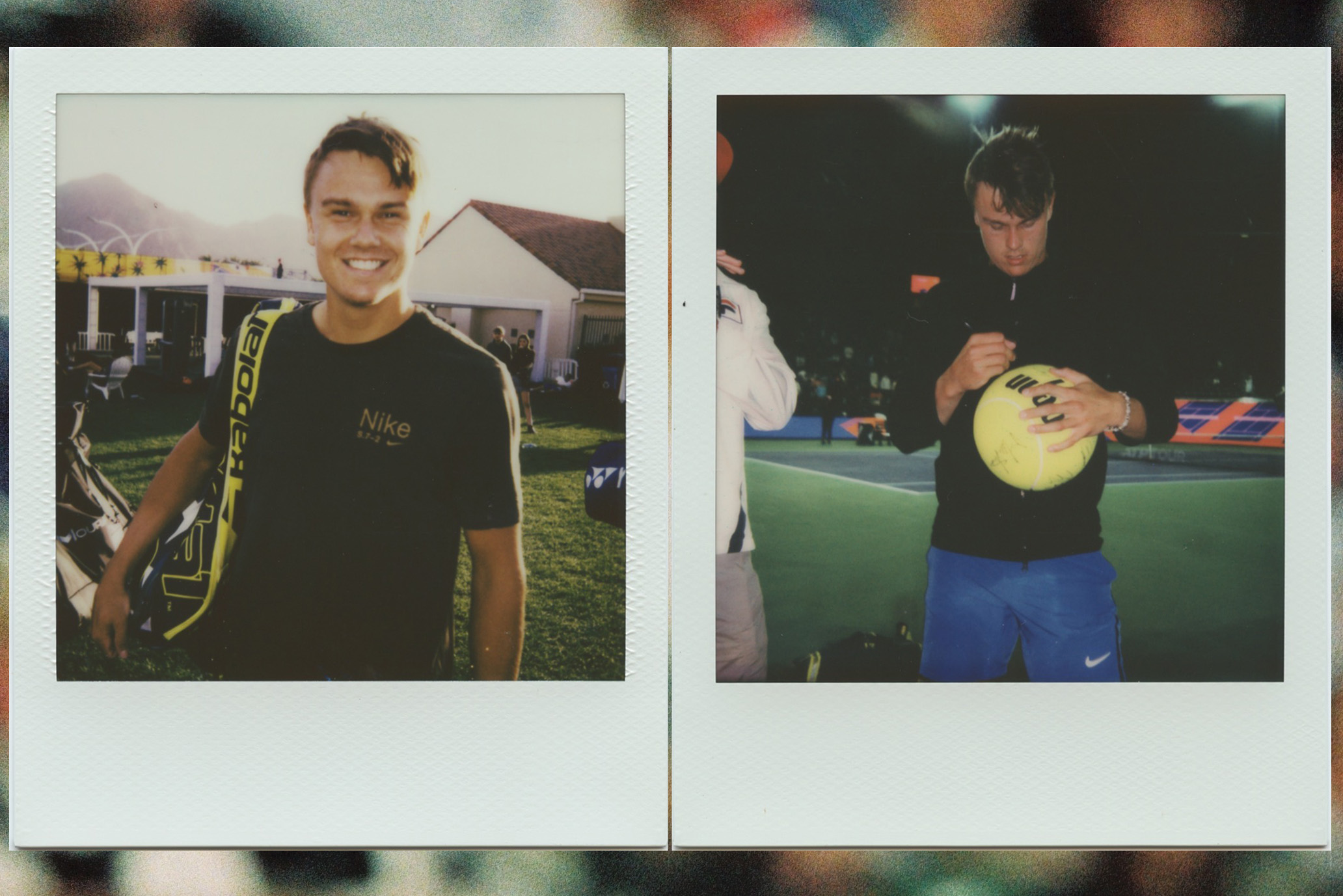
Holger Rune // David Bartholow
Holger Rune // David Bartholow
Holger Rune is no longer alive in the draw at Indian Wells, but his tennis this week was a reminder of how essential he might be to tour chemistry over the next decade. Yes, Carlos Alcaraz; yes, Jannik Sinner. Every time those two play is precious, and this is an instant-classic rivalry between well-mannered young fellas, one I’m overjoyed to witness and document in years to come. But you’ve also gotta have some Rune mixed in, someone to bring a little malice into the proceedings. That’s the recipe. What good is a totally purehearted tennis duopoly without some darker energy intruding from the margins?
Rune might just be too good to remain marginal, anyway, as I was reminded while he pieced together his comeback against Taylor Fritz in the fourth round on Wednesday. Late in the match, Fritz was serving well-placed bombs in the mid-130s, as is his nature. I wasn’t aware it was an option to take full cuts at said bombs, as if they were being fed harmlessly out of a hopper, but Rune did that over and over, staggering Fritz onto his back foot before he’d finished his service motion. There’s a restlessness, a slightly caged feeling to Rune’s tennis at its best, as he stalks around in his short-shorts and does vicious things to the ball as soon as possible. He brought some of his best to his windy quarterfinal with Medvedev, a spicy meeting between two guys with mutual fondness for a sneer. Medvedev took it in two close sets, and later praised Rune for being the sort of player who never gives you any rhythm to work with. While Rune has yet to define his own brand of tennis as confidently as Sinner and Alcaraz already have, he has proved that he has tools to bother the best, and needs to find a way to replicate that week to week.
This week was a well-needed rebound. Before the Fritz win, Rune had lost seven of his last eight against top 20 players. Partly this is because he was playing the tail end of last season through a back injury (and really looked it, too). The offseason must have been physically restorative, though it still didn’t resolve all doubts around his camp. After speed-dating coach Boris Becker, he has reunited with Patrick Mouratoglou, who has not covered himself in glory throughout the Simona Halep doping saga. Still, after listening to the recent interview our pal Craig Shapiro did with Holger’s mom, Aneke, I came away thinking that the Rune operation was pretty thoughtfully run as a whole. And after all, as Rune wrote in this tweet—which is either perfect deadpan or unintentional comedy—mom will remain in charge of all his supplements.
SIGN UP — YOU'RE ONLY AS GOOD AS YOUR SECOND SERVE.


The Hopper
—Giri Nathan and Patrick Redford interview the hero who humanely vacuumed thousands of bees out of a tennis stadium.
—Indian Wells has added mixed doubles.
—The self-described “Taste of Tennis” interviews Jim Courier on his Craig Shapiro Tennis Podcast.
—Tim Newcomb reviews all the stadiums at the Indian Wells Tennis Garden.
—Novak Djokovic is not playing Miami.
—Netflix has cancelled Break Point, but has announced a Carlos Alcaraz docuseries.
—The Saudis have made a $2 billion take-it-or-leave-it offer for tennis.
—Roger Federer signs on with Oliver Peoples.
—The International Tennis Hall of Fame has launched a cool online exhibit of tennis trophies.
SIGN UP — YOU'RE ONLY AS GOOD AS YOUR SECOND SERVE.
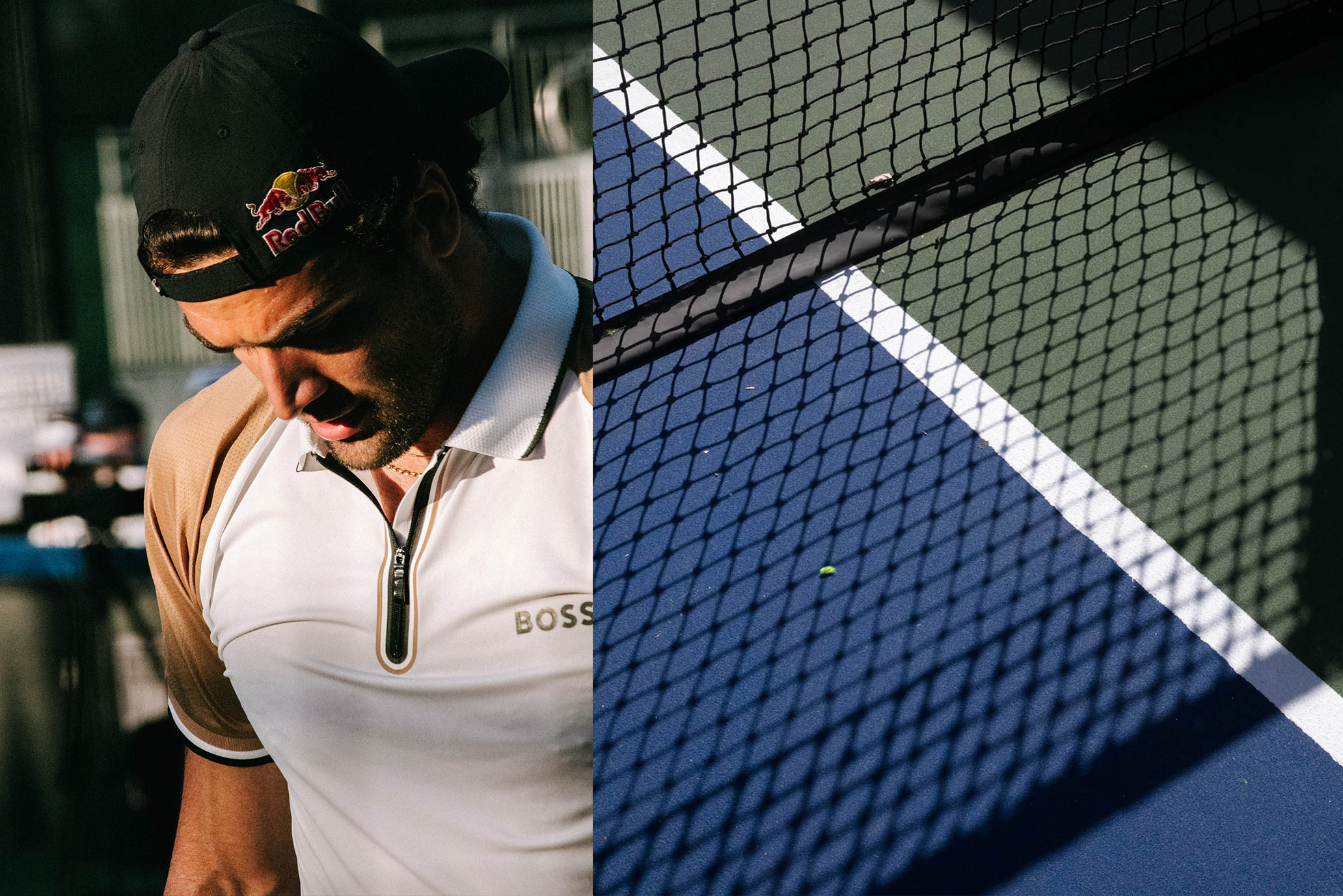
Postcard from Phoenix
Postcard from
Phoenix
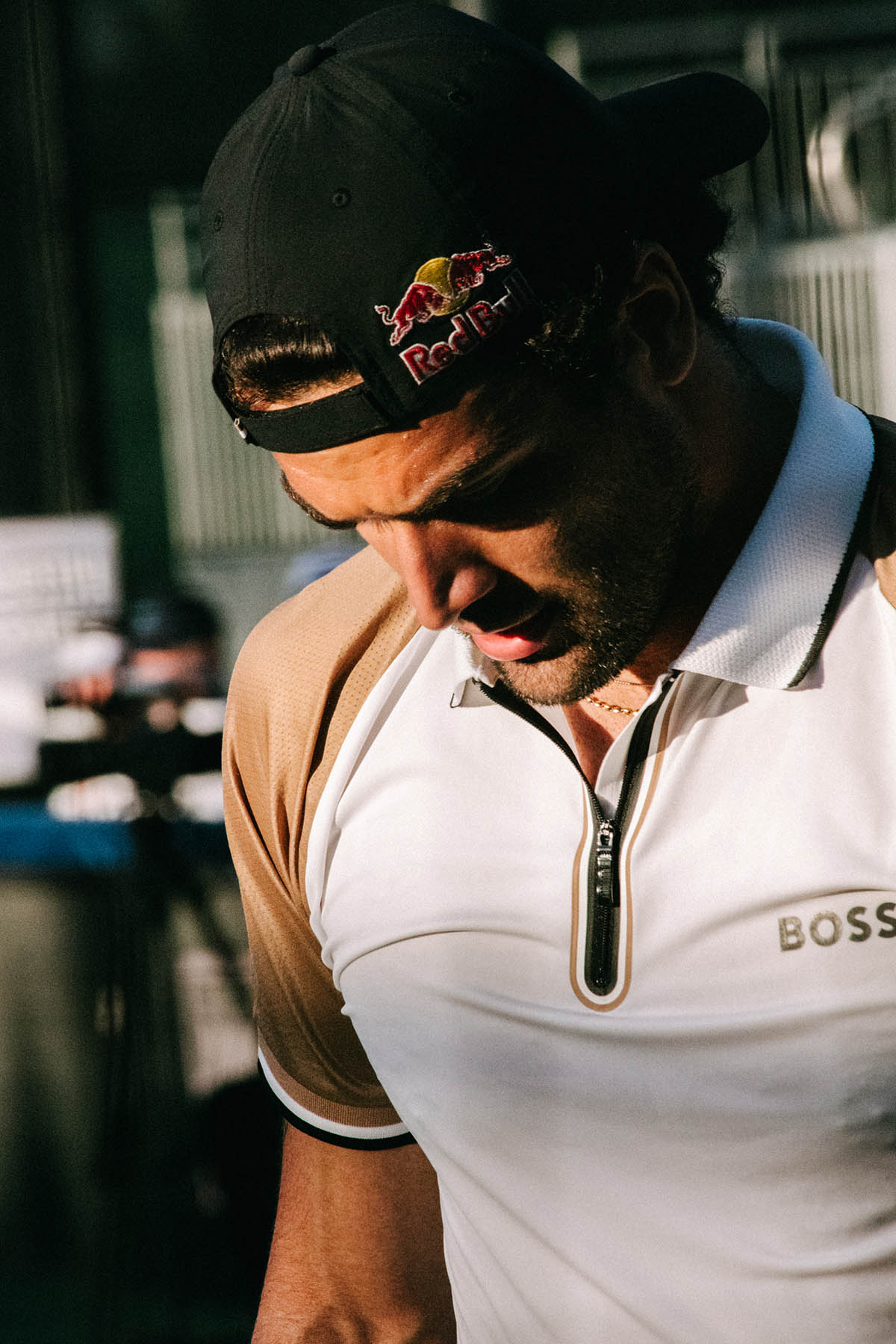
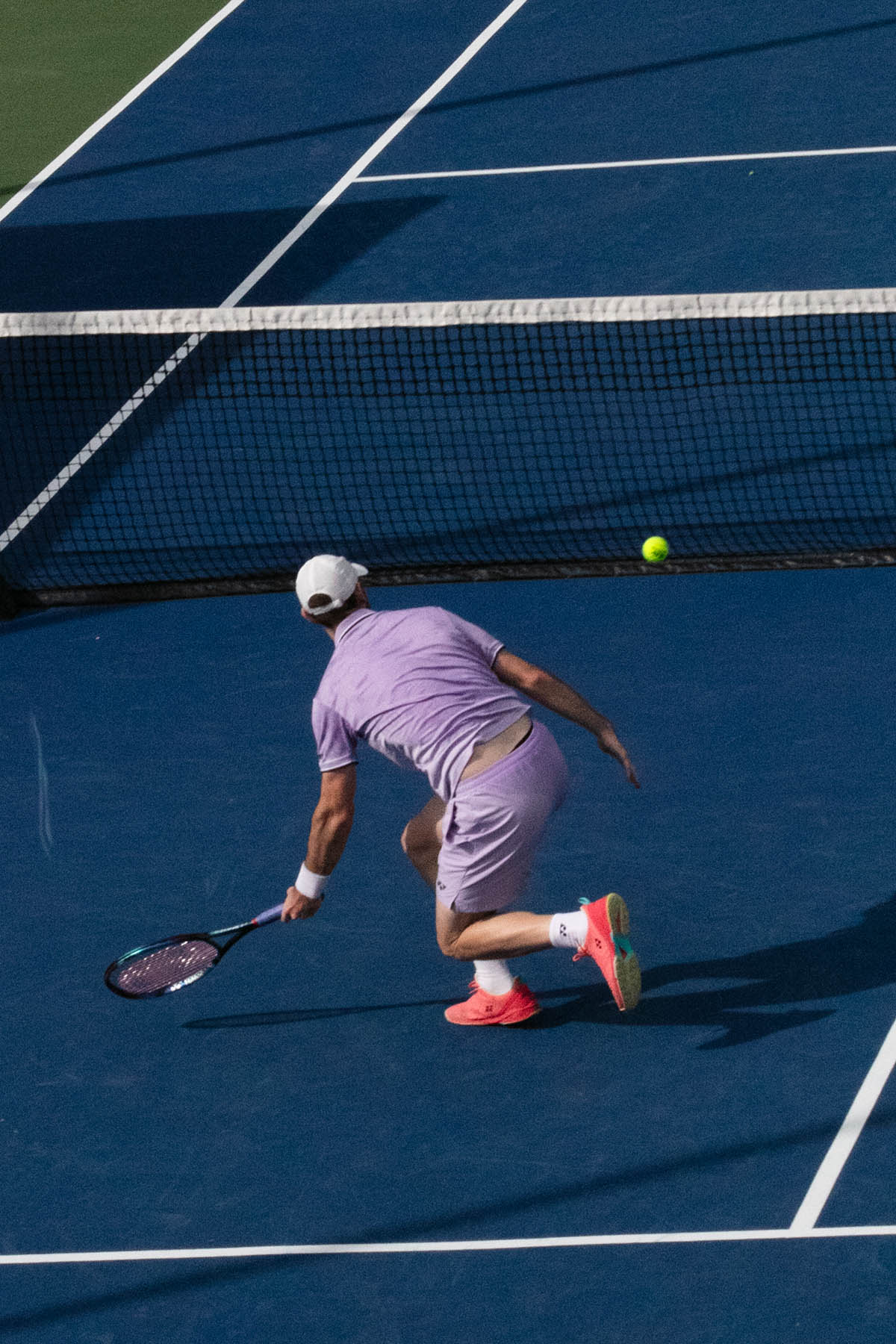
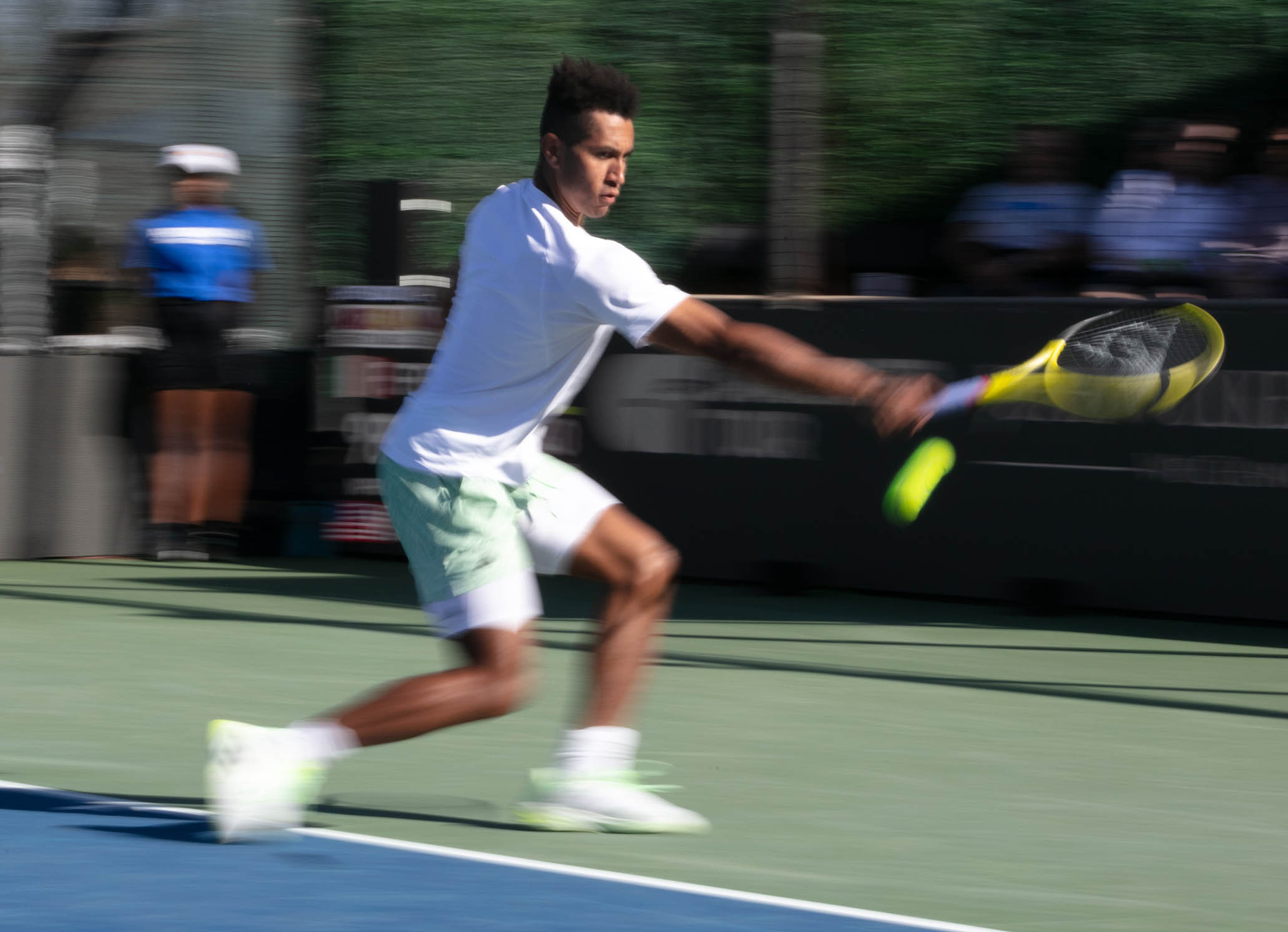
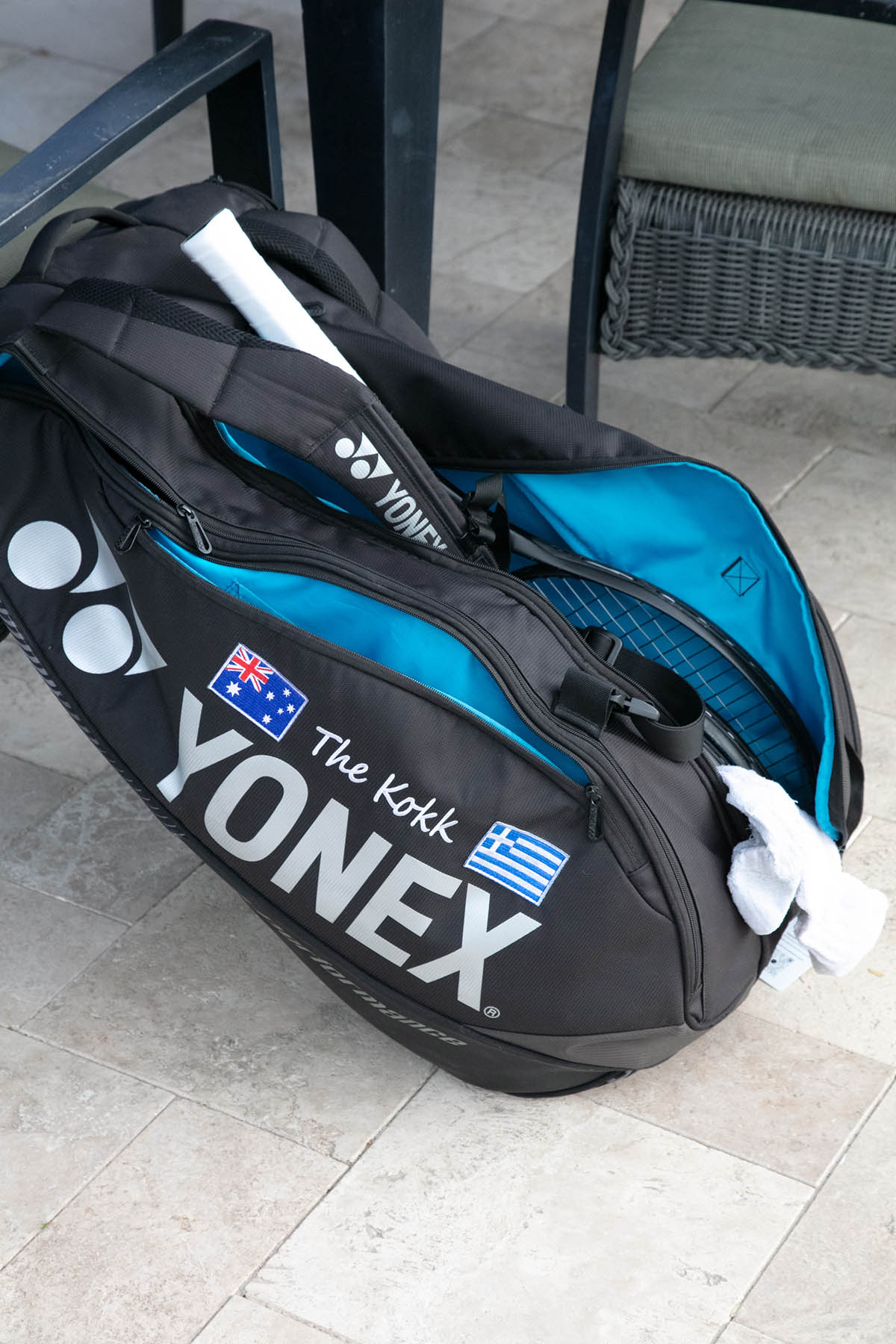
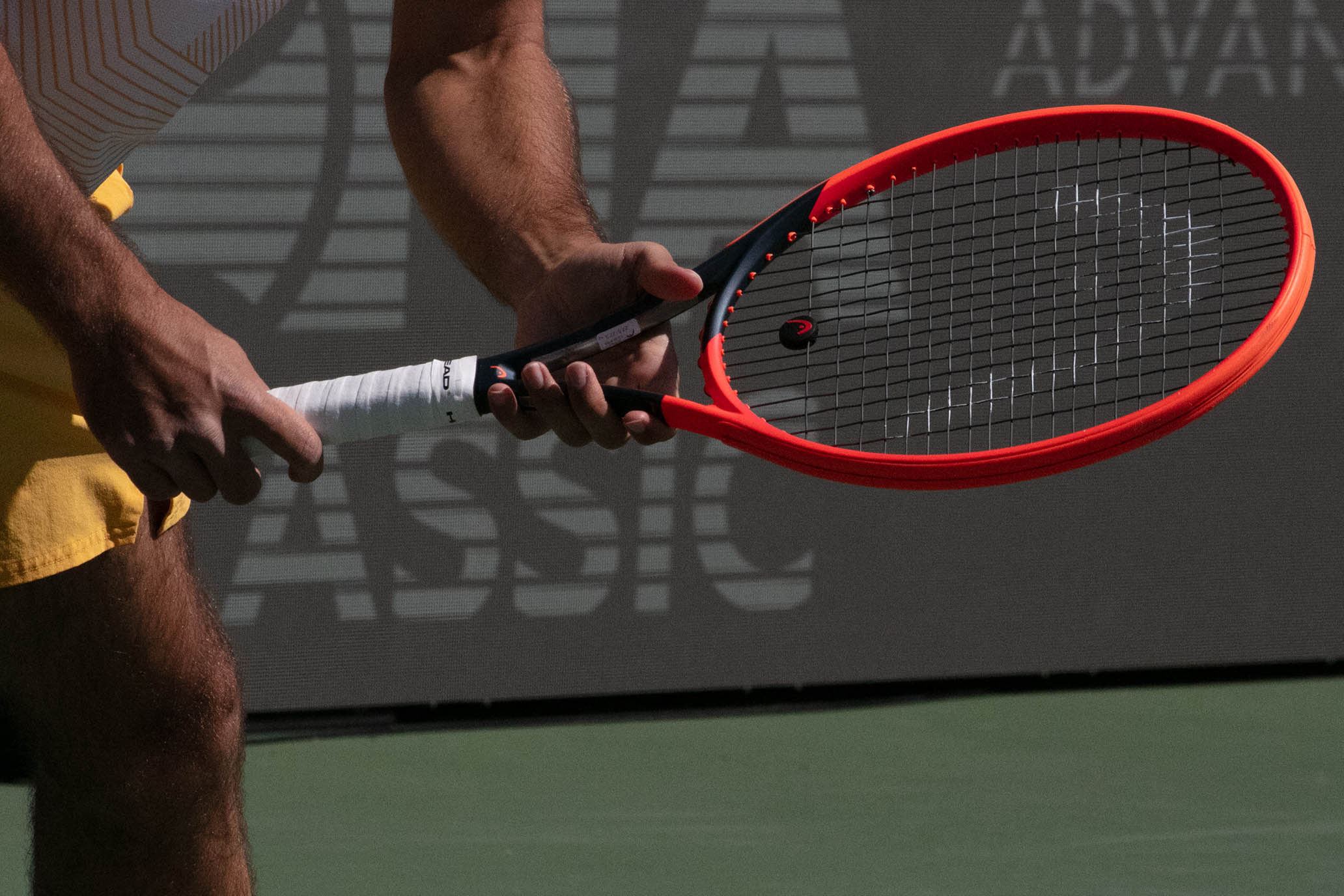
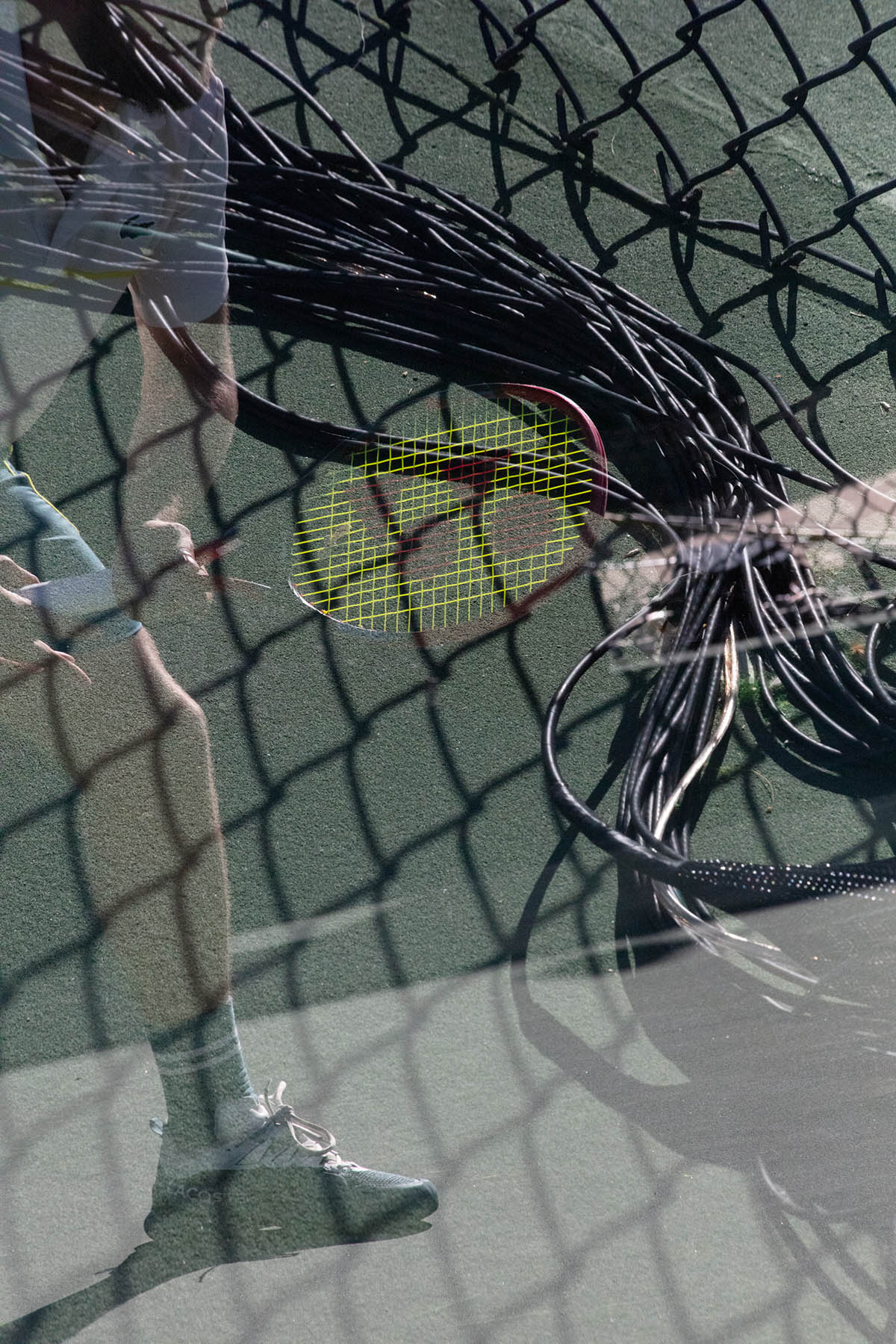
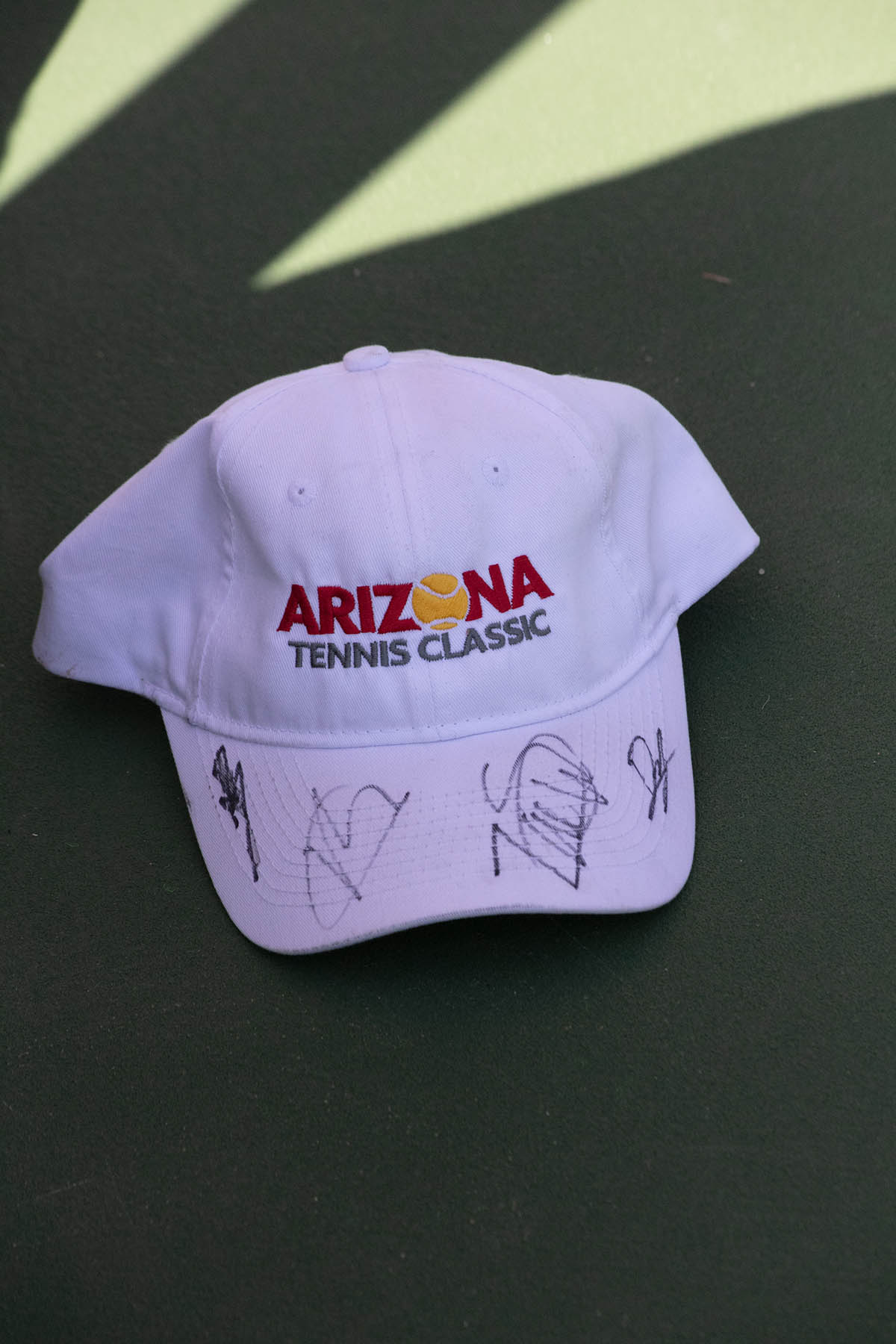
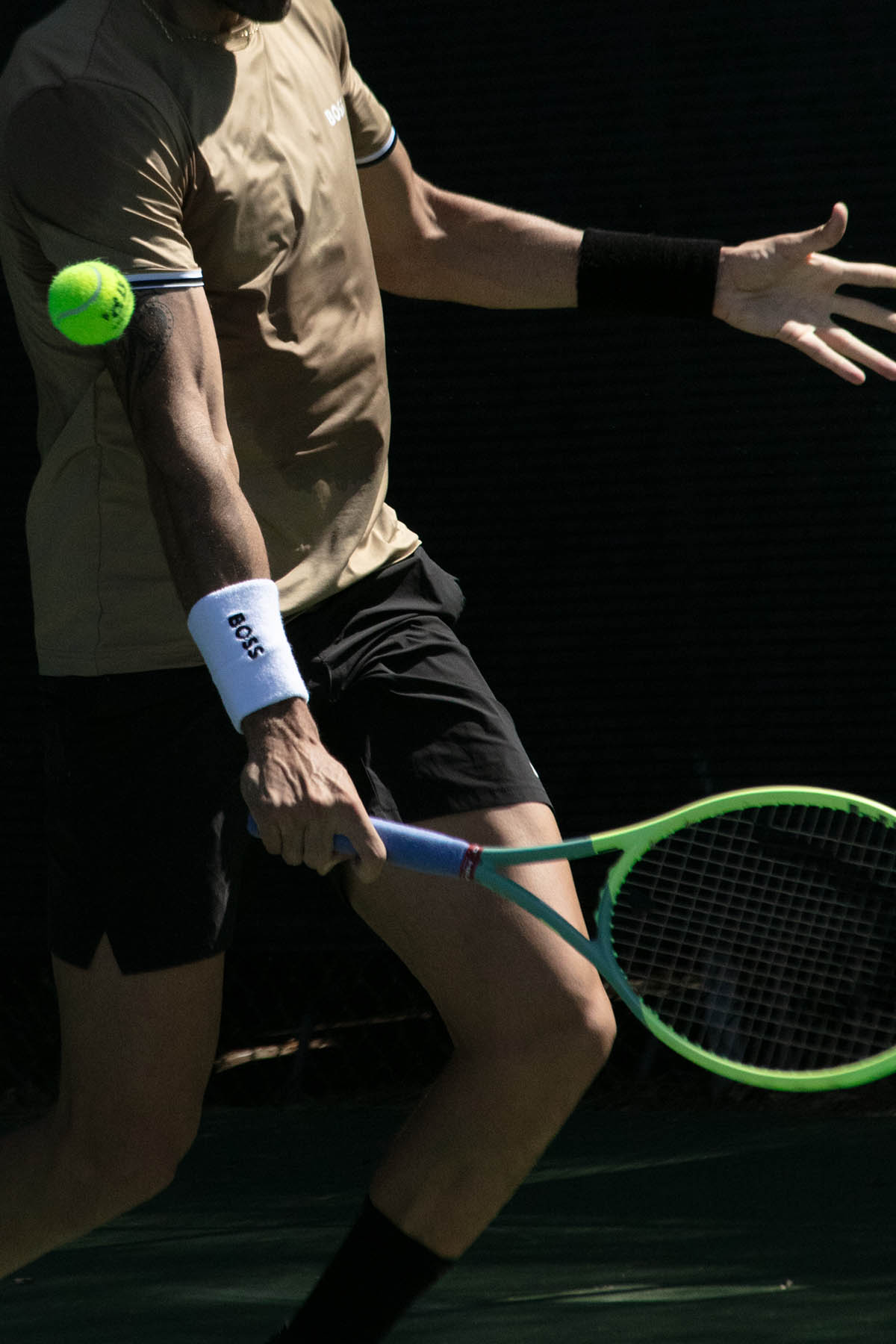
While the tennis world focuses on the action at Indian Wells, we check in on the Challenger series Arizona Tennis Classic, where many players bounced early from The BNP Paribas Open are getting some reps.
While the tennis world focuses on the action at Indian Wells, we check in on the Challenger series Arizona Tennis Classic, where many players bounced early from The BNP Paribas Open are getting some reps.
Photography by Vicente Muñoz
March 14, 2024

SIGN UP — YOU'RE ONLY AS GOOD AS YOUR SECOND SERVE.
Down in the Flood
Down in the Flood
Down in the Flood
The long and watery road to tennis paradise.
The long and watery road to tennis paradise.
By Joel Drucker
Originally Published March 13, 2024
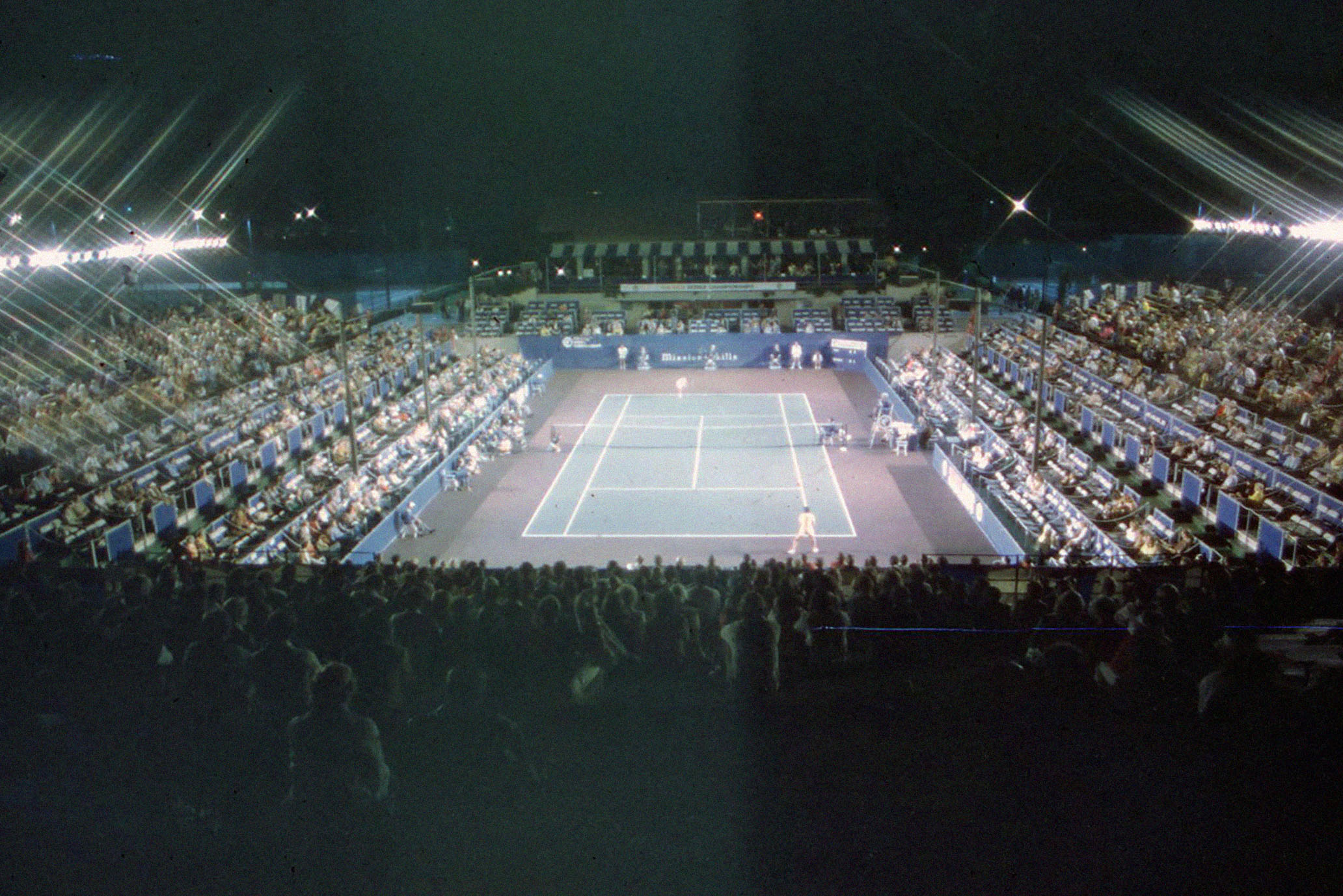
The American Airlines Tennis Games was held at the Mission Hills Country Club from 1976-1980, when the semi-finals and finals were rained out. // Source and date unknown
The American Airlines Tennis Games was held at the Mission Hills Country Club from 1976-1980, when the semi-finals and finals were rained out. // Source and date unknown
If you don’t tame nature, nature will tame you. Certainly, that’s the way it works in Southern California’s Coachella Valley. Marked by the desert’s distinct blend of austerity and beauty, this community also happens to house tennis’ near-Slam event, the BNP Paribas Open.
The year 2024 marks the tournament’s 25th at the Indian Wells Tennis Garden, home of a lush and tactile tennis feast highlighted by match courts of various sizes, now-tall trees, ample shade, comfortable lawn chairs, hundreds of television monitors, clothing boutiques, equipment vendors, beverages galore, and food selections that span from a sit-down meal at Nobu to a pretzel, joyfully scarfed while strolling and gazing at one practice court after another.
To best grasp how tennis eventually bloomed in the Southern California desert, one must break time into two eras: BTF and ATF. BTF stands for Before the Flood—a February 1980 disaster that forced the tournament to cease play at the semifinal stage. This was the moment when nature kicked the tournament’s ass and provided tennis’ powers-that-be with a rationale for relocating this event from California to Florida.
ATF—After the Flood—defines the period that began in 1981, when former U.S. No. 1 Charlie Pasarell resurrected the tournament and repeatedly tamed and reshaped nature in ways few dared imagine. Over the next 19 years, Pasarell envisioned and, aided by a nimble team, created three increasingly bigger venues—La Quinta Resort & Club from 1981 to ’86, the Hyatt Grand Champions from 1987 to ’99, and, since the year 2000, its current 54-acre spot.
This story largely confines itself to BTF, starring a pair of deserts nearly 400 miles apart. Fifty years ago, there arrived the American Airlines Tennis Games. Held in 1974 and ’75 in Tucson, this was an event owned not by an independent promoter but by the fledgling Association of Tennis Professionals (ATP).
SIGN UP — YOU'RE ONLY AS GOOD AS YOUR SECOND SERVE.
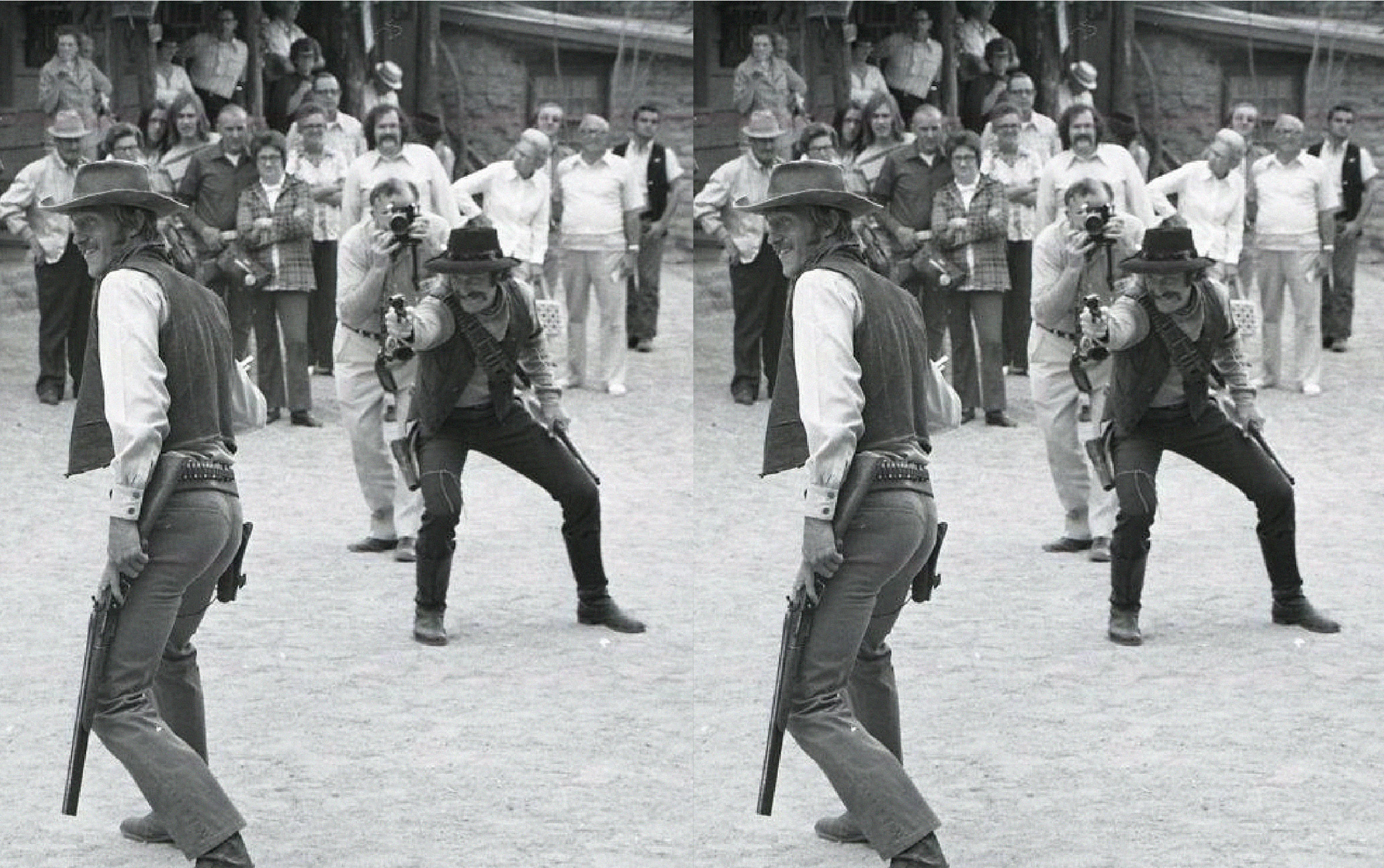
John Newcombe “guns down” Stan Smith during the first installment of the American Airlines Tennis Games—later the Indian Wells Masters—in Tucson, AZ, 1974. // Old Tucson Studios
Formed in 1972, the ATP in its early phase was strongly focused on player empowerment. The ATP’s 1973 boycott of Wimbledon was a game changer, conclusively making it clear that players would not be bossed around by administrators. Later that summer came the computer rankings, a performance-based way to enter tournaments that eliminated the invitational approach that had previously been the law of the land.
Ownership of several high-profile events would also help the ATP generate revenue. Year one in Tucson was fantastic. The entry list featured such greats as Rod Laver, Arthur Ashe, John Newcombe, and Stan Smith. The latter two at that point constituted a major rivalry, inspiring ATP PR man Richard Evans to create a compelling photo opportunity of the two mustachioed greats squaring off in cowboy regalia at a place right out of Hollywood’s vintage Westerns, Old Tucson. Lo and behold, Newcombe in the semis squeaked past Smith in a third-set tiebreaker worthy of High Noon and went on to beat Ashe in the finals. According to Evans, “right away there was a sense that this event was something big.” But after one more go in Tucson, the ATP opted to head west to the Palm Springs area.
In this specific desert, time is another factor; more pointedly, time, memory, and the evocative allure of the political leaders and entertainers whose names literally define the streets of this area some 120 miles east of Los Angeles. Gerald Ford Drive. Eisenhower Medical Center. Bandleader Fred Waring. Gene Autry, nicknamed “The Singing Cowboy.” Singer Dinah Shore. Comedian Bob Hope. And, of course, looming over all names and places, the Chairman of the Board, Frank Sinatra. This week, as the Sinatra song “Young at Heart” echoed through the lobby of one of the BNP Paribas Open’s official hotels, a woman turned to me and said, “You can’t go anywhere here without hearing him.” If the spirit of constant real estate development is always taking the Coachella Valley into the future, the retro pull of those names summons the past, cocooning residents and visitors alike in comfort and familiarity. As the years go on, will streets be renamed for more recent entertainment icons? Madonna Drive? Leonardo Lane? Robin Williams Boulevard?
Year-round sunshine and California’s seemingly inherent spirit of aspiration and status had long made the Coachella Valley a lively tennis community. For decades, Palm Springs’ most prominent tennis hotbed was The Racquet Club, a cozy, welcoming venue favored by actors, directors, producers, agents, and their many friends and associates in such burgeoning fields as real estate, entertainment law, and other business ventures. Back in the early ’60s, UCLA stars Ashe and Pasarell spent time at The Racquet Club playing hit-and-giggle tennis with various celebrities. One of Pasarell’s first partners who rapidly became a close friend was a woman then named Barbara Marx, in 1976 to become Barbara Sinatra.
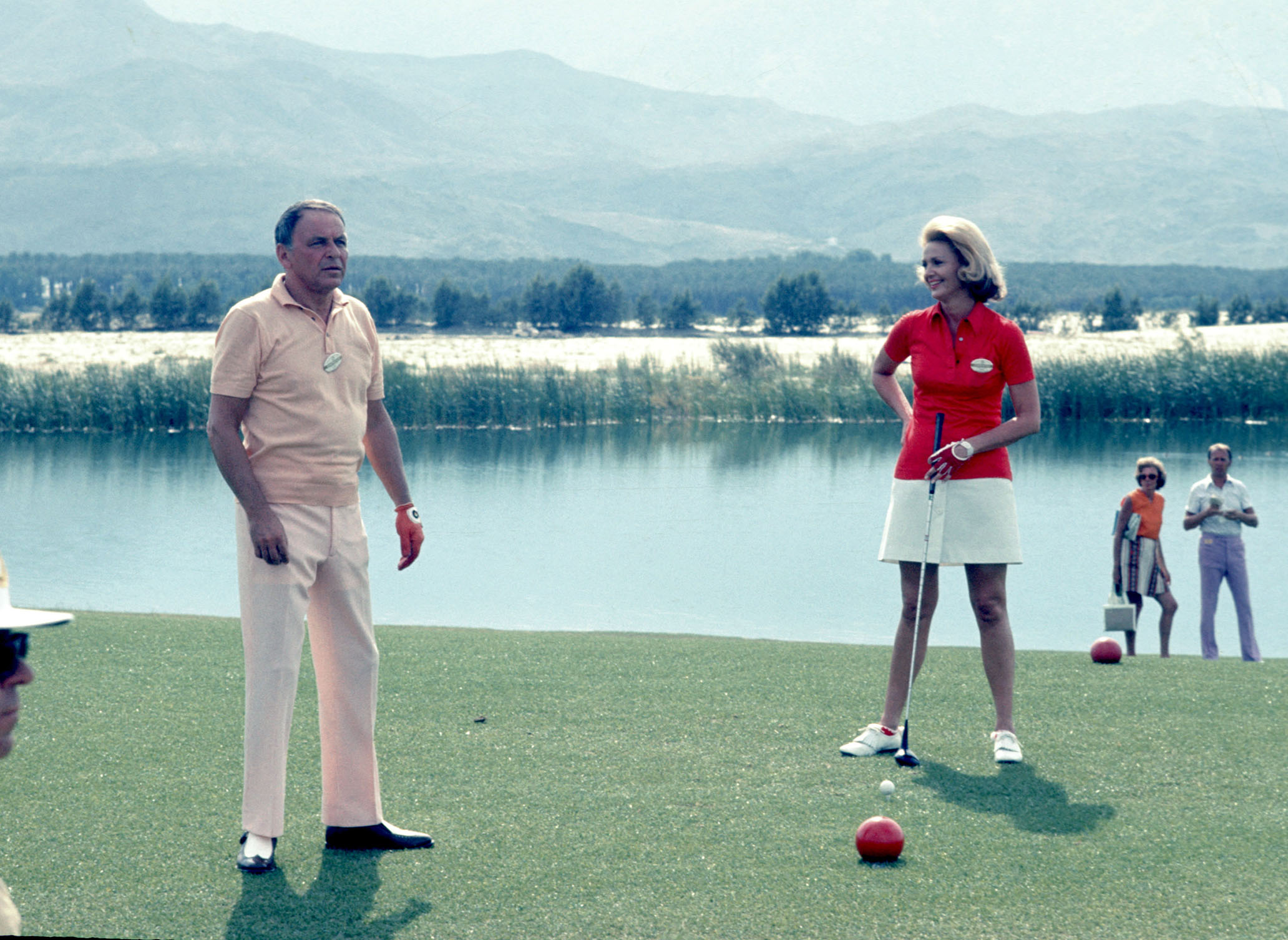
Frank Sinatra and Barbara Marx at the Dinah Shore Golf Classic, 1973 // Getty
That was the same year the tournament commenced its run in Rancho Mirage at Mission Hills Country Club. Known to all as “Mission Hills,” the venue had opened in 1971 and was purchased in 1974 by, of all corporations, Colgate-Palmolive. These were the years of the conglomerate, when even a company primarily known for its toothpaste perceived value in diversifying its holdings; not just into more packaged goods, but even into real estate and the newly emerging world of sports marketing. Colgate-Palmolive’s leader, David Foster, loved golf and tennis. The Colgate–Dinah Shore Winners Circle, held at Mission Hills, became a major LPGA stop. Foster purchased Bancroft, the racquet manufacturer that made the frames used by Billie Jean King and Björn Borg, featured King in Colgate ads, and also made Mission Hills the spot for the WTA Finals and the 1978 Davis Cup Challenge Round. An ATP event fit nicely into the portfolio.
Jimmy Connors, Laver, Borg, Newcombe, and Ashe were among the headliners that first year. Former U.S. No. 1 and recent Davis Cup captain Dennis Ralston had just come aboard as tennis director. A brilliant coach, Ralston proved a magnet, to the point where such top players as Roscoe Tanner, Tom Gorman, John Lloyd, Chrissie Evert, and many others all began to train at Mission Hills.
“The atmosphere and the tennis environment were incredible,” says Tommy Tucker. “So many of the best players in the world were here all the time.” Brought to Mission Hills by Ralston in 1977 to be the head pro, Tucker has been there ever since, engaged in everything from coaching tons of pros to conducting star-studded pro-ams and clinics to giving lessons to players of all ages and stages. “Tommy was always positive,” says Brian Gottfried, winner of the tournament in 1977 and a frequent participant in training sessions at Mission Hills. “He always had a smile and kept everything fun.”
But amid all the great competition and camaraderie, nature made its presence felt during those early years, most notably by numerous windstorms that could reach as high as 50 miles per hour, an intrusive factor accelerated by Mission Hills being smack in the path of 4,000 windmills located 15 miles to the northwest.
That was nothing compared to what happened in 1980. That February, floods came that drove thousands of people from their homes—a record 17-plus inches of rain. As a levee broke, streets turned into rivers. Six counties were declared disaster areas. Property damage exceeded hundreds of millions. The tournament got underway, but the conditions were becoming increasingly horrible. “We had sand in our eyes and our nose and our mouth,” says Tucker. Eventually, it was decided to stop play at the semifinal stage, a quartet of Americans—Connors, Gene Mayer, Brian Teacher, Peter Fleming—still in contention. “It just rained and rained,” says Teacher. “It was strange being in the desert and being rained out. You don’t expect that to happen, but it did.”
The tournament lost $80,000 that year. Though surely it would have generated a profit had it been able to finish, the ATP’s leaders were leaning strongly in the direction of completely ditching what they perceived strictly as a tiny town located in a desolate California desert. Florida would be much better. Call it an East Coast mentality.
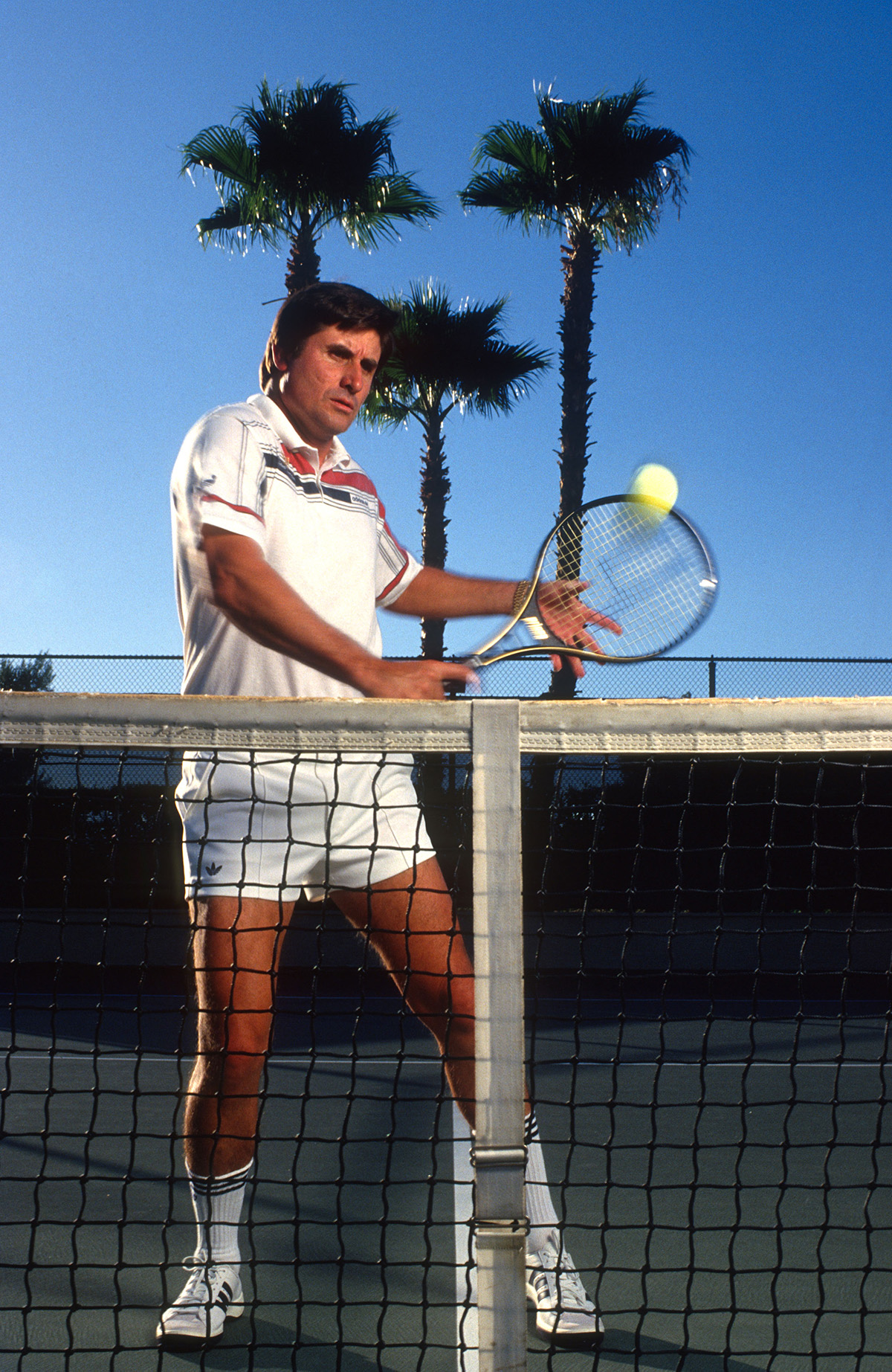
Charlie Pasarell brought the tournament to La Quinta Resort & Club in 1981 // Getty
But one ATP board member passionately disagreed. Pasarell had just started to work as head of tennis for Landmark Land Company, a firm that had purchased La Quinta Resort & Club in 1977. Arguing the area’s case to the ATP, Pasarell pointed out that Coachella Valley was located a swift two-hour drive from the country’s second-biggest city, Los Angeles. Millions more from all over California, Nevada, Arizona, and even the East Coast loved the chance to head to the desert for sun and fun.
And so Pasarell was granted the sanction to run the tournament at La Quinta—a mere 10 weeks prior to the start of the tournament. The ATF Era had begun. “There was no question in my mind that this area had all it took to support a first-rate tennis tournament,” said Pasarell. The three stadiums he built also validated another facet of desert life: If you don’t build it, they won’t come. Or perhaps there’s a better motto for the tournament. As Sinatra sang, “I’ve lived a life that’s full/I traveled each and every highway/And more, much more than this/I did it my way.”

The Indian Wells Tennis Garden as we know it today: Tennis Paradise. // Associated Press
Joel Drucker has covered the BNP Paribas Open at three venues, starting with a day trip from Los Angeles to La Quinta in 1983.
SIGN UP — YOU'RE ONLY AS GOOD AS YOUR SECOND SERVE.
Alex De Minaur Grows Up
Alex De Minaur Grows Up
Alex De Minaur
Grows Up
The Demon syncs his mind and body.
The Demon syncs his mind
and body.
By Giri Nathan
March 8, 2024
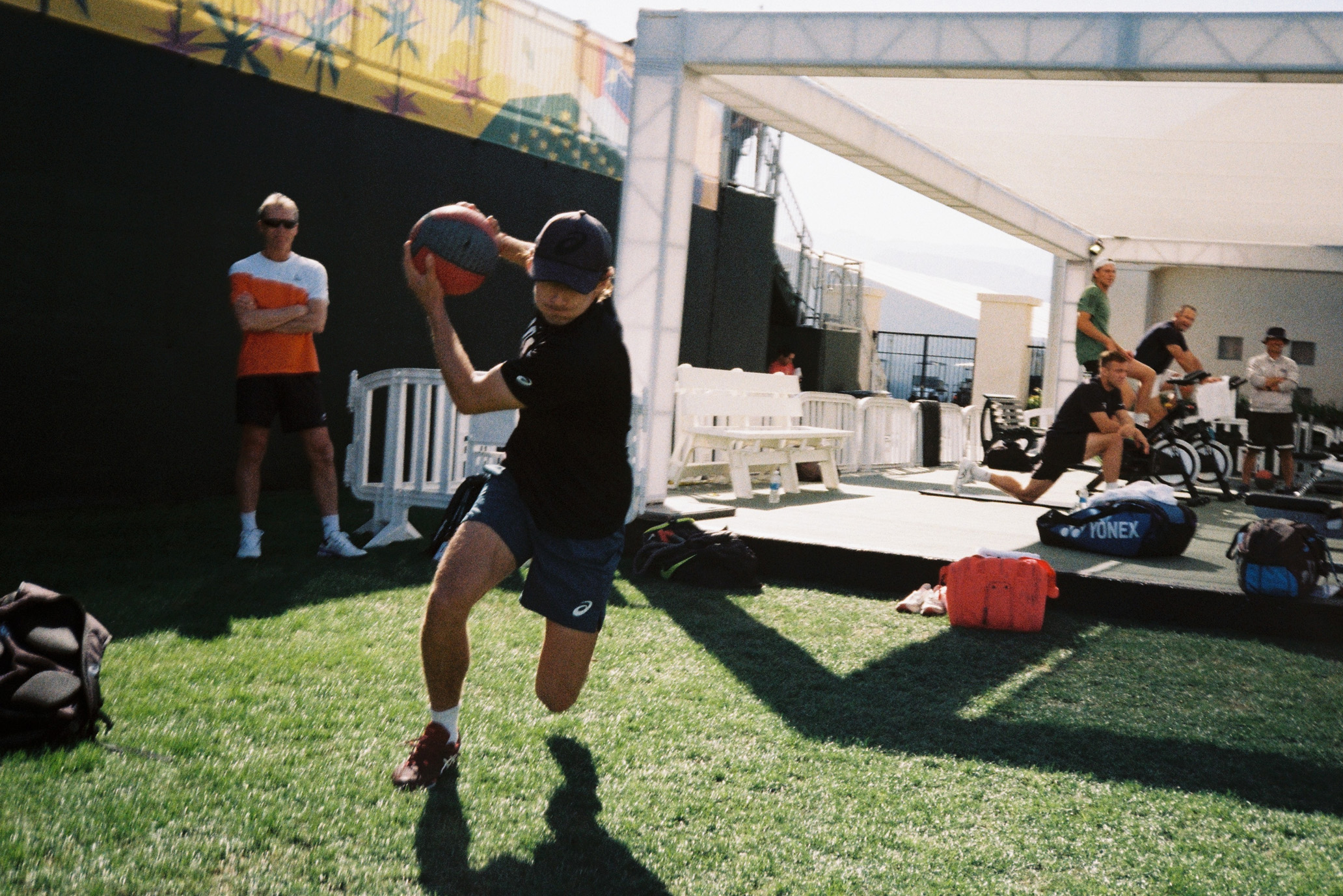
Alex De Minaur works off In-N-Out burgers at Indian Wells / David Bartholow
Alex De Minaur works off In-N-Out burgers at Indian Wells / David Bartholow
We might look back at this season as the one where the 25-year-old Alex De Minaur grew up, and grew into his tennis. In January, at home in Australia, he made the top 10, territory I thought might always elude him. I can’t call to mind an alleged six-footer with a more 5-foot-9 presence on the court. The speed was always there; nobody on tour would ever doubt the Demon in a footrace. But it didn’t always seem that his mind and his body were in alignment. I sometimes felt like I was watching a player with the game plan of a big hitter and the actual physical tools of a Gilles Simon-esque grinder. De Minaur used his speed to set up his hyper-flat attacks, but lacked the power to make those attacks to hurt the best opponents…and then he’d have to run around and hit more balls. Those flat strokes and tireless chase-downs made for fun highlights and occasional upsets, but they had only once put him in the second week of a major. He looked like a top 20 player, which is what he’d been, until very recently.
The Australian has recently put a noticeable amount of meat on his bones; that’s got to be grueling work for someone of his build undergoing the grind and caloric drain of tour life. In a 2023 interview he said that he’d gained four or five kilograms since 2019, and he looks a little beefier still than he did last year. Now there’s a lot more pop on his ground strokes and the serve. As proof, the ur-returner Novak Djokovic managed to win only one point off his first serve in a loss to De Minaur in January. (De Minaur has won 66.0 percent of service points so far this year, up from 64.0 percent in 2023 and 62.5 percent in 2022, per Tennis Abstract. These tiny margins are everything in tennis.) This new and improved Demon made it to the final in Rotterdam, losing to Jannik Sinner, perhaps the only guy on tour who’s having a more auspicious start to the year than him. Then, in Acapulco, he proved himself better than his neighbors in the third tier of players on tour, taking out Casper Ruud and Stefanos Tsitsipas, who lie on either side of his No. 10 ranking. That was his second straight Acapulco title.
It’s what this wholesome fellow De Minaur did immediately after winning that tournament that really elevates this story to peak wholesomeness. As he described it: He won the Acapulco final, finished media at 1 a.m., stayed up to pack, and got on a 6:20 a.m. flight to Tijuana, then crossed the border to San Diego, arriving around 10:30 a.m., to watch his girlfriend Katie Boulter play her first 500-level final that day. In a testament to the logistical hellishness of dating across pro tennis tours, this was the first time De Minaur had caught one of her matches live, two years into their relationship.
Good fortune must be contagious, because the 27-year-old Boulter had the best week of her tennis life. Heading into the tournament, she had managed nine wins over top 50 opponents over her career; she picked up five more such wins in San Diego alone, including the tournament’s second, seventh, third, and sixth seeds. When she’s really letting her forehand rip, it’s utterly commanding and hypnotic. Boulter took on an in-form Marta Kostyuk in the final, with De Minaur looking on in the stands. By set 2 it was clearly going to be a godly forehand day for the Brit. She held up her end of the deal, and the couple secured matching 500-level titles last weekend. They celebrated at In-N-Out. Boulter is now at a career-high ranking of No. 27, which will earn her seeds at big tournaments for the first time. Their careers are rising in unison. There will be no repeated dual magic in Indian Wells—Boulter bowed out in the first round—but at least they can still go to In-N-Out if they want.
SIGN UP — YOU'RE ONLY AS GOOD AS YOUR SECOND SERVE.
The Hopper
—Simona Halep appealed her doping ban…and won.
—A pre-Wimbledon WTA event may return to the The Queens Club.
—Taylor Fritz is with Hugo Boss now.
—Rafael Nadal’s comeback stalls—yet again—at Indian Wells.
—The self-described Taste of Tennis interviews
Maria Timofeeva and Jonny Levine on the Craig Shapiro Tennis Podcast.
—ICYMI: Vicente Muñoz’s postcard from Buenos Aires.
—Brittani Sonnenberg’s report from the Austin Open.
—The Reebok Pump is back.
SIGN UP — YOU'RE ONLY AS GOOD AS YOUR SECOND SERVE.

Reebok Is Here to Pump...You Up
Reebok Is Here to Pump...You Up
The classic Court Victory Pump is coming back to take on those rock and roll tennis guys.
The classic Court Victory Pump is coming back to take on those rock and roll tennis guys.
By Tim Newcomb
March 1, 2024

Image courtesy of Reebok
Image courtesy of Reebok
Michael Chang started pumping his Reeboks in 1990. For the first time since 2016, Reebok invites us all to do the same, as they are set to release a retro version of the tennis-specific Court Victory Pump in white, green, and yellow on March 15.
The Pump and Hexalite—a honeycomb-shaped cushioning system—both make a return. And the yellow tennis ball again serves as the pumping mechanism on the tongue, easily the most powerful technology/style tie-in across the history of the sport’s sneakers. The midcut height and TPU and rubber reinforcement across the shoe’s upper give us a true retro feel on the Court Victory Pump.
The Reebok Pump technology created cultural cachet shortly after it was introduced at the end of 1989. It was worn by Dominique Wilkins while he won the NBA slam dunk contest in 1990 and then the next year when Dee Brown paused during the contest to pump up his Reeboks before winning the 1991 iteration. But basketball wasn’t the only home for the pump, as Reebok outfitted Chang in the tennis-specific Court Victory Pump, a sneaker statement he first made at the 1990 French Open as the tennis ball pump mechanism popped from his shoes.
Since that time Reebok has sent the retro into the wild a handful of times, the most recent version released in 2016. Now we get a retro version of the Court Victory Pump, available for $160, complete with the famous tech and ’90s-inspired style.
Really, though, all we really care about is that tennis ball pump. Now we have it.
Follow Tim Newcomb’s tennis gear coverage on Instagram at Felt Alley Tennis.
SIGN UP — YOU'RE ONLY AS GOOD AS YOUR SECOND SERVE.
SIGN UP — YOU'RE ONLY AS GOOD AS YOUR SECOND SERVE.

Reporter's Notebook: The ATX Open in Austin
Reporter's Notebook: The ATX Open in Austin
Notes and observations from the live music capital.
Notes and observations from the live music capital.
By BRITTANI SONNENBERG
March 1, 2024


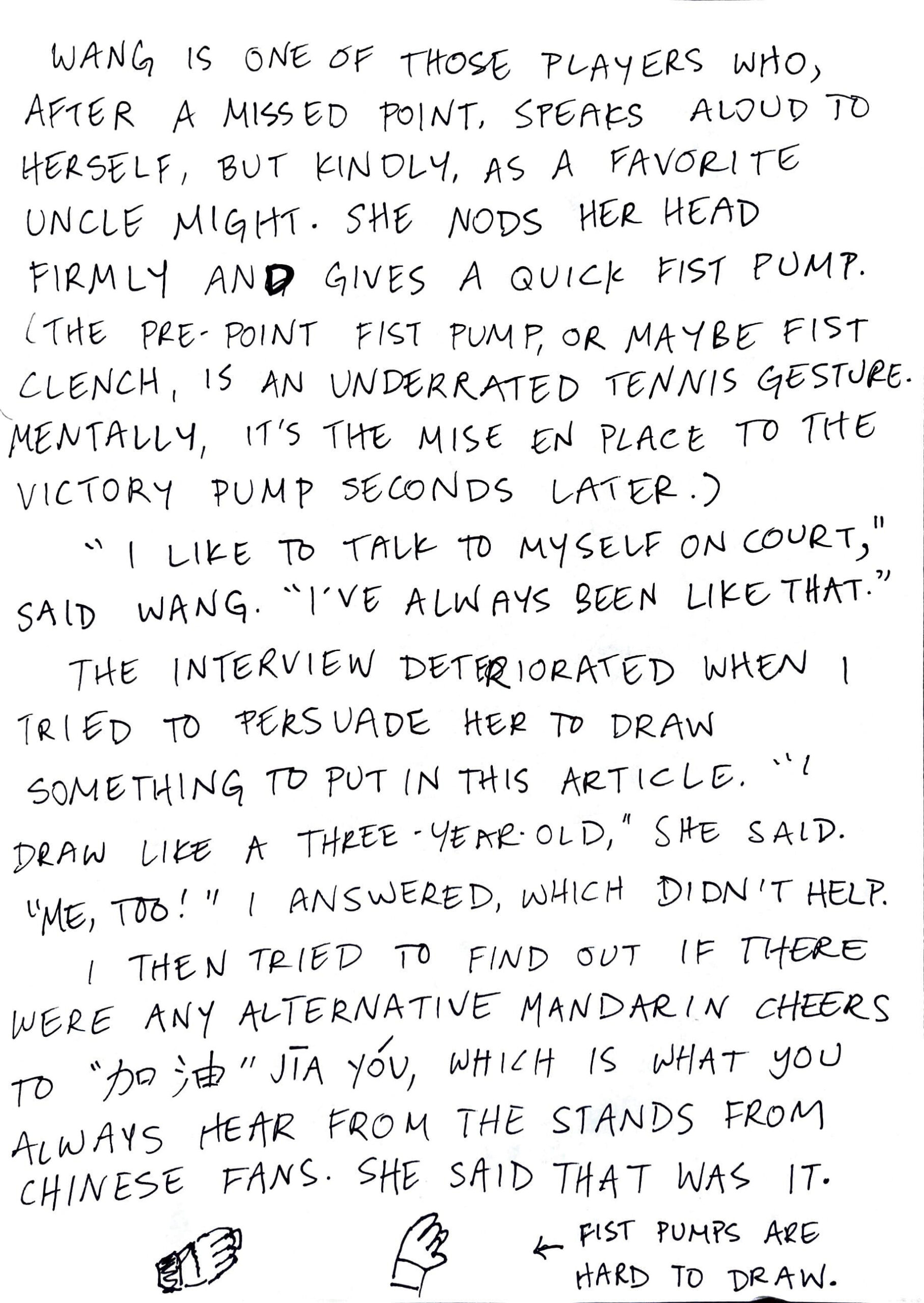
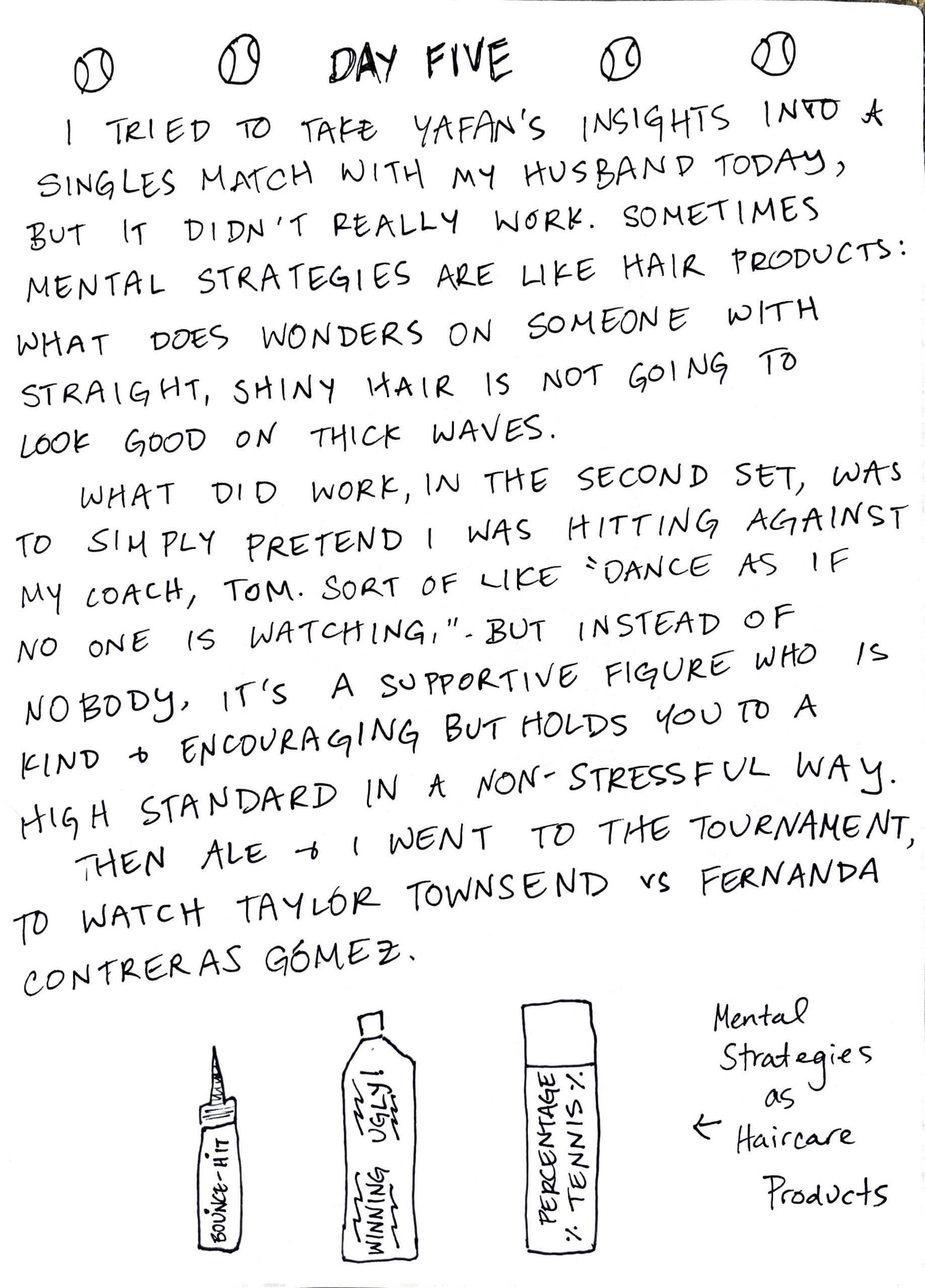
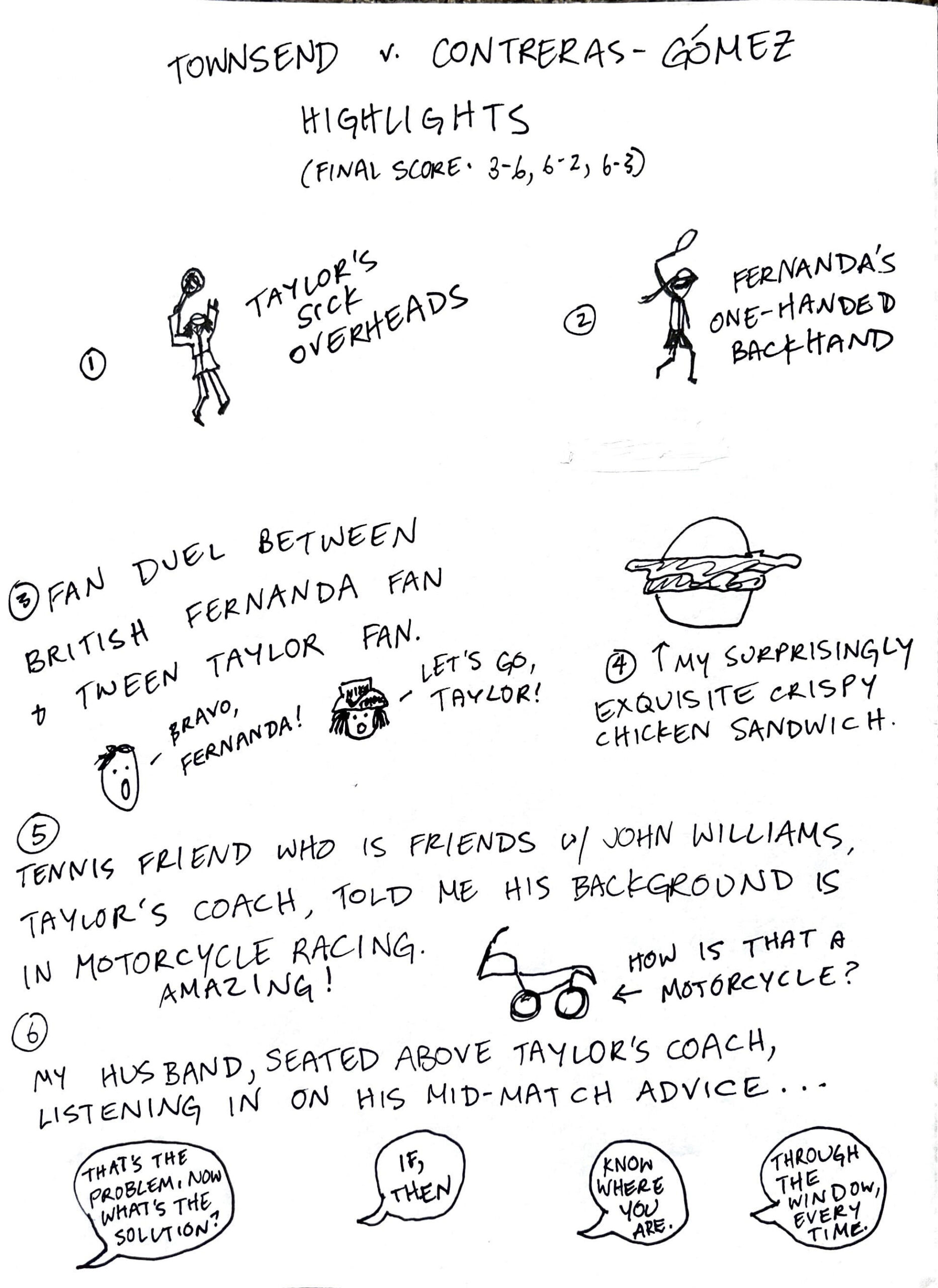
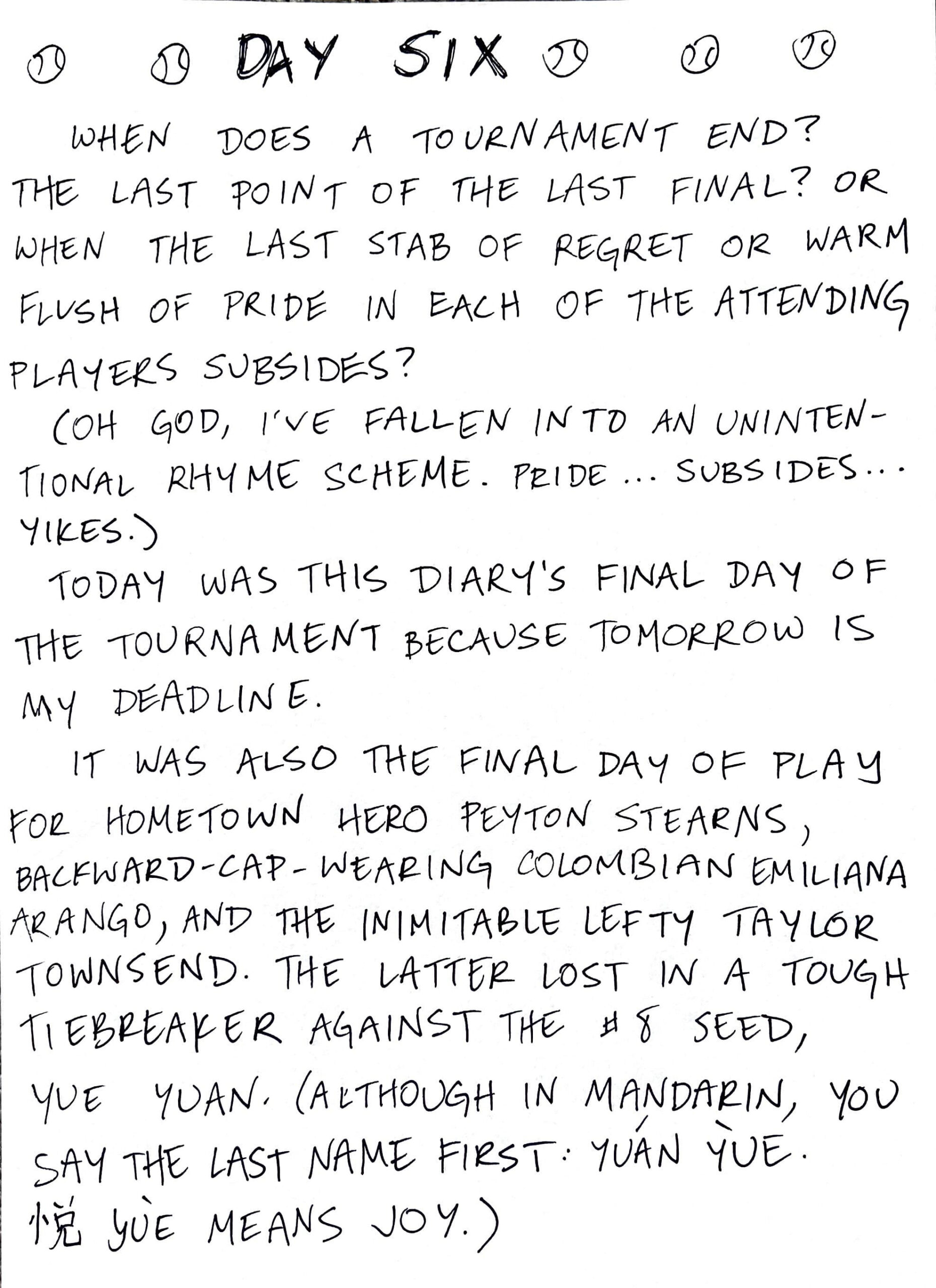

SIGN UP — YOU'RE ONLY AS GOOD AS YOUR SECOND SERVE.
Get Off Carlos Alcaraz’s Lawn
Get Off Carlos Alcaraz’s Lawn
Joao Fonseca and Jakub Mensik are making moves.
Joao Fonseca and Jakub Mensik are making moves.
By Giri Nathan
February 23, 2024
Take a bow, Joao Fonseca, you’re the first player born in 2006 to win a tour-level match // Associated Press
Take a bow, Joao Fonseca, you’re the first player born in 2006 to win a tour-level match // Associated Press
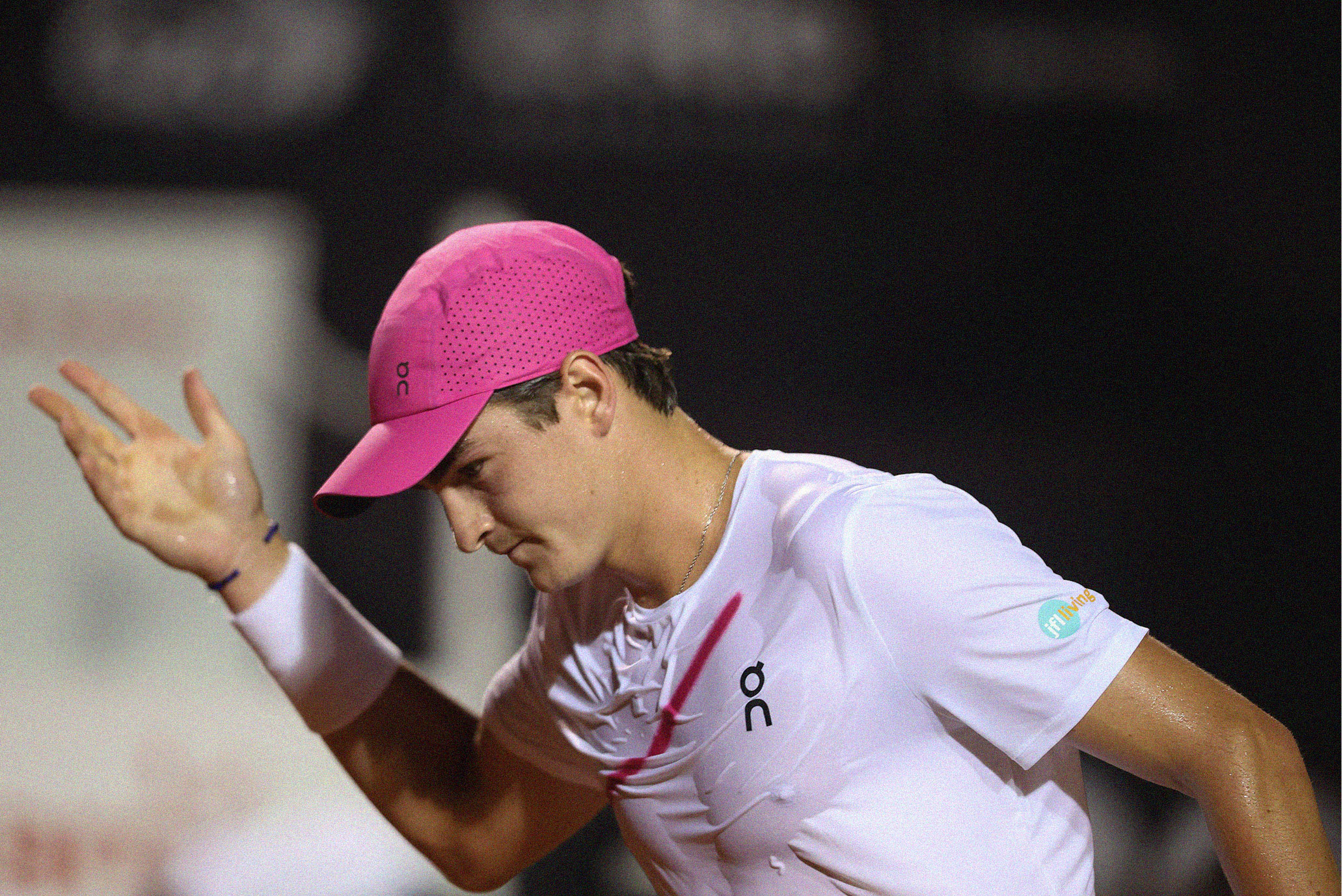
February is a sleepy phase of the tennis calendar. What better use for it than to showcase the future? Teens are making moves on the ATP tour this week, and it’s almost enough to start looking at Carlos Alcaraz—who retired with an ankle sprain in Rio but said he’ll be back in time for Indian Wells—as a grizzled old man by comparison. Soon enough he’s gonna be yelling at these two to get off his lawn (in southwest London).
This week in Rio, the 17-year-old Joao Fonseca got a wild card into the tournament that’s held just 10 minutes from his house, and he’s put it to good use. Fonseca, currently the No. 2-ranked junior, is not long for the juniors; no chance he delivers on his commitment to play at UVA this fall, either, because he seems ready for the genuine article. On Wednesday he became the first player born in 2006 to win a tour-level match. Which led me to wonder: How many players have ever won a bagel set in their second-ever tour-level match? Fonseca whupped his first-round opponent Arthur Fils—an immensely talented 19-year-old prospect in his own right—on a drizzly evening with a delirious home crowd, 6–0, 6–4. (On that note: Brazilian crowds make me feel like I’m watching gladiatorial combat, but in a good way. Someone should take the Miami Open out of that accursed parking lot and drop it somewhere here.)
Fonseca backed that up with a win on Thursday over Christian Garin, 6–4, 6–4, becoming the youngest ATP quarterfinalist in a decade, and there were a few shots in this one that made me consider calling the authorities. Forget the eye test, I swear by the ear test, and we’re getting some Jannik Sinner-ish readings on the monitors, though I suspect Fonseca is even further along developmentally than Sinner was at age 17. Technique is wonderful on both wings; racquet head speed is bonkers; winners are spurting out of nowhere. Serve is perhaps a little idiosyncratic, but the rest of the repertoire is so scary I’d be a little surprised if he wasn’t a top 10 dude by the age of 20. Next up on Friday is a winnable quarterfinal match against world No. 113 Mariano Novana. You’ll be seeing a lot of this kid, soon.
SIGN UP — YOU'RE ONLY AS GOOD AS YOUR SECOND SERVE.
SIGN UP — YOU'RE ONLY AS GOOD AS YOUR SECOND SERVE.
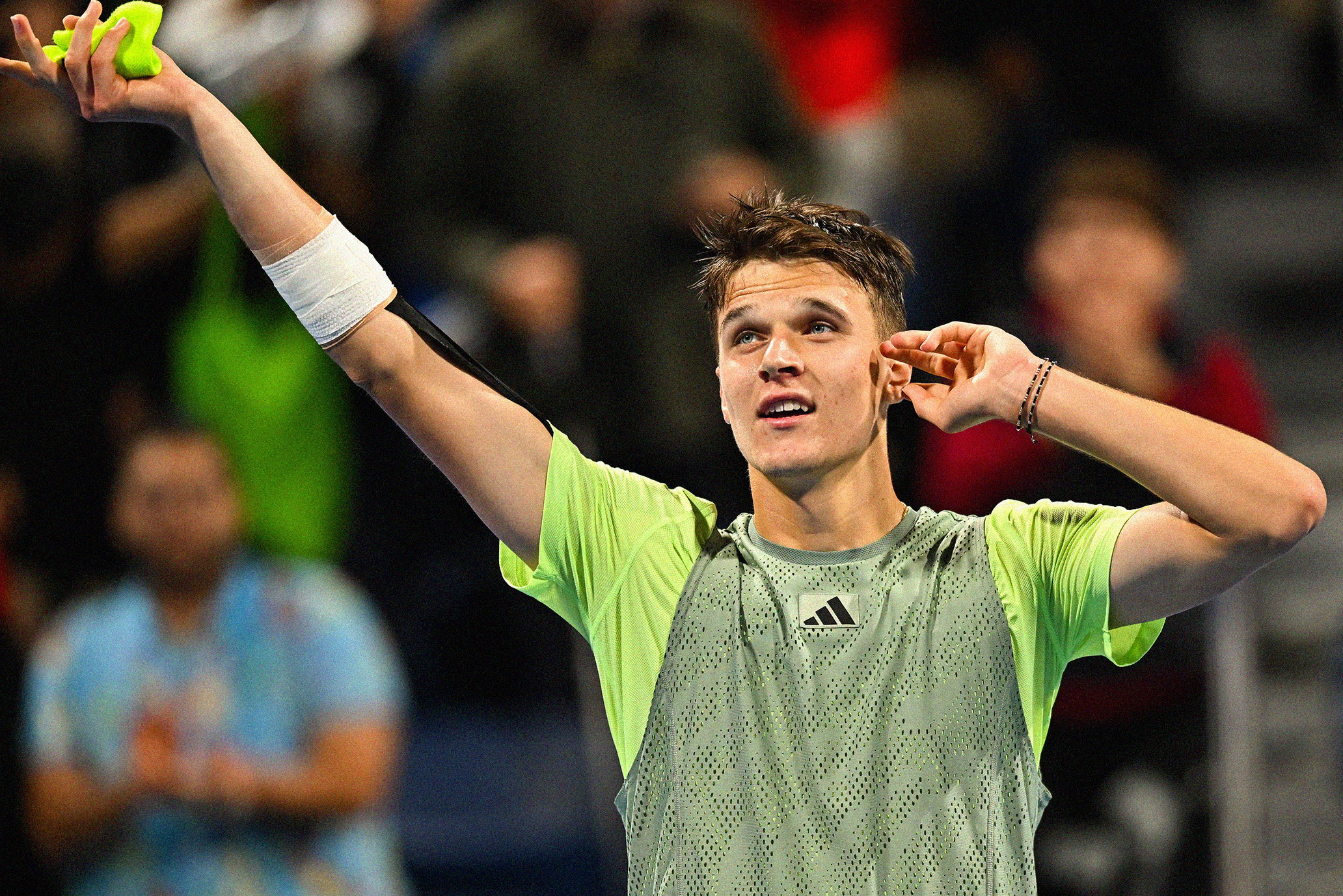
A free iPhone AND wins over three top 50 opponents for Jakub Mensik in Doha. // Associated Press.
A free iPhone AND wins over three top 50 opponents for Jakub Mensik in Doha. // Associated Press.
Elsewhere in auspicious wild-card news, the 18-year-old Jakub Mensik should thank a cool new ATP policy for his joy in Doha this week. The Next Gen Accelerator Programme, which sounds like a tool for particle physics, is actually just a way to boost good players under the age of 20. If you’re ranked inside the top 250, and there are three tour events happening in a given week, you can now get a wild card into a 250-level event (once) or its qualifying draw (twice). Mensik, who was ranked No. 116 in the world at the start of the week and has had some interesting wins over the past few months, signed right up. He said he picked Doha specifically because he got a free iPhone out of the deal. As an added bonus, he also got wins over three top 50 players, which he’d never accomplished even once before.
If Mensik only took out Alexander Davidovich Fokina in the first round, dayenu, but instead he kept going. I’ll leave it to the reader to decide how much it means for a player to beat Andy Murray at this moment in his career. While Murray appears to have developed an unseemly addiction to losing close matches—he will be reliving the botched gimme volley on set point in the first set—he did put up a tough fight, and it was high-level stuff from Mensik to win in three tiebreaks.
Even then, there’s a sizable gap between beating those two guys and beating Andrey Rublev on a hard court. The Rublev experience is difficult to simulate; the power of “bweh” must be experienced firsthand, as there aren’t many players maintaining that raw pace from first point to last. It’s the sort of tennis that tends to blow away an unprepared foe. Somehow Mensik stood on the baseline and tracked the ball as if he’d been practicing against the Rublev forehand his whole life. Mensik’s tolerance for long, punishing rallies is a testament to his very sturdy baseline game, and the 6-foot-4 Czech backed it up with an excellent serve, which Rublev didn’t manage to break once in the match. Mensik won 6–4, 7–6(6) and made his first ATP semifinal, where he’ll play Gael Monfils, who, incidentally, went pro the year before Mensik was born.
SIGN UP — YOU'RE ONLY AS GOOD AS YOUR SECOND SERVE.
The Hopper
—Coco Gauff is one of Time magazine’s women of the year.
—Ivo Karlovic has officially retired.
—Jon Wertheim profiles Novak Djokovic, whom he declares the best ever.
—James Blake has been sanctioned for a gambling endorsement, and he’s not the first.
—Oh, dear. Tennis officials have “strongly recommended” players don’t leave the tournament grounds during the Mexican Open.
—A trailer for “Challengers” has been released.
—Giri Nathan moves out.
SIGN UP — YOU'RE ONLY AS GOOD AS YOUR SECOND SERVE.
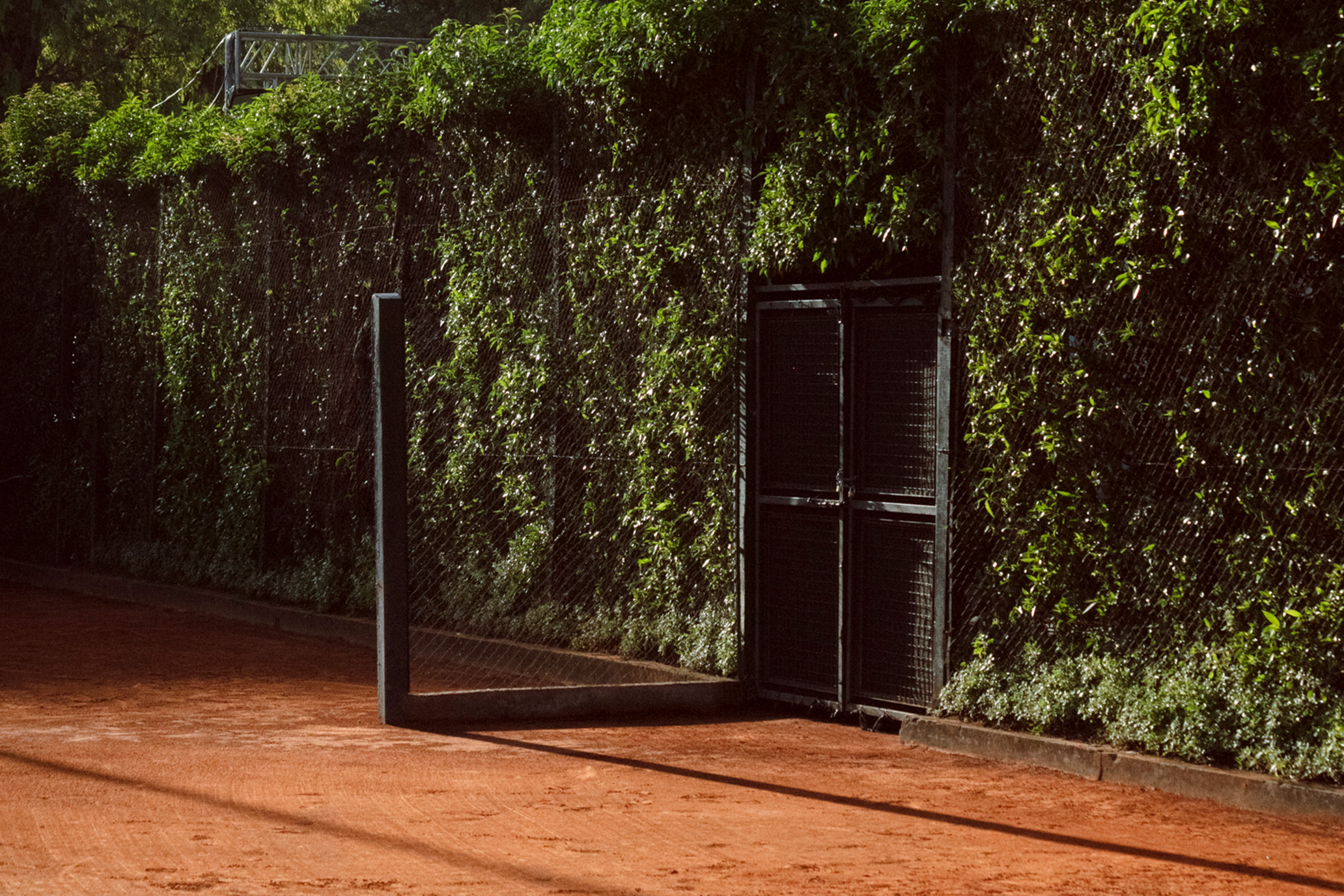
Postcard from Buenos Aires
Postcard from
Buenos Aires
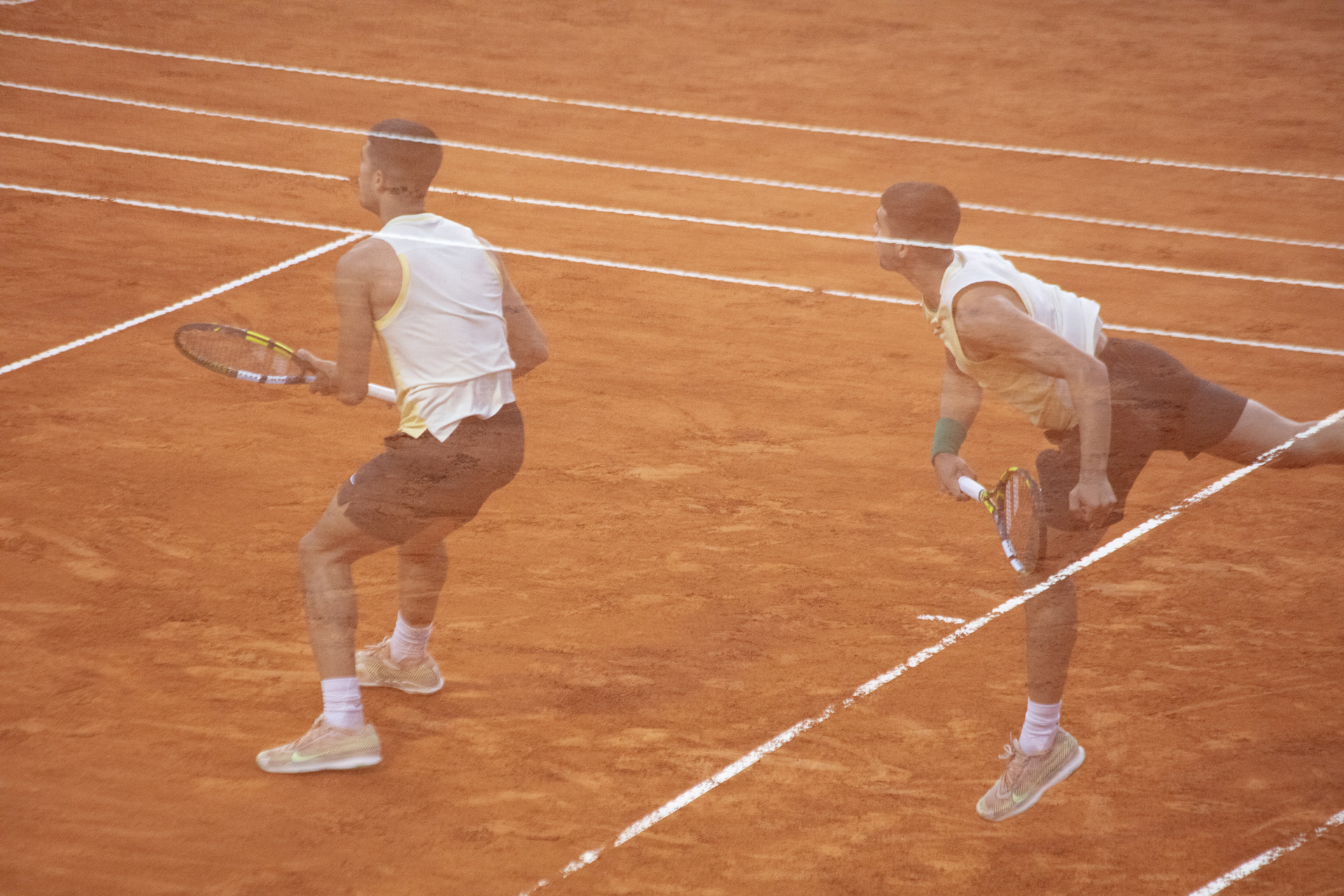
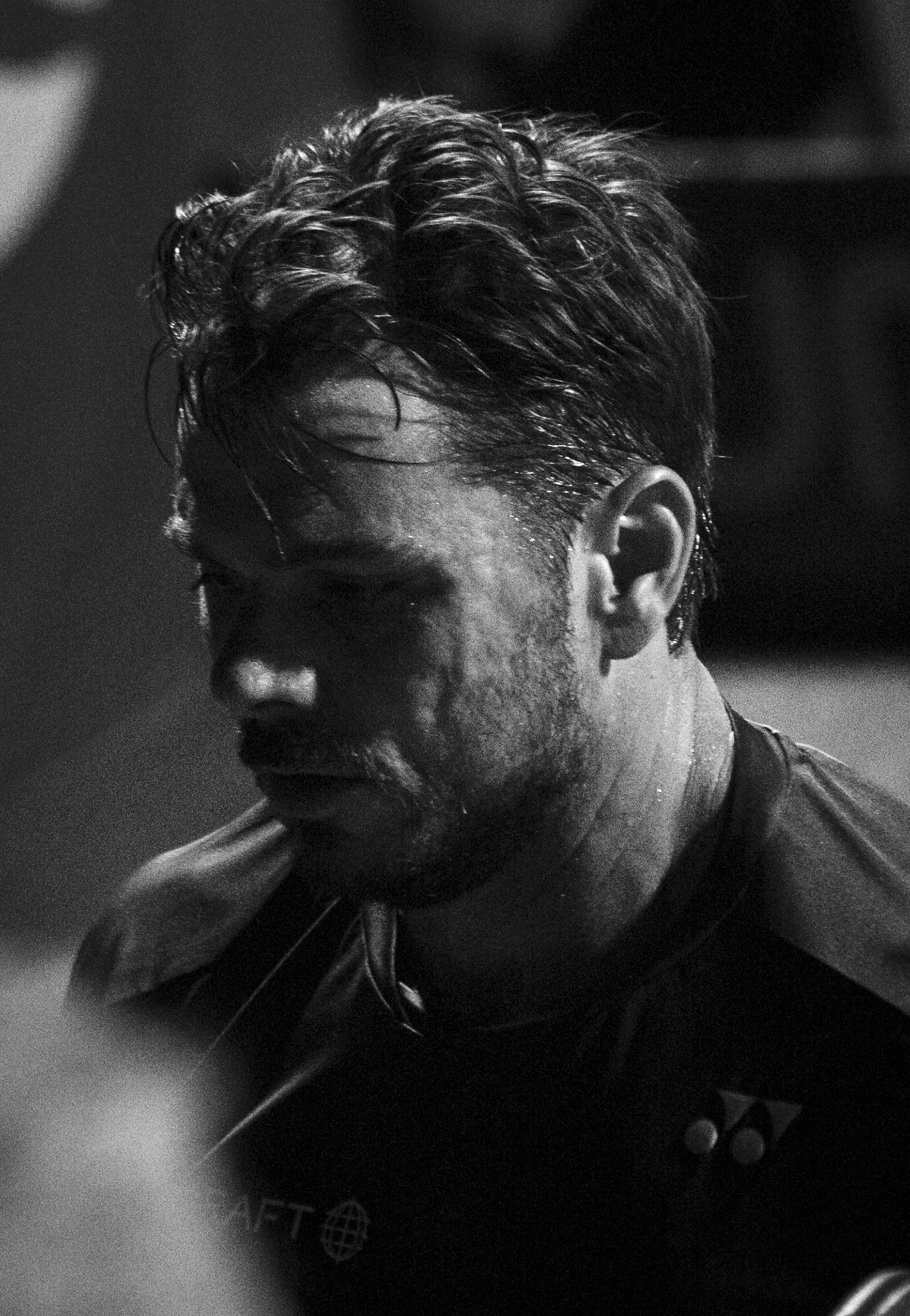
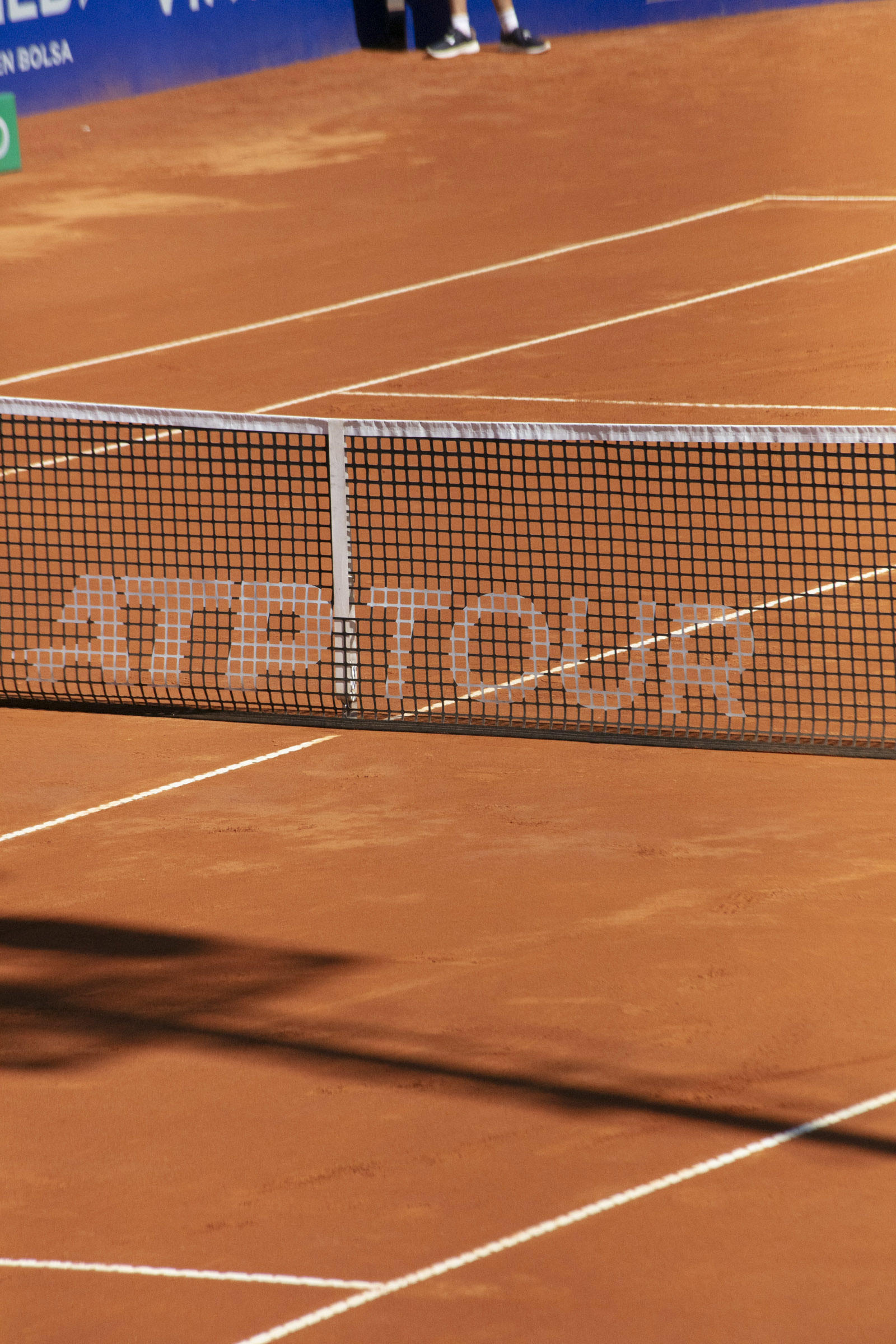
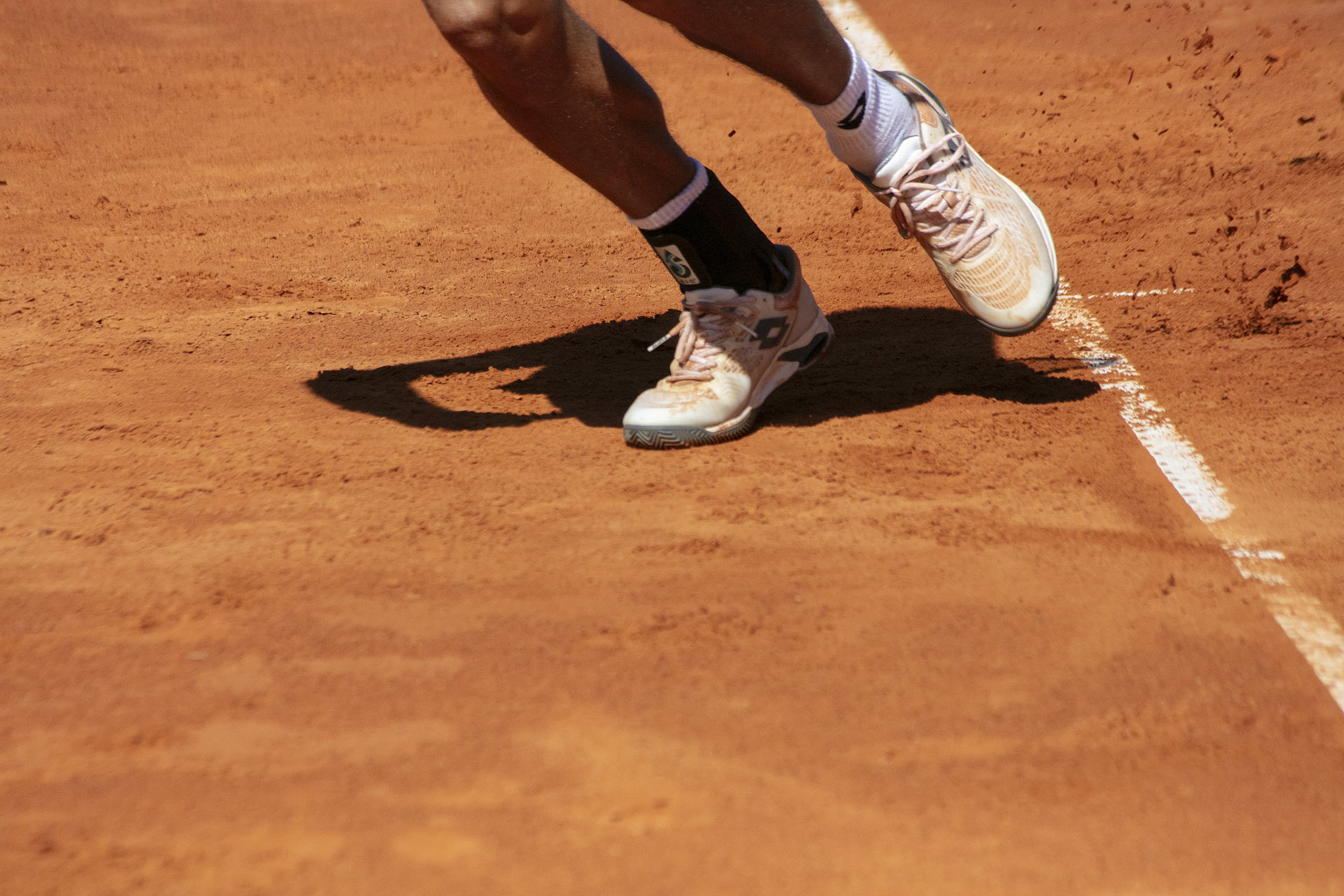
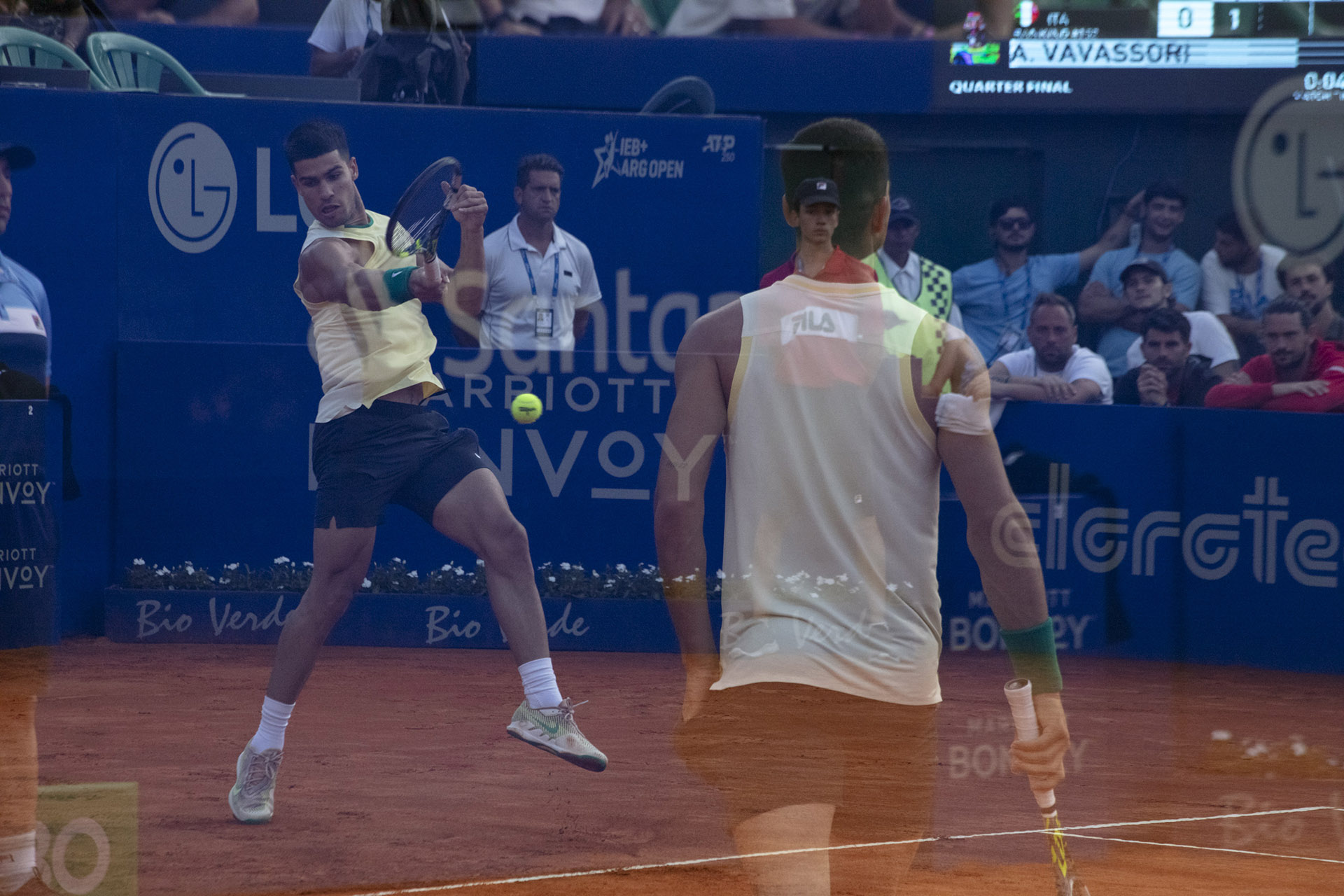
Photographer Vicente Muñoz checks in from the Argentina Open.
Photographer Vicente Muñoz checks in from the Argentina Open.
Photography by Vicente Muñoz
February 18, 2024


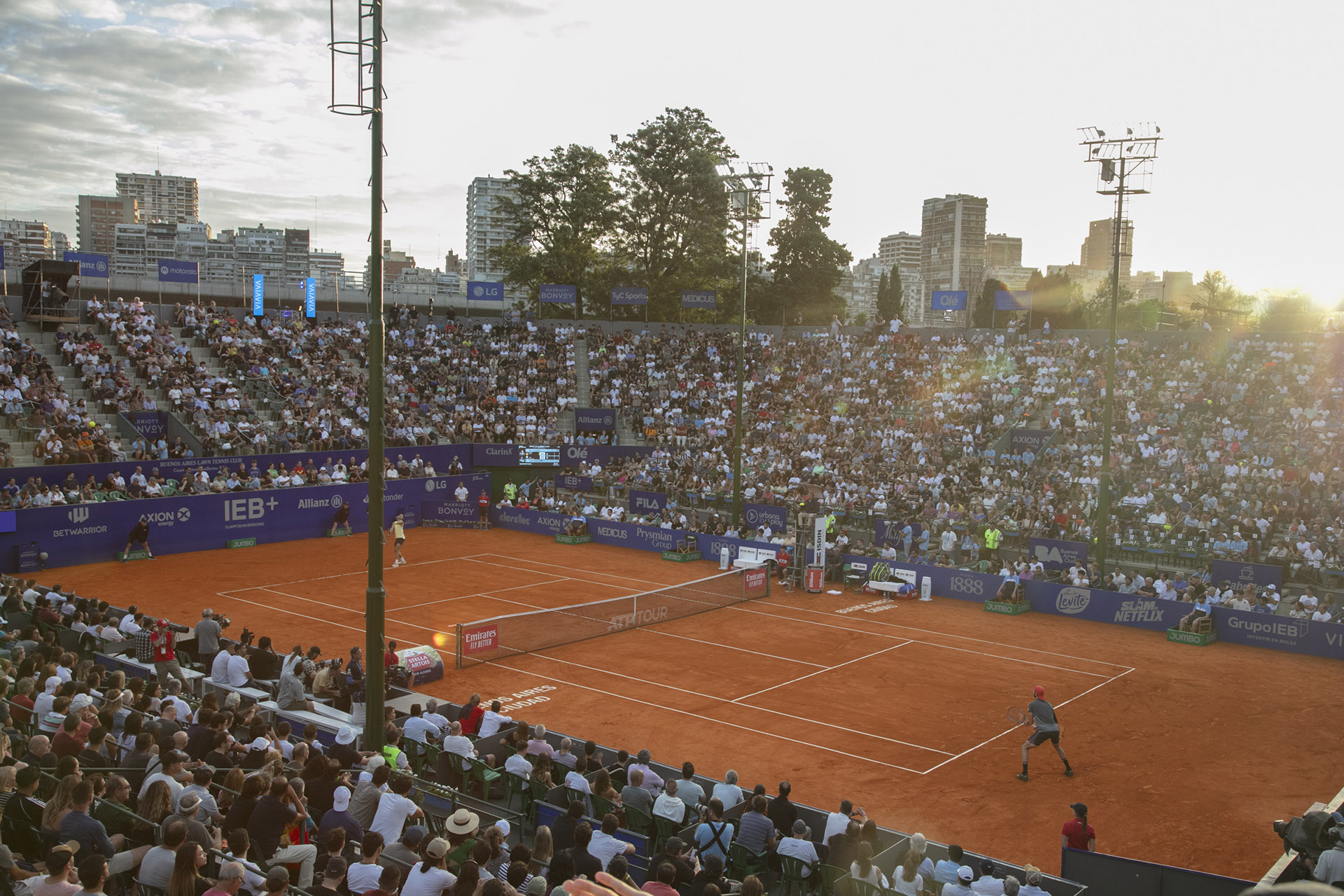
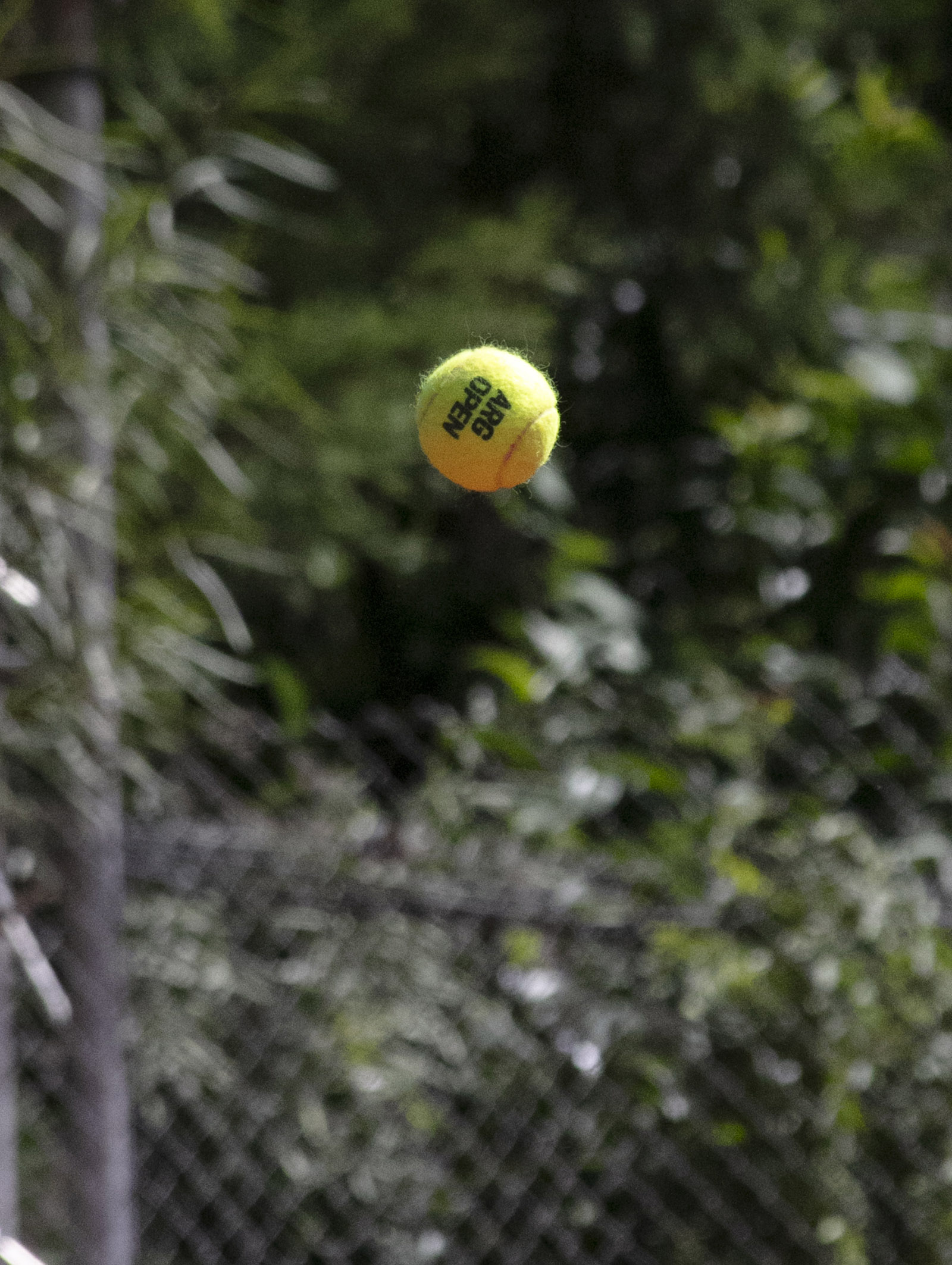
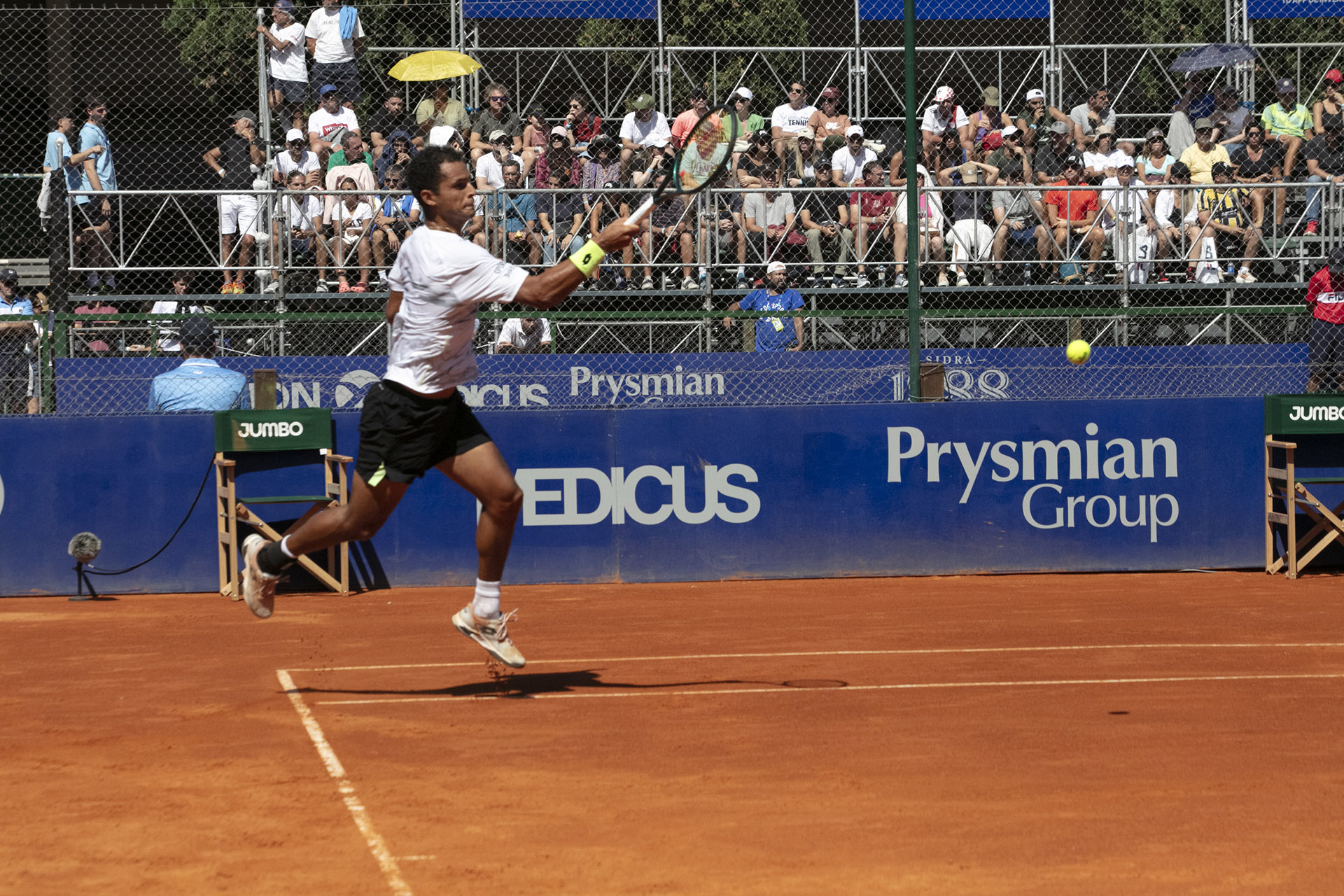
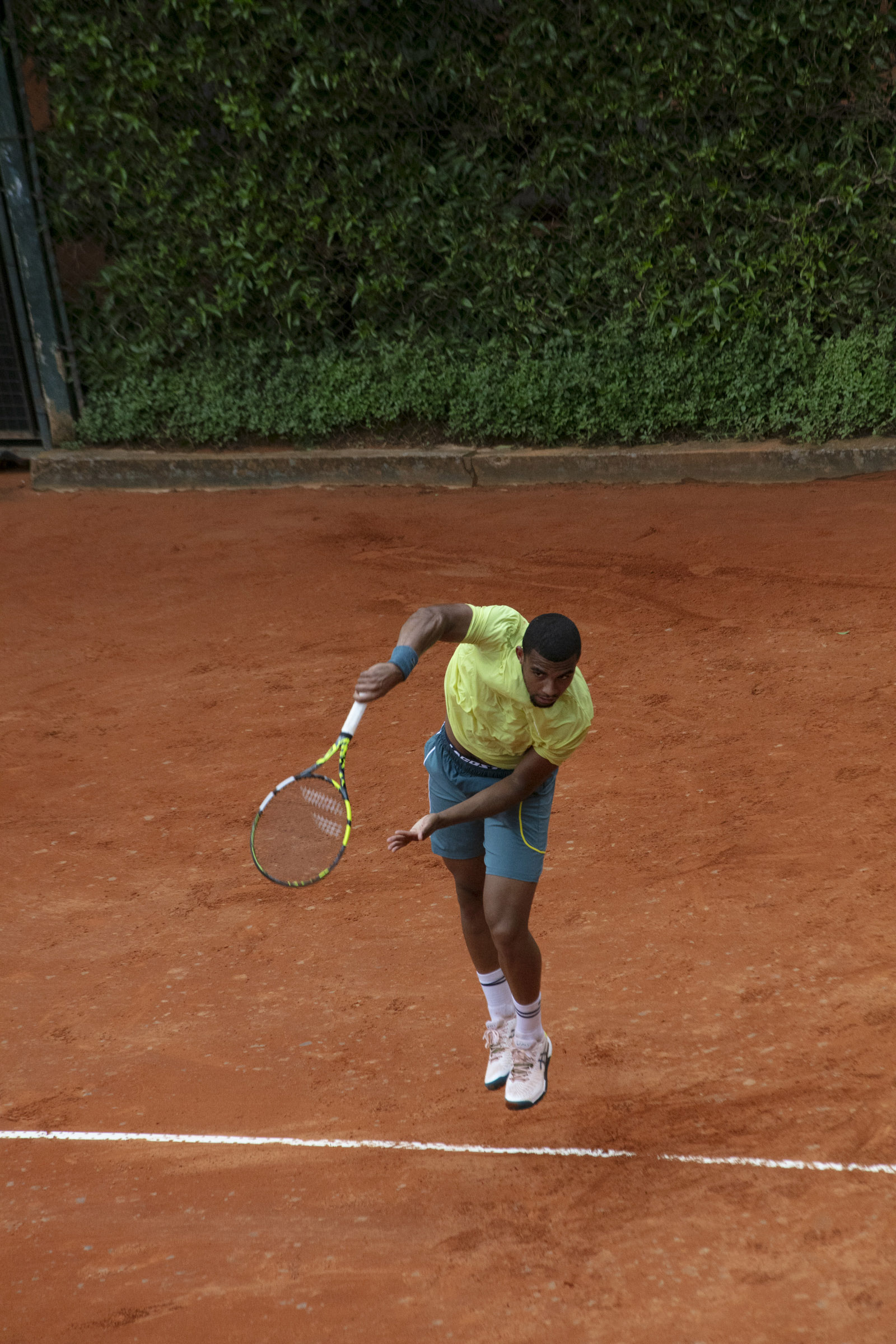
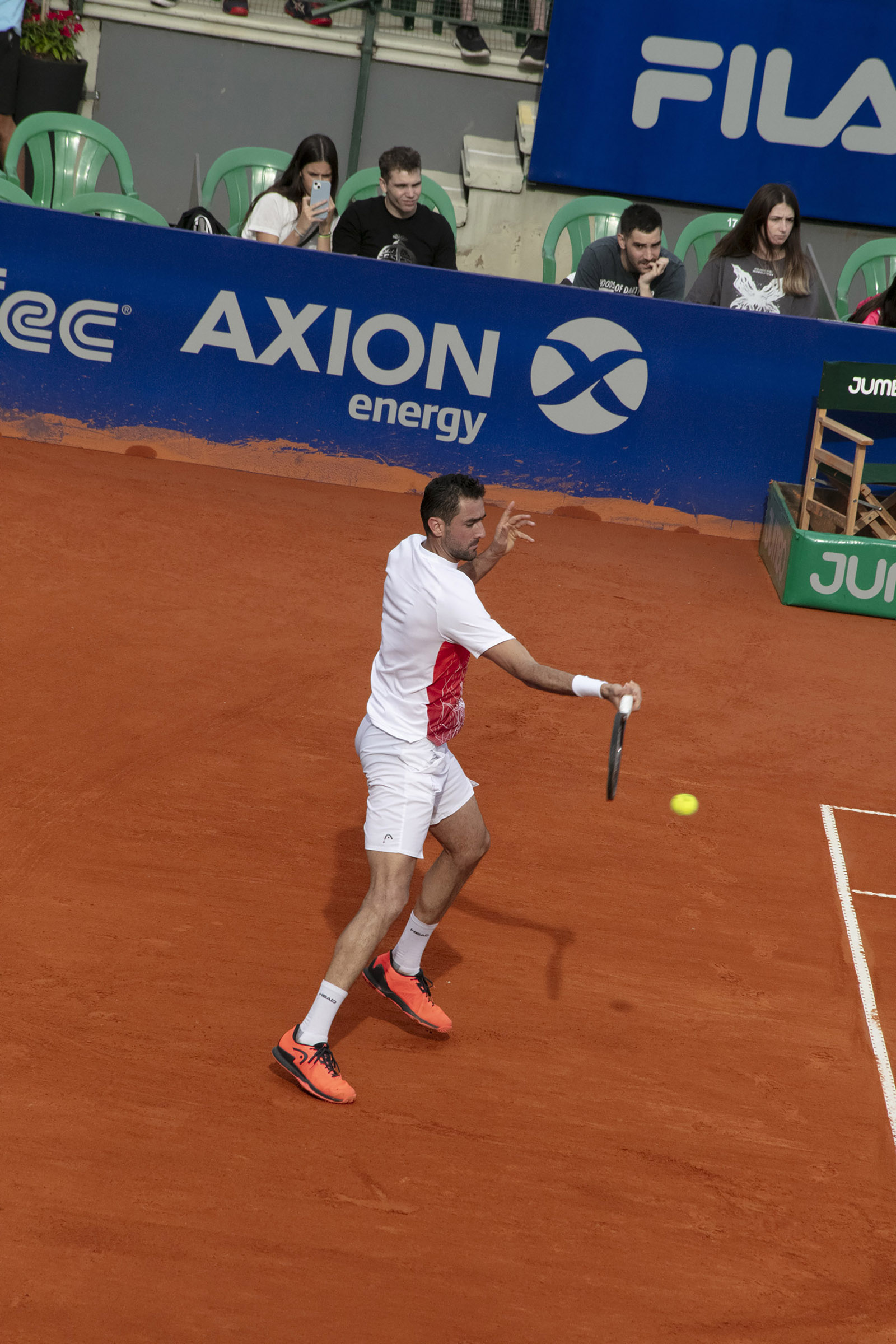
SIGN UP — YOU'RE ONLY AS GOOD AS YOUR SECOND SERVE.
Naomi Osaka Comes Back Sharp(ish)
Naomi Osaka Comes Back Sharp(ish)
The former world number one returns to a vastly different tennis landscape.
The former world number one returns to a vastly different tennis landscape.
By Giri Nathan
February 16, 2024
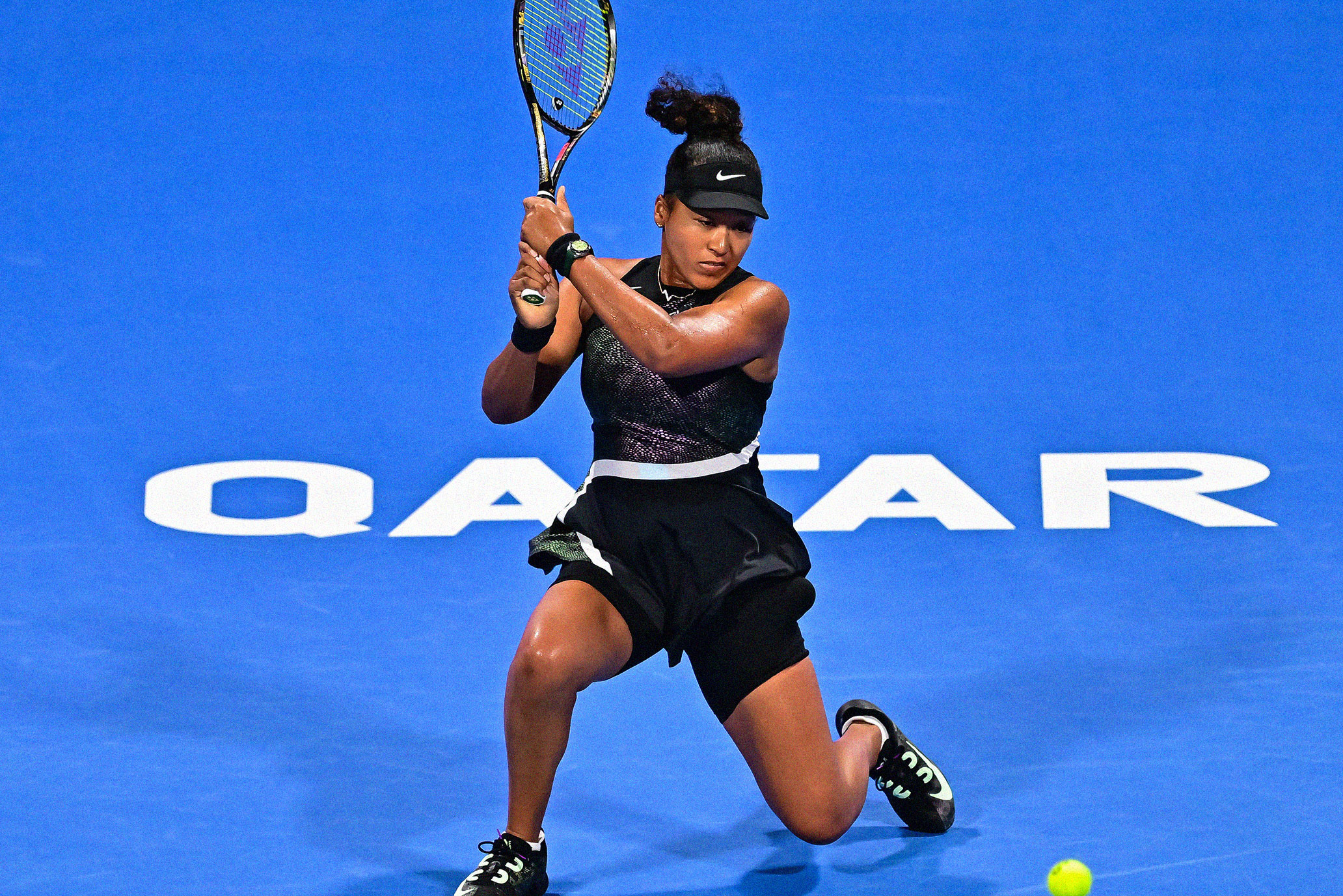
Naomi Osaka is getting ever closer to beating Karolina Pliskova. / Associated Press
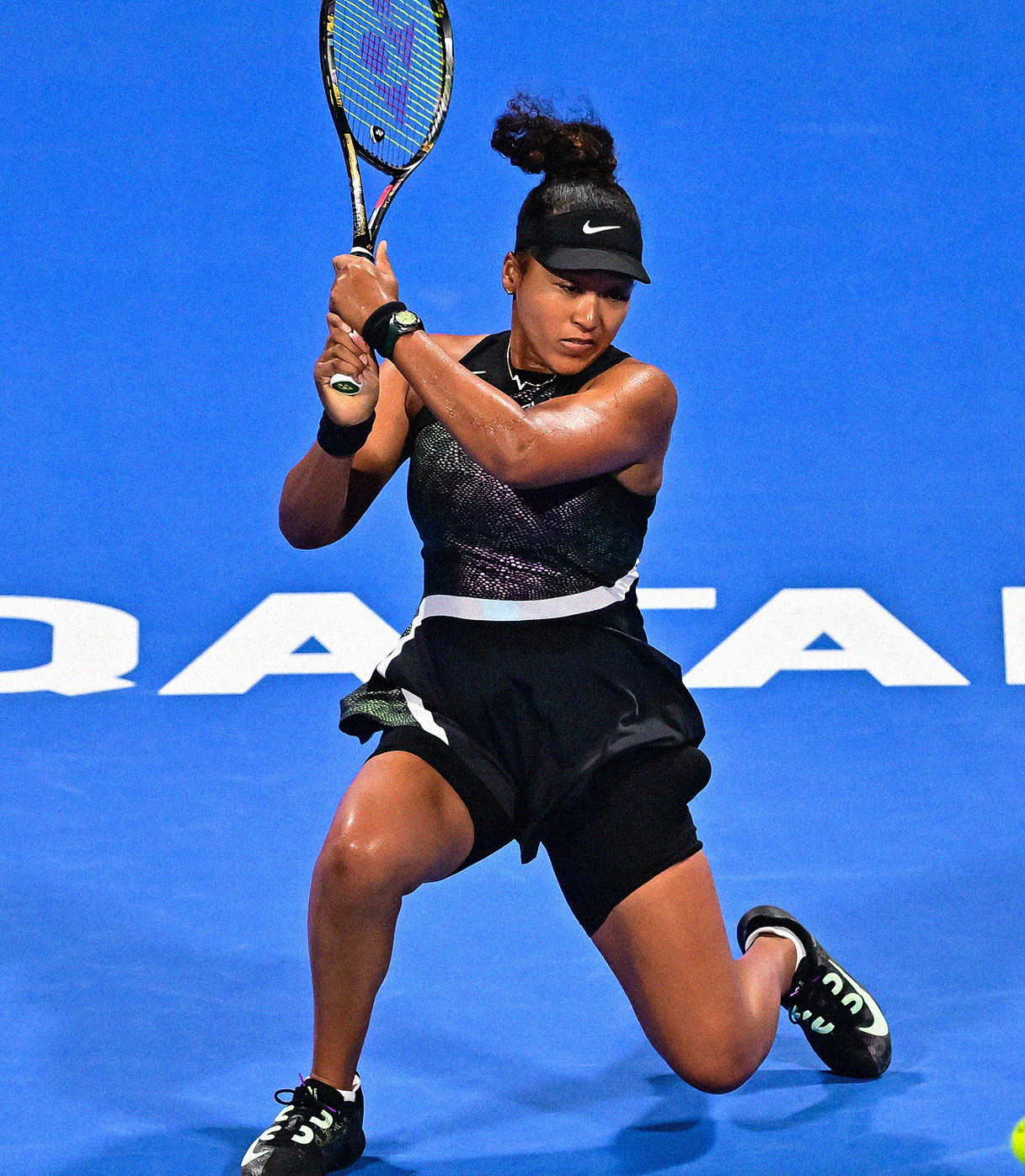
Naomi Osaka is getting ever closer to beating Karolina Pliskova. / Associated Press
Coming into this year, I had a series of interrelated questions about a returning champ. What level of Naomi Osaka would we see after her long break from competition? And: How does that version of Osaka stack up against a tour of a slightly scarier composition than the one she left behind? And: How would she handle that potential culture shock? The good part is that we’d get clear answers from Osaka’s characteristically unguarded and impressionistic press conferences. (Even though she has historically had her issues with those, she’s great at them!)
It was difficult to imagine Osaka waltzing back into the top 10. I figured there’d be a phase for her to find her legs and rhythm again, and then another (potentially more complicated and demoralizing) phase where she puzzled out how to beat the new top-end competition. The landscape has gotten wilder in the three years since her last title. Ash Barty has retired, extinguishing one hypothetical rivalry, but nothing else about the job description has gotten any easier. Iga Swiatek and Aryna Sabalenka have upgraded their tennis beyond recognition; Elena Rybakina is a thing now; Coco Gauff is no longer someone to extend a gracious microphone to after an emotional loss, but a major champ and nightmare to hit through; the whole top 30 is stuffed with talent that could run an unprepared Osaka out of her previous roost at the top of tennis.
Osaka would have to come back sharp. No easy task for someone who hadn’t competed at that level in some 15 months and had candidly discussed the challenges of physical recovery after childbirth in July. “Having a baby completely destroys your pelvic floor,” Osaka told Glamour in January. “I was shocked, because I couldn’t get up out of my bed. I had to roll sideways, and it was a really long process because, for me, my immediate way of thinking is: To rebuild this I have to do a lot of sit-ups. And I learned that that’s totally not what you’re supposed to do. You’re supposed to do deep pelvic-floor work.” She shared clips of her practices, bloopers and all, in the latter months of 2023.
When she hit the courts in Australia, Osaka proved both how much work she’d already put in and how much work there was still to do in order to match her old glory. In Brisbane she looked deadly from the baseline, if perhaps a half step slow; she won her first match, against Tamara Korpatsch, and lost the second to a diminished Karolina Pliskova. Coming into the Australian Open with a protected ranking of No. 45, Osaka ran straight into No. 5 seed Carolina Garcia, who was having One Of Those Carolina Garcia Nights, where the serve is profoundly untouchable and there’s a prohibition against rallies longer than four balls. “I felt like I was constantly on my back foot and really hesitant,” Osaka said after her straight-set loss to a hyperaggressive Garcia. “I was a little bit overthinking in my head where to go. I think that’s something that will come in time, but right now it kind of sucks a little.”
Then it was onto Abu Dhabi, where Osaka played Danielle Collins. A competitive start degraded into a rout, as Collins strung together nine straight games to win the match. “I say some pretty harsh words about myself. I know the word, but if I say it, it sounds really bad. I felt a little like a ‘failure,’ but I don’t want to be too harsh,” Osaka said after. She said she was less confident, but not so unconfident that she couldn’t play good tennis. “I really think I just need to get through a really tough match and then sort of acknowledge that that’s going to happen quite a couple of times.”
This week in Doha, she got the reps she was looking for, against some familiar faces. First off, she avenged last month’s loss against Carolina Garcia. On her second go, Osaka returned better—she said she’d adopted some new footwork technique from Novak Djokovic—and moved better in the rallies, generally doing a more convincing impression of her old self. She kept at it with her second-round win over Petra Martic, digging out of a hole in the second-set tiebreak to secure the first back-to-back wins of her comeback. After benefiting from a walkover, Osaka advanced to a quarterfinal against (once again) Karolina Pliskova, in a battle of diminished former world No. 1s. The result? Another close loss for Osaka, just like last month, this time in two tiebreaks. These consistent checks against the same opponents are useful as a kind of benchmark. Osaka’s status is clear enough: can now beat Garcia on a good day, but still working on the rebounding Pliskova. Not so bad a place to be a month into the comeback.
SIGN UP — YOU'RE ONLY AS GOOD AS YOUR SECOND SERVE.
The Hopper
—Naomi (and Barbora Krejcikova) have pulled out of Dubai.
—New York magazine has profiled Bill Ackman, who is funding the PTPA.
—Simona Halep is suing a supplement maker.
—Rafael Nadal says he did not, in fact, sell out.
—ICYMI: “Coach” Craig Shapiro gets candid with tennis mom Aneke Rune.
SIGN UP — YOU'RE ONLY AS GOOD AS YOUR SECOND SERVE.
Andy Murray Doesn't Need A Guidance Counselor
Andy Murray Doesn't Need A Guidance Counselor
Legacies are not made in the first round of the Open Sud de France!
Legacies are not made in the first round of the Open Sud de France!
By Giri Nathan
February 9, 2024
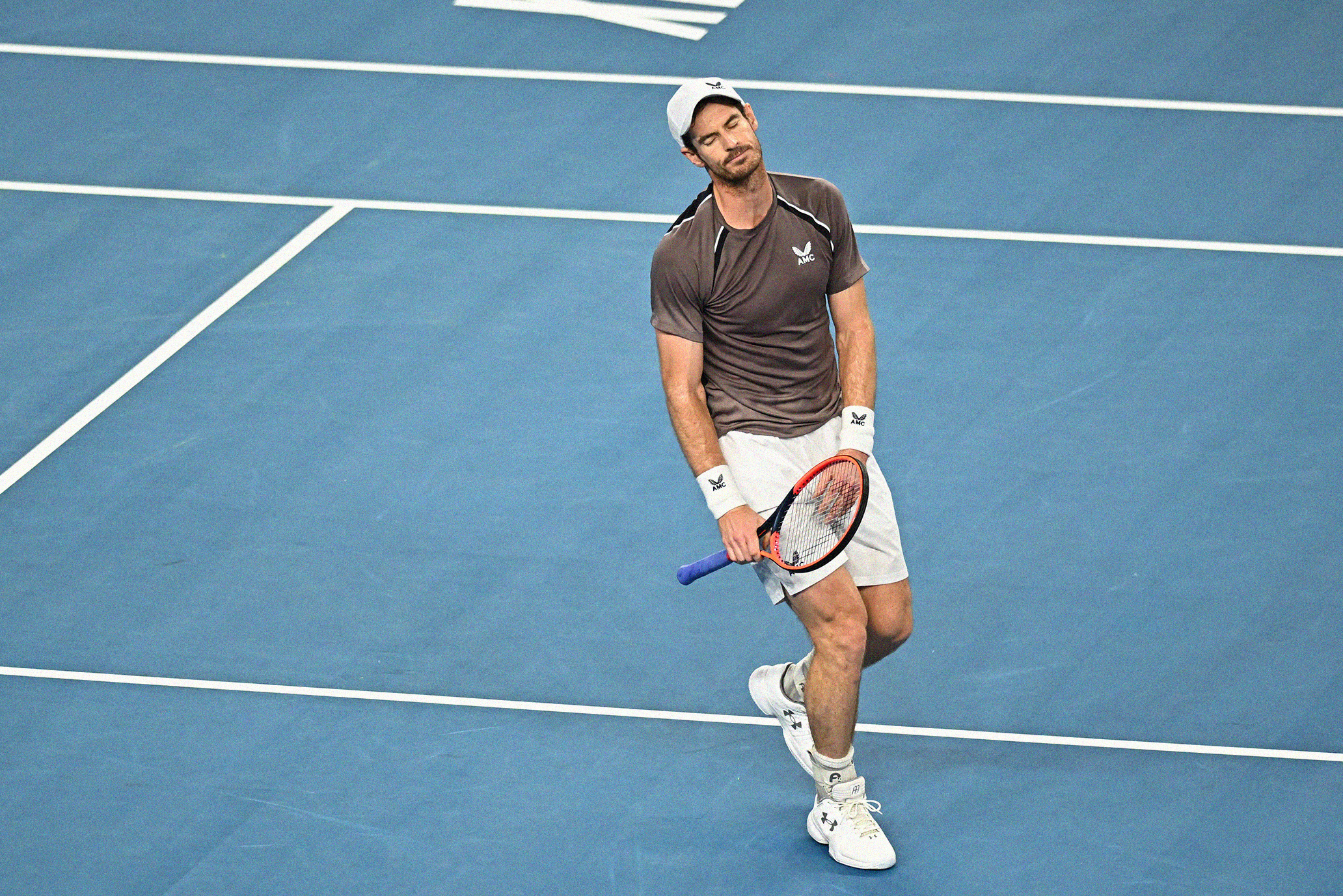
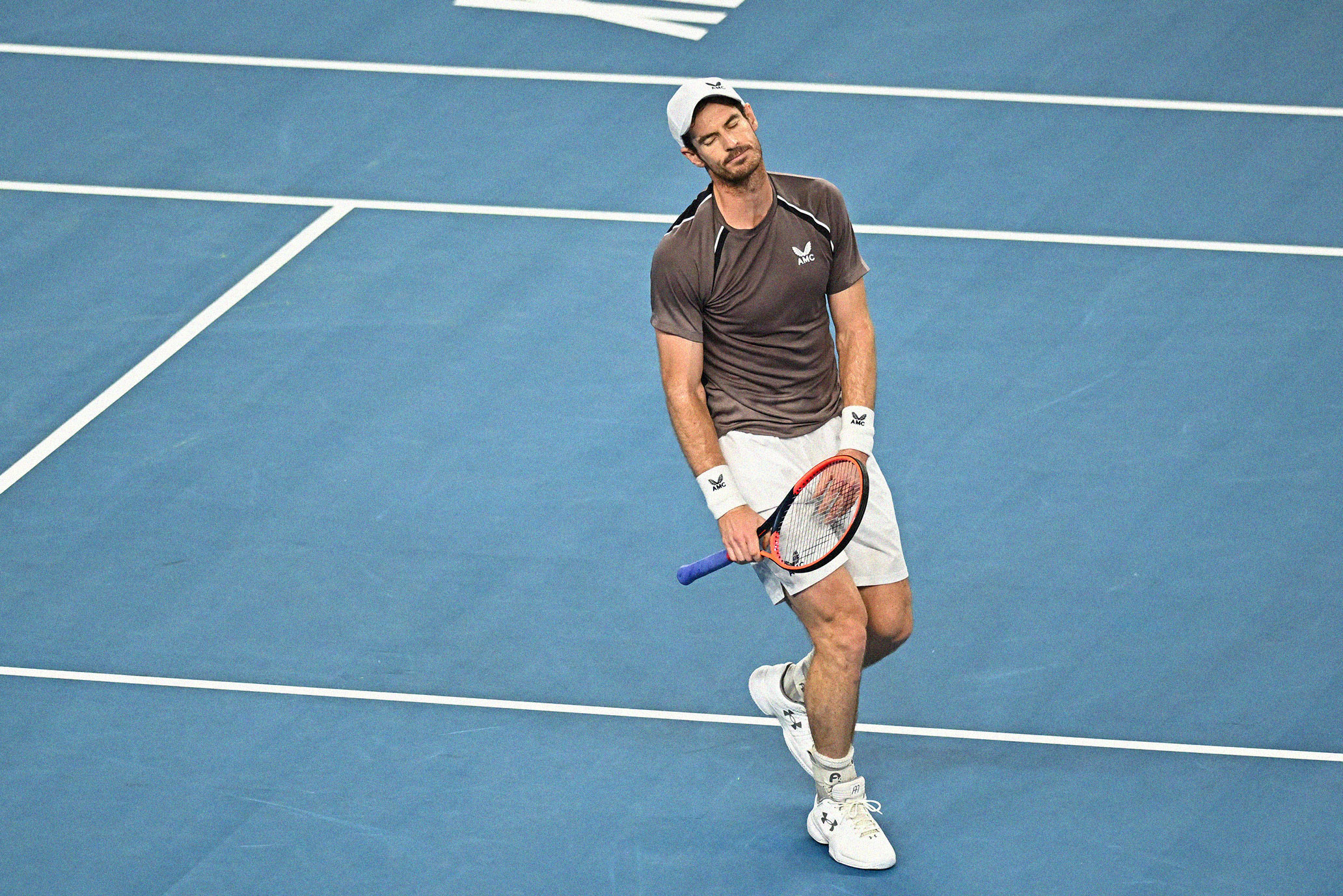
Every picture tells a story, don't it? / Associated Press
Every picture tells a story, don't it? / Associated Press
Some people will sit down at a keyboard and beg Andy Murray to retire. This is no way to spend a writing life. There has only ever been one worthwhile piece of writing calling for retirement—it was composed by Danny DeVito—but typists the world over continue to churn out their insignificant contributions to this doomed genre. Tennis’ latest such piece, which triggered its current tedious media cycle, is a BBC Scotland column from last week written by Kheredine Idessane. The headline poses a question about Andy Murray: “Is the end nigh for three-time Grand Slam winner after latest loss?” The column is written by a longtime close observer of Murray, but it is, ultimately, still a column asking an athlete to retire, out of some misplaced concern for the athlete’s legacy, and that makes it very silly, if perhaps less retrospectively stupid than the famous 2013 column asking Roger Federer to retire. (He had another productive decade in him, it turned out.)
“Safeguarding his own mental health must surely come into play alongside preserving his reputation,” writes Idessane. Murray, who is probably more focused on safeguarding his mental health from these kinds of articles than from tennis losses, replied to the writer with predictable indignation. “Tarnishing my legacy? Do me a favour. I’m in a terrible moment right now, I’ll give you that. Most people would quit and give up in my situation right now. But I’m not most people and my mind works differently. I won’t quit. I will keep fighting and working to produce the performances I know I’m capable of.” Peers like Andy Roddick rode to Murray’s defense, as the big-serving American referred to the beleaguered Scot as an “accomplished iconic adult,” which is a compliment so stilted I want to borrow it as a résumé topline. True to his word, Murray has not since quit. He has continued entering all the obscure tournaments of February. He has said he will go back down to the Challenger tour if he needs to.
Because this much is undeniable: Andy Murray cannot win an ATP match at present. The BBC column was inspired by his loss last week at Montpelier to Benoit Paire, the dissipated Frenchman who himself had not won a tour-level match for a year and a half. Murray lost his first-round match this week, too. He has now lost in the first round of seven of his last eight events, going back to last fall. What the talk of “legacy” glosses right over is the totally fair observation that Andy Murray stinks right now! That’s the reality on court; there’s no need to mash that accurate observation into the tortured framework of “legacy” or “safeguarding mental health.” And if what you are trying to say is that Murray’s stinking makes you personally uncomfortable, then a poem or talk therapy session might be a better outlet than a straight-faced request that he retire.
SIGN UP — YOU'RE ONLY AS GOOD AS YOUR SECOND SERVE.
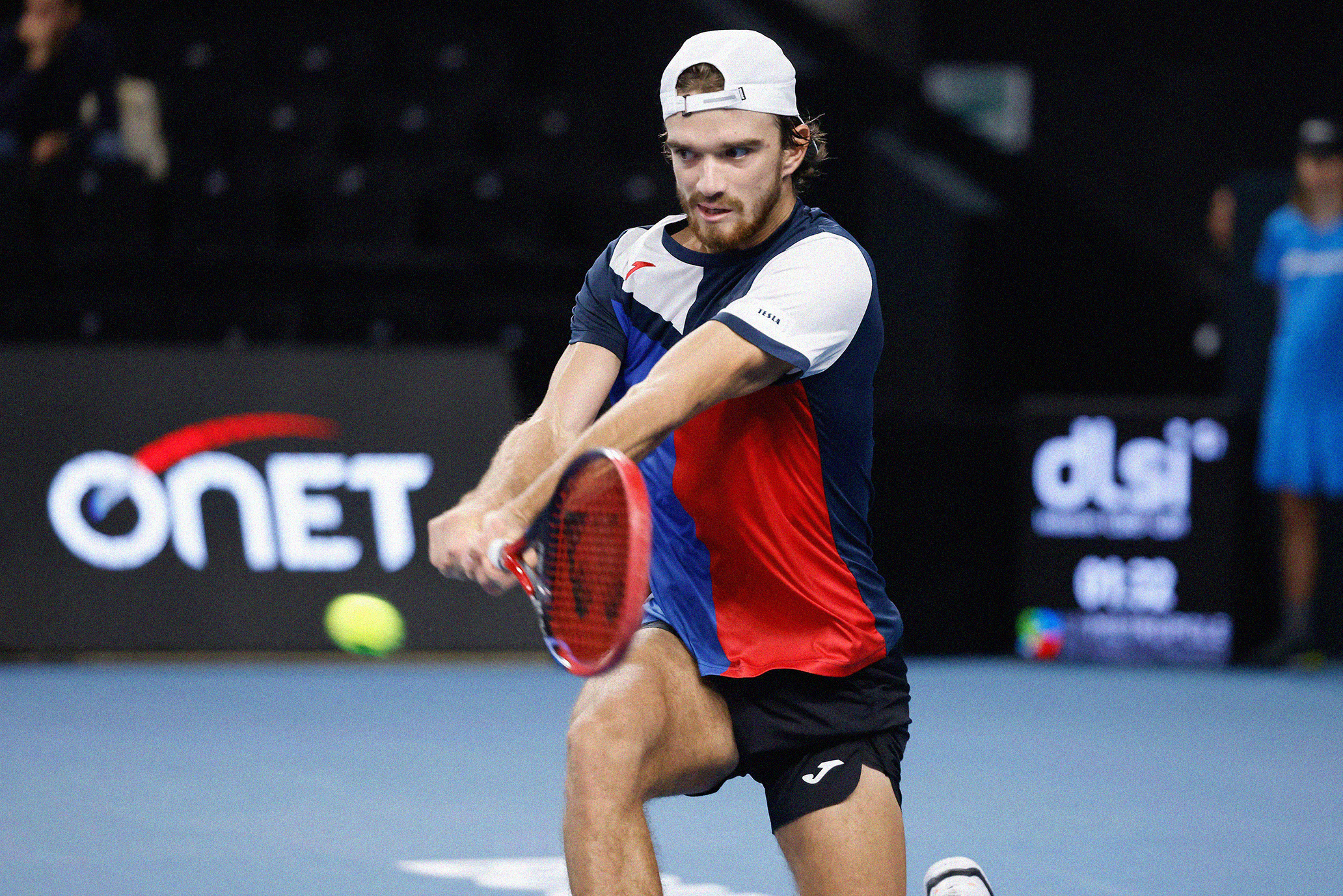
Who wears short shorts? Tomas Machac, that's who. / Associated Press
Who wears short shorts? Tomas Machac, that's who. / Associated Press
Just as Murray is free to work, you are free to construct that column about his poor play. Talk about the flagging second serve, a liability even in the best parts of his career and now barely workable some days, as in his Australian Open loss to Tomas Etcheverry, where he won just 33 percent of points behind it. Add in Murray’s observation that he’s playing phenomenal tennis in his practice sets but can’t seem to make it stick in competition. Whatever you do, just talk about the actual tennis he’s playing. Because I am not sure that the argument about legacy-tarnishing is all that clear on the mechanisms by which legacies are made. Hint: Legacies are not made in the first round of the Open Sud de France! This metal hip era is not going to somehow melt his Olympic gold medals. I don’t think the historians of tennis are going to skimp out on praise for a three-time major champ and all-time great because they were thunderstruck by the sudden memory of him losing to Tomas Machac at Marseille that one time.
But while I have you, let’s talk about that loss to Tomas Machac at Marseille. Those paying attention know that this isn’t such a dire loss anyway, because the 23-year-old Machac is one of the fastest risers on the ATP, in addition to being an avowed member of the short-shorts community. Early last year Machac nearly took out Djokovic in a third-set tiebreak in Dubai, turning heads with the quality of his aggressive tennis; this year he has already brought his best to Melbourne, with a straight-sets dismissal of Frances Tiafoe in round 2 and a tight loss to Karen Khachanov in round 3. Machac is a fleet-footed, flexible, frisky player who likes a decisive net rush and looks brilliant on fast courts. Not terribly surprising that he beat Murray, or that he followed it up with a win over Lorenzo Musetii. Fun watch, already inside the top 70, and should be moving much higher if this breakout is real. I can’t wait to see him thrive and someday bray for his retirement.
The Hopper
—“Coach” Craig Shapiro gets candid with tennis mom Aneke Rune.
—Any takers for The Tennis Channel?
—Move over Wimbledon, the 6 Kings Slam is coming. And the WTA Finals will probably follow it to Saudi Arabia.
—Simona Halep is fighting for her career.
—Alexander Zverev’s upcoming trial looms over his recent success, says Giri in Defector.