Tour Spiel
Tour Spiel
Book Review: The Cruelest Game by Matthew Futterman
Book Review: The Cruelest Game by Matthew Futterman
By Joel DruckerAugust 18, 2026
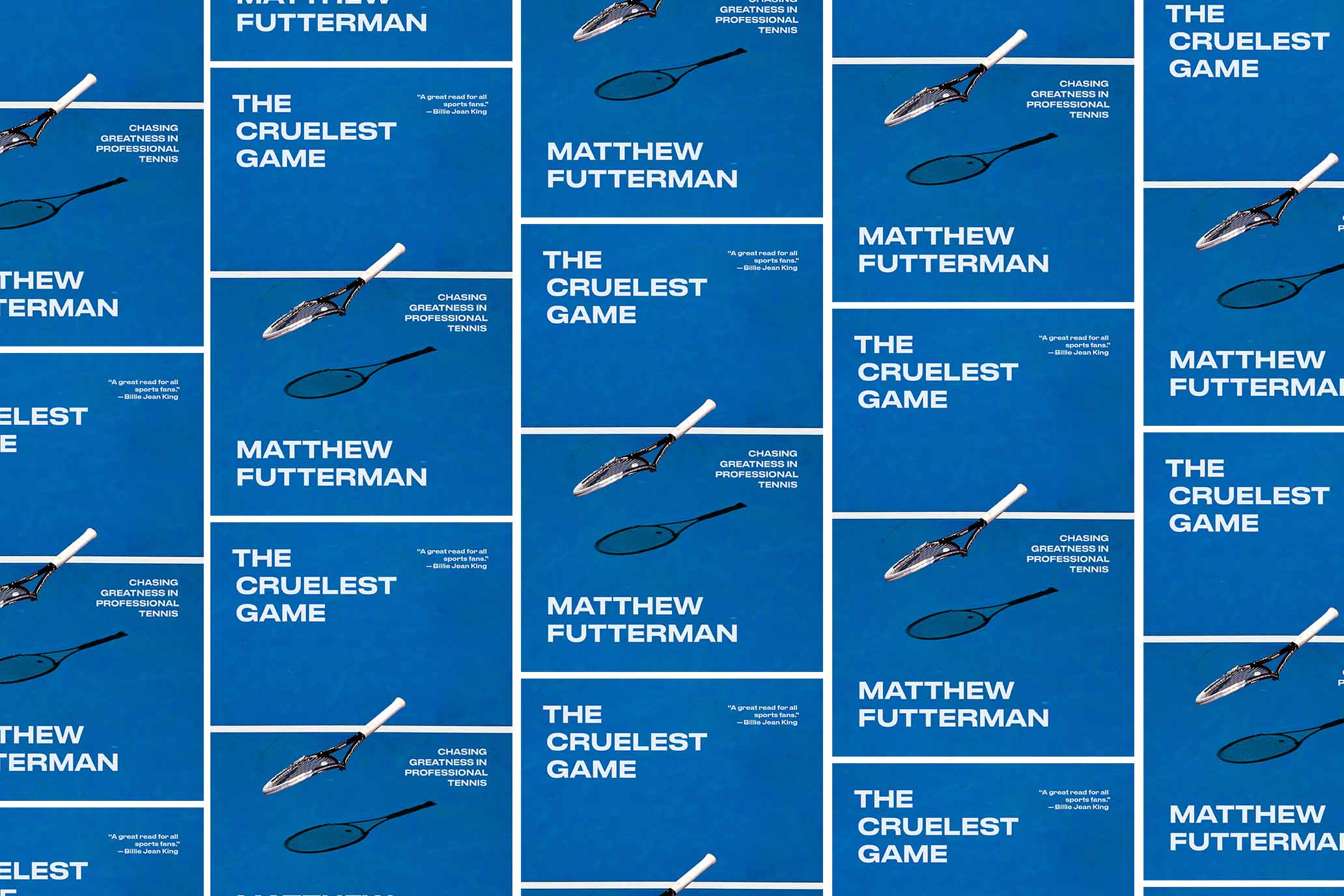
Courtesy of Doubleday
Courtesy of Doubleday
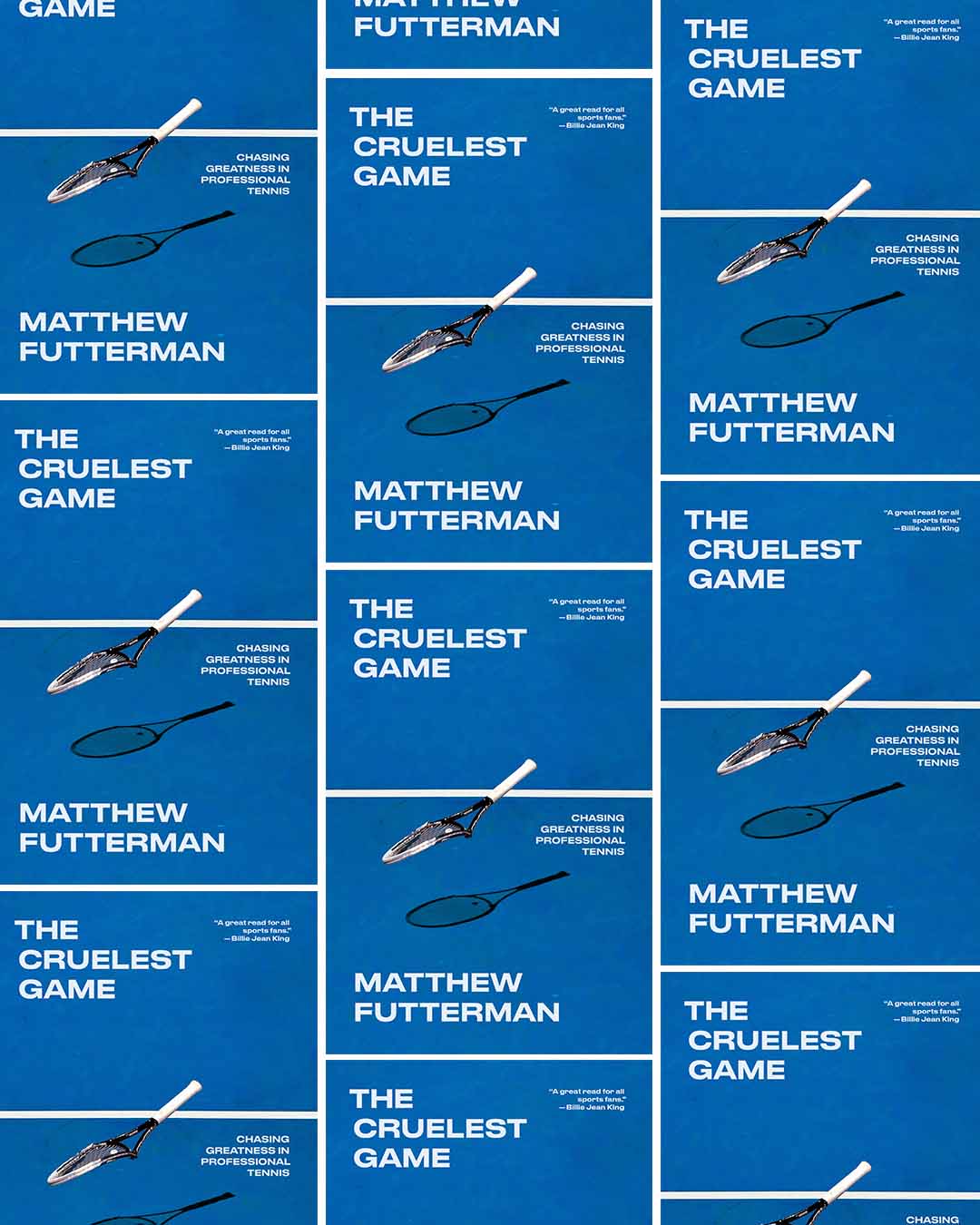
New York Times staff writer Matthew Futterman’s 2022 arrival as a full-time tennis reporter coincided with a mega-occurrence that greatly frames his compelling book, The Cruelest Game.
Call the early 2020s, “The Twilight of the Gods.” Roger Federer played his last singles match in ’21. What appeared to be Serena Williams’ farewell took place a year later. Venus Williams searched for form. Rafael Nadal and Andy Murray retired in ’24. Novak Djokovic downsized his schedule.
Much as these greats have inspired fans, while reading The Cruelest Game, there is a sense that for contemporary contenders, they intimidate. Imagine a young rock band, starting off in the early ‘70s. The prior decade had seen the Beatles, Rolling Stones, Bob Dylan. In the face of recent massive monuments, now what can a poor boy-girl do?
“This is the part of the sport that so many players despise, the unfairness of it all,” writes Futterman. “At their best, this is the part of the sport that Roger and Rafa and Novak and Serena and Carlitos and Sinner and Coco and Iga and Aryna love, even when it goes against them. The part that asks you over and over to figure out how to show up, how to be enough in the face of something that feels existential.”
The Cruelest Game is about pressure. Sadly, for many of the pros Futterman examines, pressure is more burden than privilege. But that finding is hardly based on distant observation. Aided by having one of the few full-time staff jobs in tennis journalism, Futterman’s superpower is his ability to hunt and gather.
Amazingly, in a world where tons of tennis media outlets are shrinking, Futterman’s tennis beat has grown even larger since the New York Times disbanded its sports section in 2023, Futterman and others transitioning to the Times-owned, The Athletic.
From press conferences to off-week practice sessions, to matches, chance encounters, and, rare in today’s world, one-on-one interviews with players and support team members, Futterman’s skill at culling nitty-gritty detail is impeccable. He tracks one tale after another of emotional tumult, drawing on the tennis-is-toxic narrative that began with the burnout of early Open era great Bjorn Borg, transitioned into the mid-life angst voiced by John McEnroe and Boris Becker, attained cross-over literary cache with Andre Agassi’s book Open, and by now has become a highly accepted assumption for articulating tennis’ specific difficulty (though not one I entirely buy into).
“But why?” asks Futterman about pro tennis in the 21st century. “Because tennis isn’t a Jane Austen novel. It’s The Hunger Games.” Then again, it always has been. “When I played,” Jimmy Connors once told me, “you had to win big to win big money.”
So is contemporary tennis inherently more pressure-packed than law, medicine, scholarship, accounting, the arts, or any other field where one seeks greatness? How can one gauge that? Or is it that since tennis is an individual sport, its exposed performers are placed in a fishbowl like none other, creating unmanageable external expectations? Or is it because tennis is nowhere as popular as football, basketball, or baseball? Pressure to do or be what?
Consider “Chasing the Unicorn: Taylor Fritz, Frances Tiafoe, Tommy Paul and the Legacy of Andre,” the book’s chapter about the quest for an American man to earn a major singles title for the first time since 2003. The premise underlying this quest – and, of course, Futterman isn’t the first one to explore it – strikes me as business-driven, as if a publishing or TV executive is more concerned with tennis as economic marketplace than personal athletic endeavor. Imagine dialogue in offices and conference rooms: Only if an American man can win a major is this dumb-ass, puny sport worth our while. Never mind that for decades, the most popular tennis players in America have been a pair of global icons from Switzerland and Spain, preceded by other favorites from Germany, Sweden, Australia, and Romania.
As Futterman witnessed the 2024 US Open semifinal between Fritz and Tiafoe, he zeroed in on Tiafoe: “The lungs can’t possibly get enough oxygen to keep everything together to the finish line. And not just one finish line but seven of them, one every other day, to win a coveted Grand Slam title with the competition growing stronger with each match. That’s a steep hill to climb for someone who works as hard as anyone else and with a singular purpose. For someone with a wavering attention span, oddball form, and commitment issues when it comes to his profession. So, is Big Foe supposed to be here? Does he have what it takes?”
Ah, what it takes – also the title of Futterman’s chapter on Novak Djokovic, a 31-page deep dive that offers as thoughtful a portrait of him as I’ve ever read, filled with telling details and keenly juxtaposed assessments. As an example, one paragraph notes that, “He craves the quiet of the woods and the wilderness that brings him back to his childhood,” followed by the next that reads, “A racket in hand, a title at stake, he is a ruthless assassin.”
Naming that chapter “What It Takes” is also Futterman’s conscious homage to a book by the same title – an epic detailing the efforts of six men seeking to win the 1988 American presidential election. Should you wish to compare pro tennis to American politics, it’s fair to consider Djokovic a president.
Does the comparison fit? Must we conclusively evaluate any pro tennis player for his or her ability to capture the sport’s biggest prizes? Addressing the struggles of Aryna Sabalenka, Futterman notes that “no one truly cares about the Silicon Valley Classic,” a reference to a WTA event in California. Alas, blame Ivan Lendl and Pete Sampras for commencing the MBA-like notion that the only tournaments that matter are the majors.
Get back to that executive in the American conference room who believes that homegrown champions will generate more readers and viewers. Might that well be a view more from the outside than the inside? As that superb competitor Rafael Nadal showed, isn’t the idea to take every match seriously as a way of building the superb work habits that might in time help one capture even bigger titles? And even if those titles aren’t won, must all contenders be considered of negligible interest? Can we really say that if players as skilled as Fritz, Tiafoe, Jessica Pegula or Karolina Muchova never win a singles major that they did not have “what it takes” and were therefore unsuccessful? Define success.
Please note that my critiques are collegial quibbles. In a dream world, more media would have the chance to cover tennis as extensively as Futterman – and, even better, the sport’s handlers would provide ample access to players and other sources. Meanwhile, as tennis media continues to morph, cherish this first-rate journalistic effort: tons of reporting, interpreted with powerful prose.