The Great Indoors
The Great Indoors
A lament on the lack of specialists under one roof.
A lament on the lack of specialists under one roof.
By Simon CambersOct 28, 2026
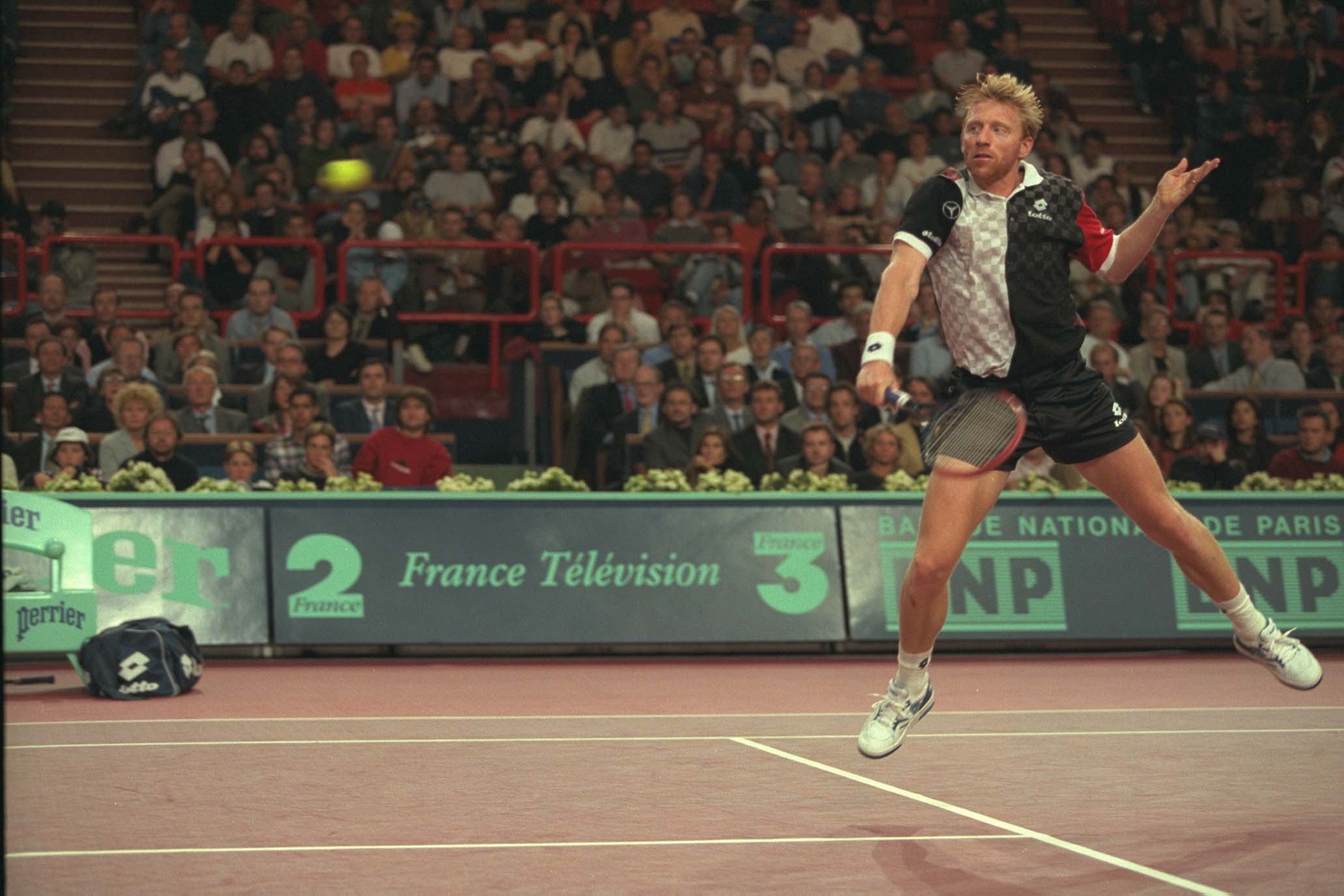
Indoor specialist Boris Becker at Paris Bercy, 1997. // Getty
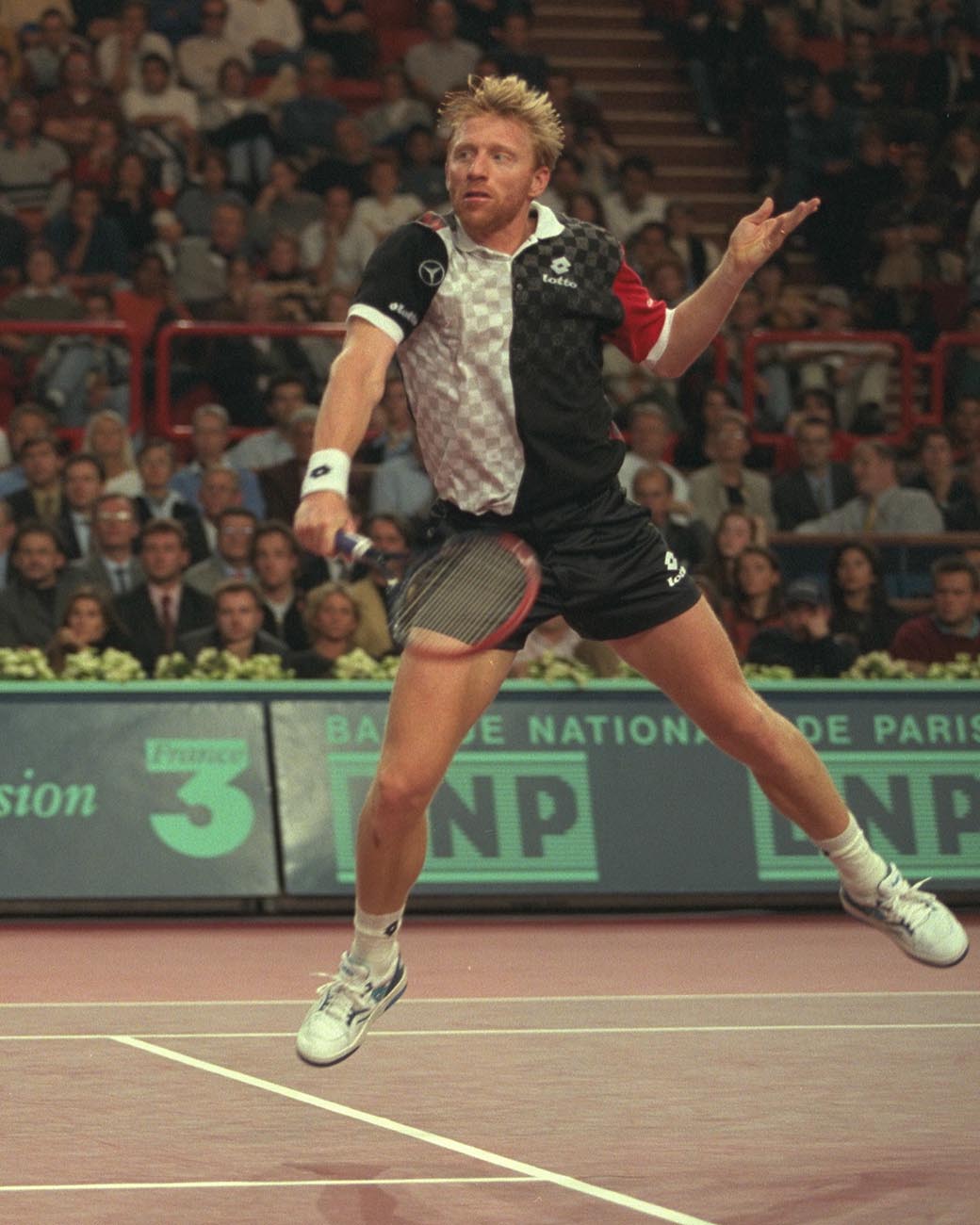
Indoor specialist Boris Becker at Paris Bercy, 1997. // Getty
The indoor season is upon us; a time for serve and volleying to prosper, for chip and charge to rush the servers, for risk and reward where players let the surface do much of the work. Wait, sorry, my mistake. I forgot. Those days are gone. Indoor courts have slowed, the balls fluff up much faster, and the heavy-hitting baseliners can do what they do best with no fear of being harried out of their comfort zone.
This used to be my favorite time of the season to watch men’s tennis. Flick through YouTube and you’ll find some of the best examples of contrasting styles on fast courts; from Ivan Lendl against Boris Becker, to Andre Agassi against Pete Sampras, to Roger Federer against Lleyton Hewitt. And when you find some of the Becker-Sampras battles of the mid-1990s, well, it’s tennis at its purist. Now, though, if you turn on the TV to watch any tournament in the next month, the chances are you will see the world’s best players hammering it out from the baseline, with volleys few and far between.
Rose-tinted glasses, you say? Maybe. But bear with me. Over the past five or 10 years in particular, indoor tennis has been a mirror image of the rest of the ATP Tour. Jannik Sinner tops the list indoors with a win-loss record of 54–8, numbers to match the likes of Becker or John McEnroe back in the day. Sinner has won all six of his Slam titles in that same period, on all surfaces (hard, clay, and grass), and he is equally comfortable on the lot. Novak Djokovic is 34–6 in that time, which is good in itself, but especially so considering he was 34 to 38 years old at the time. In his career, Djokovic is 202–50, a win-loss percentage of just over 80 percent (that’s better than Becker, by the way). Daniil Medvedev, Felix Auger-Aliassime, and Alexander Zverev round out the top five.
For all their brilliance everywhere, it could easily be argued that Jimmy Connors and John McEnroe were indoor specialists. Connors won almost half of his 109 titles indoors, while McEnroe won more than two-thirds of his 77 inside. Indoors can still benefit big servers and the biggest hitters, of course. The fact that Rafael Nadal didn’t win the ATP Finals in his career and that Carlos Alcaraz still has yet to do so is testament to that.
But what pains me most is that there is no longer such a thing as a real indoor specialist, mostly because the court speeds have slowed so much, in tandem with the advances in string technology and the constitution of tennis balls.
It was all so different in the 1990s and early 2000s. Goran Ivanisevic loved playing indoors. With his stunning lefty serve, he was a threat everywhere and, of course, eventually won Wimbledon in 2001. But he was lethal indoors, where he won 15 of his 22 titles. Swede Thomas Enqvist was a man with a funky technique on his forehand, but indoors he was a winning machine. Eleven of his 19 career singles titles came under a roof, including wins in Paris and Stuttgart.
Frenchman Guy Forget did very little at the Grand Slams but played out of his mind indoors several times, beating Sampras to win in Bercy in 1991 and then helping France to victory in the Davis Cup final the same year. Big-serving lefty Greg Rusedski served Sampras off the court to win in Paris in 1998, and Tim Henman won Basle twice (and lost in the final on another occasion), beating Federer in 2001 (albeit before Federer became Federer). In the 1980s, big-serving American Tim Mayotte won eight of his 12 titles indoors. Further back, the Flying Dutchman, Tom Okker, won 13 of his 35 career titles indoors.
Robin Soderling, another Swede with an unorthodox technique, won seven of his 10 titles indoors. With a big serve and flat ground strokes, he was able to outhit far better players. Richard Krajicek won eight of his 17 titles indoors. For Karel Kucera it was three of six, while Radek Stepanek won two of his five inside, including one in San Jose. That San Jose event had one of the fastest courts around. It was so quick, in fact, that the tournament director, Bill Rapp, used to hold a wild card for Sampras several years after he retired, just in case he fancied banging down a few more aces on a responsive surface. It produced brilliant tennis.
Because of its proximity in the calendar to the ATP Finals, especially when it was played in London, the Paris Masters courts were slowed down to match the one inside London’s O2. Speaking last year on the podcast Served, with Andy Roddick, Federer bemoaned the slower court speeds but admitted he was partly at fault himself.
“I [blame] myself because I was a part of that decision-making, but we need to fix it,” he said. “What we would want to see is Alcaraz or Sinner figure it out on a lightning-fast court and then have the same match on super slow and see how that matches up. That’s how the ranking points used to be, remember, back in the day. Only 12 tournaments counted, so everybody would play on their favorite surface, and then they would sometimes meet, and those were the best matches, when you had the attacker against the retriever. Now everybody plays similar, because tournament directors have allowed [it], with the ball speed and the court speed that every week is basically the same. That’s why you can just go from winning French, Wimbledon, US Open and just play the same way.”
With Sinner out for the rest of this year due to injury, there may be room for a few different champions across the all-to-brief indoor season. But the chances of an indoor specialist with an unusual technique emerging to take on the all-round stars is remote, to say the least. Tennis is the poorer for it.