Born Again
Born Again
For the first time since 2018, Bernard Tomic is back in the winners circle.
For the first time since 2018, Bernard Tomic is back in the winners circle.
By Giri NathanJuly 24, 2026
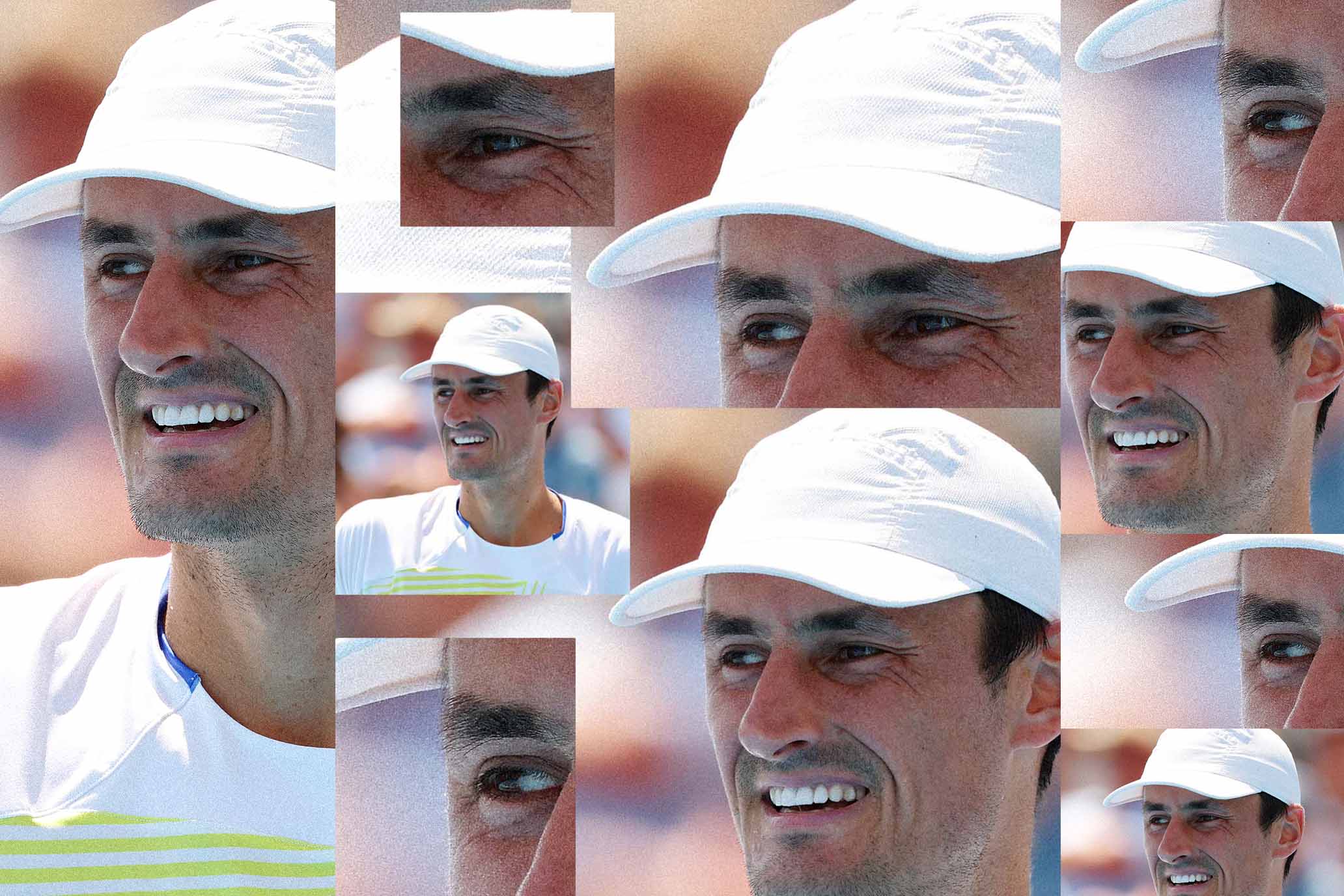
Bernard Tomic during Australian Open qualifying this year. // Getty
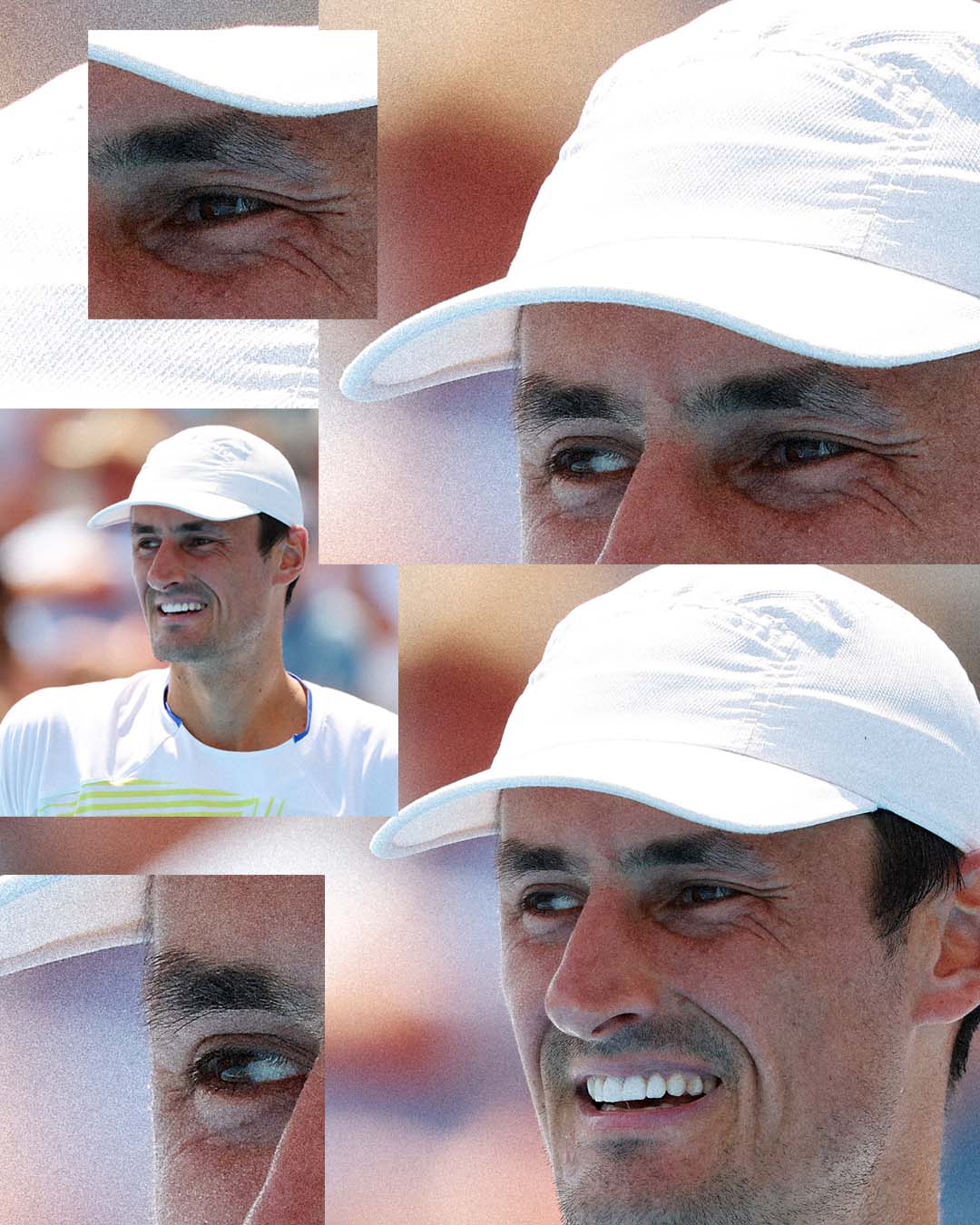
Bernard Tomic during Australian Open qualifying this year. // Getty
Bernard Tomic? You haven’t heard that name in years. Only true Tomic heads—and I’m not sure many exist in 2026—would be keeping close tabs on the surly Australian, still somehow only 33 years old, who squandered considerable talent and goodwill over the years, both on and off the court. But he’s now in the middle of something like a “born-again” tennis career, which peaked this weekend when he earned his biggest title in eight years. And that deserves a little bit of context. Enough time has elapsed since his “prime” that there’s a whole new cohort of tennis fans who know nothing of his lore. Forgive me if you were around for all this; hopefully it’s amusing enough to revisit.
Tomic was the world top junior. He also had a quintessential toxic tennis dad, which might help explain his future apathy toward the sport. But together they honed an original and effective game style. Despite standing 6-foot-5, Bernie didn’t overpower opponents. His was a finesse game, defined by ball control, deception, and change of pace. He could play his ground strokes so ridiculously flat that they stopped being flat; I don’t think I’ve seen any player, before or since, hit more baseline groundies that actually arrived with sneaky underspin. His style was already slightly anachronistic at the time, and in today’s power-oriented game, it is unimaginable. Tomic was a brilliant ball-striker, but not at all in the present-day Jannik Sinner sense. Just a guy with phenomenal hands and a keen intuition for perturbing his opponents. He had good enough hands that he could afford to get a little lackadaisical with his footwork…and conditioning, and mentality, and…yeah, pretty much everything else.
As it turns out, good hands can take you incredibly far in a sport predicated on the precise manipulation of a sphere with a racquet. Tomic’s weird style worked not just against fellow teenagers but against touring professionals. In 2009, when he was 16, he became the third-youngest player ever to win a Challenger title. In 2011, he made it to the quarterfinals of Wimbledon, becoming the youngest man to reach that stage of the tournament since Boris Becker. At that juncture, he looked like he’d be one of the most talented players of his generation. He soon ascended into the top 50, then plateaued for a few years but peaked at No. 17 at the start of 2016, before it all began to fall apart. He’s one of those cases where the Wikipedia headings tell the story more succinctly than I ever could:
2018: Rankings downfall, reality television stint and fourth ATP title
2019: Severe downfall in form and ranking
2020: Inactivity due to COVID-19
Along the way, there was a lot of nastiness, apathy, tanking, and other behavior too insipid to recount here. Suffice to say, by 2022, he was ranked outside the top 800. Bernard Tomic would have never struck anyone as the type to keep grinding at the lower levels of tennis and revive a moribund career; a full-time pivot to scammer/influencer would have struck me as a much more likely outcome. But he did in fact choose to grind away from the baseline, in unglamorous and ill-paid tournaments all over the world, as if he’d never had a taste of life at the top of tennis. In late 2022, Tomic started at the ITF level and built his ranking back up again until, by late 2024, he was back in the top 250 and securely in the Challenger tier of the tour.
He even made it back to Challenger finals again. In 2024, he lost the Fairfield final to future star Learner Tien, 6–0, 6–1, in 39 minutes, which was the shortest championship match in Challenger history, indicating that the new Tomic still had a bit of the old Tomic in him after all. In 2025, he made and lost two more finals: a three-setter in Lexington versus Zachary Svajda (who is enjoying a breakout summer) and a walkover in Barranquilla that handed the title to Arthur Fery (a freshly minted Wimbledon semifinalist). But in 2026, Tomic took two months off the tour, which he later explained was due to the birth of his first child. In the days leading up to the Lincoln Challenger, he later revealed, he felt he “hit a brick wall” and wanted to call this his last season on tour. Going into the final against Mark Lajal—you might recall the distinctive pineapple-style haircut he used to sport—Tomic was the clear underdog.
And yet, at the end of that two-hour, 41-minute final, it was Tomic who reigned supreme, 4–6, 7–6(4), 7–6(3). Lajal was playing his run-of-the-mill power baseline game, and Tomic was lazily massaging the ball all over the court. It’s a pretty refeshing style to watch, when his head is actually in it. Seventeen years after his first Challenger title, Bernie has notched another—that one a mark of blazing prodigy, this one of unexpected tenacity. Will it be his last? “I said this was going to be my last year, so I guess I have to reassess a few things now,” Tomic said after claiming the Lincoln title. He looks like he’s in the best shape of his life. “Now that I won, I’m going to have to go back to the table. I’m probably going to play another 20 years,” he said. It’s not a sequence of words that I expected to type in 2026, but here goes: Bernie Tomic, you have my respect.