
The Next Big Thing
The Next Big Thing
Don’t call Rafael Jodar “The New Rafa”.
Don’t call Rafael Jodar “The New Rafa”.
By Owen LewisApril 29, 2026
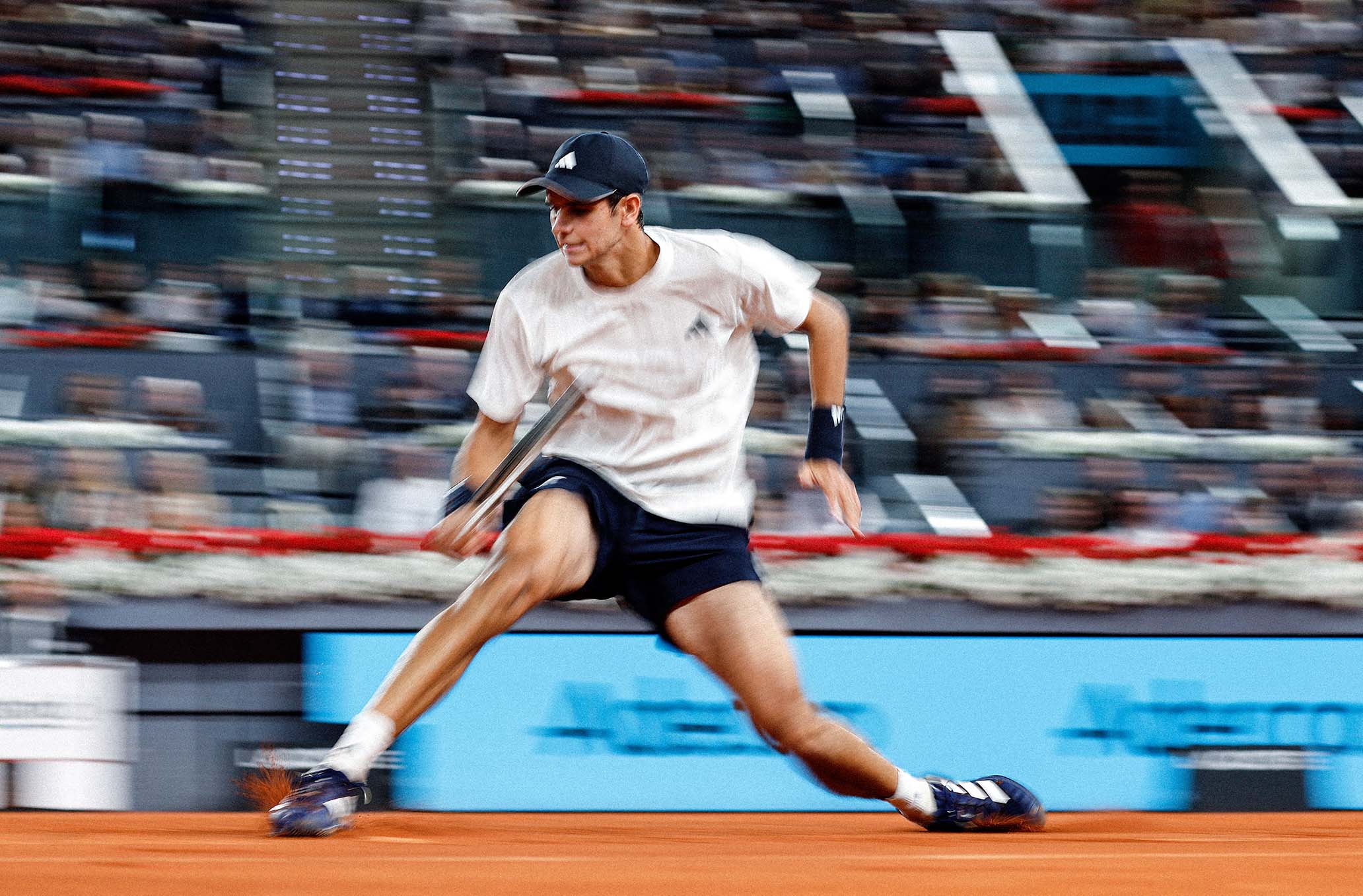
Rafael Jódar Camacho in Madrid this week. // Getty
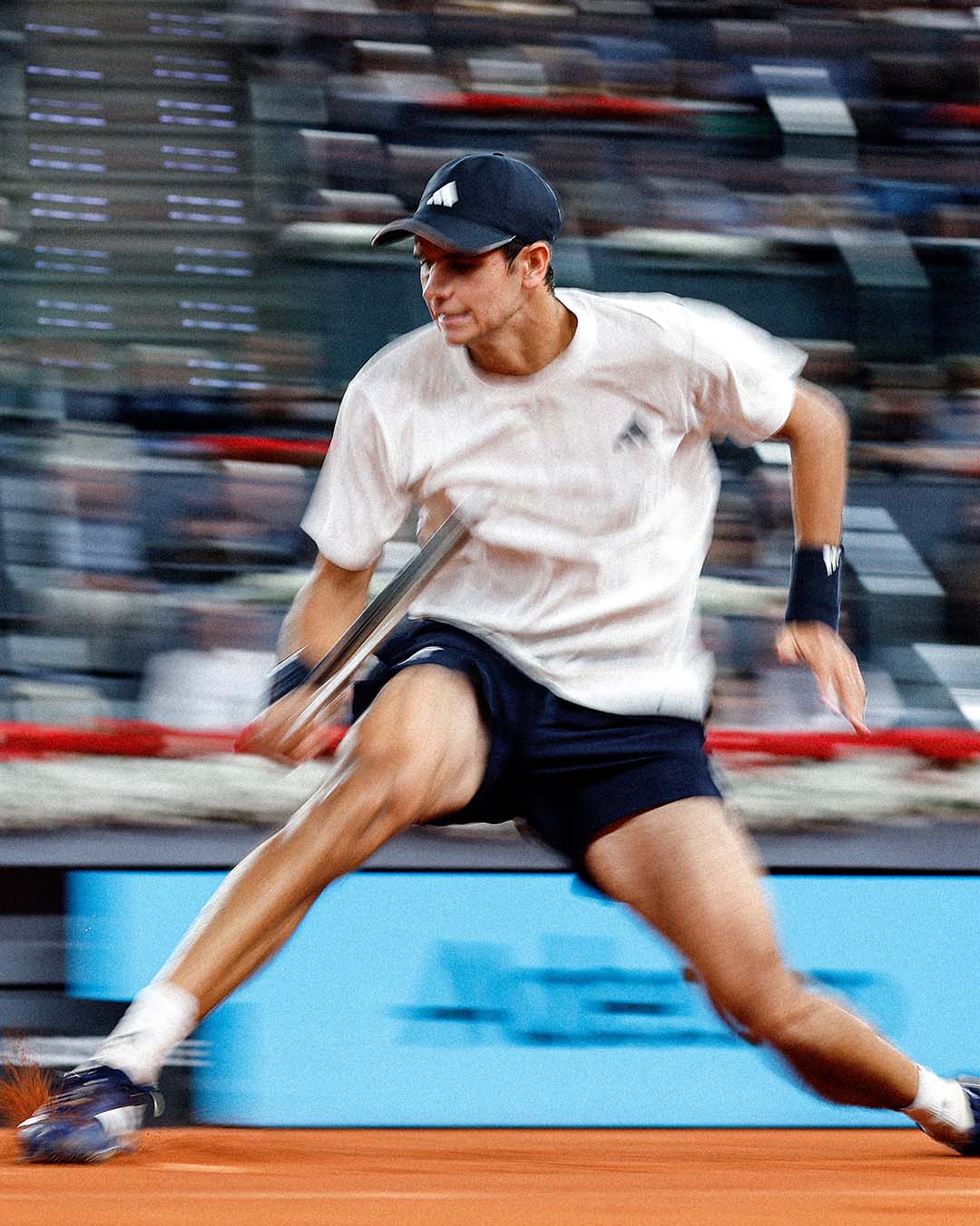
Rafael Jódar Camacho in Madrid this week. // Getty
It’s a little too cruel. We tennis fans are so stuck in the past that we’re on the constant hunt for a Third Man, to complete a new Big Three, as if dominant trios are just a fact of any given generation and not a happy accident. Jannik Sinner is constantly compared to Novak Djokovic, despite the many differences in their games. Carlos Alcaraz may be the proud owner of the most diverse, deranged skill set in tennis history, and yet we have spent much of his early career describing him as…an amalgamation of Roger Federer, Rafael Nadal, and Djokovic. Now, the tennis gods are having a laugh at our terminal nostalgia and lack of imagination, because the next promising ATP prospect is named Rafael.
His full name is Rafael Jódar Camacho, with only the former surname appearing on the scoreboard. He is 19 years old and just finished a blistering run at his home tournament, the Madrid Open. Unlike Nadal, he’s a righty, with a greater emphasis on linear power and a slighter build, the quiet student to Nadal’s jacked pirate. Do not call him “the new Rafa.” Do not do it!
Jódar is, however, the latest intriguing prospect on the ATP Tour. The stat du jour right now is that he’s won 17 of his first 25 matches on tour, more than Federer (9), Djokovic (12), Sinner (12), Alcaraz (14), Nadal (15), and Fonseca (15). But I could not be happier to let discussions of burgeoning generational talent wither and die on the vine. Alcaraz is out at least until the grass season (excuse me as I vomit into the sink). For all the maddening ways we use the past to frame the future, all we want right now is a worthy challenger to Sinner. If Jódar is up to it, that’ll be more than enough of a gift.
Jódar charted a path of destruction through the start of the Madrid draw, commanding considerable hype for the Sinner match. He destroyed Alex de Minaur, only granting the underpowered Australian four games. Jódar has more easy power in his pinkie finger than Demon has in any limb; it usually feels like this sport decides its champions unilaterally no matter how hard they work to change their fate. Jódar ran up against fellow prodigy Joao Fonseca in the next round. There are real stakes in these early clashes between talented youngsters—while they’re not necessarily indicative of how a rivalry will turn out, the players salivate at the opportunity to one-up a peer and inflict some mental damage. (Alcaraz is yet to lose to a player younger than him; you imagine it’s a point of pride.) After splitting sets, Jódar did just that by wiping out Fonseca in the decider, not allowing him a single winner until he was already down 5–0. Joao mangled a racquet in the midst of that demolition.
Even Jódar’s ouster, a 6–2, 7–6 (0) defeat to Sinner, illustrated his potential along with his shortcomings. Sinner looked antsy in the opening games, a show of mortality usually limited to his matches against Alcaraz. Here he missed an overhead from close range and a forehand second-serve return into the net (on break point, no less), a sign that this particular opponent made him uncomfortable. Jódar’s crackling pace off the ground was forcing Sinner onto the move, an aspect of his game we get to see less and less these days as he controls virtually every point against most opponents. Jannik also hit more drop shots in this match than I can remember him trying in any other. Between Jódar here and Fonseca’s close loss to Sinner at Indian Wells, we may be seeing the first draft of a very exclusive blueprint against the Italian. It’s also the direction men’s tennis is headed anyway: Hit hard and heavy ground strokes, then hit them even harder and heavier. This new world has its charms, but I weep for the lost days when variety and counterpunching defined the sport.
The first six games were intense enough to mandate a swoon in focus or physicality from one or both players. It made sense that the kid faltered; while Sinner has been forged and tempered in scalding Alcarazian fires, this was probably the most intense match point-to-point that Jódar has ever played. Despite having a break point at 2–1 and another at 2–3, and getting into a neutral rally on both occasions, Jódar lost the first set 6–2. On Sinner’s break point at 2–2, Jódar hit a sharply angled crosscourt backhand—exactly the kind of shot that Fonseca would have returned with a floater, if he’d been able to return it at all—only for Sinner to slide into it and thump a winner down the line. You play and you learn.
But the 19-year-old impressively knuckled down on serve in the second set. His greatest gift might be his fast-twitch levers, enabling him to attack even when the ball is coming at him at high speed. (Even Alcaraz struggles with this, his technique forcing him to block more shots back.) Jódar eked out two break points at 3–2 and two more at 4–3. A leaping 103 mph forehand winner down the line may have featured in there, who is to say? Sinner saved them all, but this wasn’t your garden-variety Sinner servebotting to save break points against Alexander Zverev. Jódar forced Jannik to use every bit of the court: a crosscourt forehand that could have been shot out of a gun, a low inside-out forehand winner, a stretch lob winner, an acute-angled backhand pass that tickled the line delicately enough that I was expecting an out call. Emboldened by his narrow escapes, Sinner closed the match by winning 11 straight points.
There’s more work to do. Jódar isn’t an elite defender, though with his wiry 6′ 3″ frame, he has a chance to become one. His serve is sporadically but not yet consistently damaging. He could make more frequent use of his nice touch at net (that said, you only get so many chances to come in even if you wanted to when you’re trading 85 mph ground strokes). Even in his raw form, Jódar’s as good a candidate to spice up the ATP as we have. “He pushed me to the limit,” Sinner said after the match. If Jódar can do that at 19, maybe someday he can push Sinner beyond it.


PURE, ORIGINAL TENNIS — SIGN UP!
RECOMMENDED
Zac Farro: Life Preserver
CULTURE & ARTS
Coco Gauff: Prophecy in Progress
ATP & WTA

Ben Shelton & Frances Tiafoe: Top Dawgs
FILM REVIEWS