The Noise and the Signal
The Noise and the Signal
Touching the tennis divine with Julius Gavin.
Touching the tennis divine with Julius Gavin.
By Jackson FronsPhotography by Molly CrannaOriginally Featured Volume 2 of OPEN Tennis — BUY
The Noise and the Signal
Touching the tennis divine with Julius Gavin.
By Jackson FronsPhotography by Molly CrannaFeatured in Volume 2 of OPEN Tennis — BUY
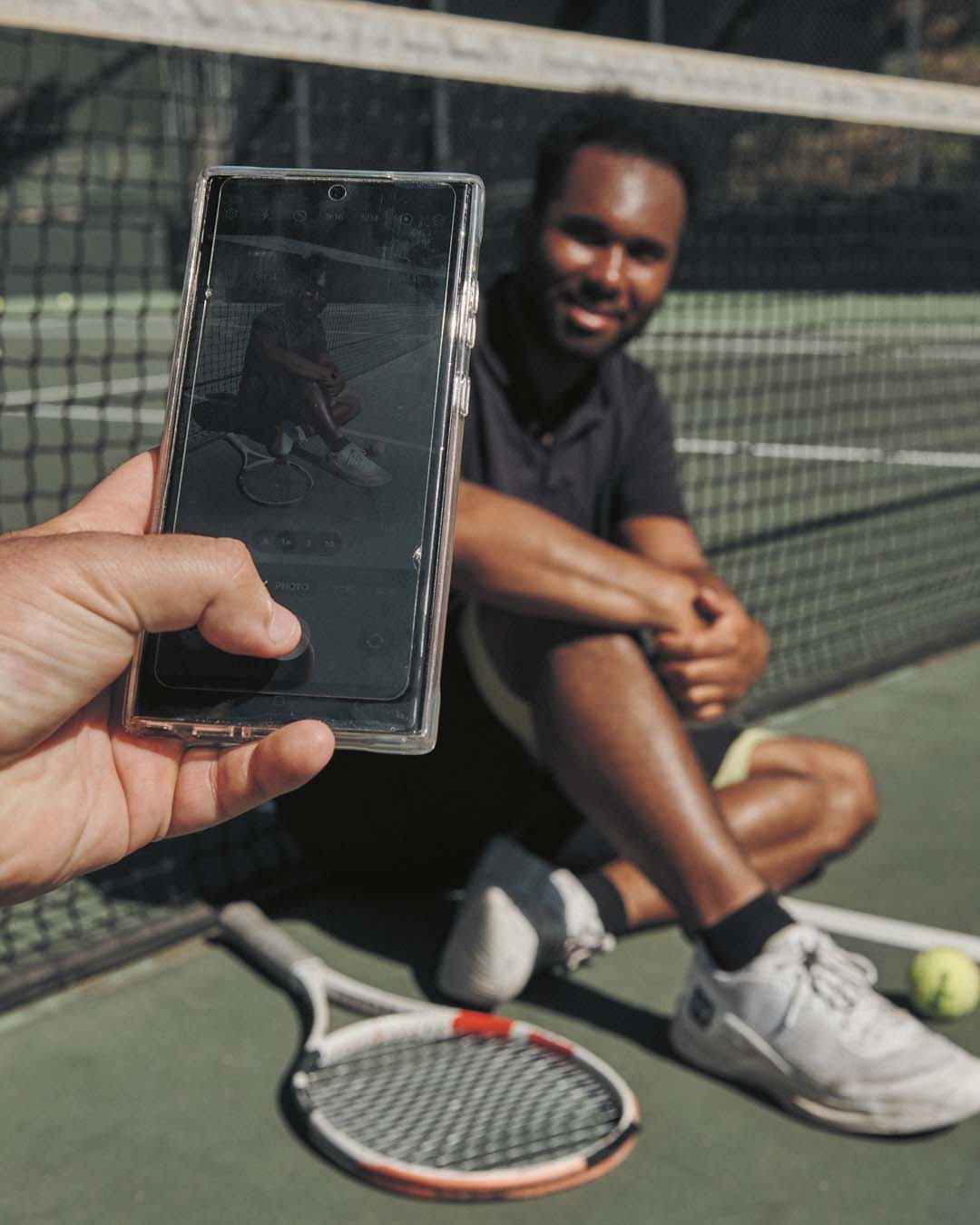
We might be entering the golden age of the tennis influencer. Perhaps the delayed result of COVID, Challengers, or divine intervention, a new generation of young indtependent creators are riding the wave (or perhaps inflating the bubble) of the tennis boom and posting their way to relative notoriety on Instagram, TikTok, and YouTube.
Legit and aspiring professionals like Karue Sell and Felix Mischker chronicle their toils on the Challengers and Futures circuits. Dylan Gee, of Tennis with Dylan, and Ashley Neaves, The Tennis Mentor, provide hyper-sincere bite-size tactical and technical coaching advice. On his eponymous YouTube channel, Winston Du posts recreational match plays highlighting a recurring cast of characters across the Southern California tennis landscape. The Tennis Nerd gives deep dives into the gear used by the pros. Winners Only Tennis and Baseline Conversation narrate their feel-good tennis journeys as they go from green adult tennis novices to full-blown tennis nuts. Coach Conor Casey has even dabbled in the realm of tennis comedy.
Across the surface-level diversity of the content these creators produce is something of a developing house style. Drone shots of prime destinations. Tournament B-roll soundtracked by “Chill Hip-Hop Beats to Study to”-type music. Aw-shucks smiles to the camera. Tepid inspirational platitudes. Ad reads for Toroline, Functional Tennis, and any product made by Diadem. They, of course, all collaborate with each other, too.
It’s a formula that has drawn the attention of some of the biggest tennis brands. Rising stars like Du and Gee have signed on with Solinco and Wilson, respectively, and Mischker has posted videos promoting Dunlop, the IMG Academy, and fellow tennis influencer Patrick Mouratoglou’s Ultimate Tennis Showdown, where he filmed an exhibition match against Lorenzo Musetti.
Despite the clear marketability of this content style, I have to say it’s all a bit bland. Everyone seems to be trying their best to be nice, positive, and normal. It’s sanitized and slick. These guys (and they are mostly guys) might be content creators, but they aren’t posters. And while some, like Sell, are veterans of our sport’s highest levels, none of them are veterans of forum flame wars. They use the internet to promote their brands, but their brains haven’t been warped by it.
Then there’s @tennis.god, a coaching creator on the come up with nearly 60,000 followers on Instagram, a notable count in the still relatively niche tennis content scene. He also has a simple, striking message that has proved quite divisive.
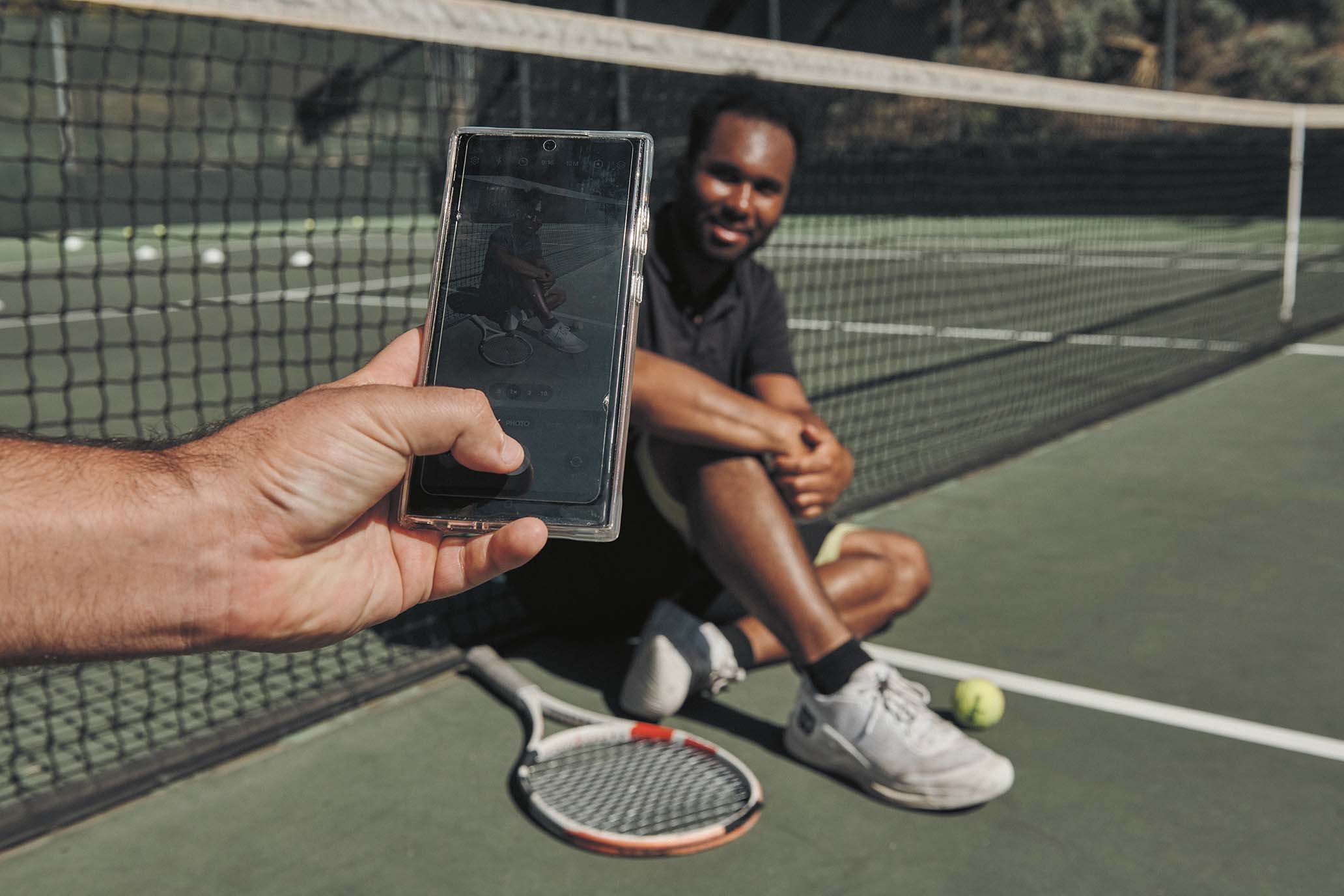
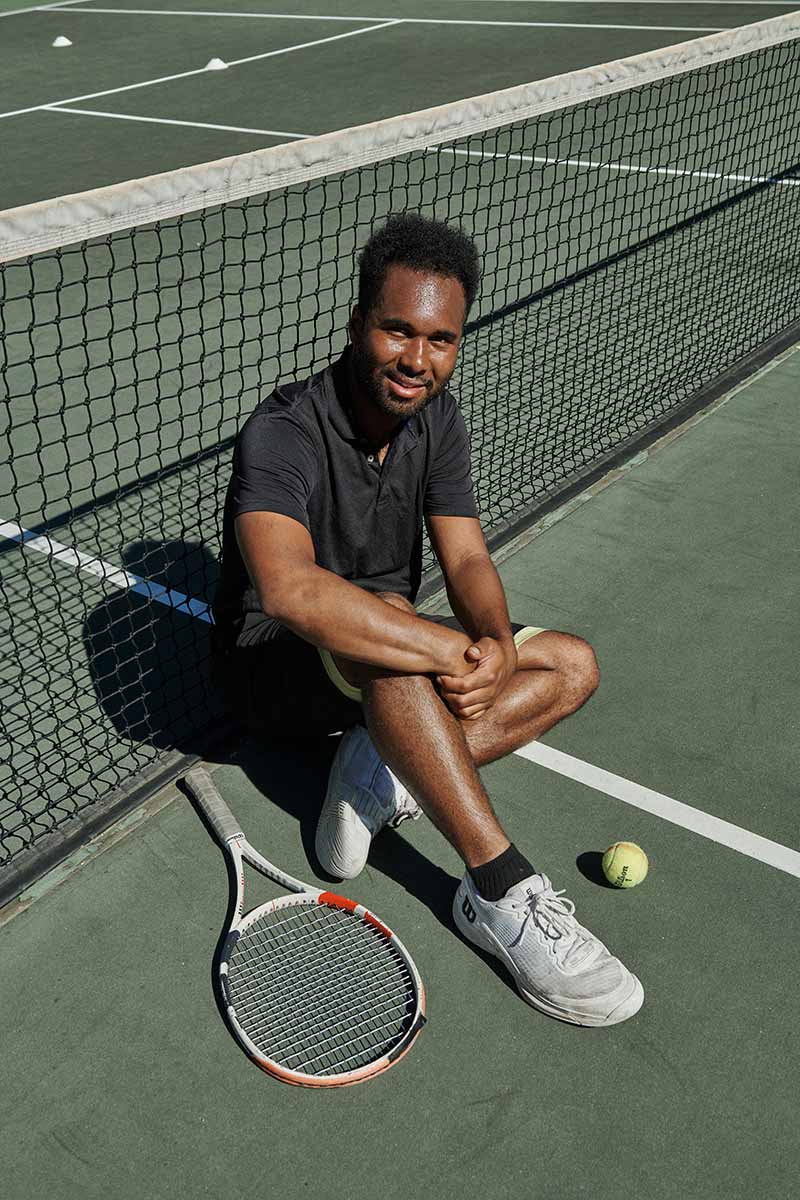
In one particularly emblematic reel, Julius Gavin, as he’s also known, stands dressed in all black. His Afro is neatly coiffed. A key-chain lanyard dangles from his pocket. He wields a racquet like a boardroom laser pointer.
“Is it possible to become a professional tennis player as an adult? Of course. It’s not even a question.”
It’s claims like this that have led some to think Gavin is a tennis messiah and for others to question his sanity.
In the video, and its caption that I’ve reproduced below, Gavin continues:
“If you join the military they give you a list of physical requirements to meet. They tell you EXACTLY what to do. They don’t care how old you are. They only care if you can DO IT. We don’t have that for tennis because no one’s bothered to make one—yet we have people MINDLESSLY telling you what can or can’t be done and this has been DONE BEFORE…. Tennis FITNESS is the hard part about going pro. Tennis SKILLS can be mastered in one to three months. There are only seven main strokes in tennis, and I have a video for all of them on my profile. Footwork is literally just a map, and I have a course on my profile teaching it as well. I’ve written an entire book on tennis strategy telling you everything that can possibly happen in any singles or doubles point. Tennis is not a secret society. Tennis is not a never-ending journey. These are limiting beliefs keeping you stuck in a maze when there’s a clear exit.”
On a bright October day, I met Julius Gavin at the private court in Bel-Air where he was four hours into a six-hour “private seminar” (basically a very long tennis lesson that costs $1,000). However, I wasn’t greeted by boisterous claims and big promises. I just heard the rhythmic thwack of his student’s forehands.
Gavin drove all the way from Virginia to be here after his client Sally found him on Instagram. Tomorrow he’d also be working with her son Alastair, a student at the posh John Thomas Dye elementary school. The two normally practiced at the Riviera, one of the premier clubs in Los Angeles.
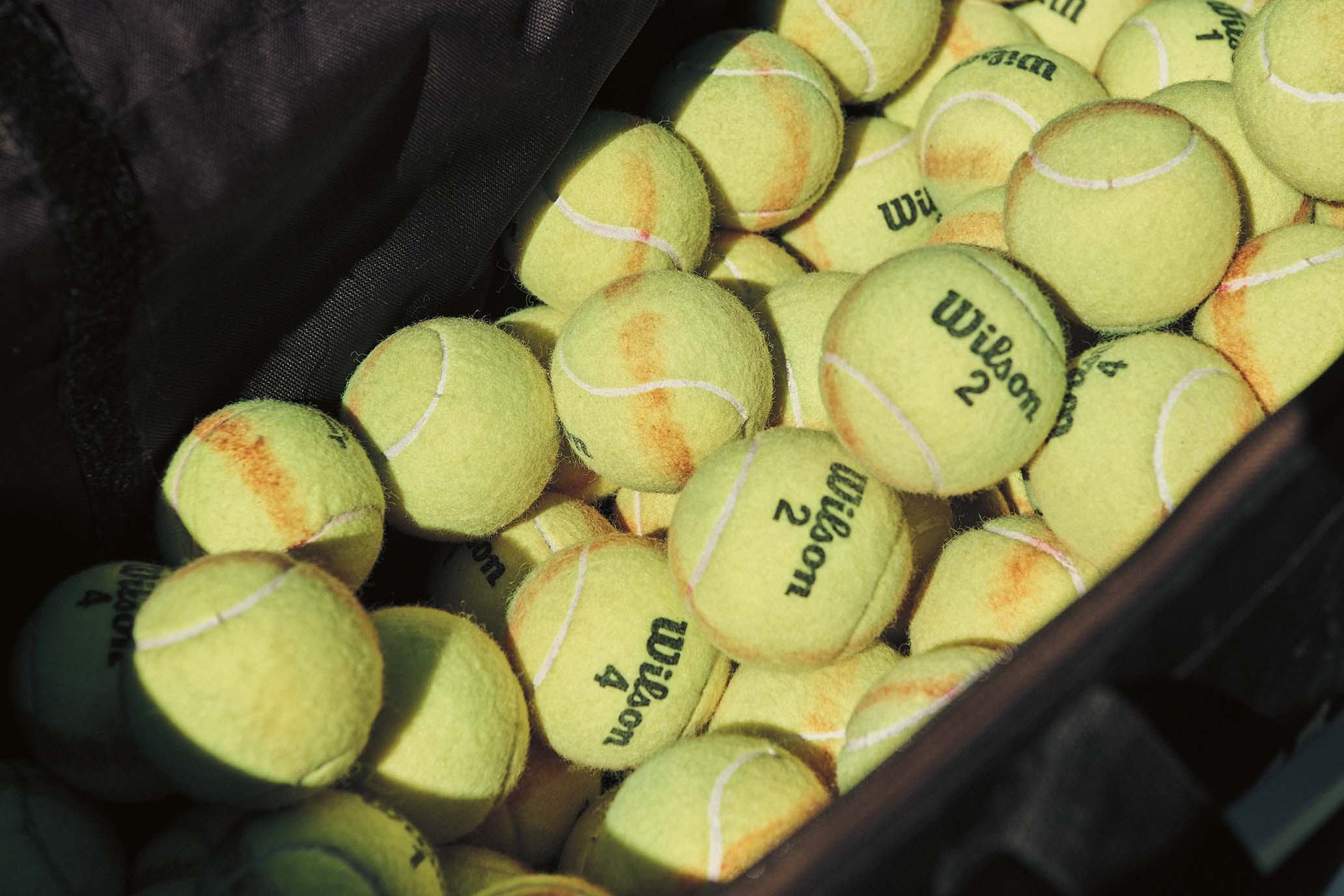
Along the court were three columns of cones. More than 1,000 Penn balls, each bisected with a hand-drawn orange marker stripe, were scattered around. Hundreds more waited in a zipped black duffel bag. Three tripods mounted with Android phones recorded the action.
Gavin, who’s 25, short, and a touch pudgy, stood a few feet from the net, on the same side as Sally, who bounded from cone to cone, moving laterally first, then up and back between the rows. After each flurry of shots, he punctuated the moment with a coaching koan.
“I want to condition you so every forehand feels vibrant…. Everything starts with the heel…. Slap it open contact angle.”
Besides that last somewhat baffling piece of advice, the lesson was better than I’d expected it to be. Sally’s hitting improved as Gavin’s pointers produced a cleaner, more technically sound swing. He was also a gentle, relentlessly positive presence. And, perhaps most important, she seemed to be having a great time despite being into her fifth hour of tennis.
After many more forehands, some “slapped open contact angle,” others not, Sally stopped to take a water break. As she sipped, Julius gazed contemplatively at the dusty canyonside dotted with scrub brush.
“So, John,” he said. “Do you have any questions?”
I had so many questions. Why did he drive across the country? How did the understated guy I was on the court with turn into a self-promotional online tennis deity? Was it an act? Was he grifting? Or was it something more complex? Also, why hadn’t he bothered to learn my name? It’s Jackson.
I saved most of that for later. We had all afternoon and evening, and I also planned to stop by some of Gavin’s other “seminars” as his calendar filled out in the coming days.
As for the choice not to fly, he told me that was simple. Gear.
The balls, the filming equipment, his stacks of racquets—his own Babolats and demos for students to try—took up a lot of space. He even packed the stringing machine on which he cooks up experimental setups like “the high-tension perimeter,” which, like the name indicates, involves stringing the outer strings at a higher tension to increase power.
Like much of Gavin’s teaching, the “high-tension perimeter” flies in the face of tennis orthodoxy.
Both in videos and during the lessons I observed, Gavin preached against high net clearance and reliance on “percentage tennis,” citing how his college teammates crushed the ball “no more than a foot over the net.”
While I can’t speak to exact net clearance of the 2019 Norfolk State Spartans, I can say that this definitively contradicts my own experience watching (and playing) tennis at a decently high level. This inaccuracy is also borne out in data from the ATP Tour, which shows that even players with notoriously flatter ball flights still average around two feet of clearance.
Then there’s Gavin’s doubles advice. He proposes that players should serve wide “at least 90 percent of the time” to maximize poaching opportunities. In reality, at both the collegiate and professional level, the standard play is to poach on serves down the tee, as the lack of angle makes hitting down the line behind the net player more difficult.
There are also many instances of internal incoherence in Gavin’s tennis philosophy. In one video, he claims the backhand has a single contact point. In another, he demonstrates a multitude of backhand contact points, arranging them like hands on a clock.
Julius was also adamant to me in our time together that “tennis is the last sport that is anything like chess.”
Paradoxically, the cover of Gavin’s book The Complete Map of Tennis Strategy: How to Win Every Match Against Any Player, which retails on Amazon for $64.99, features chess pieces superimposed on a tennis court.
Factuality aside, tennis.god makes amazing content. I love the confusion, curiosity, and titillation that envelop me when I watch his videos. In a scroll full of stale meme formats and AI slop, he is interesting, flawed, and original.
Yes, it seems like he might, at any moment, proposition the viewer to join an MLM or purchase a ShamWow. And yes, I’m “triggered” at the notion that anyone could become a pro within a year, but when so much tennis content induces only an eye roll or a shrug, at least engaging with Gavin makes you feel something.
It’s a sentiment echoed by podcaster and friend of the magazine Craig Shapiro, a man also in possession of one of the larger personalities in the tennis-media-sphere.
About Gavin’s rise, he said, “There’s an absolute lack of charisma amongst the actual coaches that are giving salient, interesting information. They’re corny.” As for tennis.god himself, Shapiro has “taken great enjoyment in his insanity.”
However, for many other members of the class of coaches, pros, former elite players, and “experts” to which Shapiro and I nominally belong, the feeling most often evoked by Gavin is rage.
On the video referenced above, top 300 ATP professional Cannon Kingsley commented, “What do you consider mastering a tennis skill? Can u learn how to serve 125mph and hit every corner of the box with ease in the span of playing tennis for 1-3 months? I don’t think any player has truly mastered any skill there’s always room to improve your game. It would be extremely arrogant of me to say I’ve mastered anything in tennis. And then for you to say that you’ve mastered all of the tennis skills is something a little bit past arrogance. IMHO.”
Tennis YouTuber and top 200 ATP doubles player Simon Freund also weighed in with a remarkably I’m Not Mad take: “Wouldn’t it be the best proof of concept if you went pro and got an ATP point? I’d watch that journey for sure 🔥”
On a different post, Mischa Zverev, the elder brother of Alexander Zverev, and himself formerly the 25th best player in the world, sounded off more tactfully: “#1 backhand coach in the world…bold ish statement.”
Gavin is well aware of his haters, and he isn’t shy about responding to their comments with full-blown essays. To one commenter who chastened Gavin for giving people “false hope,” tennis.god replied: “Are you afraid to write a book that’ll change the entire sport forever and build a tennis community? Please. We all know you’re on my page because you care about me way too much and feel your authority being challenged as I literally talk about in the video. I couldn’t give two fucks about what you do on your page. You’re not a hero saving or bettering the sport. You’re jealous I’m getting spotlight.”
To another, asking, “Serious question have you ever played or coached top 100 ATP/WTA tennis? I’ll even go as far as asking have you coached top 200 ITF juniors?”
Gavin rebutted: “Just say you’re a hitting partner bro 😂😂 if I had a dollar for all of the ‘high performance’ or ‘tour coaches’ that can’t even teach the basics, I’d be a millionaire. That’s what I focus on teaching. Most of the ‘high level coaching’ I’ve seen is overyapping during rallies and practice sessions. 99% of players are not pros. They’re struggling to even get the basics down.”
While these responses are definitely a bit aggressive, Gavin’s life in tennis has been one dotted with rejection and exclusion.
He has coached at clubs—both in Norfolk and at the Biltmore in Miami—but his methods drew criticism from more classically trained tennis directors. His last quest for a club job ended with the head pro saying, “I’d give this interview a D+.”
Even Gavin’s earliest lessons were less than traditional. Unable, or unwilling, to find people to hit with in his community, he turned to his tennis-novice friends.
“If I couldn’t find players,” he told me, “I’d build them.”
By the time he started teaching in a more professional capacity, Gavin said, he “didn’t have the preconception that tennis needed to be learned slowly. [I] had this pressure to teach people quickly so [I] wouldn’t be scamming them.”
In a self-aware turn, he added, “But now that’s what people think of me as anyway.”
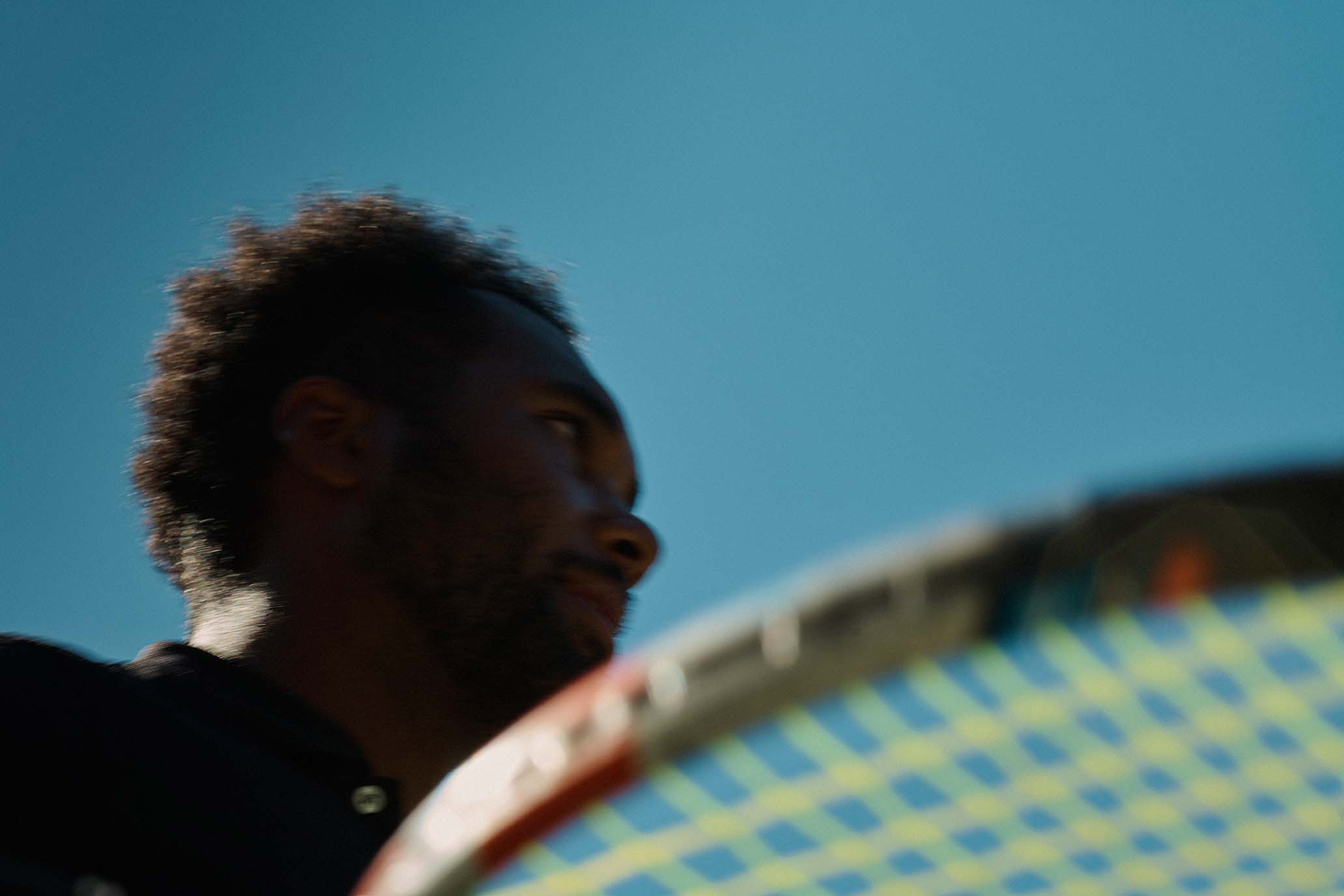
Julius asked me about my own tennis background as we schlepped his gear out to his Honda after the “seminar.” I gave a noncommittal answer. We’d be hitting the court later, after I interviewed him, and I wanted Gavin to go in with as blank a slate as possible.
Given the name mix-up, I was confident he hadn’t looked me up, which was a good thing, since I have more in common with the critics in his comments than the fans, who tend to mostly be adult recreational players.
I used to be a pretty good junior (around 120th in the country), and I had an okay college career, too. I also still compete now and then at a decently high level. As recently as 2023 I was a UTR 10, I still get out there occasionally in USTA 5.0 leagues, and I also currently help coach a college team.
Like many good tennis players, I didn’t end up where I am by accident. I’ve had the privilege to work with notable coaches, and I grew up in Southern California, surrounded by high-level players. While I wouldn’t go as far as to say, like Gavin does, that talent has no bearing on one’s tennis success (I’d certainly be much worse if I was a foot shorter), I do think the game of growing champions is at least somewhat financially rigged. To that end, unlike the guys (who are much better than me) in his comments, I’m less quick to dismiss Julius Gavin because he doesn’t sound like a normal tennis coach and because he never was that great of a player himself.
Gavin was born and raised in Norfolk, Va., near the naval station where his father served. A career enlisted man, he met Gavin’s mother while deployed in the Philippines. As a tennis parent, he was “not amazing, to say the least.”
Julius, like many young tennis players, wanted to be a professional, but he didn’t have the coaching, resources, or environment necessary to reach the highest levels.
He competed in junior tournaments with mixed results. Gavin never cracked the top 1,000 in the nation for his grade, and, after walking on at his hometown school, Norfolk State, he played on the team for only a semester, logging just a single match appearance. His highest available Universal Tennis Rating (UTR) is a 7.20, or roughly the level of a solid NTRP 4.5, which he achieved on Feb. 18, 2019.
While it’s been quite a few years since Gavin trekked to tennis tournaments with his dad, when he opened up to me on a bench in Encino’s Balboa Park the wounds still felt fresh.
Gavin told me that his father “publicly chastised [him] at every single tournament…. He would gesture…make these big eyes.”
About the behavior, Gavin was conflicted.
“You hate that your dad is mad at you and you want to make him proud, so you kind of want him to be there, but you don’t want him to be a fucking asshole.”
Julius laughed and shook his head.
“Oh shit, man.”
The story reminded him of an anecdote he’d seen a mindset speaker recount in a video. It was about “this guy who killed his wife and two daughters.”
It was a disturbing story that related to our conversation, I guess, because of the compliance inherent to children.
“Wow,” I said.
“So I was getting humiliated all the time by my own dad.” We were back on track. “And he would complain about me to other parents. And he would make me feel embarrassed. He would always tell me that everyone is your competition and nobody is your friend. And I was not only disconnected from my own emotions, but disconnected from everyone else. And now in retrospect I wish I made more friends with people. Because making friends with people is actually one of the number-one ways to get good at tennis. All the top players, they have a bunch of hitting partners.”
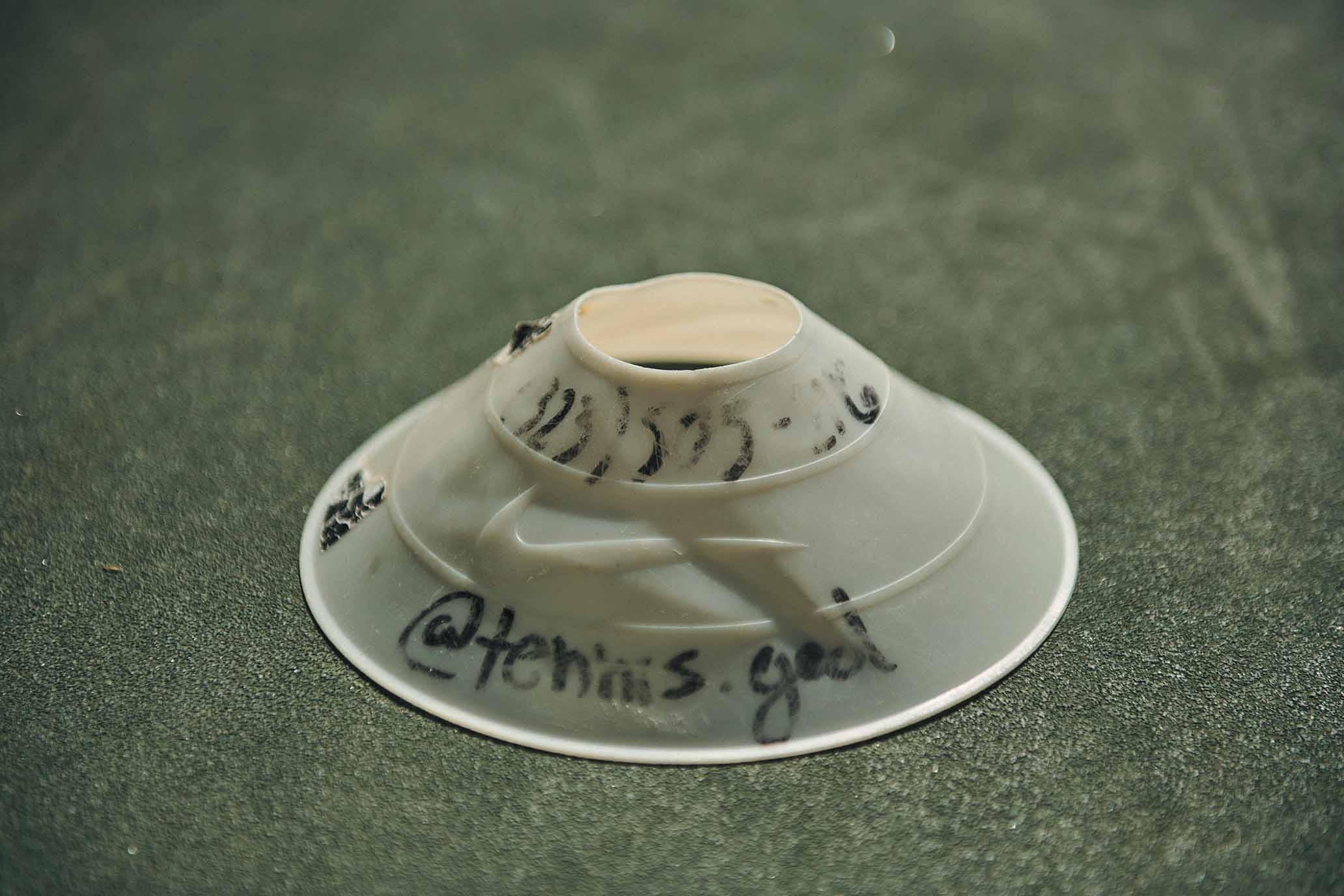
Tennis is a lonely sport. A brutal singles match can drive professionals and amateurs alike to the edge of madness. For that reason, I think, the game attracts mercurial, solitary people. Artist and writers, sure, but tennis also appeals to those whose solitary obsessions circle around more commerce-oriented notions of success—CEOs, Wall Street tycoons, and, in the case of Julius Gavin, residents of some of the more lonely and reactionary corners of the internet.
In the park, a goalie coach drilled his student on the knobby grass, a high school tennis team labored through basic rallies on the cracked courts, and Julius peppered our conversation with references to the ketogenic diet (he eats a ton of liver), mindset gurus (he particularly admires former Navy SEAL David Goggins), and testosterone levels (apparently on the decline because of chemicals in tap water).
It occurred to me that Gavin’s content becomes legible not when viewed through the lens of a tennis influencer scene he doesn’t quite fit in, but in the context of terminally online young men who live by the teachings of the nexus of mindset, fitness, combat, comedy, nutrition, business, and “success” influencers who make up what many have termed the Manosphere. For those blissfully ignorant of names like Jocko Willink, David Goggins, Jordan Peterson, Grant Cardone, Andrew Tate, Theo Von, and the rest of the Joe Rogan Extended Universe, what matters is that it was in the fires of this world, and its flimsy factuality, that tennis.god was forged.
It was also the influence of these “thinkers” that sent our conversation in a cosmic direction.
Like many deities, tennis.god loves a good proclamation. While I had expected to receive many of these during our interview, it came as a surprise that much of what Julius wanted to talk about went far beyond the realm of tennis.
Gavin regaled me with his secret knowledge of the indivisible structure that dictates our perceived reality.
He said there is a “weird law” in life that truth and survival tend to juxtapose each other. Also, paradoxes unveil themselves to those who have created a proper system, and all of the most successful people are doing “esoteric things” that are not mainstream at all. It’s also true, apparently, that an intense amount of truth is hidden somewhere if:
(1) Everyone thinks it’s bullshit.
(2) The people who believe it extremely misunderstand it.
(3) It is persistent for years.
“Astrology is an example. Alchemy is an example. Isaac Newton, he was a heavy, full-time alchemist.”
These eternal laws of nature, he said, can only be perceived with meditative focus and deep contemplation—things that are made more difficult by the strictures and distraction of modern life. The noise. Julius Gavin is looking for the signal of truth in that noise.
Julius told me that human capacity is limitless. Not just on the tennis court, where things like talent, level, and negativity are mere constructions of the mind, but also in matters of health.
He told stories that sounded more like miracles. A man who fasted for 30 days “shocked the doctors” and cured himself of stage 4 cancer.
A woman who had her thyroid surgically removed grew it back through meditation alone.
It’s possible that, at this point, I was unable to conceal my suspicion, because Gavin then tacked on, “I hope that one’s true.”
I couldn’t find anything to corroborate the cancer example, but the thyroid story does seem to have a clear origin: a patient of Dr. Joe Dispenza’s named Christine. Dispenza, a “researcher of epigenetics, quantum physics, and neuroscience,” is a New Age medical practitioner with more than 3 million Instagram followers. While I can’t speak to the veracity of Christine and Dispenza’s tale, I do think it necessary to point out that Dispenza’s only doctorate is in chiropractic.
On a similar note, I can no more easily confirm or deny the hidden structure of reality as I can determine if tennis.god really is the world’s best tennis coach. What I can say with absolute factuality, though, is that there is a real esoteric force that has, to some degree or another, quite explicitly shaped not only Gavin’s life and career, but the interests, opinions, and thoughts of nearly all Americans. The Algorithm(s).
Amongst influencers, “catching the algorithm” is a common term for blowing up beyond the siloed walls of one’s normal content community. The algorithm—everyone’s own, personalized one—is also the Overton window of what one sees passively on their screens. I am hardly the first to point out that the internet, with its endless “echo chambers” and infinite wormholes, feeds people more of what they already want. This can be a way to fill your feed with tennis content or dog videos, but it can also be a means of radicalization, particularly for those who are lonely, disaffected, and (not unjustly) lacking faith in the status quo.
It was also the algorithm that first delivered Gavin’s Instagram posts to my phone and, years before, sent him down the journey that created tennis.god.
When Julius was in college, the algorithm “recommended a bunch of drop-shipping videos and a bunch of SMMA [Social Media Marketing Agency],” and he became introduced to a world of “entrepreneurs who started having a lot of success at such a young age.”
They inspired him to pursue a path that wasn’t getting an office job out of college, drudging along. It’s an impulse I can relate to. Although, unlike Gavin, my algorithmic journey didn’t lead me into the world of sales gurus and mindset.
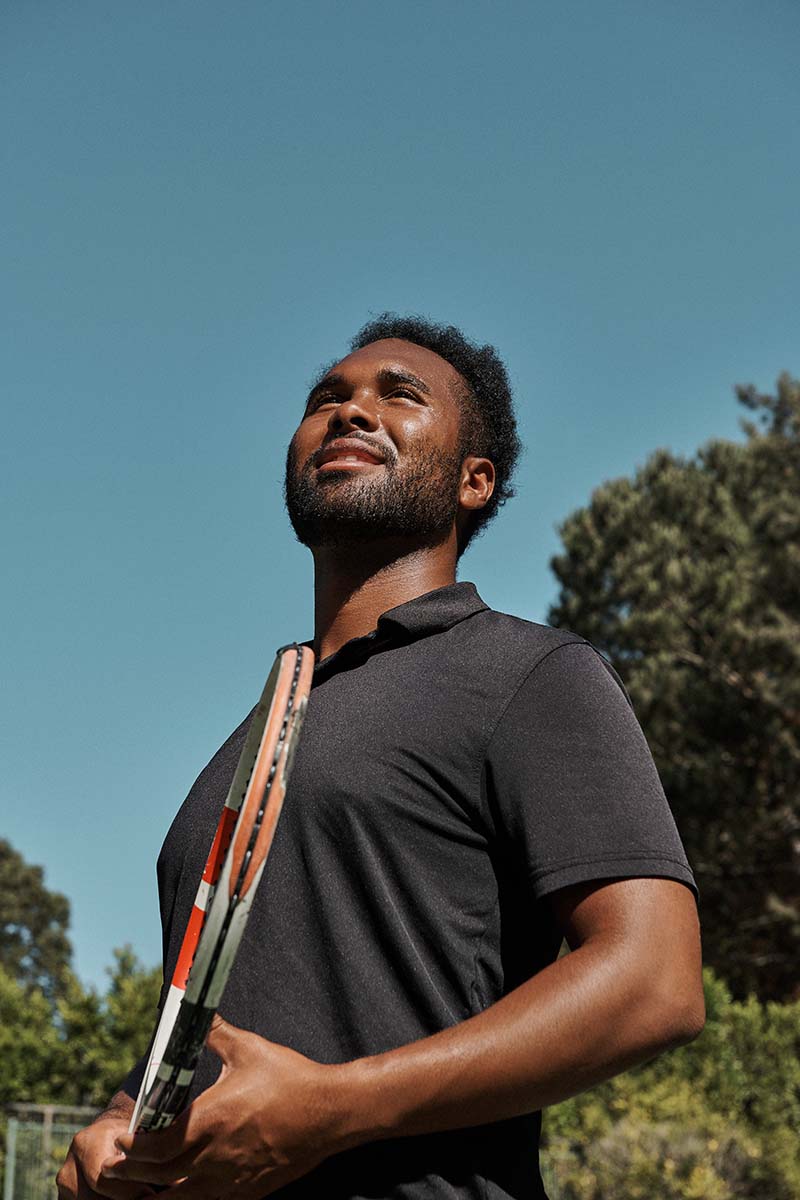
It wasn’t until late in the afternoon that Gavin and I made it out onto the court together. We’d changed locations again, now in Studio City, where it took some cajoling for the court attendant to allow us to bring Gavin’s rolling basket out.
“It’s for journalism,” I promised her.
Julius stood on the same side of the net as me and tossed me a few forehands, a few backhands. He asked my string tension. He handed me his Pure Strike for a few shots. He took it back.
“I’m surprised,” he said. “Your game is great.”
Deciding he had little to teach me, he suggested we hit.
Despite being hobbled by a knee injury that I would come to learn was a minor medial meniscus tear, I managed to get in a few good rallies with tennis.god.
The numbers and rankings didn’t lie about his game. He’s not bad, especially off the forehand, but he’s not great, either. For the most part, Gavin did seem to be clear-eyed and relatively humble about the state of his current play. Of course, he told me that, once he has the money, he hopes to take time off to train and become a successful pro, so he can shut up the haters.
I think that might be a tall order, as I’ve found no evidence that Gavin isn’t woefully misinformed about how tennis works above the NTRP 4.5 level. I mean, for one thing, I’m pretty good, but there’s a lot about my game that can be cleaned up. I’m still nowhere near the end of learning tennis. I’m on the endless journey, probably for life.
A few days later, back at the court in Bel-Air, I watched as Gavin taught Sally a shot he calls “the whip forehand.” I know it as the “reverse forehand” or “the buggy whip,” and while it probably wouldn’t be the first technique I’d teach a player of her level, she loved it. She also raved about how, since her last “seminar,” her coach had been blown away by how hard she was hitting.
It had been a busy weekend for Gavin, too. So many followers had slid into his DMs to set up their own sessions that he extended his stay (another benefit of driving) and had traversed Los Angeles from Glendale to the Palisades. He even ended up in Fresno for a day and would soon travel to Palo Alto.
I also wasn’t the only journalist hot on tennis.god’s tail. Conservative provocateur and self-described “theocratic fascist” Matt Walsh, in addition to booking a multi-hour lesson for himself, hoped to score some coverage for Gavin on Blaze Media, an outlet that, unlike this one, Julius already knew about.
As I watched Gavin work with Sally again, thought back on his lesson with her son, and re-scrolled his comments, which, in addition to the haters, are full of fans voicing support, asking for discount codes to online courses, and singing the praises of how Gavin’s methods have changed their games, I finally saw the light. I let down my guard. I allowed tennis.god into my heart.
Here’s the thing: Most tennis players never get close to becoming 4.5s, and I’ve come to realize tennis.god exists for the masses, not for me. Whether or not the finer points of his technical instruction are “correct,” it’s true that his maxims, like “the backhand finish is a bicep curl,” are easier to grasp and visualize than more abstract jargon like “pronation,” “the ATP forehand, or “the kinetic chain.”
It’s true as well that most people shouldn’t try to play like professionals. They just need the basics.
Ironically, although Gavin markets himself with concrete deliverables, his best product is more ephemeral. He sells the belief that picking up this sport doesn’t have to be that hard. It’s striking a chord because that’s the kind of attitude tennis needs and is so often sorely lacking.
As for the nitty-gritty aspects where he isn’t always spot-on, much like in a tennis match, where if you do the big things correctly—making returns and first serves, putting away your volleys, fighting for every point—you can compensate for a bad slice or a lack of raw athleticism, so too has Gavin transcended his mixed technical knowledge by tapping into a larger, invisible structure of coaching reality. Hitting a ton of balls and believing in yourself is most of the battle.
Like it or not, he also gets results.
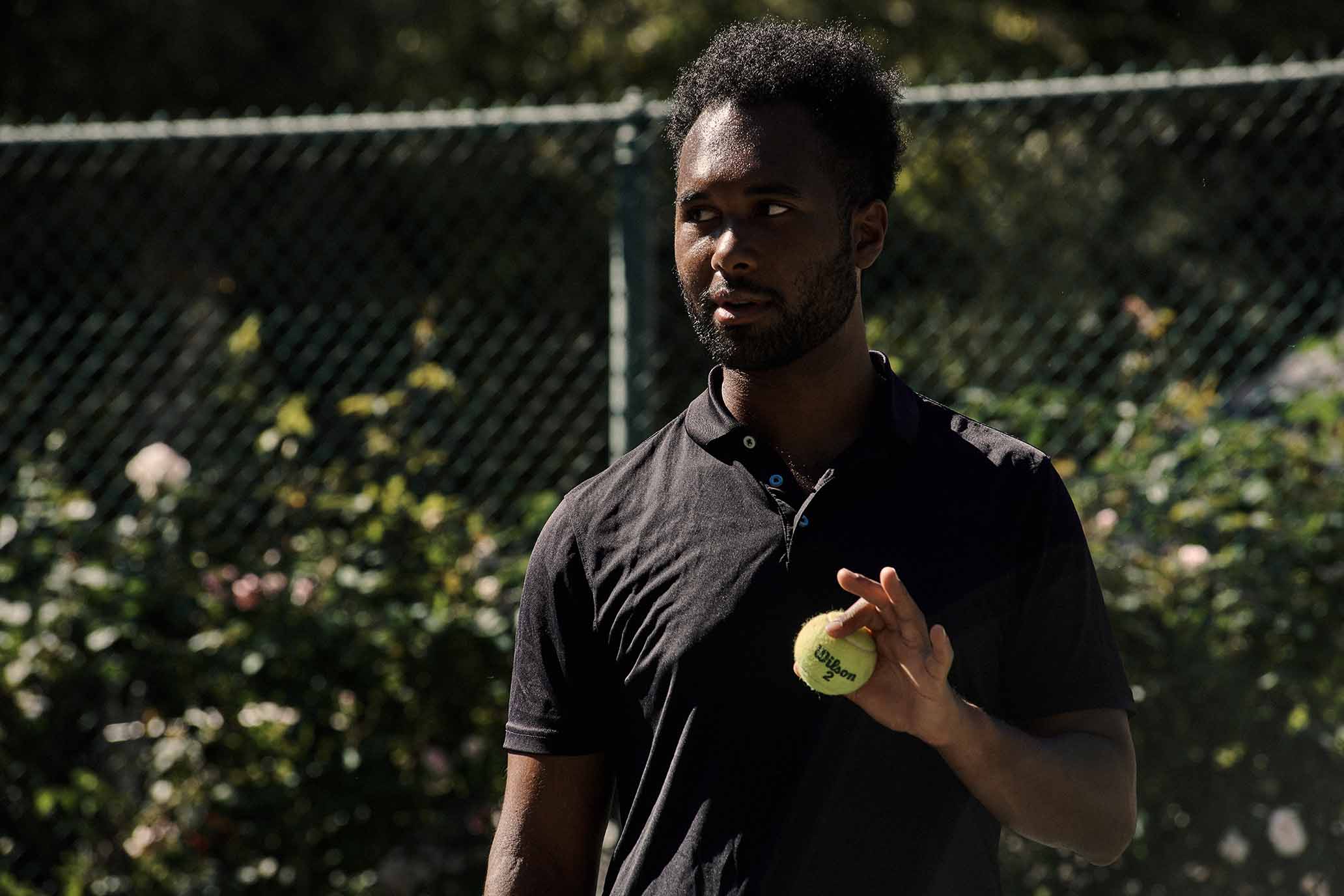
Dani de la Fe was a student of Gavin’s back from his days at the Biltmore. This was before his Instagram infamy, but he already was confident.
As she recalls, “He was like, ‘I’m gonna tell you right now that I’m the best test coach that’s ever existed…. I’m going to totally change your game.’”
She and her husband were sold. They went in for a lesson. Then another and another. They followed Gavin from court to court around Miami after he left the club, even recommending him to other players in her circle.
“People started hitting with him,” she said, “and everybody loved him, because very quickly they saw those kinds of initial results…. He has just a good way of explaining things to a beginner.”
As for his boisterous, arguably deluded claims, that’s just part of the fun.
“It’s almost something you’d expect from, like, an older white guy. Not this young black kid…. I mean, his fucking Instagram videos, I can’t. They’re, like, too good.”
While I wouldn’t recommend Gavin’s services to a serious junior or college player, for the many adults picking up the sport late or just getting back into it since childhood, he might really be a tennis god. In California, at least, he attracted an affluent, well-connected clientele, who certainly weren’t lacking tennis coaches to choose from. The message resonates. And even if Gavin isn’t a miracle worker, taking lessons from him would undoubtedly be more fun than tracking down a random pro who also probably has no idea what they are talking about. I like the guy. He’s compelling.
Before heading back east, Julius attended a seminar at the Sheraton Gateway near LAX hosted by Marczell Klein, a success coach and hypnotist. I saw it on Gavin’s Instagram story.
Klein claims that through hypnosis he can instantly make anyone quit smoking, get rich, or do just about anything else. His social media channels include prefight pep talks to Jake Paul, sports cars, and dubious titles like “How to Hypnotize ANYONE to Do Anything (USE ETHICALLY!).”
Klein’s whole shtick seems, at minimum, to be predatory. In one of his pinned clips, captioned POV: YOU HAVE A CULT, he demonstrates the ability to make the attendees of his seminar collapse to the conference room floor with a simple tap on the shoulder and the command “sleep.”
It’s a sight reminiscent of martial-arts hoaxers who claim to have mastered the mythic “dim mak.”
Klein’s website also boasts coverage from Yahoo Finance and USA Today, and his Instagram claims he’s a “best-selling author.”
None of this is explicitly false, but it isn’t exactly true, either. Klein’s media coverage on these outlets is sponsored PR content. His “best-selling” book has yet to crack the Amazon top 150 titles in the “hypnosis” category—worldwide it sits at 1.4 millionth. Although, technically speaking, it is the best-selling title by a success hypnotist named Marczell Klein.
As I continued to doom-scroll Klein’s content, I came to another realization—it reminded me a lot of tennis.god. Klein also lives by the short-form declarative. He makes massive promises. In writing, they both employ a liberal use of CAPS LOCK to EMPHASIZE a POINT. They cite similar buzzwords, too, like limiting beliefs. Even their voices sound similar.
Discovering Klein’s apparent influence on Julius’ posting, I experienced the deflating sense of contextual awareness that a M.J. Lenderman fan gets after discovering Songs: Ohia, or a new tennis viewer taken with Grigor Dimitrov might endure after finding out about Roger Federer. The thing I thought was totally original, sui generis, wasn’t.
The weeks since Gavin’s departure from California have also been clouded by the election. While I’m not sure for whom (or if) Julius voted, he’s undeniably representative of the class of young men who appear to have been electorally essential in helping Donald Trump cruise to victory.
Like many denizens of the very right-wing Manosphere, Gavin is unspoken to by mainstream liberal society and not compelled by classic party lines like class or race. He speaks the language of contemporary American culture, a warped truth that is at once aggrieved, arrogant, and fragile. The Father (truth, authority, expertise, whatever) might be dead, but he’s still angry at Dad.
But with Gavin there is always a paradox and a complication. His reactionary bent doesn’t exist in a void. Most tennis coaches are hacks. Life in America does kind of suck.
Put into slightly different vernacular, his gripes are what many might consider woke. He was emotionally stunted by militaristic critique and longed for a more holistic, inclusive upbringing.
Yet Gavin’s solutions and inspirations turn, so often, to Special Forces Operators and Navy SEALs—programs known to break and denigrate their plebs, aiming not to turn them into esoteric free thinkers, but cold instruments of war.
He believes in a human mind so fantastically powerful it can will the body to complete BUD/S on broken legs or cure stage 4 cancer through fasting, yet so fragile that the mere presence of a parent courtside can derail a tennis match.
When having his picture taken for a profile in a chic tennis magazine, he said he felt like Homelander, the megalomaniacal superhero/supervillain from The Boys.
Perhaps I’ve studied Gavin so long the paradoxes are revealing themselves…
In the weeks following Gavin’s trip to L.A., he got called out in a flurry of posts by fellow tennis creator Amir Rahbar, who runs @thetennisvault on Instagram, which led to his content reaching Donna Vekic’s coach Sascha Bajin.
In a reel posted on Dec. 16, 2024, Bajin said, “I want to expose you because you are a con artist.” Bajin then offered a challenge: He’d fly Gavin out to this year’s Miami Open and give him two weeks to train a complete beginner of his choosing for a match against Bajin himself. Bajin was even prepared to put some money on the line, offering to post 10 times whatever sum Gavin was willing to risk.
In typical frothing fashion, Gavin immediately replied in the comments, writing, “Sounds great, let’s hop on a call and discuss if you have anyone available to meet the challenge. I’m tired of coaches narcissistically complaining about how hard they have it when it’s not about the you. It’s not about you and your pretty little feelings. It’s about players.”
However, unlike his previous dustups, this one seemed to have stung Gavin. Citing health issues, he didn’t post another coaching reel until March 7, and neither he nor Bajin has publicly mentioned the challenge since.
Lately, though, it seems Gavin has righted the ship, and he’s back to walking the way of the tennis.god, searching for the signal in the noise, guided by the secret structure of reality, dismissing doubt, and managing the knife’s edge between truth and survival.
He’s been posting quite a bit about the effects of different audio frequencies on the subconscious and claiming to have gotten beginners to hit at a college level in mere hours. At the end of April, he’ll leave the country for three months of private intensive coaching with a client in Romania, and long-term he’s thinking about an accreditation system of his own. Not like the USPTA, but something that he’d market to tennis parents to help them be better with their kids.
If he believes in it enough, I bet it might actually work.
“Here’s the thing about human beings and our interaction with reality,” he told me. “A conscious being is the only thing where perception affects causality. Like if I just drop this phone, it’s just physics. Cause and effect. Human beings, we will take real actions based off of things that aren’t real…. The effect is real, but the thing that went on in your brain is not real. That’s why mindset is so powerful. This shit is so Zen. You have to sit in silence and it comes to you.”