A Backhanded Compliment
A Backhanded Compliment
In celebration of Lilli Tagger's epic one-hander.
In celebration of Lilli Tagger's epic one-hander.
By Giri NathanMarch 6, 2026
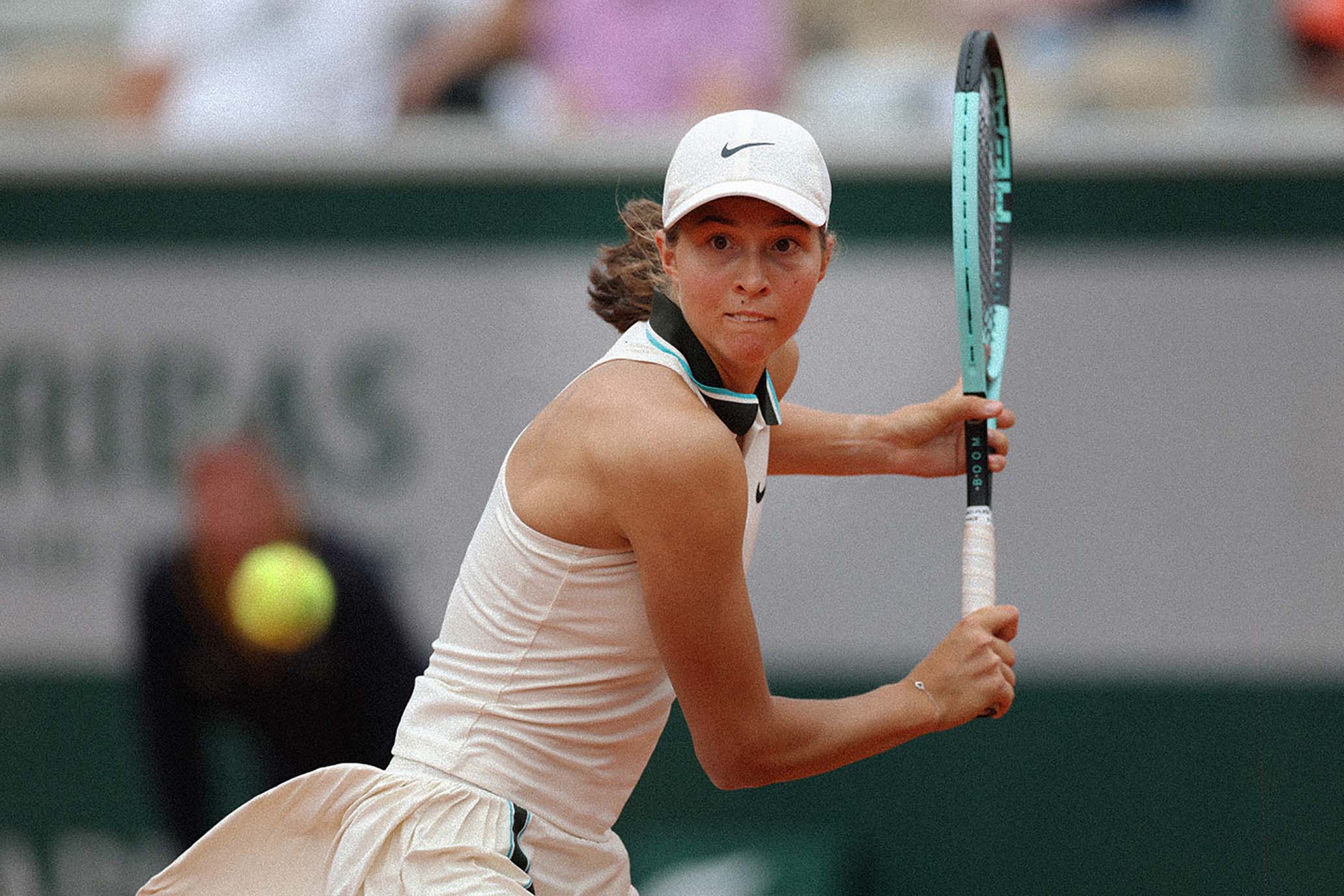
Lilly rips one during the girls French Open final last year. // Getty
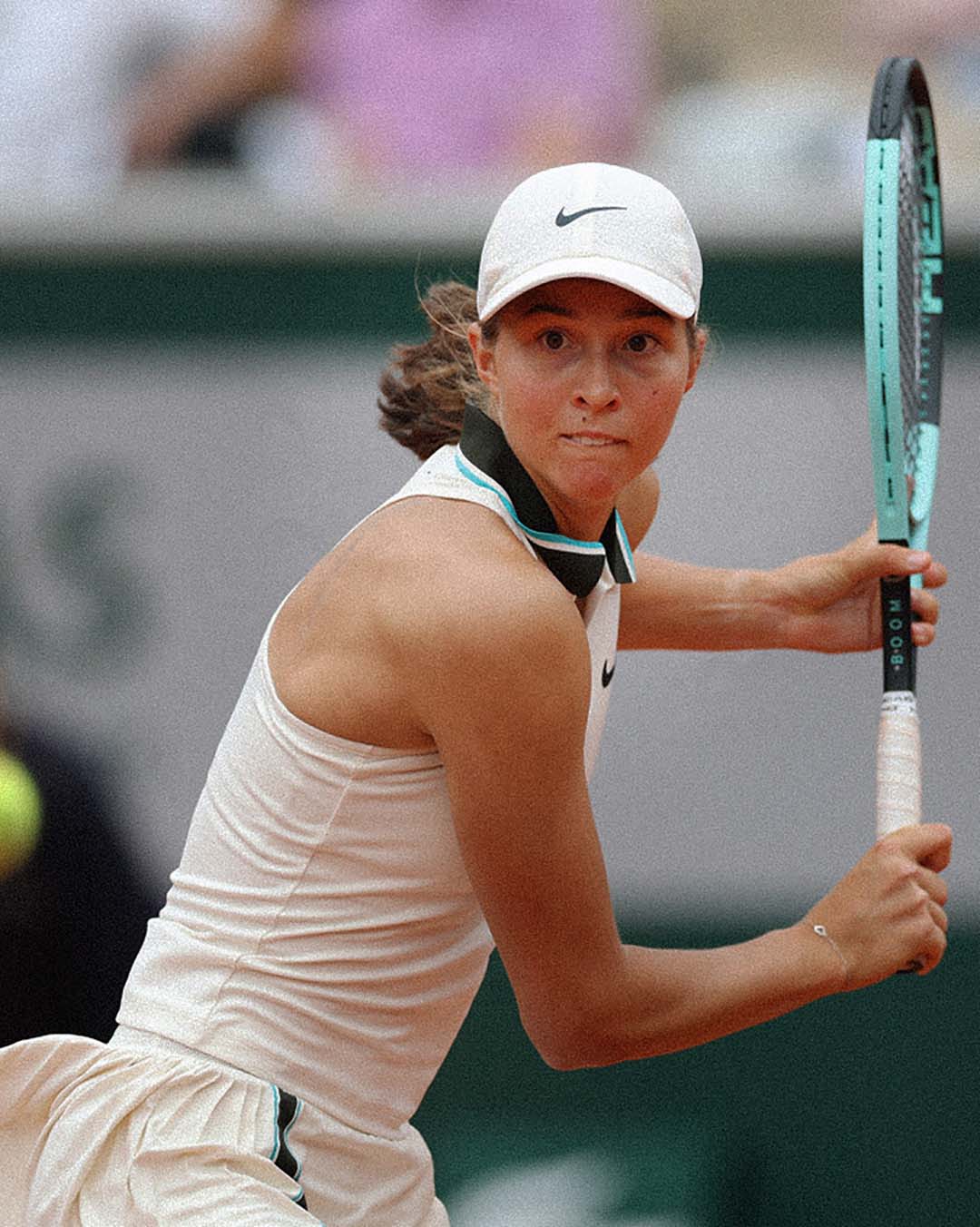
Lilly rips one during the girls French Open final last year. // Getty
Has your enjoyment of professional tennis suffered because you can no longer find an Austrian who rips a ferocious one-handed backhand? We might have your Dominic Thiem replacement right here. Lilli Tagger, the 18-year-old talent, is that rare case: a promising young player who has opted to subtract one hand from her backhand. And that shift occurred surprisingly late in her tennis development, too. She’s running against the grain of present tennis dogma, which holds that one-handers are too demanding with respect to timing, too vulnerable when returning fast serves, and generally too shaky for the pace and weight of the modern game.
I’ve undergone an evolution in my attitude toward the one-hander. It could be loosely organized into phases. In my childhood: outright enthusiasm, with so many ingenious practitioners, from Justine Henin to Tommy Haas. Then: a decade noticing the one-hander’s many downsides in an evolving game—Rafa surely accelerated its obsolescence—and tiring of people who fetishized it as some aesthetic pinnacle. (There are plenty of other beautiful movements in tennis, relax.) Then a minor panic: Denis Shapovalov is not that dude, some of these supposed one-handers like Diane Parry just slice everything in sight, and the extinction of the topspin drive is a real possibility. By 2026: I’ve come full circle, craving its presence and praising all practitioners of this ancient art, who should be given grants from governments and museums for their feats of cultural preservation. I can’t raise a child in a world without one-handed backhands.
So we celebrate Tagger, who was initially deterred in her quest. “I wanted to switch it when I was 10, but everybody told me, ‘No, you shouldn’t do it, it’s not good for you.’” she told the WTA site last year. “Then when I was 12, I had a bet with my coach, and I told him, ‘Okay, let’s do this. If I win the tournament, I will change. Otherwise, I will never ask you again.’ And I went on to actually win the tournament that week.” This unnamed junior tournament might have been a critical moment for the sport’s technical future. (Also, I’m seeing conflicting reports about whether countryman Dominic Thiem inspired this decision; someone needs to get to the bottom of this.)
After a one-year adjustment period, Tagger, at the late age of 13, had adapted to her new backhand. That was around when she moved from Austria to Italy to advance her training. First she worked with Max Sartori—longtime coach of Andreas Seppi, early believer in a tiny Jannik Sinner—and then with Francesca Schiavone—2010 Roland-Garros champ and a one-hander herself. Tagger has some commonalities with Sinner, having also grown up as a skier just on the other side of the border—she in Austrian East Tyrol, he in Italian South Tyrol—and now she has the same manager as him, too.

Looking at the state of her game, I doubt she has any regrets about making the bold technical change that her coaches discouraged. Tagger, now 6 foot 1, won’t have many issues with the ball kicking high out of her strike zone, and possesses the long levers for big power. That backhand is a point-ending weapon. Early results are impressive. She won the 2025 junior title at Roland-Garros without dropping a set, which brought her some unfamiliar attention, including a congratulations message from Thiem, who did or did not inspire her one-handed backhand. “The first week after Roland-Garros, suddenly everyone wanted to be my best friend. Sometimes I was like, ‘I have never heard of you, but now you want to be my best friend,’” Tagger told the ITF site last summer.
After thriving at the ITF level, particularly on clay courts, Tagger transitioned gracefully into the top tier of tennis. Last November she made her WTA debut at the 250 in Jiujiang, where she was down triple match point in the semifinal and strung together 13(!) straight points to win, thus contending for a title in her very first tour-level event. While she lost that final, she earned enough points to hover right outside the top 150 at season’s end. To kick off 2026, she had a flurry of strong results, celebrated her 18th birthday in February, and earned a wild card into the main draw at Indian Wells. Which is where we find her now: in the second round, after a thorough 6–2, 6–4 defeat of world No. 58 Varvara Gracheva. I suspect it is the last time that Tagger will require a wild card at this tournament, and that the one-hander will persist on those super-slow hard courts for many, many years to come.