The Whole Deal
The Whole Deal
Vicky Mboko's unique strength? Winning tennis matches.
Vicky Mboko's unique strength? Winning tennis matches.
By Giri NathanFebruary 13, 2026
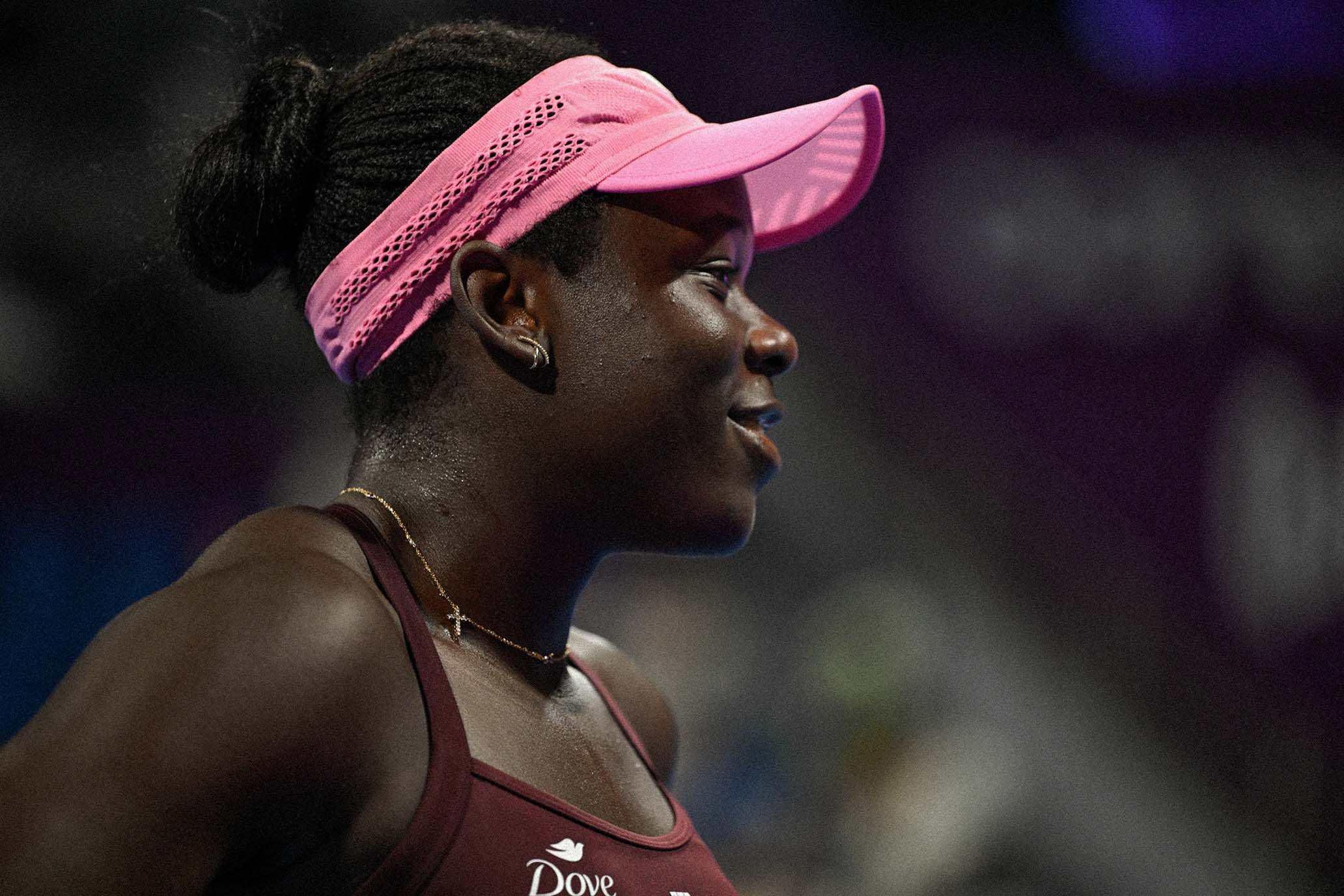
The youngster Vicky Mboko in Doha this week. // Getty
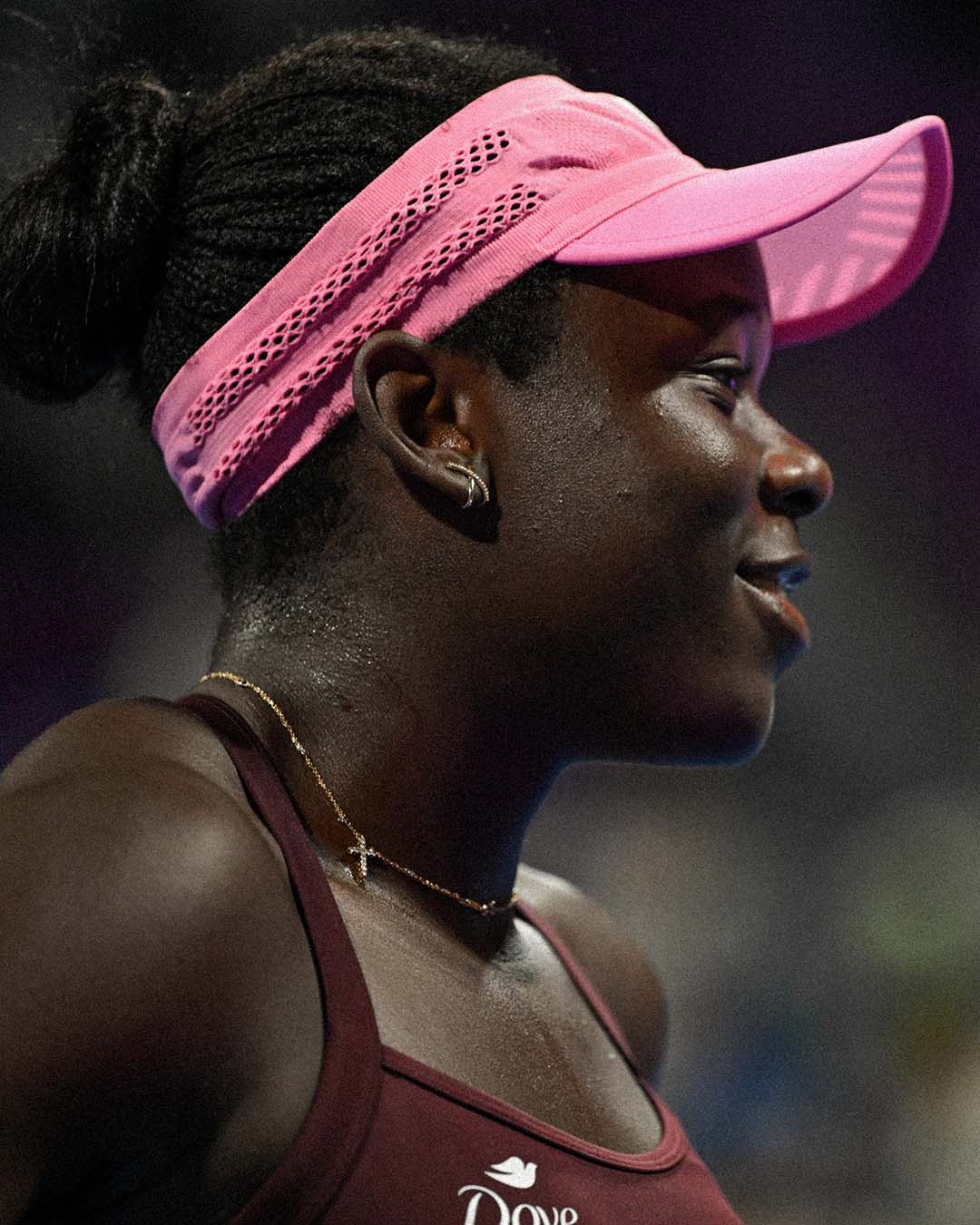
The youngster Vicky Mboko in Doha this week. // Getty
When watching a new player, it’s usually not that hard to determine Their Whole Deal. Tennis players usually find a way to play that emphasizes certain weapons and masks certain deficiencies. And with young players in particular, you tend to see a large gulf between the things they’re good at and the things they’re bad at. They are rarely so mysterious. But I must confess that I watched a whole lot of Victoria Mboko last season and ended the year still unsure what sort of tennis player she was, just aware that she was uncannily good at winning close matches. And now that I have watched much more Mboko this week—two scintillating top 10 wins in Doha over Mirra Andreeva and Elena Rybakina—I remain as confused as ever.
Let’s at least attempt the exercise. Weakness: a little bit of inconsistency on the forehand, maybe. Strengths: the remainder of tennis? The reason I had difficulty pinning down her game is because it incorporates so many different elements. Her movement is superb, as is her ball-striking, as is her feel. Depending on the match you catch, one of those aspects might be taking over, and the others receding. She never looks to be out of any point, and she can turn it around in an instant. To watch her for an hour is to see her take over rallies in any number of ways: defensive squash shots, a driving forehand slice, topspin lobs, an inside-out backhand ripper. She can counterpunch or play the aggressor. She can play with shape, or she can slap it. She can take big risks, like stepping well inside the baseline to return the imposing Rybakina serve—and then cracking it, over and over, like few players ever have.
There are players in recent history who have accomplished more on court by her age, but there have not been many with such a well-rounded skill set. I’m banking on this Canadian eventually winning the biggest titles in the sport. I suppose that’s not a terribly bold statement to make about a player who first broke out in August of last year and now already has a 1000 title, a 250 title, and a 500 runner-up to show for it; a player who has now already four wins over top 10 players. She’ll be among them soon enough. Depending on how the rest of the Doha tournament goes, next week she will either enter the top 10 or linger just one spot outside it. The speed of her ascent has been astonishing. After winning Montreal in August, she went on a four-match losing skid. After that point, she has gone 20–4.
I was recently asked in an interview which of the rising teenagers on tour would have the best future. At the time, it felt impossible to argue with Mirra Andreeva’s résumé, so I picked her. She’d been performing well at the majors since she was 15 years old. She picked up back-to-back 1000 titles last season. And moreover she was a full year younger than Mboko, whom she had also defeated (albeit in an injured state) in the Adelaide final in January. But their more recent encounter in Doha, which Mboko won in a third-set tiebreak after erasing one match point, has made me far less secure in that answer. Mboko has a bit more firepower. This was, ideally, a preview of one of the great rivalries over the next decade, now tied at one win apiece. I now think that rivalry will be very evenly split.
From there, Mboko went on to upset the recent Australian Open champion, Elena Rybakina, in the quarterfinal. She did it by fearlessly attacking the best serve on tour, breaking it six times. I don’t know if it’s just the echoey acoustics on the court, but this looked like some of the hardest ball-striking I’ve seen in some time and will probably wind up one of the highest-level matches of the season. And any 19-year-old who can step up and match Rybakina’s power without getting overwhelmed is on a fine trajectory. The players have now split their four matchups to date.
In her brief tour-level career, Mboko has often appeared resistant to scoreboard pressure, and she won both these matches despite having trailed by a break in the deciding set. “Yeah, I feel like there’s been so many times where I’m down a match point, or the opponent has a match point, but I don’t really think much of it,” the Canadian said in press after defeating Andreeva. “I just think of it as any other point in the match.” Very easy to say, harder to exemplify that perfect equanimous tennis mind, but that she has: After turning these two matches around, Mboko is now 7–1 in three-setters this season. If they manage to come up with new ways to be good at tennis, I’m sure she’ll be promptly adding them to her never-ending list.
On Friday, she routined Jelena Ostapenko—last year’s Doha runner-up—to qualify for her second 1000-level final. Her reward was that most precious and scarce WTA commodity: a gracious hug from a freshly defeated ‘Penko. Who doesn’t love Mboko?