A Recipe For Weirdness
A Recipe For Weirdness
Medvedev vs. Tsitsipas doesn't mean what it used to.
Medvedev vs. Tsitsipas doesn't mean what it used to.
By Giri NathanFebruary 20, 2026
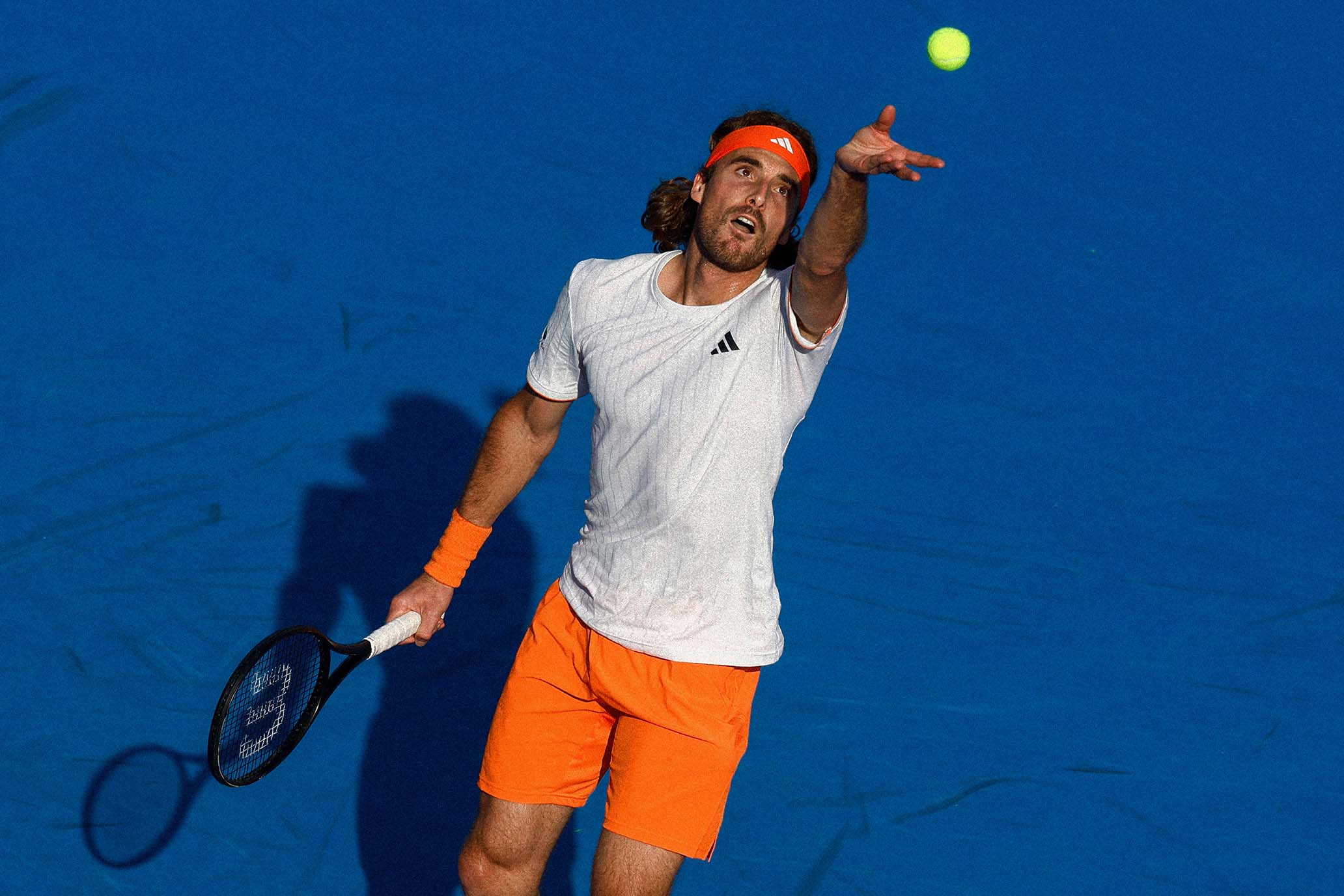
Stef find his form against Meddy in Doha this week. // Getty
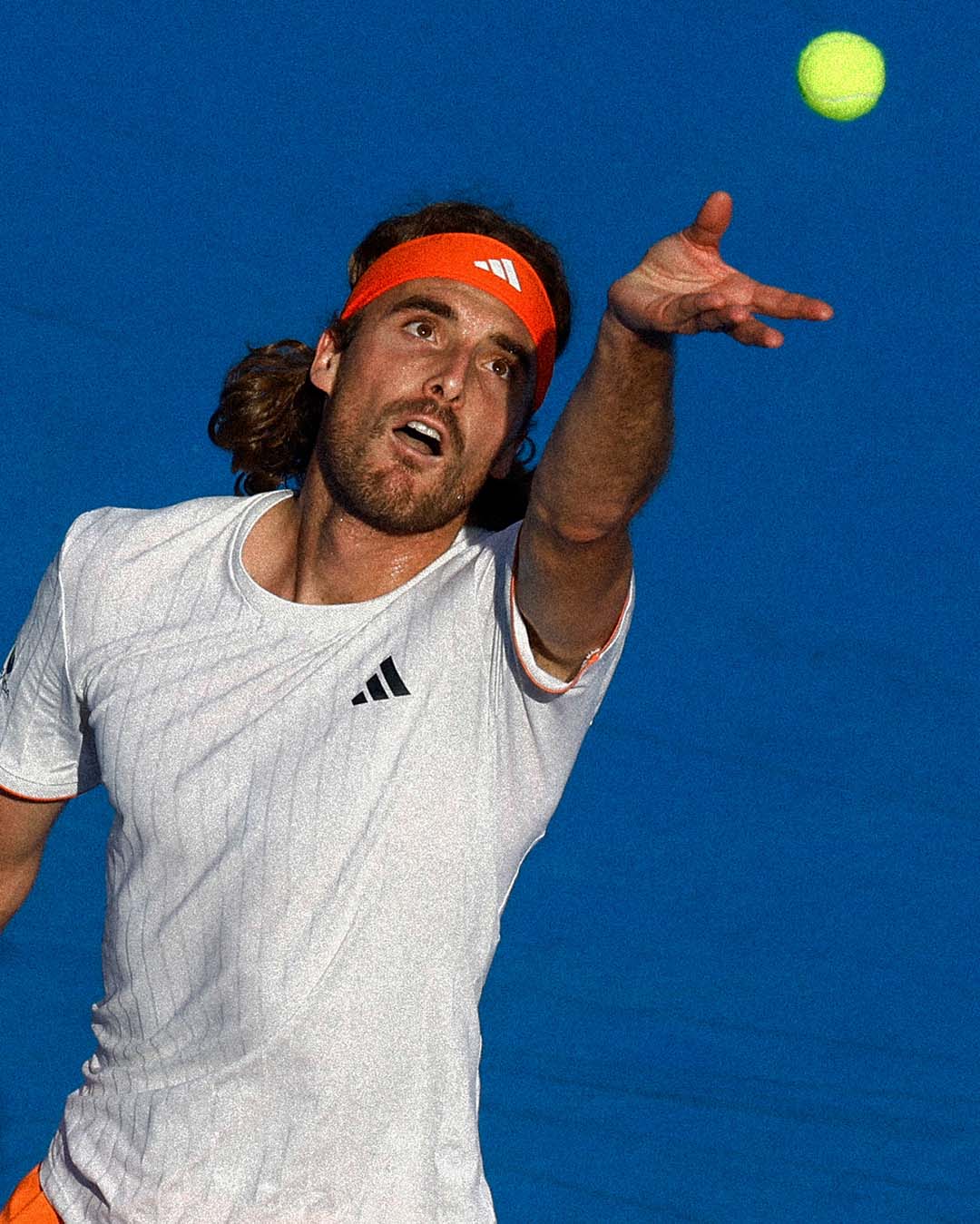
Stef find his form against Meddy in Doha this week. // Getty
Here’s a measure of how far the mighty have fallen: A matchup between Stefanos Tsitsipas and Daniil Medvedev was, for many years, appointment viewing. Here was one of the most charged rivalries on tour, between two rising superstars who entered tennis legend with their 2018 Miami Open scuffle. Or, as I will always remember it, the “Shut Your Fuck Up” summit, a day of absolutely unforgettable language hurled across the net. See also: “small kid who doesn’t know how to fight.” (Should you want a hat memorializing that day, we have got you covered.)
The Tsitsipas-Medvedev beef continued to simmer over the years, as they commented on their strange relationship (“definitely not friends”), carped about the other’s style of play (“boring”), and played a few classics, some of which involved on-court oddities. To wit: the “sting operation” during their 2022 Australian Open semifinal, where a Greek-speaking off-duty umpire lurked in the tunnel to bust the Tsitsipas family for illegal coaching from the player’s box. I loved watching them play. It seemed like a recipe for weirdness. And they were clearly poised to inherit the tour.
Fast-forward to February 2026, there’s a Medvedev-Tsitsipas match in Doha, and I forgot it was even happening, had to catch a replay. Each player has fallen from past glory and has been left wandering the desolate landscape of the tour. The Medvedev downfall is well-documented, though his recent tennis ball rant deserves a brief mention, before we shift to contemplating the demise of Tsitsipas. He entered 2025 still ranked No. 11 in the world, still clinging to his former top 10 stature. Here are the good things in the 2025 Stefanos Tsitsipas tennis season: won his first 500-level title in Dubai. As for the bad things: pretty much everything else. After mid-April, he did not win back-to-back matches for the rest of the season. He ended 22–20, having fallen to No. 34 in the world.
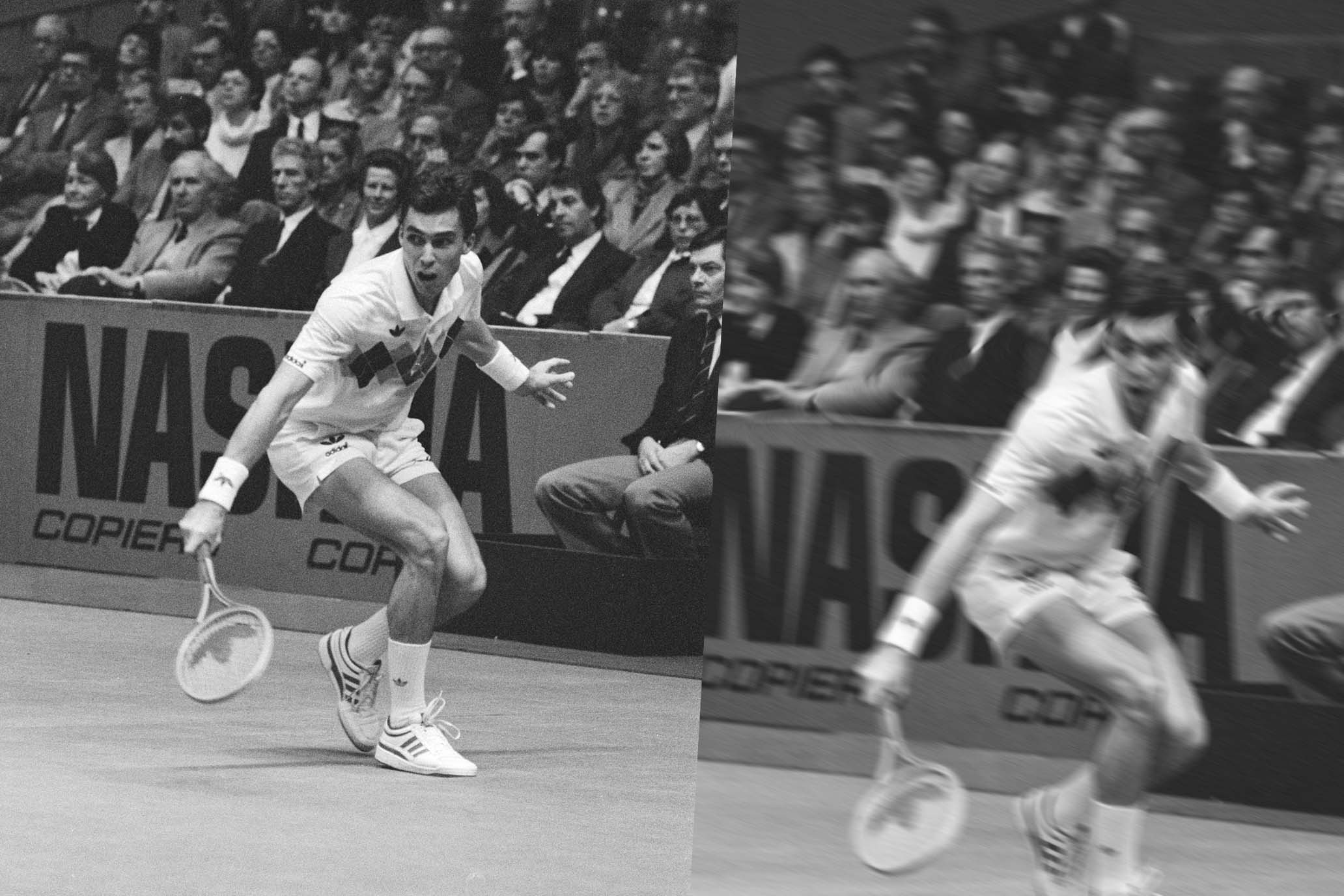
That’s the high-level story. The details are even grimmer. His primary struggle was with a chronic lower-back issue that had bothered him since the end of 2024. That loomed over his entire season. Then there was also the perennial issue of coaching. Longtime observers of the Tsitsipas family will have noted the queasy on-court relationship between Stefanos and his father-slash-coach, Apostolos. Aside from brief dalliances with Mark Philippousis and Dimitris Chatzinikolaou, Tsitsipas has relied only on his father for coaching. That’s why it was so refreshing when he announced his partnership with Goran Ivanisevic. The former Wimbledon champ, and highly successful coach of Novak Djokovic, was still in search of his first long-term client after splitting with the Serb in 2024 and attempting a doomed partnership with Elena Rybakina. On paper this collaboration would have been an excellent fit for both player and coach. They said nice things about each other at the inception in May.
By July, it had blown up. Tsitsipas retired in the first round of Wimbledon due to his back and revealed that he was still deciding “whether I want to keep going or not,” referring to his career in professional tennis. After that loss, Ivanisevic appeared to go on a miniature media tour to flame his own player, with a splendor that is simply no longer seen in their professional realm. “He needs to fix his back and get physically fit because physically—he’s a disaster. I can’t understand how a player of his level can be so unfit. After that, he can think about playing tennis again,” Ivanisevic told CLAY. “He has to find a solution for his back issue. I was shocked. I’ve never seen such a poorly prepared player in my life,” he said in an interview with SportKlub. “Me, at my age and with this bad knee, I’m three times in better shape than him. I’m not sure what he was doing in the previous 12 months, but his current shape is very poor.” He is one of the best quotes in the tennis world, but that’s not actually a desirable quality in a coach.
Before the end of the month they had officially split. The partnership lasted just two tournaments, and according to Tsitsipas’ public statement, it was a “brief but an intense experience and a truly valuable chapter in my journey.” Elsewhere, in an interview with Greek outlet SDNA, Tsitsipas said, without naming anyone in particular, that it was “very difficult to have dictators and people who speak negatively” in his team. He got back together with his first coach: his dad. Hard to cheer on that particular reunion. After a second-round loss at the US Open, Tsitsipas could not walk for two days. He then shut down his season. While dealing with his injury, he felt like “I was just an observer of tennis and the ATP Tour, rather than an active participant,” he said in an interview with Bolavip. Entering the 2026 season, the back injury still required management.
All that context makes Tsitsipas’ straightforward 6–3, 6–4 win over Medvedev on Wednesday in Doha all the more miraculous. He moved well, closed out points at the net, and notched his only victory over a top 20 player since July 2024, at the Paris Olympics. (We’re already at the next damn Olympics! That’s how long it took.) Conversely, this must be a devastating development for Medvedev, who had won the last three matches in their head-to-head and had been in okay form this year, compared with his own abysmal 2025. Yet there he was, falling to a familiar rival, as neither player could muster tennis that looked remotely capable of winning them the Slams they once looked poised to rack up. Life goes on, but no one wants to lose the battle of the washed.