From Out of Nowhere
From Out of Nowhere
Talia Gibson Has Power to Spare.
Talia Gibson Has Power to Spare.
By Giri NathanApril 3, 2026
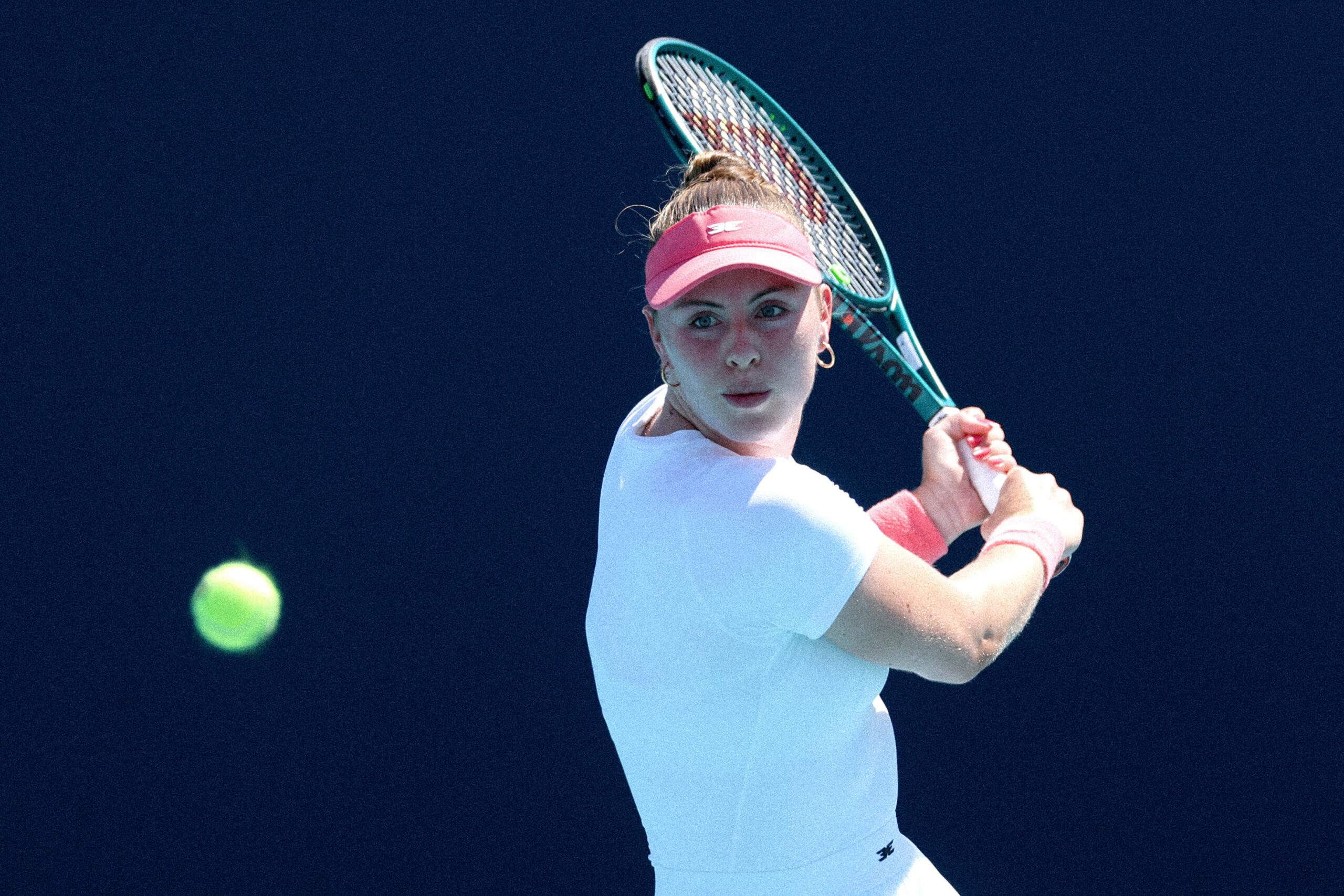
Talia Gibson during her match with Iva Jovic in Miami. // Getty
Talia Gibson during her match with Iva Jovic in Miami. // Getty
In winning the Sunshine Double, champions Aryna Sabalenka and Jannik Sinner each won 12 matches across Indian Wells and Miami. An astounding feat. Across those same two tournaments, meanwhile, one WTA player won 11 matches. Granted, some of those matches were in the qualifying rounds, but many others were against the very best players in the world. The sudden emergence of 21-year-old Talia Gibson was wild to witness.
Ranked No. 118 at the start of the season, the young Australian had not given us any omen that such a blistering run of form was coming. Right before coming to the Californian desert, Gibson was playing at the W100 in Bengaluru, where she lost in straight sets to the world No. 160. At that point, she had managed only four wins over top 100 players in her entire career. And then across the next few weeks in Indian Wells and Miami, she beat five top 20 players. What gives?
Within a few seconds of watching her, it’s clear that Gibson is a ball-striker’s ball-striker. Power is increasingly the currency of this sport, and she has plenty to spare on both wings. The backhand in particular I could watch all day—a swooping strike that she even likes to take inside out on occasion. She’s hard to push behind the baseline as she camps out and makes early, bruising contact on one ball after another. No matter how casual her swing, that ball moves; it’s the sort of power we have come to expect out of those named Elena Rybakina or Amanda Anisimova. These are lofty names to be throwing around a player who has been at this level for only a month, and Gibson may well just be on an anomalous heater…but there are players who go their entire careers without ever revealing weapons like these. So perhaps there is something real here to build on.
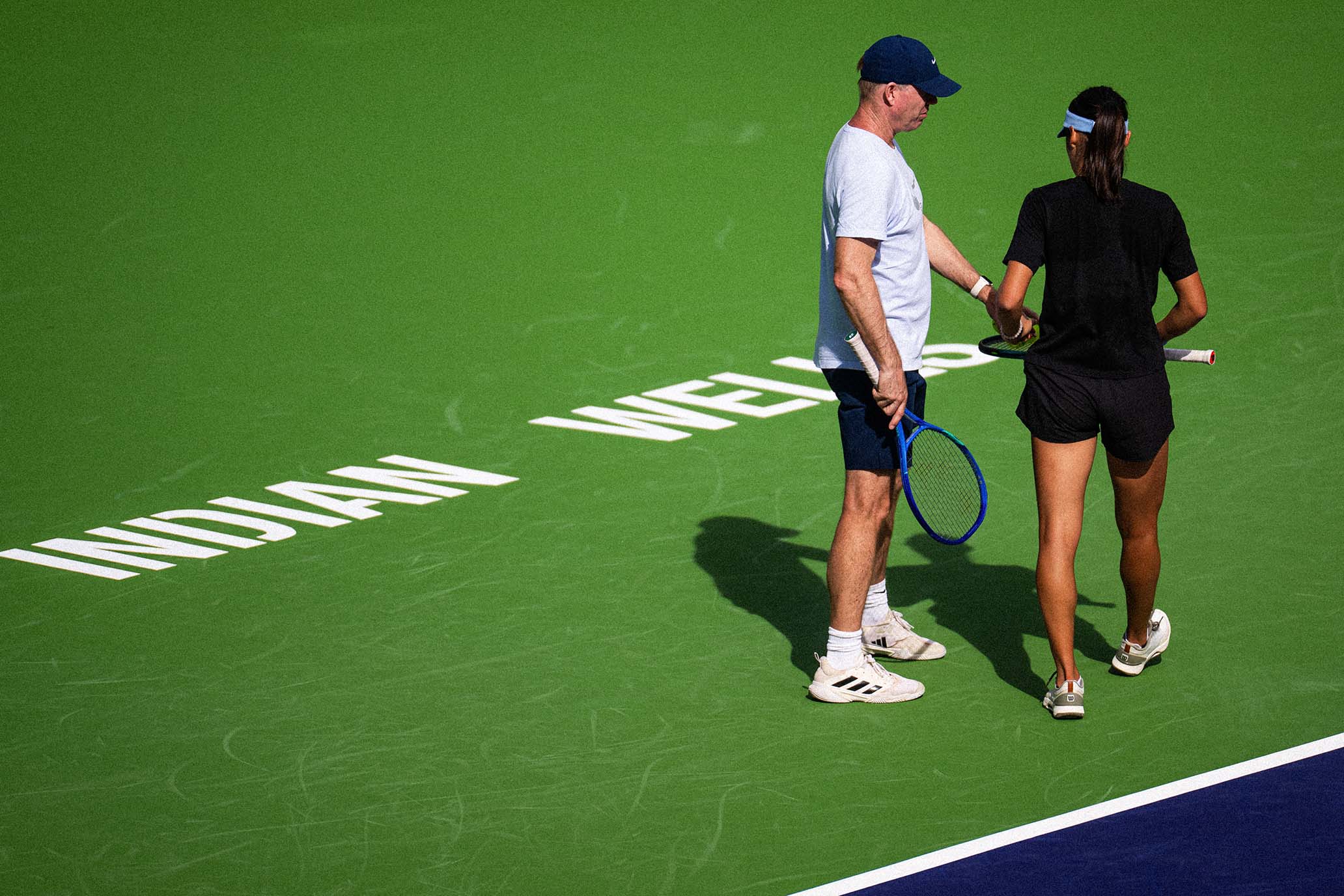
If you asked any of the top players upset by Gibson in March, I suspect they would say that there’s definitely something real here. In Indian Wells, she won two rounds of qualifying, then a first-round against world No. 41 Ann Li, which was the best win of her career to date, although that mark was immediately obsoleted by her next three wins, over the world No. 11, No. 17, and No. 7 (or Ekaterina Alexandrova, Clara Tauson, and Jasmine Paolini, respectively). A quarterfinal appearance at Indian Wells, for a qualifier, who had won only two WTA main-draw matches heading into the 2026 season. Surely a fluke?
Not at all. In Miami, she was back in the qualifying rounds, and then springing back out of them to pull off. Eventually she took out No. 15 Naomi Osaka in straight sets, a match where the neutral observer might find themselves tallying up the players who can now match Osaka in the high-speed shoot-outs she used to dominate, a testament to how deep the sport has gotten in even the past few years. From there, Gibson moved on to crushing No. 17 Iva Jovic, the teenage prodigy who nevertheless appeared to be playing tennis from a lower weight class. Gibson cracked returns for casual winners, winning a staggering 81 percent of her points when returning Jovic second serves. Eventually Gibson had her fun ended in the fourth round by Rybakina, who reasserted the true hierarchy of power players on tour.
But by that point Gibson had stacked lots of wins and altered the course of her whole season. At world No. 56, she’ll no longer have to claw through qualifying in these 1000-level tournaments, and she doesn’t have too many points to defend for the rest of the season.
Australia hasn’t had a tip-top player on the women’s side since Ash Barty hung up her racquets. There’s a buzz around the 19-year-old Maya Joint, now ranked No. 31 in the world and currently on a rough six-match losing streak. Which of these two prospects will go higher in tennis depends on what skills will be rewarded in the future. Joint has assembled a more successful full season but hasn’t yet had as much success against top players as Gibson has had in just the last month. Joint moves around the court with more ease, but Gibson can gain control of the rally with any given superpowered ground stroke. In the era of Sabalenka-Rybakina duopoly—surely shaped by the current facts of court speed and racquet tech and tennis ball quality, which may well change—fortune seems to favor the bigger bashers.