
A Mixed Blessing
A Mixed Blessing
The 2025 Mixed Doubles Invitational proved that tennis is best when it’s coed.
The 2025 Mixed Doubles Invitational proved that tennis is best when it’s coed.
By Gerald MarzoratiPhotography by Florence PernetOriginally Featured Volume 3 of OPEN Tennis — BUY
A Mixed Blessing
The 2025 Mixed Doubles Invitational proved that tennis is best when it’s coed.
By Gerald MarzoratiPhotography by Florence PernetOriginally Featured Volume 3 of OPEN Tennis — BUY
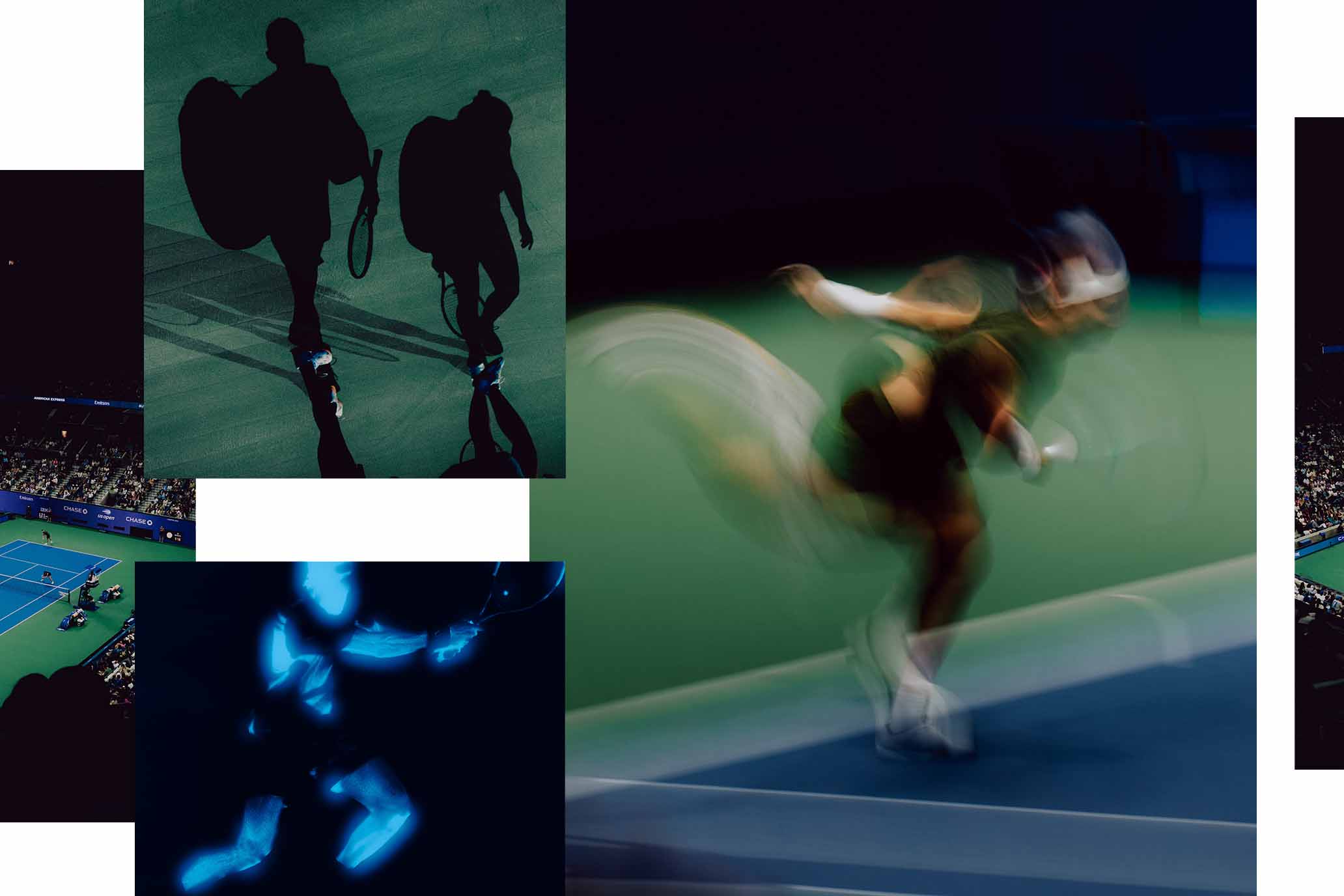
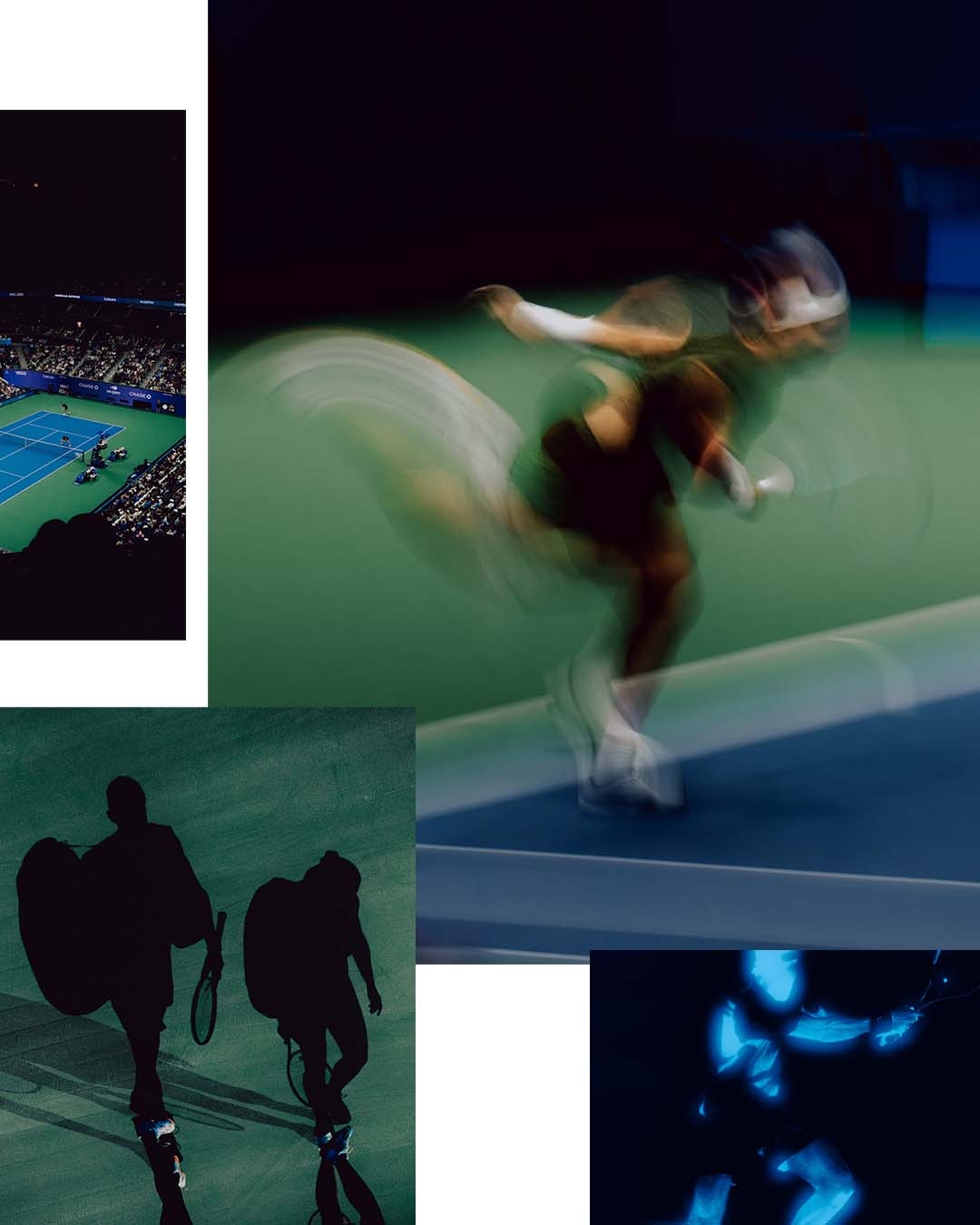
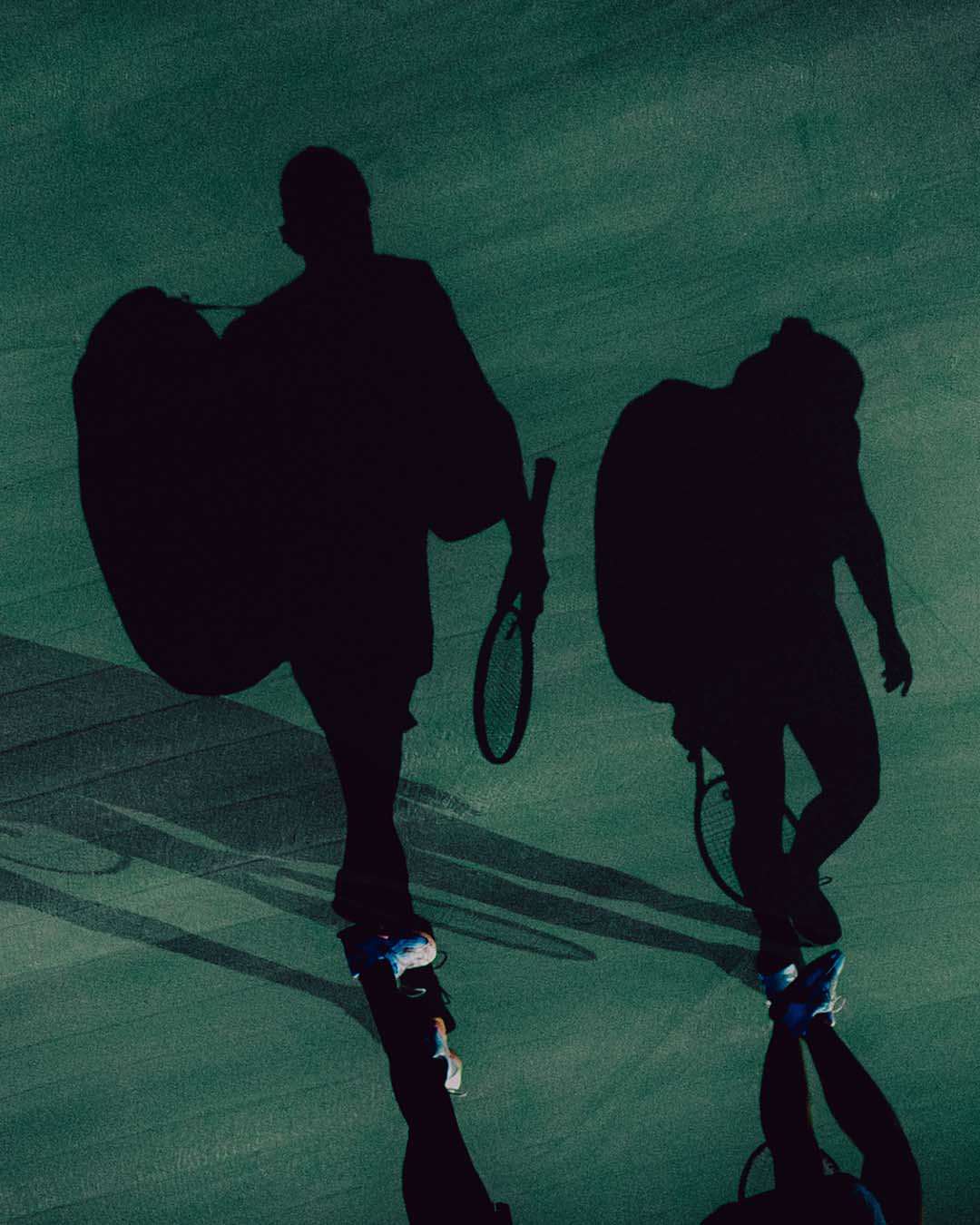
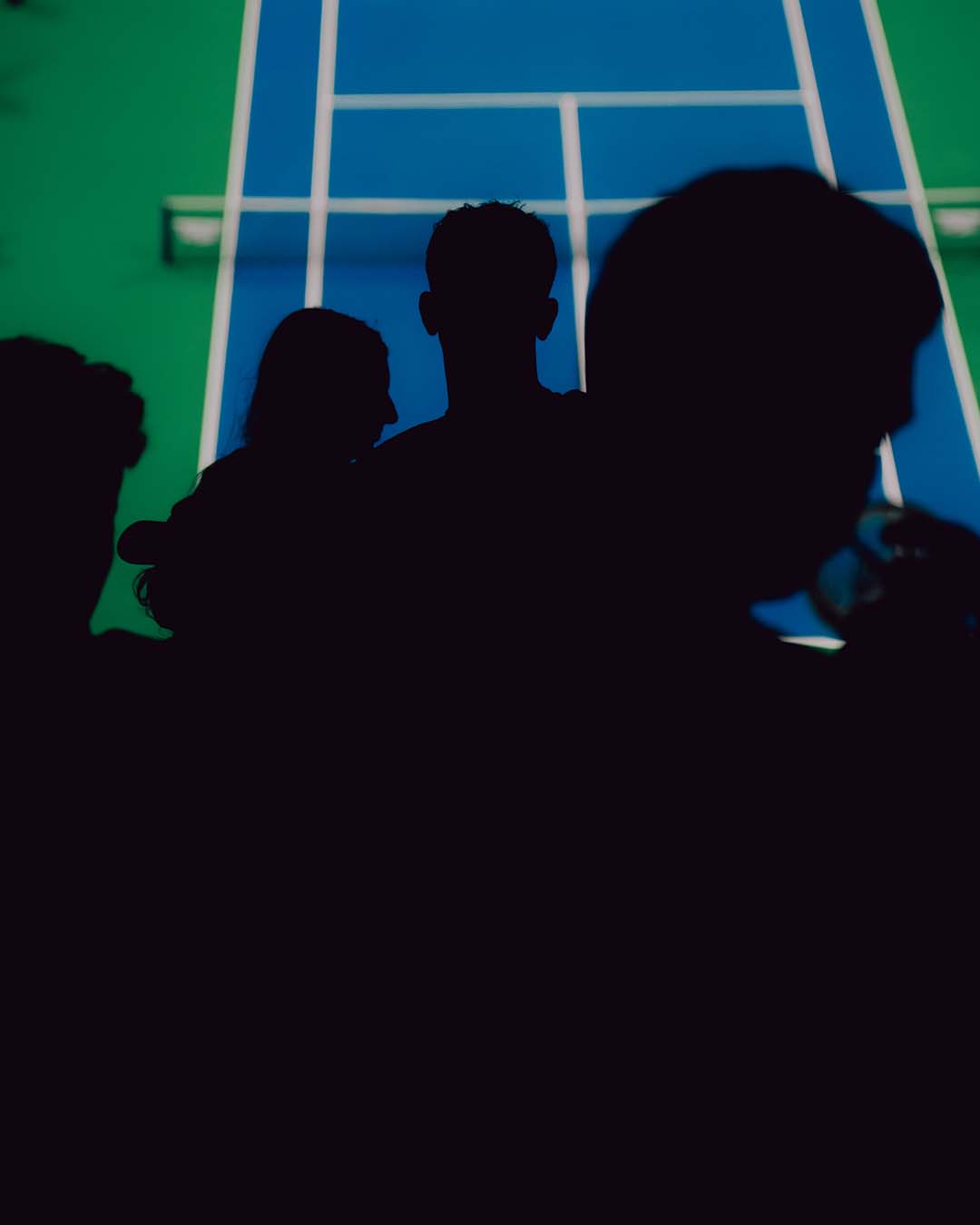
Florence Pernet / @flo_pernet

Sir John Lavery was a notable society painter who rose to prominence in Britain in the years before the First World War. His landscapes and portraits limned what the well-off of his time saw (their estates, their vacation vistas) and how they saw themselves. It’s painters like Lavery who, by the last years of the 19th century, tended to capture their time, or, anyway, that of their age’s upper classes—their look, their sphere, their enthusiasms—as more original artists no longer sought to.
Lavery painted The Tennis Party in 1885. Lawn tennis had been around for just 11 years. It’s a late afternoon in late summer. A slanting sun dapples a fenced-in grass court and delicately pinks and purples the players’ white clothing. The grass in the foreground, outside the court, is dried in places to a dusty yellow. Summer, with its invitation to the Victorian era’s monied to set aside weekends for leisure, to head outside and play, is almost gone; a darkened woodland beyond the court broods to near black.
It’s mixed doubles that’s getting played. Men and women like those portrayed by Lavery would likely have known that Gentlemen’s Doubles and Ladies’ Singles had been introduced at Wimbledon the year before, after seven years of Gentlemen’s Singles only. Tennis was becoming a sport. These men and women would likely know, too, that there was no mixed-doubles championship at the All England Croquet and Lawn Tennis Club. (There wouldn’t be till 1913.) Mixed doubles, part of tennis from the beginning, depicted in so many illustrations of the time, remained a game.
It’s a game that Lavery manages to charmingly capture, the focused fun of it. The players are engaged but evince no strain. There’s a friendliness evoked by others on hand to watch, or sort of watch as they chat among themselves, or to wait, like one young girl with her racquet resting next to her atop the fence, for a chance to play. Perhaps this stretch of lawn was once a croquet pitch: That’s where Major Wingfield, beginning in 1874, advised those who ordered his patented portable lawn-tennis kits to set up their nets. British elites of the time were in the thrall of Hellenism; among other things, they’d come to prize the Ancient Greek aestheticizing of the human body in motion. Forget croquet: Pick up a racquet and start moving. Lavery has his men and women bending, swinging, sidestepping. The Tennis Party is, in its way, a dance party.
By the time it came to its frantic end, the US Open’s newly formatted, star-studded mixed-doubles championship had turned into quite literally a kind of dance party too, with a packed-to-the rafters crowd out of their seats and DJ Malski and DJ Saige—the first DJs, it’s safe to say, in the house for a mixed-doubles final—blasting their bangers and screamers. Who imagined? The United States Tennis Association, which runs the US Open, was product-launch sunny and carefully vague about the “why” when it announced last winter that it was moving the tournament’s mixed-doubles championship to the week before the start of the main draw event, a week long devoted in Flushing to qualifying matches. “What I would say is the reason behind this,” said Lew Sherr, the USTA’s executive director and CEO, “is to appeal to more fans and grow the fan base around the world.”
Accompanying the schedule shift would be the introduction of a shortened, quick-paced format (four games to win a set in all matches but the final; a 10-point tiebreak instead of a third set; no-ad sudden-death scoring at deuce) and an enormous prize-money increase (including $1 million to the winning team, or nearly seven times what the previous year’s champions split). The thinking was that together these changes would induce singles tennis stars to play mixed. A “Mixed Madness” event held during qualifying week in 2024 drew top-level singles players (Coco Gauff, Naomi Osaka, Ben Shelton) and provided moments that were harder fought than a hit-and-giggle exhibition (which essentially it was). The bet was that enough of the game’s top players—enough to spread among 16 teams—would just as soon play a few hours of mixed doubles for a day or two to earn prize money and a trophy than simply practice, and that proved right.
A sense that qualifying week, which the US Open had already rebranded “Fan Week,” might need something more than qualifying matches—something involving tennis’ biggest names—is not ultimately about mixed doubles, it’s safe to say, if not for the USTA CEO to say. You can watch professional tennis for free during “Fan Week,” but you’re not watching the sport’s biggest stars. Watching tennis’ top players in person at the US Open has, for many fans, become an unaffordable luxury. Ticket prices during the tournament’s two main-draw weeks for the biggest show courts now approach the stratospheric on Ticketmaster’s resale site, where single-session tickets are available. This is especially the case at the business end of the Open, and of all top tournaments, when the best of the best tend to clash. It’s a problem for the sport—its branding, its vibe—that the sport has not been paying enough attention to.
The opportunity: Those biggest show courts at the US Open, Ashe and Armstrong, sat empty during previous qualifying weeks. If the game’s big names would play mixed doubles for two days and nights during that week, their matches could be played in those stadiums, and tickets would be priced low enough—because they’d have to be for an untested event—for most any fan to get a glimpse of the stars. Moreover, the move could provide a third week, or anyway part of a third week, of TV viewership. The players competing on the field courts in qualies, low-ranked and unknown to the casual fan, do not attract television viewers. The mixed-doubles overhaul would provide ESPN with qualies-week star power, as well as an opportunity to experiment with changes of its own, from on-court interviews with players at the conclusion of a set to new camera technologies able to provide fresh angles on the game.
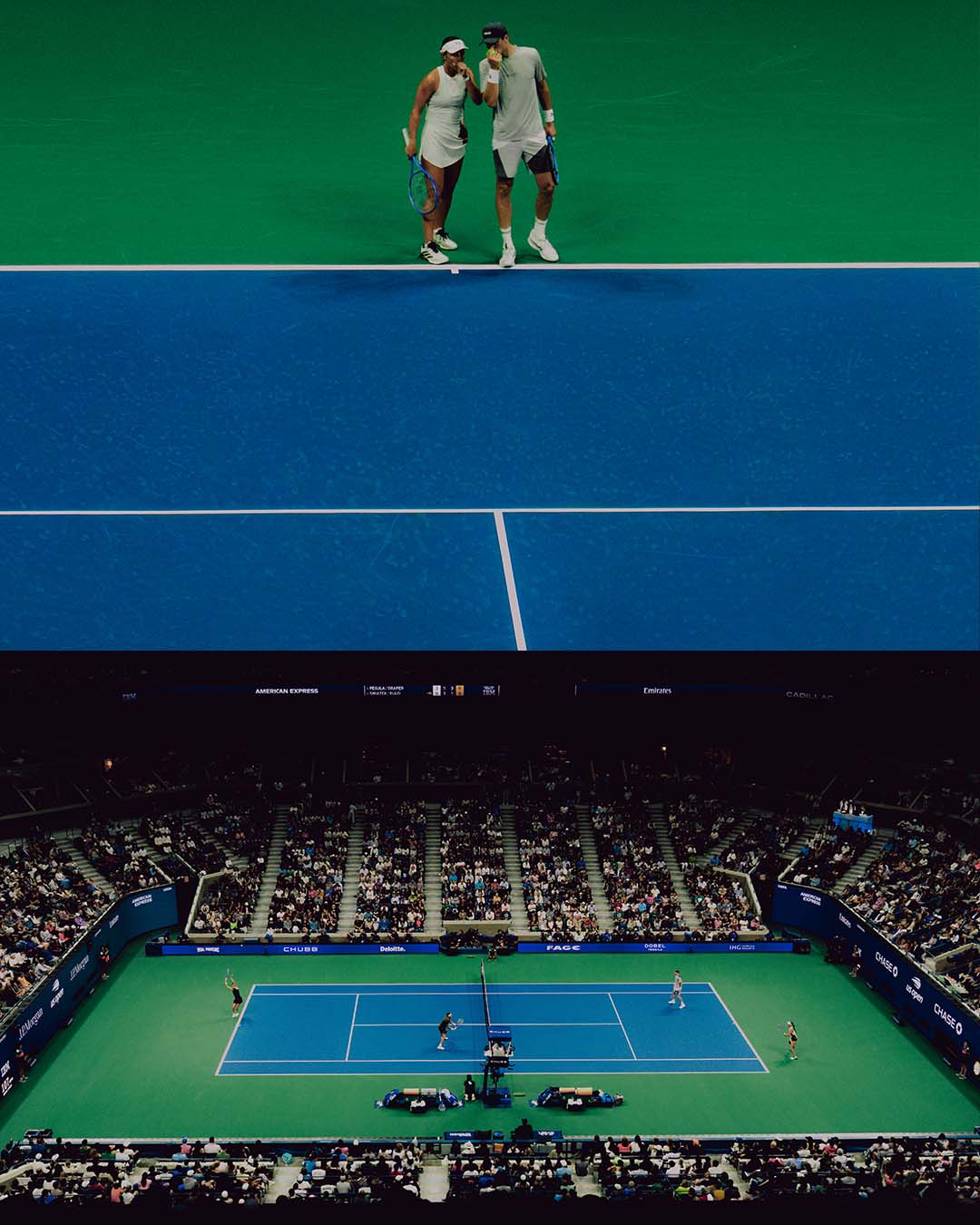
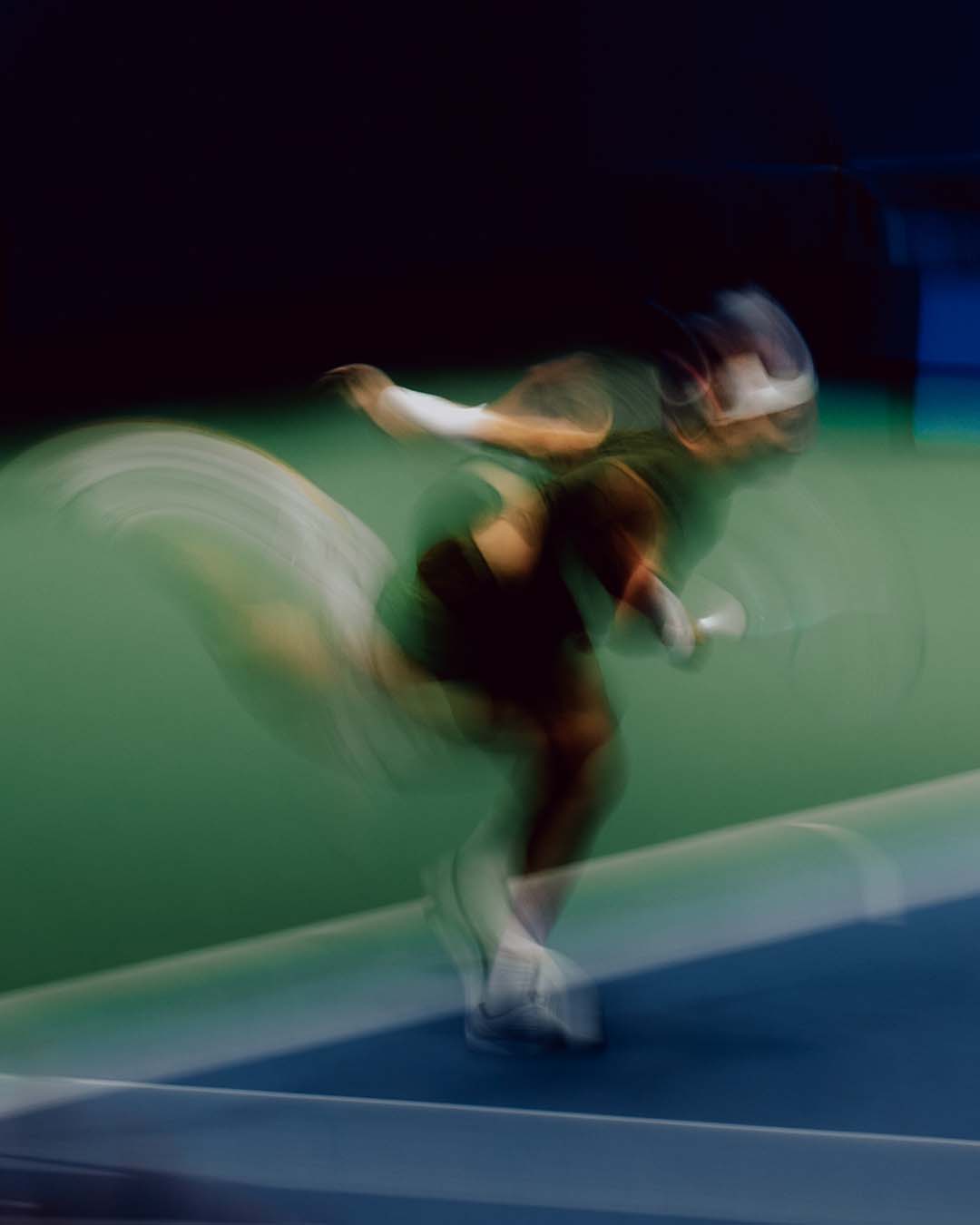
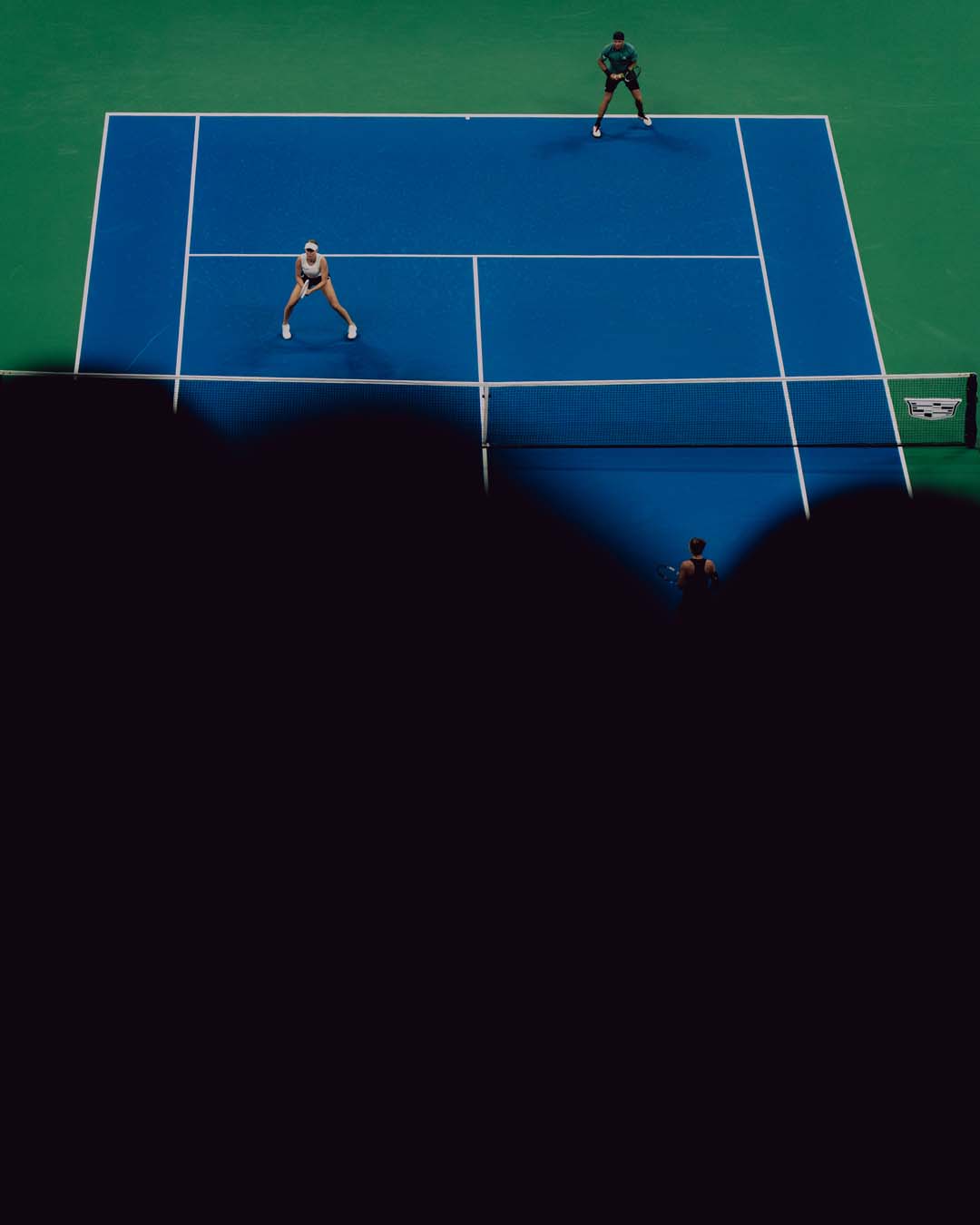
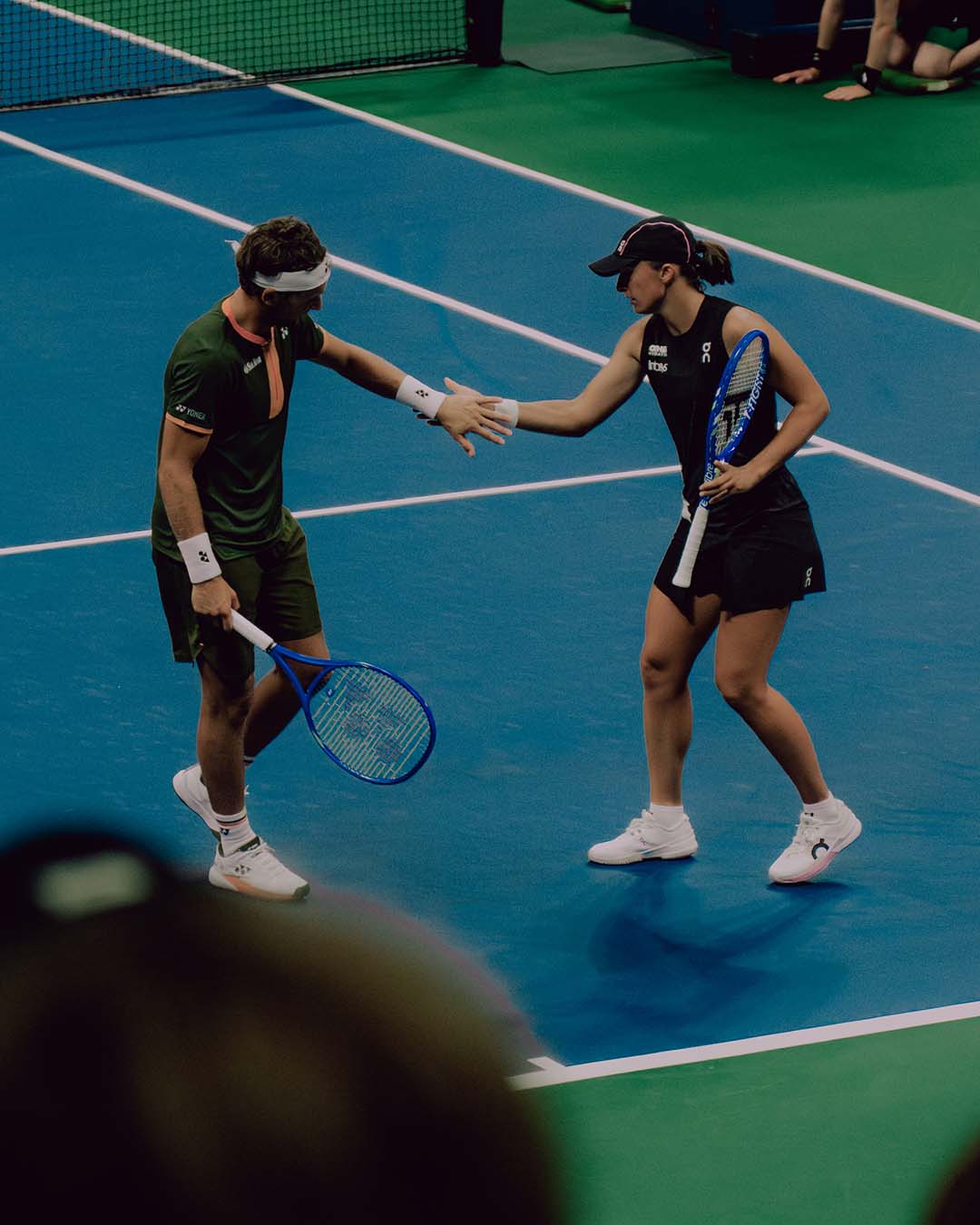
As it turned out, what the US Open, ESPN, and the rest of us were treated to was ultimately about mixed doubles—a game that, even as a sport, has managed to hold on to the feels of a game. It was two days and nights of stupefying glimpses of what a 130-mph serve and mind-boggling baseline power can’t get you. It was to behold, with a shake of the head and a smile, what delicate angles and soft hands can. It was that rarest of opportunities to watch male and female athletes of the highest caliber cooperate with each other and compete against one another. It was seeing how the unisex gestalt of mixed doubles—the male-female team huddling after every point, the slapstick close-in volley exchanges between members of the opposite sex—lightens the moods of even the most gladiatorial singles stars, inducing laughs and cross-net banter. It was to savor, as a fan, watching at home or sitting, as I was through all of it, in seats I never paid more than $90 for, something that the unyielding potency and otherworldly athleticism of elite singles tennis, for all its jaw-drop dazzle, no longer has to offer, for the most part—something it’s been draining itself of. The players seemed to savor it too. Here was the game of tennis, the diversion of it, the quirkiness of it. Iga Swiatek, who with her partner Casper Rudd would reach the final, put it this way: “I think it’s a reminder that tennis should be fun…feel this positive energy and just have fun.”


I’d had a taste of this, or something like it, once before: Wimbledon, Centre Court, Saturday, July 6, 2019, Roger Federer having just eased past Lucas Pouille, last match of the day up next, twilight dimming the rectangle of sky framed by the stadium’s roof, the crowd going nowhere, standing and buzzing as it had not been all afternoon, awaiting a mixed-doubles match. The sustained roar that greeted the team of Andy Murray and Serena Williams: It was something I’d never heard on Centre Court. Their decision to pair up was the first-week story of Wimbledon that year, and in their first-round match on the sport’s most hallowed stage, they did not disappoint, earning 17 break-point opportunities and never dropping serve on their way to a 6–4, 6–1 win over doubles specialists Alexa Guarachi and Andreas Mies. “I think it was fun,” William said afterward. Then she said: “I had fun out there.” Then she said: “Some moments I thought were really fun.” I’m going to put it out there that a Serena press conference had never had more fun about it.
Williams was no stranger to mixed doubles. She’d won her first mixed-doubles championship in 1998, at Wimbledon, at the age of 16, partnering with Max Mirnyi. She also paired regularly with her sister, Venus, for women’s doubles at majors, winning 14 titles. As a doubles team they also won three Olympic gold medals. They were the last of their kind: celebrated singles players who routinely entered the doubles draw at Grand Slams, and once in a while at other tournaments, too.
The reasons why today’s top singles players no longer play doubles much—men’s, women’s, or mixed—are pretty well established: Singles has become both much more lucrative (who need the doubles money anymore?) and much more grueling (we need the off days for recovery). I’d add another reason: Singles and doubles are no longer what they were back when, games approached with similar playing styles: continental grip, serve and volley, chip and charge. What’s been left to debate is whether or how doubles has suffered as a result.
It was Reilly Opelka who, two years ago, surfaced on social media a point of view you’d heard in some form or another for years if you spent enough time around pro tennis. Opelka was on hiatus from tennis, recovering from a wrist injury, but he was posting. Asked on Instagram what he would change about the ATP Tour, he responded: “Get rid of doubles.” If singles players like himself no longer wanted to team up, do away with the game. In the years since, he’s kept up the trolling: Fans don’t care about doubles. Doubles didn’t sell tickets. Today’s doubles specialists were “the most overpaid athletes.” They took up resources at tournaments that singles players needed—practice courts, physios’ hours. Why keep a game on tour that’s simply for “failed singles players”?
Opelka unleashed the kind of conversation that certain corners of tennis today live for—an admixture of aggro (nothing like a burst of irritation and insult in a sport steeped in niceties) and soberly suggested fixes to a problem that may or may not be a problem (Opelka didn’t muddy his take with data). Among those who eventually joined the rage-baiting was Alexander Bublik, who pronounced that doubles was “not real tennis” but something more akin to pickleball. Jon Wertheim agreed with Opelka that doubles needed to induce singles stars to play, and proposed that tourney overseers move doubles to later in their events, the better to lure singles players who lost in the early rounds to team up.
The unexamined assumptions and begged questions in all this are myriad. Are singles players actually better at doubles than the doubles specialists? How much time would singles players need to hone their doubles games—and where in the schedule would that honing fit? Might there be inherent aspects of the doubles game—net play? teamwork?—that ultimately make it more suitable and comfortable, and thus more appealing, for those “failed singles players,” and not so much for leading singles players? Are those tournament attendees clutching the grounds-pass admissions they could afford really dissatisfied on the field courts watching specialists play doubles? If Reilly Opelka and Alexander Bublik crashed out of a Slam early (plausible) and stuck around to pair up as a doubles team, would their presence send ticket holders scurrying to their assigned court? National players draw crowds in their home countries. Carlos Alcaraz, Coco Gauff, Jannik Sinner, Naomi Osaka—the pop stars of tennis—can draw crowds to watch them play dubs anywhere (or, for that matter, do karaoke). Who else?
Serena and Andy, teaming up, they had that star power for sure. They lost in the third round to a pair of doubles specialists.
Andrea Vavassori is a 30-year-old Italian doubles specialist. His highest singles ranking was No. 128, reached in 2023. He does continue to play singles from time to time, but a couple of years ago he made a decision to make doubles his main focus. He says he wanted the chance that only doubles was proving to provide for him to play tennis on the most important stages, the show courts of majors. He wanted to play in the ATP finals, too, held currently in Turin, his hometown. And Italian tennis was suddenly dominating the world; he wanted to be part of Italy’s Olympic and Davis Cup teams. He teamed up with compatriots: Simone Bolelli for men’s doubles, Sara Errani for mixed. He and Bolelli have reached the Australian Open final twice. He and Errani won the mixed-doubles championship at the French Open this past June, having won the US Open mixed-doubles title in 2024. In the end, that US Open win is why they were the only team of doubles specialists to be invited in August to play the inaugural mixed-doubles extravaganza. How can you deny champions the chance to defend their title?
Vavassori didn’t accept the invite with quiet gratitude. He joined other doubles specialists in lamenting their lack of representation in the new event. Doubles pros were losing one of their best-paying gigs. And he didn’t hold back about what he thought of the it-sucks-as-is view of the doubles-sphere.
“I don’t understand the people when they talk shit about something and then they want to play,” Vavassori told Ben Rothenberg a couple of weeks before the Open. Vavassori was referring to Opelka, who would be teaming up for mixed with Venus Williams. “Honestly, I don’t understand. I think we are a community, and I don’t understand why when people talk shit about something. Because when you speak about swimming or you speak about running, there are so many different disciplines; singles and doubles is like this. Like, if you run the 100 meters, there is Usain Bolt. But then there is the 400 meters, there is the marathon, where you have to have different skills, you have to do different exercises to become great. In swimming, there are so many different disciplines. I don’t know why the people don’t understand that singles and doubles is two different things.”
Tennis, like any sport, has its instructive ironies. It was a sun-splashed Tuesday in Armstrong Stadium as the Open’s mixed-fest got underway, the stands slowly filling with the curious and star-seeking, most of whom were getting to watch for free by downloading a special digital pass. Errani-Vavassori finished off Elena Rybakina and Taylor Fritz (who’d partnered before at Indian Wells for an exo and were seeded second in this event) in less than an hour, thanks to the new sped-up format, and got to relax a bit while Karolina Muchova and Andrey Rublev sent off Williams and Opelka. (No trolling from Vavassori.) The defending champs returned to find a stadium that had filled, and a strong breeze coursing through the louvered walls at the stadium’s ends. They proceeded to dominate the first shortened set against Muchová-Rublev in 17 minutes, the breeze bothering their bigger hitting opponents more than them, and went on to win the second in a white-knuckle tiebreak. Their court positioning, anticipation, return placement, and net play were just more exacting when it mattered. That’s doubles.
Much of the sellout crowd for the Wednesday-night final was not paying a whole lot of attention to the tennis during the two semifinal matches that began the evening—but that’s how it often is in the far reaches of the upper bowl of Ashe, where I found myself among the chattering Honey Deucers and selfie-ists. Swiatek and Ruud eked past Jack Draper and Jessica Pegula in an absorbing three-setter—how solid is Jess on a doubles court?—before Errani and Vavassori dispatched Danielle Collins and Christian Harrison (the other doubles specialist included in the event) in straights. The final was tense, hard-fought, enlivened by cat-and-mouse points, dramatized by a second-set momentum swing. The crowd went all-in. The DJs cranked it. It was everything the organizers could have hoped for.
Everything but the outcome. Two players, neither of them ranked within the top 250 in singles, repeated as mixed-doubles champs. They celebrated the victory with a Bryan Brothers’ leaping chest pump, or, anyway, shoulder (hers)-brushes-midsection (his) bump. They’d won the third-set tiebreak with superior net play. (Vavassori put on a two-day poaching clinic.) Was there some sort of doubles-players-can justice to the whole thing when it was brought to an end by the No. 2 women’s singles player netting a volley?
“We show that in doubles there are more things than hitting the ball,” Errani said afterward. If Yogi Berra had been a tennis fan, he would have liked that. And maybe the USTA organizers will keep that in mind next year—invite more doubles specialists, pair them up with singles players, consider expanding the draw. Games, even the really fun ones, teach us things. We play and watch them because we like what’s going to happen. And because we don’t know what’s going to happen.

TENNIS. ART. CULTURE. FASHION. TRAVEL. IDEAS. — SIGN UP
RECOMMENDED
Review: “Novak Djokovic: The Wolf in Winter”
FILM REVIEWS
When Rehab Becomes “Content”
ATP & WTA