
Deathblow
Deathblow
Nick Kyrgios' infamous career goes off the rails.
Nick Kyrgios' infamous career goes off the rails.
By Giri NathanAug 21, 2026
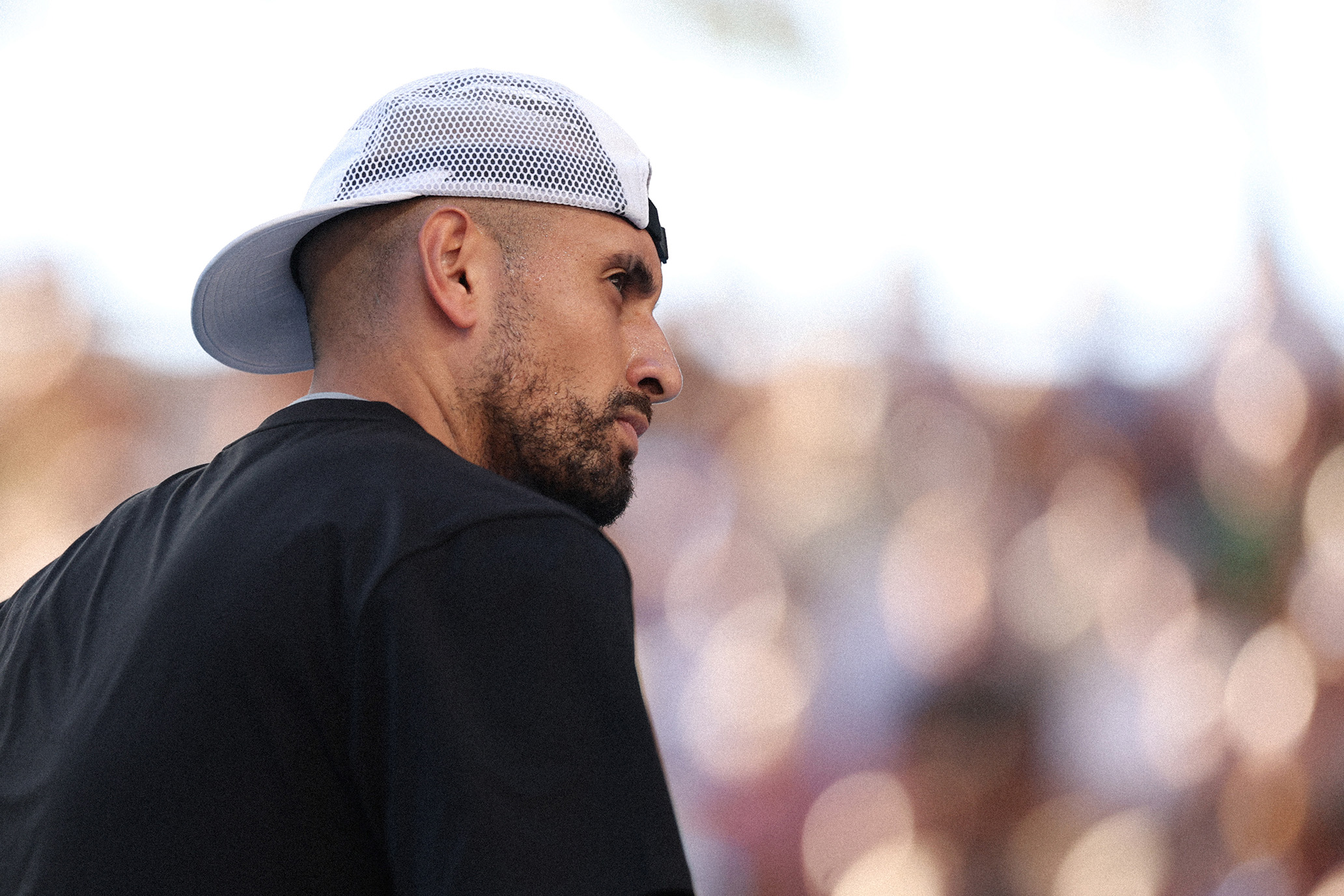
Nick Kyrgios during the mixed doubles at the Australian Open. A rare appearance on a pro court this year. // Getty
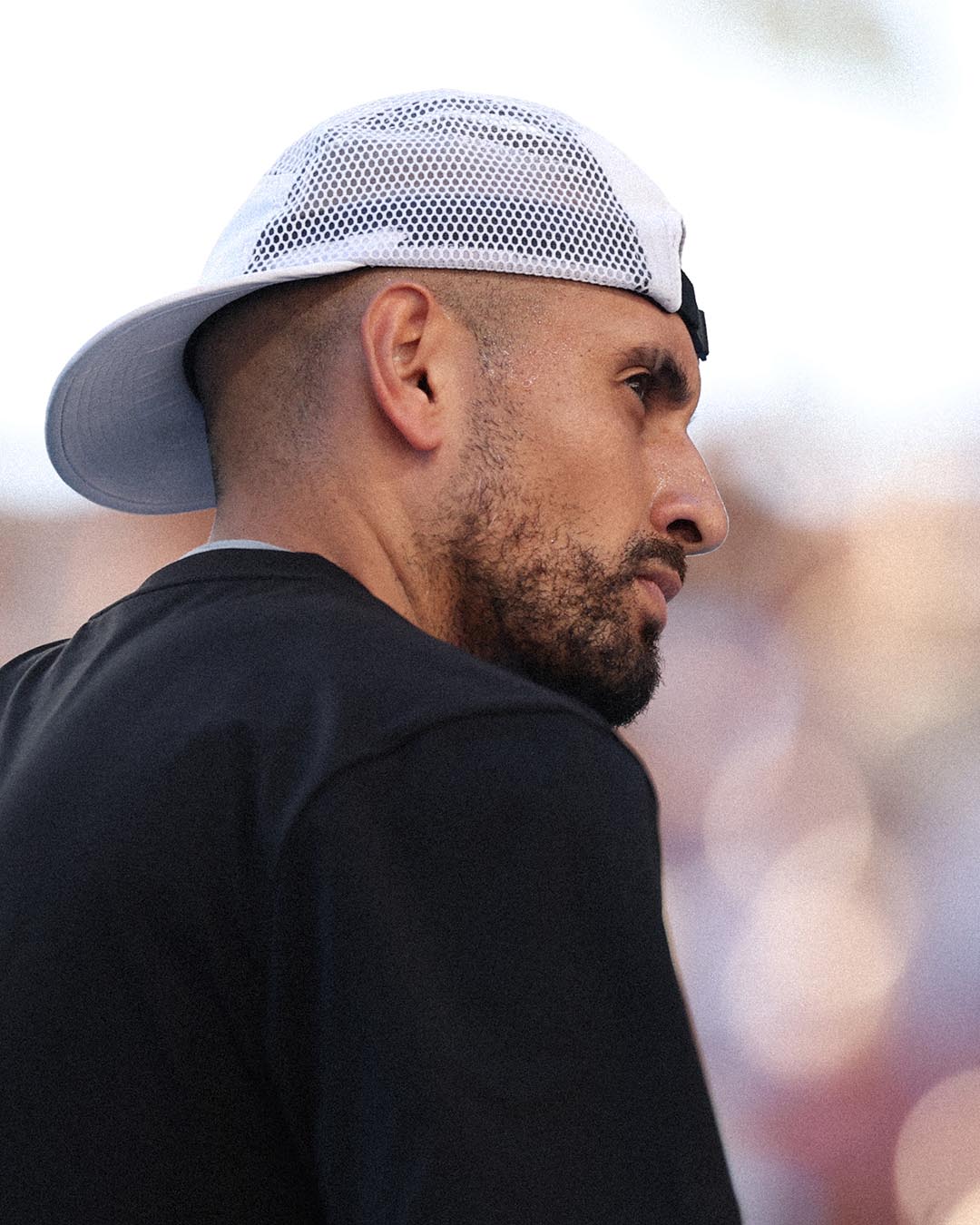
Nick Kyrgios during the mixed doubles at the Australian Open. A rare appearance on a pro court this year. // Getty
Nick Kyrgios tested positive for cocaine while competing in Mallorca in June, he announced on Wednesday, noting that he wanted the world to “hear this from me first.” He has been issued a provisional suspension by the International Tennis Integrity Agency and faces a maximum suspension of up to four years. If he can prove in an appeal that the drug was taken out of competition, he could cut it down to a manageable three months, but that assumes that there’s a playing career left to salvage. Saddled with injuries, and the general lifestyle demands of being Nick Kyrgios, he has played 10 total singles matches since the start of 2023. Even before this latest mishap, he’d been speaking as if this were his last season on tour. It’s hard to imagine a more spiritually apt ending to his tale.
Remember when Nick Kyrgios was interesting? You don’t? Okay, you have better judgment than me. Or at least you are less susceptible to trick shots. There was a long stretch of Kyrgios’ career where I gave him the benefit of the doubt, perhaps too long. It was strictly tennis that first got me invested. Set aside everything that’s happened since: There’s no denying the hair-raising sight of a 19-year-old Nick against Rafa Nadal at Wimbledon. A teenager, ranked outside the top 100, flicking tweeners at the best player in the world, with a zigzag shaved into the side of his fade. That iconic service motion—a casual rock back and forth, right into a blinding viperous strike. Forehand he could rip 100 mph with all arm, no footwork. Backhand shoveled flat. We watched him sling aces, act a fool, perform acts of God, mutter at himself, and, eventually, win in four. Then he took down Roger Federer and Novak Djokovic, too, in his first try against each, as I’m sure he will continue reminding everyone for decades to come. Back then, when these hegemons faced no real challenges from below, Nick was the funniest possible candidate to unsettle them. Brash, young, freakishly talented, unpredictable, armed with power and touch…and unwilling to buy into their ascetic lifestyle. Perhaps there was another way to win at this sport after all. A way that involved more milkshakes and pickup hoops. I mean, I like those things too.
When he was still a young man, I found him to be a fairly sympathetic figure. He didn’t love the sport, despite his physical (if not psychological) gifts for it. Even if he had loved it, it would have still been a brutal sport to make a life in while carrying that entire personality. I’m sure that coming up in Australia’s sporting culture had been incredibly racist, as he has often claimed. I saw the staid norms of tennis that he seemed to be rebelling against; I agreed that many of them were worth defying. Underarm serves? More, please. Want to smash your racquet? I could care less. Wear Jordans out to the court, cheat the Wimbledon dress code? Go for it. Obviously there was more repellent behavior mixed in—lambasting umpires, acting nasty to ball kids, chatting by the water cooler with Stan Wawrinka—but at least the tennis was exhilarating, and even when it was interspersed with occasional tanking, I always wanted to tune in. His nihilistic attitude toward the sport meant that his shot selection was impossible to predict. In general, I had no idea what was going to happen, on the level of an individual stroke, rally, set, or match. That was an interesting feeling. I would see his mom at tournaments, and I really felt for her. From about 2016 to 2019, I would describe myself as a Kyrgios enjoyer. During the pandemic, he even had the good sense to call out the behavior of his most reckless colleagues, and that was sort of charming, too. An unexpected voice of reason?
The next era was one of cautious, narrow hope. At this point it was obvious that he was not going to enjoy a traditionally successful career—he wasn’t going to “enjoy” any of it, period—and it was foolish to ask that of him. The man did not consistently employ a tennis coach. His box was stuffed with random friends that he berated at length. He ignored an entire playing surface. He was very clearly not conditioned for tennis. But perhaps he could get out of his own way and peak for a short stretch. To many, the slacker-prodigy is an appealing archetype. Huffing and puffing like Rafa, eschewing chocolate like Novak, acting regal like Roger? Not your style. Why not keep playing all the Pokémon you want, but just put your head down for two weeks, serve your ass off, and steal a Slam from underneath their noses? Just one Slam, then back to Pokémon, and you can talk all you want. In this period, it was possible to hold on to the delusion that he’d do it someday. The 2022 Wimbledon final against Novak Djokovic was, of course, an answer to that delusion. It was a real chance. And it eluded him. But at least it no longer had to be a hypothetical, and one could firmly close that book. That was the best season of his career, and his last season of relevance.
Since then, the injuries took over, and the tennis has fallen away, like a mask. What’s revealed hasn’t been all that appealing. With many other rebels in the sport’s past, once you peeled back their confrontational exterior, you might see deep soul (Andre Agassi), terrifying eccentricity (Marcelo Rios), or admirable politics (Billie Jean King). In this case, was there really anything left but a sort of dark hedonism and knee-jerk contrarianism? He would pay occasional lip service to the importance of mental health, yes. But he also spewed a steady stream of misogyny, which manifested in diverse ways: an assault allegation (and admission of guilt), manosphere-tinged commentary, countless dismissive comments about the women’s game, and a Battle of the Sexes match that tried to inject itself into some already accursed gender discourse. How do you get attention when you stop hitting 140 mph serves and drop shots? The answer is depressing. Scrolling right past the tedious dispatches from Kyrgios over the past three years revealed to me just how much work the tennis was doing. Once it was gone, and once he was all grown up, there was little left for me to care about or hold out optimism for. I’m also older now, and I’m no longer that curious about what talent looks like without discipline (many such cases). Hell, we even have Sascha Bublik now. Basically a Kyrgios with less baggage.
In what might end up being one of his last acts as a sort-of active player, Kyrgios rode his high horse about being a clean athlete. He claimed his five-set battles were only fueled by “bananas and coke cola” [sic, hilariously]. He publicly criticized Jannik Sinner and Simona Halep, both of whom tested positive for banned substances, both eventually ruled by the ITIA to have been unintentionally contaminated. One imagines Nick Kyrgios took his cocaine on purpose, and so far, he isn’t pretending otherwise. As Halep wrote on her Instagram story after the news broke: “Never kick someone when they’re down. Life has a strange way of changing positions. And an even stranger way of revealing the difference between an accident and a choice.”
PURE, ORIGINAL TENNIS — SIGN UP!
RECOMMENDED
Review: Coco Gauff’s “The Zina Effect”
FILM REVIEWS
Postcard from the Japan Open
JAPAN OPEN