Yes She Can
Yes She Can
Interview: Jessica Pegula lives for the grind.
Interview: Jessica Pegula lives for the grind.
By Reem AbulleilFebruary 26, 2026
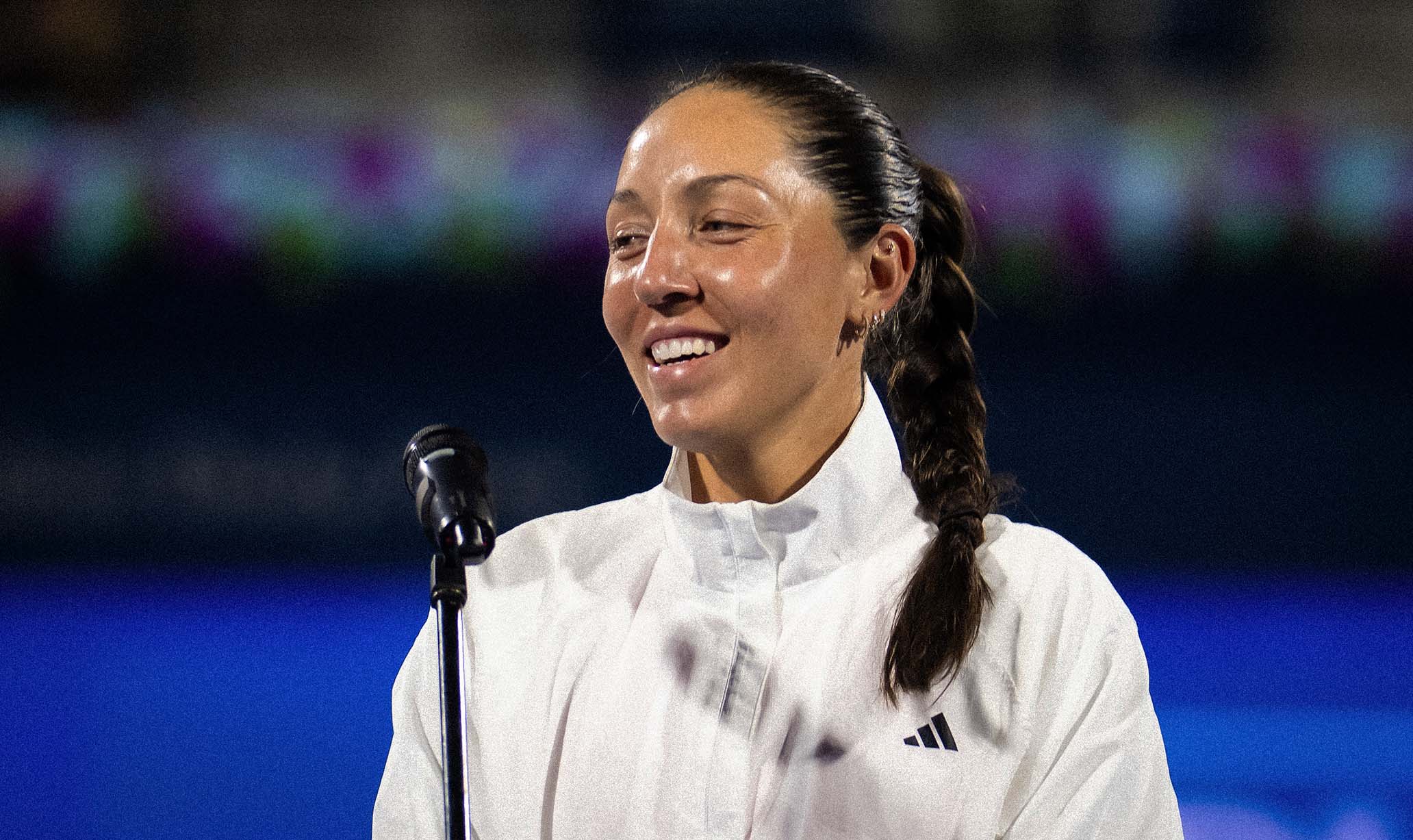
J-Peg won her 10th singles title last week in Dubai. // Getty
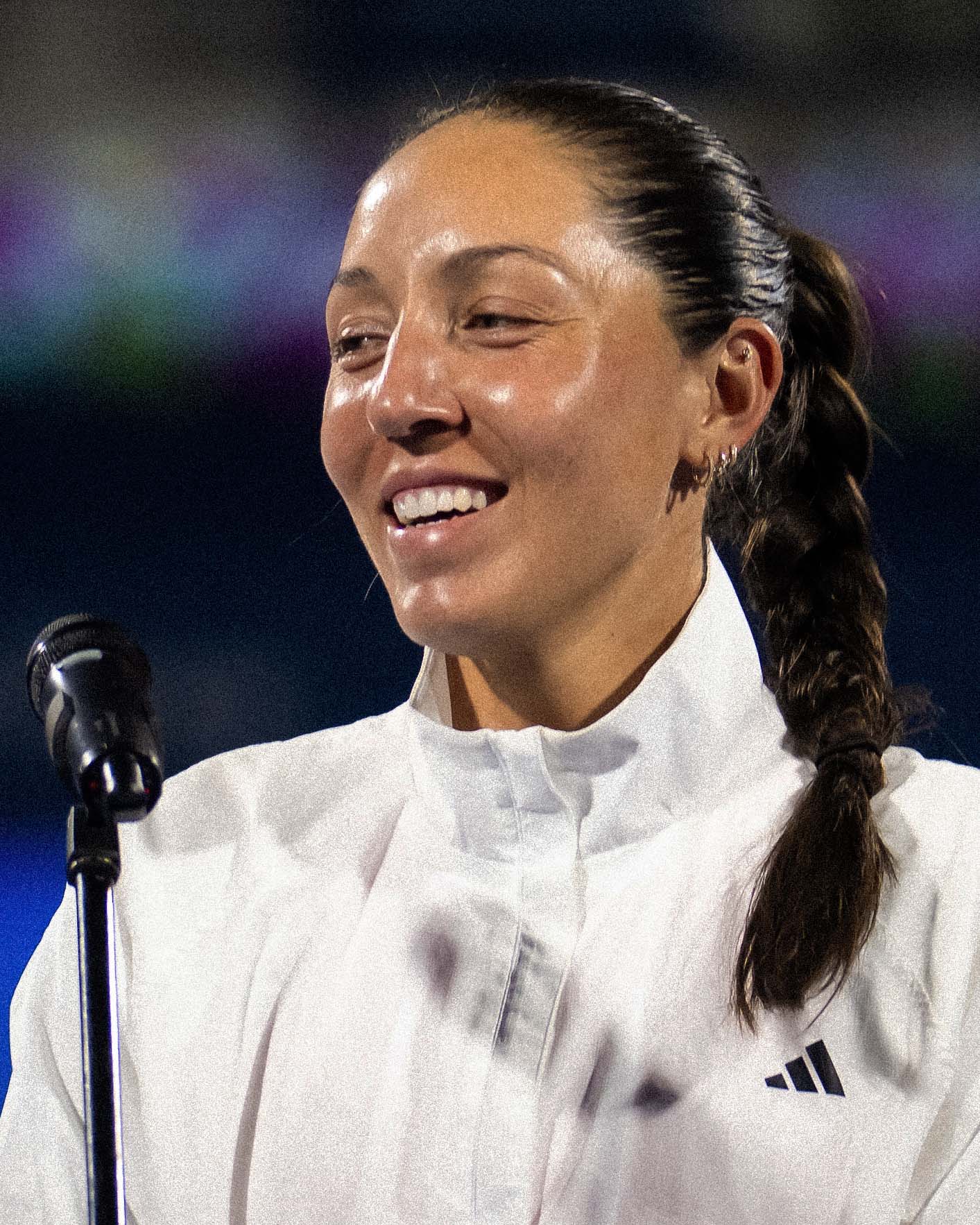
Jessica Pegula won her 10th singles title last week in Dubai. // Getty
Jessica Pegula is a mystery to many people. Zheng Qinwen, the Chinese tennis star, recently told her during a brief cameo she made in a video Pegula was filming that “in China we say, ‘Why [does] such a rich girl play tennis? Tennis is such a hard sport, why are you not in [that] high-class life?’” Pegula burst into laughter.
The 32-year-old American comes from a wealthy family that owns the NFL’s Buffalo Bills and NHL’s Buffalo Sabres. Zheng’s candid moment in that video posed a question that crosses many people’s minds. It’s notable given her upbringing, however, that Pegula is one of the hardest-working players in tennis. A near-constant fixture among the top five in most matches played and most matches won during the past four seasons, Pegula lives for the grind and rarely complains about it.
She hasn’t lost before the semifinals since before the US Open last summer—that’s seven straight tournaments where she’s made the final four or better. And as she was battling through a tricky draw in Dubai last week en route to her 10th career title, the WTA announced Pegula as the chair of a newly established Tour Architecture Council, dedicated to introducing much-needed reforms to the tennis circuit’s schedule. Pegula has served as a representative on the WTA Player Council for the past six years, and she now has another role to add to her already busy work schedule.
When the announcement landed in my inbox, I had to ask Pegula where she finds the energy for these extracurricular activities, and more important, what’s been motivating her to take on these roles?
“I don’t know. People just ask me to do things, and I tend to say yes to everything,” she told me with her signature mix of nonchalance and deadpan humor. “I don’t really say no very often. I think in a sense, though, I’m pretty laid-back. I don’t get overly stressed very easily. I think because I’m able to manage a lot of things naturally, maybe, with my personality, that it doesn’t quite worry me and stress me out.”
The problematic tour schedule has been a hot topic for years, and players have been particularly critical of it in the past two seasons, ever since the WTA increased the number of mandatory tournaments in 2024.
Pegula and her fellow Player Council representatives have tried in vain to steer the WTA in a different direction, but their recommendations for the calendar have been pretty much falling on deaf ears. As it stands, players are required to compete in four Grand Slams, 10 WTA 1000s, six WTA 500s, and the WTA Finals, if they qualify for it, in a single season.
That mandate is getting harder and harder to fulfill, and players have started to take matters into their own hands by simply not showing up to events. The WTA 1000 in Dubai last week witnessed 24 withdrawals and retirements—including the world’s top two—before and during the tournament.
The idea of this new Tour Architecture Council is to implement necessary changes to the calendar as early as next season. Given her experience on the WTA Player Council, and the lack of action surrounding schedule reform, does Pegula have reason to believe this new committee will be any different?
The answer is: Yes. She says Valerie Camillo, the new WTA chair who was appointed three months ago, wants to make a point of really listening to the players and making a swift and positive impact.
“I think in the past the WTA has been a little bit slow to make some changes. So I think it’s more sending a message that [Valerie] is really committed to it, the council’s really committed to trying to make change,” said Pegula. “I think it’s kind of just a, ‘Hey, we hear you and we’re trying to make a difference here and we’re going to try and do this the best, fastest way possible.’
“I think just having my name there as a top player will kind of help steer that.”
Ultimately, Pegula accepts these behind-the-scenes roles because she believes change is necessary, believes she has the capability of accelerating that change, and believes her laid-back approach makes her a great candidate for the job.
Some people might not get why Pegula does the things she does, but she always has her reasons, even when she feels the masses aren’t necessarily backing her.
“I definitely get the feeling that people don’t want to root for me because it’s not more of like the fairy-tale, Cinderella story, which is fine, and I’m okay with that,” she once told me at the 2022 WTA Finals in Fort Worth.
Recently Pegula started a podcast called The Player’s Box with three of her fellow American tennis players—Madison Keys, Jennifer Brady, and Desirae Krawczyk. Their conversations are unfiltered and give you the sense that you’re part of their WhatsApp group chat, listening in to the random things that happen to them on tour. Pegula feels the podcast has made her and her cohosts more relatable to fans and has allowed them to showcase their personalities.
The video Zheng appeared in was one where Pegula and Krawczyk were tasting and rating an alarming number of the viral Dubai chocolate bars. (Pegula later made sure to clarify they filmed that video pre-tournament, and she was not eating a bunch of chocolates while she was playing, and winning, a tournament.)
It quickly turned into comedy gold when Krawczyk brought up the nickname Chinese fans have given Pegula, “Da fu,” which translates to “Big Rich,” and Zheng dropped that “high-class life” zinger.
I had to get an answer for the Chinese fans wondering why Pegula bothers to play tennis for a living.
“It’s something I’ve loved to do since I was a kid, since before I had anything about my family or money or the teams or stuff like that,” said Pegula. “I wanted to be No. 1 in the world when I was, like, 6 years old. It’s been my dream for as long as I can remember to be No. 1, to be able to play on tour, to be able to win Slams. I mean, it’s pretty cool that I can look back and say that I’m putting myself in contention to do that, living out my dream.”
At 32, Pegula says her source of motivation is making sure she doesn’t feel stagnant and that she continues to improve. She believes in “trying things” and says that drives her even more than victories and titles. She often overwhelms her coaches by throwing at them a million ideas of things they should be working on. They in turn urge her to slow down and tackle things one at a time.
“At the end of the day, are you really challenging yourself as a person and as a competitor and as a tennis player to get better?” she says. “That’s always been my source of motivation.”
Like I said, she always has her reasons.