
Unpredictable vs. Inevitable
Unpredictable vs. Inevitable
Buckle up for a Roland-Garros final in which anything could happen.
Buckle up for a Roland-Garros final in which anything could happen.
By Giri NathanJune 5, 2026
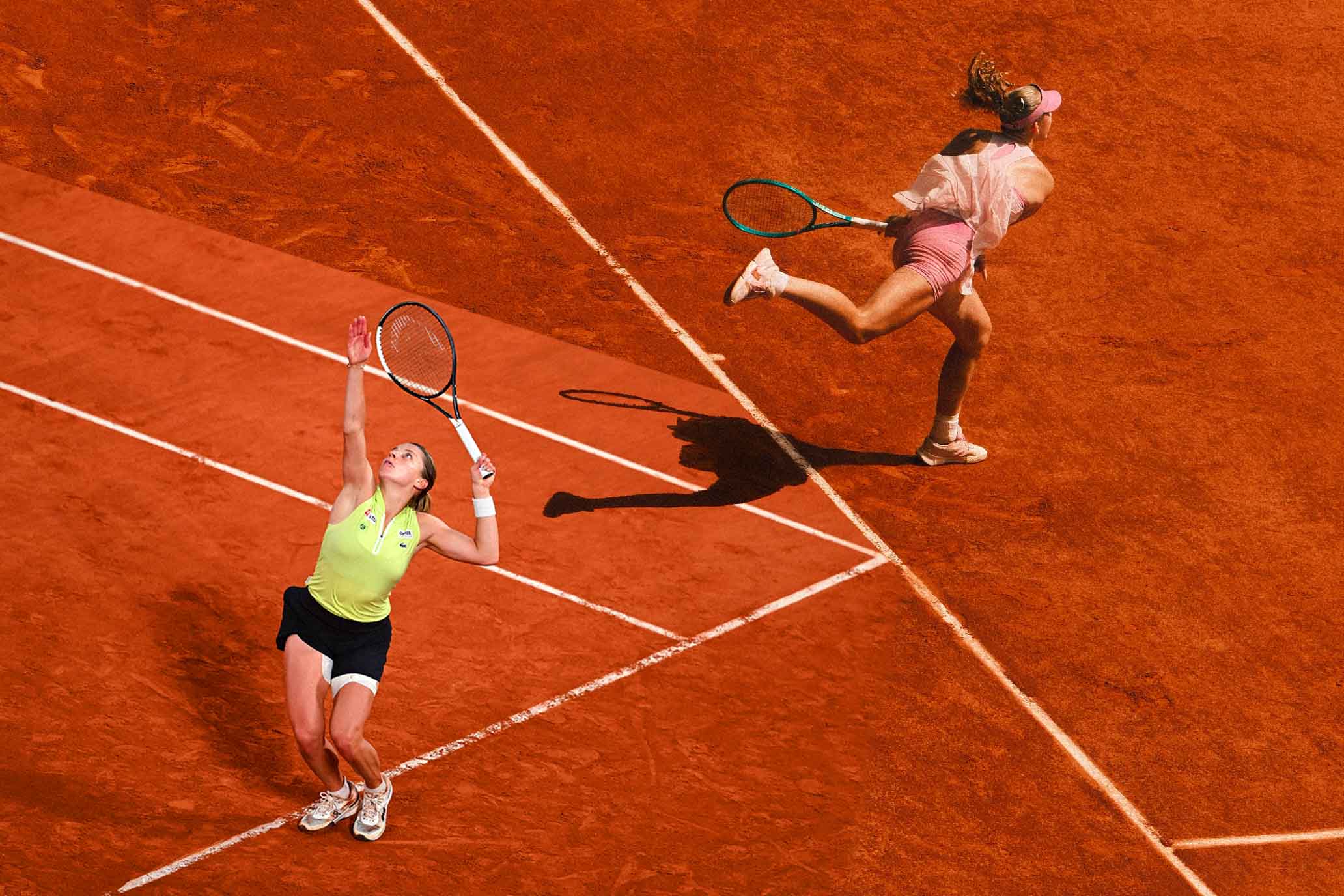
Maja & Mirra in Paris this week. // David Bartholow, Getty
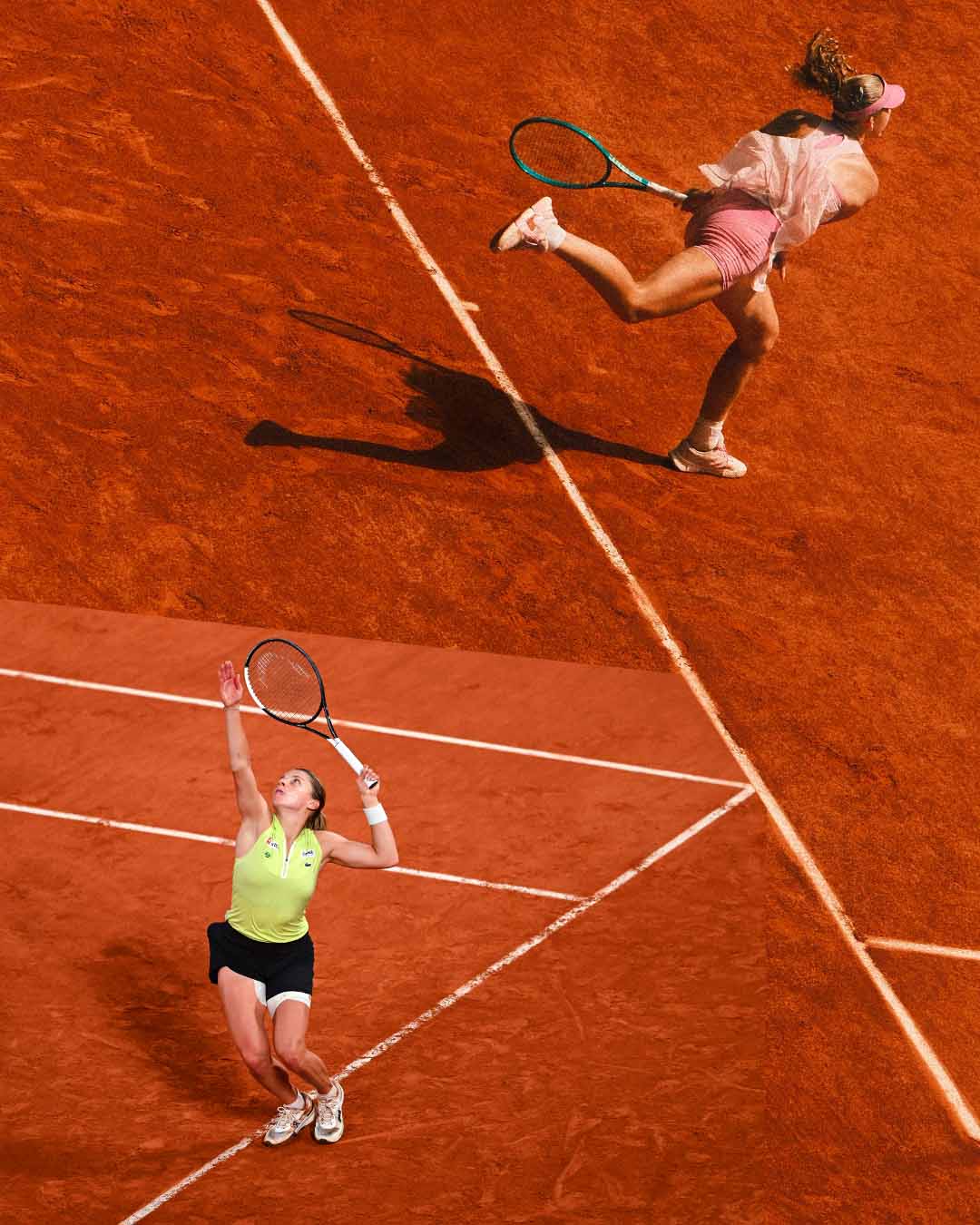
Maja & Mirra in Paris this week. // David Bartholow, Getty
Let’s be real: Most quotes from athletes live very short lifespans. They are procured, tossed onto broadcasts and into news stories, and almost immediately forgotten. Both the person asking the question and the athlete providing the answer know that neither of them has said anything interesting. However! Every so often a player speaks without a filter and says something that sticks with me for a long time. Mirra Andreeva was one such case. At the 2024 Australian Open, after winning a third-round match, during which she bit her own arm in anger, and came back from a 1–5 deficit in the third set, she spoke unexpected words. “Fourth round is nothing,” she said after the win. Reminder: She was 16 years old at the time. What 16-year-old says that? “Maybe if I win a Slam, I have to win three more matches, and it’s really tough to win seven matches in a row. I don’t think that I did something incredible. I have time to do it, I hope.” I put the quote in a piece I wrote that day. I was absolutely enthralled and terrified by this new talent.
From that point onward, Andreeva kept saying odd, captivating things—and kept making impressive runs at big tournaments. After winning the Dubai title in 2025, she made a point to thank herself, which has since become something of a victory speech tradition. (As she revealed recently, it was inspired by Snoop Dogg.) When she won Indian Wells a few weeks later, she used her speech to apologize to her coach Conchita Martinez for being “a little brat.” At that same tournament in 2026, she expanded on the brat concept: tossing racquets, smashing one, and yelling at the crowd, “Fuck you all!” on her way off the court after a third-round loss. (Upon hearing the outburst, a woman in the stands literally clutched her pearls.) During her third-round match at Madrid 2026, Andreeva blew a big lead in the deciding tiebreaker and sat down to drink water during the change of ends. Between sips, she could be seen talking to her box: “I’m not a champion. I’m not a champion. I will lose. I will lose.” She went on to win. After losing the final, she admitted to reporters that “every time I lose, every time it’s like the end of the world to me.”
Over time, that initially confusing candor and intensity resolved into a clearer picture: a mind hell-bent on winning, at any cost, and unrepentant about that ambition. She was not just resisting her generation’s trend toward politeness and media training; she also seemed to be resisting its trend toward work-life balance and general well-being. This may not be a particularly easy way to be a person, but it is definitely a great way to become a champion. So it was partially this mindset, and partially her crisp counterpunching, that made me confident she’d be contending for Slams someday. On Saturday at Roland-Garros, she will have a chance to complete the quest she once outlined as an unsatisfied 16-year-old. She will be looking to win that seventh match in a row.
While 19-year-old Andreeva’s arrival at a Slam final felt inevitable, the same could not be said for her opponent in that match, 24-year-old Maja Chwalinska, whose game I must admit I was totally unfamiliar with until this shocking run. I can forgive myself because Chwalinska had played just three tour-level matches since the start of 2025, entered just two Slam main draws before this one, and made it into this Roland-Garros as a qualifier. This makes her just the second qualifier in the Open Era to make it to a Slam final, after Emma Raducanu’s US Open win in 2021. Chwalinska has done it in memorable style: choppy two-handed slices, moonballs, unpredictable changes in depth and height, dropshot-lob combos, volleys, great anticipation. “She moves incredible on the court,” said Diana Shnaider, her vanquished semifinal foe. “She covers a lot. She reads the game very well—even if you think she won the point, she’s there, she’s returning that ball; returning it very uncomfortable for you, so you need to start the whole point literally from the beginning, building it up again. A lot of variety, a lot of spin.” It’s very much a style tailored to clay courts, as some of her opponents have pointed out. Chwalinska, who has had limited experience against top players in her career, upset four seeds en route to the final. Compared with those players, Andreeva is much better equipped to wrangle Chwalinska’s strange style, and I suspect this miraculous run ends with a runner-up trophy. But it’s a strange kind of pressure to play a first Slam final as the prohibitive favorite. If Andreeva’s feeling the pressure in the match, something tells me we’ll be the first to hear.
PURE, ORIGINAL TENNIS — SIGN UP!
RECOMMENDED
Review: Coco Gauff’s “The Zina Effect”
FILM REVIEWS
Postcard from the Japan Open
JAPAN OPEN