The Price is Tight
The Price is Tight
Where its three Slam brethren overcharge, the Australian Open gets it (somewhat) right.
Where its three Slam brethren overcharge, the Australian Open gets it (somewhat) right.
By Simon CambersJanuary 15, 2026
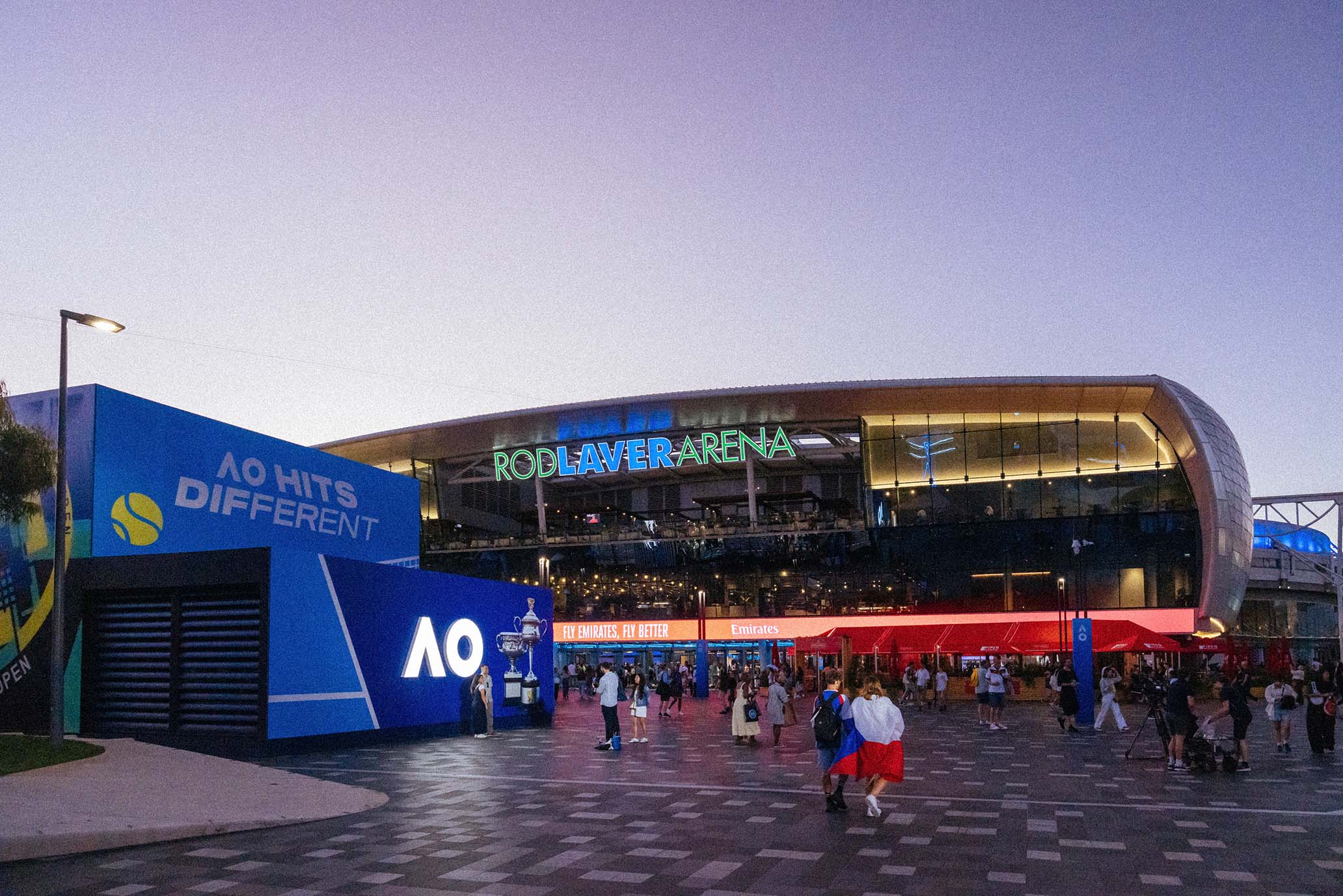
You can't beat that Melbourne light. // Getty
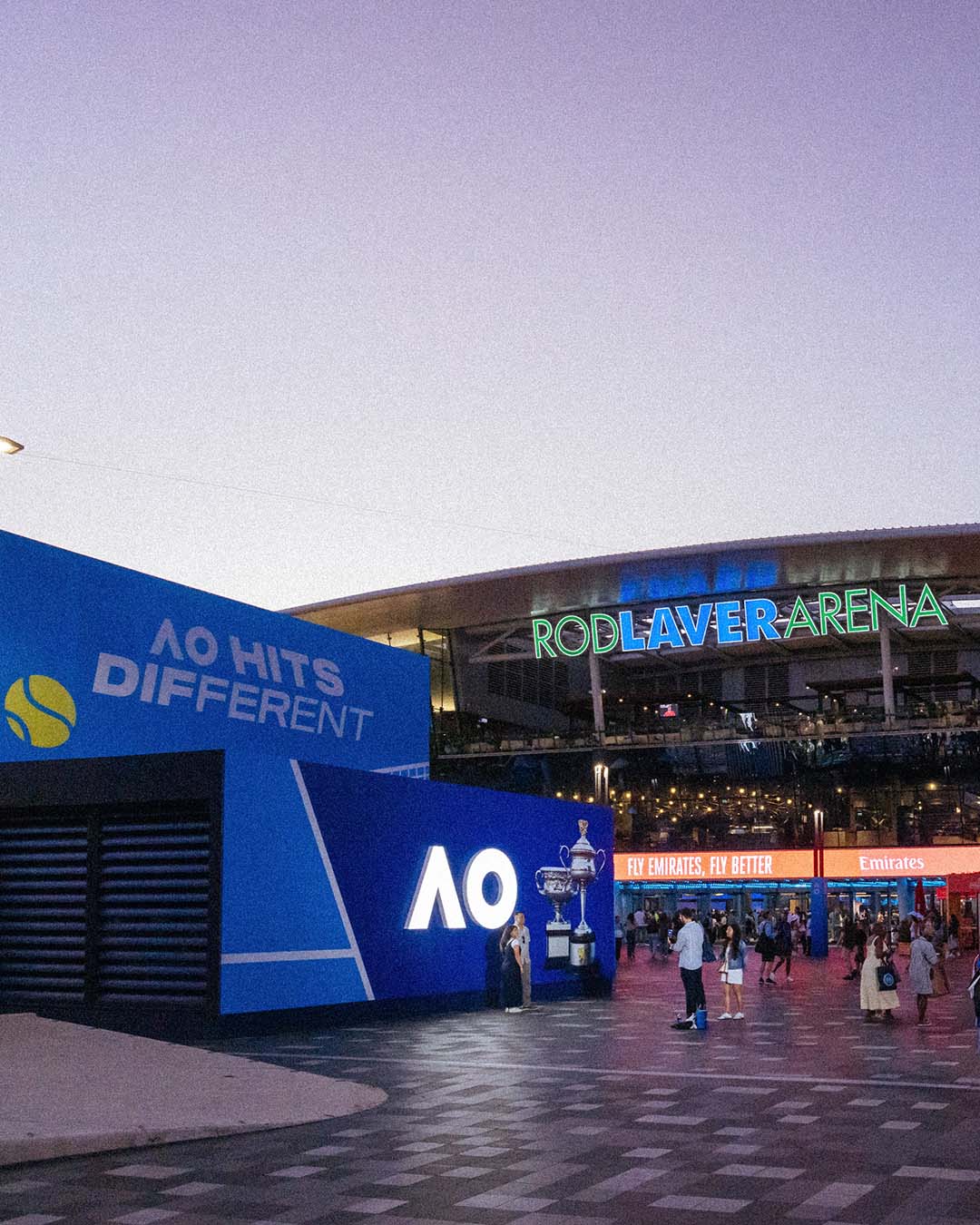
You can't beat that Melbourne light. // Getty
Australian Open organizers made big noise last week when they announced that this year’s event will boast record prize money, up 16 percent from last year at a total of AUD $111.5 million ($74.5 million). That puts it second only to the US Open among the majors. Ten years ago, total prize money in Melbourne was AUD $44 million ($29.5 million).
If you have been lucky enough to visit Melbourne Park in recent years, it won’t have escaped your attention that the once poor relation of the four Slams has become a behemoth. Grow any bigger and it will soon be starting at Federation Square, right in the city.
But while the US Open peddles signature cocktails for $23 apiece, with sales of the (admittedly tasty) Honey Deuce drink alone totaling almost $17 million in 2025, the Australian Open retains a certain charm that’s unmatched in Grand Slam circles.
Prices are not cheap here, either—a beer is around AUD $16 ($11), but that’s still decent compared with the US Open, where a domestic beer in 2025 was $15 and Heineken a dollar more. Or at Wimbledon, where a Pimm’s was £12.25 ($17) last summer. But the chances are that when you enter the grounds here, you will be given sun cream and water for free, a big smile, and a tip that, should you need it, there’s a pharmacy on site. Considering that one of the main meeting and resting areas at Melbourne Park is named Heineken Square, perhaps it’s wise.
There’s no question that the four Slams are now moneymaking machines. Last year’s French Open prize money was 56.35 million euros ($64 million); at Wimbledon, it was £53.5 million ($71.6 million); and at the US Open it was $90 million, with the two singles champions receiving a record $5 million each.
Revenues are immense; in 2024, the United States Tennis Association (USTA) recorded revenue of $623 million, the vast majority coming from the US Open, while Wimbledon brought in a record £406 million ($539 million).
But the four Grand Slam nations also have a remit: to grow the game and make it accessible to everyone. That’s proving more and more difficult every year.
But the point is that Australia gets the balance right.
A grounds pass ticket (giving general access to the outside courts and some show courts) for any day in the first week in Melbourne costs from just AUD $59 ($39.50), similar to the French Open and Wimbledon, where it is around $40. Great value, no doubt. You can even get a grounds pass for the whole of week 2 from just AUD $99 ($66).
By contrast, the US Open has become almost impossibly expensive. In theory, a grounds pass there costs a similar amount if obtained in advance, but tickets are invariably snapped up in minutes, by bots or organized companies, only to reappear at vastly increased prices.
At Wimbledon, the only tickets that can be resold are “debentures.” They’re the most expensive tickets, almost a financial instrument in themselves, which can be traded on the secondary market. Otherwise, you can try your luck in the ballot or line up in the famous Wimbledon queue, with tickets available every day on the gates. The French Open’s grounds passes are available online, in advance and during the events, while Australia has a rule that says tickets can only be resold at a maximum of 10 percent above face value. In New York, however, tickets can be instantly re-advertised for sale via Ticketmaster and are often several times face value. In 2025, grounds passes were available during week 1 for $300, and people were not happy, as a glance at social media during the event proved.
Not all grounds passes are the same; at the US Open, a grounds pass gives access to some seats in Arthur Ashe Stadium, while at Wimbledon, in Paris, and in Australia, it does not give a seat on the two main show courts.
If you do happen to get a ticket, that’s just the start of what can quickly become a bank-account-emptying day out. At the 2025 US Open, their signature Grey Goose honeydew melon cocktail was on sale for $23. An incredible 738,459 of them were sold, bringing in $16.98 million, up 32 percent from the previous year.
Price increases have far outstripped inflation; in 2014, the drinks were just $14. Food prices are also sky-high; a lobster roll, which was $18 in 2010, is now $39.50, a shrimp cocktail is $25, and a beer (Heineken) is $16. Food and drink at Wimbledon are pricey, too, but in Paris you can get a galette or a signature ham baguette for less than 10 euros, while a Leffe beer was also 10 euros (once the 2 euros for the cup had been refunded).
The 2025 US Open was the last for Stacey Allaster as tournament director (former doubles player Eric Butorac takes over). At a gathering hosted by Rolex in the second week of last year’s event, Allaster outlined a host of new, costly improvements that will be carried out at the Billie Jean King Tennis Center over the next couple of years, including some more rows in the lower bowl on Arthur Ashe, which will doubtless command tasty prices.
I asked Allaster whether she or the USTA could do something about resale prices. She seemed to suggest it is beyond her control. I contacted the USTA to see what, if any, percentage they receive from resold tickets in the form of service fees or facilities fees that often appear on Ticketmaster. Though the USTA acknowledged the question, an answer has not been forthcoming.
The U.K. government announced in November that it is to ban the resale of tickets above face value for live events, including sports, although Wimbledon’s debenture tickets may be exempt—in part, it seems, because their sale helps boost the tournament’s profit, 90 percent of which is then handed to the Lawn Tennis Association to grow the sport in the U.K. In 2024, that amounted to almost £50 million.
The Slams might argue that if people are willing to pay those prices, then it’s all good. Revenues go up, players get more money, everyone’s a winner. The numbers from 2025 will no doubt buoy US Open organizers, but if tennis becomes a sport only the rich can afford to watch, then it has a problem.
But that grounds pass for week 2 in Australia is an outstanding value, including access to numerous other attractions, from music to dance. That $99 ($66) is just enough to get you a Grey Goose and a lobster roll at Flushing Meadows. It can’t be right.