Backhand Blindness
Backhand Blindness
The Stanimal's backhand was magnificent, but wasn't his biggest weapon.
The Stanimal's backhand was magnificent, but wasn't his biggest weapon.
By Owen LewisNovember 3, 2026
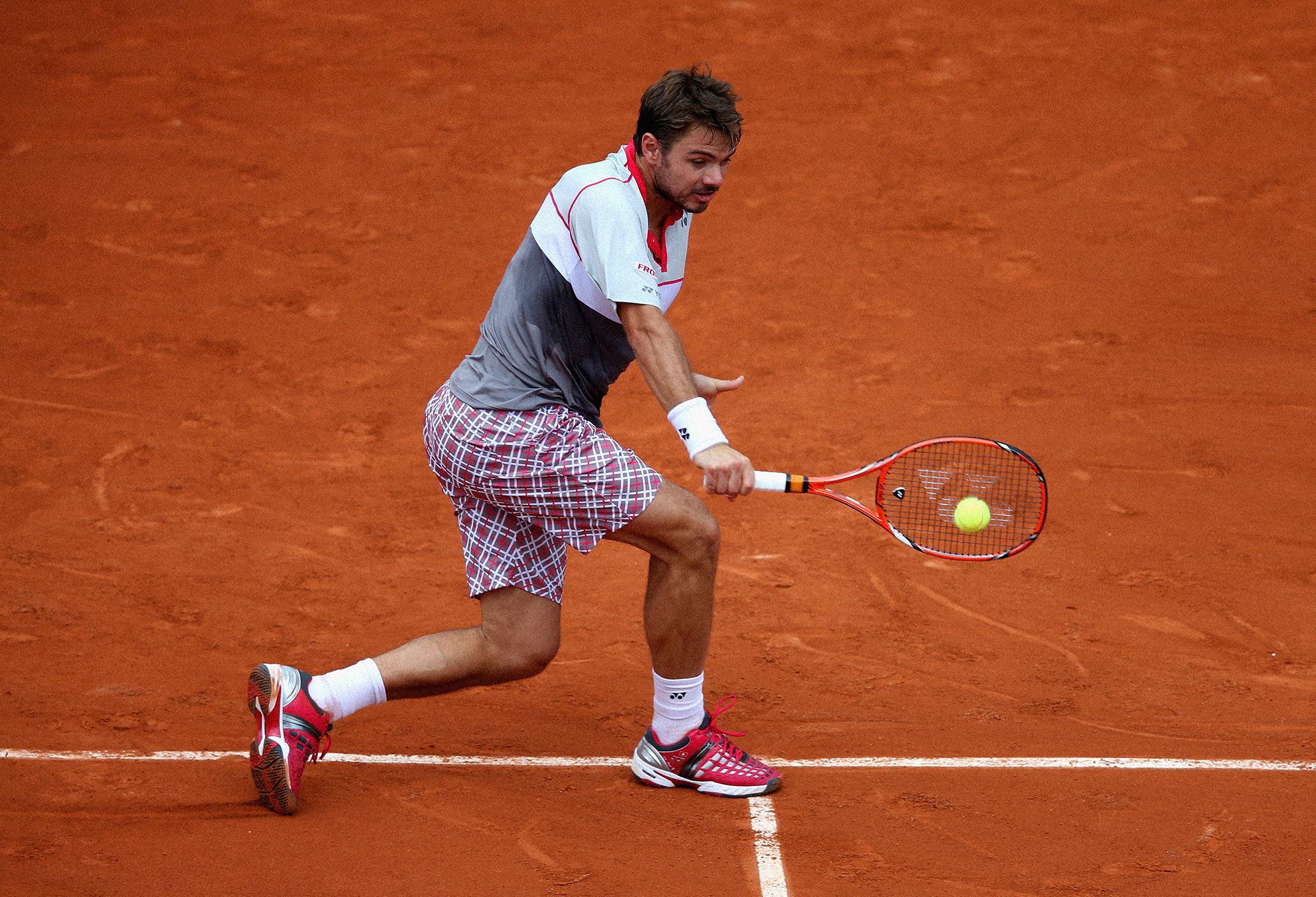
Stanimal magnetism. // GETTY
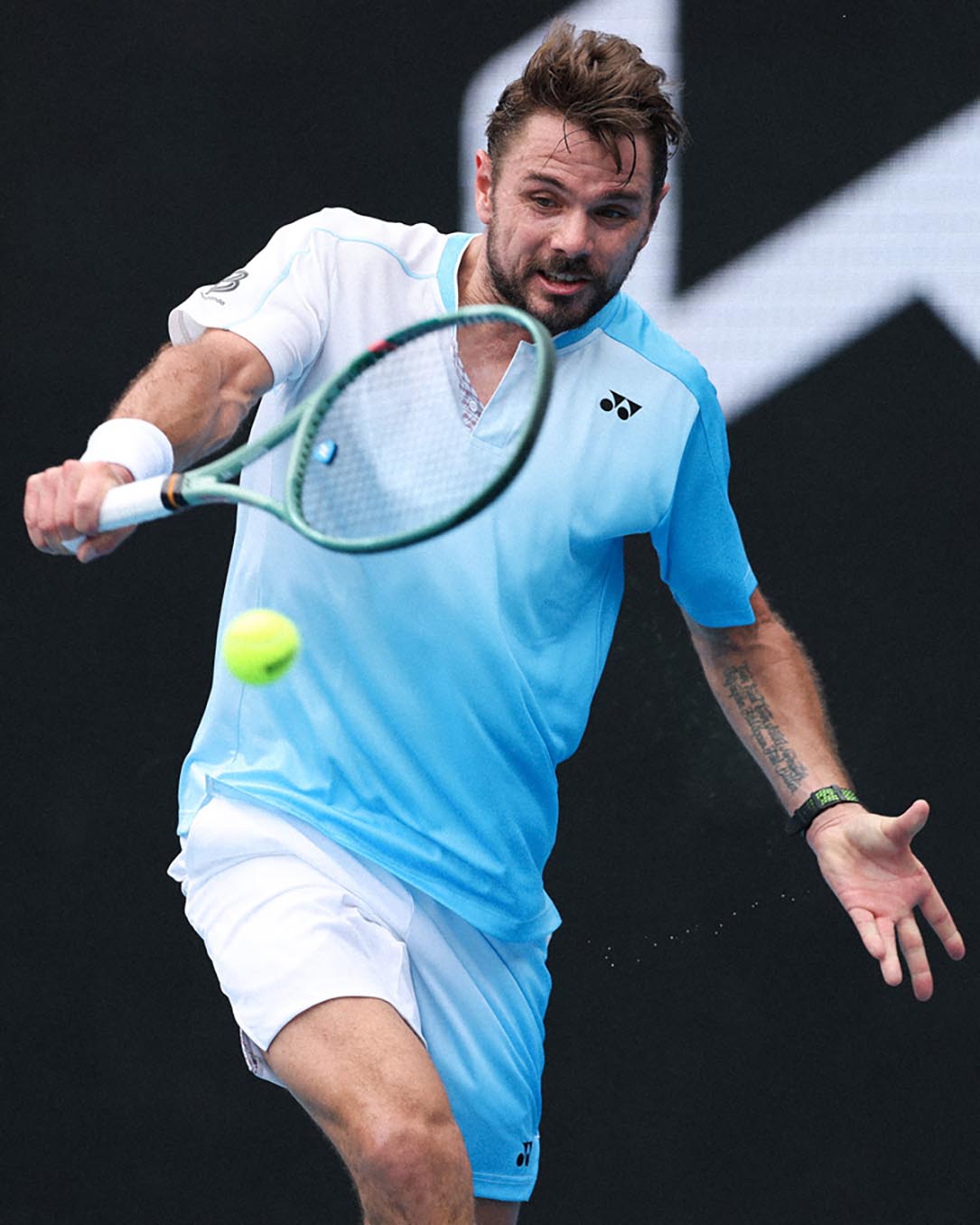
Stanimal instincts. // GETTY
On a pre-Musk Twitter, a tennis fan who chose to use his deep knowledge of the game for trolling once posted a poll, announcing that most voters would get the answer wrong: What Stan Wawrinka ground stroke was better, his forehand or his backhand? The prophecy came true: Most people went for the one-hander. It took me a while to realize why that was the wrong answer.
Wawrinka retired last week, following a two-set loss to Jiri Lehecka in his home tournament, the Swiss Indoors. It was fitting that on match point, he rammed a backhand down the line wide. That shot is the first thing that comes to mind for legions of fans when they think of Wawrinka. It’s the winner he hit to seal victory in the 2015 Roland-Garros final, a ridiculously potent dose of ball-striking that Wawrinka deployed to unseat a Novak Djokovic who’d spent most of that season approaching invincibility. It’s the shot he hit over and over in his 2013 Australian Open match against Djokovic—watching this match on YouTube years later was when I first understood a player could hit a backhand, one-handed or otherwise, inside out—which announced to the world his sky-high ceiling. Wawrinka’s backhand down the line wasn’t languid, a word so often associated with one-handers. He slashed with it, as though unsheathing a sword from a scabbard on his left hip. The flight of the ball matched the violence of the motion.
In the immediate aftermath of Wawrinka’s retirement, a number of official tennis channels released compilations of his best backhands. It’s hard to mess this up; not putting out these clips for the occasion would have been malpractice. And yet, consider a couple of the captions on these videos. ATP Tour, on a YouTube short: “Stan Wawrinka: The Best Backhand of All-Time?” Tennis TV, on the thumbnail for a highlight nearing two hours: “THE BEST BACKHAND EVER?!”
If anybody reading needs an answer to these questions: No! Not close, really. If you consult the contents of these videos, you’ll notice that almost every backhand is of the offensive variety. There are precious few defensive stabs with that backhand that reset a point that looked lost, because Wawrinka wasn’t an elite defender, or returns of serve with it that erased the advantage from a very good first serve, because Wawrinka wasn’t an elite returner. Though good defense and returns don’t have the personality for a highlight video, they are nonetheless significant parts of tennis. The best backhand ever must be one that excels in all these arenas. I don’t want to detract from Stan’s one-hander, a genuinely magnificent shot I always enjoyed watching, but in the name of the facts: His returning never really rated beyond decent (the ATP rates him 408th all-time), and his defense only ever existed in effortful little patches to serve his offense. Does Wawrinka have the best one-handed backhand ever? There’s an argument. The best offensive backhand within the confines of the baseline rally? Ditto. (Though each match Jannik Sinner plays erodes that case.) Those descriptions must not have fit in a video caption.
The reasons for the existing captions have a lot to do with clickbait, but there’s also an element of nostalgia here. The one-handed backhand is approaching extinction among top pros. February 2024 saw an ATP top 10 that featured all two-handers for the first time in the tour’s history. This year, a one-handed backhand failed to appear in the semifinals of any of the four majors for the first time ever. As such, tennis’ relationship with the shot, which already bordered on fetishistic, has grown even more desperate. Richard Gasquet’s backhand defines his career even more than is the case for Stan’s (which in some ways is fair enough, given that Gasquet could trade backhands with Wawrinka but his overall game wasn’t as well-rounded); we remember the Frenchman’s one-hander more than any of the many remarkable matches he took part in or any of the tournaments he won. Roger Federer’s backhand is maybe the most feted tennis shot ever seen—can you think of another all-time great whose most popular attribute is also so clearly their weakest?—but you can also see this phenomenon whenever Lilli Tagger plays a match. So Wawrinka’s retirement is a perfect time to rhapsodize, as a truly elite practitioner of this flawed stroke departs from the sport.
There is something touching about worshipping a shot that is more often than not a liability. It can be tempting to view tennis as a race to solve the game—we’ve got nonsensical performance ratings, we’ve got AI infiltrating everything, we’ve got racquets and courts that are flattening the game into a hitting contest, we’ve got champions with weaknesses no larger than a tendency to hit slightly floaty volleys off wicked passing shots—and lose sight of it as a wonderful expression of style. One-handed backhand worship suggests that some fans care more about how the game makes them feel than how best to play it. (Even wildly successful bearers of the one-hander freely admit that the game has evolved in a way that sent the shot right into obsolescence, from Federer teaching his kids a two-hander to Dominic Thiem suggesting young players keep both hands on the stick to cope with the increased pace of the game.)
But this rhapsodizing can also go too far. For one thing, the internet is simply groaning under the weight of all the one–handed backhand eulogies written over the years, some of which are identical not only in topic but title. (Won’t somebody think of the internet?!) Tennis also has a way of letting its one-lensed backhand goggles blind it to reality, and even to other beautiful shots. Let’s go back to Wawrinka: The man really did have a whale of a forehand. It was his primary weapon from the baseline. (Relatedly: How many highlight-watchers know that Dominic Thiem had one of the best, most vicious forehands of the 2000s?) Here’s a secret: Wawrinka also didn’t hit his backhand down the line all that often. That made the times he did more precious, sure, but if the image of Wawrinka presented to the tennis masses is one whose backhand blasted bullets down the line constantly and was arguably the best ever, that’s not quite accurate. His record against Rafael Nadal is just as tragic as you’d expect from any faceless top player with a one-hander.
Wawrinka was an engine of all-around baseline hellfire, a guy who could go toe-to-toe with Djokovic in crosscourt backhand rallies, but also a guy who could match and exceed Novak from the forehand wing. His backhand was not immune to the inertia that affects all one-handers. He was more weapon than craftsman. It’s only fair for his game and career to be the avatar for a fan base’s nostalgia for a dying stroke if they’re allowed to be more than that, too.