From Bass to Ace
From Bass to Ace
Korn’s Ra Diaz ups his game—and his string count.
Korn’s Ra Diaz ups his game—and his string count.
By Jeffrey SilversteinOctober 29, 2026
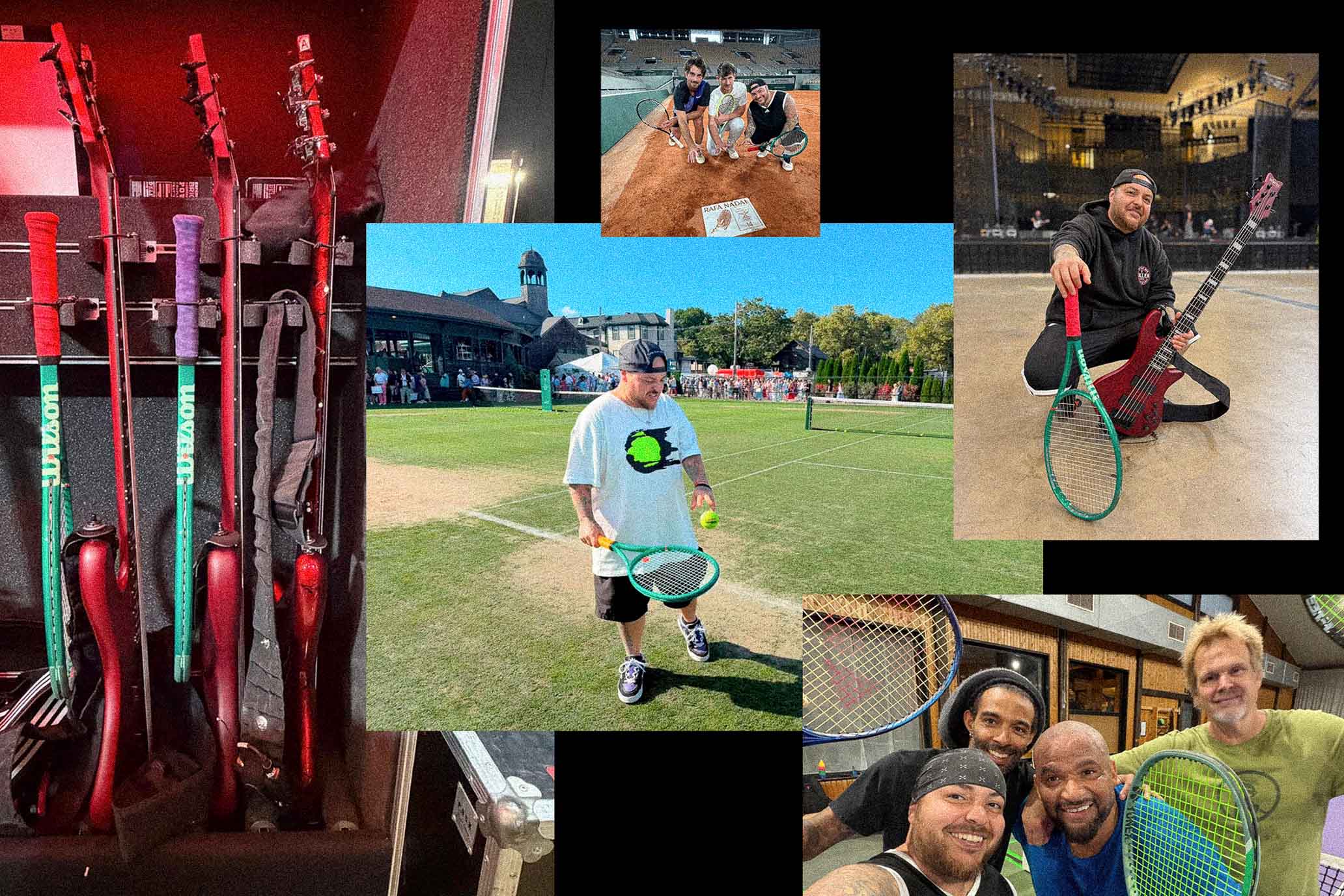
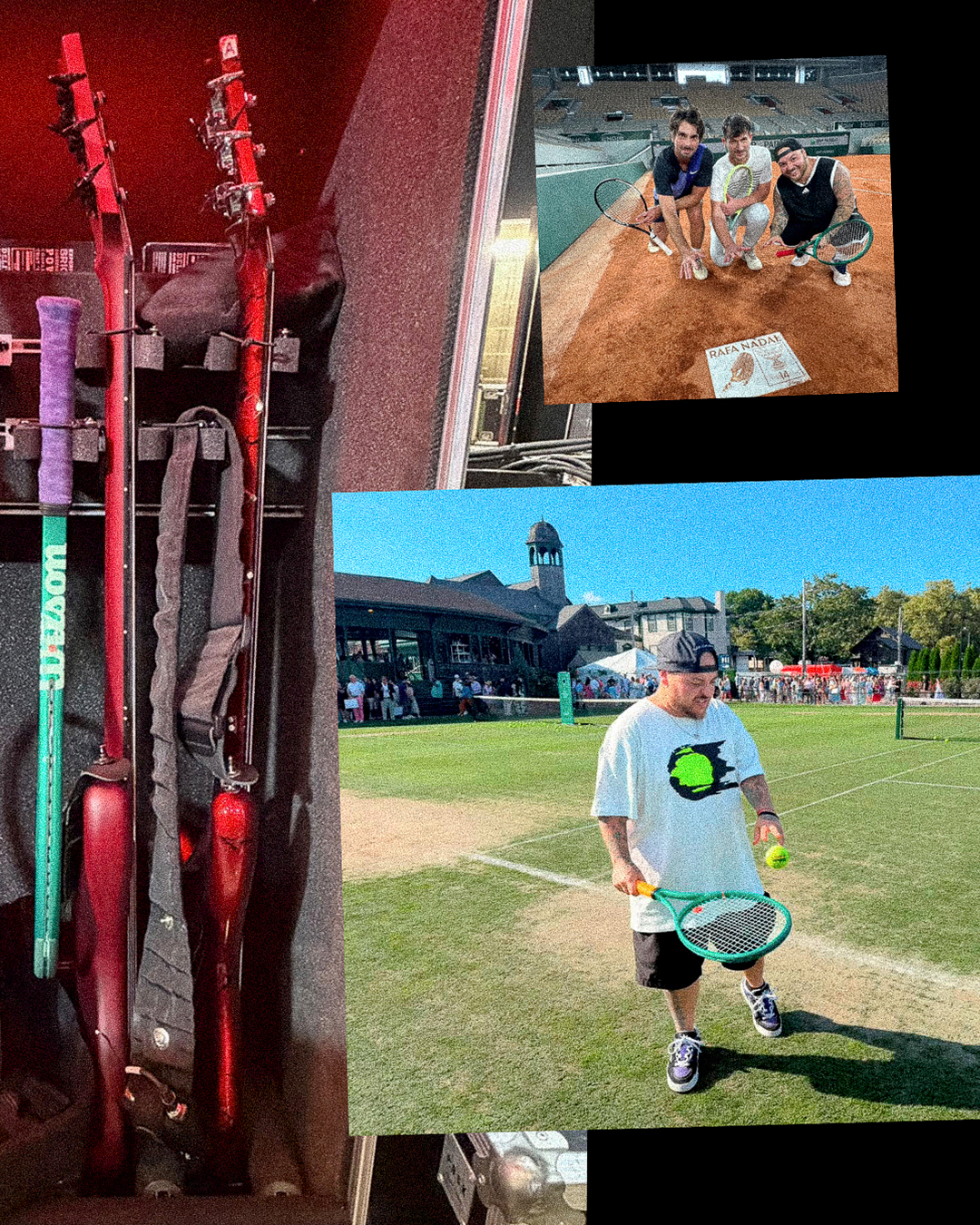
For Ra Diaz, music and tennis are intertwined. The current Korn bassist and former Suicidal Tendencies member grew up in Chile during a golden era for the sport, when Marcelo Rios’ rise to world No. 1 helped popularize tennis on a large scale. Though he didn’t begin playing seriously until later in life, Díaz has since made the game a regular part of his routine, seeking out coaches, challenging better players, and finding courts wherever his busy touring schedule takes him. Here he discusses the connection between music and tennis, the value of learning through competition, and how the game offers a welcome escape from life on the road.
Did you grow up around tennis?
I was lucky. I was born in ’84, which means in the mid-’90s I was roughly 10. In Chile we had Marcelo Rios, the first-ever South American No. 1 in the world. Tennis was everywhere in Chile at that point. Soccer is the No. 1 thing in most of South America, but when Marcelo Rios was around, it was the first time that families would gather together to watch a match.
My grandpa was the president of a tennis club in our city, in Viña del Mar. I didn’t play or anything, but I would hang out at the club and watch matches. They would have tournaments and some pros would show up. Whenever my grandpa was playing, I would be a ball boy and he would give me a couple of bucks. I never had formal lessons, but I knew how everything worked.
You had a clear visual.
Not even just of the sport, but of the club, dynamics, and people. In a lot of places tennis has this reputation of being somewhat elite, but because of what happened in the ’90s with Marcelo Rios, now everybody wanted to play tennis, and it became huge. After Marcelo Rios, we had Fernando Gonzalez and Nicolas Massu; they won gold medals and it just kept going from there.
The first time I thought, “Oh, tennis can be cool,” was when I saw Agassi and the Chili Peppers. Remember that [Nike] ad? Being a bass player, the Chili Peppers are one of my favorite bands ever. I saw the “Higher Ground” music video and was grabbing stuffed animals, putting them in my pants like Flea. Me and my mom would celebrate Flea’s birthday. I saw that crossover and was like, “Wait, tennis can be like rock and roll?”
So Agassi was big for you?
I lived in Vegas for a short period of time and always thought if one day I run into him, I’ll cry. That was my dude. To the point where when we were kids we were planning a trip to visit family in France. My family was like, “Hey, we’re going to make a quick weekend trip to Italy.” At that time, the juniors Agassi racquet was out. It was yellow and black. I told them I don’t care about Italy, I want to buy the racquet. They said you can either go to Italy or you get the racquet. And I decided to get the Agassi gear. My brother went to Italy and I stayed with my cousins in France.
Your love for the game took off when you met your wife, is that right?
When my wife and I started dating, she mentioned that she played D1 tennis. At the time, I didn’t even know what that meant. She started explaining it to me. I told her, “I love tennis. I watch it all the time.” She’s like, “Oh, really?” When I was visiting her here in Boston, before I even moved here, she said we should go to the park around the block and hit. I’m like, yeah, but what am I going to do? It didn’t actually go that bad. She was like, “Dude, you can hit!” She was also the first person to tell me something that, to this day, I don’t even know what it means—she told me, “You hit like a South American.” I’ve heard the same phrase from two or three other people. I think it’s good.
So you’re living in different cities but trying to be together and play as often as you can…
When I would visit and she was at work, I would grab the bus and go to a club that did drop-in clinics.I would go every day. When she would visit Vegas, we found the Darling Tennis Center, an amazing place.
Was there anything about being a bass player that transferred to tennis right away?
I think so, but at the same time, all that stuff kind of clicked without me even trying. It was just somewhere in my brain, maybe from watching as a kid. All of a sudden you’re accessing that. I read a study noting that musicians make good tennis players and vice versa because of timing.
The way you get better at anything is by playing with people who are better than you. How did this look for you with both tennis and music?
I had to learn fast. I found a group where I knew they were good, or at least better than me. I stuck to that group and would test myself every time. I became friends with some coaches on the ATP Tour. I would send them videos. I got the opportunity to hit with people that are at a professional level. I would tell them, “I’d rather have you destroy me so I know what I have to do or work on than play mini tennis for fun.” That’s where someone’s growth potential lives. With music, when I was 12, I was jamming with 50- and 60-year-olds.
Do you have a practice regimen for either?
If I’m going to be honest, I practice more tennis than bass now. With tennis I found a club with a solid group of people. I try to go three times a week. There’s a tennis academy here, mostly for kids, but I became friends with the coaches. When we have time, we meet up to hit and they give me advice. Most of them are originally from Colombia. One of them, Ricardo, shout out to him, he’s awesome. He was like, “Dude, I want to go to your show in Colombia. I don’t want to miss that.” And I’m like, “Well, why don’t you come and you can hit with me there?” We were on the same flight and everything. When we got there I met him and his brother, who is also a great tennis player. We found a court and played every day.
What’s your approach for finding places to play while on tour?
The first step for me is reaching out to people I already know. If I’m going to, say, Germany, or a city I’ve never been to or played tennis in before, I’ll ask a coach, like, “Hey, do you happen to know someone there who I could connect with?” A month ago or so, I went to Nashville for a day and went to this academy called Farm & Forge, which is incredible. It’s like a paradise for tennis players. One of the coaches there is Tennys Sandgren. Every time I’m in town, I hit him up. He’s like, “Dude, I’ll link you up with Dustin Brown,” another German player, one of two people that were undefeated against Rafa Nadal.
Sometimes it’s getting connected through someone you know; sometimes it’s finding out what hotel we’re staying at and getting onto Google Maps. Finding the nearest club, deciding which one looks more friendly. The problem, at least in Europe, is that everything is member-oriented.
I’d imagine having your own outlet outside of your band/crew can provide a nice balance.
You have to keep in mind that we’re a band, but we’re also 30 people traveling together. I love everybody, don’t get me wrong, but it’s nice to do your own thing for a couple of hours and shut down your brain, shut down your phone, just kind of not think. Being on tour, it’s just so active. There’s so much buzz all the time.
What racquet are you currently using?
Recently I switched to the new Wilson Blade, the V10. Every time I’ve made a change it’s because a coach or a pro has told me, “You are progressing, and at this level, this racquet is not going to help you.” A few months ago I happened to be in Nashville again—that same place, Fire & Forge—and the guy that strings racquets in the pro shop is a freaking wizard. He was watching me play from the balcony, then approached me afterwards and said, “You’ve got to change that racquet.”
A couple of years ago, through someone that worked with the band, I became friends with someone that works at Wilson. They noticed that I’m trying to do my best when it comes to tennis. They’ve helped me out with a lot of gear, which has been amazing.
What’s a part of your game you’ve been putting a lot of work into?
In the last few months, I would say my backhand. I switched from one hand to two. The last time I went to Nashville, it’s the same people that saw me six months ago. They were like, “Dude, you’re hitting differently.” I put in the effort. It’s nice to be noticed, but it’s more of me against me. I want to prove to myself that I can do it. It’s not necessarily for approval, you know? I want to be able to hang with good players. I’m not going to be the one ruining the experience for everybody. When I was a kid I wanted to learn and become better so I could hang out with the people that I considered to be great. I wasn’t going to be the one that, “Oh, he showed up, so now the jam is going to suck.” If I play with Dustin Brown next week, I’m never going to beat him. But it’s not about beating him. It’s just proving to myself we can rally, I can survive this, I belong.
Social media has made people believe they should be good at things right away.
In tennis, right away doesn’t exist. If you don’t play for one week, you regress two months. It takes a lot of dedication and commitment. Now that I’m seeing my progress, there is always the fear that if I stop, I’m going to lose that. So I have to keep going.