
Healing in Public
Healing in Public
When injuries become "content."
When injuries become "content."
By Carole BouchardAug 20, 2026
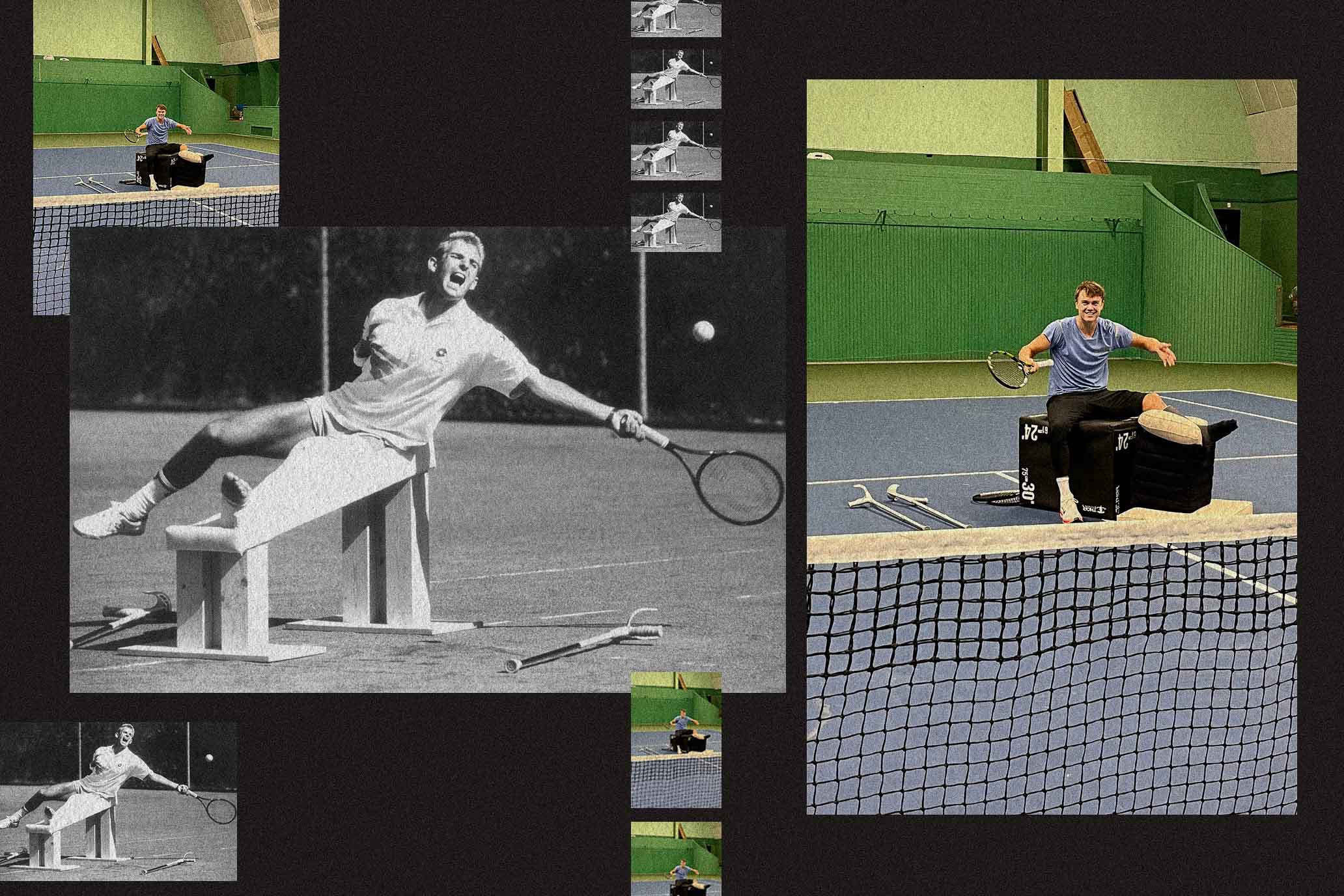
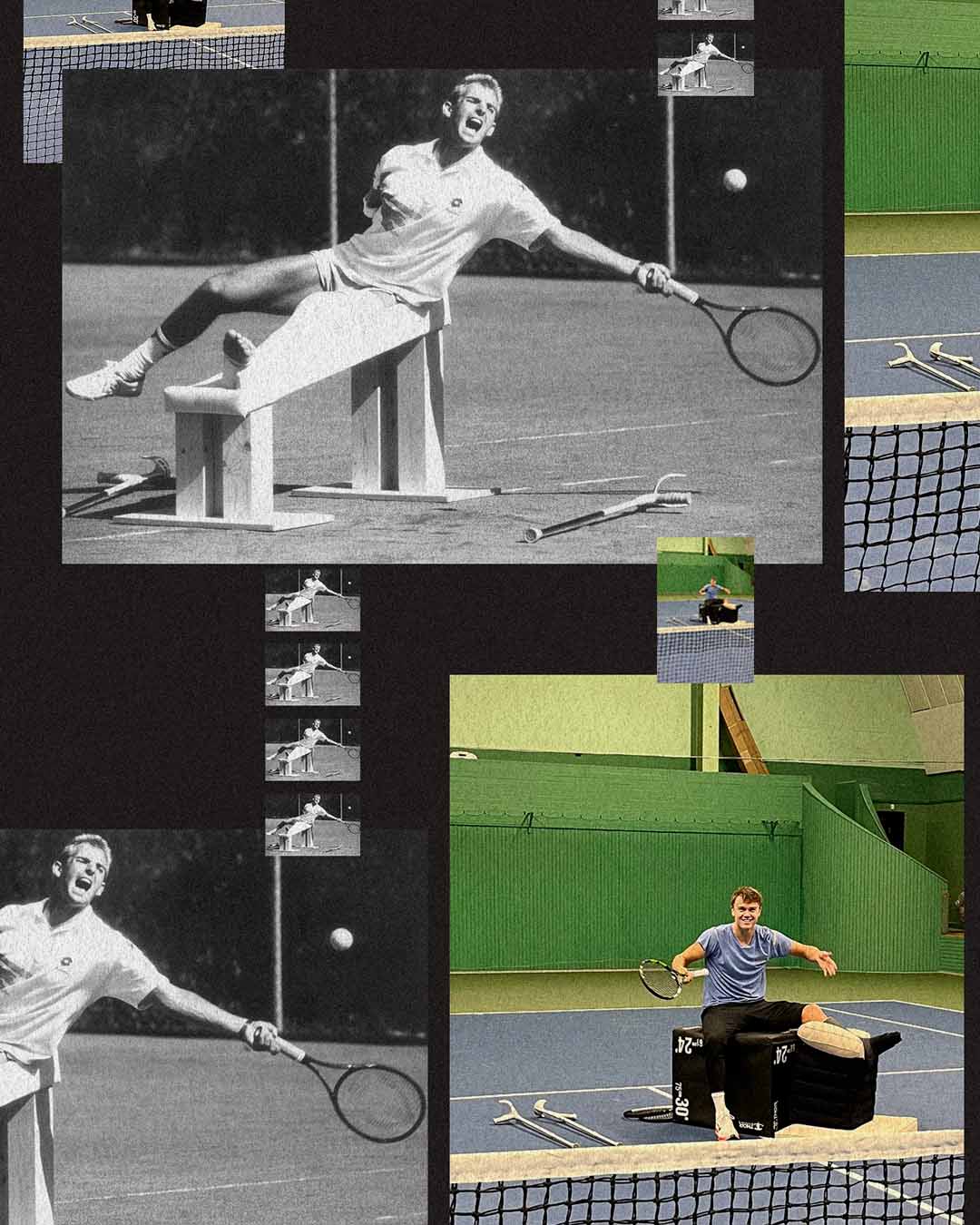
Then and now: Thomas Muster and Holger Rune.
Then and now: Thomas Muster and Holger Rune.
It seems going through monthslong, painstaking rehab isn’t enough anymore for the ever-expanding roster of injured players. No, now rehab doubles “content,” whether it comes from a clear strategy or from a generation that has absorbed social media as if it’s an essential life-sustaining element. Receiving public support while going through trying times surely helps. It’s also good for personal brand maintenance—and communicating with the fans while staving off pesky inquiries from the press—and finding a way to stay relevant. Sponsors are getting exposure, fans are getting news from their favorite player, and media has tidbits to recycle and repost, all while the player doesn’t feel isolated dealing with what can be a traumatic experience. Where is the harm? Well, there are instances that make one wonder.
In 1989, Thomas Muster gave tennis one of its indelible images in the form of a picture of him on a chair hitting his infamous lefty forehand, on a clay court, with his left leg in a cast. It’s probably the image most associated with him, despite having peaked at No. 1 and winning the French Open. In 2026, it’s becoming the daily norm in picture or video form, with an inspiring text swearing they will come back stronger than ever and have found new motivation. The tennis equivalent of Hollywood’s “stay tuned!” to turn long-term injuries into serialized content to fill the void. Can’t play tournaments? No problem. The warm embrace of social media is waiting for you.
Last October in Stockholm, Holger Rune saw his young career severely derailed by a torn Achilles tendon. We knew it’d be a miracle to see him back on a court before the end of 2026 at the very best, but Rune became the poster boy for a new playbook for injured players with solid résumés and followings. A week after surgery, he posted a picture of himself hitting a few balls in a chair on the court, surely an homage to Mr. Muster. A month later, a video circulated of him trying to hit balls in a boot, awkwardly jumping on his sole valid leg, and the content hasn’t stopped since, with interviews, an ATP feature to see “inside” his recovery, magazine covers, regular quotes from his mother, content at the gym, sponsored posts, public appearances, training session videos, and podcasts. All along this, we had announcements about a faster-than-fast return to competition. In May in Hamburg? It didn’t happen. Then it was going to be Roland-Garros. Didn’t happen. Queen’s, Wimbledon, Cincinnati? It didn’t happen either. It will soon be a year since his injury, and only now his return is looming, which is normal. What hasn’t been is this yearlong public saga.
Hailey Baptiste broke all tennis people’s hearts at Roland-Garros when she dramatically injured her left leg on May 27. The moment she hit the ground, you knew it’d be a very long recovery. Two days later, she gave news on Instagram, then on June 5 posted the now mandatory post-surgery picture, and by July 8, she posted content of her on court and doing rehab with a racquet. The new coping mechanism is to go through it live. Consider me worried. Victoria Mboko, injured at the Queen’s, has been out there in a knee brace in Toronto, making appearances for a WTA 1000 that, of course, needed her in one way or another. The Canadian star, winner in Montreal last year, hasn’t shared anything from the rehab process but still has to regularly be out there for sponsors and public appearances. Rehab in peace is a thing of the past, especially for young top players who have just started being big business. There’s never been more money to take in tennis, even when they can’t play.
Carlos Alcaraz hasn’t played since April and yet is in the news every other week: “He’s been seen training, he’s gonna be back soon! Oh no, he’s been seen in a cast, it doesn’t look good. Forget about that, he posted a training session, watch out!” It’s like he has to prove he can hit the court here and there because the stakes have become too high for social media ghosting. Sponsors are still paying big money, contracts are still signed or renewed, future appearance fees remain on the table, so something has to be given publicly. The days a player like this could just go MIA for months to focus on healing are over. Now the mandate is to reassure people. Now there’s a fear of not being seen for too long. If you don’t see them, do they still matter? It’s also a never-ending source of content, as shown by Alcaraz and Rune sharing a practice week in Murcia, for all social media and media to see, ahead of a US Open nobody knows they’ll be able to play. The story is the point.
But what is really displayed? What do we really learn? Nothing. I have no idea of the severity of the damages done by any of these career-hampering injuries or of the potential relapses. I don’t know how rough rehab has been. I don’t hear about the doubts. All we see is smiles and determination. Who said monthslong rehab was hard? They keep the most crucial part behind closed doors, and unfortunately, it’s surely the part that would help the most. Not the glossy filter on that rehab ordeal. Yet the goal isn’t to share, but to manage the consequences of the ordeal, and to soothe the anxiety of players brutally cut from their sport at a time when a lot of their brain space is taken up by social media and personal branding, whether they’re aware of it or not. Some are. Some have agents, managers, or parents who are.
They’re not wrong about that playbook because, yes, it’s a business. They don’t want to risk losing lucrative deals because they’re going to be out for a year or because some might start wondering if they will even be back to the top. And so they post. And so they honor off-court engagements. Some may also need wild cards on their return, and so investing in keeping their public profile high could help. Others will get such a wave of support during these times that it can in itself become brand-worthy.
Yet isn’t it an added pressure to an already demanding process to try to turn it into a social media feel-good story? Will Rune feel fresh coming back after nearly a year spent both in rehab and in a PR campaign? Isn’t there a moment when staying relevant becomes a concerning obsession? I can’t help but wonder if it’s going to come back to bite the players in the end by keeping the expectations so high. I don’t doubt that for some it’s genuinely helping them go through this, but it’s now becoming a copy-and-paste guideline of how to manage long rehab stints that isn’t going to end well for everybody.
In the end, it’s all about intent: healthy or calculated-out-of-anxiety. If it’s the latter, it’ll often be for reasons that have nothing to do with the player’s well-being, and that’s where it becomes potentially harmful performative healing, bringing pressure from everywhere. Genuinely sharing the process has to help and is incredibly valuable for others to get inspired, but it depends on how and why it’s done. Being injured has become crisis management and business as much as healing, yet the body will take the time it needs to heal: That’s not algorithm-dependent, and it can’t be scripted.

PURE, ORIGINAL TENNIS — SIGN UP!
RECOMMENDED
Review: Coco Gauff’s “The Zina Effect”
FILM REVIEWS
Postcard from the Japan Open
JAPAN OPEN