
Courting Confidence
Courting Confidence
For players at the top, belief is fickle.
For players at the top, belief is fickle.
By Simon CambersJun 19, 2026
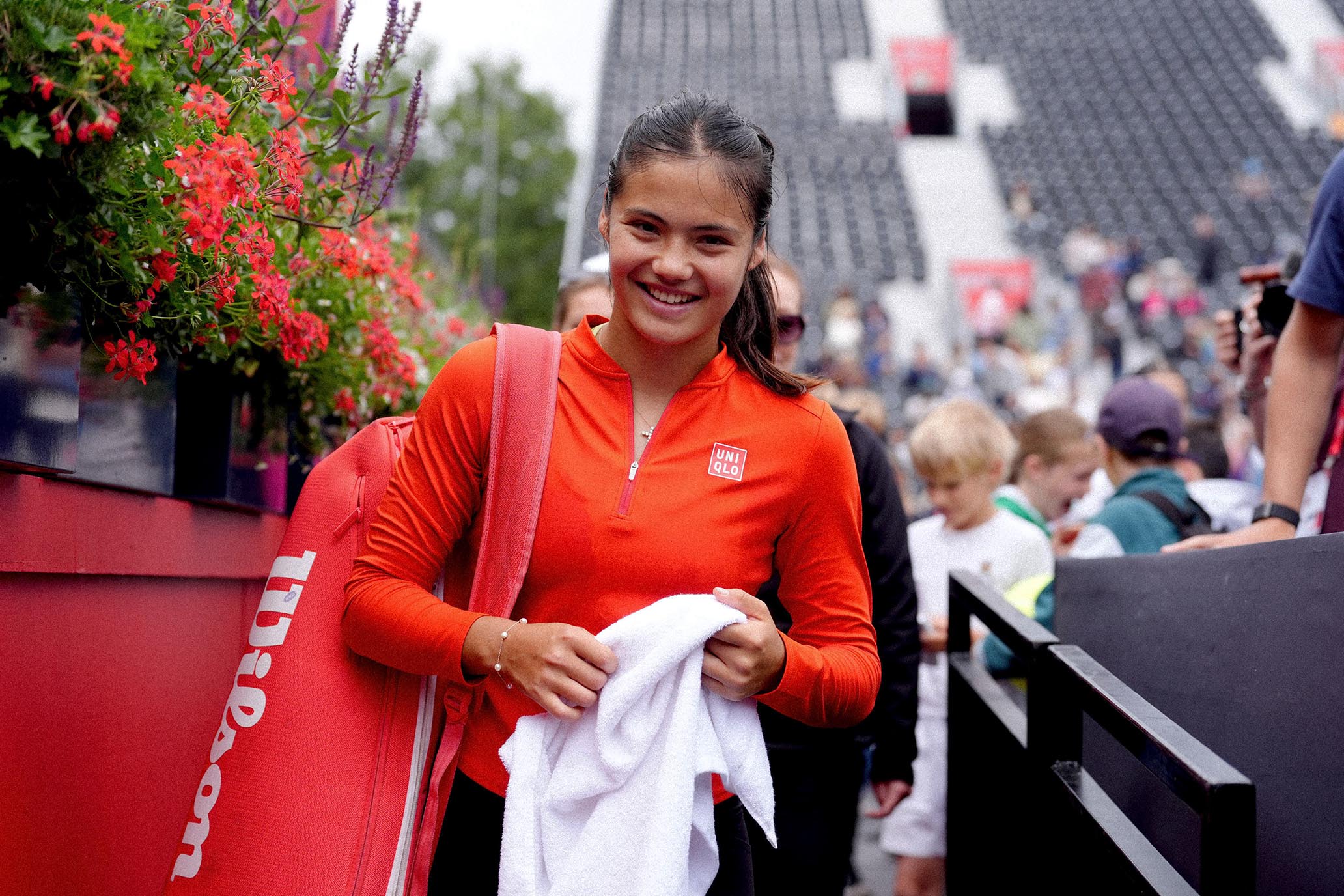
Emma Raducanu brimming with confidence at Queen's. // Alamy
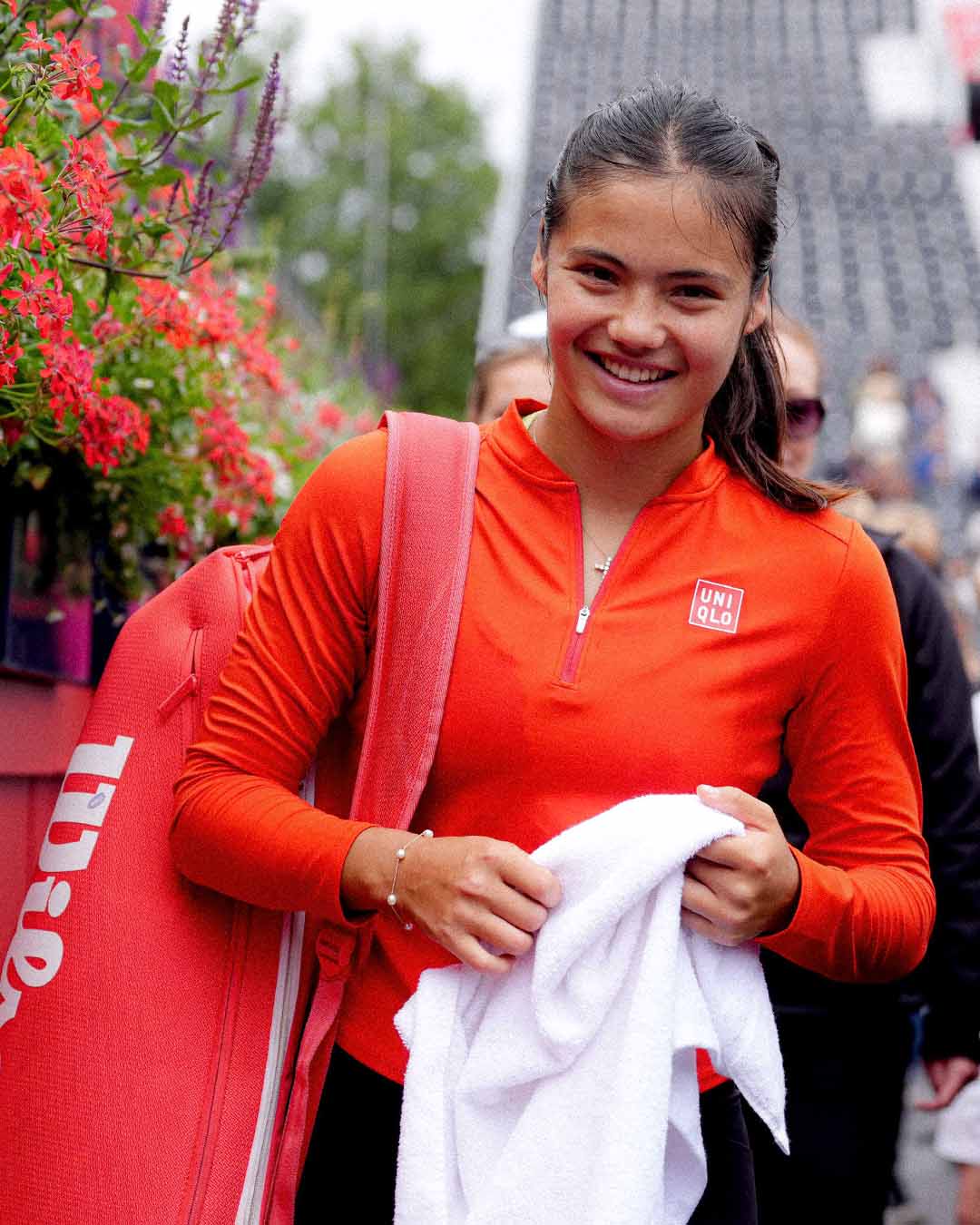
Emma Raducanu brimming with confidence at Queen's. // Alamy
When Emma Raducanu was humbled in the first round at Roland-Garros last month, beaten 6–0, 7–6 by Solana Sierra of Argentina, it was her sixth defeat in seven matches, hardly an encouraging run of form heading to the grass-court season, where all eyes in Britain follow her every move. Fast-forward a couple of weeks to her next event, and the 23-year-old beat two top 20 players on her way to finishing runner-up in the HSBC Championships at London’s Queen’s Club, an outstanding effort and ideal preparation for Wimbledon.
In a sport like tennis, where players are largely out there on their own (notwithstanding advice from courtside coaches), problem-solving and fighting their inner demons, confidence is crucial. And brittle. As fast as a player like Raducanu can gain it, it can be lost just as quickly. The problem for all players is that there is no sure way of knowing when things will change, and dealing with that requires mental fortitude.
Daria Kasatkina has been through plenty of ups and downs in her career. After a poor run at the end of 2025 and start of 2026, she rediscovered form at Roland-Garros. Confidence, she said, is fickle. “It’s not happening overnight. You cannot inject it in your veins. It’s just something you build up,” she said. “Sometimes one shot can change it. At the same time, maybe winning five matches in a row cannot change it. You never know when you’re going to have it back.”
There are always contributing factors to any loss of confidence. For Raducanu, yet another change of coach and a nagging illness stopped the momentum she had built up by reaching the final in Cluj in February. In difficult moments, she clung to the fact that she had been training well, trusting herself that results would come. “On the clay, I just didn’t have the results, but I was applying myself the best I possibly could each day,” she said last week at Queen’s. “Even when I didn’t necessarily feel like it, even when I felt down about the results, I kept showing up. It was great to see the result of that this week.”
No one is immune. Daniil Medvedev arrived in Monte-Carlo after a good start to the year, winning in Dubai and reaching the final in Indian Wells, only to lose 6–0, 6–0 to Matteo Berrettini in the first round in Monte-Carlo, an inexplicable scoreline for a man with a big serve and fighting qualities. Aryna Sabalenka is the commanding world No. 1 right now, but her surprise loss to Diana Shnaider at Roland-Garros prompted her to consult a sports psychologist. Iga Swiatek won last year’s Wimbledon final without losing a single game, but her confidence has been fluctuating wildly at times of late.
Sometimes it’s hard to see the woods for the trees. In 1999, American player Vince Spadea beat Jim Courier and Yevgeny Kafelnikov, then ranked No. 2, on the way to a semifinal spot in Lyon. Though he lost to Lleyton Hewitt, his confidence could hardly have been higher. What happened next was almost unbelievable. Spadea lost 21 matches in a row. When he arrived at Wimbledon with his parents in tow and saw he was playing the Briton Greg Rusedski in the first round, his parents decided to fly home instead of watching yet another seemingly inevitable loss. Out of nowhere, Spadea won the match, 9–7 in the fifth, snapping the longest losing streak in ATP Tour history. “‘I’m going to be in Europe until I win a match,’ I told my family,” Spadea said afterward. “My parents left. My parents went home two days ago. I think they saw the draw and said, ‘Vince, man, good luck to you, boy.’”
In the seven months between wins, Spadea tried all sorts of things to get his confidence back but always believed he could raise his game against big players. The amazing thing is it disappeared right away, and he lost 12 of his next 14 matches.
“You can lose confidence very, very, very easy,” Kasatkina said at Roland-Garros this year. The Russian had been through a tough run herself, only to find some form on the clay. “You can lose it with one bad loss or even one bad frame, let’s say. That’s why your level and your self-esteem cannot depend on how confident you feel hitting the tennis ball, because at the end, it’s important, but not the most important. I don’t think Rafa [Nadal], Roger [Federer], and Novak [Djokovic] felt the ball every single time they stepped on court. They were winning with something else. I said many times that it’s very easy to lose it and so tough to get it back. That’s why I have to just try to fight. The only thing you can control is to fight for every ball.”
The simple fact is that all but one player lose every week, in every tournament, and most people leave with disappointment. It’s why winning silver medals in individual sports at the Olympics often feels like a letdown, because the last thing they have done is lose. As Taylor Fritz, who won doubles bronze with Tommy Paul in Paris in 2024, said: “I’ve been told that statistically, bronze medalists are happier than silver medalists.”
Great players seem to have short memories. At the very least, they are better at forgetting bad losses. If they didn’t, they probably wouldn’t get themselves up again for the next tournament. And that’s the beauty of tennis: There’s always another chance to regain form and confidence. Then it’s just a case of trying to hang on to it.

PURE, ORIGINAL TENNIS — SIGN UP!
RECOMMENDED
Zac Farro: Life Preserver
CULTURE & ARTS
Coco Gauff: Prophecy in Progress
ATP & WTA

Ben Shelton & Frances Tiafoe: Top Dawgs
FILM REVIEWS