Demons
Demons
Talent is the armor that protects Aryna Sabalenka.
Talent is the armor that protects Aryna Sabalenka.
By Owen LewisMarch 25, 2026
David Bartholow
David Bartholow
In her press conference after losing the Australian Open final in January, Aryna Sabalenka couldn’t stop laughing. She was angry after losing to Madison Keys in the same match a year earlier, annihilating her racquet after match point. Dropping the Roland-Garros final to Coco Gauff in June after hitting 70 unforced errors made her feel something even worse. “Once a year even a stick shoots,” she said, disgustedly, as Elena Rybakina hit her off the court in the championship match of November’s WTA Finals. When my friends and I talk about who we think will win a tournament, I sometimes say, “Whoever plays Sabalenka in the final.” By the time Rybakina beat Sabalenka again in Melbourne this year—Aryna won five straight games to go up 3–0 in the third set; she had the match sewn up—there seemed to be no new negative emotions for Aryna to feel. Her laughter was regretful, dark, fatalistic, but still. The best player in the world’s inability to close out a tournament had become comedic.
Had Sabalenka fallen short yet again in the Indian Wells final, watching her press conference would have felt intrusive. “I’m so done losing these big finals,” she had said earlier in the week; when I read the quote, I figured it’d been said partially in jest, but Sabalenka didn’t have a trace of humor in her voice. She’d already cycled through—hell, maybe invented—the five stages of grief in top-level tennis: fury, heartbreak, confusion, rationalization, and nihilistic laughter. Some untold horror awaited her if she lost once more.
It looked imminent at a number of moments in the Indian Wells final, a Rybakina rematch. The matchup between the current two best players in the world is an odd one. Rybakina gives Sabalenka hell every time but tends to bleed faster when a match grows teeth, so she often loses in three sets if she can’t win in two. Rybakina breezed through the first set and went up an early break in the second before beginning to fade. She lost serve at 1–1 in the decider despite going up 40–love—something that should never happen given her top-flight serve, but it’s somehow unsurprising when she drifts into the ghostly background of one of her own matches. Not without difficulty, Sabalenka maintained the break throughout the set and served for the match at 5–4.
Of how many dominant No. 1-ranked players in history can you expect failure in that situation, and be right? Sabalenka only won one point in the game. But even I didn’t bargain for the three second-serve return errors she missed at break point up in the following game. This was the Australian Open final again, but magnified, each vital mistake she made there reproduced here in sharper and more agonizing color.
Sabalenka’s vices and virtues collided in a deciding-set tiebreak. Since the start of 2025, she has demonstrated a confusing excellence in breakers. You’d think a player so susceptible to the pressure of late-round matches would come apart in the emotional horror movie of a first-to-seven, win by two. But it’s as if the proximity of the finish line, even if she’s not first over it, frees Sabalenka from her demons. She won 19 straight tiebreaks in 2025. Here, she and Rybakina exquisitely teetered their way to five–all, at which point Elena thrashed a backhand winner down the line, giving her a match point on serve.
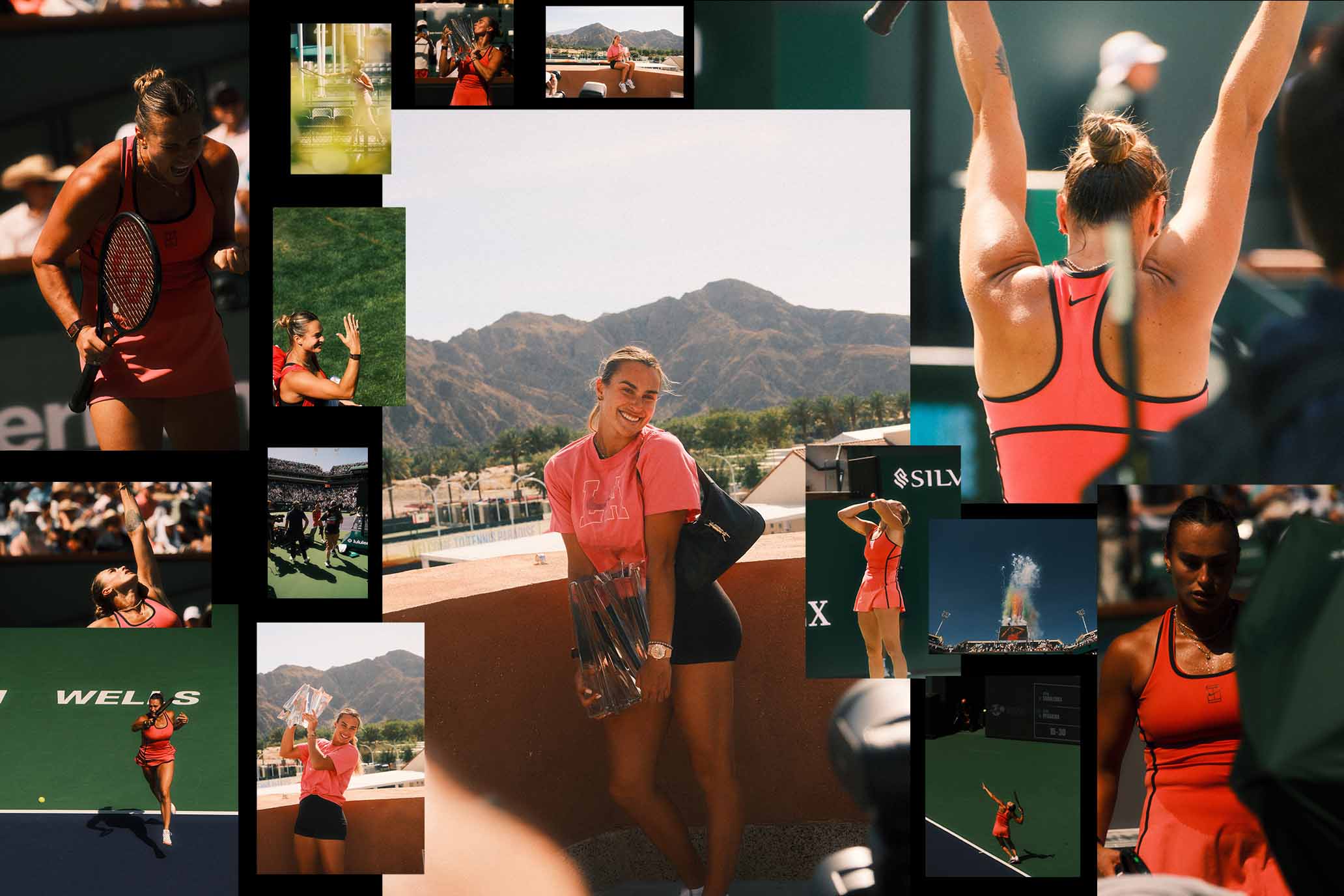
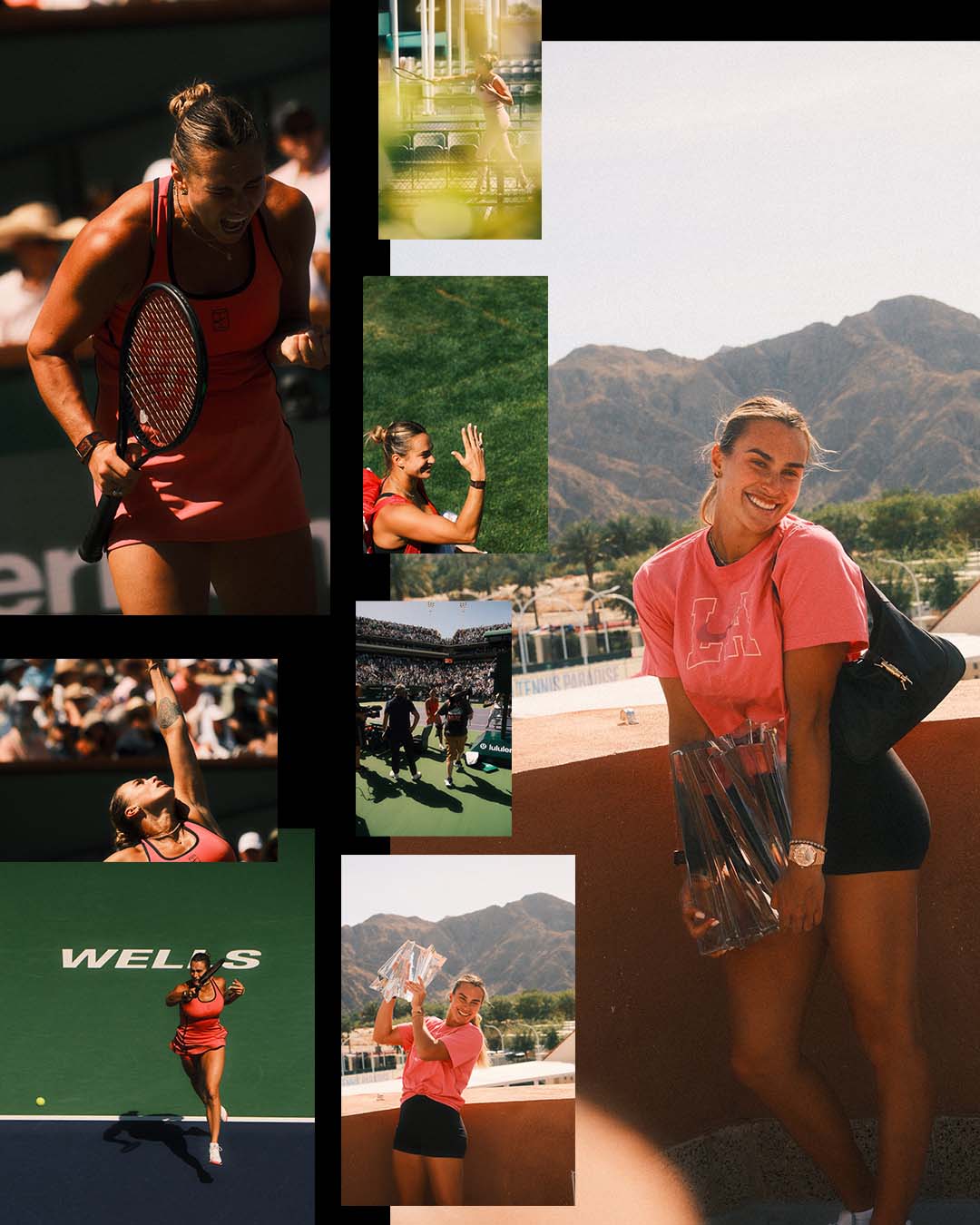
In the same situation in Melbourne, Rybakina hit an ace, then celebrated her career-defining triumph as if she’d unexpectedly found a quarter in her pocket. This time, her first serve was more tentative, landing closer to the middle of the box. Sabalenka returned it with authority, then, on her next shot, lashed a backhand winner at an acute crosscourt angle. It spent approximately a millisecond in my field of vision and felt like it cleared the net by a fly’s wing. It was an even braver backhand than Rybakina had just hit, struck under even more pressure. When Sabalenka had a match point of her own, she went for broke on the serve. Rybakina’s return sailed long. Sabalenka wept at the sky and clutched the air hard, as if seizing something ephemeral suddenly made tangible.
I am consistently floored by how good Sabalenka is. On a tour including Rybakina, Gauff, Iga Swiatek, Amanda Anisimova, and a fleet of other high-ceiling challengers, Sabalenka is a clear class above everybody and has been for 75 weeks and counting. Teenage terrors Victoria Mboko and Iva Jovic are already scaling the rankings; Sabalenka played both at the Australian Open and didn’t drop a set. She hasn’t missed a major quarterfinal since 2022, hasn’t lost in straight sets at a major since 2020, and has been in 12 of the last 14 major semifinals (of the two missing, she didn’t play one tournament and got sick in another). Most of her records are on hard court, but she’s a two-time Wimbledon semifinalist (and had to skip the tournament in 2022 and 2024) and a three-time Madrid champion, and she ended Swiatek’s 26-match winning streak at Roland-Garros by bageling her in the third set. Though her accomplishments haven’t yet caught up to Swiatek’s, Sabalenka feels like the defining player of the generation.
As I write this, Martina Navratilova just cried, “Queen Aryna!” on Tennis Channel at a successful Sabalenka serve-and-volley. Sabalenka has a drop shot in her arsenal, a net game. She hits sharp angles on both forehand and backhand as well as big blasts through the middle of the court. The strength of her second-serve return alone is enough to win many matches. Her defense, once a nonfactor in her game, is now yet another weapon. Sabalenka has yet to drop a set in Miami. Rybakina is making something of a challenge for the No. 1 ranking (she’s still more than 3,000 points behind), thanks to making three big finals in a row over the course of a few months. Sabalenka has been similarly reliable in getting to finals over the course of years.
And still, that vulnerability in those finals. She is incredibly susceptible to the chaos and anxiety wrought by a tennis match. In that way, her talent is an armor that protects her from the nerves. She’s bolstered it in every imaginable area.
But sometimes, that armor fails. The pressure of a final pierces it, or an opponent can match her on a given day. On those occasions, Sabalenka has to meet the moment with nothing but herself. It’s still when she’s most beatable, but Indian Wells proved it can also see her at her most spectacular.

PURE, ORIGINAL TENNIS — SIGN UP!
RECOMMENDED
If You’re Feeling Sinister
OPEN TENNIS — VOLUME 3
Subscribe to Survive
OPEN TENNIS — VOLUME 3