The Happy Slam Is in a Funk
The Happy Slam Is in a Funk
The vibes are a bit off at the Australian Open this year.
The vibes are a bit off at the Australian Open this year.
By Simon CambersJanuary 30, 2026
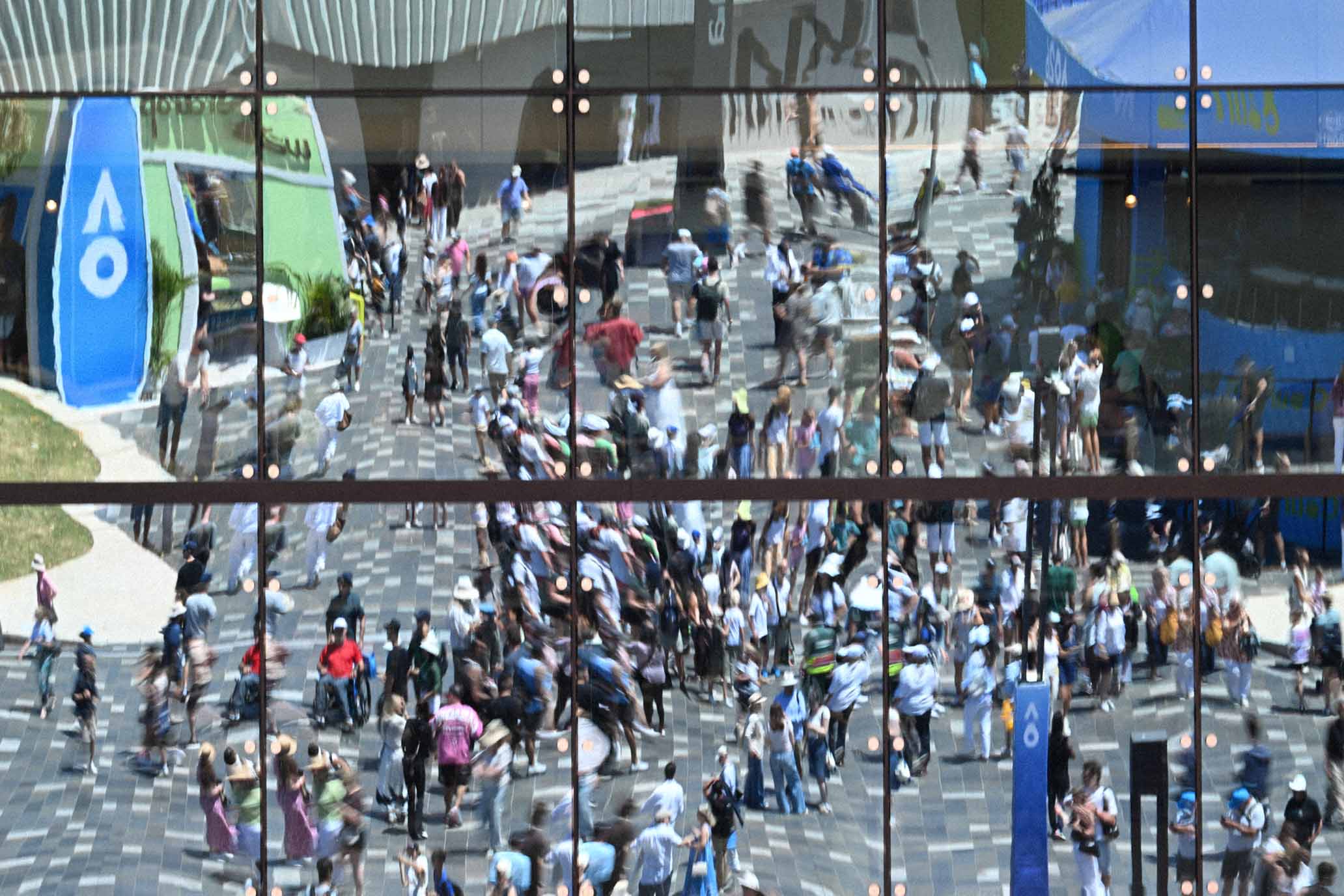
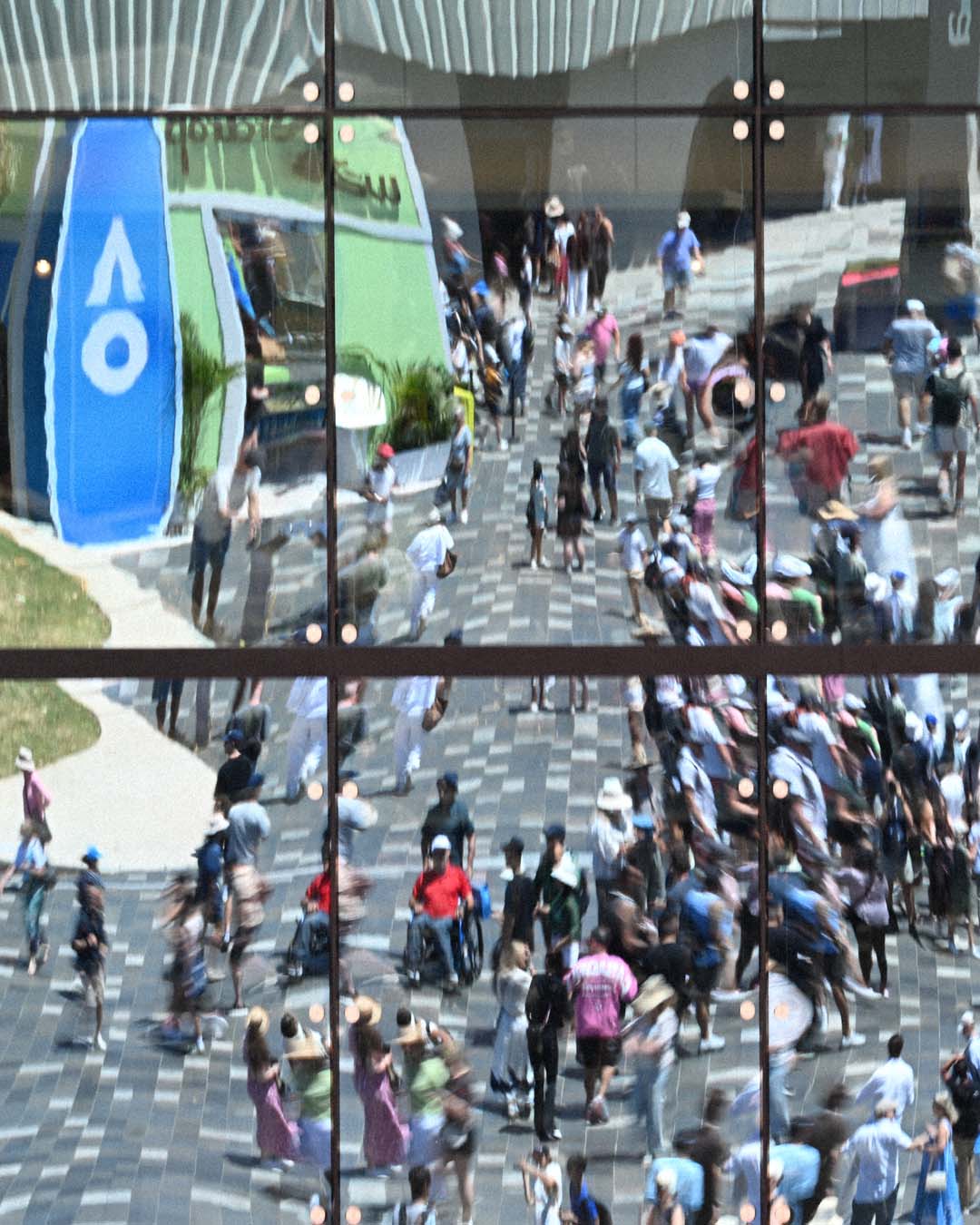
Fans sense a vibe shift at the usually Happy Slam. // Getty
Fans sense a vibe shift at the usually Happy Slam. // Getty
On the eve of this year’s Australian Open, Roger Federer, back at the tournament for the first time in six years to play in an exhibition as part of the opening ceremony, was reminded that he had coined the phrase “Happy Slam” for the first major of the year. That was back in 2007. Almost 20 years on, Federer said he was glad it had stuck and explained why he’d said it.
“It felt like a very normal thing to say because a lot of players, they’re happy to escape the European winter,” he said. “Finally you’re happy to maybe see the other players again [after a break], so it just feels very happy. The weather’s good, people are incredibly excited and pumped up about the Australian Open, we the players can feel that, the vibes are incredibly happy, nobody’s exhausted and tired [except for travel]. It stuck, and I’m happy it’s still the case because I still think the players are super happy to be here.”
As the 2026 edition heads toward its finale, the Happy Slam vibe remains relatively intact, although some of the gloss, it seems, has been rubbed off. While the increase in prize money across the board will doubtless have gone down well—total prize money is up to a record AUD $111.5 million ($78 million) from $96 million ($67 million) last year—around the fringes there has been some grumbling.
Not least from some of the players, irritated by what they see as the Big Brother feel of the Australian Open, where cameras are everywhere and privacy is limited. Coco Gauff, angry at her performance in losing to Elina Svitolina in the quarters, thought she was being considerate in not breaking racquets on the court. Instead, she smashed one in the corridor in the player areas, near the locker room. Unbeknown to her, it was immediately clipped up and sent around the world on social media.
“I feel like certain moments…they don’t need to broadcast,” Gauff said. Novak Djokovic, asked about the proliferation of cameras at Melbourne Park, went further. “I’m surprised that we have no cameras while we are taking [a] shower,” he said.
Of course, it’s a two-way street. Broadcasters, who are paying more and more each time for rights to show the tournament, want more bang for their buck, and behind-the-scenes footage fits the bill. Players might not like it, but the ever-increasing broadcast rights boost prize money. It will be interesting to see if there is any row-back on the cameras, but as Djokovic suggested: Don’t hold your breath.
Record crowds have flooded through the gates this year. Up to and including Friday, the main draw alone has seen more than one million people attend. It would have been more had it not been for a couple of days of 40-plus degrees Celsius (104F), when people wisely stayed away.
That’s been fueled by ground passes being on offer at very affordable prices (in week 1 they were around AUD$69 ($48). On the face of it, that’s a good thing, of course. Ordinary working people should be able to afford to come. And the result of that has been a huge buzz around the tournament. However, on several days, it was almost impossible to move around the grounds, so tightly packed was it.
And once on site, the prices were, well, pricey. Not as bad as at the US Open, as we outlined on the eve of the event. But still, fans were not happy at having to fork out AUD$14 ($10) for a small can of Asahi beer. Or up to AUD $25 ($12.70) for a Shake Shack burger.
Players do love coming to Melbourne, but the cumulative load on their bodies is also taking its toll. There have been six injury retirements to date in the men’s event, plus one walkover, and two retirements and one walkover in the women’s singles. Some, like Jack Draper and Holger Rune, didn’t make it here, and others, like Emma Raducanu, had shorter-than-usual preparation due to injury. It didn’t help that local heroes Nick Kyrgios and Thanasi Kokkinakis withdrew with injuries. Players are supposed to be arriving in rude health, but that’s not always possible.
The heat may also have been a factor in the unusually low number of exciting matches. Until the men’s semifinals, which were both incredible contests, the tournament was low on intrigue, low on shocks. Six of the top eight seeds made the semis in both events for the first time in the Open era, but with the exception of Stan Wawrinka, who even at 40 can still be relied upon to entertain, most matches felt a little flat. Playing in high temperatures is rarely conducive to great tennis.
There’s no question that players (and traveling media) are well-treated here. In addition to prize money, all players in the singles and doubles events (including qualifying) receive a check for AUD$10,000, along with a nice gift bag, to help with their travel and subsistence. Obviously the top players don’t need it, but it’s very useful for the lower-ranked players who come down to try to qualify, especially doubles players.
One thing to note, though, is the future of Craig Tiley. Tournament director since 2006 and CEO of Tennis Australia since 2013, Tiley is regularly thanked by the players for going above and beyond. However, Tiley is heavily rumored to be about to be named as the new CEO of the United States Tennis Association.
The weather may be great (largely) and the facilities second to none, but how Tennis Australia replaces him will go a long way to ensuring whether the Happy Slam remains a thing.