Life Preserver
Life Preserver
Paramore drummer and solo artist Zac Farro talks music, photography and and tennis.
Paramore drummer and solo artist Zac Farro talks music, photography and and tennis.
By Jeffrey SilversteinPhotography by Zac FarroSeptember 18, 2026
Life Preserver
Paramore drummer and solo artist Zac Farro talks music, photography and and tennis.
By Jeffrey SilversteinPhotography by Zac FarroSeptember 18, 2026
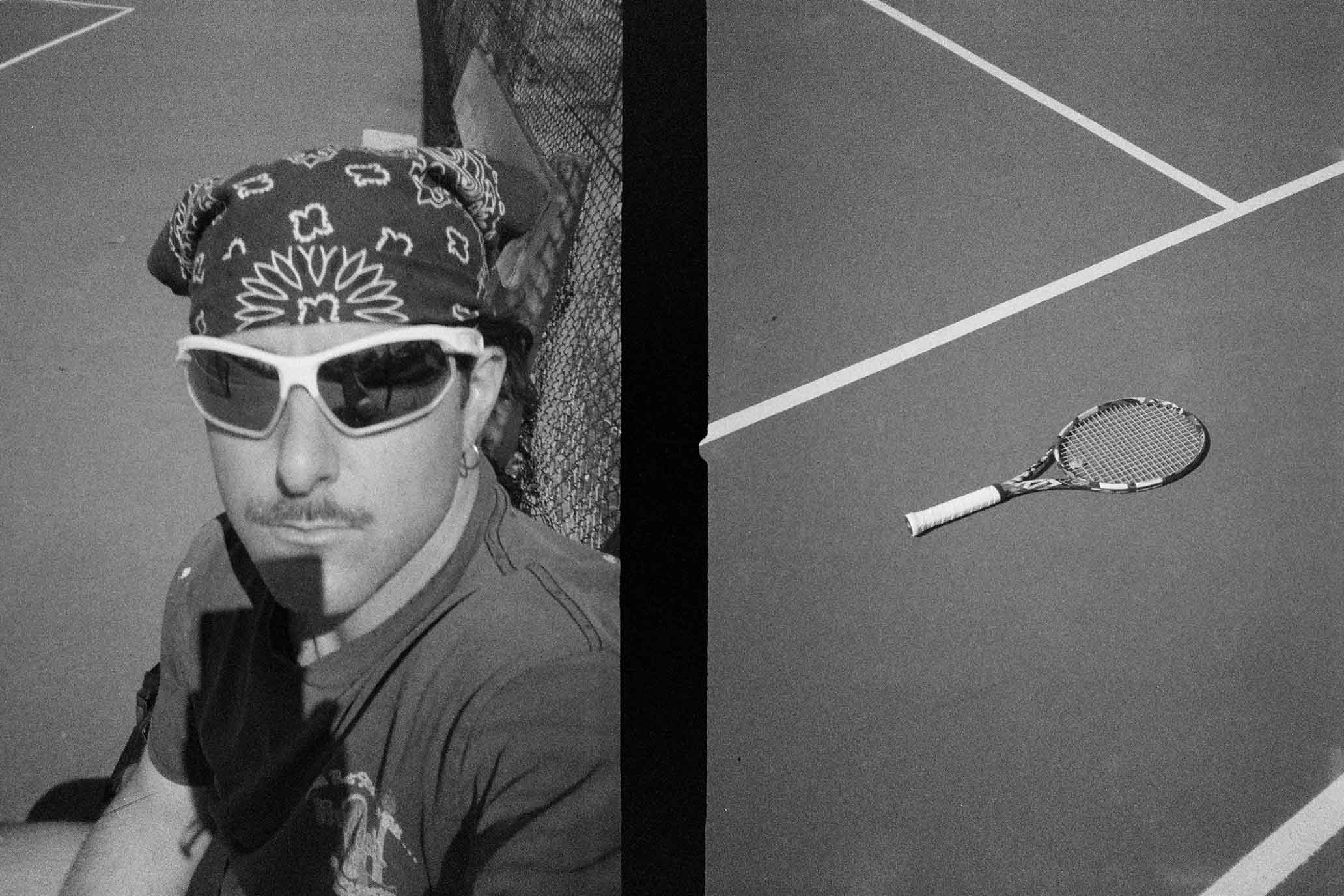
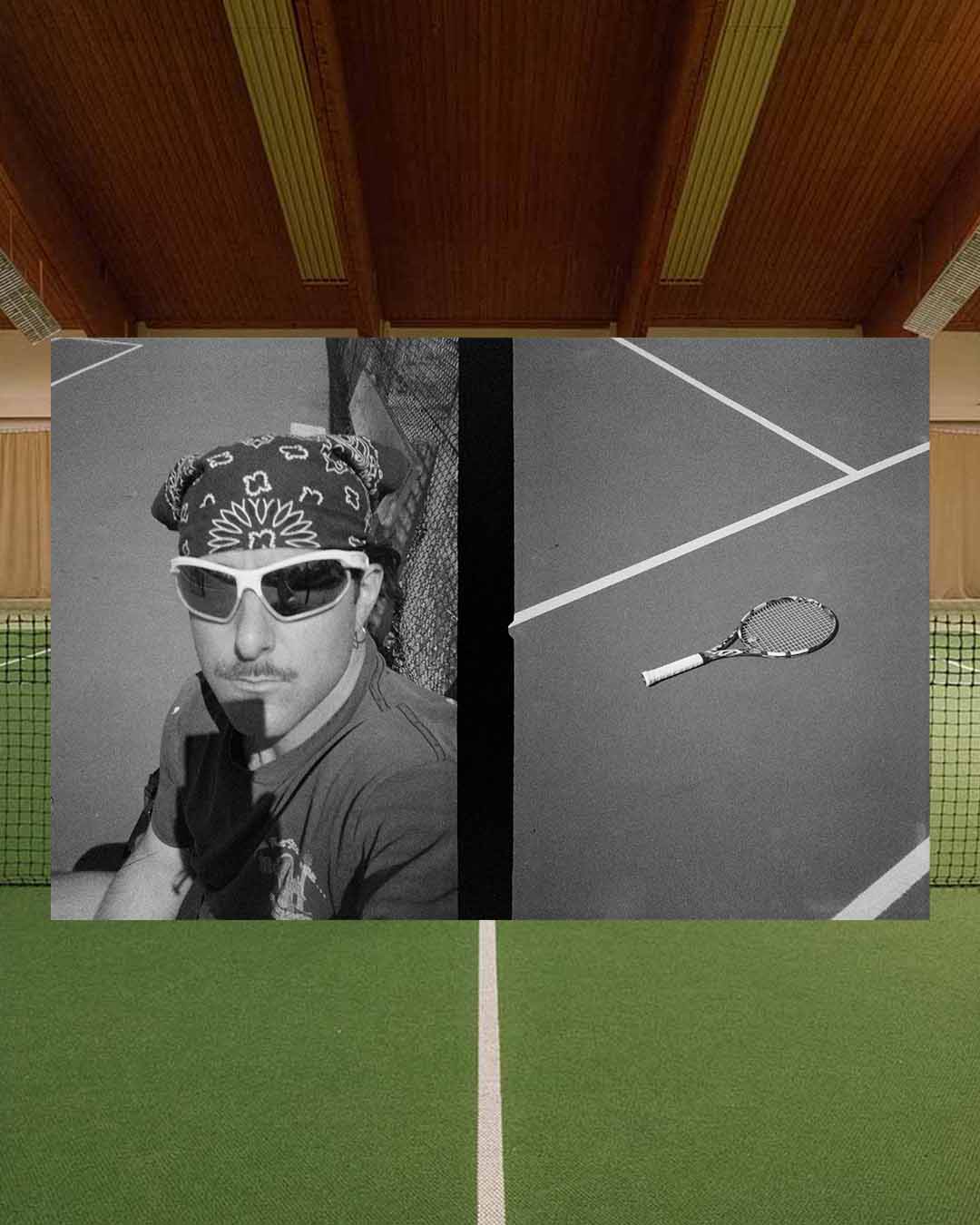
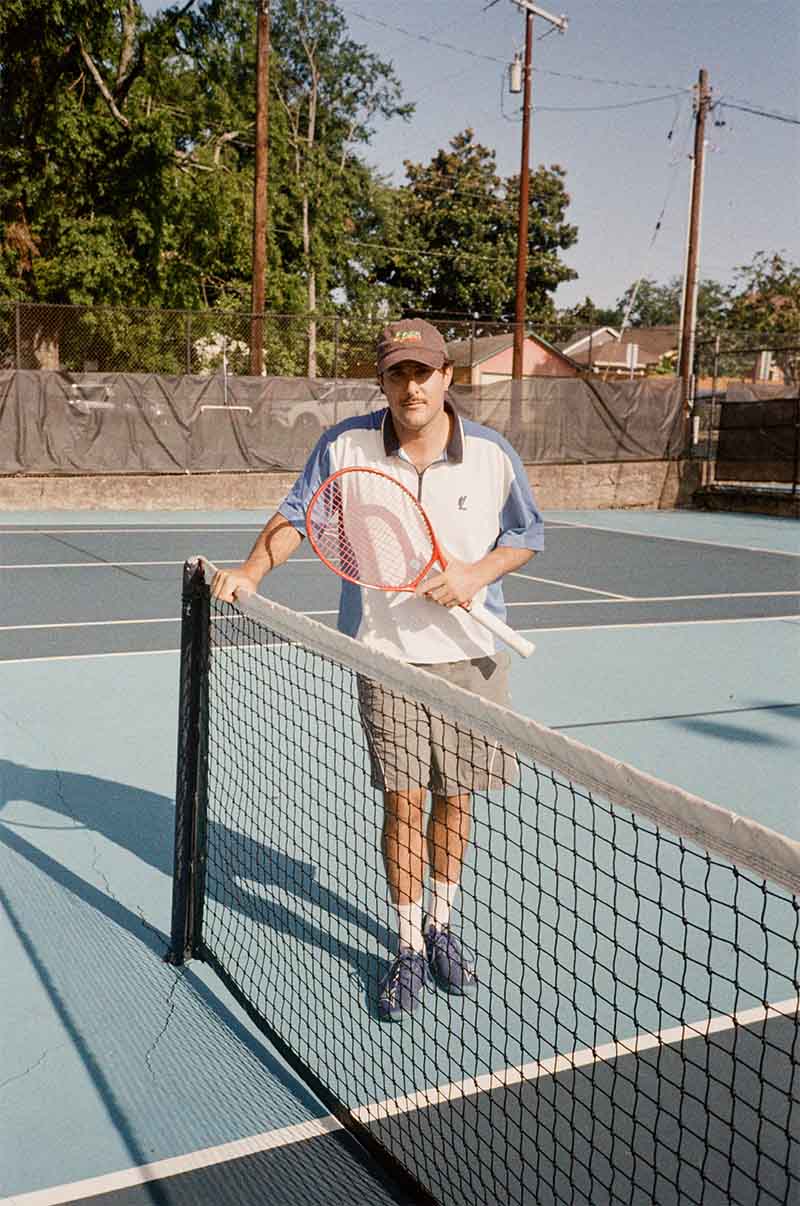
Paramore drummer Zac Farro spent his formative years on tour while most kids his age were discovering the sports they’d play (or abandon) in years to come. He’s since built a creative career that extends well beyond music—as the founder of Congrats Records and an accomplished photographer—but it wasn’t until his 20s that tennis entered the picture. What began as an extracurricular has quickly become an essential part of Farro’s life, bringing balance, community, and a healthy dose of competition. We caught up with Farro at home in Nashville to talk about being an amateur, photographing tennis courts around the world, and why the game has become such a meaningful part of his everyday routine.
Where and how does tennis enter your life?
It’s fairly new to my life, but it’s also a massive part of it. Almost as big as music, for many reasons. I was born in New Jersey, moved down to Tennessee when I was 2. I’m one of five kids, four boys. We grew up on baseball. My dad loves the Mets. We were always an underdog family. I was almost going to be named after Lenny Dykstra if they won the World Series in 1990. That’s how I got the name Zac instead of Lenny. I didn’t really care for baseball—I was more excited about the snacks that the moms would bring after the games than playing. Around 9 is when I got into drums and music. My focus shifted quickly.
Paramore started when I was around 12 or 13. From, like, 9 to 12, a lot of kids are figuring out what sport they want to play. For me, I went right on tour. I never had a sport in my teenage years, it was all music. At 20 I’d left the band. I needed to jump off the road—it was kind of beating me up. I didn’t know if I wanted to do that forever. Turns out I do love it and would later rejoin the band. In that off time I started picking things up like tennis a bit. I moved to New Zealand, lived in a van, and had a surfboard under my bed. I lived like that for about nine months. I started to enjoy these extracurricular interests, not just music.
I was always the musician guy that was like, “I hate sports.” I’m not a jock, but now I’m watching tennis at dinner. My friends and my girlfriend are like, “Are you watching a game?” “Yeah, it’s the Open and Carlos Alcaraz is down on a break.’ I’m so into it. I’m 36 now. The older I got, I realized I was competitive. It’s one of those things you don’t always want to admit. For some reason I thought it’s not artistic to be competitive. But that’s why the Rolling Stones would hear a new Beatles single and be like, “Oh, we’ve got to make another record.” There’s healthy competition. We brought a Ping-Pong table on tour. I really did not want to lose. I don’t know if I grew into my competitive nature or if I always had it but just didn’t tap into it.
You carry a beginner’s mind when learning something new. Did this mindset help when starting to develop your tennis game?
As musicians, we’re always trying to find a reminder of why we started doing it. Starting something new reminds you that you’re not good at everything. If I get excited about something, I go all in. I love photography but for a long time would never call myself a photographer. Ten years ago, while I was in New Zealand, a dear friend of mine said, “What makes you think you’re not a photographer?” He encouraged me to buy a bunch of disposables and to just not think about it. Just go shoot a ton of stuff. And I did. I continued to grow from there. I jumped in headfirst with tennis, too. I’m going to watch my friend Troy play tonight. He’s also a musician and drummer. He played in high school, just has this natural talent for tennis. It’s almost intimidating to be like, “I’ll never get to that place.” Tennis has brought me so much joy and peace. Parallel to my personal life and my inner dialogue of how frustrated I get with myself and learning to combat negative self-talk.
Tennis is such a good outlet if people haven’t found something yet. Not only does it add years to your life, but the mental health benefits are huge. I actually drove over to my local tennis court to do this interview, we live really close. I play most mornings. Unless I’m on a bike ride or purposely meditating or being quiet, tennis is my only time to think for myself. If it’s an empty concrete court and it’s open, you’re just looking at the sky and trees. It’s really meditative.
When I’m out there in the morning, it’s the only two hours of the day where I’m not thinking like, “Should I turn that snare up in that mix? Should I have responded to that email?” I completely turn my brain off from that world and fully focus on, like, “Okay, I’m going to move my feet. How am I going to serve today?” Like just trying to like, don’t beat yourself up so much. You’re doing great. Look how much you’ve grown. I’ve been grinding every week with my coach Scott, who is this amazing, beautiful person. He has an astrology podcast; everything for him is connected. Tennis has a lot of parallels and metaphors hidden inside of it.
What is the connection between drumming and tennis from a physical standpoint?
The thing that I noticed early on is my endurance. I can be hitting for like two hours and feel like I’m just getting going. For a Paramore headlining show, it’s like 90 minutes. It’s a long, long set. You have to save your energy for the very end because that’s when you play the hits. I’m literally an hour and a half into this and now we have to play the heaviest three songs back-to-back. With tennis, I feel like I start waking up in the second set. I attribute that to playing live. Then there is timing. With drumming, you’re stationary. It’s sort of like footwork and running around. Having the timing of a drummer helped my serve develop quickly. I was better at serving but had no backhand, no volley, had no other part of my game besides a little bit of a forehand, and I could serve. It’s funny how it clicked right away.
Do you have a favorite type of environment to play in?
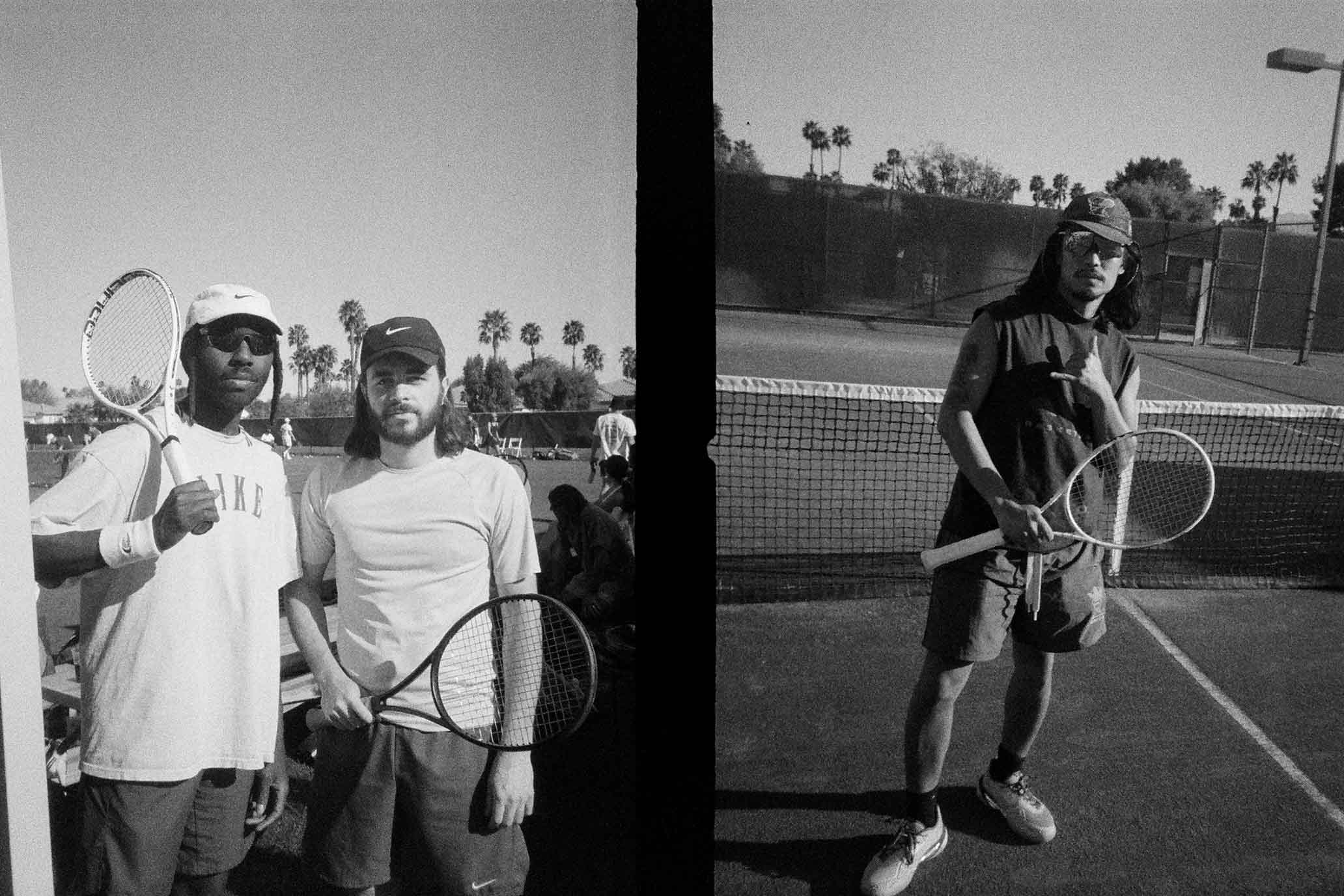
I prefer to go to a public court. Yeah. There’s a group of guys at the one by my house, these dudes that are so cool in their 70s. They all used to play basketball, but they got too old for it. There’s a huge crew of them. They’re so sassy, too. I just don’t think you find something like that at a club. We have a club that just opened here, six Italian clay courts. It’s super nice, but I prefer pickup games.
Where does photographing tennis come into play?
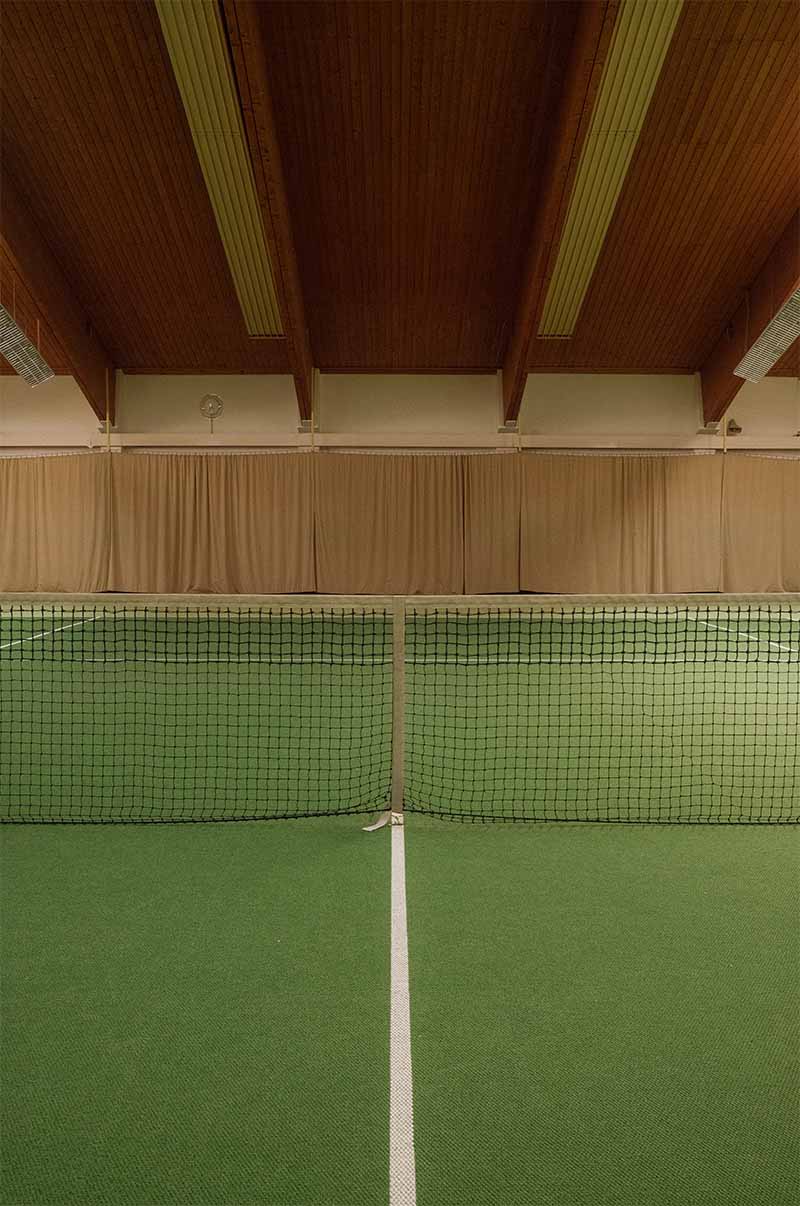
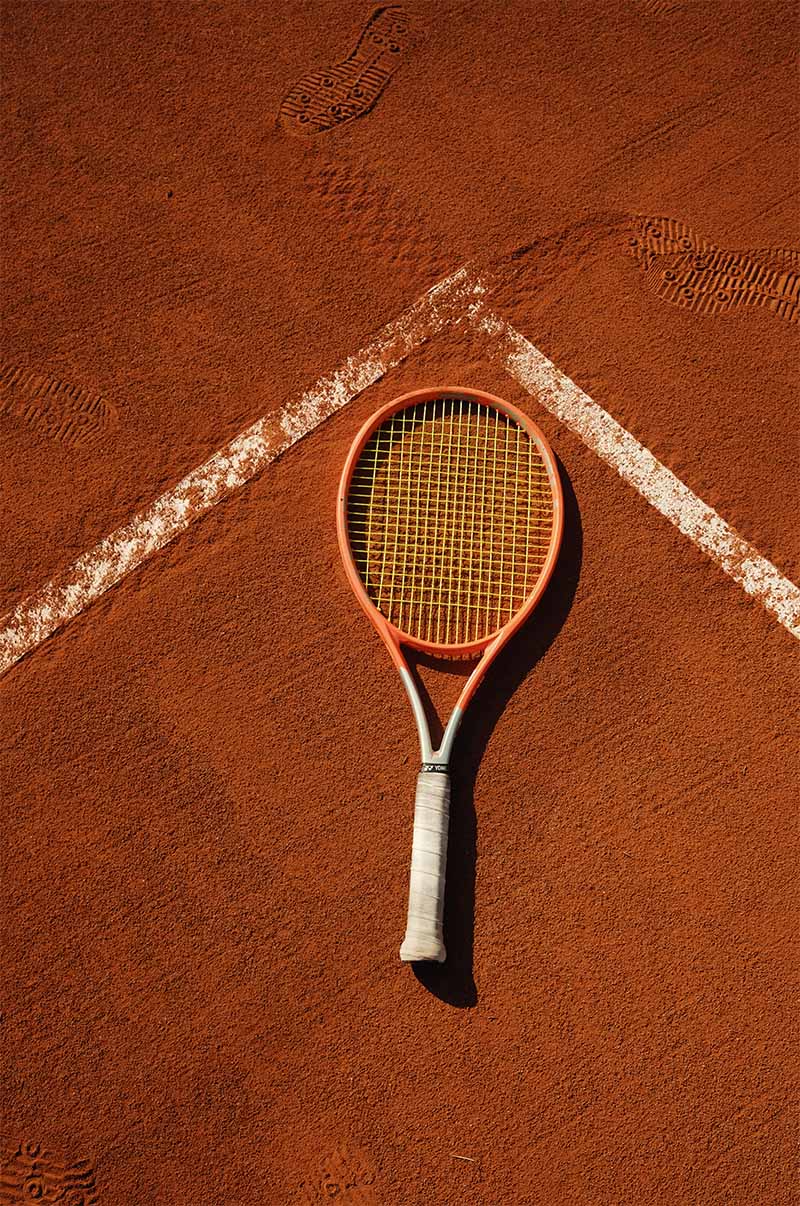
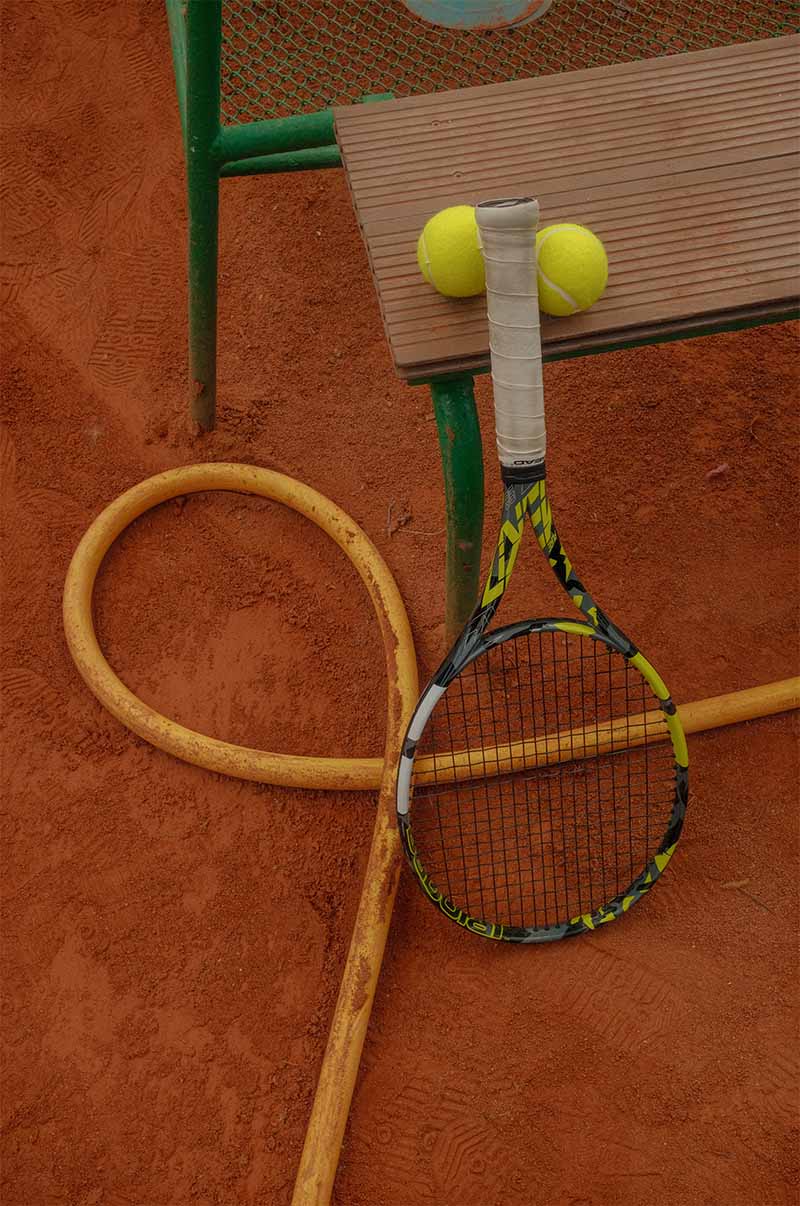
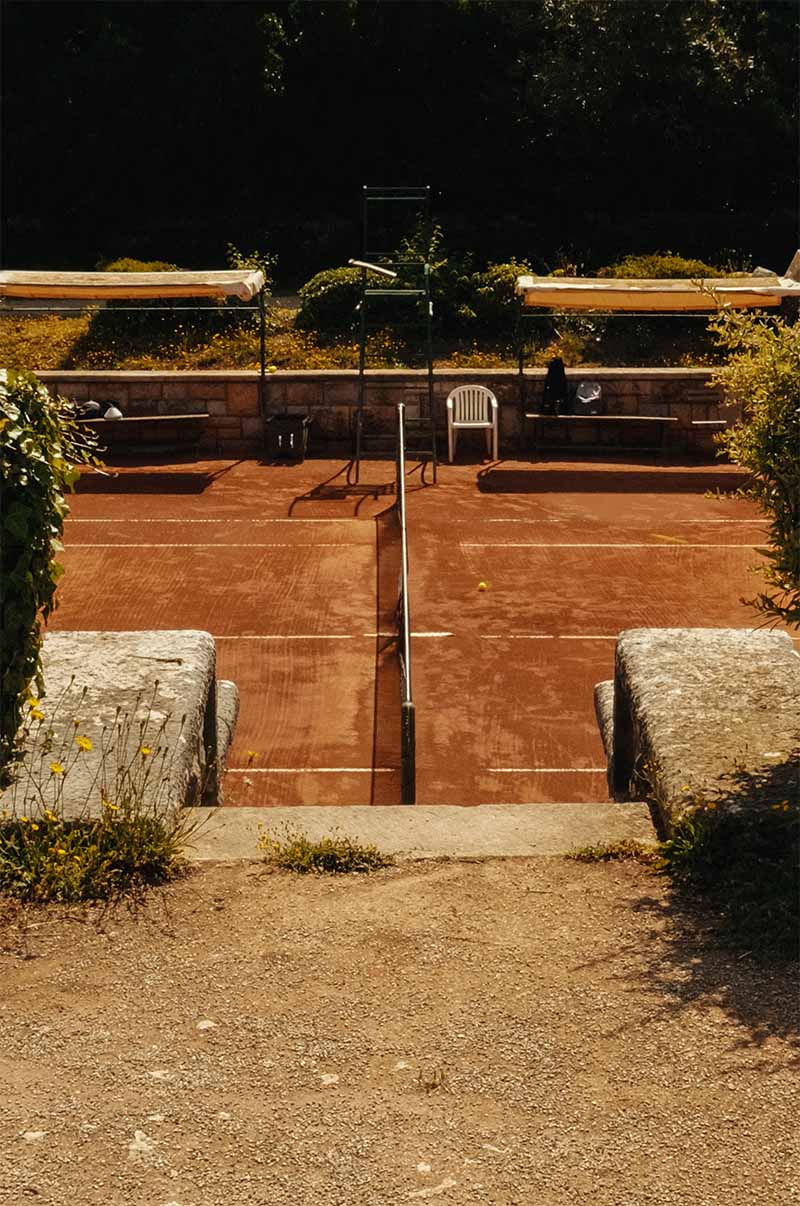
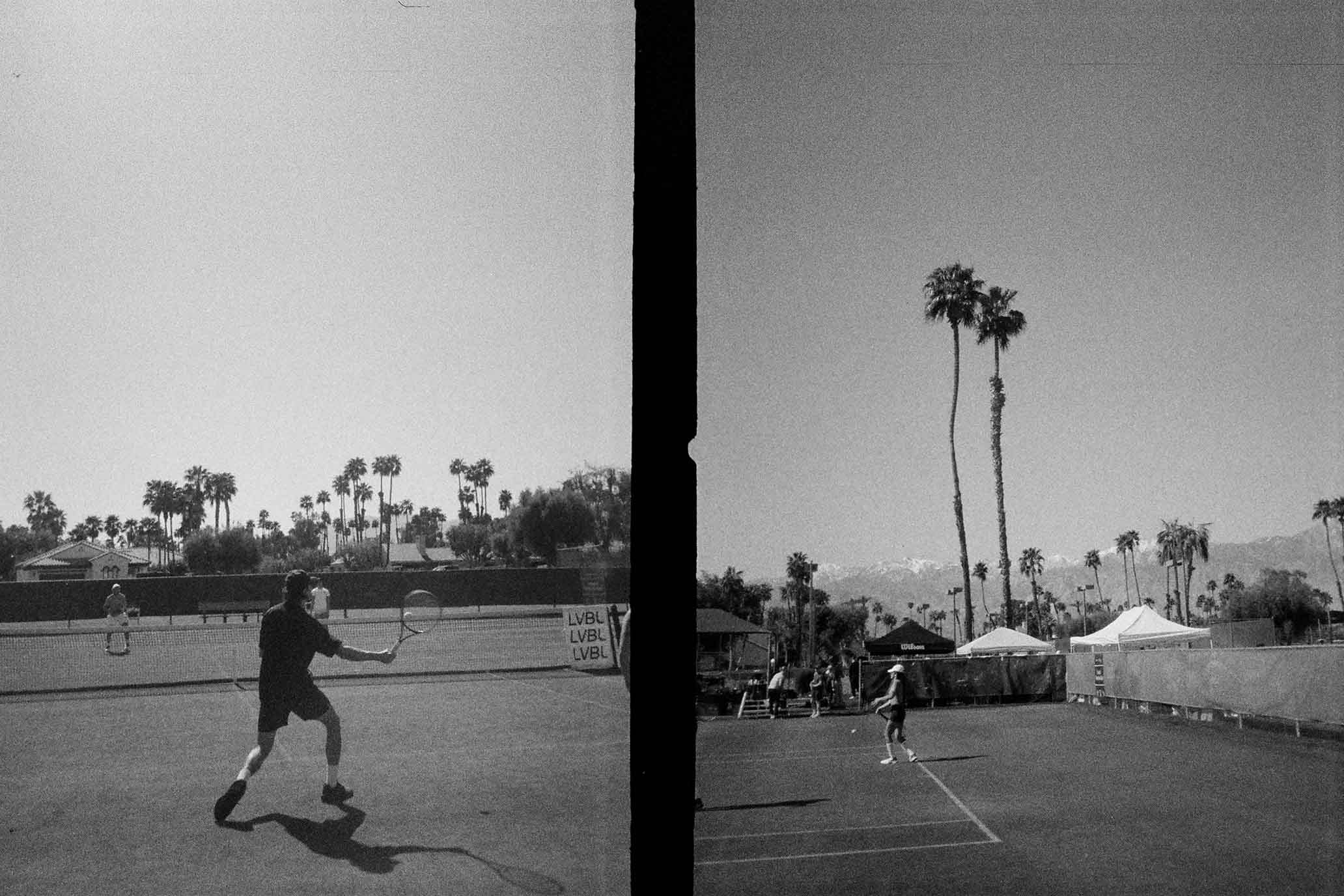
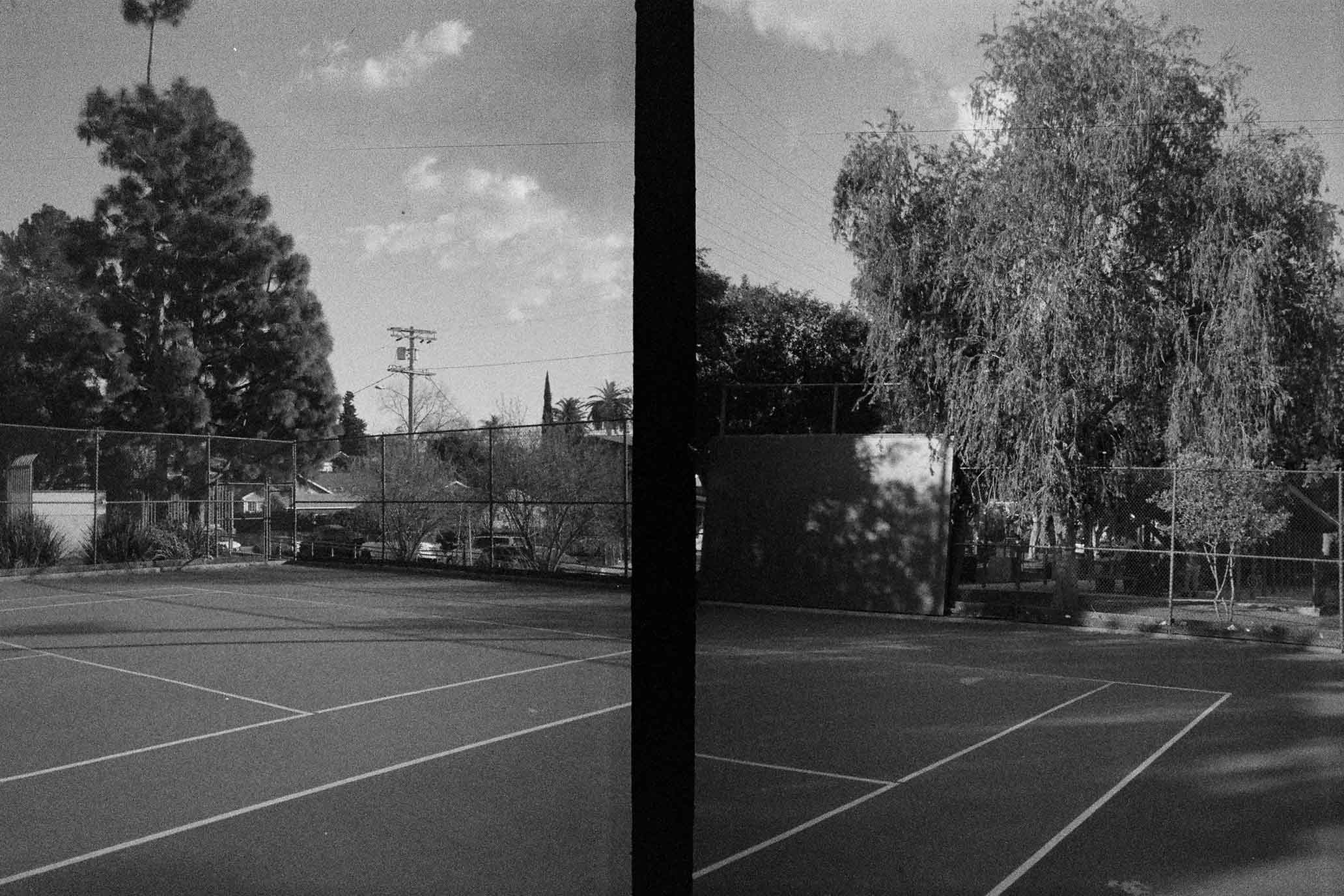
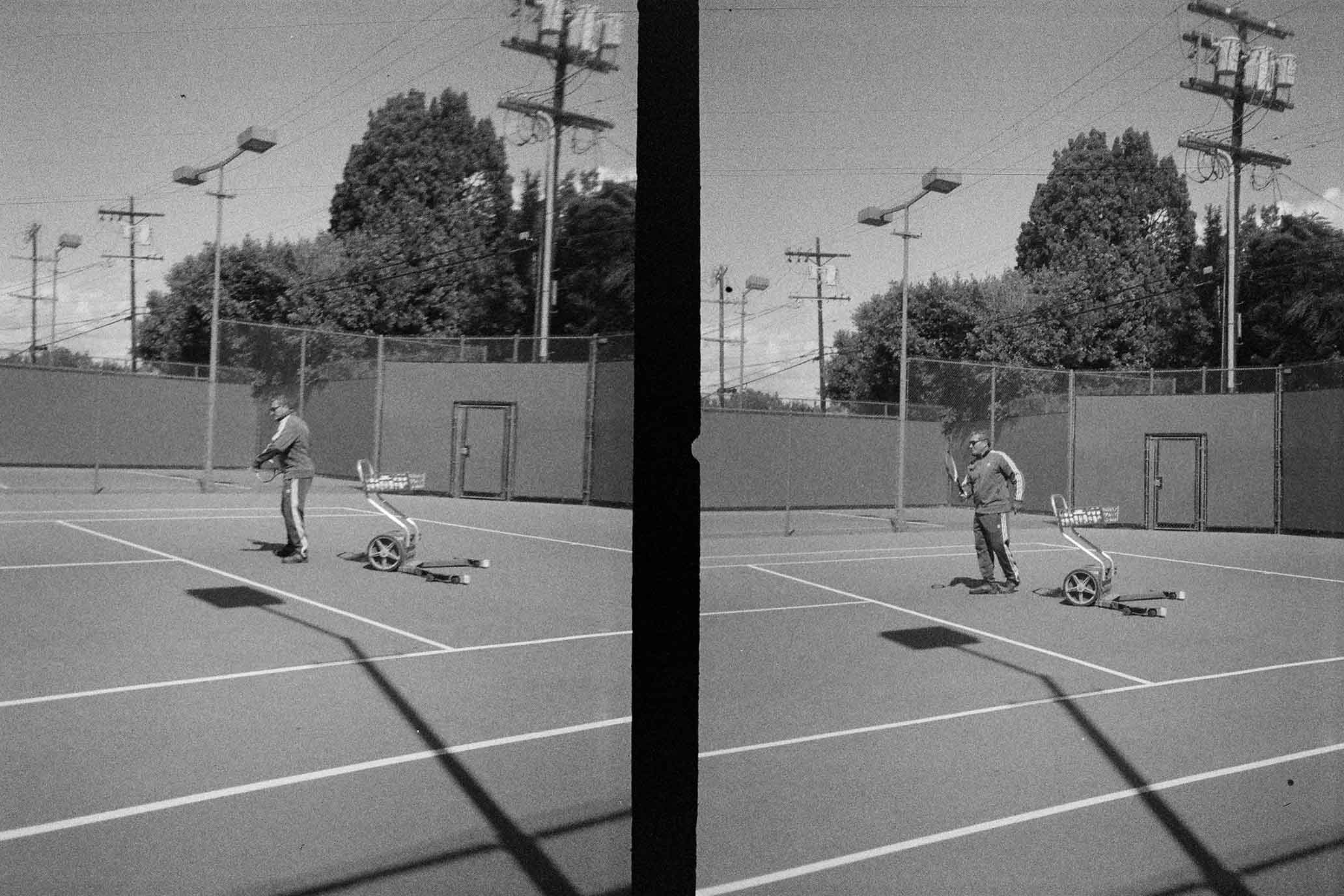
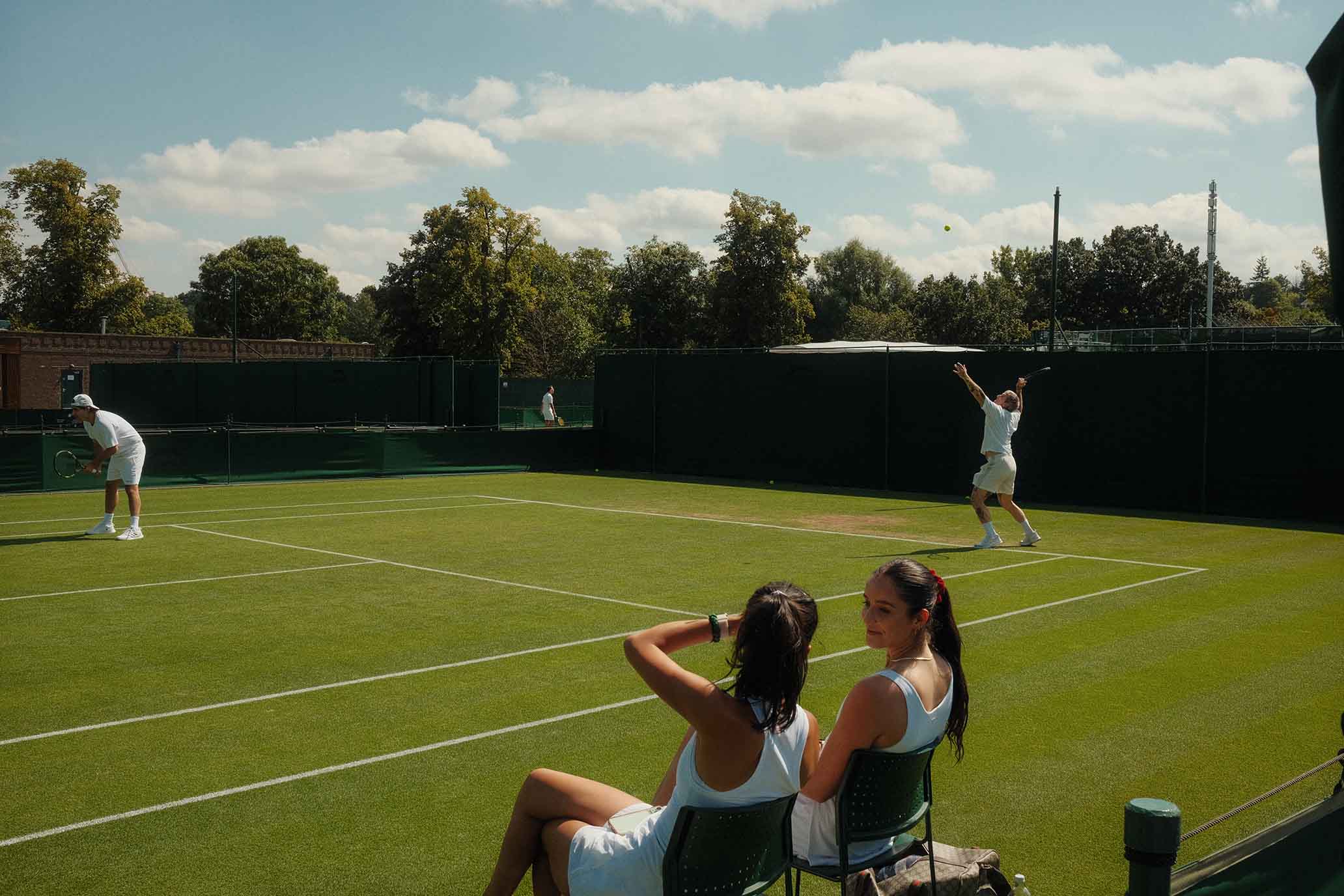
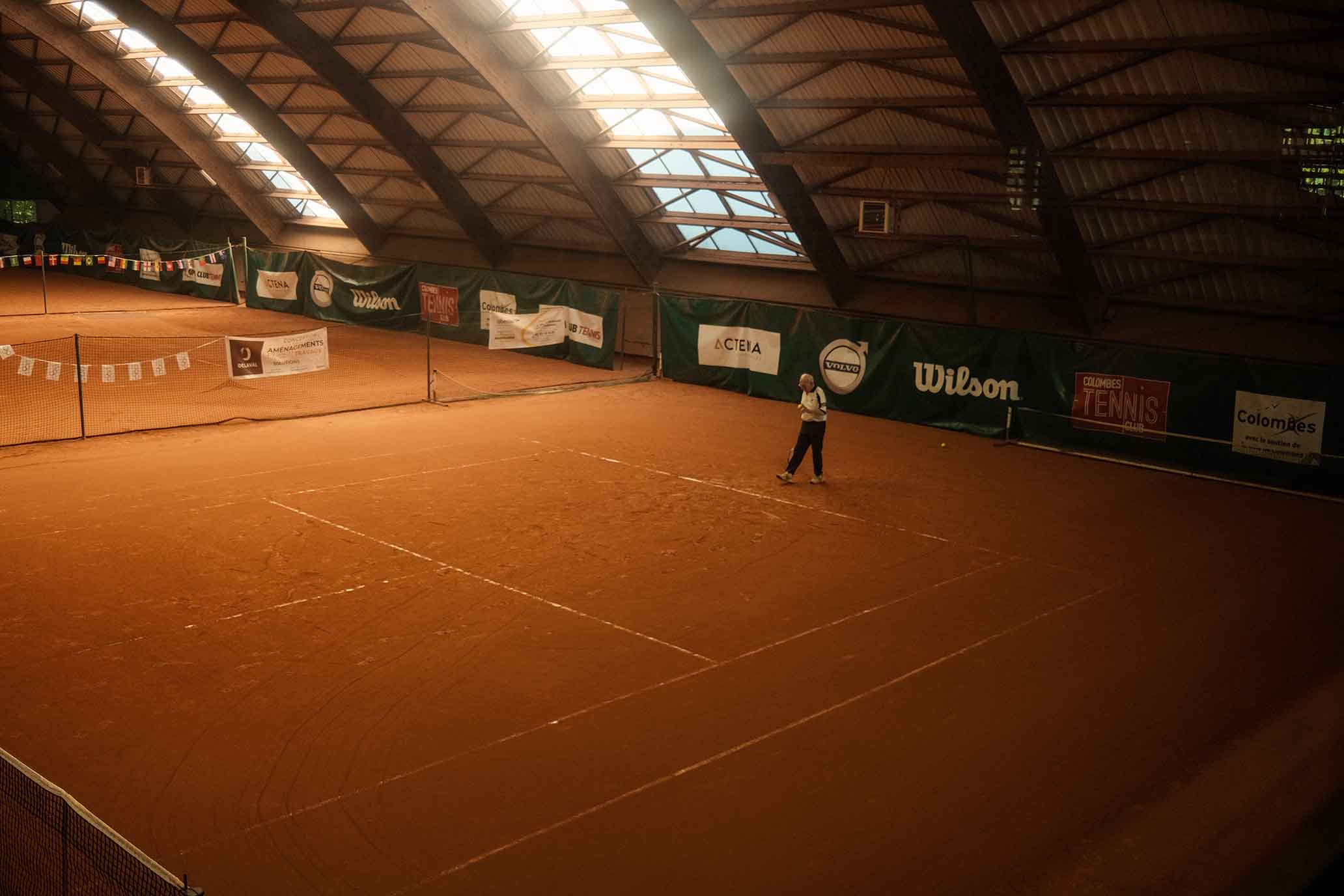
I always thought tennis courts were cool and aesthetically pleasing. Two summers ago we went on a four-month Taylor Swift tour. She only plays shows on the weekends, or she did on that tour. We would be in Paris or Zurich for a week. In Europe they primarily have clay courts. I was booking courts every day on our off day. You can only go to so many pubs or museums. I decided to make a trip out of it and see how many courts we could find. I made a tennis zine about it. I brought my camera to every court and documented everywhere we played.
Is this your photo book?
The zine I did is called Souvenir. It’s what I took away from those four months. It’s easier on tour because you stay at hotels that have gyms, but I don’t love going to the gym. Tennis tricks me into getting two and a half hours of cardio every morning. It’s given me a lot of balance mentally and physically. I can’t promote it more. It’s a frustrating sport that’s given me a lot of life.
Drumming, photography, and tennis all require being as present as possible. It feels like they’ve all helped keep you in balance.
Totally. It makes me love music more because I’m not putting all of my eggs in one basket. If you only do one thing, you can lose sight of how special it is. Healthwise I have something to look forward to forever. Knock on wood I’ll be playing till I’m in my 70s like these guys. I’m not really a network-y, go-meet-other-musicians kind of person, but I’ve met more musicians through playing tennis than I have through playing music.

TENNIS. ART. CULTURE. FASHION. TRAVEL. IDEAS. — SIGN UP
RECOMMENDED
Coco Gauff: Prophecy in Progress
ATP & WTA

Ben Shelton & Frances Tiafoe: Top Dawgs
FILM REVIEWS