The Coach Approach
The Coach Approach
The coaching carousel turns, but are full-time coaches even necessary?
The coaching carousel turns, but are full-time coaches even necessary?
By Simon CambersApril 8, 2026
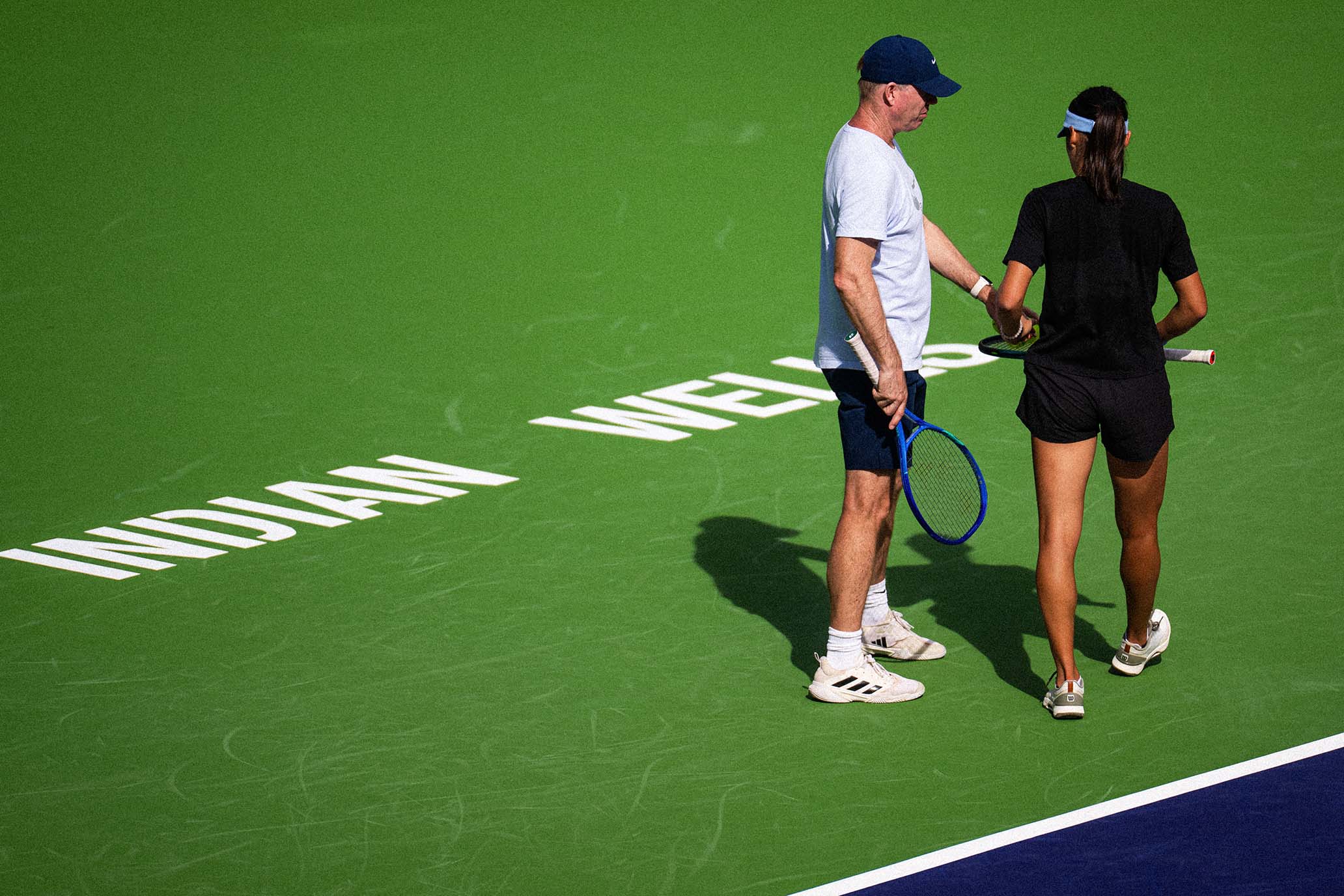
Mark Petchey and Emma Raducanu renewed their partnership at Indian Wells this year. // Getty
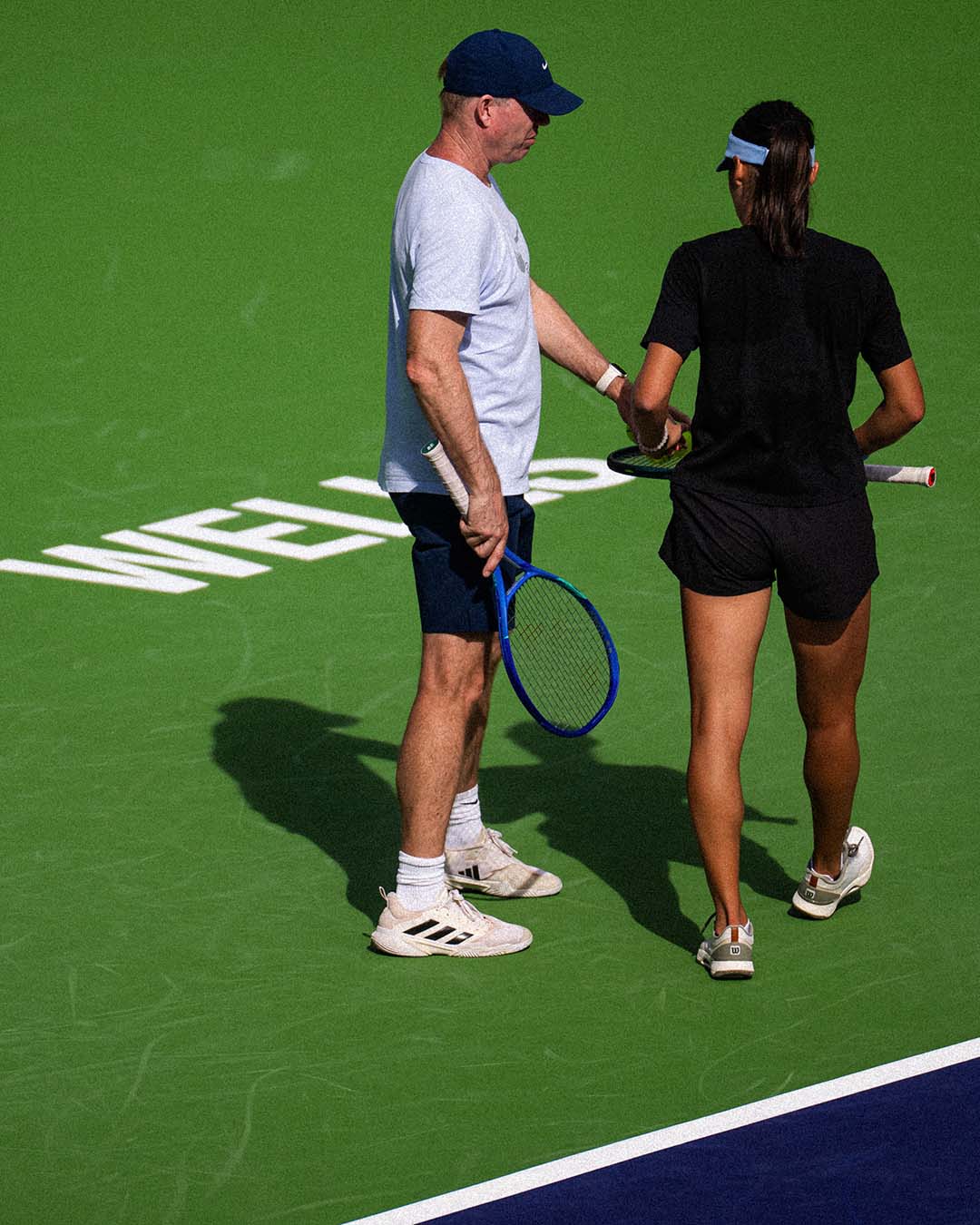
Mark Petchey and Emma Raducanu renewed their partnership at Indian Wells this year. // Getty
The coaching merry-go-round began early this year. Usually it’s an end-of-season-type thing, a clear-out before the new year, but things have been moving fast, with Iga Swiatek and Emma Raducanu at the heart of a spring clean. Swiatek split with Wim Fissette, who helped her win Wimbledon last summer, as she looks to regain confidence and form, while Raducanu parted ways with Francisco Roig, who then worked with Giovanni Mpetshi Perricard for about five minutes before hooking up with Swiatek at the Rafa Nadal Academy, with the man himself on hand in the background.
Who would want to be a coach these days? Even success doesn’t bring security. It’s less than a year since Swiatek won Wimbledon, for which Fissette was given due credit, and yet the Belgian lost his job when her confidence deserted her. In an interview with The Athletic last week, Fissette said patience is a rare quality in tennis. “There are some teams that can stay really calm under, let’s say, difficult conditions,” he said. “Others feel like something needs to change. As in every sport, it’s always first the coach that has to go.”
It’s highly likely that Swiatek will find form under Roig, especially with Nadal, a genuine hero of hers, on hand to offer support and advice these past few days. And Fissette will doubtless land another big job soon, with Amanda Anisimova among big names looking for a new coach.
Do all players even really need a full-time coach? Players of Raducanu’s earning power can afford big teams if they want, picking and choosing between whom they confide in. In the past few years, she has seemed happiest when working with Mark Petchey, the former British player and early-career coach of Andy Murray. Petchey couldn’t be full-time if he wanted to, thanks to his TV commitments. Perhaps that’s exactly what works for Raducanu, someone she trusts but who can’t be there every day, so is less likely to get on her nerves.
Raducanu is a fascinating case. Every time she changes coach—and in truth, it’s been often—she is criticized. Stay with someone for longer than a few months, she is told. Get a legend to help you. The funny thing is that though Raducanu appears ruthless in her decision-making, the opposite is the truth, at least going by her words to the BBC in Indian Wells recently.
“I have had a lot of people telling me what to do, how to play, and it hasn’t necessarily fit,” she said. “I want to come back to my natural way of playing. That takes time to relearn because that’s something that has been coached out of me a little bit. I don’t necessarily want to have one coach in the role because anyone I bring in is straightaway going to be scrutinized—even if it’s a trial. I might feel the pressure to stick with them, even if it’s not necessarily the right decision.
“I would love to have a coach that works well, but I don’t think it’s necessarily going to be easy to find one person and they are going to check every box. I definitely have my mind open to it. It’s just that I would rather someone not come in and tell me, ‘Let’s do this,’ and I disagree with it but have to listen to them.”
Maybe Raducanu just doesn’t like being told what to do. And she doesn’t have to; she’s the one paying the bills.
When the likes of Rod Laver and Ken Rosewall ruled the roost, they didn’t have someone in their pocket day in, day out. They used Harry Hopman, Australia’s legendary Davis Cup captain, as a sounding board when they needed him, and that worked nicely.
Likewise, Roger Federer did very nicely when he split from the late Peter Lundgren at the end of 2003. Lundgren had helped him win his first Grand Slam title that year, at Wimbledon, but Federer went off on his own, and in 2004, he won three of the four Slams, trusting his talent. He had plenty of people he could speak to behind the scenes, of course, but he didn’t have that constant that players are so often told they need.
Nick Kyrgios played for much of his career without a full-time coach; Novak Djokovic doesn’t have a full-time coach right now. As he said in Indian Wells: “I’m okay with that. I feel I have what I need. I don’t think that right now I’m ready to, again, at this stage of my career, bring somebody completely new and go through the same process of getting to know each other.”
Darren Cahill, the coach of Jannik Sinner since 2022, believes the optimum length of time for a coach to be with a player is about three to four years. In that time, the Australian says, a player will have learned everything the coach has to give. Some players stick with their coach for longer. Alex de Minaur has been with Adolpho Gutierrez since he was 9; if you can find that great, long-term player-coach relationship, that’s great.
But everyone has different needs. Raducanu didn’t like where her game was going under Roig, and so she cut ties. Fair enough. Swiatek is in the business of winning Slams, and if she felt she needed a change, then so be it.
Coaches work so closely with players these days—going out for dinner each night, hanging around with them all day—that when the cut comes, it can hurt. But the coach should also know that it’s not worth taking things too personally. The merry-go-round continues.