Playing in the Band
Playing in the Band
Jeffrey Silverstein talks guitar and tennis—and where they intersect—with Grateful Shred’s Austin McCutchen.
Jeffrey Silverstein talks guitar and tennis—and where they intersect—with Grateful Shred’s Austin McCutchen.
By Jeffrey SilversteinMarch 26, 2026
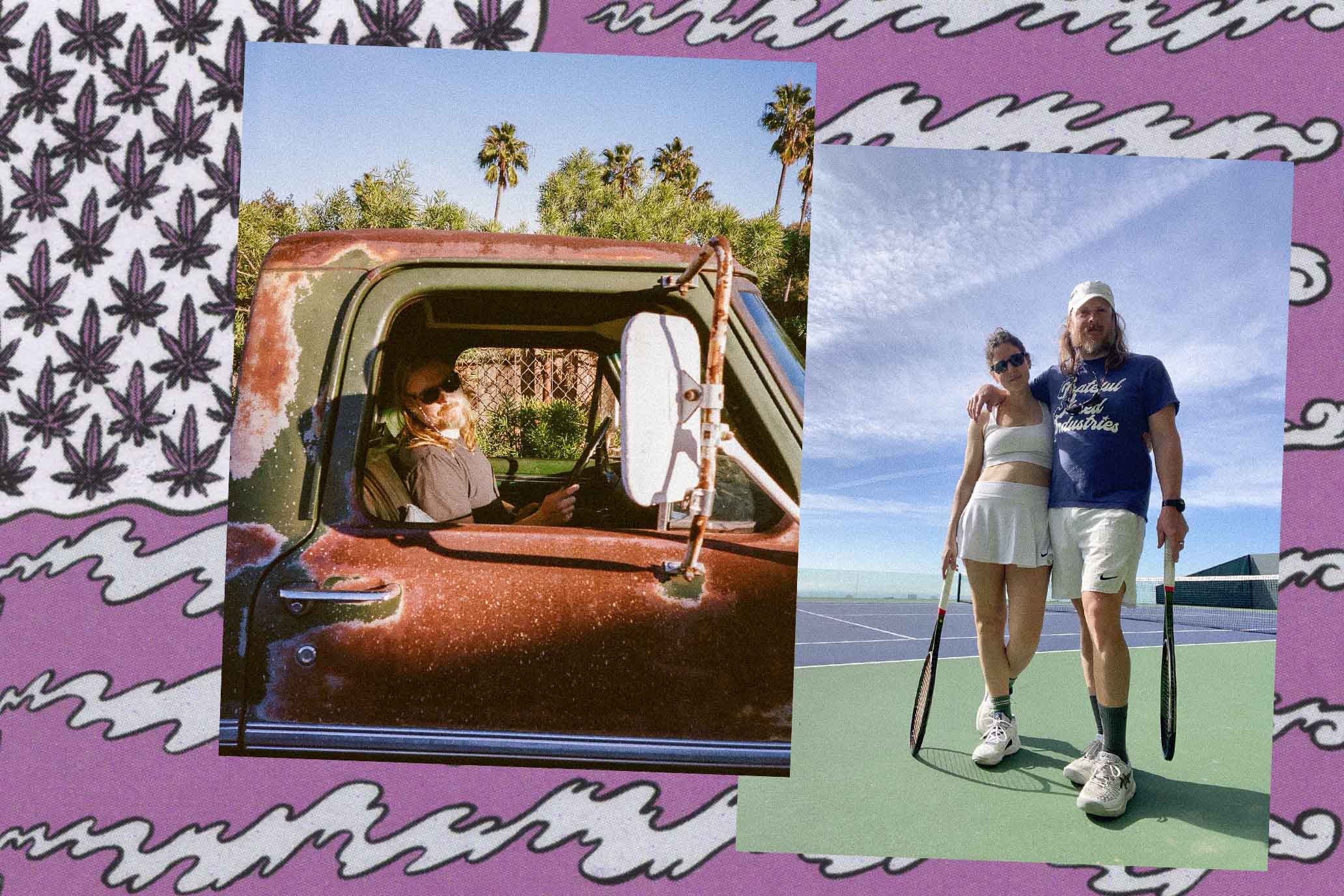
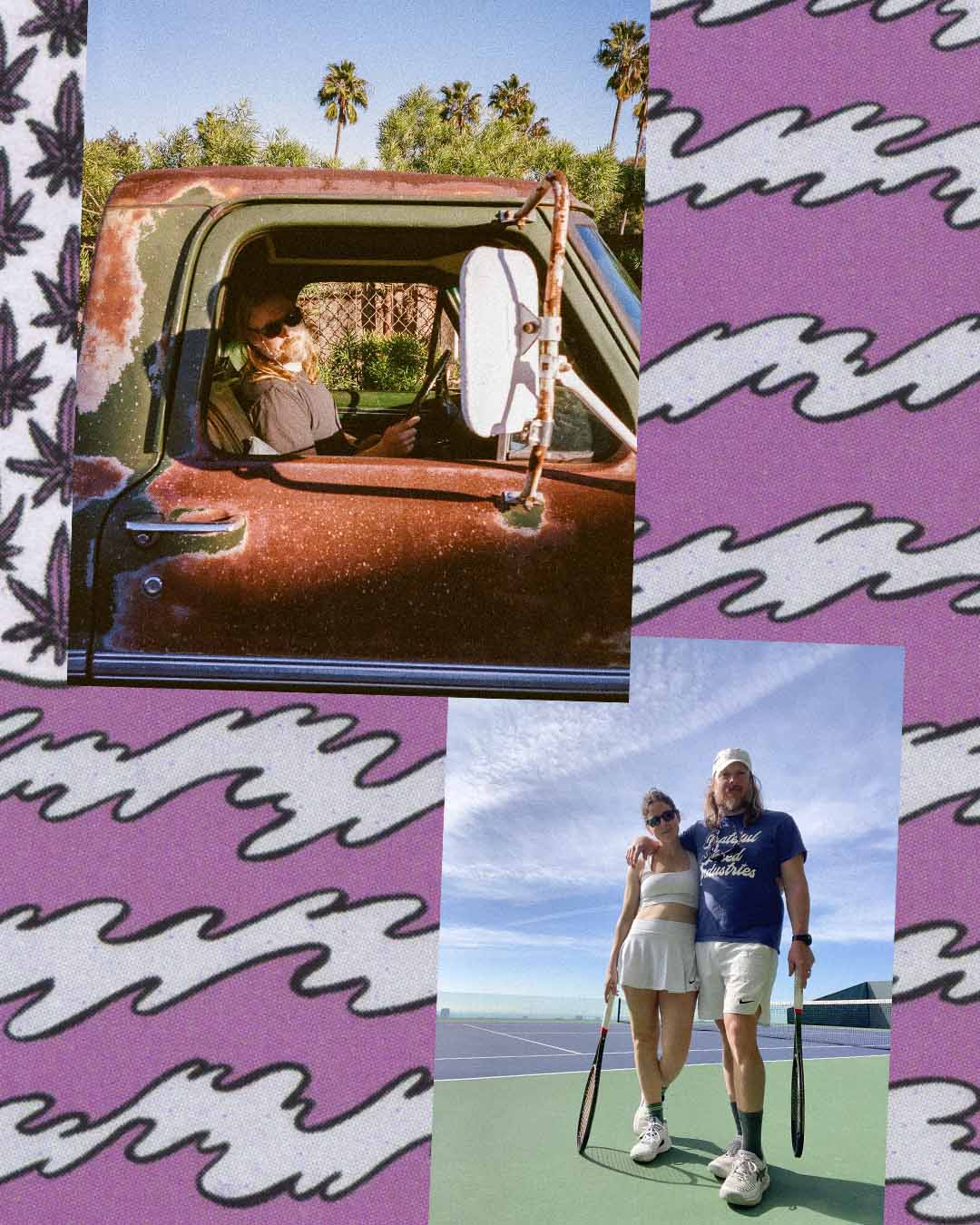
Brooklyn-based musician Austin McCutchen is best known as guitarist-vocalist of the Grateful Shred and Blue Drivers, as well as leading his own band, the Western Stars. In recent years McCutchen has become an avid tennis player. A relatively late arrival to the game, McCutchen fell in love with tennis in Los Angeles during the pandemic, drawn to the same rhythms, feel, and focus that shape his musical life. Along with his wife, Ali, McCutchen also cofounded Racquet Collective, an effort aimed at bringing more social connection to the tennis community in Las Vegas through free events and gatherings. We caught up with McCutchen in between tours about developing his game, navigating the noise of New York City courts, and building community via sport.
Where did music and sport intersect for you as a young person?
I grew up in the Pentecostal Church between the Ozarks of Missouri and the west suburbs of Chicago. My early childhood was spent in Missouri in the Evangelical Assemblies of God Church. B3 organ, piano, bass player, drum kit on the stage. Good music. My whole family sings. My brother is a music minister. I was around it from day one.
My brother is seven years older than me. He’s always been the sports person in the family. I’m the youngest of three. He played a lot of baseball and then in high school was on a state-winning football team. I had never been into sports—I was into LEGOs and computer games. When high school came around, we had just moved back to the suburbs of Chicago from Missouri. I went through the process of trying to figure out what my sport was. I tried football; I was horrible. I did wrestling for one year. That was weird. It just didn’t click.
I ended up doing shot put and discus and later found running in my early 20s. By the time I was a junior in high school, I was so invested in doing music, I kind of went full tilt. I was a choir kid by the time senior year rolled around. I was just like, “Sports aren’t for me, I’m just going to do music.” I got an acoustic and got more into guitar. I put the idea of sports away.
Where does tennis enter the equation?
When I was in high school, I had some friends who were on the tennis team. We had a choir trip where they brought racquets, and we hit a little bit. They were like, “Oh, why don’t you do this?” For whatever reason, it didn’t sink in that it was something I would like to do. In the context of high school and the suburb I lived in, the barrier for entry felt tough. You had to go through the proper channels: sign up with a coach, do tennis camp, whatever it was. Flash forward, I moved to Los Angeles in 2013. Around 2019 I had a friend who, out of the blue, was just like, “Hey, do you want to go hit some tennis balls?” I had a roommate for the first couple of months of the pandemic who grew up playing. We would go and find tennis courts that weren’t locked up. He moved out, and then it became just me, focused on finding a wall to hit against and starting to look at specific skills. What’s going on with my ground stroke? What’s up with my backhand?
It turned into more of an individual pursuit.
Totally. Like how you would practice a scale or licks. I could see a direct correlation. It’s just repetition. That turned into serving, because that’s something you can do by yourself and you just get a bucket of balls. Because I spent basically a year playing by myself, I don’t have an amazing serve, but I have a consistent serve. It’s a strong part of my game. You kind of have to have that if you want to win.
What makes for an exciting opponent on the court?
I like a lot of variety in people’s playing. I personally try to incorporate a lot of variety in the way I play. When you’re playing against someone who is doing a lot of different things, it keeps it fun. It’s great if you’re evenly matched, but even if you’re not, if they can keep you running and change up shots a lot, it makes the game more fun.
There was a certain time where I wasn’t good enough to know why I was getting my ass kicked. I knew I couldn’t get to the ball. At a certain point you have enough clarity with the game to where you’re like, “Oh, well, I shouldn’t put the ball there because I know that they know what to do with the ball when I put it there.” It takes a certain amount of awareness to be able to do something different. You have to be able to react to what they’re doing and strategize with that information. It takes a lot of focus and time, learning how to react.
What parts of your game were more challenging to develop?
Well, it never stops, for sure. I have a pretty strong backhand slice. Kind of to a fault. It can limit the variety of my backhand. I’m working on trying to get a two-handed backhand. Then the variety comes into play; you switch it up because they expect that you’re just going to do the thing that you’ve been doing. That becomes the weapon, the change-up.
What about the skill of tracking the ball?
I played this morning, and we had a good time. The guy I was playing with, we were pretty evenly matched. I was making a concerted effort to, like, really look at the ball, you know? People have this in baseball, too. Good batters can see the seams on the ball. It’s similar in that way to tennis. You really see how fast the backspin or the topspin is. You do it enough to where you know how to touch the ball in a different way. That’s been really exciting for me lately.
What are some of your favorite tennis sounds?
The pop off a nice forehand is great. I get a pretty big toss on the serve, and you know if you smack it just right there’s a satisfying feeling knowing that you hit it right in the sweet spot. I’ve been finding a lot of joy at the net with volley play that is soft, just getting the right touch. That’s what fucks people up. You go to the net, and they think you’re just going to crash the net, and then you do something more finessed. It’s a good feeling when you pull it off.
How does playing in New York compare with L.A.?
It’s been fun playing tennis in New York the past couple of years. There’s a lot of cool courts here. They vary in the neighborhoods they’re in. It’s a little bit more of an effort to get a court, but it’s rewarding in that way. In L.A. there are a lot of serene courts and plenty of availability. You can kind of play whenever. Here you’re thinking about the sounds around you. There’s these courts I play at here where there is a train that runs directly next to where you are playing every five minutes. You’ll be in a peaceful headspace, then it goes full train white noise. If you’re hitting the ball, you can’t hear the contact point at all. It’s completely washed out. If it’s not that, there is a marching band practicing across the street, or any number of sirens blasting. It’s just so chaotic. It is kind of a fun challenge to block out everything that’s going on around you and really focus. You really have to go to a special place.
What led to the formation of the Racquet Collective?
My partner Ali and I met while playing tennis. Our first date was a tennis date. That was a formative, foundational thing for us. It was a regular activity that we could do together and still get to do together. She’s originally from Las Vegas, fourth-generation. We were trying to figure out a way to live together. My place in L.A. was tiny, and her place in New York is pretty small. We needed to find common ground. We had an opportunity to rent this ranch out in Red Rock Canyon, her grandma’s property. In 2024 we moved to Vegas. I didn’t know anyone there, we were just trying a thing.
As tennis people, we’ve both been inspired by community-based programs and events, whether it’s in L.A. or New York. Here in Brooklyn there’s the Fort Greene Tennis Association. There’s something called TennisGrip—cool meetups and organized doubles play. They’ll rent the court and let people play for free. There are watch parties for the Grand Slam finals. In L.A. I’ve done something called LVBL, basically a king of the court scenario. There’s also great tennis shops—Racket Doctor, a hub for tennis in Atwater Village. Great community offerings.
When we made the move, we were able to see that the communities in Vegas were very siloed. There’s the USTA league—that’s kind of what everyone does there. There are different country clubs, and they all have their own teams. There are various tennis centers that have their own teams. I was going to the Darling Tennis Center, a great facility that offers clinics. They have a ton of teams based out of there. USTA is fun, but we felt like something was lacking on the social side. We had a lot of time on our hands living in the desert. We were actually on a road trip to escape the heat for a bit in Colorado. We’re driving down the highway and happen to see something called “collective” and both started to think, “Racquet Collective, what would that be?”
We started scheming ideas on what we could do. The initial idea was to put on events that were free that would bring the community together and create space for players to meet each other—to connect just for the love of it rather than the competitive USTA vibe, which is awesome in a different way. We put on a couple of what we felt were successful community events. We did one at the Westgate. It used to be the International Hotel, where Elvis lived in the penthouse. Then it was the Hilton for a long time. Then it became the Westgate. It’s a cool hotel, they have four or six courts behind the pool. There’s a little clubhouse. Seemingly they don’t get used that much. We had been poking around trying to find cool tennis places on the strip and across town. We did a Liveball event with the guys from L.A. LVBL. We actually reached out to the Second Serve; I think they helped repost it, which was really nice of them. Ali was super motivated to get on the socials, so we found a lot of local people to come together. We also did a king and queen of the court tournament at the Darling Tennis Center a few months later. Around that time we felt like the desert was not the right fit for us. So Racquet Collective is on hold for now.
Do you have a community of musicians who play?
In L.A. there are a lot of musicians that play tennis and play tennis well. It’s been a joy for me to meet other musicians where this is a crossover. You are going to see the show and you run into your buddy who you hit with every other week. Then you’re talking about tennis and music. Community-wise it’s pretty dreamy. It feels affirming.
Do you get to play on tour?
I do. If it’s a van tour, on a day off, it’s definitely a mission. I got to play at a really nice facility in Chico—a tennis club built in the ’70s. My hack has been finding tennis centers wherever we go. If it’s a bus tour, you arrive at the town in the middle of the night or the morning. If you have the day or morning before load-in, you can go hit somewhere. That’s super nice. I’ll see if there is a tennis center that offers a clinic, and usually you can find one for 20 to 30 dollars and hit for an hour and a half with a coach. You’ll meet local people. It’s fun because every time you are there, all the regulars want to know what your deal is. They think it’s cool you’re on tour.